

















You love the septum. You also need it gone by tomorrow morning, maybe for work, maybe for school, maybe because your family's idea of “professional” still hasn't caught up with your face. Good news, a septum is one of the easiest facial piercings to hide, but only if you pick the right jewelry and respect the healing process. The wrong piece, the wrong size, or the wrong timing turns a clean concealment trick into an irritated mess.
Why You Might Need to Hide Your Septum Ring
The usual moment is painfully familiar. You're heading into a shift, walking into class, or showing up at an event where somebody will definitely have an opinion, and suddenly your favorite little ring feels very public. That's exactly why septum rings you can hide are such a smart category of jewelry, they give you control instead of forcing you into one look all day.
Septum piercings are unusually easy to conceal compared with a lot of facial piercings. The simplest methods are a horseshoe-style flip-up or a septum retainer, and that's why septums show up so often in mainstream piercing advice as a flexible, low-drama option. The practical appeal is obvious, you can wear the piercing visibly when you want and then tuck it away for work, school, or a family dinner without changing the actual piercing channel. Mainstream piercing guidance on hiding septums
The part people get wrong
Hiding a septum piercing isn't just a style trick. It depends on whether the piercing has healed enough, whether the jewelry is shaped for flipping or concealment, and whether your nose can accommodate the piece without it peeking out. That's why the lazy advice, “just flip it up,” fails so many people in real life.
Practical rule: if the jewelry moves too much, pokes too hard, or keeps showing from the side, it's not a concealment piece for your anatomy.
A septum ring can function like a public accessory one minute and nearly disappear the next, but only when the jewelry style and healing stage match the job. That's the game here, not just “can it be hidden,” but can it be hidden comfortably, cleanly, and without irritating the piercing. If you treat concealment like a healing and fit question first, you'll make a much smarter choice and avoid the awkward halfway-hidden look that screams, “I tried.”
Types of Septum Rings You Can Hide

The concealment lineup is pretty simple, but each option behaves differently. If you want to hide your septum ring without drama, you're mostly choosing between a horseshoe ring, a septum retainer, or a clicker-style piece that stays secure but isn't always meant to disappear. The trick is knowing which one fits your life, not just which one sounds cute in a product photo.
What each style really does
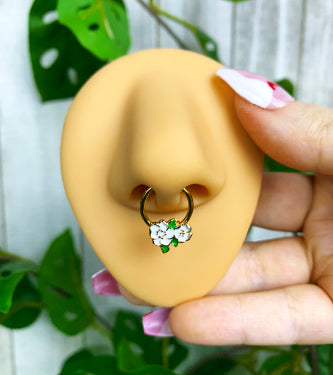
A horseshoe-style ring is the classic flip-up option. The ends tuck into the nostrils, which makes it easy to hide once the piercing is fully healed, but it only works with specific jewelry shapes. A septum retainer is made to stay low-profile, often clear or skin-toned, and it's the most discreet choice when you want the piercing channel open without the jewelry drawing attention. Neutral jewelry guidance also points out that long-term retainers should be made from glass or silicone rather than acrylic, because those materials are less irritating for extended wear. Septum retainer material guidance
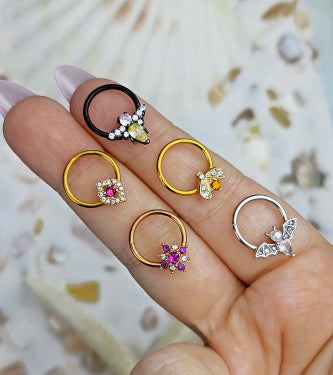
Clickers are a different story. Some are decorative and secure, and some have internal latches, but they're not automatically concealment pieces. If you're shopping for hidden wear, don't assume every shiny septum ring can flip up, because captive rings and many clickers won't cooperate. BodyCandy's own guidance on septum accessories beyond clickers makes that distinction clear.
A good concealment piece should disappear from ordinary viewing angles, not just look hidden in a mirror when you tilt your chin perfectly.
Comparison of Concealable Septum Jewelry Types
| Jewelry Type | Visibility When Hidden | Comfort Level | Ease of Switching | Best For |
|---|---|---|---|---|
| Horseshoe Ring | Low, but anatomy matters | Good when sized well | Easy once healed | Occasional hiding, quick on-off wear |
| Septum Retainer | Very low | High for discreet wear | Moderate | Daily concealment, work or school |
| Hinged Clicker | Variable, often visible | Depends on design | Easy to wear, not always hideable | Style first, concealment only in select designs |
If your life switches between visible and hidden often, the horseshoe wins for convenience. If you need the piercing to stay quiet every day, the retainer is the no-nonsense answer. If you want a decorative piece and don't need to hide it, clickers make more sense, but they're not the piece I'd reach for when a boss wants “subtle.”
How to Safely Switch to Concealable Jewelry

Timing is everything here. Guidance consistently says a septum should generally be left alone for about 6 to 8 weeks before you start flipping or changing jewelry, and other body-piercing guidance notes that full healing can take roughly 3 to 6 months depending on the person. That gap matters because concealment isn't just about looking invisible, it's about not irritating the piercing while it's still settling. Septum hiding and healing guidance
Don't twist a healing piercing
A major jewelry retailer warns that twisting or spinning jewelry during healing can prolong healing time and/or cause injury. I'd take that seriously. If your piercing is still tender, crusty, or reactive, the goal is not to “see if it'll work” by repeatedly flipping it up and down.
The safest route is simple. Wash your hands, clean the jewelry, use a mirror, and move the piece gently only when you're ready to commit to the concealment mode that matches the healing stage. One instructional source also notes that if you're hiding with a retainer, long-term clear retainers should be made from glass or silicone rather than acrylic, while tape or small bandages are really temporary concealment tools during healing. Jewelry switching caution from BodyCandy, Temporary concealment and retainer material guidance
A straight-up switching checklist
- Wait until your piercing is stable. The 6 to 8 week minimum is the line you should respect before attempting flip-up movement.
- Clean your hands and jewelry. Don't touch a septum with dirty fingers and expect a smooth swap.
- Use gentle pressure, not force. If it resists, stop. Resistance usually means swelling, wrong sizing, or both.
- Check the fit in a mirror. If it rubs, catches, or shows from the side, it's not hiding well enough.
If you want a more detailed retainer walkthrough, BodyCandy has a useful guide on retainers as a clear choice for less-visible mods. Use that kind of piece when you need the piercing to stay open but stay out of sight.
Anatomy and Sizing Why Some Rings Hide Better Than Others

This is the part most guides skate past, and it's the part that determines whether a hidden septum looks clean or awkward. Visibility depends on jewelry size and anatomy, and that's why the same ring can vanish on one person and peek out on another. A horseshoe can tuck nicely into one nose and sit too wide in another, while a retainer is built to sit out of sight more reliably. Fit and visibility discussion for septums
Gauge and diameter matter more than people admit
Gauge is the thickness of the jewelry. Diameter is how wide the ring is. If the piece is too chunky, too wide, or too decorative, it's much more likely to show when you flip it up. If the ring is too large for your nose, you can get that annoying half-hidden look where the jewelry is technically tucked away but still visible from the side.
That's why a plain, low-profile piece often hides better than something ornate. The same goes for the shape of your nostrils and the width of your septum sweet spot. Some noses give you more room to tuck jewelry inside. Some don't. That's not vanity, it's fit.
What to look for when sizing
- Measure what you already wear. Match the gauge and diameter before buying another piece.
- Favor smaller, simpler ends. Decorative balls and accents are more likely to peek out.
- Test visibility from the side. A mirror straight on is not enough.
- Choose the style for your nose, not for the photo. A jewelry listing can look stealthy and still sit badly on your anatomy.
Fit check: if the ring touches the edge of your nostril when flipped, it's probably too large for true concealment.
The honest answer is that not every septum ring can be hidden equally well. The jewelry has to match your nose, and the nose has to give the jewelry somewhere to go. If you're buying for concealment, stop shopping like you're hunting for the prettiest piece and start shopping like you're solving a fit problem.
Navigating Workplace and School Policies
If you're hiding a septum ring for work or school, make the policy the boss, not the vibe. Read the dress code, save a screenshot, and know exactly what's allowed before you start improvising with tape or jewelry swaps. A calm conversation works better when you can point to the rule instead of just hoping nobody notices.
Temporary concealment can help during healing, but keep it basic and clean. Skin-colored tape or a small bandage can cover the area for short stretches, and one guide specifically notes that tape should be removed daily so you can clean the area properly. That matters because concealment should never trap dirt or moisture against a fresh piercing. Temporary hiding methods for septums
If your school or workplace is strict, ask directly whether a nonmetal retainer is acceptable. Some settings care about visibility, some care about hardware, and some care about both. If you've got to hide it for a long stretch, a retainer is cleaner than trying to keep a decorative ring half-hidden all day.
Don't keep flipping a fresh piercing on and off just to please a dress code. Pick a concealment method and leave the piercing alone.
There's also the emotional side, and it's real. Hiding a piercing can feel annoying when your jewelry is part of your style, but discretion doesn't mean giving up who you are. It just means choosing when to show it. If you want a broader look at stealth options, BodyCandy's guide on undercover jewelry for hiding piercings is a solid reference point.
Your Action Plan for Concealing Your Septum Piercing

If your piercing is still healing, don't get clever. Use a temporary concealment method, keep it clean, and stop flipping it just to check the mirror. If your septum is healed and you only need it hidden sometimes, a horseshoe ring gives you the easiest switch. If you need it hidden every day, buy a quality retainer and stop fighting the situation.
Buy this, not that
- Healing piercing: clear or low-profile retainer, plus your aftercare routine.
- Healed piercing, occasional hiding: a properly sized flip-up horseshoe.
- Daily concealment: a discreet retainer in a material that won't irritate you.
The most common mistake is treating concealment like it's purely visual. It isn't. It's part jewelry choice, part fit, part healing timeline. If any one of those is wrong, the whole setup gets fussy fast.
If you want a deeper look at hidden-wear options, BodyCandy's guide to hiding piercings with undercover jewelry lines up with the same practical logic. Choose for your anatomy, choose for your schedule, and don't buy a decorative piece if what you really need is stealth.
Ready to hide your septum without wrecking your vibe? Shop BodyCandy for septum retainers, flip-up styles, and low-profile jewelry that fits real life. If you need to look polished for work or school tomorrow, pick the piece that matches your healing stage, then wear your style on your terms.