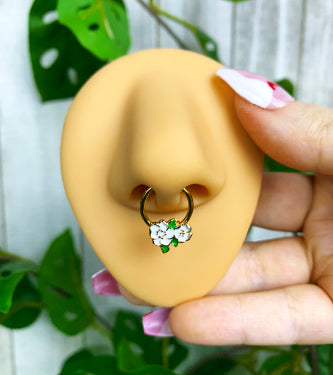


















Let's get right to it: just how much does a septum piercing hurt? Everyone’s experience is a little different, but most people put the septum piercing pain level somewhere around a 4 to 6 on a 10-point pain scale. It’s a super quick, sharp, and intense pinch that almost always makes your eyes water for a second... and then it’s over.
Decoding the Septum Piercing Pain Level
So, you’re thinking about getting that killer septum piercing but are a little nervous about the ouch-factor. We totally get it! But here's the good news: that intense feeling is incredibly brief, lasting only a few seconds while the needle passes through.
The secret to this surprisingly manageable pain is that a professional piercer isn't actually going through the tough cartilage in your nose. Instead, they aim for a very specific area known as the "sweet spot" or columella. This is a small, thin strip of soft tissue located just below the hard cartilage of your septum. Piercing this spot is way less painful and heals much faster than going through cartilage. Think of the difference between piercing your soft earlobe versus the hard cartilage at the top of your ear—it’s a very similar idea!
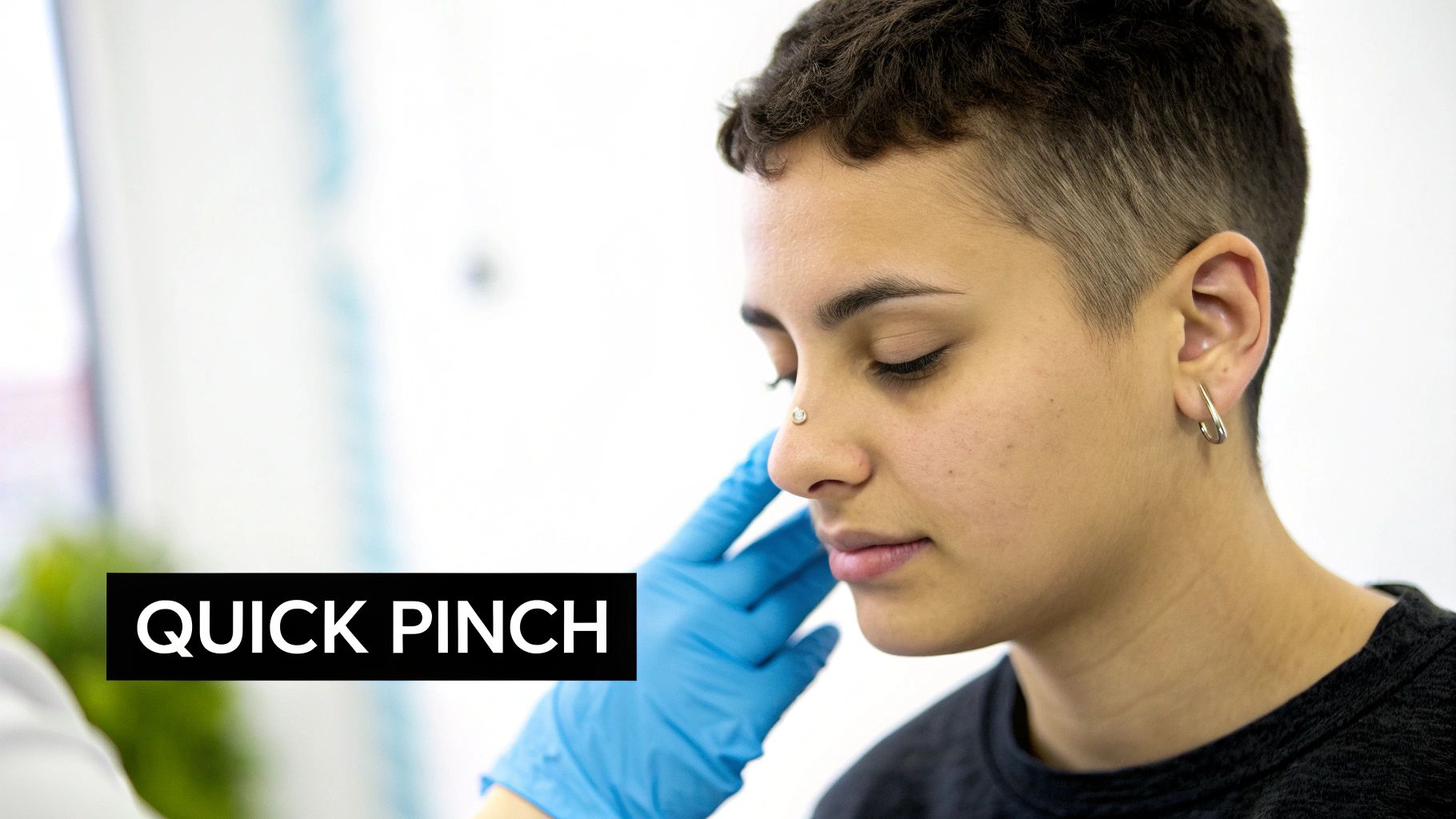
Here's a quick cheat sheet for what to brace yourself for.
Septum Piercing Pain at a Glance
| Pain Level (1-10 Scale) | Pain Duration | Key Factors |
|---|---|---|
| 4-6 (during piercing) | 1-3 seconds of intense pinching | Your personal pain tolerance, the piercer’s skill, and whether the "sweet spot" is used. |
| 2-4 (soreness after) | 1-3 days of general tenderness | Proper aftercare and avoiding bumping or snagging the jewelry. |
This table should give you a good idea of the timeline, but remember, everyone's body is unique!
What to Expect During the Pinch
While your pain tolerance is totally personal, the experience itself is pretty universal. Most people describe it as a strong pressure followed by a sharp sting that might make you feel like you have to sneeze.
And that eye-watering reaction? Totally normal! It’s just an involuntary reflex because of all the nerves in your nose, not a sign that the pain is unbearable.
The most common feedback we hear is that the anticipation is far worse than the actual piercing. It's a quick, sharp moment that’s over before you can really process it.
Once the needle is through and your new septum jewelry is in place, the initial sharp pain fades almost immediately. It’s then replaced by a dull, throbbing ache or just a general feeling of tenderness in your nose. This soreness is completely normal and usually only lasts for a few days up to a week. Your nose will probably be sensitive to the touch, but it shouldn't really interfere with your daily life. The procedure itself is over in a flash, setting you on the path to rocking some seriously cool new bling.
What Happens During a Septum Piercing Appointment
Walking into a piercing studio can feel a little nerve-wracking, especially if it's your first time. But knowing exactly what's about to happen is the best way to kick those pre-piercing jitters to the curb. A professional appointment is a clean, controlled, and surprisingly fast process. Let's pull back the curtain so you know what to expect when you get in that chair.
First up, you'll handle some quick paperwork. Nothing too crazy. After that, your piercer will bring you to their station for a quick chat. This is the perfect time to ask any last-minute questions and just get comfortable. They're there to help you feel at ease!
Next comes the most important step before any needles are involved: the prep. Your piercer will get in there and thoroughly clean and sanitize the inside of your nose. Then, using a special marker, they’ll pinpoint your "sweet spot." They'll almost always have you check out the placement in a mirror to make sure you’re happy with where your new bling will live.
The Piercing Process Step-by-Step
Once you give the final "okay" on the placement, it's go-time. Seriously, the piercing itself is over in a blink, but here’s a play-by-play of how it goes down:
- Positioning: Your piercer might use a receiving tube on the opposite side of your septum to catch the needle, or they could use clamps to hold the tissue steady. Some seriously experienced piercers even go "freehand," using just the needle itself.
- The Deep Breath: A classic for a reason! Your piercer will coach you to take a deep breath in and will perform the piercing as you exhale. This little trick helps your body relax and gives your brain something else to focus on besides the pinch.
- The Pierce: In one quick, smooth motion, a sterile, single-use needle will pass through your sweet spot. This is it—the moment you'll feel that sharp, eye-watering pinch we talked about. It lasts for literally one to two seconds.
- Jewelry Insertion: Right on the heels of the needle, your piercer will immediately guide your chosen jewelry into its new home.
And just like that, it’s done! Your piercer will clean you up one last time and walk you through the all-important aftercare instructions. For an even deeper dive into the whole experience, check out our full guide on how to prepare for your first piercing.
The eye-watering thing is a totally involuntary reflex! The nerves in your nose are wired to your sinuses and tear ducts. When they get a sudden jolt, your eyes just automatically start watering. It’s not a sign that you’re in a ton of pain—it's just your body doing its thing.
After that initial sting fades away, you’ll probably feel a dull throb or some general tenderness around your nose. That's completely normal and just the first step on your healing journey. Now for the best part: admiring your awesome new piercing!
Why the Sweet Spot Is Everything for Pain Management
So, what’s the big secret to a septum piercing that barely registers on the pain scale? It all comes down to one thing: location, location, location. We're talking about the almost-magical “sweet spot,” and getting what it is and why it matters is your ticket to a much, much smoother piercing experience.
Think about the difference between piercing your soft earlobe versus the hard cartilage at the top of your ear. That’s the exact same idea at play inside your nose. The sweet spot, technically known as the columella, is a thin slice of soft tissue right at the tip of your nose, just below the much tougher nasal cartilage. Hitting this spot is everything.
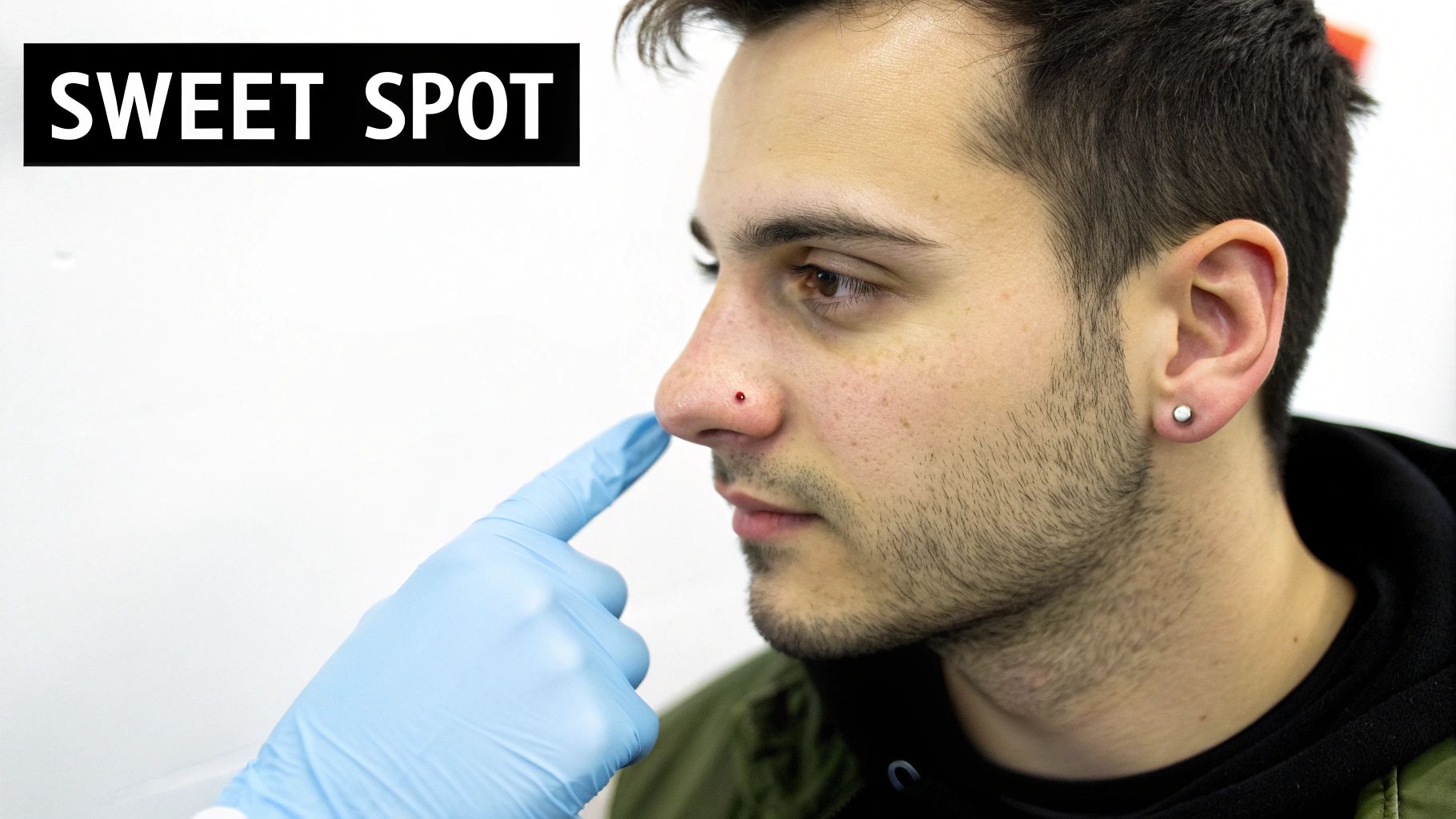
When an experienced piercer nails this exact location, the needle glides through with almost no resistance. This is what creates that quick, sharp pinch we’ve been talking about, instead of a drawn-out, grinding kind of pain.
Finding Your Sweet Spot
Everyone’s anatomy is a little different, but just about everybody has this sweet spot. You can even find it yourself! Gently pinch the skin between your nostrils, just below the hard part. Feel that soft, fleshy bit? That's it!
A skilled piercer can identify this area in seconds. They’ll feel around inside your nose to locate that perfect piece of real estate before a needle even comes into the picture. This is precisely why choosing an experienced professional is non-negotiable—they have the anatomical know-how to place your piercing correctly for minimal pain and the best possible healing. This precision is a big reason why many experts see connections between piercing and acupuncture points.
Cartilage vs. Sweet Spot: The Real Difference
What happens if the piercing goes through the cartilage by mistake? Well, that’s when the pain level can jump from a pinch to a serious ouch.
- Pain: Piercing cartilage hurts a lot more. It’s dense tissue packed with more nerve endings, leading to a much more intense and lasting pain.
- Healing Time: A piercing through the sweet spot usually heals up in about 6 to 8 weeks. A cartilage piercing, on the other hand, can take a whopping 6 months to a year to fully settle down.
- Complications: Cartilage doesn't have great blood flow, which makes it way more prone to infection and other healing headaches like hypertrophic scarring.
On average, septum piercings land around a 6 out of 10 on most pain scales. This surprisingly manageable rating is almost entirely because the piercing targets the sweet spot, avoiding that tough, nerve-filled cartilage higher up. Proper technique can drop the perceived pain by up to 50% compared to a botched job that hits cartilage.
At the end of the day, knowing this stuff empowers you. You can walk into your appointment ready to have an informed chat with your piercer. Ask them to show you where your sweet spot is and confirm that’s their target. A true professional will be happy to walk you through it, making sure you feel totally confident and comfortable before you get started.
How Septum Piercing Pain Compares to Other Piercings
Thinking about how much a septum piercing hurts can feel a bit abstract. The best way to get a real sense of what you're in for is to stack it up against other piercings you might already have or have heard friends talk about. Putting it all into context makes the whole idea a lot less scary!
If you’ve only ever had your earlobes pierced, a septum piercing is definitely a step up. An earlobe piercing is a tiny pinch, maybe a 1 or 2 on the pain scale. The septum is a much sharper, more intense sensation, but it’s also over in a flash.
Where Septum Sits on the Pain-O-Meter
So, where does it land compared to other popular spots? It's generally considered more intense than a navel (belly button) piercing but less painful than a nostril or most cartilage piercings. The real difference is the type of pain. Cartilage piercings, like a helix, have a sharp initial poke followed by a deep, lingering throb that can last for hours or even days.
A septum piercing, when done correctly in the sweet spot, is all about that super brief, eye-watering sting that vanishes almost as quickly as it arrives. Most people agree: the anticipation is way worse than the actual event. Data from studios around the world backs this up. In piercing pain rankings, the septum sits comfortably in the middle, usually rated a 5 or 6 out of 10. For more piercing facts, you can explore insights on piercing pain scales, which often highlight how tissue type dictates the sensation.
To make it even clearer, let's break it down visually. We've put together a little chart to show you exactly how the septum stacks up against some other common piercings you might be familiar with.
Piercing Pain-O-Meter How Septum Stacks Up
See how the septum piercing pain level compares to other popular body piercings.
Piercing Type Average Pain Rating (1-10) Pain Description Earlobe 1-2 A tiny pinch Navel (Belly Button) 4-5 A strong pressure-like pinch Septum (Sweet Spot) 4-6 Intense but very brief pinch Nostril 5-7 Sharp, eye-watering sting Helix (Cartilage) 6-8 Sharp, with a lingering throb Nipple 8-9 Very sharp and intense
As you can see, the septum piercing pain level is truly moderate. It holds its own in the middle of the pack—not as mild as an earlobe but definitely not as notoriously intense as a nipple piercing. This comparison helps you gauge the feeling based on experiences you or your friends might have already had, making the unknown feel much more familiar and manageable.
Your Septum Healing Journey Week by Week
So, you did it! You survived the pinch—congrats! That initial sharp sensation is over in a flash, but what about the next few weeks and months? The healing journey is just as important as the piercing itself, and knowing what to expect will keep you from freaking out over every little twinge.
Let's break down the typical healing timeline so you can just chill out and let your body do its thing.
The First Few Weeks
The first 7 to 14 days are when your nose will feel the most tender. It's totally normal to experience some mild swelling, redness, and a general feeling of soreness, especially if you accidentally bump it. Your only job right now is to keep it clean with saline soaks and fight the urge to touch, twist, or mess with your new jewelry.
After the first week or two, you’ll probably start to notice some yellowish-white crust forming around the jewelry. Don't panic—in the piercing world, these are affectionately known as "crusties." They're just a mix of dried lymph fluid and dead skin cells, which is a perfectly healthy sign that your body is on the right track. Gently clean them away with your saline solution, but never pick at them!
This visual timeline gives you a quick look at how the septum's initial pain stacks up against other common piercings.
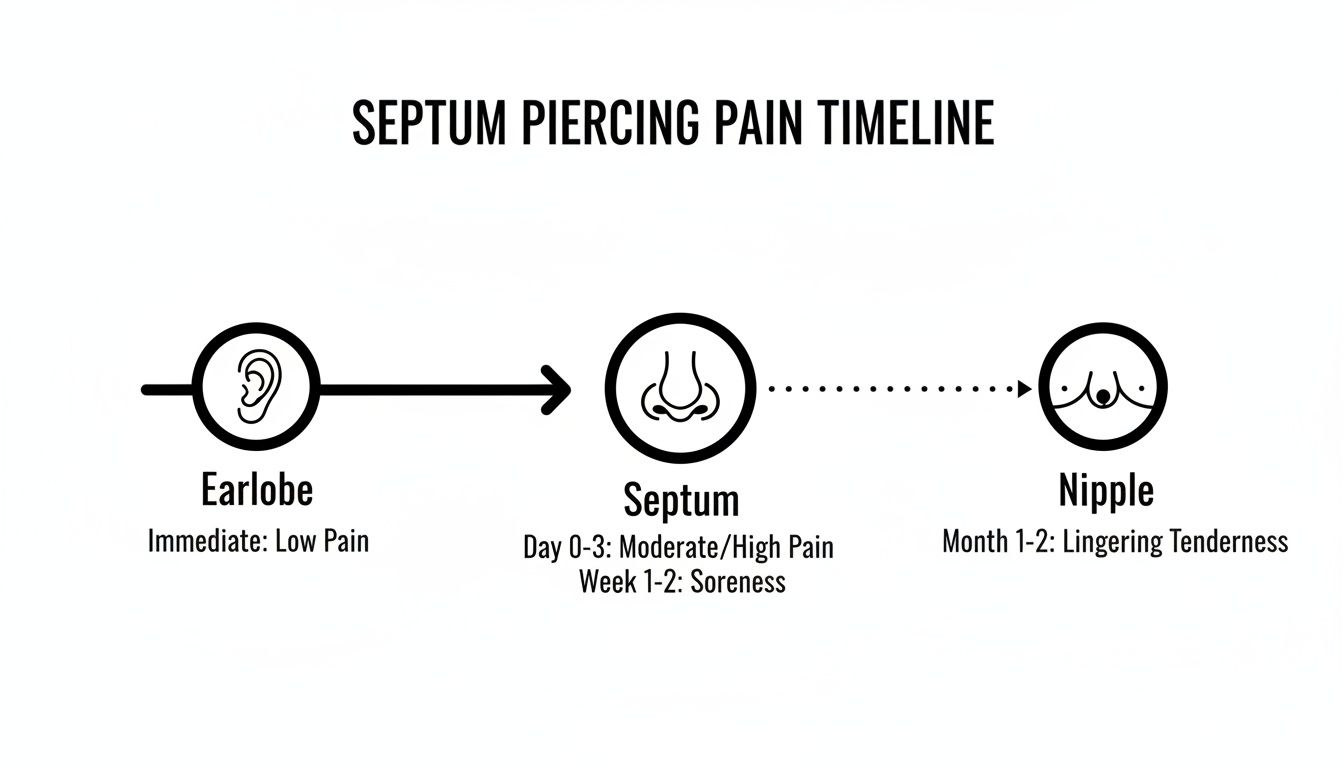
As you can see, the pain from a septum piercing is a sharp but very brief event. It's nothing like the lingering throb you might get from some cartilage piercings.
Reaching Full Recovery
Once you get past the first month, most of that daily soreness should be gone. The piercing might still feel a little sensitive if it gets knocked, but it won't be a constant thought in your mind anymore. But here's the thing: just because it feels good doesn't mean it's fully healed on the inside.
The total healing time can vary, but most septum piercings done in the sweet spot are fully healed in 4 to 6 months. It's crucial to keep up with your aftercare for this entire period to avoid any annoying setbacks.
For most people, you're looking at an average of 4-6 months for a full recovery. However, getting pierced in that sweet spot can slash the initial, more sensitive healing phase down to just 4-8 weeks. The thin, vascular tissue in the sweet spot heals way faster than tough cartilage. If you're curious, you can explore a deeper dive into how quickly different piercings heal over on our blog.
It’s super tempting to swap out your starter jewelry as soon as it feels better, but patience is your best friend here. Wait until you're completely healed before you start experimenting with new styles. Once you're cleared, you can have a blast with Bodycandy's huge collection of septum rings!
And of course, always watch for red flags like greenish discharge, severe swelling, or a fever. If anything seems off, contact your piercer. Otherwise, just keep it clean and let your body work its magic.
Tips for a Smooth Septum Piercing and Aftercare
You have way more control over your septum piercing experience than you might think! From the moments before you even sit in the chair to the weeks that follow, a few smart choices can make a huge difference in both the initial pinch and the entire healing journey. Think of it as setting yourself up for success.
It all starts with getting your body ready. Honestly, showing up to your appointment feeling good can genuinely impact how you perceive pain. These simple pre-piercing steps are non-negotiable for a better experience.
Pre-Piercing Prep for Less Pain
- Eat a Solid Meal: Going in on an empty stomach is a recipe for feeling dizzy or lightheaded. Grab a good meal about an hour or two before your appointment to keep your blood sugar stable.
- Stay Hydrated: Drink plenty of water the day of your piercing. A hydrated body is a happy body, and it can help your skin be more pliable and your pain response more manageable.
- Skip the Vices: Lay off the alcohol and caffeine for at least 24 hours beforehand. Both can thin your blood and actually increase your sensitivity to pain, making the experience more intense than it needs to be.
- Practice Deep Breathing: It sounds almost too simple, but it really works! Practicing slow, deep breaths helps calm your nervous system. When the moment comes, focusing on a long exhale as the needle goes through can make the septum piercing pain level feel much, much lower.
Nailing Your Aftercare Routine
Once you’ve got your awesome new jewelry, the real work begins. Proper aftercare is your ticket to a fast, complication-free healing process. Messing this up can lead to irritation, prolonged soreness, and even infection, so listen up!
Your piercer is your best resource, but here are the golden rules that everyone should follow to keep their new piercing happy and healing smoothly.
A common mistake is over-cleaning or using harsh chemicals like alcohol or hydrogen peroxide. These can strip away healthy cells and seriously irritate your fresh piercing. A simple sterile saline solution is all you need.
The goal is to be gentle and consistent. Don’t get lazy with your routine, especially in those first few crucial weeks.
Your Aftercare Checklist
- Clean Twice Daily with Saline: Use a sterile saline spray or a sea salt soak twice a day. Just spray the area or gently apply a saturated cotton ball. This is the single most important step.
- Hands Off: This is a big one! Avoid touching, twisting, or playing with your new jewelry. Your hands carry bacteria that can easily lead to an infection. Let it be!
- Be Gentle When Cleaning Your Face: When washing your face or blowing your nose, be extra careful not to snag or bump the jewelry. A little awareness goes a long way in preventing painful irritation.
- Keep Makeup and Skincare Away: Try to avoid getting foundation, powders, or lotions directly on the piercing site until it's fully healed. These products can clog the fistula (the healing tunnel) and cause all sorts of problems.
By following these tips, you’re not just hoping for a good experience—you’re actively creating one. A little preparation and diligent aftercare will minimize the pain, speed up your healing, and get you to the fun part faster: showing off your amazing new septum jewelry!
Got More Questions About Septum Piercing Pain?
Still have a few things buzzing around in your head? No worries, we’ve got you covered. Let's tackle some of the most common questions people have about septum piercing pain and what comes after. Think of this as your personal Q&A session to clear up any last-minute doubts.
We want you to walk into your appointment feeling totally confident and excited.
Does a Deviated Septum Make It Hurt More?
This is a great question, and the short answer is: it definitely can. A deviated septum means the cartilage wall inside your nose isn't perfectly straight, which can make it a little trickier for the piercer to find that perfect "sweet spot." If the area is more sensitive or difficult to access, it might bump up the septum piercing pain level for you.
But don't let that discourage you! The most important thing is to find a highly experienced piercer. They'll take a look at your unique anatomy and give you an honest opinion on whether a septum piercing is a good fit and what you can expect, pain-wise. Communication with your piercer is your best friend here.
What Jewelry Is Best to Minimize Pain?
When your piercing is brand new, your choice of jewelry is super important for keeping pain and irritation at a minimum. You'll want to stick with high-quality, body-safe materials that your body won't react to.
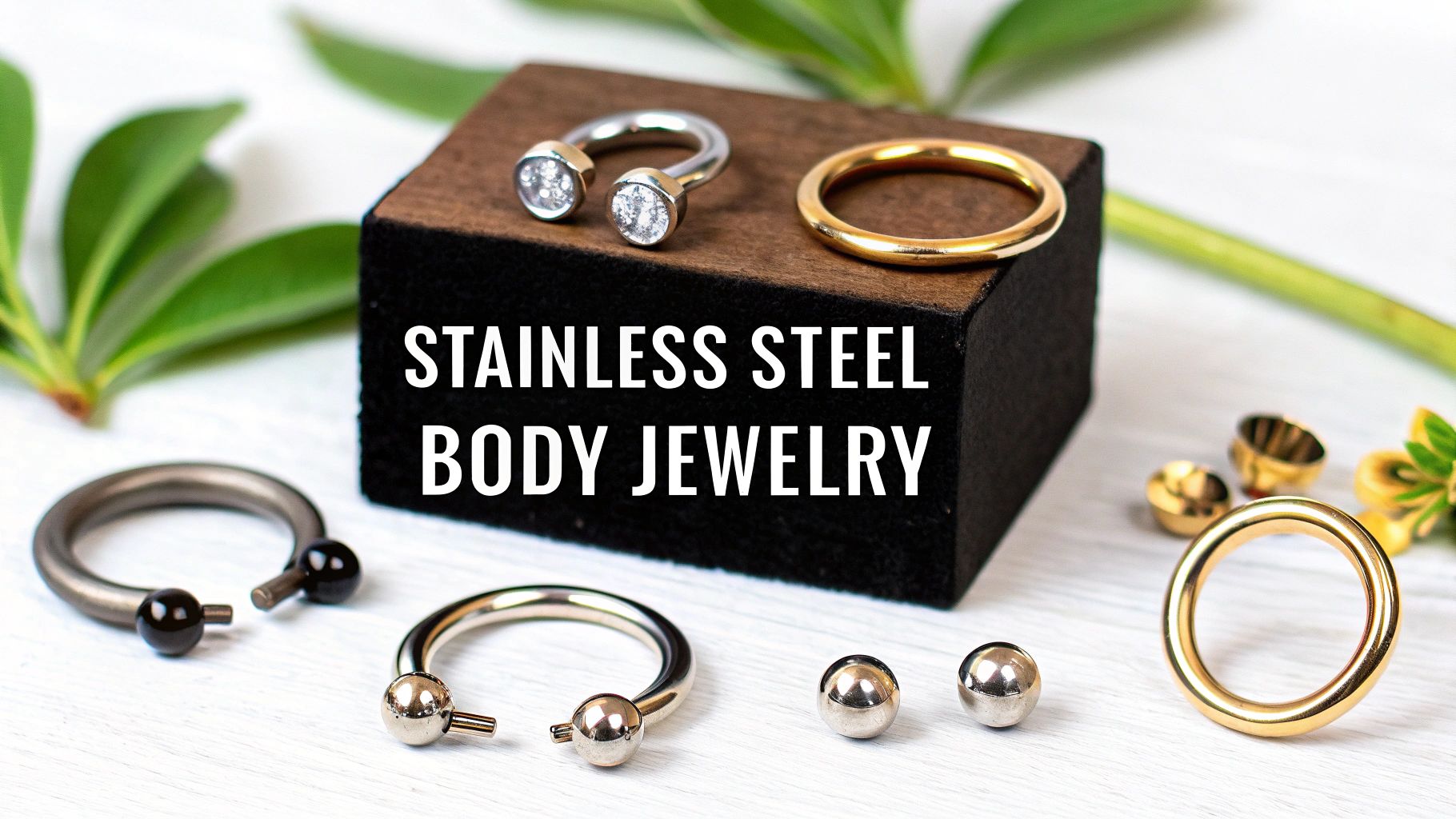
We always recommend implant-grade titanium. It's hypoallergenic, completely nickel-free, and incredibly lightweight, which means less pressure and pulling on your healing nose. Surgical steel is another solid option for many people, but titanium is the gold standard for sensitive skin.
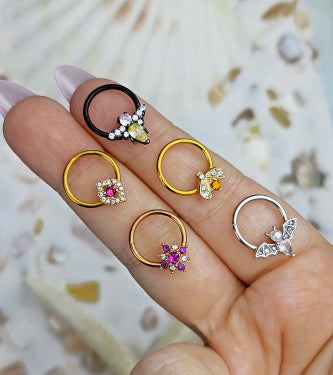
As for the style, a simple captive bead ring (CBR) or a circular barbell (often called a horseshoe) is perfect for starting out. These classic shapes don't move around too much, which is exactly what you want to reduce soreness while you heal.
When Does a Septum Piercing Stop Feeling Sore?
That super-intense pinch is over in seconds, but what about the aftermath? You can expect some general tenderness and soreness for about one to two weeks. It’ll be most noticeable if you accidentally bump your nose or snag the jewelry on your clothes.
This initial soreness should fade pretty quickly as long as you’re on top of your aftercare routine. By the one-month mark, most people report that they feel little to no daily discomfort at all.
Ready to find the perfect starter piece for your new piercing? At Bodycandy, we have a huge collection of high-quality septum jewelry designed for comfort and style. Shop our full collection today