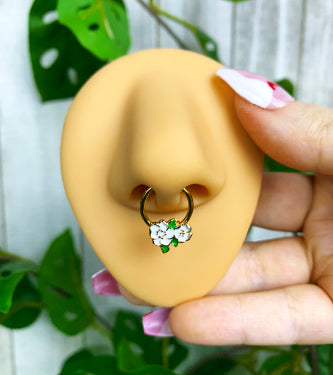















So, you’re thinking about getting a nose ring? Awesome choice! The world of nose jewelry is massive and super exciting. It really boils down to three main players: classic hoops, simple studs, and statement-making septum pieces.
Each one has a totally different vibe, from subtle and sweet to bold and edgy. Trust us, there's a perfect match for everyone's personal style, and we're here to help you find it.
Your Ultimate Guide to Nose Jewelry
Whether you're counting down the days until your first piercing appointment or you’re a seasoned pro looking to switch up your look, figuring out all the options can feel like a lot. Don't worry—that's exactly why we're here. Think of us as your personal piercing bestie, ready to walk you through everything.
This guide is your complete roadmap to understanding all the different types of nose rings out there. We’ll break down all the popular styles, from the tiniest, most delicate studs to eye-catching clickers that demand attention. You'll learn what makes each piece unique, how it stays put, and which ones work best for different vibes and piercing placements.
Before we really get into it, here’s a sneak peek at what you'll discover:
- The Classics vs. The Newcomers: We’ll explore timeless favorites like L-bend studs and seamless hoops alongside modern marvels like septum clickers.
- Style Meets Function: You'll understand how a nose screw’s clever twist keeps it secure or why a captive bead ring gives off such an edgy look.
- Finding Your Perfect Fit: We'll touch on what makes certain jewelry better for fresh piercings versus ones that are fully healed.
By the end of this, you'll feel totally confident walking into a studio or browsing online, knowing exactly what you're looking for. For an extra dose of inspiration, check out our complete style guide for nose piercing fashion to see how others are rocking their looks.
Ready to find a piece you'll absolutely love? Let’s dive in and explore the amazing world of nose jewelry together.
Exploring Every Style of Nostril Jewelry
Okay, let's zoom in on the nostril—the most classic spot for a nose piercing. This is where the magic really starts because you have SO many different types of nose rings to play with. Picking the right one isn't just about what looks good; it's about finding what’s comfortable, secure, and fits your day-to-day life.
You’re looking at two main families here: studs and hoops. Think of studs as the subtle, sparkly punctuation mark on your face, while hoops are the bold underline. But inside those families, you'll find a ton of different designs, each with its own clever way of staying perfectly in place.
The Stud Squad: Low-Maintenance and Classic
First up, let’s talk studs. These are often the go-to for a fresh piercing because they’re stable and way less likely to get snagged while you’re healing. But even these simple styles have some really cool variations.
- Nose Stud: This is your most straightforward, no-fuss option. It’s just a short post with a gem on top and nothing on the end. It relies on a snug fit to stay put, making it super minimalist and a breeze to pop in.
- Nose Screw: Picture a stud with a little corkscrew-shaped tail—that's a nose screw. The curve hugs the inside of your nostril, which makes it one of the most secure styles out there. It takes a little twist to get it in, but once it’s settled, that thing is not going anywhere.
- L-Bend Nose Ring: Just like the name says, this stud has a post bent into a 90-degree "L" shape. It’s a fantastic middle-ground option that’s easier to insert than a screw but more secure than a simple nose bone.
- Nose Bone: This style is a straight post with a tiny ball on the end that’s just a bit larger than the post itself. You gently pop that little ball through your piercing, and it holds the stud in place from the inside. They're incredibly quick to change, perfect if you love switching up your look all the time.
And that's just scratching the surface! There are even more unique variations out there. If you're curious about some of the less common but super cool designs, you should definitely check out our guide on what in the world is a fishtail nose ring.
The popularity of these styles isn't just a hunch. Nose piercings have carved out a massive niche in the body jewelry world, with recent industry analysis showing that nose jewelry commands a robust 27% share of the market. That makes it second only to ear piercings in popularity.
This infographic breaks down the main categories of nose jewelry, showing how studs, hoops, and septum pieces all fit into the bigger picture.
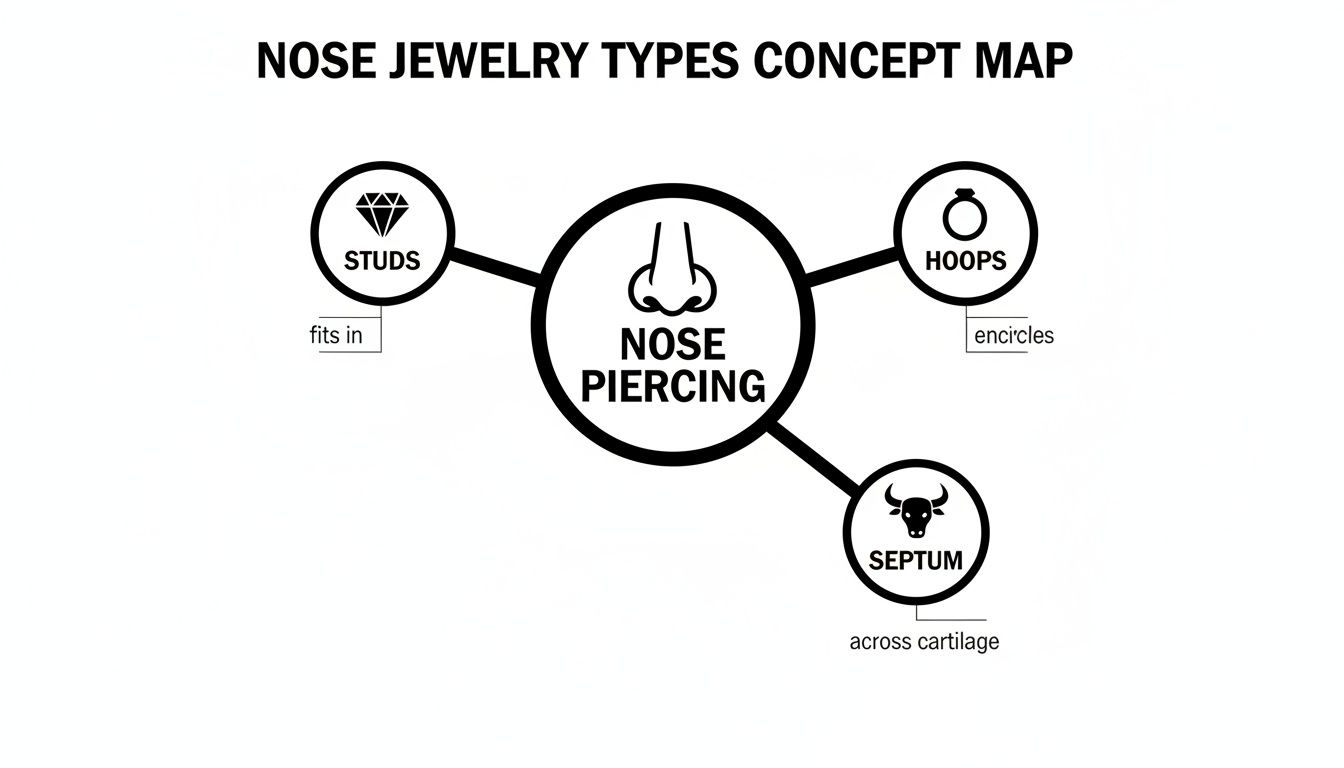
As you can see, both studs and hoops branch out into several unique styles, giving you plenty of ways to customize your look.
Hoops and Rings: For a Bolder Statement
Once your piercing is fully healed, you can step into the amazing world of hoops. Hoops bring a completely different vibe to the table, framing your nostril and drawing more attention to your piercing.
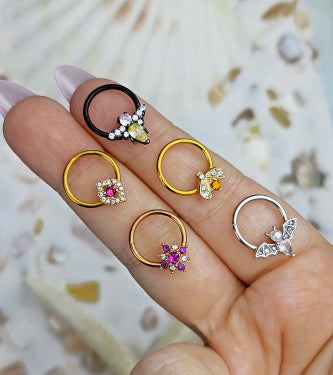
- Seamless Ring: This is the ultimate minimalist hoop. It’s a continuous ring that you gently twist open to insert, then twist back closed. When it's in, it creates a flawless, seamless circle that looks incredibly chic and clean.
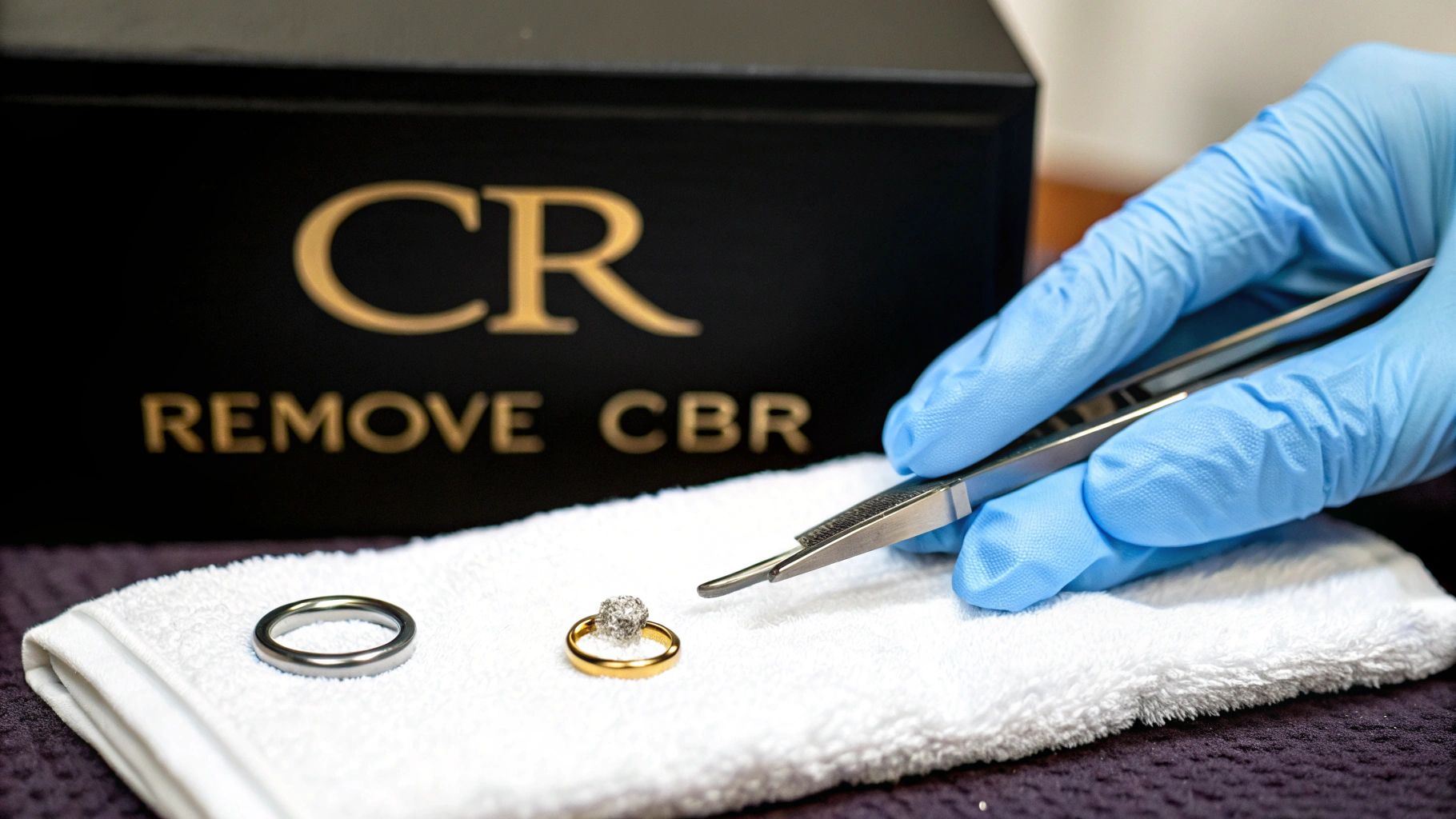
- Captive Bead Ring (CBR): A CBR is a ring with a small gap that's held closed by a single bead or gem. The bead is held in place by the ring's tension, creating a classic, edgy look that’s also super secure.
- Clicker Hoop: The clicker is a total game-changer. It has a tiny hinged segment that simply "clicks" open and shut, making it unbelievably easy to put in and take out. No more bending your jewelry or losing tiny beads—just a satisfying click and a secure, stylish hoop.
Choosing between a subtle stud and a statement hoop completely changes your aesthetic. It gives you the power to match your nose ring to your mood, your outfit, or any occasion. The real key is finding the style that feels most like you.
A Guide to Septum Piercing Jewelry
Ready to talk about the piercing that makes a serious statement? Let's dive into the world of septum jewelry. While nostril piercings offer tons of variety, the septum is where you can truly show off your personality. You can swing from fiercely bold to subtly chic in a single jewelry change.
This piercing sits in the "sweet spot" of cartilage at the front of your nose, making it the perfect canvas for some of the most iconic pieces out there.
Your choice of jewelry can completely transform your look, whether you’re aiming for something powerful and eye-catching or delicate and minimalist. It’s all about finding the piece that perfectly captures your vibe.
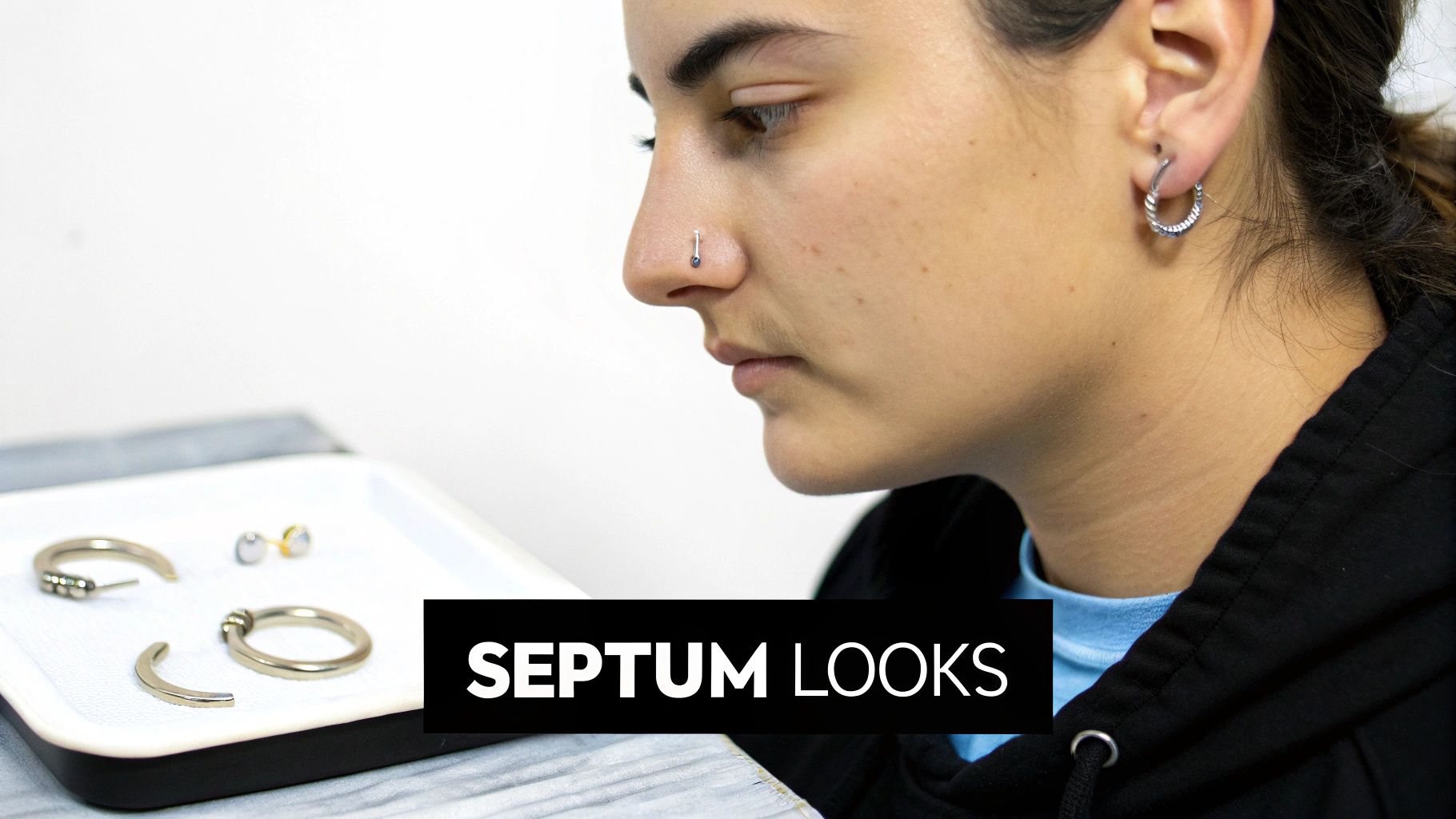
Fan-Favorite Septum Styles
When it comes to the different types of nose rings for your septum, a few designs totally reign supreme. Each one brings its own unique flair and functionality to the table.
-
Septum Clicker: This is the undisputed champion of convenience and style. Septum clickers feature a clever hinged bar that opens and closes with a satisfying "click," making them incredibly easy to pop in and out. They come in endless designs, from simple metal rings to elaborate, gem-encrusted statement pieces.
-
Septum Horseshoe: A true icon in the piercing world, the horseshoe (or circular barbell) is a C-shaped ring with a small bead or ball on each end. Its biggest claim to fame is its versatility—you can wear it down to show off your piercing or easily flip it up into your nostrils to hide it for work, school, or any other time you need to be discreet.
The ability to hide a septum piercing is one of its biggest draws. Unlike a nostril piercing, a simple flip of a horseshoe ring can make it completely invisible, giving you total control over when you show it off.
-
Captive Bead Rings (CBRs): Just like with nostril piercings, CBRs offer a bold, edgy look for septums. The complete circle, held in place by a single bead, creates a powerful and secure aesthetic that’s both classic and a bit rebellious.
-
Seamless Rings: For a clean, minimalist vibe, nothing beats a seamless ring. This style creates a flawless, continuous loop that looks sleek and sophisticated. If you love the look of a full hoop without any extra bells and whistles, this is the perfect choice.
While clickers and horseshoes often steal the spotlight, exploring all your options is part of the fun. To see what else is out there, check out our guide on how clickers aren’t the only septum accessories.
Ultimately, the best septum jewelry is the one that makes you feel amazing every time you look in the mirror.
Choosing the Right Material for Your Piercing
Picking the right material for your nose ring is a huge deal—it’s not just about looks! Think of it like choosing the right skincare for your face; the wrong stuff can cause a total meltdown. The material you choose is key to keeping your piercing happy, healthy, and irritation-free, especially when it’s brand new and still healing.
So, let's talk about what your jewelry is actually made of. This choice can mean the difference between a comfortable, stylish piercing and one that’s angry, red, and sore. You want something that not only looks amazing but also works in harmony with your body.
At Bodycandy.com, we’re obsessed with offering you the best, safest, and most stylish options out there. Let's break down the top contenders so you can feel totally confident in your choice.
Titanium: The Superhero for Sensitive Skin
If your skin throws a fit over pretty much everything, implant-grade titanium is your new best friend. Seriously, this stuff is the gold standard in the piercing world for a reason. It's completely hypoallergenic, which means it’s free of nickel—the most common culprit behind those nasty allergic reactions.
Because it’s so pure and biocompatible, piercers almost always recommend implant-grade titanium for fresh piercings. It’s lightweight, non-corrosive, and gives your body the best possible chance to heal without any drama.
Beyond being super safe, titanium is also incredibly lightweight and strong. You get all the durability without feeling like your nose is weighed down, making it perfect for comfortable, everyday wear.
Surgical Steel: Durable and Dependable
Next up is surgical steel, a true classic in the piercing world. It’s a fantastic, budget-friendly option that’s known for its strength and mirror-like shine. Most people can wear surgical steel without any issues, which is why it's one of the most popular materials for all kinds of nose rings.
It’s tough, resists corrosion, and will keep its luster for years to come. One thing to keep in mind, however, is that surgical-grade steel can contain trace amounts of nickel. If you have a known sensitivity, you might want to stick with titanium, especially for a new or finicky piercing.
14k Gold: A Touch of Timeless Luxury
For those who love a bit of luxe, you just can’t go wrong with 14k gold. It brings a warm, classic glow that looks incredible on any skin tone. When you're shopping for gold body jewelry, you'll want to look for 14k or 18k, as these blends are ideal for piercings.
Pure 24k gold is actually too soft and can easily get scratched or even harbor bacteria. A 14k blend provides that perfect mix of beauty and strength. Just be sure you're getting nickel-free gold to keep any potential irritation at bay!
The materials you choose are a massive part of the body piercing jewelry landscape. It's no surprise that nose rings made from premium, biocompatible materials like titanium, gold, and surgical steel are dominating the scene. With North America holding over 42% of global revenue in 2023, the demand for high-quality, safe jewelry is soaring, especially among youth who see nose piercings as a key part of their style. You can discover more insights about these body piercing jewelry trends and see just how big the movement really is.
How to Find Your Perfect Nose Ring Size
Ever tried shopping for nose rings and felt like you were trying to crack some secret code? All those numbers and letters like '20g' or '8mm' can feel a little intimidating at first, but trust me, you've totally got this. Nailing the right size is the real secret to making sure your piercing not only looks amazing but feels comfortable, too.
Think of it like a recipe with two main ingredients: gauge (the thickness of the post) and length/diameter (how it actually fits). Getting both right is the difference between a hoop that hugs your nostril perfectly and one that pinches, or a stud that sits flush instead of sticking out awkwardly. Let’s break it all down so you can shop like a total pro.
Cracking the Code on Gauge
First up is the gauge (g). That's just the industry term for the thickness of the jewelry post that goes through your piercing. Here's the slightly weird part you need to remember: the higher the gauge number, the thinner the jewelry.
So, a 20g post is actually thinner than an 18g one. This is super important because you always want to match the gauge of your new jewelry to the size of your piercing.
- 20 Gauge (0.8mm): This is the most common, go-to size for nostril piercings. It’s delicate, comfy, and you'll find the absolute widest variety of styles in this size.
- 18 Gauge (1.0mm): A little thicker, this size is also really popular for nostrils. Piercers sometimes use this size to create a slightly more durable piercing channel from the get-go.
- 16 Gauge (1.2mm): This is pretty much the standard thickness for most septum piercings.
If you're ever on the fence, the easiest thing to do is just ask your piercer. They'll know exactly what gauge they used, which takes all the guesswork out of the equation for you.
Mastering Length and Diameter
Alright, next let's talk about the actual fit. This measurement is going to change depending on whether you’re rocking a stud or a hoop.
For studs (like L-bends or screws), you'll be looking at length. This is the measurement of the "wearable" part of the post—from the bottom of the gem to where the bend or curve starts. The standard length is usually around 6-7mm. If you know your nostril is a bit on the thicker side, you might need a longer post to keep it from feeling tight and causing irritation.
For hoops, the magic word is diameter. This is simply the distance across the inside of the ring at its widest point.
Getting the diameter right is crucial for hoops. A hoop that’s too small will pinch and irritate your piercing, while one that’s too big can move around too much and look off-balance. The goal is that perfectly snug, "huggie" fit.
The most common hoop diameters are 8mm (which gives a snug fit for most people) or 10mm (if you want a looser look or your piercing sits a little higher up your nostril). The best trick to find your perfect size is to measure the distance from your piercing hole straight down to the edge of your nostril. That measurement in millimeters is the smallest diameter you'll be able to wear comfortably.
How to Style Your Nose Ring and Care for It
Alright, let's get to the fun part! You’ve made it through the world of nose ring types, picked a material you love, and figured out your perfect size. Now it’s time to talk styling and really make that piece your own.
Styling your new jewelry is all about creating a vibe that feels like you. Think about how your nose ring can play off your other jewelry, like your earrings or other facial piercings. You could go for a sleek, put-together look by matching a simple gold nostril hoop with some gold huggies in your ears.
But don't ever be afraid to mix things up! Sometimes the most interesting looks come from contrast. A tiny, delicate stud paired with a more statement-making septum clicker can create a really cool, balanced aesthetic that’s all you.
Keeping Your Piercing Happy and Healthy
Let’s be real: great style starts with a healthy piercing. Following a solid aftercare routine isn’t just a suggestion—it’s essential for keeping your piercing happy, comfortable, and looking its best. Your piercer is your best resource for specific instructions, but the core advice is pretty straightforward.
- Clean it correctly: Your best friend here is a sterile saline solution. A quick spritz 2-3 times a day is all it takes. Let it sit for a moment, then gently pat the area dry with a clean paper towel. No Q-tips, no twisting.
- Hands off: This is the golden rule. Avoid touching, twisting, or playing with your new jewelry at all costs. Your hands carry bacteria, and introducing that to a new piercing is asking for trouble.
- Be patient: Healing takes time. Nostril piercings can take anywhere from 4-6 months to fully heal, so you have to be consistent with your cleaning routine for the entire duration.
There's a reason the body jewelry market is absolutely booming, valued at USD 13.5 billion in 2023. It’s because more and more people are finding unique ways to express themselves through piercings. Your style is part of a massive, growing trend! Learn more about the body jewelry market's massive growth and see just how big this world of self-expression has become.
Your Nose Ring Questions, Answered
Got a few questions still floating around in your head? You're definitely not alone. When you first start exploring all the different types of nose rings, it's totally normal to have some things you're still curious about. Let's clear up some of the most common questions we get asked all the time.
What Is the Best Nose Ring for a New Piercing?
For a fresh nostril piercing, your piercer is almost always going to start you off with a simple stud. More specifically, a flat-back labret stud is the undisputed gold standard for healing.
This style is super stable, meaning it’s way less likely to get snagged on your clothes or a towel. That stability is absolutely key to keeping irritation at bay and making sure you have a smooth, happy healing journey.
When it comes to the material for that first piece of jewelry, implant-grade titanium is the champion. It's completely hypoallergenic and biocompatible, giving your body the best possible head start on healing.
How Do I Know What Gauge My Nose Ring Is?
The most common size for a nostril piercing is either 20g or 18g. Septum piercings, on the other hand, are usually a bit thicker at 16g.
Your piercer is your best friend here—they can tell you exactly what gauge needle they used, and it's always a good idea to stick with that size. If you've forgotten, just pop back into the studio and ask. It's the safest and surest way to get the right fit.
When Can I Switch from a Stud to a Hoop?
Patience is everything with this one! You absolutely have to wait until your piercing is 100% healed before even thinking about swapping your initial stud for a cool hoop. This process typically takes at least 4-6 months, but remember, everyone's body heals at its own pace.
Switching to a hoop too early is a major no-go. The constant movement of a ring in an unhealed piercing can cause those nasty irritation bumps, open the door for infection, and seriously set back your healing time. It's just not worth the risk.
Ready to find your new look? Shop our full collection of nose rings today!