
















So, you're on the hunt for the best nose rings for sensitive skin? Girl, it all comes down to the material. Your absolute safest bets are going to be implant-grade titanium (ASTM F-136) and solid 14k or 18k gold. Why? Because these high-quality hotties are nickel-free and totally body-safe, which means you can finally dodge that nasty irritation that totally ruins the vibe of a killer piercing.
Honestly, choosing the right metal is the single most important thing you can do for a happy, healthy piercing. Trust us.
Why Your Nose Piercing Hates Your Jewelry
Let’s be real—a red, itchy, or just plain angry nose piercing is a total buzzkill. You got that awesome piercing to show off your style, not to wage a constant war with irritation. If you've ever found yourself wondering why your nose seems to be rejecting your jewelry, you are so not alone.
The problem almost always boils down to one sneaky culprit: the metal your nose ring is made of.
Think of it like this: your skin is pretty smart. When a material it doesn’t like comes into contact with it, it sounds the alarm with redness, swelling, and itchiness. This reaction, known as contact dermatitis, is super common with body jewelry.
The Main Irritant: Nickel
The number one offender behind these flare-ups is a metal called nickel. It's a cheap and strong filler metal that gets mixed into tons of fashion jewelry to keep costs down, but for a whole lot of people, it's a one-way ticket to an allergic reaction.
In fact, nickel sensitivity is a massive issue. Studies have shown that roughly 28 percent of the American population has an allergic reaction to nickel, making it one of the leading causes of contact dermatitis. (You can discover more insights about nickel sensitivity research at PMC).
This is why "hypoallergenic" isn't just a marketing buzzword; it's a promise that the jewelry is free from the stuff that commonly causes irritation. When you have sensitive skin, steering clear of nickel isn't just a good idea—it's essential for a comfortable and stylish piercing.
Key Takeaway: If your nose piercing is constantly irritated, there's a huge chance your jewelry has nickel in it. Making the switch to a nickel-free material is the fastest way to calm things down and let your piercing heal happily.
Beyond just nickel, other things can cause irritation, too. Low-quality metals often have microscopic rough spots and imperfections on the surface that can trap bacteria and scrape against the delicate skin inside your piercing.
This is exactly why choosing high-quality, body-safe metals is so crucial, especially when your piercing is fresh and still healing. It’s all about working with your body, not against it.
Understanding Why Your Nose Piercing Gets Irritated
Ever wonder why your new nose piercing is throwing a tantrum? It's not just bad luck. Think of your piercing as a delicate little ecosystem; introduce the wrong element, and things can go sideways fast. The good news is, figuring out why it's so angry is the first step toward a happy, calm piercing.
So, let's play detective. That redness, itchiness, or that pesky little bump isn't just a random occurrence. It's your body sending up a flare, signaling that something is wrong. More often than not, the jewelry itself is the main suspect.
The Metal Allergy Culprit
The number one cause of piercing drama is, without a doubt, a metal allergy. The most notorious offender? Nickel. This metal is a common ingredient in cheaper jewelry alloys because it makes them stronger and less expensive to produce. While that’s great for a manufacturer's bottom line, it can be a total nightmare for sensitive skin.
Your immune system might see nickel as a foreign invader and launch an all-out attack. This leads to an inflammatory response we know as contact dermatitis—think redness, swelling, and that maddening itch. It's an incredibly common problem, so if your piercing is acting up, a nickel allergy should be the first thing on your radar.
Low-Quality Jewelry Problems
But it's not always about allergies. Sometimes, the problem isn't just what the jewelry is made of, but how well it’s made. Low-quality pieces can bring a whole host of issues that can irritate even the most resilient skin.
Here are a few sneaky problems that come with poorly made jewelry:
- Rough Finishes: Cheap nose rings often have microscopic scratches, burrs, or uneven surfaces left over from the manufacturing process. These rough patches can create tiny tears in the delicate skin of your fistula (the healed tube of skin inside your piercing), causing irritation and creating a perfect breeding ground for bacteria.
- Porous Materials: Some materials, like acrylic or low-grade steel, are porous. That means they have tiny, invisible holes that can trap bacteria and bodily fluids—the absolute last thing you want inside a healing piercing.
- Mystery Metals: When you buy uncertified, cheap jewelry, you often have no idea what you're really getting. These pieces can be a cocktail of random metals, sometimes including dangerous ones like lead or cadmium. These are definitely not body-safe.
Your piercing deserves better than a mystery-metal disaster. Investing in high-quality, certified jewelry from a trusted source like Bodycandy means you know exactly what you're putting in your body. It takes the guesswork out of the equation and seriously reduces the risk of irritation.
The Wrong Size and Shape
It's not always the material's fault, either. Wearing jewelry that’s the wrong size or shape for your piercing can cause major issues, especially while it's still healing.
A nose ring that’s too tight can squeeze the piercing, restricting blood flow and even causing the jewelry to sink into your skin (a process called embedding). On the flip side, a ring that's too loose or a style that moves around too much—like putting a hoop in a brand-new piercing—creates constant friction. This repeated trauma can lead to those dreaded irritation bumps and set your healing time back significantly.
Finally, don't forget about aftercare. Even simple mistakes like over-cleaning, using harsh chemicals like alcohol, or touching your piercing with unwashed hands can throw the whole healing process off track. Understanding these root causes is your superpower—it empowers you to choose jewelry that works with your body, not against it.
The Best Materials For Hypoallergenic Nose Rings
So, you're ready to become a pro at picking piercing materials? Let's dive into the metals that are about to become your new best friends, ensuring your nose piercing stays happy, healthy, and looking its best. When you've got sensitive skin, knowledge is your best defense, and choosing the right material is a total game-changer.
Think of your new piercing as a VIP club—not just any material gets past the velvet rope. We’re talking about body-safe, non-reactive options that won’t cause a scene. This is where understanding the difference between high-quality metals and cheap imposters becomes absolutely essential for anyone with a sensitive nose.
As you can see, the biggest culprits behind piercing irritation are almost always tied to a metal allergy, low-quality jewelry, or a bad fit.
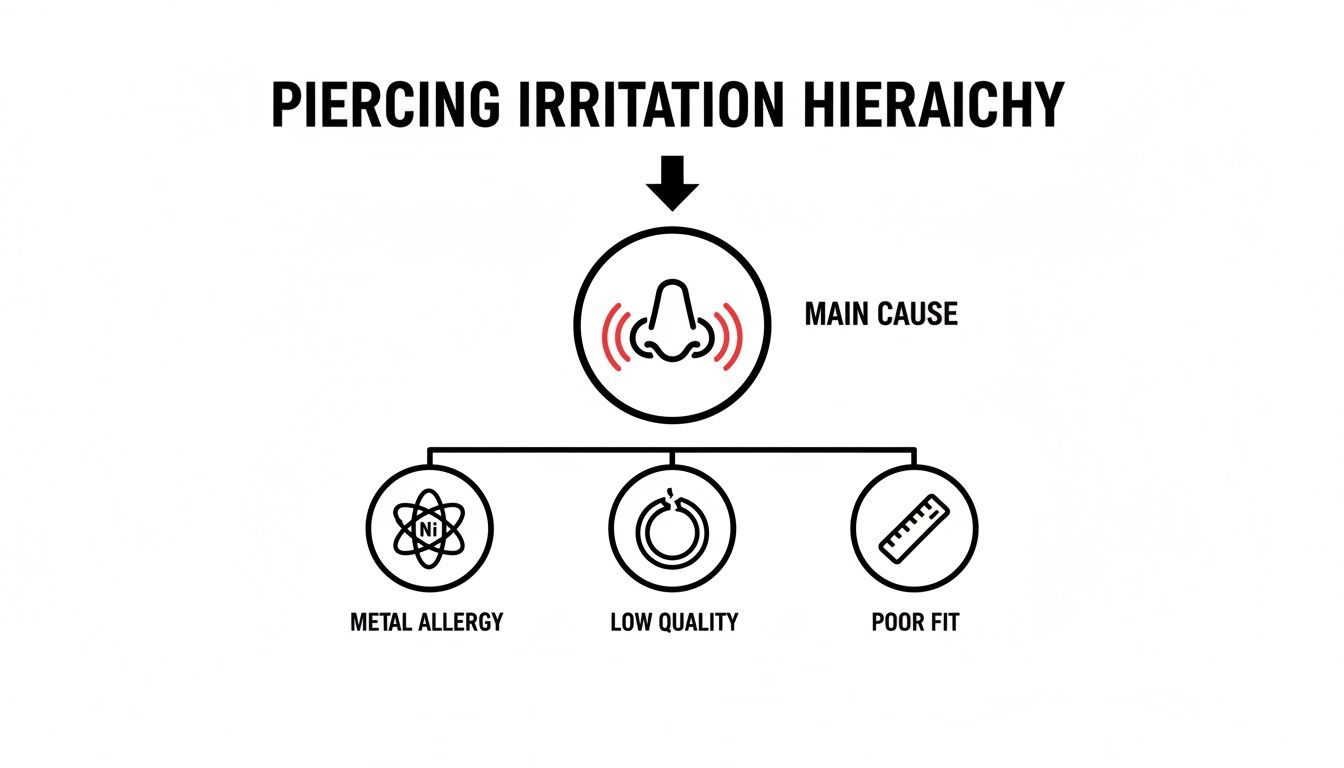
This hierarchy makes one thing crystal clear: starting with a body-safe material knocks out the number one risk factor right from the get-go.
Detailed Material Breakdown For Sensitive Skin
To make this super simple, we've put together a handy chart breaking down the top-tier materials. Think of this as your cheat sheet for choosing the perfect metal for your sensitive nose piercing.
| Material | Key Features | Best Use Case | Potential Cons | Average Cost |
|---|---|---|---|---|
| Implant-Grade Titanium (ASTM F-136) | 100% nickel-free, lightweight, non-corrosive, can be anodized into different colors. The gold standard for biocompatibility. | Fresh piercings, extremely sensitive skin, long-term wear. | Can be slightly more expensive than steel, limited color range compared to Niobium. | $15 - $40 |
| Niobium | Elemental metal, nickel-free, highly biocompatible. Can be anodized into a vibrant rainbow of colors without plating. | Fresh piercings, individuals who want colorful options without risking irritation from dyes or plating. | Slightly heavier and often pricier than titanium. Not as widely available. | $20 - $50 |
| Solid 14k or 18k Gold | Classic, timeless look. Biocompatible when nickel-free. Must be solid gold, not plated or filled. | Healed piercings for a touch of luxury. Long-term investment piece. | Expensive. Lower karat gold (below 14k) may contain nickel. Not ideal for initial piercings. | $40 - $150+ |
| Implant-Grade Steel (ASTM F-138) | Durable, affordable, and polished to a mirror finish. Certified for use in medical implants. | Healed piercings for those without a severe nickel allergy. A solid budget-friendly choice. | Contains trace amounts of nickel, which can still cause a reaction in highly sensitive individuals. | $10 - $30 |
| Bioplast | Medical-grade flexible plastic. 100% metal-free and hypoallergenic. Lightweight and comfortable. | Retainers for work/school, medical procedures, or sports. Good for anyone with extreme metal allergies. | Can degrade over time and may need to be replaced more often than metal jewelry. | $5 - $15 |
Now that you've got the overview, let's get into the specifics of what makes each of these materials a great (or conditional) choice.
Implant-Grade Titanium (ASTM F-136)
Let's start with the undisputed champion of hypoallergenic body jewelry: implant-grade titanium. Think of this as the superhero of piercing metals. It’s the very same stuff used for medical implants like bone screws and joint replacements, which tells you everything you need to know about its safety.
Titanium is completely hypoallergenic because it’s an inert element, meaning it won’t corrode, tarnish, or react when it comes into contact with your skin or body fluids. This makes it the absolute gold standard for fresh piercings and anyone with known metal sensitivities. Plus, it’s incredibly lightweight—you'll barely even feel it's there.
Why We Love It: Titanium is 100% nickel-free, making it the safest bet for preventing allergic reactions. It's durable, non-corrosive, and approved by the Association of Professional Piercers (APP).
If you want to do a deeper dive, we’ve got you covered. Check out our complete guide to understand everything you need to know about titanium body jewelry. It's a must-read for anyone serious about their piercing health.
Niobium
Meet titanium's cool, colorful cousin: Niobium. This is another fantastic elemental metal that is highly biocompatible and totally safe for sensitive skin. Just like titanium, it's nickel-free and works wonderfully for initial piercings and long-term wear.
What really makes Niobium stand out is its ability to be anodized into a stunning rainbow of vibrant colors without using any cheap dyes or plating. If you love bold, bright jewelry but your skin hates everything, Niobium is your go-to. It's slightly heavier and sometimes a bit more expensive than titanium, but that unique look is well worth it.
Solid 14k or 18k Gold
For those who love a touch of timeless luxury, you can't go wrong with solid gold. But listen up, because this part is important: you must choose solid 14k or 18k gold. Anything less can be a recipe for disaster.
Here’s a quick rundown of the gold lingo you need to know:
- Solid Gold: The entire piece is made of a gold alloy (mixed with other metals for strength). This is what you want.
- Gold-Plated: A super-thin layer of gold is electroplated over a base metal, which is often a nickel alloy. This plating can wear off in a flash, exposing your skin to whatever irritant is hiding underneath.
- Gold-Filled: A thicker layer of gold is mechanically bonded to a base metal core. It's more durable than plated jewelry, but it’s still not as safe as solid gold for a sensitive piercing.
Always, always opt for nickel-free solid gold. While it's a pricier option, its classic beauty and biocompatibility make it a fantastic long-term investment for a fully healed piercing.
Implant-Grade Steel (ASTM F-138)
"Surgical steel" is a term you see everywhere in the piercing world, but you have to be careful. The key is to look specifically for implant-grade steel (ASTM F-138). While lots of jewelry is labeled "surgical steel," this is the only grade certified for use in medical implants.
Even implant-grade steel contains a small amount of nickel. The alloy is formulated to trap the nickel molecules inside, minimizing your skin's exposure. For most people, this is perfectly fine, but if you have a known severe nickel allergy, you’re much better off sticking with titanium or Niobium to be safe.
Bioplast
Last but not least, let's talk about Bioplast. This is a medical-grade, flexible plastic that is completely hypoallergenic and biocompatible. It’s an amazing option for anyone who needs a non-metallic alternative, like for an MRI, certain sports, or a job with a strict dress code.
Because it's flexible, Bioplast can reduce stress on a piercing if it gets bumped or snagged. It's also available in clear styles, making it perfect for retainers when you need your piercing to be less noticeable. It's an affordable and safe choice, especially for tricky piercings or temporary situations.
Choosing The Right Nose Ring For Your Piercing Stage
Picking the perfect nose ring isn't just about finding a killer style—it's also about timing. The jewelry you need for a brand-new piercing is a whole different ballgame from what you can rock once it's fully healed and happy. Nailing this timing is one of the most important things you can do for a smooth, drama-free healing journey.
Think of a fresh piercing like a tiny, sensitive wound that's trying its best to heal. Its only job right now is to get better without any fuss. That's exactly why your piercer will almost always start you off with a simple, secure piece of jewelry.
Jewelry For A New Piercing
When your piercing is new, the mission is 100% safety and stability. This is not the moment to try out that flashy hoop that might get snagged on your pillow, or a big, dangly gem that could get caught on your towel. Your initial jewelry needs to be designed specifically to minimize movement and prevent snags.
There's a reason professional piercers have a go-to lineup for initial nostril piercings. These styles are tried, tested, and proven to help your piercing heal better and faster.
Your best bets for that first piece of jewelry are:
- Flat Back Labret Studs: These are a top choice for piercers, and for good reason. The flat disc on the inside of your nostril sits flush against the skin, which is a game-changer for preventing snags and irritation. They're incredibly comfy and super secure.
- Nose Screws or L-Shape Studs: These classic styles have a small curve or a 90-degree bend inside the nostril that holds them in place. They’re easy for your piercer to insert and offer a snug fit, which is exactly what you want during the healing phase.
When it comes to the material, there's zero room for compromise. Your initial jewelry should always be made from implant-grade titanium (ASTM F-136). It’s completely nickel-free, lightweight, and won't mess with your body's healing process. It's the absolute gold standard when you're looking for the best nose rings for sensitive skin during this delicate stage.
Pro Tip: Avoid hoops at all costs for a new nostril piercing. Hoops naturally move and rotate way more than studs, creating constant irritation on the healing fistula (that's the little tube of skin forming inside your piercing). This friction is a super common cause of those dreaded irritation bumps.
Patience is your best friend here. Let your piercing heal up with a stable stud, and you’ll have a much happier nose that’s ready for all the awesome jewelry you want down the line.
Jewelry For A Fully Healed Piercing
Alright, you made it! You got through the healing process—congratulations! Now the real fun begins. Once your piercing is fully healed (this usually takes about 4-6 months, but always get the green light from your piercer), a whole new world of styles opens up to you.
How do you know you’re ready to swap? A fully healed piercing will show no signs of redness, swelling, tenderness, or any weird discharge. The jewelry should move freely without a hint of discomfort. Once you've hit that milestone, it's time to let your personality shine.
This is your chance to experiment with all those styles you've been daydreaming about. Here are some amazing options for a healed piercing:
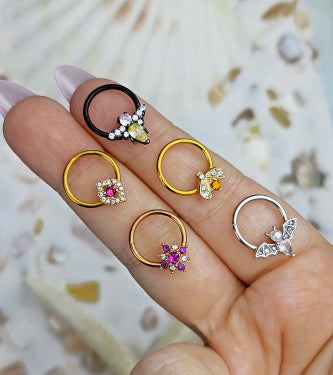
- Hoops and Seamless Rings: The classic hoop is an icon. From snug-fitting seamless rings to bold captive bead rings, hoops add an instant edge to your look. You can even find them in incredible hypoallergenic materials like solid 14k gold nose rings for a touch of luxury.
- Captive Bead Rings (CBRs): A CBR is a hoop that's closed with a small bead or gem held in place by the ring's tension. They offer a secure fit with a unique and eye-catching vibe.
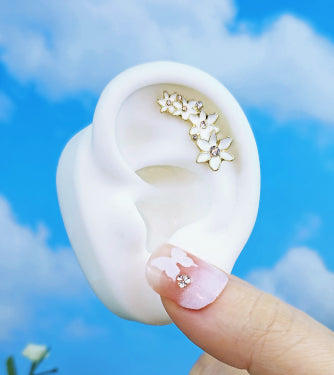
- Ornate and Gemmed Studs: Now that your piercing is stable, you can finally upgrade from a simple starter stud to something with more personality. Think sparkling gems, intricate floral designs, and unique shapes that show off your personal style.
Your material choices also get way more exciting once you're healed. While implant-grade titanium is always a fantastic and safe option, you can now explore other body-safe metals without worry. This is the perfect time to invest in a beautiful piece made from solid 14k or 18k gold, or even try out the vibrant, stunning colors of Niobium. The key is to keep choosing high-quality, nickel-free materials to keep your sensitive skin happy for years to come.
How To Care For Your Piercing And Jewelry
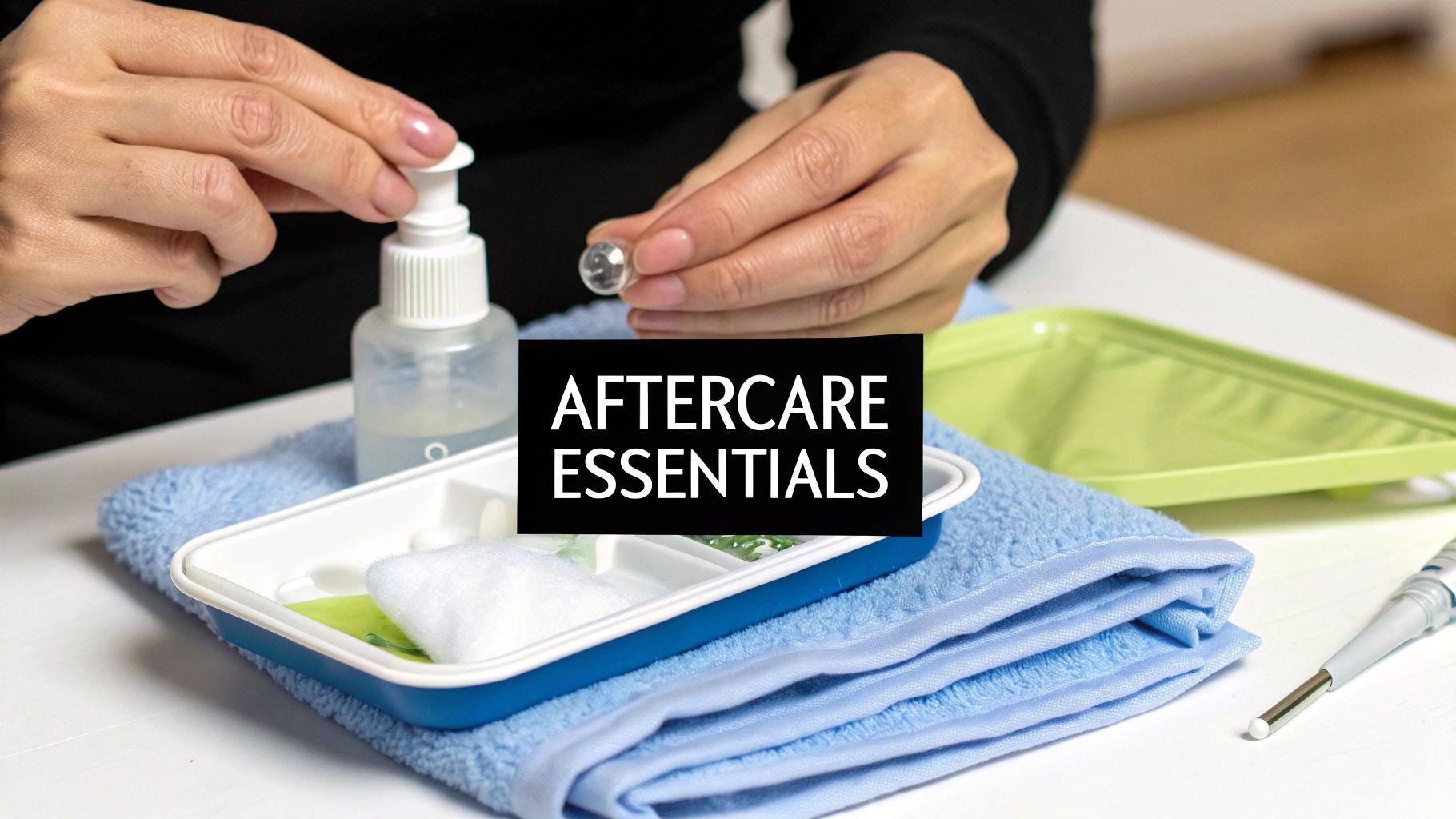
You've finally found the perfect hypoallergenic nose ring—amazing! But getting the right jewelry is only half the battle. Now, it's all about keeping your piercing happy and your new bling sparkling. Great aftercare is the secret sauce for long-term piercing health, and we've got your back.
Think of this as your simple rulebook for a healthy piercing and long-lasting jewelry. A little daily care goes a long way in preventing irritation and keeping your nose piercing looking incredible.
The Dos And Don'ts Of Cleaning
Your piercing is a delicate thing, especially when it's fresh and healing. The key is to be gentle and consistent. It's easy to think "more is better," but over-cleaning or using the wrong products can do more harm than good, leading to dryness and irritation that just sets your healing back.
So, what's the right way to do it? It’s simpler than you think.
- DO Use Sterile Saline Solution: This is your piercing's best friend. A gentle spray or soak with a sterile saline solution once or twice a day is all you need to flush away debris and bacteria without being harsh.
- DO Wash Your Hands First: Before you even think about touching your piercing, wash your hands thoroughly with soap and water. This is a non-negotiable step to keep nasty bacteria away.
- DON'T Use Harsh Chemicals: Step away from the alcohol and hydrogen peroxide! These products are way too aggressive for a piercing. They kill off the healthy new cells your body is trying to build, which can lead to serious irritation and delay healing.
- DON'T Over-Clean: It might be tempting to clean constantly, but this can strip your skin of its natural oils, leading to a vicious cycle of dryness and irritation. Stick to that one-to-two times a day schedule.
Keep It Simple: Your body is a healing machine. The best aftercare routine supports this natural process, it doesn't try to take over. Gentle saline washes and leaving it alone are the keys to success.
Keeping Your Jewelry Looking Amazing
Proper care isn't just for your skin; it's for your jewelry, too! Keeping your nose rings clean prevents bacterial buildup and ensures they keep their shine. Different materials need slightly different approaches to stay looking their best.
For workhorse materials like titanium and implant-grade steel, a simple wipe-down with a saline-moistened gauze pad is usually enough. Solid gold can be gently cleaned with mild, non-scented soap and water, then rinsed thoroughly and patted dry.
Plated or coated jewelry requires a bit more TLC to keep its finish intact. You can get all the specifics by checking out our guide on the proper aftercare of coated and plated body jewelry to ensure your pieces last.
Avoiding Common Irritation Triggers
Even with the best cleaning routine, certain habits can still lead to an angry piercing. Being mindful of these common triggers will help you avoid unnecessary drama.
- Hands Off: Fiddling, twisting, or playing with your jewelry is a major no-no. Every touch introduces bacteria and puts stress on the healing fistula (the little tunnel of flesh).
- Watch Out for Snags: Be extra careful when washing your face, getting dressed, or drying off with a towel. A snag can be painful and seriously set back your healing timeline.
- Avoid Makeup and Skincare Products: Keep foundation, powders, and lotions away from the immediate piercing area. These products can clog the piercing opening, trap bacteria, and cause major irritation.
By following these simple guidelines, you’re setting yourself up for a beautiful, healthy piercing that you can enjoy for years to come.
Your Questions About Sensitive Skin Nose Rings Answered
Still have some questions buzzing around? You're not alone! Picking out the right hypoallergenic jewelry can feel like a pop quiz you didn't study for. We've got you covered. This is where we tackle all the common questions about finding and caring for the best nose rings for sensitive skin.
Let's clear up the confusion so you can feel totally confident on your piercing journey. Think of this as your final checklist before you find that perfect, irritation-free piece you absolutely deserve.
Can I Be Allergic To Gold Nose Rings?
Yes, it’s possible, but it’s almost never the gold itself that’s causing the problem. A true, full-blown gold allergy is incredibly rare. When someone has a reaction to gold jewelry, what they're really reacting to are the other metals mixed in with it. The number one culprit? You guessed it: nickel.
Gold has to be mixed into an alloy to be strong enough for jewelry. Lower-karat golds (like 10k or anything under 14k) are notorious for containing higher amounts of other metals, including nickel, to make them more durable.
To keep your piercing happy, stick with these options:
- Solid 14k or 18k Gold: These have a much higher purity, which means they are far less likely to contain nickel.
- Always Confirm it's Nickel-Free: A reputable seller will always tell you if their gold is nickel-free. If you don't see it mentioned, it's safest to assume it could contain irritants and steer clear.
So if you’ve had a bad run-in with gold before, don't write it off completely! You might just need to level up to a higher quality, nickel-free solid gold piece to get that classic shine without the itch.
Is Surgical Steel Actually Safe For Sensitive Skin?
This is easily one of the biggest points of confusion in the piercing world, so let's set the record straight. "Surgical steel" is a broad term, and not all of it is created equal. For lots of people, it's a perfectly fine, wallet-friendly choice. But for anyone with truly sensitive skin, it can be a real gamble.
Here's the deal: even implant-grade surgical steel (ASTM F-138) has trace amounts of nickel in it. The whole point of this alloy is that it's highly corrosion-resistant, which means it's designed to lock those nickel molecules in tight so they don't leach out and touch your skin.
For most people, this is enough to prevent a reaction entirely. But if you have a known, severe nickel allergy, even those microscopic amounts can be enough to set off a full-blown irritation response.
If you know for a fact that you're extremely sensitive, your best move is to skip steel altogether and head straight for implant-grade titanium. It's 100% nickel-free. Think of titanium as the ultimate peace-of-mind material for your piercing.
What’s The Difference Between Gold-Plated and Solid Gold?
Getting this right is absolutely critical if you have sensitive skin. It’s the difference between a happy, healthy piercing and a total irritation nightmare.
- Solid Gold: It's exactly what it sounds like. The entire piece of jewelry is made from an alloy of pure gold and other metals. For sensitive skin, 14k or 18k nickel-free solid gold is the goal. It's a high-quality investment that's built to last.
- Gold-Plated: This is where you get into trouble. Gold-plated jewelry has a paper-thin layer of gold coated over some kind of base metal. That base is usually a cheap alloy packed with—you guessed it—tons of nickel. That fragile plating can wear down, chip, or scratch off in a heartbeat, especially inside a piercing. Once it's gone, your skin is directly exposed to whatever mystery metal is hiding underneath. It's a recipe for a nasty reaction.
Bottom line: always choose solid gold for a piercing. That low price tag on plated jewelry might look tempting, but it’s just not worth the irritation and potential infection it can cause for sensitive skin.
How Do I Know If I'm Having An Allergic Reaction?
Your body is pretty good at sending up flares when something's not right. An allergic reaction to your nose ring can show up in a few key ways, and it’s important to know the difference between an allergy, normal healing, or an infection.
Look out for these signs of an allergic reaction (also called contact dermatitis):
- Intense Itching: A nagging, persistent itch right around the piercing site.
- Redness and Rash: The skin around the piercing might look red, angry, inflamed, or even develop a rash.
- Swelling: While some swelling is normal for a fresh piercing, swelling that pops up on a healed piercing or just keeps getting worse is a major red flag.
- Weeping or Crusting: The area might produce a clear or yellowish fluid that forms a crust when it dries.
If you think you're having an allergic reaction, the first thing to do is take out the problem jewelry and swap it for something you know is safe, like implant-grade titanium. For more info, check out our quick take on hypoallergenic jewelry for sensitive skin for extra tips. If your symptoms are severe or don't get better, it's always smart to check in with your professional piercer or a doctor.
Ready to finally find a nose ring that loves your skin back? At Bodycandy, we have a massive collection of high-quality, hypoallergenic jewelry designed to keep you stylish and comfortable.
Shop our full collection of nose rings today and say goodbye to irritation for good!