

















A hoop is the one piece of jewelry where size makes or breaks the whole look. Too big and it droops and spins. Too small and it pinches or won’t close. And because hoops come in millimeter sizes with no “small, medium, large” to hide behind, a lot of people guess, order wrong, and give up. Here’s how to get it right the first time.
It comes down to two numbers
Every hoop is defined by two measurements, and you need both.
- Gauge is the thickness of the wire. Match it to your piercing, since the hoop has to pass through the hole you already have.
- Inner diameter is how wide the circle is across the inside, and it’s the number that decides whether your hoop sits snug or hangs loose.
Get the gauge right so it fits through, and the diameter right so it looks the way you pictured.

Inner diameter is the one everyone gets wrong
This is the measurement that trips people up, so it’s worth being clear. Inner diameter means the open space inside the ring, not the outer edge. Measure across the middle of the hole, straight from one inner wall to the other.
Why it matters so much: the same piercing can wear two totally different looks depending on diameter
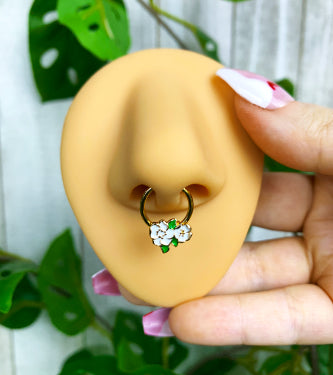
- A smaller inner diameter hugs close to the skin for a neat, fitted look.
- A larger inner diameter gives you that dangly, hangs-below hoop vibe.
Neither is wrong. It’s about the look you want, so decide that before you pick a number.
How to measure a hoop you already own the easy way
The easiest shortcut is to copy a hoop that already fits.
- Lay it flat against a millimeter ruler.
- Measure the inside of the circle, inner wall to inner wall, not the outer rim.
- That number is your inner diameter. Jot it down and reuse it forever.

Measure like the pros: grab calipers
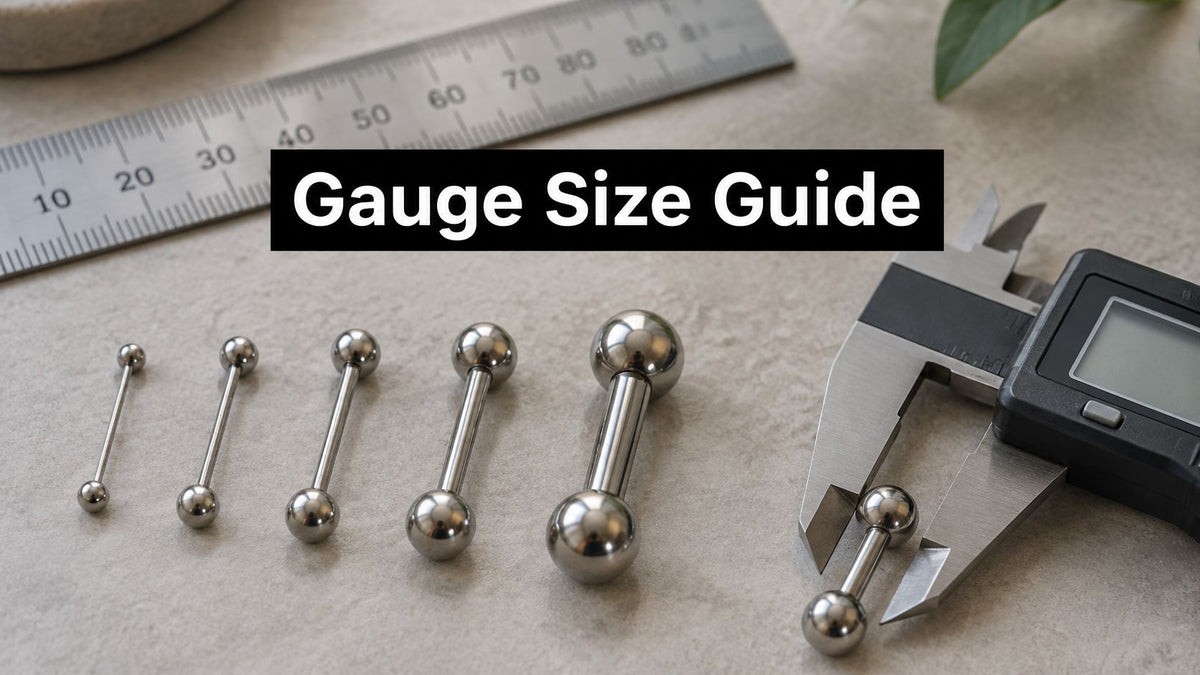
A ruler gets you close, but if you want the exact number the pros work with, use a pair of calipers. Piercers and jewelers reach for them because a hoop that reads “8mm” on a ruler can actually be 7.5 or 8.5, and that half millimeter is the difference between snug and sloppy.
- For inner diameter: use the inside jaws of the calipers, open them to span the inner circle, and read the digital or marked measurement.
- For gauge: close the calipers gently on the wire itself to get its thickness in millimeters, then match it to a gauge chart.
Digital calipers are cheap online, they take the guesswork out completely, and once you own a pair you’ll never eyeball a size again. No calipers and no hoop to copy? A fresh piercing is usually measured and fitted by your piercer, and they can tell you both your gauge and a diameter that works for your placement.
General diameter ranges by placement
If you’re starting from scratch, these are the ballpark ranges people tend to land in. Think of them as a starting point, not a rule, since every body is a little different.
- Nostril: often around 6.5 to 8mm
- Helix and other ear cartilage: often around 6 to 10mm
- Septum: commonly around 8mm, up or down for the look you want
- Lobe: the most flexible, anywhere from a close 8mm to a bold 12mm and beyond
When you’re between two sizes, think about the look. Snug and fitted, size down. Loose and dangly, size up.
Don’t forget the gauge match
A perfectly sized diameter still won’t work if the gauge is off. Too thick and it won’t fit through your piercing. Too thin and it can feel loose or wobbly in the hole. If you don’t know your gauge, measure a piece you currently wear or ask your piercer, and match it exactly.
The two-minute habit that ends the guessing
Here’s the whole trick: measure one hoop that fits, write down the gauge and inner diameter, and save it in your phone. From then on, shopping is just matching numbers instead of crossing your fingers.
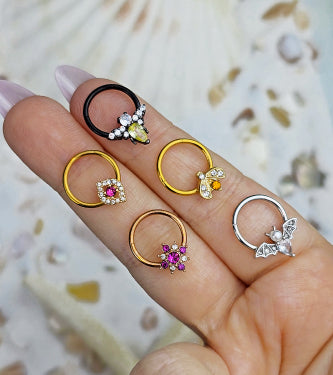
Once you’ve got your size, the fun part is choosing the style. Body Candy lists the exact gauge and inner diameter on every hoop, in implant-grade titanium and solid 14K gold made in house by our own master jeweler, so you can match your numbers and know it’ll fit before it ships.
Measure once, save it forever, and never order a wrong hoop again. That’s the secret.