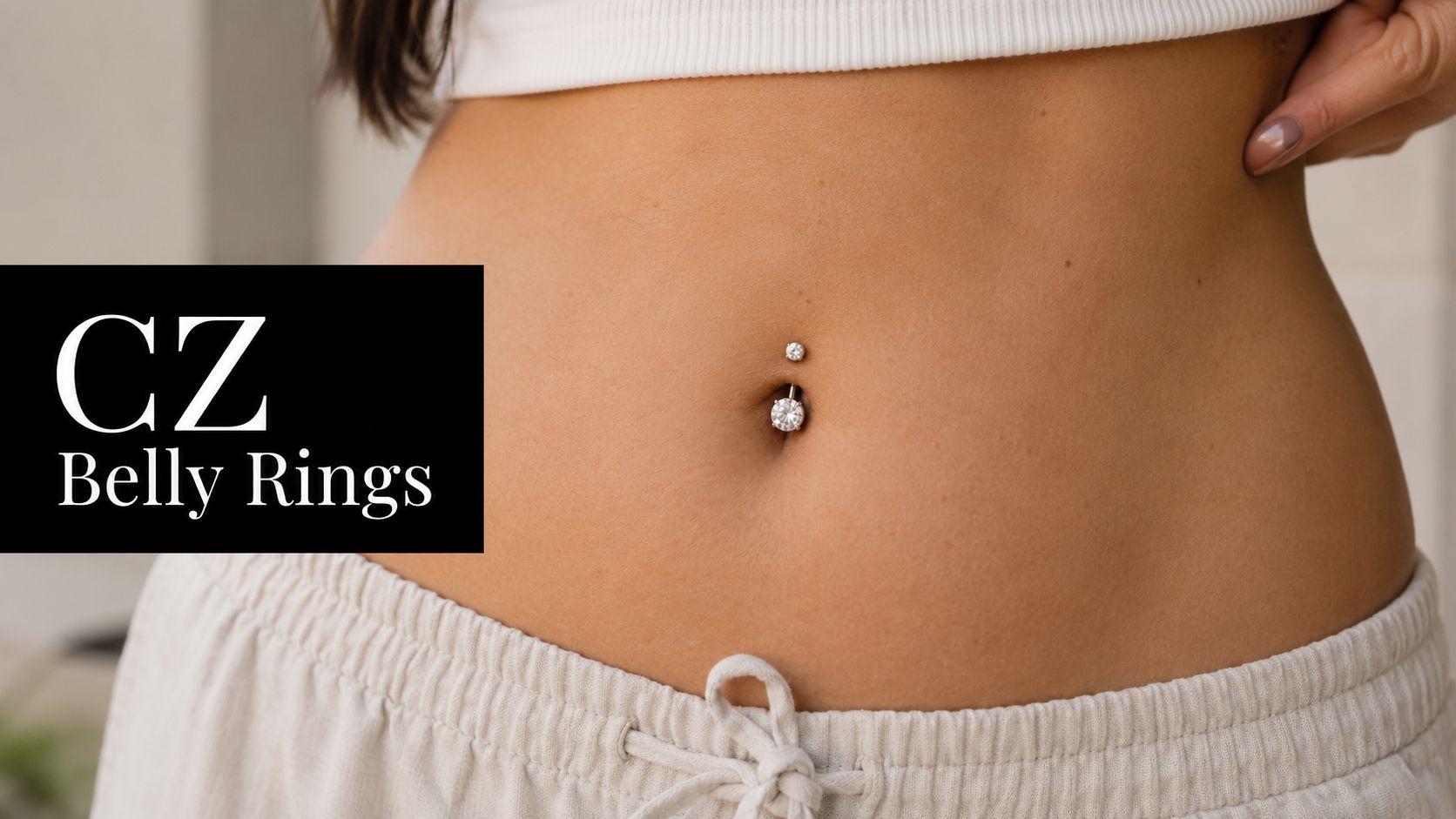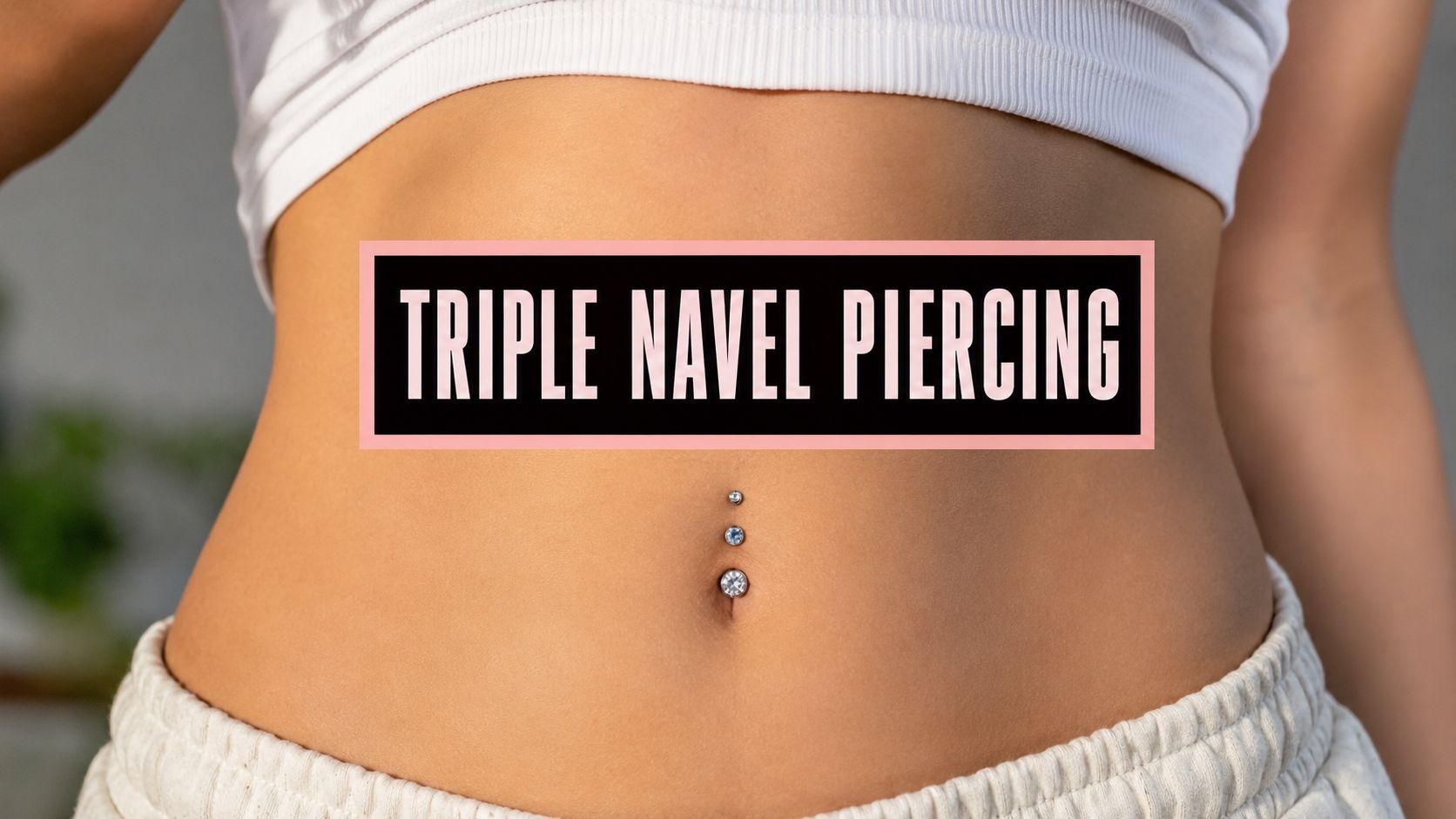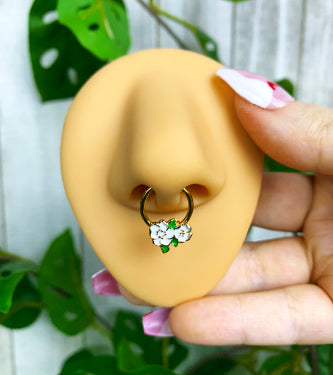
















You're staring at a belly ring that finally feels worth upgrading, and yeah, the temptation is real. A gold and diamond belly button ring looks like the moment your piercing graduates from cute to serious. The catch is simple, though, luxury only feels luxe when the metal suits your skin, the fit suits your anatomy, and the timing suits your healing.
Your Guide to Gold and Diamond Belly Rings
A sparkly navel ring can change your whole vibe fast. It can also become an expensive mistake if you buy for the shine and ignore the basics. Gold and diamond belly button rings sit in a weird little corner of body jewelry, part fine-jewelry, part piercing hardware, and that combo deserves more respect than a random impulse buy.
Treat It Like Jewelry and a Body Item
The first move is to think like a body jewelry nerd, not a window shopper. A belly ring sits in moving tissue, gets tugged by waistbands, and has to live with your skin all day. That means the pretty part matters, but so does the bar, the length, the finish, and the metal.
Practical rule: If the piece looks amazing but you can't verify the material and sizing, keep scrolling.
A luxury navel ring should feel intentional. If you're buying one, you're not just collecting sparkle, you're choosing what your piercing will wear against your body for hours at a time. That's why quality, fit, and healing status matter more than the first flashy thumbnail.
The smartest buyers ask a blunt question first, which is, “Can my piercing handle this?” A healed piercing can usually support more style options than a fresh one, and gold and diamond belly button rings make the most sense once the tissue is calm and settled. Fresh piercings need caution, not flexing.
Know What You're Really Paying For
Luxury body jewelry often gets marketed in terms you'd see in fine jewelry, like gold weight and gemstone carat weight, not just trendy style labels. One 14K gold diamond belly button ring example is listed at 0.53 ct, which shows how these pieces can be built like tiny fine-jewelry items rather than costume accessories (14K gold diamond belly button ring example).
That's the mindset shift. You're not buying a throwaway accessory. You're buying a piece that should hold up, sit comfortably, and still look good after you've worn it enough to forget it's there.
Solid Gold vs. Gold Plated: What Matters for Your Piercing

If the piece is going to live on your body, solid gold is the smart pick. Gold-plated jewelry can look convincing at first, but the thin outer layer is carrying the whole visual effect, and that layer wears down with time. Once it does, your skin meets the base metal underneath, which is exactly the kind of mess you do not want near a fresh or sensitive navel piercing.
Why Solid Gold Wins for Body Contact
Solid 14K gold is widely treated as a safer, higher-end choice for body jewelry because it is hypoallergenic for many wearers and less likely to irritate than nickel alloys or plated metals (gold body-jewelry guidance). That matters when a piercing is already dealing with friction, movement, and daily wear. If your skin gets touchy fast, plated metal is a gamble you do not need to take.
Clear specs tell you a seller is dealing in real jewelry, not just shine. One product listing from ITSHOT describes a 14K gold diamond belly button ring with measurable precious-metal and gemstone details, which is the kind of information you want before spending on a piece like this (listed luxury body jewelry example).
A piece like that also makes more sense as a long-term buy. If you are comparing solid options, 14kt gold belly rings are worth checking for the kind of construction that holds up against real wear instead of peeling apart after a few uses.
Where Gold-Plated Falls Short
Gold-plated styles are fine if you want the look for a short stretch, but they are not where I would put money for a navel piercing you care about. Sweat, cleaning, and friction all wear on the finish. That creates a durability problem and a skin problem at the same time.
Here is the blunt version.
- Solid gold: Better for long-term wear, better for sensitive skin, and better when you want the piece to stay stable.
- Gold-filled: A middle-ground style option, but still not my first pick for a body-contact piece that sits against healing tissue.
- Gold-plated: The cheapest-looking route over time, because the finish is doing all the work and can wear away.
If you want the gold look without rolling the dice on irritation, compare plated pieces against solid options and pay attention to what is being sold. The whole point is to buy once, wear well, and avoid paying twice when your skin gets annoyed.
Decoding the Diamond Details You Need to Know
Diamond talk gets messy fast, but a belly ring does not need gemology-school jargon. You need enough knowledge to spot real quality and skip the slick wording. The 4 Cs still matter, but they do not carry equal weight in a small navel setting.
Cut Does the Heavy Lifting
For tiny body jewelry, cut drives the sparkle. A well-cut stone catches light better, looks brighter in motion, and reads more luxurious than a dull stone that is technically larger. A smaller diamond can still look sharp and expensive if the cut is strong.
Clarity and color matter too, just less dramatically at this size. Small stones do not always show flaws the way a big center stone does, so do not let a seller push you into paying extra for details you will barely notice once the piece is on your body. If the setting and cut are right, your eye goes straight to the sparkle before it starts hunting for microscopic perfection.
Carat Weight Is Not the Whole Story
Carat gets attention because everyone recognizes the number. In body jewelry, a bigger carat does not automatically mean a better-looking ring, especially if the design feels bulky or the stone sits wrong on the body. A real-world example like a 0.53 ct diamond belly ring shows the scale without turning the purchase into a bragging contest.
Do not pay for a diamond label if the setting, finish, or fit looks cheap.
If you are weighing diamond against simulated stones, BodyCandy's breakdown of cubic zirconia versus diamond is useful because it keeps the comparison tied to real wear, not hype. For a belly ring, the smart buy is the one that looks gorgeous on skin, feels good in the piercing, and does not force you into a price range you do not need.
Is Your Piercing Ready for a Luxury Upgrade

This is the part people skip, then regret. A navel piercing can look calm on the outside and still be irritated underneath. If your piercing is not fully healed, gold and diamond belly button rings are a bad move, even if the piece itself is gorgeous.
Fresh Does Not Mean Ready
Navel healing takes patience. General guidance puts healing around navel piercing healing time, while belly piercing aftercare guidance says some piercings take much longer, especially if the area keeps getting irritated or your body heals slowly (belly piercing healing guidance, body jewelry anatomy of a belly ring). That is not a reason to panic. It is a reason to stop rushing and let the piercing set the pace.
Swap into a luxury ring too early, and you invite pressure, friction, and bad movement right when the tissue needs stability. Fresh piercings do better with simple, body-safe jewelry and a boring routine than with sparkle-first choices. Aftercare guidance also says to keep initial jewelry in place until the piercing is fully healed, which is exactly why a pretty upgrade can wait (belly piercing healing guidance, aftercare for body piercing).
Signs You're Actually Ready
A healed piercing is not just “looks fine today.” It stays calm over time, not only between showers. You want boring here, because boring means the tissue is settled.
Use this reality check before you buy.
- No tenderness: Touching the area should not make you flinch.
- No discharge: A healed piercing should not be acting like it is still repairing itself.
- Stable jewelry movement: The bar should not feel stuck, pinchy, or like it is dragging the tissue around.
- No recurring irritation: If waistband friction keeps setting it off, it is not ready for fancy hardware.
Your body's tolerance matters too. People with sensitive skin or metal reactions should pay attention to material choice before they pay for a stone. Testing for nickel sensitivity is a smart move if you have a history of irritation, because even a beautiful piece is a bad deal if it keeps your skin angry (nickel allergy patch testing).
Sizing matters here as well. A bar that is too short traps swelling, and a bar that is too long pulls and rubs the piercing site. That is why the fit details in the next section matter just as much as the metal.
Finding Your Perfect Fit Gauge and Length
A gorgeous belly ring that pinches is not a luxury piece. It's a problem. Gauge and wearable length decide whether your jewelry sits smoothly or turns into a daily annoyance, and the wrong size can mess with comfort, tissue pressure, and long-term wear.
Start With the Standard Gauge
A useful retail example lists a navel ring at 14G with 3/8 in. or 7/16 in. lengths, which gives you a concrete sense of what a properly sized belly ring can look like (14G diamond pave gold belly button ring). 14G is the standard navel-piercing gauge you'll see again and again, so don't get talked into guessing.
Length is the other half of the equation. It controls how much room the piercing has to breathe, and it needs to match your anatomy, not just the style you want. Too short can press into swelling and feel tight. Too long can snag on clothes and tug the hole.
Measure What You Already Wear
If you already have a ring that fits well, measure it before you shop. Look at the bar thickness first, then check the distance between the ends to find the length that feels secure without squeezing. If you don't know your size, a reputable piercer should be able to tell you what works for your navel shape.
The right fit feels quiet. You notice the jewelry, not the pressure.
A well-fitted gold and diamond belly button ring should sit centered without twisting all over the place. If it flops, catches, or presses when you bend, it's not your dream piece yet. It's the wrong size in a cute outfit.
A Simple Fit Checklist
- 14G bar: A common navel choice that gives you a reliable starting point.
- Shorter length: Better when your anatomy is compact and the jewelry sits snug without pressure.
- Longer length: Better when you need room for swelling or the piece sits lower on the navel.
- Professional check: Worth it if you've had irritation, migration, or size confusion before.
This is one place where buying “pretty” first is backward. Buy the fit first, then let the sparkle be the reward.
Styling and Caring For Your New Sparkle

A great belly ring earns compliments because it catches light the right way, not because it's screaming for attention. With a gold and diamond belly button ring, the styling win is in contrast, clean skin, and letting the jewelry do the talking. Think high-waisted denim, cropped tanks, swimwear, and anything that frames the navel without crowding it.
Make the Jewelry Part of the Outfit
Gold reads warm and polished against skin, so it works beautifully with neutral fabrics, black, white, and deep jewel tones. Diamond accents add flash without needing a giant dangling design. If your outfit is already loud, choose a more refined piece so the look doesn't become cluttered.
A small diamond detail can feel richer than an oversized gimmick. That's the whole point of luxury body jewelry, it should look intentional, not desperate for attention.
Keep It Clean Without Babying It
For care, keep it simple. Use gentle cleaning, avoid harsh products, and don't treat the setting like it's indestructible. Gold and diamond pieces still benefit from being dried properly after wear, especially if they've been around sweat or saltwater.
Don't wear a high-end belly ring where it'll get abused. Intense sports, rough movement, and chlorinated pools are all bad bets if you want to protect the finish and the setting. That's not being precious, that's being smart.
If you need a place to browse styles while you're deciding what kind of luxury look fits your piercing, BodyCandy carries body jewelry options that include belly rings and 14K gold pieces. Use that as a shopping stop, not a shortcut around fit and healing. A pretty ring only stays pretty if you wear it like you respect it.
Your Top Gold and Diamond Questions Answered
How do I check if the gold is real? Look for clear material details, not vague language. Solid 14K gold is the standard I'd trust over a shiny mystery finish, and you want the listing to say exactly what it is, not dance around it.
Can I shower or sleep in it? If the piercing is healed and the piece fits well, daily wear is much less of a problem than it is for a fresh piercing. If the jewelry is new, bulky, or snag-prone, take it out before sleep or anything rough enough to bend the bar. Comfort beats vanity when you're trying to keep the piercing happy.
What if the piercing gets irritated anyway? Stop wearing the luxury piece and figure out why. Even 14K gold, which is considered hypoallergenic for many individuals, can still be wrong for an individual body, especially if the fit is off or the piercing isn't fully healed (gold body-jewelry guidance). If irritation keeps showing up, see your piercer.
Can a regular jeweler clean or repair it? Sometimes, yes, but use judgment. A jeweler can handle the metal side, while your piercer understands what the jewelry is doing inside a healing channel. For anything involving sizing, wearability, or irritation, the piercer wins that conversation.
Is a diamond belly ring worth it? If you want a long-term piece, yes, as long as the piercing is healed and the sizing is right. If you're shopping just to show off, save your money. Buy the piece because it fits your body, your style, and your standards.
Ready to upgrade without guessing? Shop smart, check the fit, and choose jewelry that looks amazing without making your piercing miserable. Browse BodyCandy for belly ring styles and gold pieces, then pick the one that matches your healed piercing, your vibe, and your standards.