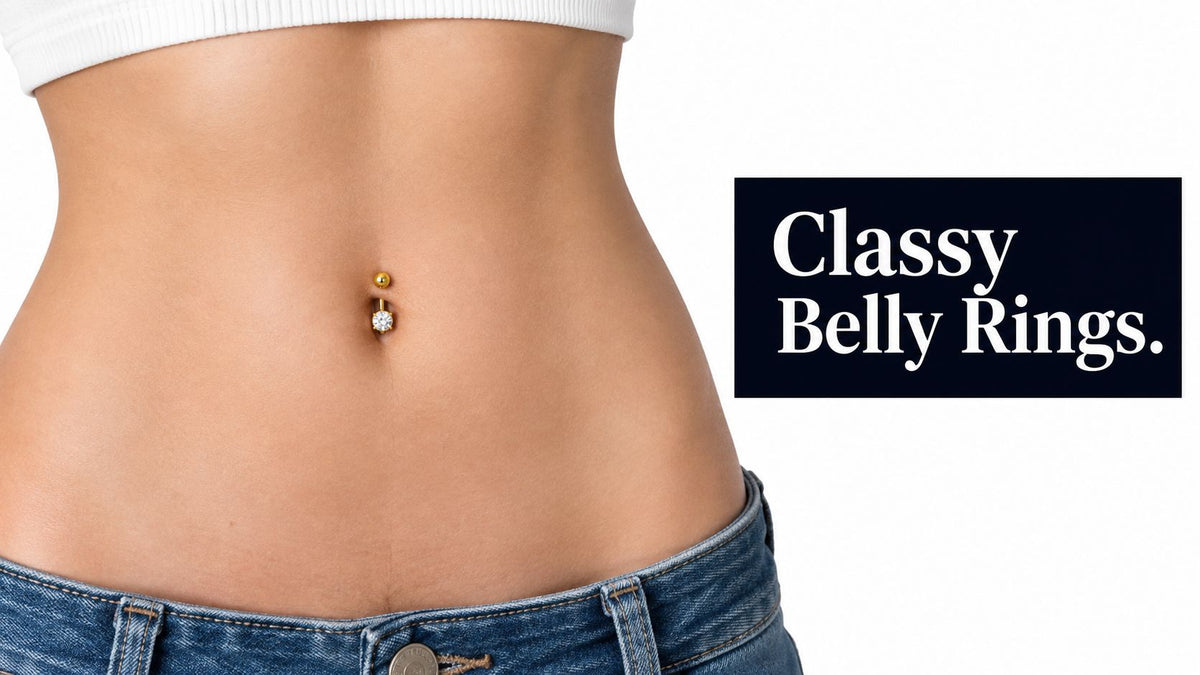
















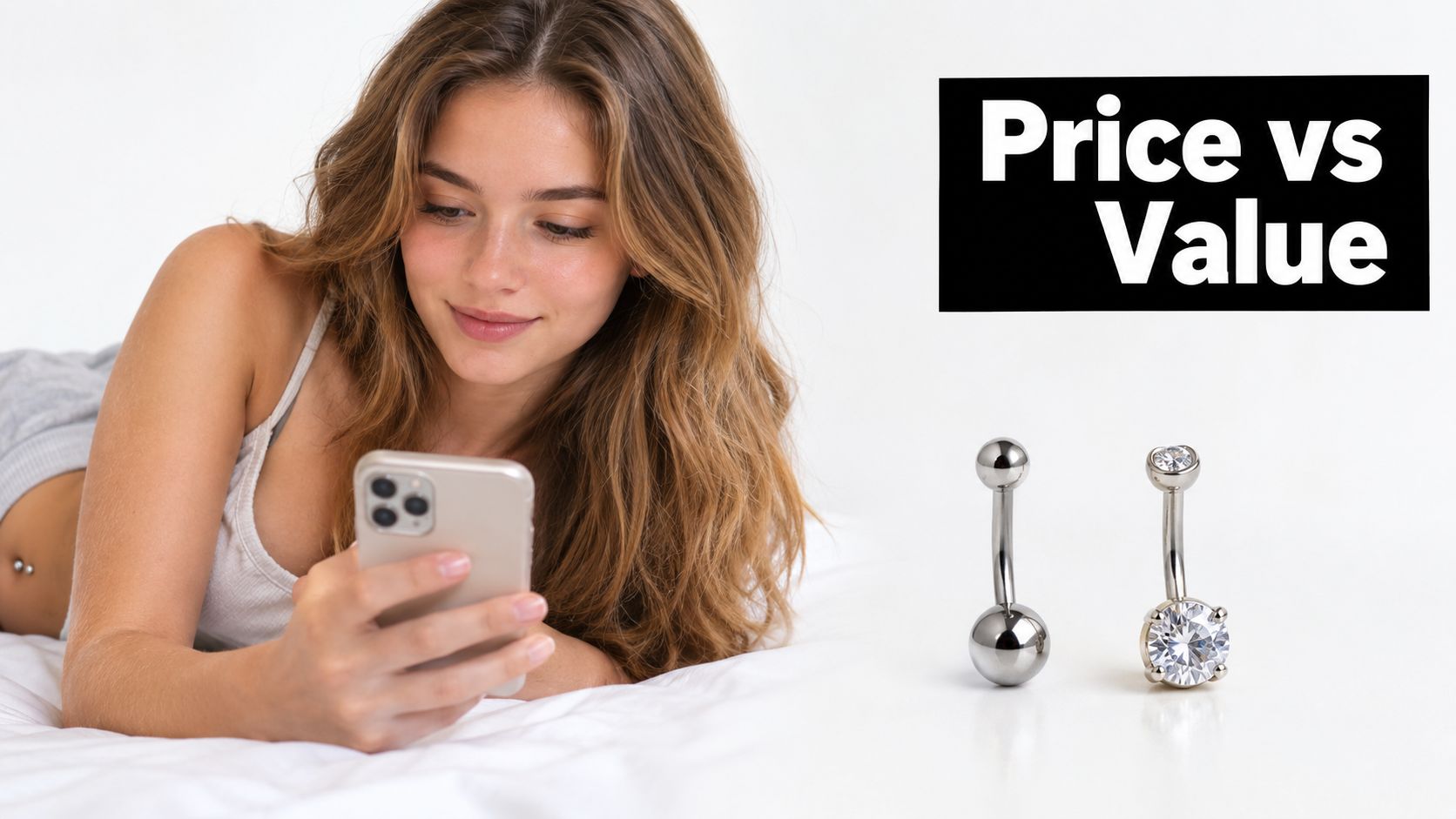
You're scrolling through belly rings and spot two pieces that look almost identical. One costs a few dollars, while the other makes you pause before adding it to your cart. So why are belly button rings expensive when they can appear to be the same shape, color, and sparkle?
The short answer is that price can reflect much more than fashion markup. Material grade, nickel-release requirements, sizing, finishing, gemstones, design complexity, production volume, and studio service all change what you're buying.
This guide breaks down those differences in plain English. You'll learn how navel rings are sized, what separates plated fashion jewelry from implant-grade pieces, how price tiers compare, and when spending more may make sense for sensitive skin or long-term wear. You'll also get a practical way to save on style without cutting corners on comfort.
Understanding Belly Button Rings and How They Are Sized
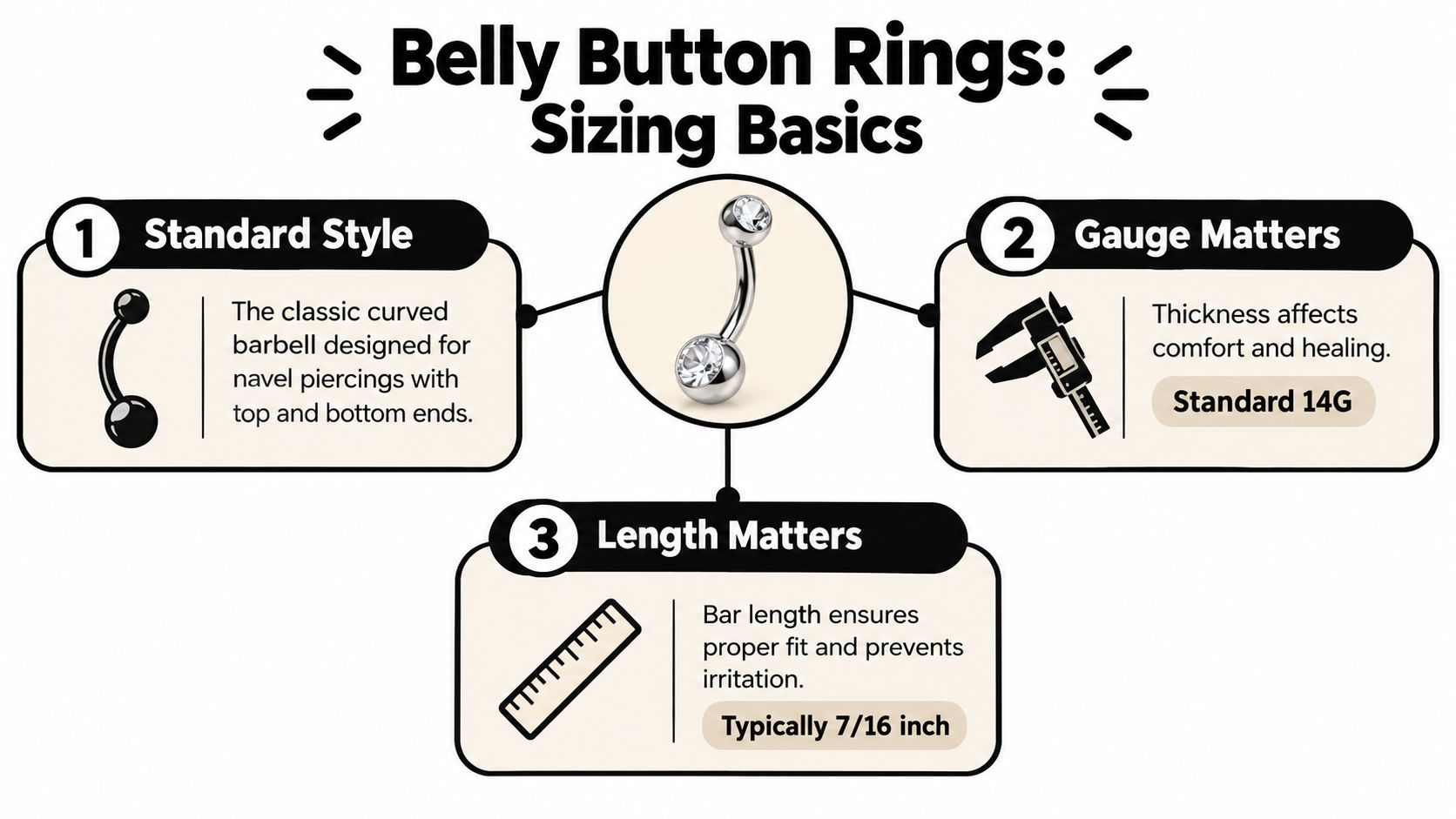
A belly button ring is usually a curved barbell, not a traditional circular hoop. The curved post passes through the navel piercing, with a smaller decorative end at the top and a larger bead, gem, or charm at the bottom.
That shape follows the natural contour of the navel. It also helps the jewelry sit neatly against your body instead of pressing like a straight bar would.
Gauge is the thickness
Gauge describes the thickness of the bar. Navel piercings are commonly pierced at 14G, as outlined in this navel ring styles, materials, and sizing guide.
Think of gauge like shoe width. Two shoes may have the same length, but the wrong width can pinch or slide around. A bar that's too thin or too thick for your piercing can create pressure, movement, or irritation.
The bar's gauge should match the size established by your piercer. If you're unsure, don't guess based on a product photo. Ask a professional to check the piercing.
Length changes the fit
Barbell length is the distance between the decorative ends. A new navel piercing often needs a starter bar around 10mm to 12mm long, because the tissue needs room for swelling. Once the piercing has settled, the comfortable length is commonly around 8mm to 10mm. These measurements are detailed in this navel piercing sizing guide.
That's similar to buying a coat with room for a sweater underneath. Extra space can be useful at first, but you may prefer a closer fit later. A bar that's too short can pinch the tissue, while one that's too long may catch on clothing or move more than necessary.
Anatomy matters more than a universal size
Navel anatomy varies. The depth and shape of your navel, the amount of tissue available, and the way your body bends can all affect which curved barbell sits comfortably.
A starter piece also has a different job from healed jewelry. During healing, your piercer may select a longer bar to accommodate swelling and monitor how the jewelry sits. After healing, a shorter piece may look cleaner and reduce snagging, but only if it leaves enough room for comfortable movement.
Before buying, check three details:
- Gauge: Confirm that the thickness matches your piercing.
- Length: Check whether the measurement is intended for a fresh or healed piercing.
- Style: Make sure the curved barbell and decorative ends suit your anatomy and daily clothing.
What Makes Belly Button Rings Expensive
Two belly rings can share the same silhouette while having very different manufacturing requirements. A plated alloy piece is made for short-term fashion use. A high-quality titanium or solid gold piece may need safer raw materials, documented specifications, careful machining, polishing, and more precise finishing.
Material grade creates the first big gap
Reputable initial-piercing jewelry often has to meet implant-grade material rules, not ordinary fashion-jewelry standards. Oregon's body-piercing rules list titanium that complies with ASTM F136 or ISO 5832-3, ASTM F67 titanium, and solid 14 karat or higher nickel- and cadmium-free gold among acceptable options for initial jewelry. You can review the material requirements in the Oregon body-piercing regulations.
Independent safety guidance also identifies implant-grade titanium, implant-grade steel, niobium, and solid 14k-or-higher gold as options for initial piercings. It notes that gold above 18k can be too soft for body jewelry. High-purity metals and biocompatibility standards cost more than plated or mixed-metal accessories because manufacturers need better material control and compliance testing.
Nickel limits add another layer. In Europe, body jewelry for pierced skin must meet nickel-release limits of no more than 0.5 µg/cm²/week, according to the regulatory information summarized in the same material reference. A low-cost piece and an implant-grade piece may look alike on a screen, but they aren't held to the same expectations.
Titanium costs more before the design begins
ASTM F136 titanium is engineered for biocompatibility and is often more expensive than generic metals. Market pricing commonly places ASTM F136 body jewelry around $12 to $27 per piece at wholesale, while an industry pricing guide describes the raw material cost as about three to four times higher than generic surgical steel. Those figures appear in this body jewelry material cost guide.
That difference is like comparing a medical-grade water bottle with a disposable plastic cup. Both hold water, but one is made to meet a more demanding purpose.
Stones and complicated shapes add labor
A plain curved barbell has fewer parts to cut, polish, inspect, and assemble. Add a genuine gemstone, a secure setting, multiple dangles, engraved details, or an unusual shape, and the production process becomes more involved.
A stone also needs a setting that holds it securely. A poorly finished edge can catch on clothing, while a carefully polished setting takes additional labor and inspection. For a closer look at the difference between gold types and finishes, see this real gold jewelry guide.
Small batches spread costs across fewer pieces
Large production runs distribute tooling, setup, labor, and finishing costs across many units. Custom or small-batch runs don't have that advantage. Each piece carries more of the preparation cost, which is why ornate titanium or gold designs can rise quickly.
Market examples place standard implant-grade titanium belly-ring jewelry around $65 to $145, while 14k gold versions sit around $120 to $380. Bespoke or gem-set pieces can exceed $400 when production is limited and the design requires additional labor, according to this implant-grade titanium body jewelry pricing guide.
Brand reputation, compliance documentation, quality control, and polished presentation can add more. That doesn't mean every expensive ring is automatically better. It means you need to identify what the price is paying for.
How Much Belly Button Rings Cost Across Different Price Tiers
The phrase “belly button rings expensive” covers a very broad market. Mass-market pieces can sit near the bottom of the range, while studio jewelry and designer collections can move into luxury pricing.
One market overview places mass-market pieces around $7 to $30, standard piercing and jewelry bundles around $40 to $100, high-end studio jewelry around $100 to $200, and designer navel jewelry at $1,300 or more. Specialist collections can range from about $150 to over $2,500, as summarized in this belly ring collection overview.
| Price Tier | Typical Materials and Features | Best For |
|---|---|---|
| Mass-market, $7 to $30 | Plated pieces, basic alloys, simple synthetic stones, large-volume designs | Healed piercings and occasional fashion wear, provided the material suits your skin |
| Standard studio or jewelry bundle, $40 to $100 | Basic studio jewelry, common body-jewelry metals, more consistent finishing, possible service bundle | A straightforward replacement or a new piercing package |
| High-end studio, $100 to $200 | Implant-grade titanium or solid gold, refined finishes, better stone settings, anatomy-conscious fitting | Sensitive skin, regular wear, or a carefully fitted upgrade |
| Luxury designer, $1,300 or more | Precious metals, elaborate settings, distinctive design work, limited or bespoke production | Collectors, statement jewelry, and special-occasion styling |
These bands aren't a promise of quality. A lower-priced piece may be perfectly useful for a healed piercing, while an expensive piece may be priced mainly for design, branding, or precious materials.
The market itself helps explain why premium segments exist. One 2026 industry report valued the global piercing jewelry market at $9.36 billion in 2025 and projected a 5.3% compound annual growth rate through 2033. Another 2026 report valued the global body piercing jewelry market at $62.84 billion in 2025, with a projection of $93.80 billion by 2032 at a 5.89% CAGR. These estimates use different methodologies, so they vary widely, but both indicate a large, expanding category that supports premium titanium and gold segments, according to this piercing jewelry market report.
The useful question isn't “Is this ring expensive?” Ask instead:
- What is it made from?
- Is it sized for your piercing?
- Will you wear it daily or occasionally?
- Are the finish and setting worth the design premium?
A price jump makes more sense when the material and construction change. It makes less sense when a plated basic is dressed up with luxury language.
When to Splurge or Save Based on Sensitive Skin and Long Term Wear
The smartest budget depends on your skin and your piercing's condition. Someone with no known metal sensitivity and a fully healed navel may have more flexibility than someone buying starter jewelry for a fresh piercing.
Choose the safer foundation when your skin is reactive
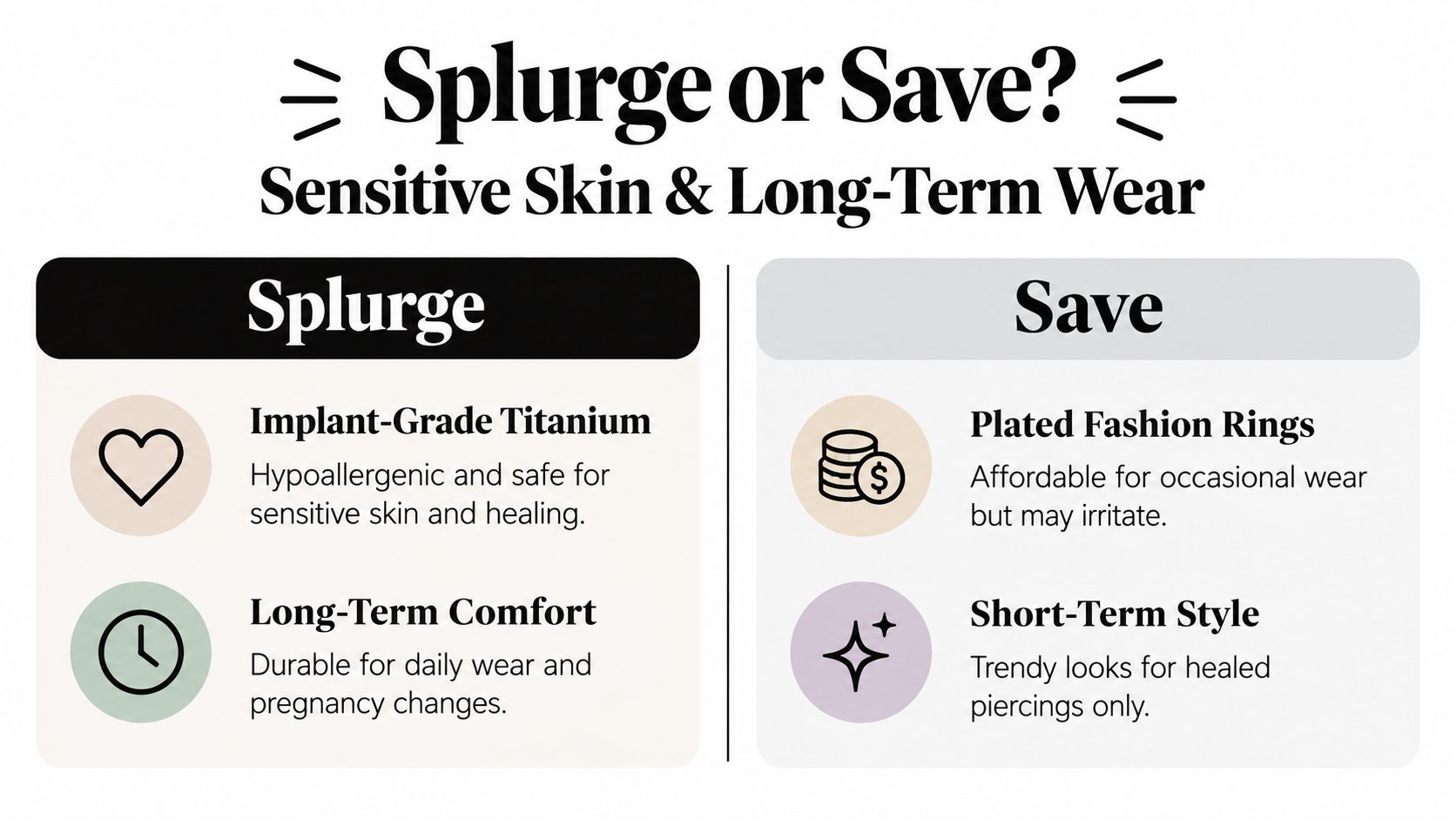
Implant-grade titanium is widely recommended for sensitive skin and new piercings because it's considered biocompatible and hypoallergenic. ASTM F136 titanium is identified as nickel-free in this piercing jewelry materials guide.
That distinction matters because 316L surgical stainless steel may still contain nickel. Many people tolerate it, but nickel-sensitive wearers can experience irritation. Plated jewelry can create another concern if the outer coating wears down and exposes the underlying metal.
Practical rule: If you already know nickel bothers your skin, pay for a verified nickel-free material instead of hoping a cheap coating holds up.
Healing and changing anatomy deserve more attention
A new piercing needs properly fitted starter jewelry, space for swelling, and a material your body tolerates. Paying more for implant-grade titanium can be sensible here because the jewelry is part of the healing setup, not just an accessory.
Pregnancy and other changes in body shape can affect how a navel piercing feels and sits. Flexible PTFE is often recommended for pregnancy because it can accommodate changing anatomy more easily than rigid jewelry. Ask an experienced piercer about timing, fit, and whether the piercing should remain in place.
Compare the total cost, not only the ring
The jewelry price is only one part of the purchase. Independent piercing pricing guides commonly place the piercing itself around $40 to $80, with initial jewelry adding about $10 to $40 or more. Some studios list navel jewelry minimums around $40, and newer studio pricing examples put total navel services at roughly $93 or more, according to this 2026 navel piercing pricing guide.
A cheaper ring that irritates your skin, needs early replacement, or forces you to repurchase the correct size may cost more over time. On the other hand, a healed piercing used for occasional outfits may not need a luxury piece for every look.
Save on decorative extras when you want variety. Splurge on the material, fit, and finish when your skin is sensitive, the piercing is healing, or you plan to wear the ring every day.
How to Spot Value and Shop Smart for Your Next Belly Ring
Start with the listing, not the sparkle. A good product description should tell you the material, gauge, length, and whether the metal is solid, plated, or described with a vague term such as “silver tone.”
Use this buying checklist
- Read the material specification. Look for implant-grade titanium with an ASTM F136 or ISO 5832-3 reference, or solid 14k-or-higher nickel- and cadmium-free gold. “Hypoallergenic” without a material description gives you less useful information.
- Confirm the measurements. Check the gauge and bar length. A standard navel piercing is commonly 14G, but your personal piercing may need confirmation from a professional.
- Inspect the finish. Smooth threading, rounded edges, and a clean polish matter because rough areas can rub against tissue or catch on clothes.
- Study the stone setting. A larger gem or dangling design can justify extra cost when the setting is secure and the details are carefully finished. Sparkle alone doesn't prove construction quality.
- Ask the studio what the service includes. Find out whether the quoted piercing price includes basic jewelry, an upgrade, or a separate jewelry charge. That prevents a surprise at checkout.
Small-batch pieces often cost more because setup and labor are shared across fewer units. Ornate designs can also require hand finishing or more inspection. Those are reasonable premiums when the details are real and the base material is appropriate.
Shopper's filter: Don't pay a luxury price for a plated basic just because it has a dramatic product photo.
For more guidance on weighing construction against appearance and cost, use this body jewelry buyer's guide. BodyCandy offers belly rings in a range of styles and price points, so you can compare decorative looks with material and sizing details before choosing.
Find Your Perfect Belly Ring Without Overpaying
Expensive doesn't always mean better. A high price can reflect implant-grade titanium, solid gold, secure gemstone work, careful polishing, or limited production. It can also reflect branding and presentation without adding much value for your particular piercing.
Match the ring to the job:
- Fresh or sensitive piercing: Prioritize verified implant-grade titanium or another material recommended by your piercer.
- Healed everyday wear: Focus on fit, smooth finishing, and a material your skin consistently tolerates.
- Occasional styling: Save on decorative variety if the piece is suitable for your healed piercing.
- Luxury statement jewelry: Spend more when the metal, setting, craftsmanship, and design matter to you.
Check the gauge and length before you fall for the charm. A gorgeous ring that pinches, snags, or irritates your skin isn't a bargain.
The best belly ring is the one that fits your body, your routine, and your budget. Spend on comfort first, then let the sparkle have fun.
Explore BodyCandy's belly button ring selection to compare playful styles with options suited to different budgets and materials. Visit BodyCandy to browse new looks, sign up for arrival alerts, and find a ring that earns its place in your rotation.