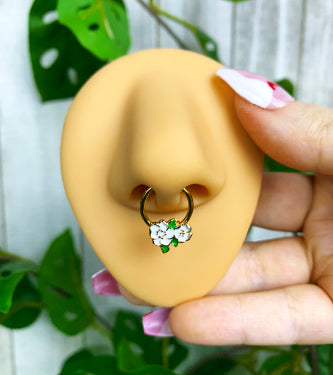




















You're staring at a titanium post that used to catch the light, and now it looks cloudy around the threads. Maybe there's lotion under the end, a little shower residue along the bar, or buildup that won't disappear with a quick rinse. Titanium is low-maintenance, but body jewelry needs more than a casual wipe, especially when residue collects in places you can't easily see.
The good news is that you don't need aggressive polish or a cabinet full of specialty cleaners. The safest routine is gentle, repeatable, and easy to do at home. The important part is knowing whether you're cleaning a removable smooth ring, an anodized piece, or threaded jewelry sitting in a healing piercing.
Why Titanium Jewelry Needs a Different Cleaning Approach
Titanium doesn't behave like sterling silver. Its natural protective oxide layer helps it resist corrosion, so routine dullness usually comes from skin oils, lotion, soap film, sweat, or dust sitting on the surface, not from ordinary tarnish. That's why mild soap and warm water are usually more useful than harsh metal cleaners. The guidance from BodyCandy's titanium body jewelry care article follows the same practical idea: clean the residue without attacking the finish.
That oxide layer is helpful, but it also changes how you treat colored titanium. Anodized color comes from a controlled surface oxide, not paint, so abrasive cloths, hard brushes, and strong chemicals can change the color while you're trying to restore the shine. A dull rainbow finish may only need a gentle rinse. Scrubbing it like a stainless-steel kitchen tool can permanently alter what you liked about it.

Material and construction change the rules
For body jewelry, implant-grade titanium such as ASTM F136, grade 23, is selected for piercing use. Fashion titanium in a ring, pendant, or other accessory may have a different finish, coating, gemstone, or inlay. You should care for the complete piece, not just the titanium portion.
A smooth ring has fewer hiding places. A threaded post has external threads, an internal threaded end, and a junction where skin oils and soap can collect. Seam rings, clickers, decorative ends, and gem settings create their own small channels. Those areas need gentle attention, but they also punish over-cleaning.
Practical rule: If a cleaner would sting an open wound, keep it away from body jewelry and healing tissue.
The repeatable baseline is simple: one drop of mild soap, a brief soak, gentle brushing, a thorough rinse, and careful drying. Several care guides recommend keeping the soak around two to five minutes, rather than leaving titanium submerged for long periods, as described in this titanium jewelry cleaning guide. Patience beats force.
The Gentle Cleaning Method That Works Every Time
A threaded end can look clean while holding soap in its inner ridges. A smooth ring usually needs only surface cleaning, but removable body jewelry has small channels that deserve a closer look. Use this method for plain titanium jewelry you can safely remove, including a smooth ring or a straight post. If the piece sits in a healing or irritated piercing, keep it in place and follow the care approach in the next section.
Prepare a clean little workstation
Wash your hands first. Cover the counter or sink with a soft towel so a small threaded end cannot bounce into the drain. Set out:
- Mild liquid soap: Choose an unscented option, such as Dr. Bronner's Baby castile soap or another mild soap.
- Lukewarm water: It should feel comfortably warm, never hot. Guidance for certain titanium rings recommends staying below 40°C / 104°F, as noted in this titanium care resource.
- Soft brush: Use a dedicated, soft-bristled nylon toothbrush. Avoid one that has touched toothpaste or abrasive cleaner.
- Drying cloth: A lint-free microfiber cloth removes moisture without adding scratches.
- Small bowl: Glass makes it easier to see residue as it loosens.
Fill the bowl with lukewarm water and add one drop of mild soap. Place the jewelry in the solution for a short soak, just long enough to soften oils caught in grooves and threads. Plain titanium care guidance recommends only a few minutes, and a guide to cleaning titanium rings at home describes a routine of about five minutes. A longer bath does not improve the result.

Brush the places that hold residue
Lift the jewelry over the towel. Guide the soft brush along the post, around the threaded end, and across grooves or engraving with light strokes. An anodized finish needs an especially gentle touch. Brush only where residue remains, and stop before the colored surface begins to look dull.
A smooth ring may need no brush at all. Wipe it with the microfiber cloth after rinsing. For threaded body jewelry, clean the end and post separately when they unscrew. Inspect the internal thread too, since that narrow space can hold a slippery layer of soap even when the outside looks spotless.
Rinse with clean lukewarm water until the slippery feel disappears. This step removes detergent from the same ridges that collect skin oils. Conservative care guidance for plain titanium jewelry recommends lukewarm distilled water, gentle brushing in grooves, and drying with a lint-free microfiber cloth.
Place the piece on the cloth to air dry, then pat away remaining moisture. A light final wipe can bring back the shine of polished bare titanium. Skip buffing on anodized finishes, and never add vinegar, bleach, ammonia, or another strong chemical to the soak.
For a visual walk-through, use this cleaning demonstration after your supplies are ready:
Cleaning Titanium Jewelry Without Removing It From a Piercing
You're several weeks into a helix or nipple piercing. The jewelry still feels firmly in place, the area is easily irritated, and you've noticed crusties collecting near a threaded end. Removing the jewelry just to make it sparkle isn't the move. For an unhealed piercing, clean around the jewelry instead of disturbing the post.
Use a sterile saline wound wash with 0.9% sodium chloride and no additives, such as NeilMed or a similar product. Spray it directly onto the piercing twice daily, let it sit for 30 to 60 seconds, then pat the area dry with non-woven gauze. Cotton balls can shed fibers into the piercing channel, so gauze is the cleaner choice for drying.
Work around the jewelry, not against it
If buildup is sitting at the junction between the threaded end and your skin, moisten a cotton swab with sterile saline. Trace the outside edge gently, lifting softened residue without pushing the swab into the piercing. You're cleaning the surface, not trying to excavate the fistula.
Don't twist or rotate the jewelry while cleaning. A threaded post can look sturdy, but movement may pull across delicate healing tissue and make irritation worse. If the end is visibly loose, don't force it tighter with unwashed fingers. Have a qualified piercer check the fit and threading.
A normal shower can help with surface debris. Let warm water flow over the area briefly, keeping the stream gentle enough that it doesn't knock or shift the jewelry. Afterward, pat dry rather than rubbing.
Healing jewelry needs a lighter touch than a removable ring. Saline, stillness, and clean drying usually beat repeated brushing.
Watch the piercing, not just the jewelry. Increasing redness, heat, or discharge that doesn't settle within 24 hours is a reason to contact a professional piercer or an appropriate healthcare provider. Don't remove jewelry from a potentially infected piercing unless a qualified professional tells you to do so.
Cleaning Do's and Don'ts for Titanium Body Jewelry
Start with these safe practices when cleaning titanium body jewelry, and avoid shortcuts that can scratch a finish, loosen a setting, or push residue against a healing piercing. A threaded post needs different care from a smooth ring because soap and moisture can remain inside its grooves.

Do this
- Choose mild soap: Use fragrance-free liquid soap for removable, plain titanium. Keep cleanser away from an unhealed piercing unless the cleaning method calls for it.
- Use warm water: Lukewarm water loosens oils without exposing coatings, adhesives, or stones to unnecessary heat.
- Brush selectively: A dedicated soft-bristled brush can reach safe grooves and threads. Use a light touch, and never scrub across anodized color.
- Rinse thoroughly: Flush soap from internal threads, backs, and settings. On a threaded post, residue in the grooves can sit against the skin after the jewelry is replaced.
- Dry completely: Wipe with a clean microfiber cloth, then allow hidden channels to air dry before reassembly.
- Remove straight jewelry when safe: Clean a removable straight post separately. Leave curved jewelry in an unhealed piercing in place unless a qualified piercer advises otherwise.
Skip these shortcuts
Toothpaste, baking soda paste, scouring pads, and rough polishing cloths create abrasion. They can alter a polished surface, wear away anodized color, or leave particles behind. Bleach, hydrogen peroxide, alcohol, ammonia-based glass cleaners, strong acids, and antibacterial hand soaps containing triclosan are poor choices for a routine titanium soak. BodyCandy's anodized titanium overview explains why colored anodized finishes require especially gentle handling.
Ultrasonic cycles also need caution. Vibration may loosen or erode material around gemstone settings and affect anodized oxide color layers. Manual cleaning is safer for decorative pieces and threaded ends, especially when solution could remain trapped in narrow grooves.
Keep water comfortably warm rather than hot. Excessive heat is unnecessary for ordinary film and may place avoidable stress on finishes, adhesives, or stones. A hotter bath will not solve stubborn residue.
Threaded titanium tolerates careful cleaning, but cross-threading can ruin a good fit. Start the end straight, turn it onto a clean post by hand, and stop immediately if it catches. Never force the connection.
When Ultrasonic and Professional Cleaning Make Sense
“Just put it in an ultrasonic” sounds efficient, but it's not a universal answer for body jewelry. Cavitation can reach areas a cloth misses, which makes controlled ultrasonic cleaning useful for some plain, solid titanium rings and simple captive pieces. It becomes a poor choice when the piece has anodized color, gemstones, glued elements, inlays, or delicate threaded construction.
The vibration can affect a colored oxide layer and may loosen or erode material around a stone setting. Cleaning solution can also remain in thread grooves if the piece isn't rinsed and dried correctly. That risk is unnecessary for a smooth ring with only a light film.
Use the construction as your decision point
A controlled unit for surgical titanium should operate at no more than 40 kHz and 35°C, use distilled water, and limit the cycle to about three minutes, according to this guidance on cleaning surgical titanium. Those limits don't turn every piece into an ultrasonic-safe piece. Construction still decides whether the method is appropriate.
Manual cleaning is the better default for:
- Anodized jewelry: Preserve the color-producing oxide by avoiding vibration and friction.
- Gem-set pieces: Protect settings, stones, and any adhesive.
- Threaded ends: Prevent fluid from lingering inside internal grooves.
- Healing piercings: Don't create extra movement or trap solution against sensitive tissue.
- Inlaid jewelry: Avoid soaking materials that may absorb water or separate from the titanium.
A professional piercer or jeweler can inspect buildup that won't lift, a piece with a damaged thread, or jewelry that has remained in place for years. For implant-grade titanium, ask a piercer about professional sterilization rather than improvising a harsh home treatment. BodyCandy's guide to cleaning body jewelry without an autoclave is also useful when you're deciding what can be handled safely outside a studio.

Keep That Shine Going With Smart Daily Habits
Clean titanium is usually the result of small habits, not a dramatic rescue session. Wipe away lotion, sunscreen, self-tanner, perfume, sweat, and salt before those films settle around a post or under a ring. If you're heading into chlorinated water, removing the jewelry first is the simplest way to limit chemical exposure, especially for anodized or mixed-material pieces.
Storage makes a difference. Place dry titanium in a soft pouch or a lined jewelry-box slot instead of letting it rub against harder metals such as steel. Contact with harder pieces can leave gray transfer marks or scratches, particularly on polished surfaces.
Match the routine to the piece
An everyday ring can get a quick wipe with a damp microfiber cloth during the week. A captive ring or removable ear piece can receive a fuller mild-soap wash when residue is visible. Don't polish anodized color just because it looks less bright. Buffing gradually wears the oxide layer, so rinse gently, dry carefully, and leave the finish alone.
For body jewelry, rinse after workouts if sweat has collected around the piercing. Pat dry instead of twisting the jewelry. A threaded post also benefits from an occasional fit check by a jeweler or piercer, especially if the end keeps loosening or residue repeatedly gathers at the connection.
BodyCandy offers a wide selection of body jewelry styles, including titanium-friendly options for piercings and everyday accessorizing. Visit BodyCandy to browse pieces that fit your style, then use this gentle cleaning routine to keep removable jewelry fresh and healing piercings undisturbed.