



















Q: Can I flip my septum up to hide it at work? Does it mess with healing though? — Jada T.
A: Yes to hiding it, that’s one of the best things about a septum. But there’s a real catch during healing, so let me split it into “healed” and “still healing,” because the answer’s different for each.
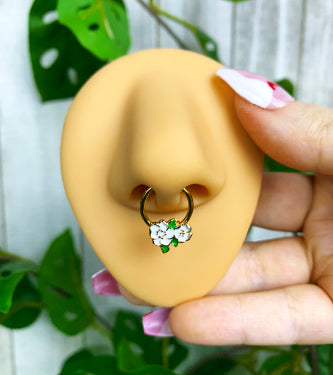
Once it’s healed: flip away, zero problem. A retainer or a horseshoe barbell tucks right up inside your nose, basically invisible, and flipping it up and down does nothing to a settled piercing. Work-friendly superpower, fully unlocked.
While it’s still healing: this is where you want to be careful. The hiding itself doesn’t slow healing, but the flipping can. Every time you turn that jewelry up and down, you’re moving and tugging a fresh piercing, and that repeated motion is exactly what irritates it and drags healing out. So constant daily flipping on a brand-new septum works against you.
So how to do it smart in the early weeks:
-
Ask your piercer for a retainer made to sit discreetly, so you’re not relying on dramatic flips
-
Flip as little as possible while it’s healing, ideally set it once rather than up-and-down all day
-
Clean hands EVERY time you do touch it, since fingers on a fresh piercing invite irritation
-
Be gentle and slow with any movement, no forcing it
Good news, septums are often pretty discreet even sitting normally, so you may not need much flipping at all to stay work-appropriate early on. Get through the healing stretch with minimal fuss, and after that you’ve got a piercing you can hide in two seconds and show off whenever you want.
Q: How long do dermals really last before they have to come out? — Cassidy M.
A: Honest answer: there’s no fixed expiration date, and anyone who gives you an exact number is guessing. Dermals are more “it depends” than almost any other piercing. Some people keep one happily for years, others watch it work its way out in a matter of months. A few years is a common ballpark, but it really varies.
The reason there’s no clean number is that a dermal is an anchor sitting under a single point of skin, and a bunch of things decide how long it stays put:
-
Placement - Spots that get bumped, rubbed by clothing, or flex a lot (hands, chest edges, anywhere high-friction) tend to have shorter lifespans
-
Your body - Some people’s skin just pushes them out over time, that’s called rejection, and it’s super common with dermals
-
Everyday life - Snagging it on clothes, towels, or seatbelts is the classic way one gets cut short
-
Aftercare and quality - A good anchor, a skilled placement, and not fiddling with it all buy you more time
And here’s the key thing: a dermal usually tells you when it’s time. It’ll start to sit crooked, get irritated, the skin over it thins, or it begins pushing up and out. That’s your cue to have it removed rather than wait for it to fully reject. One important note, you don’t take a dermal out yourself. Removal is a quick procedure a piercer (sometimes a doctor) does, since they have to free the anchor under the skin. Trying to dig it out at home is how you get scarring or an infection.
So think of dermals as semi-permanent, lovely while they last, but a “someday it comes out” piece, not a forever one. Keep an eye on it, be gentle with it, and let a pro handle the removal whenever that day comes.
Disclaimer: Body Candy is only here to give you fun and helpful advice and information when it comes to getting pierced. Always consult a professional piercer to make sure a new piercing is right for you!