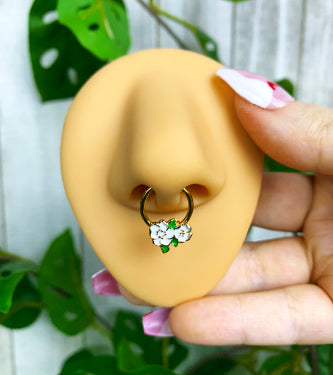




















You're scrolling through body jewelry, find two nearly identical gold hoops, and then notice the prices: one costs $12, the other costs $89. Both look warm, shiny, and ready for your piercing. The difference is hiding underneath the finish, and for jewelry that sits against your skin all day, that construction matters far more than the first impression.
Gold filled and solid gold aren't interchangeable versions of the same purchase. They're two different budget promises, with different wear patterns, maintenance needs, and failure points. This guide gives you a clear pick by piercing site, plus a practical way to judge durability, skin safety, cost, and care before you buy.
Why This Choice Matters for Your Piercings
A cheap plated ring can look perfect in the product photo and still turn dull, green, or irritating after regular exposure to sweat, water, lotion, and friction. You may get away with it in an occasionally worn healed lobe, but that same material is a poor gamble in a septum, navel, or cartilage piercing that gets bumped and rotated every day.
Solid gold is gold alloy throughout the piece. There's no separate base-metal core waiting underneath the surface. Gold filled jewelry has a mechanically bonded gold outer layer over a base-metal core, so it gives you a genuine gold surface at a lower entry price, but that surface can eventually wear through.
Practical rule: Choose based on how the piercing behaves, not just how the jewelry looks in your hand.
Your healed lobe may tolerate a gold-filled stud beautifully because it gets little movement and minimal rubbing. A helix bar that catches on hair, headphones, and pillows has a much rougher job. A septum ring rotates inside the nose, while a navel ring presses against clothing and collects sweat. The material that works for one can be the wrong choice for another.
The useful question isn't “Which is universally better?” It's “Which material makes sense for this piercing, this wear schedule, and this skin?” Use these four filters:
- Durability: How much rubbing, bending, moisture, and movement will the jewelry face?
- Skin safety: Will your skin contact only the gold surface, or could a base metal eventually be exposed?
- Cost: Are you buying a rotation piece, or something you'll wear continuously for years?
- Care: Will you remove it for showers, workouts, pools, and sleep, or leave it in constantly?
My blunt starting point is simple. Solid gold is the safer long-term material for demanding wear and reactive skin. Gold filled is the smarter value for many healed, lower-friction piercings. The right answer depends on the site.
What Gold Filled and Solid Gold Mean
The construction decides what reaches your skin, how the piece wears, and what you are paying for.
Gold filled jewelry has a bonded outer layer of real gold over a base-metal core, often brass. In the United States, the category requires at least 5% real gold by total weight, commonly marked 1/20 or 1/20 14K GF. The Federal Trade Commission's jewelry guidance defines that minimum as 1/20 of the total weight.
That layer is substantially thicker than ordinary plating. Technical references place gold-filled layers at roughly 5 to 100 microns, which helps explain why gold filled can handle more normal wear than a thin plated finish. The base metal remains underneath, though. If friction, sweat, or chemicals damage the bonded layer, that core can eventually enter the skin-contact equation.
Solid gold jewelry is gold alloy throughout the piece, not just on the outside. In U.S. jewelry standards, “solid gold” generally means the item is gold throughout and reaches at least 10 karats, or 41.7% pure gold by weight, according to the World Gold Council's jewelry standards overview.
Karat numbers are purity labels
Karat shows how much of the alloy is gold:
- 14K: 58.3% pure gold
- 18K: 75% pure gold
- 22K: 91.7% pure gold
- 24K: 99.9% pure gold
The gold purity and karat reference summarizes these purity figures. The remaining metals add strength, color, and workability. Pure 24K gold is soft, so body jewelry commonly uses lower karats for a better balance between gold content and structural strength.
A 14K stamp identifies the karat grade of solid gold. 1/20 14K GF identifies a 14K gold layer that makes up at least one twentieth of the item's total weight. A 14K solid-gold piece therefore contains more than 11 times as much gold by weight as gold filled meeting the minimum 5% threshold, based on the stated weight requirements in the Federal Trade Commission's jewelry guidance.

Gold plated jewelry has a thinner gold coating over base metal. Gold vermeil has gold plating over sterling silver. Gold filled sits between those surface treatments and solid gold, but its bonded layer still differs from an all-gold alloy. For practical buying and wearing guidance, read BodyCandy's crash course on buying and wearing gold jewelry.
Durability, Skin Safety, and Price Compared
The gold filled vs solid gold decision gets easier when you separate three questions: how long the surface lasts, what happens if your skin reacts, and whether the lower upfront price makes sense for your habits.
| Factor | Gold Filled | Solid Gold 14K–18K |
|---|---|---|
| Construction | Gold layer bonded to a base-metal core | Gold alloy throughout |
| Gold content | At least 5% by total weight | 58.3% to 75% pure gold by weight |
| Wear behavior | Strong surface, but can eventually expose the core | No outer gold layer to wear through |
| Best fit | Healed piercings and rotation jewelry | Demanding daily wear, sensitive skin, and long-term pieces |
| Main risk | Base-metal exposure after damage | Alloy ingredients may still matter for highly reactive skin |
| Value logic | Lower upfront cost, limited recoverable gold | Higher upfront cost, fuller material value |
Gold filled can be surprisingly sturdy. The bonded layer is far thicker and more secure than standard plating, so a healed lobe stud or occasional hoop can keep its gold appearance through plenty of normal wear. That doesn't make it permanent. Rings, tight-fitting hoops, and jewelry that constantly rubs against skin or clothing place more stress on the surface than a pendant that hangs freely.
Solid gold wins the durability contest because there's no separate surface layer to wear away. A scratch can affect the finish, but it doesn't reveal a different core metal. You can also have solid gold cleaned or polished without losing the entire material category.
Skin safety needs a closer look
Pure metallic gold itself isn't generally the allergen people fear, but gold contact allergy remains measurable. A pooled patch-tested prevalence of 14.1% appears in the medical literature reviewed in this PubMed record on gold contact allergy. That makes the alloy and the construction relevant, especially for people with known nickel sensitivity or a history of reactions.
Gold filled may be comfortable for many healed piercings while the gold barrier stays intact. If the layer wears through, the brass or copper core can touch your skin. Solid gold removes that specific core-exposure problem, though you should still check the alloy details if you already know that certain metals bother you. BodyCandy's guide to allergic reactions and piercing-care materials offers additional material-selection context.
For price, gold filled is the obvious choice when you want several fashion pieces and don't need every item to become a permanent staple. Solid gold costs more because you're buying substantially more gold and continuous material, not just a more convincing surface. My opinion: save money with gold filled for rotation jewelry, but buy solid gold when removing and replacing the piece would be a hassle.
When Gold Filled Stops Acting Like Gold
The failure point most shoppers skip is the day the bonded gold layer stops separating your skin from the core.
Gold-filled jewelry contains at least 5% gold by total weight, but that number doesn't mean every part of the visible surface contains a thick, uniform slab of gold. The material is built as an outer layer bonded to a base metal. Friction gradually works on that layer, especially at posts, hinges, edges, threaded areas, and spots that press against skin or clothing.
Sweat, saltwater, repeated bending, chlorine, lotions, and harsh cleaning agents can speed up the process. A piece worn occasionally may stay attractive much longer than one worn continuously, but the timeline depends on the piercing site, movement, body chemistry, and care routine. There isn't one honest lifespan number that applies to every gold-filled hoop or barbell.
Watch for the first signs
Pay attention to changes at the exact points that contact your piercing:
- Darkening or dulling: The post, hinge, or edge loses its even gold appearance.
- New itchiness: Irritation appears after a long period of comfortable wear.
- Green or gray discoloration: The exposed core reacts with moisture and skin oils.
- Unexpected tenderness: A healed piercing becomes sore without a clear bump or injury.
- Metallic taste: Oral jewelry that has damaged or exposed surfaces may create an unpleasant metallic taste.
A reaction doesn't prove that gold caused the problem. It may indicate that the base metal is now touching you, that residue has collected around the jewelry, or that the piercing has been irritated by movement. Remove the suspect piece and ask a qualified piercer or clinician for guidance if symptoms persist, worsen, or include significant swelling.

Solid gold doesn't have this same layer-breach failure mode. It can still collect debris, scratch, or contain an alloy ingredient your skin dislikes, but it won't suddenly turn into base-metal jewelry because the outer gold has disappeared. That's why I'm comfortable recommending gold filled for a healed lobe you monitor, but not as my first choice for a piercing where irritation would be difficult to identify or manage.
Care and Maintenance That Extends the Life
Care won't turn gold filled into solid gold, but it can keep the bonded layer intact for much longer. The winning routine is less about fancy jewelry products and more about reducing exposure to friction, chemicals, and trapped moisture.
Build the right daily routine
Remove jewelry before showering if you're using harsh soap, before applying lotion or sunscreen, and before a workout that leaves the piece soaked in sweat. Chlorinated pools are especially rough on gold-filled jewelry, and repeated swimming can shorten the useful life of the outer layer.
Sleeping in a fresh cartilage piercing is a separate problem. Pressure from a pillow can irritate the healing channel and push the jewelry against the skin, while movement can accelerate wear at the same time. Don't sleep on healing cartilage, and don't treat gold filled as a reason to ignore standard piercing aftercare.
For cleaning, match the routine to the piercing:
- Fresh piercings: Follow your piercer's saline instructions. Don't twist the jewelry or scrub the channel.
- Healed piercings: Use mild soap and warm water, then rinse and dry thoroughly.
- Either material: Avoid alcohol, hydrogen peroxide, abrasive cloths, and jewelry dips that can damage finishes or irritate tissue.
Care habit that pays off: Dry the post, hinge, and threaded areas completely after cleaning. Moisture trapped in a tight area creates a perfect setting for residue and irritation.
Store each piece separately
Use a fabric pouch or compartmented jewelry box so pieces don't scrape against one another. Keep jewelry away from humid bathroom counters when possible, and place silica packets in the storage area if humidity is a recurring problem. Solid gold is more forgiving, but scratches still dull its surface, while gold-filled pieces can suffer damage to the bonded layer.
Inspect gold-filled jewelry before putting it back in. If you see a worn spot, rough edge, or color change at the part entering the piercing, retire it from body wear rather than waiting for irritation. Solid gold can usually return to service after a proper clean and inspection, provided the jewelry remains structurally sound and suitable for the piercing.
Matching the Metal to the Piercing
The best material changes with anatomy, movement, moisture, and how often you remove the jewelry. A healed lobe and a fresh helix shouldn't get the same recommendation just because both use a small post.
| Piercing Site | Best Material | Why |
|---|---|---|
| Fully healed lobe | Gold filled for value, solid gold for permanent wear | Lobes usually face less friction, making them a strong use case for gold-filled studs and hoops |
| Helix or other cartilage | Solid gold after healing | Hair, headphones, pillows, and movement create more opportunities for rubbing and bumps |
| Septum | Solid gold | Rotation inside the nose and contact with moisture make continuous, stable material more useful |
| Navel | Solid gold for full-time wear | Clothing, sweat, and repeated movement put pressure on the jewelry |
| Nipple | Solid gold, or another qualified hypoallergenic material | The jewelry needs to remain comfortable through extended contact and movement |
| Eyebrow or surface piercing | Lightweight gold filled for healed fashion wear, solid gold for maximum continuity | Lower weight can reduce pulling, but the jewelry still needs to suit the site and anatomy |
| Fresh piercing of any kind | Implant-grade titanium or suitable solid 14K gold | Healing tissue shouldn't depend on a gold-filled barrier staying perfect |
Lobes are the easiest gold-filled win
A fully healed lobe is where gold filled earns its place. If you change jewelry regularly, inspect the posts, and avoid sleeping, swimming, and showering in your favorite pair, a gold-filled stud can give you the warm gold look without the price of solid gold.
Cartilage deserves a stricter standard. Helix jewelry gets caught in hair, pressed by headphones, and bumped while you sleep. Once the piercing is healed, solid gold is the choice I'd make for a piece you plan to leave in.
The wet and mobile sites need more confidence
A septum ring rotates, collects moisture, and sits in a sensitive area. I'd choose solid gold for a long-term septum ring, particularly if you're prone to irritation or you don't want to monitor the surface every time you clean it.
Navels deal with waistbands, shirts, sweat, and repeated contact. Solid gold has the edge for daily wear. Eyebrow and surface piercings bring a different concern, weight. A lightweight option can reduce pulling, but surface placements need professional assessment, appropriate jewelry geometry, and a healed channel before fashion material becomes the focus.
For a broader explanation of body-jewelry materials, read BodyCandy's material guide for body jewelry. Fresh piercings are the firm boundary: choose implant-grade titanium or appropriate solid 14K gold, not gold filled.
Which One You Should Actually Buy
If you're buying for a fresh lobe or helix, choose implant-grade solid 14K gold if gold is the look you want. Healing tissue is vulnerable to friction and contamination, and a gold-filled piece adds the possibility of base-metal exposure if its bonded layer gets damaged before the piercing settles.
For a healed lobe with ordinary sensitivity, gold filled is a smart buy. It works especially well for people who want multiple earrings, switch styles often, and don't need every piece to remain in place through showers, workouts, and sleep. You get a real gold outer layer and a noticeably lower entry cost than solid gold.
Use this decision list
- First-time buyer with a fresh piercing: Choose implant-grade titanium or solid 14K gold. Don't make gold filled your healing experiment.
- Healed lobe with normal sensitivity: Choose gold filled for rotation jewelry, or solid gold for the pair you never remove.
- Healed septum worn daily: Choose solid gold. Rotation and moisture make the continuous material worthwhile.
- Cartilage you keep in all the time: Choose solid gold, ideally in a comfortable design that won't snag.
- Known nickel sensitivity or reactive skin: Choose solid gold after checking the alloy details with the maker or piercer. Avoid waiting for a worn gold-filled layer to reveal what's underneath.
- Budget shopper building a stack: Use gold filled for pieces you'll rotate, and reserve solid gold for the one or two items that stay in every day.
- Navel or nipple jewelry exposed to constant movement: Choose solid gold for the more dependable long-term wear path.
My buying verdict: Gold filled is a value material for healed, lower-friction piercings. Solid gold is the responsible splurge for fresh, sensitive, high-movement, or permanent-wear placements.
One more point matters if you're thinking about resale or recycling. Solid gold retains the full value of its gold content, while gold filled contains limited recoverable gold because the minimum construction is only 5% gold by total weight, as described in this gold-filled and solid-gold comparison. Recycled gold supply reached 1,404 tonnes in 2025, the highest level since 2012, according to the gold-filled jewelry care and recycling discussion. That makes end-of-life value more relevant, but it doesn't change the basic math: solid gold gives you substantially more recoverable gold, while gold filled earns its keep through lower upfront cost and attractive everyday styling.

Choose the material that matches your actual behavior. If you'll baby a healed lobe and rotate jewelry, gold filled makes sense. If you'll put one piece in and forget about it, solid gold is usually the better purchase.
Ready to make the material match your piercing? Browse BodyCandy to compare gold-filled and solid-gold body jewelry by piercing type, metal, style, and price, then choose the piece you'll wear and care for.