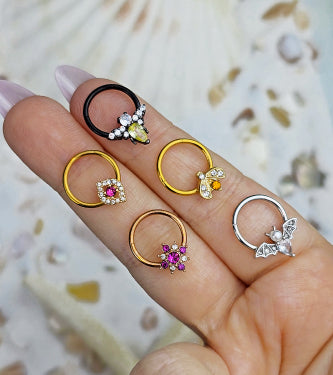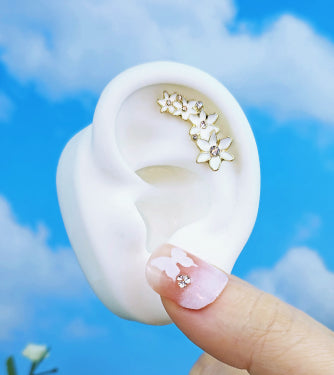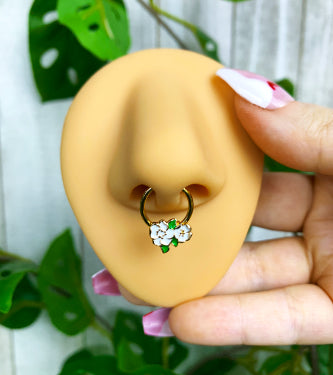


















You’ve decided you want a hoop. Great choice. Then you start shopping and suddenly there are three names for what looks like the same little circle, and the product page assumes you already know the difference. Captive, clicker, seamless. They each open, close, and wear differently, and picking the right one is the difference between a hoop you love and one that lives in a drawer. Let’s break it down.

Captive bead ring: the secure classic
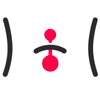
A captive bead ring (you’ll see it as CBR) is the OG hoop. It’s a ring with a small bead held in place by the tension of the metal pressing against it. That bead is the closure.
- How it wears: secure and timeless, with that little bead as a cute focal point
- The catch: getting it on and off is fiddly, and it often takes a bit of practice or even a small tool to pop the bead in and out
- Best for: people who don’t plan to swap it constantly and want a look that stays put
It’s reliable and a little old-school in the best way. Just don’t expect to change it on a whim.

Clicker: the easy, everyday hero
A clicker (sometimes called a hinged segment ring) has a tiny hinge built in. One side swings open, you slip it through, and it snaps shut with a satisfying little click. No beads to lose, no wrestling.
- How it wears: secure and seriously low-effort, which is why it’s a fan favorite
- The catch: the mechanism makes it a touch pricier than a basic ring, and that’s about the only downside
- Best for: septum, daith, helix, and anyone who wants to put it in once and forget about it
If you hate fumbling behind your ear or with a mirror, the clicker is almost always the answer. It’s the most beginner-friendly of the three.

Seamless: the minimalist’s minimalist
A seamless ring (also called a continuous ring) is one smooth, unbroken circle with no bead and no hinge. You gently bend the two ends apart to get it in, then close them back together.
- How it wears: the cleanest, most delicate look of the bunch, perfect for stacking and that understated aesthetic
- The catch: the open-and-close bending takes a careful hand, and doing it over and over can weaken the ring over time, so it’s not the one you swap daily
- Best for: minimalist looks, curated stacks, and anyone who wants the hoop itself to be the whole statement
When you want “barely there but make it gold,” this is the one.
Quick cheat sheet
- Want the easiest on and off? Clicker.
- Want a classic, secure look with a little bead detail? Captive.
- Want the most seamless, minimal circle for stacking? Seamless.
Two things that matter no matter which you pick
Before you check out, nail these down so your hoop actually fits:
- Gauge and diameter. Gauge is the thickness, diameter is how wide the circle is. Match them to your piercing, since a hoop that’s too small pinches and too big flops. If you’re unsure, our sizing guide walks you through measuring a piece you already own.
- Timing. Hoops are best once a piercing is fully healed, not fresh. A new piercing is happier starting with a flat back stud, with the fun hoop saved for after it settles.
Whichever style wins you over, the metal still matters most. Body Candy makes its hoops in implant-grade titanium and solid 14K gold, much of it crafted in house by our own master jeweler, so the circle on your ear is quality all the way through.
Pick your mechanism, match your size, and go get the hoop you’ve been eyeing. Your future ear stack starts with one good circle.