
















You put on a cute pair of earrings, feel fine for a few hours, then wake up to a red, itchy lobe that's hot for no good reason. That's the annoying reality for a lot of people with sensitive ears, and it's exactly why the best jewelry for sensitive ears isn't about chasing the prettiest pair first. It's about choosing metal that your skin can tolerate, then making sure the post, backing, plating, and clasp aren't sabotaging you from the start.
Nickel allergy is the big villain here. One guide says around 15% of people who have their ears pierced report sensitive ears, and nickel is responsible for about 65% of jewelry-related contact dermatitis cases, which is why nickel-free metals like titanium, platinum, and verified 14k or 18k gold keep showing up as the safest bets for sensitive wearers (Shiels). If your ears react, don't assume you're “just sensitive to earrings.” Assume your jewelry is hiding a trigger.
Why Your Ears Freak Out After Wearing Earrings
A bad earring reaction usually does not show up in a dramatic way at first. It starts with itching, redness, warmth, soreness, or swelling, then the skin can turn dry and irritated if you keep wearing the piece. If you have ever changed earrings for a night out and dealt with the fallout the next morning, you have already seen the basic pattern of contact dermatitis.
Nickel is often the culprit
Nickel shows up in cheap alloys, plated jewelry, clasps, posts, and other parts people do not check. Guidance from Blue Nile notes that nickel allergy affects about 15%–20% of the general population, and coatings, clasps, and other hidden components can make a piece react badly even when the front looks harmless. That is why an earring can look safe in the display case and still make your ear angry once it is on skin.
The full assembly matters, not just the face of the earring. A nickel-free front does not help much if the post, backing, latch, or plating layer contains nickel or wears through quickly. If a seller cannot tell you what every skin-contact part is made of, treat the claim as weak.
Moisture and friction pile on fast. Sweat under a heavy hoop, perfume on the lobe, or lotion trapped behind a backing can turn mild irritation into a real flare. If your ears only hurt after workouts, hot days, or long wear, the problem may be part metal, part irritation, and part poor fit.
Practical rule: If the pain shows up fast and the itch is the main complaint, suspect metal or plating. If it is more about rubbing, pressure, or damp skin, the fit and finish are working against you too.

Your takeaway is simple. If your ears are reactive, stop shopping by style alone and start checking what touches the skin. Look for full material disclosure, especially on the post, backing, and clasp, and use this guide on piercing and material sensitivities to understand why certain pieces trigger reactions while others stay calm.
The Metals That Play Nice With Sensitive Ears
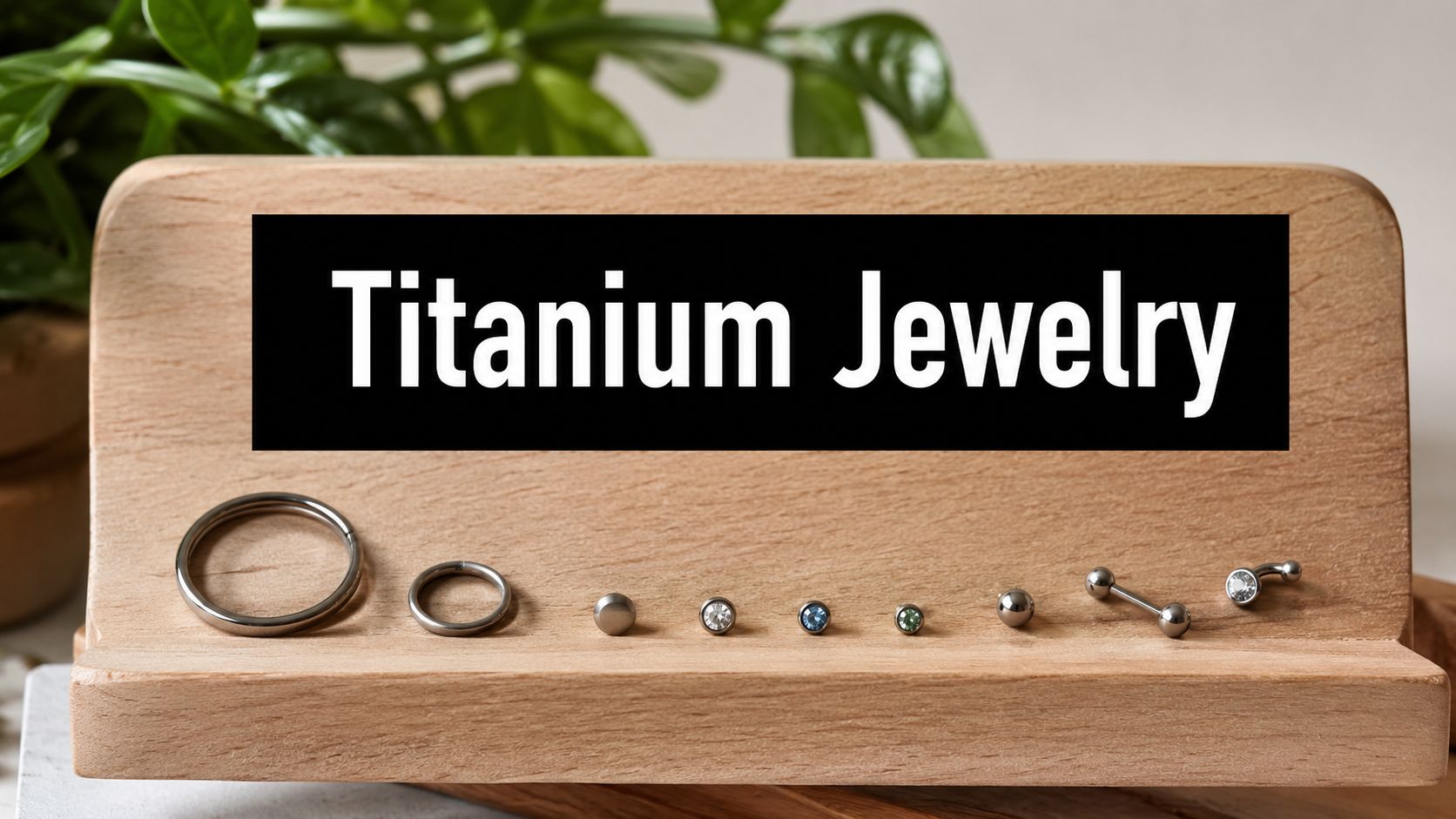
If your ears flare up fast, start with the metals that give skin the least to complain about. Niobium, high-karat gold, and platinum are the safest bets here. Implant-grade titanium also belongs in that group, but the point is bigger than the front of the earring. The post, backing, clasp, and any plating have to be clean too. A pretty front means nothing if the parts touching your skin are cheap or coated in mystery metal.
The safest picks, ranked by trust
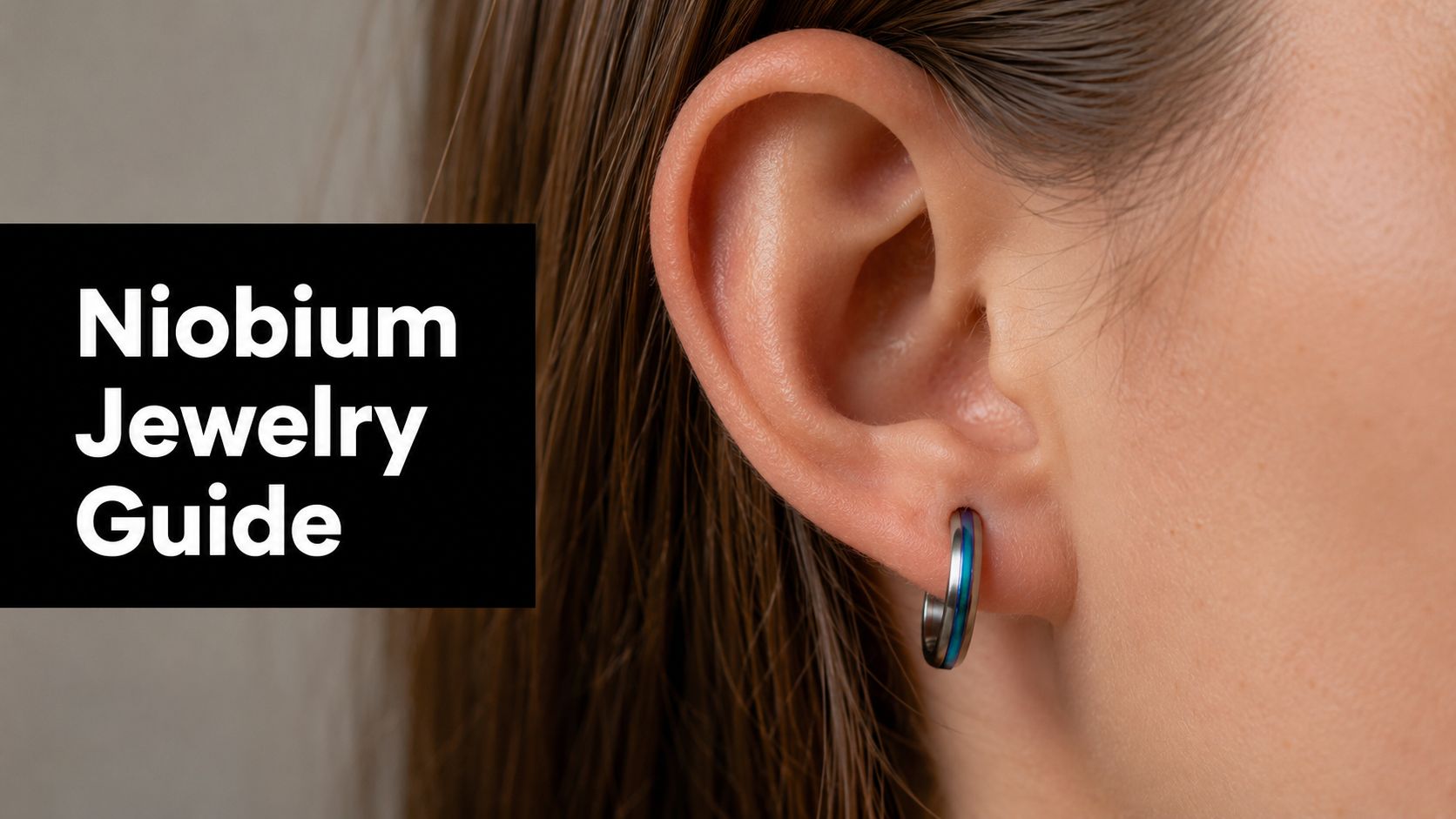
Niobium is one of the cleanest choices for reactive ears. It forms a stable oxide layer, which helps it stay calm against skin, and it's a strong fallback when a style does not come in a better metal (Atoleajewelry). If you want a metal that usually minds its business, niobium earns that spot.
Implant-grade titanium is still a top-tier option. The version you want is the one clearly identified as implant-grade, with material claims you can verify instead of vague “safe” marketing. Look for a straight material disclosure on every skin-contact part, including the post and backing, because a titanium front does not help if the clasp or butterfly back is a different alloy. That is the part sellers love to gloss over.
14k gold or higher works only when it is solid and properly identified. A seller should be able to name the karat and show a purity stamp such as "14k" or "585" (EfyTAL). If the piece is merely plated, filled, or described with vague language, pass on it. For sensitive ears, loose claims are how people end up itchy.
Platinum is another strong choice because it is chemically inert and resists tarnish and corrosion (Blue Nile). That makes it a steady option for people who want a metal that stays predictable over time. It is also one of the cleaner picks when you do not want to keep second-guessing wear and finish.
The ones I'd treat with caution
Surgical stainless steel sits in the gray zone. Some people tolerate it, but it is not the first metal I'd hand to someone with reactive ears, because quality and nickel content vary from piece to piece. The problem is not the label. The problem is that “surgical” still leaves room for a lot of bad hardware.
Gold-plated brass is a bad bet, plain and simple. Once the plating starts to thin, the base metal is exposed and irritation usually follows. The same warning applies to costume jewelry that sounds reassuring on the product page but hides cheap parts in the post, backing, or clasp. If the seller cannot spell out every skin-contact component, assume your ears will find the weak spot.
Hard truth: If the listing cannot tell you exactly what the post, backing, and clasp are made of, treat the piece as a gamble.

For a quick shopper's filter, this short guide to hypoallergenic jewelry for sensitive skin lines up with the same basic rule. The clearer the metal disclosure, the safer the buy.
Quick Comparison of Hypoallergenic Jewelry Materials
If you want the fast version, use the table below as your shopping filter. This is the stuff I'd scan before I even clicked into a product page, especially if your ears get angry fast.
| Metal | Nickel Content | Price Range | Best For | Durability |
|---|---|---|---|---|
| Implant-Grade Titanium | Virtually none when properly certified | Moderate | Fresh piercings, daily wear, very sensitive ears | Excellent |
| Niobium | Virtually none | Moderate | Reactive ears, minimalist styles | Excellent |
| 14K or Higher Gold | Low when solid and properly disclosed | Higher | Lobes, everyday pieces, gift jewelry | Very good |
| Platinum | None in quality jewelry described for sensitive ears | High | Long-term wear, premium pieces | Excellent |
| Surgical Steel | May contain nickel | Lower to moderate | Mild sensitivity only | Good |
For a broader shopping shortcut, this quick take on hypoallergenic jewelry for sensitive skin lines up with the same basic rule. The more clearly a seller names the metal, the less likely you are to buy a problem.
How to Read Labels and Spot Real Hypoallergenic Pieces
A pair of earrings can look harmless on the card and still set your ears off the second they touch skin. The word hypoallergenic gets used as a sales crutch, not a guarantee. A real listing tells you what the metal is, what the post is made of, and whether the backing and clasp match the part that touches your ear.
What to look for before you buy
Start with the stamp or spec. If a seller gives you 14k, 585, ASTM F136, or Ti6Al4V, that is useful because it points to the actual material instead of a vague promise. One guide recommends checking for a metal purity stamp like "14k" or "585" so you can verify what you are buying without guessing, and that is the kind of detail worth trusting (EfyTAL). If the seller cannot name the alloy, assume the label is doing too much work.
Read the wording like someone trying to hide nickel from you, because that is often the game. These phrases should make you stop:
- “Metal alloy” with no details, because that can hide nickel.
- “Gold tone” or “silver tone”, because tone is not composition.
- “Plated” without telling you the base metal.
- “Hypoallergenic” with no material breakdown.
- “Nickel-free” with no mention of the post, clasp, or backing.
The whole assembly matters, not just the decorative front. A safe-looking face can still irritate if the post, backing, or clasp contains nickel, or if the plating wears thin and exposes a cheaper base metal underneath. That is the part shoppers miss, and it is why sensitive ears keep getting betrayed by cute packaging and vague product pages.
If a seller will not say exactly what touches your skin, do not put it in your skin.

The best listings also make it easy to confirm the details with customer service and return policies. If the seller cannot answer basic material questions or refuses to clarify the post and backing, move on. Your ears do not need a mystery purchase.
If you want a simple aftercare reference for the first wear, BodyCandy's H2Ocean aftercare guidance follows the same practical idea, keep the area clean and do not beat it up with harsh treatment.
Testing New Jewelry Safely and Caring for Piercings
A new pair of earrings can behave beautifully in the box and still wreck your ears once you wear them. That's why I always tell people to treat the first wear like a test, not a victory lap. If the piece is for a sensitive piercing, don't debut it during a sweaty workout, a long travel day, or a night you know you'll be tossing and turning.
Start small, then watch your skin
Put the earrings in on a calm day when your ears are clean and not already irritated. Wear them for a short stretch first, then check for itching, redness, burning, swelling, rash, cracking, or blisters. The earlier you catch a reaction, the easier it is to stop the damage before your skin stays angry for days.
For aftercare, keep it simple. Saline is your friend, and over-cleaning is not. If you're healing a piercing or dealing with a sensitive spot, the point is to keep the area clean without stripping it raw. H2Ocean aftercare guidance fits that basic approach, and the same logic applies here.
What not to do
- Don't twist the jewelry just to “check” it.
- Don't scrub with alcohol or harsh cleaners, because that can dry the skin out and make the irritation worse.
- Don't sleep on a fresh piercing if you can avoid it.
- Don't assume more cleaning equals faster healing.
If you're wearing earrings often, give your ears breaks when they need them. Even good jewelry can feel awful if the skin is already irritated, damp, or overworked. Sensitive ears usually reward patience better than panic.
Piercing Types and Fasteners That Reduce Irritation
Metal matters, but hardware matters too. A great material can still feel miserable if the backing digs in, the post is too bulky, or the closure catches every time you move. I care a lot about the shape of the hardware because that's where comfort either shows up or falls apart.
The hardware that usually behaves better
Flat-back labrets are the first thing I'd reach for if your ears hate pressure. They sit more smoothly against the skin than old-school butterfly backs, which can pinch and trap debris. That flatter profile also makes them easier to sleep in.
Threadless push-in posts and internally threaded styles tend to feel cleaner and less fussy than cheap external threads, because the threading isn't scraping the skin on insertion. That matters more for cartilage than many realize. Helix, tragus, and conch piercings need better hardware because they're firmer, less forgiving spots than soft lobes.
For everyday wear, go lighter and simpler. Small hoops, huggies, and minimal studs usually beat big dangling pieces because they move less and tug less. If you're shopping for sensitive ears, that's where the style choice supports the material choice instead of fighting it.
BodyCandy carries flat-back earrings and push-in cartilage or helix styles that fit this general comfort-first approach. I'm mentioning that because a lot of shoppers want something they can click through and compare, not just theory.
Comfort rule: If the backing makes you aware of the earring all day, it's not a good earring for you.
When DIY Fixes Aren't Enough and a Pro Is the Move
Some flare-ups are obvious bad jewelry. Others aren't. If you've switched to better materials, watched your aftercare, and your ears still stay red, angry, or sore, stop guessing and get a professional involved. That's not overreacting, it's smart.
Who to see and why
A piercer is the right move when the issue looks mechanical, like pressure, bad fit, or jewelry that keeps rubbing. A dermatologist is the better call if you've got a spreading rash, blistering, or a reaction that points to a stronger metal allergy. If a piercing is still persistently irritated after 6+ months, it's time to stop treating it like a normal healing issue and get it looked at by someone who knows skin and metal reactions.
If you suspect a true nickel allergy, ask about patch testing. That's the cleanest way to confirm what your skin is reacting to, and it changes your shopping rules forever. Once you know the trigger, you can quit gambling on “maybe this one will be fine.”
Bring the jewelry with you if you can. The exact post, backing, and clasp matter just as much as the front design. That one habit saves a lot of time and a lot of unnecessary flare-ups.
Your Sensitive-Ears Shopping Checklist and What's Next
Before you buy, run the piece through a quick sanity check. If it fails any of these, keep scrolling.

- Material is clearly stated. Look for ASTM F136 titanium, niobium, 14K+ gold, or platinum.
- Metal stamps are visible. Good signs include Ti, Pt, 14K, or 585.
- “Alloy” and “costume jewelry” are red flags. Skip vague descriptions.
- The brand explains the whole piece. Post, clasp, and backing should all be disclosed.
- Reviews mention sensitive ears. Real-world feedback matters.
- Clasps look secure and smooth. Sharp edges cause unnecessary irritation.
- Return policy is clear. You want an exit if the piece doesn't work.
- Start with studs or low-profile styles. Heavy pieces pull and irritate faster.
That's the shopping game in plain English. Choose the metal first, check the full assembly second, and treat the label like a clue, not a promise. If you want to browse options built around that logic, BodyCandy has titanium, 14k gold, and niobium pieces worth checking, and their newsletter is where you'll catch fresh drops and seasonal sales without hunting for them later.
If your ears are picky, shop like your skin has standards, because it does. Start with clearly disclosed materials, then look at the post, backing, and clasp before you click buy. Visit BodyCandy to browse sensitive-ear-friendly styles that make the metal, the fit, and the comfort easy to check.