










So, you're thinking about getting a nose piercing, or maybe just leveling up your current jewelry game. Fantastic choice! A nose ring is way more than just an accessory; it’s a statement of personal style that can be as subtle or as bold as you want it to be.
The world of nose jewelry is huge, and diving in can feel a little overwhelming at first. But don't worry—we've got your back.
Think of this guide as your personal tour through all the amazing options out there. We'll break down everything you need to know, from the most popular types of nose rings to finding that perfect fit. No confusing jargon, just real, friendly advice from your piercing-obsessed pals to help you find a piece that feels like it was made just for you.
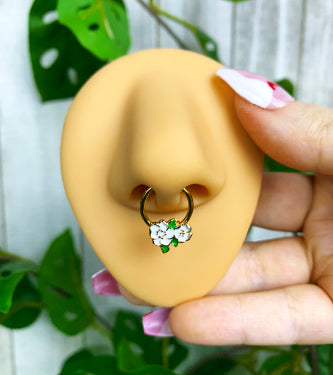
Basically, nose jewelry falls into two main families: studs, which sit flat against your nostril, and hoops, which loop through your nostril or septum. From there, the styles branch out into an incredible variety, including secure nose screws, easy-to-use L-shapes, and bold septum clickers, giving you endless ways to express your unique style.
What You'll Discover Inside
This guide is built to be your go-to resource for everything nose jewelry. We'll start with the basics and walk you through everything, making sure you feel like a total pro by the end. Here’s a little sneak peek of what’s in store:
- Exploring the Classics: We'll introduce you to the timeless go-tos, like nostril studs and hoops, and get into what makes each one unique.
- Diving into the Details: You’ll learn the real difference between a nose screw and an L-shaped stud, and what makes a septum clicker stand out from a classic horseshoe ring.
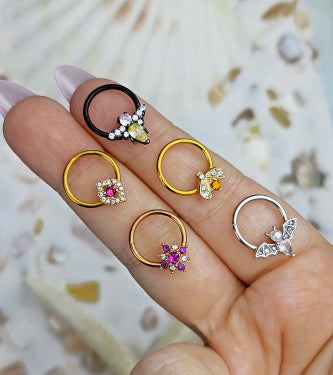
- Visualizing Your Style: By showing you real-world examples (hello, Body Candy collection!), we'll help you picture exactly how each type of nose ring looks when worn.
Our goal is to give you all the knowledge you need to choose jewelry that not only looks incredible but also feels comfortable and shows off your personality. By the time you're done reading, you'll be a nose ring connoisseur.
Ready to find your new favorite piece? Let's get started and explore the diverse and exciting world of nose rings together. Your perfect style is just waiting to be discovered.
Alright, you've got the basics covered. Now we get to dive into the fun stuff—all the different styles of nostril jewelry you can use to really define your look.
This is where your personality gets to shine. Are you feeling dainty and delicate? Or are you aiming for something more bold and beautiful? We'll break down every major type so you can find your perfect match.
Nostril jewelry basically falls into two big families: studs and hoops. But don't let that fool you—within those categories, you'll find an incredible variety of designs, each with its own unique vibe and its own way of staying securely in place.
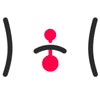
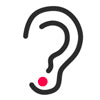
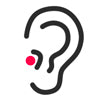
This quick visual breaks down the main players in the nose jewelry game, giving you a snapshot of studs, hoops, and septum styles.
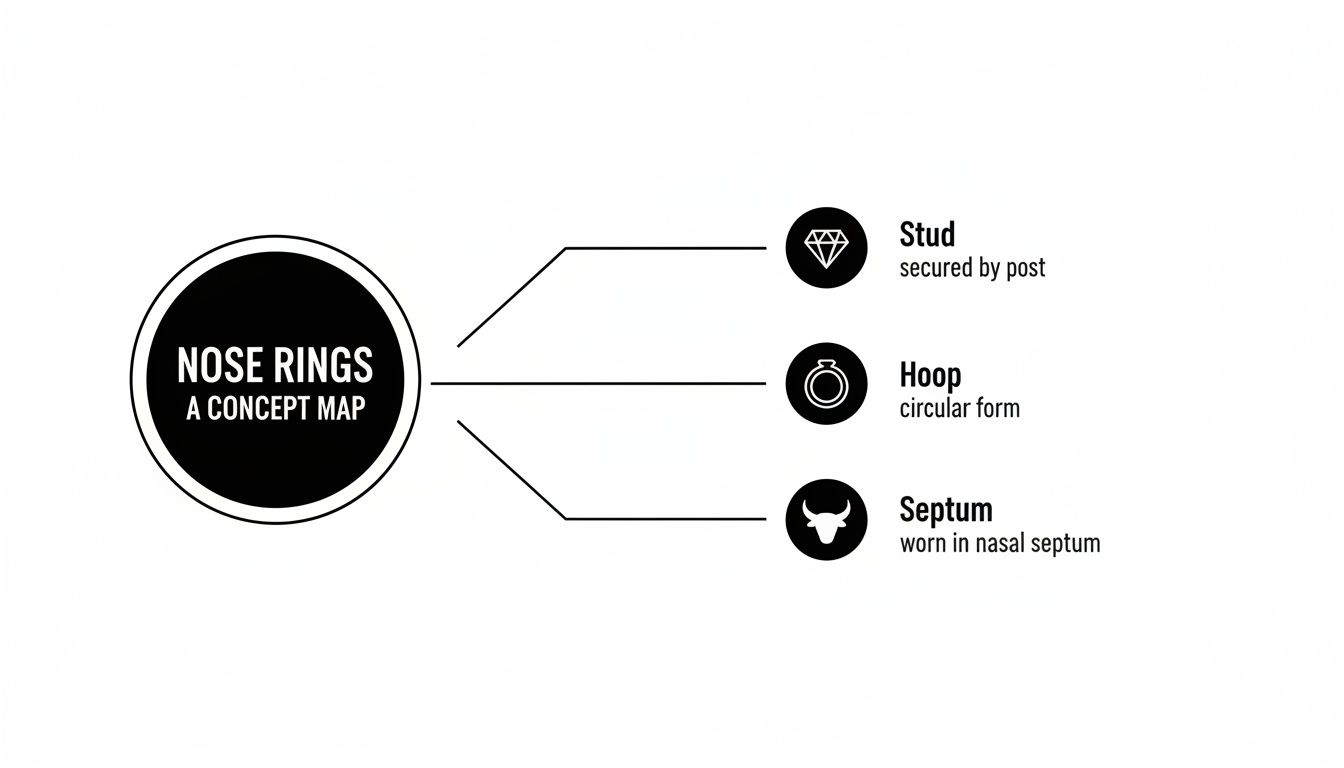
As you can see, the world is your oyster! You've got tons of options to choose a style that fits your anatomy and your aesthetic. Let's dig a little deeper into the nostril-specific styles you’ll find right here at Body Candy.
The Stud Squad
Studs are pretty much the quintessential nose piercing accessory, and for good reason. You love them for their simplicity and versatility. They're often the go-to choice for fresh piercings because they sit flat against the nose and are way less likely to get snagged while you're healing. But "simple" definitely doesn't mean boring!
-
Nose Screw: This one is a true classic. A nose screw features a straight post that ends in a little C-shaped curve. That tail, or "screw," rests snugly against the inside of your nostril, holding your jewelry securely in place. It might take a little practice to twist in, but once it's there, it’s not going anywhere.
-
L-Shaped Stud: Just like the name says, this stud has a post that's bent at a 90-degree angle, creating an "L" shape. It’s a total fan favorite because it's so easy to pop in and out, which is perfect if you love switching up your look on the regular. It strikes a great balance between being secure and convenient.
-
Nose Bone: For the ultimate minimalist, the nose bone is as straightforward as it gets. It's a short, straight post with a tiny, slightly thicker ball on the end that holds it in place. Because you have to gently push that little ball through the piercing, this style is only recommended for fully healed piercings.
Quick Tip: Think about your lifestyle when choosing a stud. If you're super active or always worried about losing your jewelry, a nose screw offers maximum security. If you're all about changing your vibe on a whim, the L-shape is your new best friend.
Finding Your Perfect Hoop
Hoops bring a whole different kind of energy to your nostril piercing. They can create a look that ranges from edgy and cool to totally elegant. And let's be real, hoops are incredibly popular. The nose ring market is a huge slice of the global body jewelry pie, with nostril hoops alone making up about 35% of all nose piercing sales.
When you're picking out a hoop, it usually comes down to the closure mechanism and the overall aesthetic you're going for.
-
Seamless Ring: This style is the definition of sleek. A seamless ring is a continuous hoop that you gently twist open sideways, insert, and then twist back closed. The result is a flawless, unbroken circle of metal for a super clean and modern look.
-
Captive Bead Ring (CBR): An absolute icon in the piercing world! A CBR is a hoop with a small gap that's closed off by a single bead or charm, which is held in place by the ring's tension. They're incredibly secure and let you add a little extra flair with different bead styles.
-
Open Hoop: Also known as a C-shaped hoop, this style is a game-changer when it comes to convenience. It isn't a full circle; instead, it has a small opening and a flat disc on one end that sits inside your nostril to keep it from falling out. You just slide it right in—no twisting, clicking, or fussing required.
The Unique and Customizable Options
Beyond the everyday studs and hoops, there are a few other types of nose rings out there designed for a very specific purpose or a truly custom fit. These are for the piercing connoisseur who knows exactly what they want.
One of the most interesting is the fishtail nose ring. Now, this isn't a style you can wear right out of the package. It's a long, straight post that your professional piercer will custom-bend into a perfectly fitting L-shape or screw that's tailored to your nostril's unique anatomy.
A fishtail gives you a fit that is literally made just for you, which means ultimate comfort and security. It's an amazing option if you've ever struggled with standard sizes. To get the full story, check out our guide on what in the world is a fishtail nose ring.
At the end of the day, the best style is the one that makes you feel amazing and fits your piercing comfortably. Whether you're drawn to the locked-in fit of a nose screw, the easy-breezy vibe of an open hoop, or the custom comfort of a fishtail, there's a perfect piece of nostril jewelry just waiting for you.
Beyond the Nostril: A Look at Septum Rings and Other Placements
Ready to venture beyond the classic nostril piercing? Let's dive into the world of septum piercings and other unique spots that can totally redefine your style. The septum piercing, which passes through that "sweet spot" of soft tissue between your nostrils, has absolutely exploded in popularity. It's become the go-to for anyone wanting to make a real statement.
And wow, what a statement you can make! Septum jewelry is a universe all its own, with styles ranging from subtly chic to daring and bold. If you've been daydreaming about this iconic piercing, getting to know the different types of nose rings will help you find your perfect match.

Septum Jewelry Unlocked
When it comes to septum piercings, you'll mostly be choosing between two superstar styles: clickers and horseshoes. Each one brings a totally different vibe and function to the table, so let's break them down.
-
Septum Clicker: Think of the septum clicker as the most secure, no-fuss option out there. It has a slick hinged bar that you simply click open and closed—easy as that. This design is fantastic because it's super secure and gives you that complete, seamless hoop look. Plus, they come in endless designs, from simple polished metal to intricate, gem-encrusted showstoppers.
-
Septum Horseshoe: This is the OG of septum jewelry. Also known as a circular barbell, it’s a C-shaped ring with a bead or ball screwed onto each end. The real beauty of the horseshoe is its versatility. You can rock it with the ends pointing down for a classic look, or you can flip it up into your nostrils to hide it for work, school, or when you just want a more low-key vibe.
The right jewelry can make all the difference in your piercing experience. As you explore your options, our guide on the ins and outs of septum piercings is a great resource for everything from pain levels to aftercare.
- Seamless Rings: Just like with nostril piercings, a simple seamless ring offers a super clean and minimalist look for your septum. It's a continuous ring that you twist open and closed, creating a flawless circle that’s perfect for a more understated style.
Exploring More Adventurous Placements
Your nose is a canvas with way more piercing possibilities than just the nostril and septum. If you're feeling adventurous and want a look that truly stands out from the crowd, there are several other placements to consider. These are less common, which honestly, just makes them even cooler!
The Bridge Piercing
This piercing makes an immediate impact. It runs horizontally across the bridge of your nose, right between your eyes. Since it doesn't go through cartilage, it's technically a surface piercing.
- Best Jewelry: The only safe bet for a bridge piercing is a straight barbell. Trying to use a curved barbell or a hoop can lead to migration and rejection, so it’s super important to stick with what your professional piercer recommends.
The Rhino Piercing
This one is just as badass as its name sounds. A rhino piercing, or vertical tip piercing, goes vertically right through the tip of your nose.
- Best Jewelry: A curved barbell is the standard for this unique placement. It lets the piercing sit comfortably with one bead visible on top of your nose and another just under the tip, creating that distinctive "rhino horn" look.
The High Nostril Piercing
It's just like a standard nostril piercing, but placed much higher up on the nose bridge. This placement is absolutely perfect for creating cool, layered looks with other nostril jewelry.
- Best Jewelry: High nostril piercings are almost always done with studs. Think flat back labrets, L-shapes, or nose screws. Because of where it sits, hoops just aren't a viable or comfortable option for this spot.
Whether you’re drawn to the endless styles of a septum piercing or the unique edge of a bridge piercing, there's a world of options out there waiting for you. The key is to find the placement and jewelry that make you feel incredible.
Choosing the Right Material for Your Nose Ring
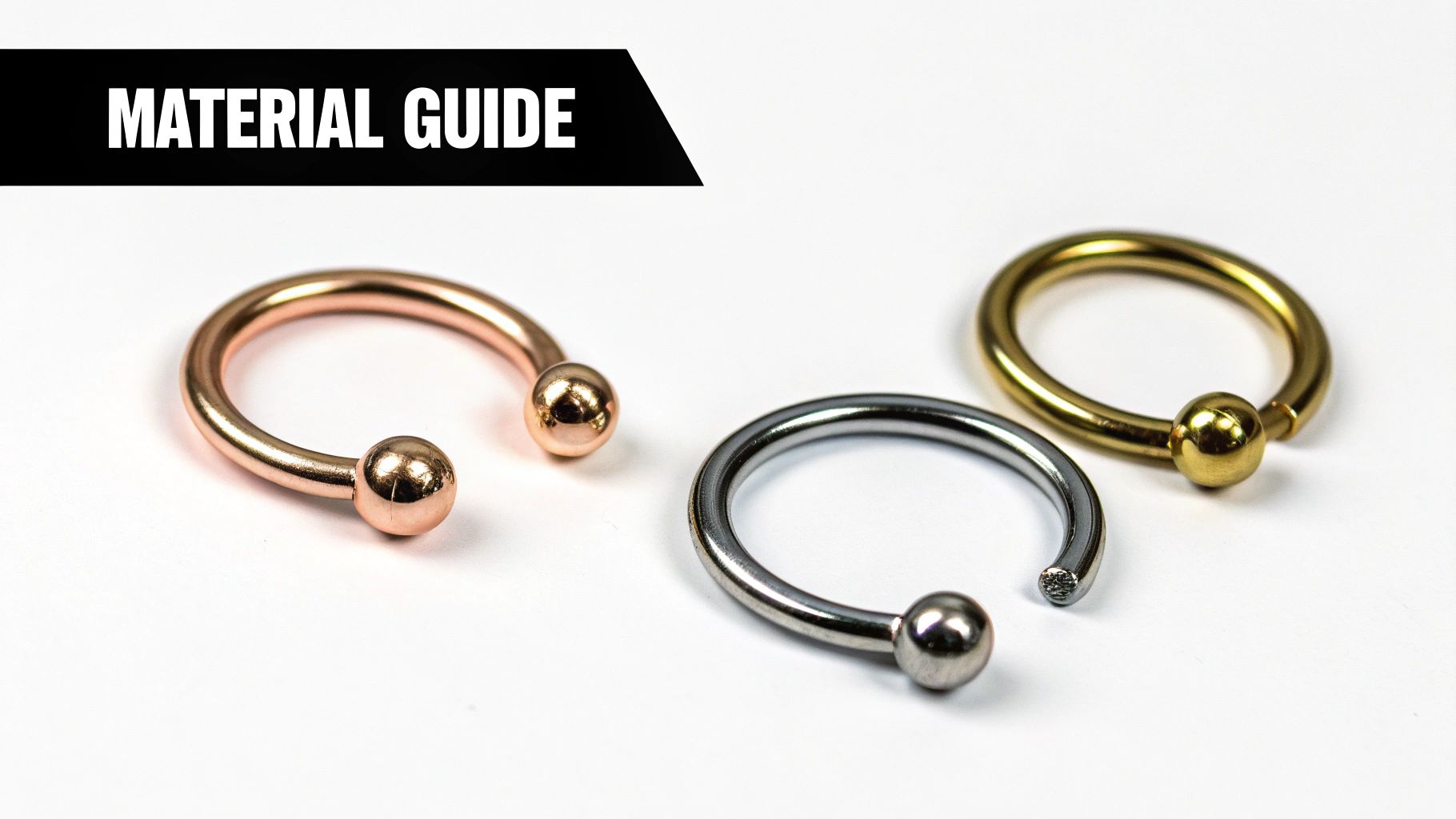
Okay, so you’ve got your dream style in mind. Awesome! Now let's talk about something just as important—the material your jewelry is made from. This isn’t just about looks; it’s about keeping your piercing happy, healthy, and comfortable for the long haul.
Think of it like picking out a phone case. You want one that looks cool, sure, but you also need it to protect your phone, right? The material of your nose ring is your piercing’s first line of defense against irritation, and choosing the right one is a total game-changer.
Let's break down the best materials you’ll find here at Bodycandy, so you can pick the perfect one for your piercing.
Surgical Steel: The Reliable Workhorse
When you think of classic body jewelry, you’re probably picturing surgical steel. It’s one of the most popular materials out there for a reason! It's incredibly durable, resistant to corrosion, and has a great shine that lasts.
Surgical steel is also super budget-friendly, making it a fantastic option for building up your collection without breaking the bank. While it's a solid choice for most healed piercings, it’s worth noting that some grades contain trace amounts of nickel. If you have a known nickel allergy or super sensitive skin, you might want to consider another option, especially for a fresh piercing.
Titanium: The Hypoallergenic Hero
If your skin gets angry at the mere thought of mystery metals, titanium is your superhero. This is the top-of-the-line choice recommended by professional piercers, especially for new piercings. Why? Because it’s implant-grade, completely nickel-free, and biocompatible.
That just means your body sees it as a friend, not a foe, which drastically reduces the chances of an allergic reaction or irritation. It's also surprisingly lightweight, making it incredibly comfortable for all-day wear. For a happy healing process and peace of mind, you can't go wrong with titanium.
Bodycandy Tip: For a brand-new piercing or if you've had reactions in the past, always start with implant-grade titanium. It’s the safest bet for a smooth healing journey and gives you the best possible start.
14k Gold: A Touch of Luxury
Who doesn’t love a little sparkle? If you want to add a touch of elegance to your look, 14k gold is a stunning choice. Available in classic yellow, modern white, and trendy rose gold, it offers a timeless beauty that other metals can’t quite match.
When choosing gold, quality is key. Stick to 14k or 18k solid gold, as gold-plated jewelry can wear down over time, exposing the base metal underneath which could cause irritation. Solid gold is a beautiful and body-safe option for healed piercings. For a deeper look at your options, we've got a fantastic guide that helps with picking the right material for your nose piercing.
Bioflex: The Flexible Friend
Bioflex is a unique, medical-grade plastic that’s both flexible and metal-free. This makes it an amazing option for a few specific situations.
- Active Lifestyles: If you play sports, its flexibility reduces stress on your piercing if it gets bumped.
- Medical Procedures: It's safe for MRIs and X-rays, so you won’t have to take it out.
- Pregnancy: It can comfortably accommodate changes in your body.
It’s also completely hypoallergenic and can be a great choice for healing piercings or as a retainer to keep your piercing open discreetly.
To make things even easier, here's a quick comparison of our go-to materials.
Nose Ring Material Comparison
| Material | Pros | Cons | Best for Sensitive Skin? |
|---|---|---|---|
| Surgical Steel | Durable, affordable, classic shine | May contain trace amounts of nickel | Good for healed piercings, but not for severe nickel allergies. |
| Titanium | 100% nickel-free, lightweight, implant-grade | Higher price point than steel | Yes! The absolute best choice, especially for new piercings. |
| 14k Gold | Luxurious look, available in multiple colors | More expensive, needs to be solid gold (not plated) | Yes, as long as it's solid 14k or 18k and you don't have a gold allergy. |
| Bioflex | Flexible, metal-free, MRI-safe | Less decorative than metal options | Yes! It's completely hypoallergenic and great for tricky situations. |
Ultimately, the best material comes down to your skin, your lifestyle, and your budget. Listening to your body (and your piercer!) is always the smartest move.
Finding Your Perfect Fit with Sizing and Gauge
Alright, you've zeroed in on the perfect style and you know exactly which material will keep your piercing happy. Awesome! Now, let's tackle the final piece of the puzzle: getting the size spot-on. When you’re looking at new nose rings, you’ll see words like “gauge” and “diameter” thrown around. It can feel a little like learning a new language at first.
But don’t sweat it. We’re about to make this super simple.
Choosing the right size isn’t just about how it looks—it's absolutely critical for the health and comfort of your piercing. A hoop that’s too tight can put painful pressure on your nose, while a stud that’s too short can actually sink into the tissue. Yikes. Think of it like buying a pair of shoes; you wouldn't just grab a random size and hope for the best, right? Let's get you measured up so you can shop with total confidence.
What Is a Gauge Anyway?
First things first, let’s talk gauge. In the world of body jewelry, "gauge" is just a fancy word for the thickness of the post or ring that goes through your piercing. Here’s the one tricky part you need to remember: the higher the gauge number, the thinner the jewelry is. It's a bit backward, but you'll get the hang of it fast.
For most nostril piercings, you'll almost always be dealing with two main sizes:
- 20 Gauge (0.81mm): This is probably the most common size out there for nostril piercings. It gives a delicate, subtle look, and you’ll find an absolutely massive variety of studs and hoops in this size.
- 18 Gauge (1.0mm): A little bit thicker than a 20g, this is another popular standard. A lot of professional piercers actually prefer to start with an 18g because it helps create a slightly more stable and durable piercing channel while it heals.
Septum piercings are a different story. They often use thicker gauges like 16g (1.2mm) or even 14g (1.6mm) to properly support bolder styles like chunky clickers and classic horseshoes.
Pro Tip: Not sure what gauge your piercing is? The easiest thing to do is just ask the professional who pierced you. If that's not an option, you can check any jewelry you currently have that fits well, or gently compare your piercing to a standard earring post—most of them are 20g.
Nailing the Right Length and Diameter
Once you've got your gauge figured out, the next measurement you need depends on what style you're after. If you're buying a stud, you need to know the length. If you're going for a hoop, it’s all about the diameter.
Measuring for Studs (Length)
For styles like nose screws, L-shapes, and nose bones, the "length" refers to the wearable part of the post. That's the straight part from the base of the gem down to where the post starts to curve or bend. The standard length for a nostril piercing is usually around 6mm. If your nostrils are a bit on the thicker side, you might find an 8mm post gives you a much more comfortable fit.
Measuring for Hoops (Diameter)
For hoops, the key measurement is "diameter," which is the distance across the inside of the ring from one edge to the other. This is what determines how snugly (or loosely) the hoop will sit against your nose.
- 8mm (5/16"): This is the most common diameter by far. It gives that classic, snug fit for most nostril piercings.
- 10mm (3/8"): If your piercing is placed a little higher up on your nose, or if you just prefer a looser, more dramatic vibe, a 10mm hoop is probably your best bet.
How to Measure at Home
Figuring out your ideal diameter is incredibly easy to do right at home. You just need a little slip of paper and a ruler. Seriously, that's it.
- Cut a small, thin strip from a piece of paper.
- Hold the strip up to your nose so the end is right at your piercing hole.
- Use a pen to mark the paper right at the edge of your nostril.
- Now, just lay that paper strip against a ruler and measure the marked distance in millimeters. That number is your perfect diameter!
And there you have it—no more guesswork! Now that you’re armed with your gauge and size, you’re officially ready to dive into the entire Bodycandy collection of nose rings and find that perfect piece that fits like it was made just for you.
How to Style Your Piercing and Aftercare Essentials
You’ve navigated the world of materials, sizes, and styles, and you've found the perfect piece of jewelry. Congrats! Now for the really fun part: making it completely and totally you.
Styling your nose piercing is where your creativity gets to take center stage. Think of it less like just wearing jewelry and more like telling your story. This is your chance to experiment and land on a look that matches your unique vibe, whether that's a delicate, barely-there nostril stud or a bold, decked-out septum clicker that stops traffic. You're in charge here.
Finding Your Signature Style
Don't ever feel like you have to stick to just one look! The real magic of nose jewelry is how versatile it is. You can switch it up to match your mood, your outfit, or whatever the day throws at you.
Need a little inspiration to get started?
- The Layered Look: Got more than one piercing? Perfect. Try coordinating them for a seriously cool effect. A simple gold hoop in your nostril paired with a more detailed gold septum clicker creates a look that's cohesive but still has tons of personality.
- The Statement Piece: Sometimes, one knockout piece is all you need. Grab a nose ring with a unique design or a flashy gemstone and let it be the star of the show. No backup dancers required.
- The Subtle Stack: This is a super trendy move for anyone with a double nostril piercing. Stacking two tiny hoops, especially in different colors, is an instant way to create an eye-catching, custom look.
There's a reason the nose piercing world is absolutely blowing up. It's one of the most expressive and adaptable piercings you can get. The global body jewelry market is expected to hit $9.36 billion by 2025, and nose piercings are predicted to have the highest growth rate of all. It just proves how much people love this kind of self-expression. You can read more about these piercing trends and see for yourself how popular your favorite styles are becoming!
Aftercare Is Everything
Let's be real: true style starts with a happy, healthy piercing. It doesn't matter how amazing your jewelry is—if your piercing is red, angry, and irritated, it's not going to look or feel good. Proper aftercare is absolutely non-negotiable, especially in those early healing stages.
Keeping your piercing clean and happy is the ultimate style secret. A healthy piercing not only looks better but also allows you to comfortably switch up your jewelry and experiment with all the amazing types of nose rings out there.
Here’s a quick rundown on the aftercare basics:
- Clean it Correctly: Grab a sterile saline solution and clean your new piercing 2-3 times a day. You can spray it on directly or soak a clean, non-woven gauze pad and hold it gently on the piercing for a few minutes.
- Hands Off: This is the golden rule, seriously. Avoid touching, twisting, or messing with your new jewelry at all costs. Your hands are covered in bacteria that can easily lead to an infection.
- Be Patient with Changing Jewelry: Don't even think about swapping out your starter jewelry until your piercer gives you the all-clear that you're 100% healed. This can take 4-6 months or even longer. Changing it too soon is a recipe for irritation and can set your healing back in a major way.
Stick to these simple rules, and you'll keep your piercing healthy, happy, and ready to show off for years to come.
Your Top Nose Ring Questions, Answered
Over the years, we've heard just about every question you can imagine when it comes to the different types of nose rings. We've gathered the most common ones right here to give you a go-to cheat sheet for your entire piercing journey.
What Is the Easiest Type of Nose Ring to Put In?
If you're new to the piercing game, your best friend is probably going to be an L-shaped nose stud. That simple 90-degree bend just slides right in without much fuss.
For all you hoop lovers out there, a hinged seamless ring—often called a septum clicker—is a total game-changer. It literally just clicks open and snaps shut, making it incredibly easy to handle.
Can I Wear a Hoop in a Fresh Nostril Piercing?
I know, it's so tempting to go straight for that cute hoop! But any professional piercer will tell you to start a fresh nostril piercing with a stud, like a flat back labret.
Studs are way more stable and don't move around as much as hoops. Less movement means less irritation, which helps your piercing heal straight and happy. You can make the switch to a stylish hoop once you're fully healed, which usually takes about 4-6 months.
Which Material Is Best to Avoid Irritation?
Hands down, implant-grade titanium is the undisputed champion for happy piercings, especially if your skin is sensitive or you're healing a brand-new spot. It's totally nickel-free and biocompatible, which is just a fancy way of saying your body is very unlikely to have a bad reaction to it.
Once you're all healed up, high-quality surgical steel is another great, safe option that lots of people love.
Ready to show off your style? The perfect piece is waiting for you at Bodycandy. Explore our full collection of nose rings today and find your new favorite look!