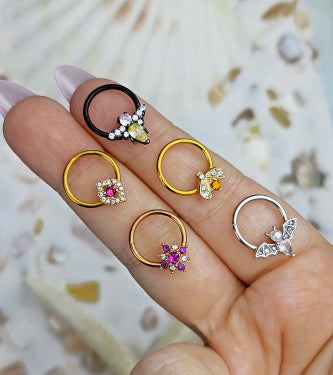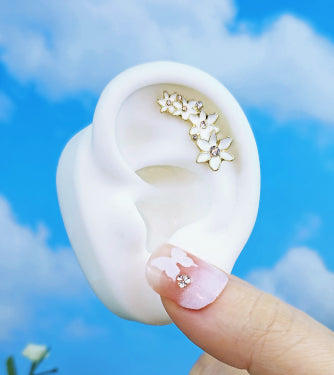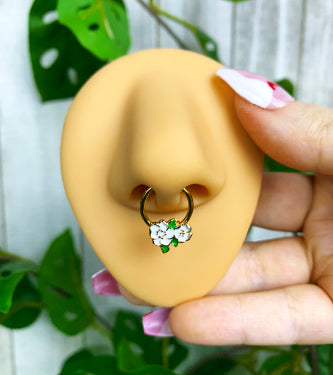

















So, you're standing at the crossroads of nostril style, asking the age-old question: nose ring or nose stud? It's one of the biggest debates in the piercing world, but here's the honest answer from a friend who's seen it all: a stud is almost always the best choice for a fresh piercing, while a ring is a fantastic style upgrade for a fully healed one.
Your final decision really comes down to your personal style, your daily habits, and where you are in your piercing journey. Ready to figure out your perfect match? Let's go!
The Ultimate Showdown: Nose Ring vs. Nose Stud
Welcome to the main event! Deciding between the delicate sparkle of a stud and the bold curve of a hoop is a huge part of defining your piercing’s personality. But this choice is about so much more than just looks; it directly impacts your healing experience, long-term comfort, and even how your jewelry fits into your day-to-day life.
Think of this guide as your personal piercing consultant. We're here to break down everything you need to know, helping you figure out which option is your perfect match right now. Are you team sparkle or team hoop? Let’s find out.
Nose Ring vs. Nose Stud At A Glance
Before we really get into the weeds, let's start with a quick comparison. Use this table to see the key differences at a glance and figure out which style aligns best with your immediate needs and long-term piercing goals.
| Feature | Nose Ring (Hoop) | Nose Stud |
|---|---|---|
| Initial Piercing | Not recommended; movement can cause irritation & bumps. | Highly recommended; provides stability for healthy healing. |
| Aesthetic Vibe | Bolder, edgier, and more of a statement piece. | Subtle, classic, and offers a delicate sparkle. |
| Lifestyle Fit | Can snag on clothing, towels, or masks more easily. | Low profile and less likely to get caught during activities. |
| Versatility | Excellent for healed piercings; offers a distinct style change. | Huge variety of tops (gems, shapes) for easy customization. |
This table gives you a snapshot, but the real decision comes from understanding how these differences play out in the real world. From the moment you leave the piercer's chair to your six-month selfie, each choice has its own unique path. Ready to explore which one is right for you? Let's dive deeper.
Comparing The Style And Aesthetic Impact
When you're deciding between a nose ring and a stud, what you're really choosing is the kind of statement you want to make. Each one sends a completely different message and crafts a unique aesthetic that becomes a core part of your personal style. Let's break down the vibe each one brings to the table.
A nose stud is the master of subtle elegance. It’s that perfect little glimmer that catches the light, adding a touch of personality without ever shouting for attention.
Think of it as a quiet whisper of rebellion or a classic, timeless accent. This is what makes studs so incredibly versatile—they fit in just as well in a professional office as they do at a laid-back weekend hangout.
The Understated Charm Of A Nose Stud
The real beauty of a nose stud lies in its minimalism. It gives you just a hint of sparkle that complements your features rather than defining them. If you’re aiming for a more refined or delicate appearance, a stud is the perfect choice.
Because they sit flush against your skin, studs are perfect for showcasing intricate designs in a tiny space. You can rock everything from a simple polished ball to a dazzling gemstone or even a unique shape like a tiny star or crescent moon.
The Takeaway: A stud is your go-to for effortless, everyday style. It’s the kind of piercing you can wear anywhere and with anything, offering a personalized touch that feels both private and polished.
The Bold Statement Of A Nose Ring
Switching over to a nose ring, on the other hand, is like turning up the volume on your style. A hoop instantly draws more focus to your piercing, creating a look that’s often seen as edgier, more bohemian, or just flat-out confident.
It frames your nostril, adding a dynamic curve that can beautifully accentuate the shape of your nose and your entire face. A sleek, simple hoop offers a clean and modern feel, while a decorated or textured one can add a touch of ornate flair. This bold choice is becoming more popular than ever.
The cultural acceptance of body piercings has exploded, moving from a niche trend to a totally mainstream form of self-expression. In 2023, North America accounted for over 42% of the global body piercing jewelry revenue, with the U.S. leading the charge thanks to a massive Gen Z audience and celebrity influence.
There's really no one-size-fits-all answer here, as the right style often comes down to the specific look you’re curating. To help you visualize all the possibilities, you should check out our guide on nose piercing fashion, which is packed with inspiration for styling both studs and rings.
Navigating The Piercing And Healing Process
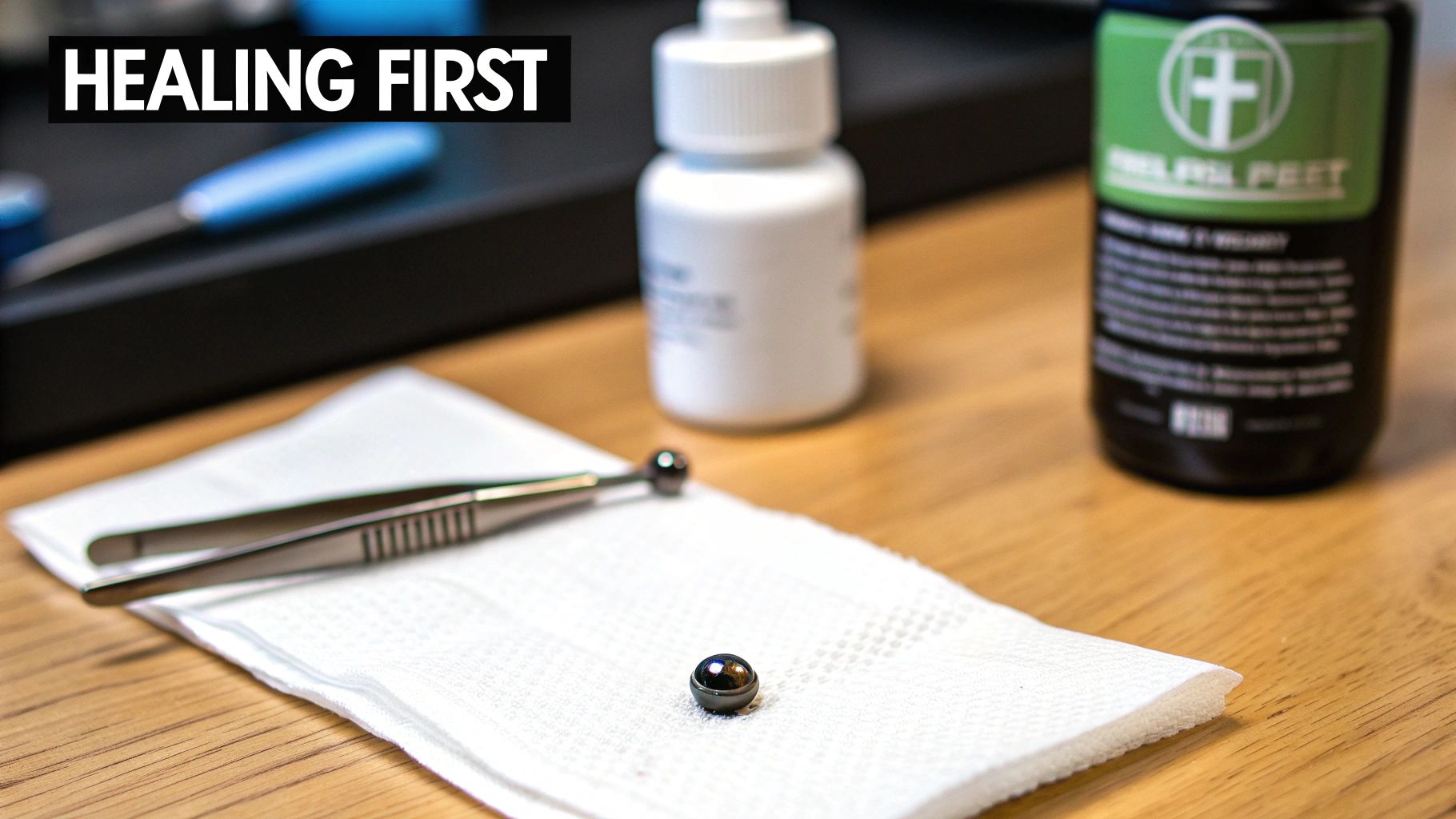
This is where the nose ring or nose stud debate gets serious. When you're dealing with a fresh piercing, the healing process is everything, and your choice of starter jewelry plays the starring role. Spoiler alert: your professional piercer will almost always point you toward a stud, and for some very good reasons.
A stud, especially a high-quality, flat-back labret, is built for stability. It sits flush against your nostril, which seriously cuts down on movement and friction. That stability is the secret sauce for preventing irritation and those dreaded piercing bumps that can pop up while you're healing.
A ring, on the other hand, just loves to move around. It rotates, it shifts, and it constantly aggravates that delicate, healing channel (called a fistula). All that movement can drag in bacteria, make swelling last longer, and just generally turn your healing journey into a total headache.
The Initial Piercing Experience
So, why is a stud the undisputed champ for starter jewelry? Let's break down the practical side of things.
- Minimized Snagging: A low-profile stud is way less likely to get caught on your clothes, your pillowcase, or a towel. Every single snag is a major step backward in your healing.
- Easier Cleaning: Cleaning around a stud is just plain easier. You can get to the front and back of the piercing without having to move the jewelry and irritate the fresh tissue.
- Reduced Risk of Bumps: Less movement means less irritation. This directly lowers your chances of developing pustules or hypertrophic scarring, keeping your new piercing looking clean and happy.
Pro Tip: Choosing a stud for your initial piercing isn't about sacrificing style—it's about setting yourself up for success. Think of it as a short-term investment for a long-term, healthy piercing you can deck out however you want later.
The Non-Negotiable Healing Timeline
Patience is a piercer’s best friend, and it needs to be yours, too. A nostril piercing typically takes a full 4 to 6 months to heal completely—and sometimes even longer. This timeline isn't just a suggestion, and trying to swap your jewelry out too early is a recipe for disaster.
During this time, your body is working hard to build a fully healed tunnel of skin. Switching to a hoop before that tunnel is solid can damage the delicate fistula, cause an infection, or trigger a flare-up of irritation bumps. That can set you back weeks or even months.
For a firsthand look at what the process is really like, check out Ashleigh’s nose piercing experience on our blog. Seeing the journey from start to finish really helps you understand why sticking to proper aftercare is so critical. Once you’re fully healed, the world of hoops is yours to explore!
How Each Style Fits Your Daily Life

Alright, let's get down to what really matters: how is your new jewelry going to hold up during your actual, day-to-day routine? The most stunning piercing is worthless if it's a constant pain. This is often where the real decision between a nose ring and a nose stud happens—in those simple, everyday moments.
For most people, a nose stud is the definition of a low-maintenance, hassle-free experience. Because of its flat, low-profile design, it’s way less likely to snag on your favorite sweater, a towel after your shower, or your pillowcase while you're tossing and turning. If you're always on the move, play sports, or just want jewelry you can forget about, a stud is your most reliable bet.
On the other hand, a nose ring that fits perfectly can be so comfortable you don’t even know it's there. The catch? Fit is everything. A hoop that's too snug can put awful pressure on your piercing, but one that’s too loose will catch on literally everything.
Finding Your Perfect Fit and Security
When you're rocking a stud, security comes down to the backing. Different styles offer a unique balance of comfort and a secure fit, so let's break down the most popular options.
- L-Bend Studs: These are bent at a sharp 90-degree angle, which makes them a breeze to pop in and out. They're a super comfy choice for piercings that are fully healed, but some people might find them a little too loose.
- Corkscrew Studs: With their signature curl, these are made to be twisted into place for a much more secure hold. Getting them in takes a little practice, but they are far less likely to fall out by accident.
- Flat-Back Labrets: Your piercer probably started you with one of these, and for good reason. They have a flat disc on the inside of your nostril, offering maximum comfort and security.
For nose rings, a perfect fit is all about two measurements: gauge (the thickness of the metal) and diameter (how wide the hoop is). A hoop that doesn't fit right can cause some serious irritation and even damage your piercing, so measuring is non-negotiable. The goal is a snug hoop that hugs your nostril just right, without any pulling or pinching.
Choosing your daily driver comes down to one question: Do you prioritize a secure, set-it-and-forget-it style (stud), or do you love the look of a hoop enough to ensure it's perfectly sized? Your lifestyle—from wearing glasses and face masks to your skincare routine—will guide you to the right answer.
Let's look at how these two styles really stack up in common situations you'll actually encounter.
Practical Daily Life Comparison
| Activity Or Situation | Nose Stud Considerations | Nose Ring Considerations |
|---|---|---|
| Sleeping | Generally comfortable. Flat-back labrets are the most secure and snag-proof option for side-sleepers. | Can get snagged on pillows or blankets, especially if the fit isn't perfectly snug. May cause pressure if you sleep on that side. |
| Wearing Masks/Glasses | Much less likely to get caught when putting on or taking off masks or glasses. A definite plus in daily life. | Prone to snagging on mask straps and can be bumped by glasses. A snug-fitting hoop minimizes this risk. |
| Washing Your Face | Easier to clean around. Low-profile designs are less likely to catch on washcloths or facial cleansing brushes. | Requires more care. Debris can get trapped in the hoop, and it can be easily snagged by towels. |
| Blowing Your Nose | Stays out of the way for the most part. You can easily clean your nose without much interference. | Can be a bit awkward, especially during allergy season. Requires gentle handling to avoid irritation. |
| Physical Activity | The clear winner for sports or high-impact activities. Less risk of being hit, pulled, or snagged. | Higher risk of getting caught or pulled. It's often recommended to switch to a stud or retainer for intense sports. |
Ultimately, both styles are great, but they serve different needs. Studs are the practical, worry-free choice, while rings offer a bolder look that requires a bit more mindfulness.
Choosing The Right Jewelry Material
Okay, let's get into something just as important as the style of your jewelry—what it's actually made of. This is a huge deal, especially if you have sensitive skin or you're dealing with a brand-new piercing. Picking the right metal for your nose ring or stud can be the difference between a piercing that's happy and one that's constantly angry at you.
When you're putting something in your body, quality is everything. You're looking for materials that are biocompatible, which is a fancy way of saying your body will welcome them instead of freaking out. This is your best defense against allergic reactions, irritation, and those dreaded piercing bumps.
The Gold Standard: Titanium
For a fresh piercing, implant-grade titanium (ASTM F-136) is the undisputed champion of materials. This is what professional piercers trust, and for very good reasons. Titanium is completely nickel-free, super lightweight, and incredibly body-safe, which dramatically cuts down the risk of allergic reactions and helps your piercing heal more smoothly.
Think of it as the ultimate peace-of-mind metal. When you start with titanium, you’re giving your piercing the best possible shot at healing properly, whether you've picked a stud or are planning to switch to a ring later on.
Other High-Quality Options
Once your piercing is fully healed up, your world opens up to a bunch of other awesome materials. Here are some other fantastic, high-quality options to add to your collection:
-
14k or 18k Solid Gold: If you're into a little bit of luxury, solid gold is a classic and safe choice for healed piercings. Just make sure you stick to 14k or 18k, because 24k gold is way too soft for body jewelry. Also, be certain it's solid gold, not plated—that plating can wear off over time and expose your skin to whatever mystery metal is hiding underneath.
-
Surgical Steel: This is a super common and affordable option you'll see everywhere. The thing to know is that 316L surgical steel can contain trace amounts of nickel. For a lot of people, this is totally fine. But if you know you have a nickel sensitivity, you're better off sticking with titanium or solid gold just to be safe.
Your jewelry material isn't just about looks—it's about the health of your piercing. Investing in high-quality, body-safe metals is the smartest move you can make for the long-term happiness of your nose. For a deeper dive, check out our guide to picking the right material for your nose piercing.
With nose piercings getting more and more popular, we've seen an explosion in jewelry choices, which also means we all need to get smarter about materials. The global body piercing market was valued at a whopping USD 59.8 billion in 2023 and it’s only getting bigger, which just goes to show how many people are embracing this kind of self-expression. Find out more about the body piercing jewelry market trends on fortunebusinessinsights.com. All those options are great, but it makes it even more critical to shop smart and always put quality first.
Making Your Final Decision
So, after digging into style, healing, and all the day-to-day factors, what's the verdict in the great nose ring or nose stud showdown? Let's bring it all home and help you lock in the perfect choice for you.
The answer is actually pretty clear, and it all depends on where you are in your piercing journey.
The Golden Rule: If you are getting a brand new piercing, the choice is already made for you. Start with a stud. This isn't just a casual tip—it's the best practice to make sure your piercing heals up beautifully, without any drama or complications.
Once you’re fully healed, that's when the fun really starts. The decision flips to being all about your personal vibe and daily life.
When To Choose a Nose Stud
A stud is your go-to if you're all about subtlety and practicality. It's the perfect pick when you:
- Need a more discreet option for your job, school, or those big family get-togethers.
- Love a minimalist, delicate aesthetic that adds just the right amount of sparkle.
- Live an active lifestyle and would rather not worry about your jewelry getting snagged during a workout or on your favorite sweater.
When To Choose a Nose Ring
Ready to make more of a statement? A nose ring will be your best friend. A hoop is the right move if you:
- Want a bolder, edgier look that really draws attention to your piercing.
- Are going for a bohemian or more alternative style.
- Have a fully healed piercing and are itching to switch things up from your starter stud.
But here's the best part: you don't have to pick a side and stay there forever! The versatility of a nostril piercing is what makes it so awesome. You can build out an entire jewelry collection with pieces from BodyCandy, easily swapping between a chic stud for work and a badass hoop for the weekend.
This decision tree gives you a simplified path for picking the right jewelry material for your piercing.
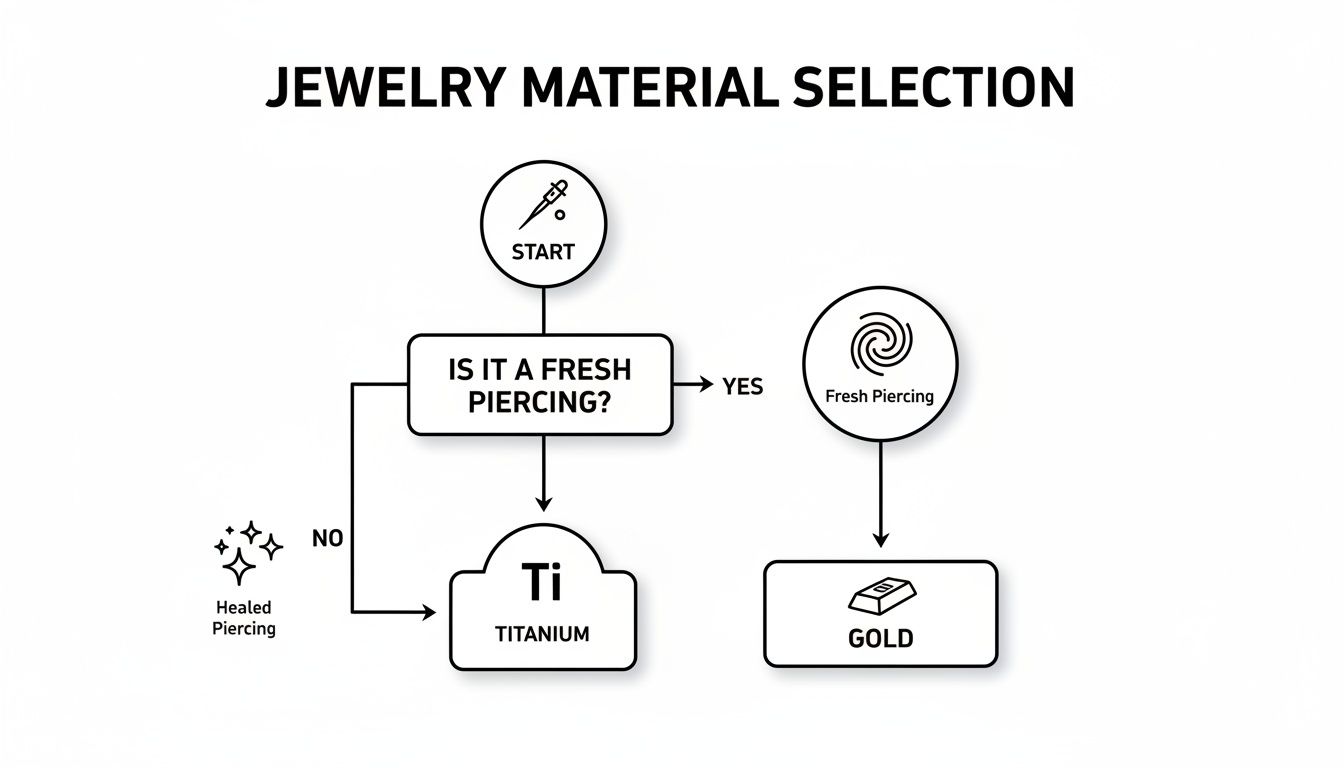
As you can see, making body-safe materials like titanium your top priority for a fresh piercing is the smartest first move on your journey.
This growing interest in personal expression is reflected in the market, which is projected to grow to over $13 billion by 2032, fueled by people like you looking for new ways to show off their style. Discover more insights about the body piercing jewelry market on metastatinsight.com. Your piercing is your story—go ahead and tell it your way.
You've Got Questions, We've Got Answers
Still mulling over the great nose ring vs. nose stud debate? We get it. Let's tackle some of the most common questions we hear from the BodyCandy community so you can feel totally confident in your choice.
Can I Get Pierced With a Nose Ring?
While you technically could, any piercer worth their salt will tell you it's a bad idea. Why the strong stance? A hoop moves around—a lot. All that twisting and turning can seriously mess with your healing, drag in nasty bacteria, and just generally make for a miserable experience.
That constant movement is also the number one culprit behind those dreaded irritation bumps. The gold standard is to start with something stable, like a flat-back labret stud. Give your piercing a solid 4-6 months to fully heal before you even think about swapping it for that cool hoop you've been eyeing.
The Piercer's Verdict: Starting with a stud isn't just a friendly suggestion; it's the professional standard for a safe, smooth, and successful healing journey.
Which One Is Easier to Change?
This one really comes down to the specific style of jewelry. When it comes to studs, threadless (push-pin) tops are a game-changer. Once you get the hang of it, swapping them out is ridiculously easy—just a little bend, push, and you're done.
For rings, styles like clickers and seamless rings are designed to be super user-friendly. On the other hand, captive bead rings (CBRs) can be a real head-scratcher if you're not used to them. If you love to switch up your vibe on the fly, we definitely recommend building your collection with easy-to-use clicker rings and threadless studs for maximum style with minimal fuss.
Does a Ring or a Stud Hurt More to Get Pierced?
Let's clear this up: the initial pinch of the needle is going to feel about the same no matter what jewelry goes in. The real difference in pain comes out to play during the healing process.
Because a nose ring is constantly moving and rotating, it's way more likely to cause ongoing irritation, soreness, and general achiness while your body is trying to heal. A stable stud, however, just sits there peacefully, which almost always leads to a much more comfortable and drama-free healing experience.
Ready to find the perfect piece to show off your unique style? Whether you're Team Stud, Team Ring, or a little bit of both, BodyCandy has an incredible collection just waiting for you. Shop our full collection of nose jewelry today!