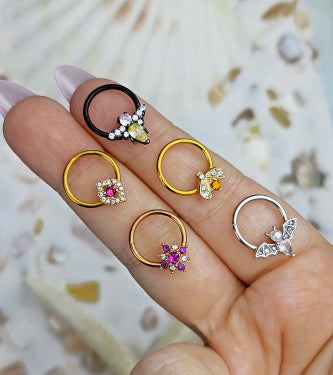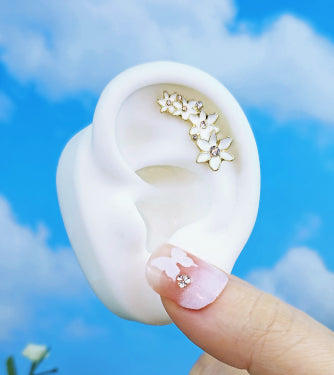






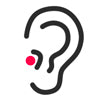
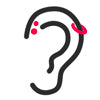
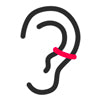
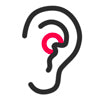
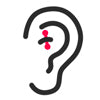
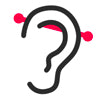
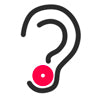




Ready to build your dream ear stack? You've probably seen gorgeous curated ears online and thought, okay, but how do you get to 4 ear piercings without ending up with a random mix that doesn't suit your ear? That's the gap most inspo posts skip. They show the final look, not the planning, anatomy, jewelry choices, or healing reality that gets you there.
That's why a 4-piercing stack is such a sweet spot. It feels styled and intentional, but it's still flexible enough to go minimalist, edgy, glam, or a little bit of everything. And you're definitely not alone in loving ear stacks. In the U.S., approximately 83% of the population has pierced earlobes, according to the NEHA policy statement on ear piercing guns.
So let's skip the endless scrolling and get straight to the fun part. These four ear-scapes give you distinct vibes, specific piercing combos, styling ideas, and essential notes you need before you book anything.
1. The Classic Lobe Ladder
If you want 4 ear piercings that feel polished, wearable, and easy to style every day, the lobe ladder is the one. It's basically a graceful climb up the earlobe, starting at your first lobe and moving into stacked or upper-lobe placements.

This setup works for so many aesthetics because the shape is simple. You can wear one bolder piece at the bottom, then taper into smaller pieces as the stack goes up. It reads intentional without trying too hard.
How it lays out
The formula is straightforward:
- Piercing one: Standard first lobe
- Piercing two: Second lobe
- Piercing three: Third lobe
- Piercing four: Upper lobe or a tighter stacked lobe
If your lobe is short or narrow, your piercer can place the four holes in a tighter formation so the whole look still feels balanced. That's often way prettier than forcing equal spacing that your anatomy doesn't support.
Practical rule: More space isn't always better. A compact lobe ladder can look cleaner and more intentional than wide gaps.
Jewelry pairings for different moods
This look shines when you build size and visual weight from bottom to top.
- Edgy vibe: Start with a chunky hoop or a small dangle in the first lobe, then add sleek steel-tone huggies or bead-end studs above it.
- Minimalist vibe: Use four tiny studs in one metal tone. Think polished balls, tiny clear gems, or flat-back ends that sit close to the ear.
- Glam vibe: Put the sparkle low and let it fade upward. A gem cluster in the first lobe with smaller crystal studs above looks so good.
A real-life example. If you wear office clothes all week but still want personality, the lobe ladder lets you keep the lower hole more expressive and the upper three more subtle. That means you can switch one piece and the whole stack changes mood.
For extra inspo on placement and the lived experience of getting several lobe piercings, BodyCandy's post on multiple earlobe piercings is a fun companion read.
Why people love this one
This is often the easiest visual entry point into curated ears. It doesn't depend on a pronounced cartilage ridge, and it gives you lots of room to play with tiny studs, huggies, and matched sets.
It also photographs beautifully. Hair up, hair down, one metal, mixed metals. It all works.
2. The Orbital Orbit
This one has range. The orbital orbit gives you 4 ear piercings that travel from the lobe into the upper ear, so your whole ear shape gets involved instead of just the bottom.

The combo is two lobe piercings, one standard helix, and one forward helix. The result feels balanced and a little sharper than a lobe-only stack. It's the kind of setup that makes even a simple ponytail look styled.
The shape that makes it work
Your eye moves from the lobe up the outside rim and back toward the front of the ear. That's what makes this stack feel cohesive.
For a lot of people, the forward helix is the wildcard. Some ears have a strong ridge there, and some don't. When that front ridge is shallow, a tragus can create a similar focal point without forcing placement that doesn't suit your anatomy.
Recent piercer-led content has highlighted how much angle and anatomy matter with cartilage placement, especially when pressure from sleeping or delayed downsizing shifts jewelry over time. The best four-piercing layout isn't just pretty. It has to sit well on your actual ear, as discussed in this anatomy-focused piercing video.
If your ear says no to a forward helix, that isn't a style failure. It's good planning.
Styling ideas that keep the balance
This stack looks best when the jewelry feels related without becoming too matchy.
- Edgy vibe: Matching lobe huggies, a captive ring in the helix, and a small gem or spike in the forward helix.
- Minimalist vibe: Tiny hoops in the lobes, a simple helix ring, and a low-profile flat-back stud in front.
- Glam vibe: Keep the lobes clean and let the forward helix sparkle. A small crystal there catches light in a really pretty way.
A real-world scenario. If you wear glasses every day, your helix placement needs extra thought so the arm of the frames doesn't knock or crowd the jewelry. That's the kind of detail that can make or break healing comfort.
If you like circular ear jewelry and want to understand the difference between similar ring-forward looks, BodyCandy's conch vs. orbital breakdown is worth a peek.
3. The Constellation Cluster
If the lobe ladder is tidy and predictable, the constellation cluster is its artsy cousin. This is for the person who wants 4 ear piercings that feel personal, a little celestial, and less locked into a straight line.

A classic version uses one lobe, one flat, one conch, and one tragus. You get outer-ear detail, inner-ear depth, and a nice mix of visible and tucked-away sparkle.
Why this one feels so custom
No two constellation setups need to look the same. The exact spacing, angles, and visual weight depend on your folds, your cartilage shape, and what areas can comfortably support jewelry.
That matters more than people think. A snug-style placement, for example, only works if the fold is pronounced enough, and lobes need enough tissue thickness to hold placement safely. Four piercings may fit beautifully on one ear and feel cramped on another, which is why anatomy-first planning matters so much.
Best jewelry moods for a cluster
Here, tiny details get to shine.
- Edgy vibe: A bold conch piece paired with small polished studs in the flat and tragus.
- Minimalist vibe: Tiny bead or gem ends across all four placements in one finish, with the conch kept slim and sleek.
- Glam vibe: A jeweled conch as the center of attention, then smaller star, moon, or crystal-inspired pieces around it.
A strong example is someone building a “night sky” ear. They might use a tiny star in the flat, a simple gem in the tragus, a bright cluster in the conch, and a delicate lobe stud to keep the look airy instead of overloaded.
Draw the plan on your ear before you pierce it. A few marker dots can save you from a layout that felt cute in your head but crowded in real life.
If you're into the whole curated-ear approach, BodyCandy's guide to ear curations fits perfectly with this style.
One thing to be careful about
This setup often includes multiple cartilage areas, which means placement and jewelry fit matter a lot early on. If one piece sits at a bad angle or gets pressure every night, the whole stack can feel fussier than you expected.
That doesn't mean don't do it. It just means plan it like a long game.
4. The Daith and Lobe Trio
This stack is such a good mix of bold and grounded. You've got one statement piercing in the daith, tucked into the inner fold, plus a trio of lobe piercings that keeps everything feeling structured.
The composition is dramatic, but not chaotic. If you want 4 ear piercings with one obvious hero piece, this one absolutely delivers.
The layout and the vibe
The formula is simple:
- One daith piercing
- Three lobe piercings
Because the daith sits deeper inside the ear, the three lobes act like a visual anchor. That contrast is what makes the whole look feel styled instead of busy.
This is also a smart option if you love rings but don't want your entire stack to be hoops. One eye-catching daith ring can do the heavy lifting, while the lobe row stays clean with studs or huggies.
Jewelry ideas that keep the daith center stage
You want your lobe jewelry to support the daith, not compete with it.
- Edgy vibe: A sleek daith clicker with three tiny steel-tone studs down the lobe
- Minimalist vibe: A smooth daith ring with a soft gradient of tiny lobe balls or bezel gems
- Glam vibe: A jeweled daith ring paired with delicate matching huggies or crystal studs
A very real lifestyle detail. If you're constantly in earbuds or over-ear headphones, the daith deserves extra thought. That inner-ear placement can feel amazing once healed, but fresh jewelry plus daily pressure is not a cute combo.
Healing reality matters here
This stack can be more manageable than a full cartilage constellation because only one of the four is cartilage-heavy. But that one piercing sits in a spot that many people bump with earbuds, fingers, or sleep positions.
Piercer-led posts have been calling more attention to healing logistics in multi-piercing plans, especially the way swelling, sleeping pressure, snagging, and delayed downsizing can compound when several holes heal at once. That's especially true once cartilage enters the picture, as highlighted in this discussion of angle shifts and healing tradeoffs for multiple piercings.
The prettiest stack is the one you can actually heal. If your routine includes side sleeping and constant headphones, staging this look might be smarter than doing everything at once.
4-Style Ear Piercing Comparison
| Style | Implementation Complexity 🔄 | Resource Requirements & Healing ⚡ | Expected Outcomes ⭐ | Ideal Use Cases 📊 | Key Advantages & Tips 💡 |
|---|---|---|---|---|---|
| The Classic Lobe Ladder | Low, four standard lobe placements, straightforward to execute | Low resources; faster healing (~6–8 weeks); affordable jewelry | Elegant, cohesive gradient stack; highly wearable | First-time multi-piercing, everyday wear, showcasing stud collections | Easy to heal and highly customizable, ask piercer for tighter formation if space is limited |
| The Orbital Orbit | Moderate, combines lobes with helix/forward helix; requires precise placement | Moderate resources; cartilage heals slower (3–9 months); mixed jewelry types | Balanced ear-framing look that is sophisticated and slightly edgy | Users seeking full-ear balance and mixed hoop/stud styling | Creates visual harmony across the ear, consider tragus as an alternative if anatomy limits forward helix |
| The Constellation Cluster | High, custom, non-linear layout across lobes and cartilage; may require staging | Higher resources; multiple cartilage sites mean longer cumulative healing (months); varied jewelry | Unique, multi-dimensional aesthetic with high visual impact | Trendsetters wanting bespoke, statement arrangements and layered styling | Very customizable and dramatic, map placements with a non-toxic marker before piercing |
| The Daith & Lobe Trio | Moderate, daith is anatomy-dependent and may be trickier than standard lobes | Moderate resources; daith cartilage healing can be lengthy; potential headphone discomfort | Striking focal daith balanced by a neat lobe trio; bold yet timeless | Wearers who want one standout piercing with classic lobe balance | Strong focal point with complementary lobes, consult a pro for daith suitability and consider earbud comfort during healing |
Your Piercing Playbook and Next Steps
Healing your stack
Healing is the part that turns a cute plan into a wearable one. If you want four piercings that still look amazing months from now, build your timeline around irritation, not just aesthetics.
Lobes usually settle faster than cartilage. Cartilage is more like a stiff zipper on a new jacket. It looks simple from the outside, but it gets cranky fast if you tug on it, sleep on it, or swap jewelry too soon. If your dream ear-scape includes helix, daith, or forward-helix placements, ask your piercer whether you should do all four at once or stage them in rounds.
Your daily routine matters here. Side sleepers, glasses wearers, over-ear headphone fans, and anyone with long hair that loves to catch on studs should say that out loud during the consultation. Those details can change placement, spacing, and even which of the four looks from this guide makes the most sense for your ear.
Picking jewelry for fresh piercings
Fresh-piercing jewelry has one job first: heal well. The cute styling part comes second.
Ask for pieces that give swelling room, stay secure, and suit the specific placement. Titanium is a common pick for starter jewelry because it is widely used for healing piercings. Solid 14k gold can also work, depending on the piercing and your piercer's recommendation. A report from JCK on Studs noted that its piercing service uses sterile needle-only piercings and offers titanium and 14k gold jewelry, with titanium styles starting at $35 and premium pieces reaching $200+.
Once your piercer gives the green light for styling swaps, that is where your four-piercing plan gets really fun. BodyCandy pieces can help you steer each ear-scape in a different direction. Try tiny flat-back studs for a minimalist Classic Lobe Ladder, a slim hoop plus clean studs for an edgy Orbital Orbit, gem clusters for a glam Constellation Cluster, or a polished daith ring paired with simple lobe pieces for a balanced focal-point look. The trick is matching the jewelry mood to the structure of the stack, not treating every piercing like a separate outfit.
What to bring to your piercer
Walk in with a plan your piercer can use.
Bring screenshots of the ear-scape you like, note which side you sleep on, mention whether you wear earbuds or glasses every day, and point out any old piercings that closed, migrated, or got irritated. Then ask four practical questions: Does my anatomy support this layout? Should I do these all at once or in stages? What starter jewelry shape and length do you recommend? Which placements will interfere most with my routine?
That quick conversation can save you months of annoyance.
Ready to find your stack? Explore BodyCandy for ear jewelry options like flat-back studs, huggies, and cartilage styles, then bring your favorite look to a professional piercer for an anatomy-based plan.