
















You found the perfect belly ring. You ordered it. It arrives, and it's somehow too thick, too long, or just wrong. Sound familiar? Body jewelry sizing trips up almost everyone, because it doesn't work like ring sizes or clothing. Once you understand the two numbers that matter, though, you'll never guess again... let's decode it.
The three measurements that actually matter
Nearly every piece of body jewelry comes down to gauge and length (or diameter for hoops). Get these right and the fit follows.
- Gauge is the thickness of the bar that goes through your piercing.
- Length is how long the bar is from end to end.
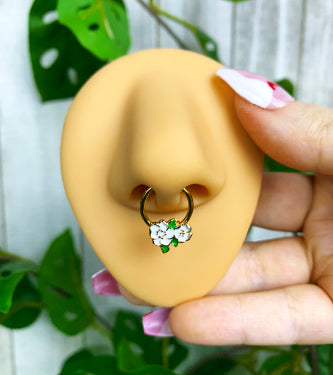
- Diameter is how wide a ring is across the inside.
That's it. The decorative parts, the charms, gems, and balls, don't count toward sizing. You measure the part that sits in your body, not the pretty bits on the ends.
Gauge: the number that runs backwards
Here's the catch that confuses everyone: the higher the gauge number, the thinner the jewelry. A 20g bar is thin. A 14g bar is noticeably thicker. It feels backwards because it is, but it's the standard.
Common gauges by piercing:
- Belly button: 14g
- Nostril: 18g or 20g
- Earlobe: 20g
- Cartilage / helix: 16g or 18g
- Septum: 16g
These are starting points, not rules. Piercers sometimes go thicker or thinner, so your actual gauge is whatever was put in.
How to measure jewelry you already own
The easiest way to nail your body jewelry size is to measure a piece that already fits.
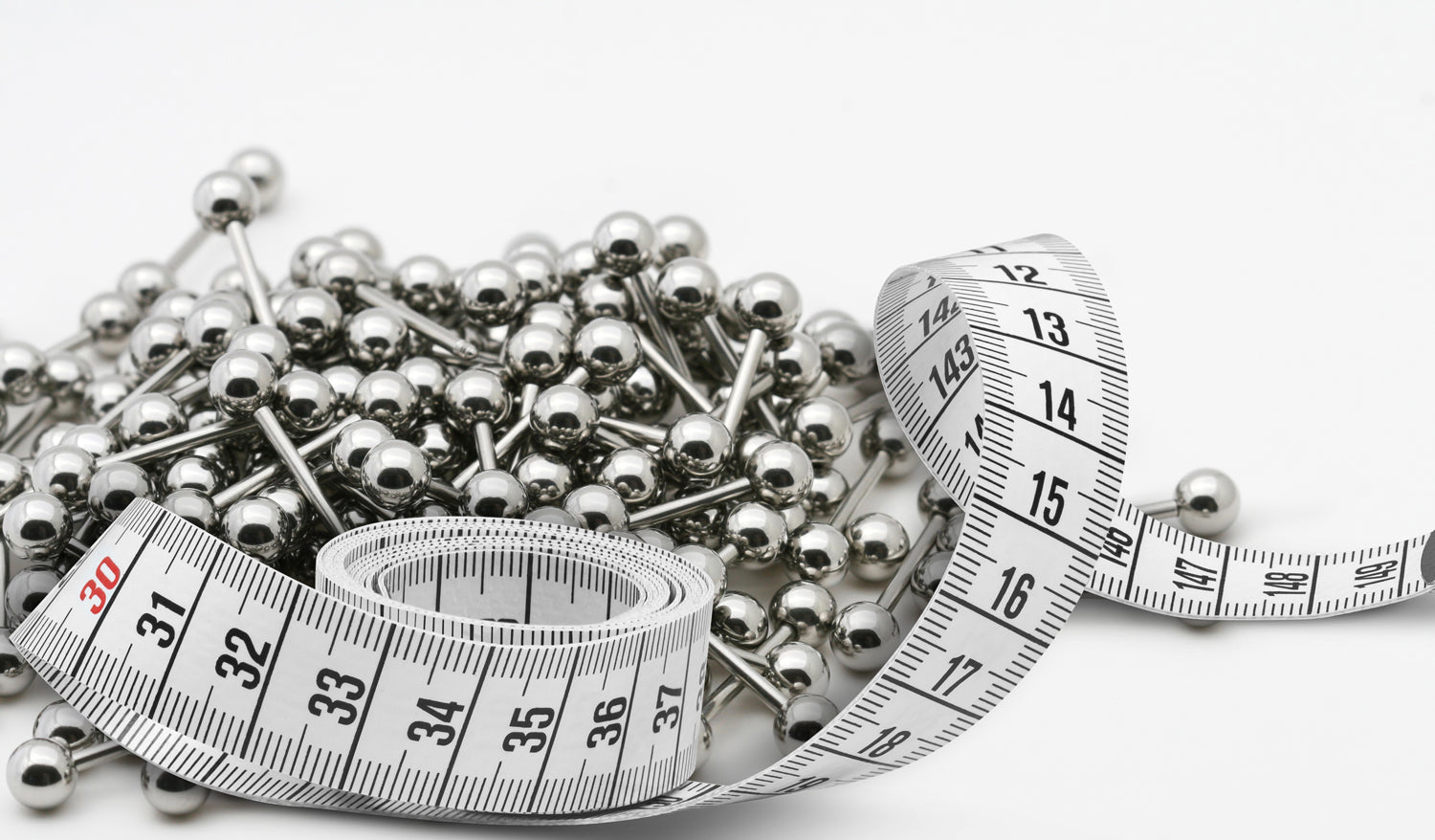
- For gauge: the most accurate tool is a set of calipers, which measure the bar's thickness in millimeters. No calipers? A gauge wheel (cheap online) or even a careful millimeter ruler reading works. Then match the mm to a gauge chart.
- For barbell or labret length: measure the straight wearable bar from the inside of one end to the inside of the other. Skip the ball ends.
- For rings and hoops: measure the inner diameter, straight across the open space in the middle, not the outer edge.
Jot the numbers down somewhere you'll find them later. Your future self, scrolling for new jewelry at midnight, will thank you.
Measuring a piercing without removing anything
Don't want to take your jewelry out? You can still get close.
- Check your piercing studio paperwork, since many list the exact gauge and length they used.
- When in doubt, your piercer can tell you your sizes in about ten seconds.
Why getting the size right is worth the two minutes
A correctly sized piece sits comfortably, heals cleanly, and actually looks the way it does in the photo. Too long and it spins or snags. Too thick and it won't fit through the piercing at all. Too thin and it can feel loose or migrate. Two minutes with a ruler saves you the return, the reorder, and the wait.
The good news: once you know your gauge and length, shopping gets fast. Body Candy listings show the exact gauge, bar length, and diameter right on the product page, so you can match your numbers and order with confidence instead of crossing your fingers.
Measure once, save the numbers, and the guessing stops for good. That's the whole secret.