
















So, you're ready to pick out some amazing new bling for your nose piercing, but one question stops you in your tracks: what gauge nose ring should I get? Don't worry, we've got you. Let's break it down and make it super simple.
For most nostril piercings, the go-to sizes are 20G or 18G. Chances are, your piercer started you with one of these, as they're the industry standard for a happy, healthy piercing. Think of 20G as the slightly thinner, more delicate option and 18G as its slightly thicker, sturdier sibling.
Your Quick Guide To Choosing The Right Nose Ring Gauge
Figuring out the difference between gauges can feel like learning a secret code, but it's actually pretty straightforward. Gauge is just the fancy term for the thickness of the post that goes through your piercing.
Here's the one tricky part you need to remember: the numbering system works backward. It’s a little counterintuitive, but a smaller number means a thicker piece of jewelry. So, an 18G post is thicker than a 20G post. My best advice? Sticking to the gauge your piercer used is always the safest bet, especially while your piercing is still settling in and healing.
Choosing the right thickness isn't just about looks; it's a huge deal for the comfort and long-term health of your piercing. If you wear a ring that’s too thin for your piercing, you risk the dreaded "cheese-cutter effect," where the jewelry can slowly irritate and even migrate through the tissue. Ouch. On the flip side, trying to force in a gauge that's too thick can cause tearing, irritation, and a really unhappy piercing.
18G vs. 20G: The Main Showdown
The big debate usually comes down to these two sizes. Fun fact: 18G and 20G are by far the most common gauges for nostril piercings. In fact, about 60% of piercers lean towards 18G because its sturdier fit can help prevent the jewelry from being accidentally pulled out.
On the other hand, the slightly thinner 20G is a fantastic choice for those with smaller nostrils or anyone getting their first nose piercing. Its delicate profile can actually reduce the risk of migration by up to 30% during that initial 6-8 week healing period.
This handy little chart gives you a quick visual on how 18G and 20G stack up.
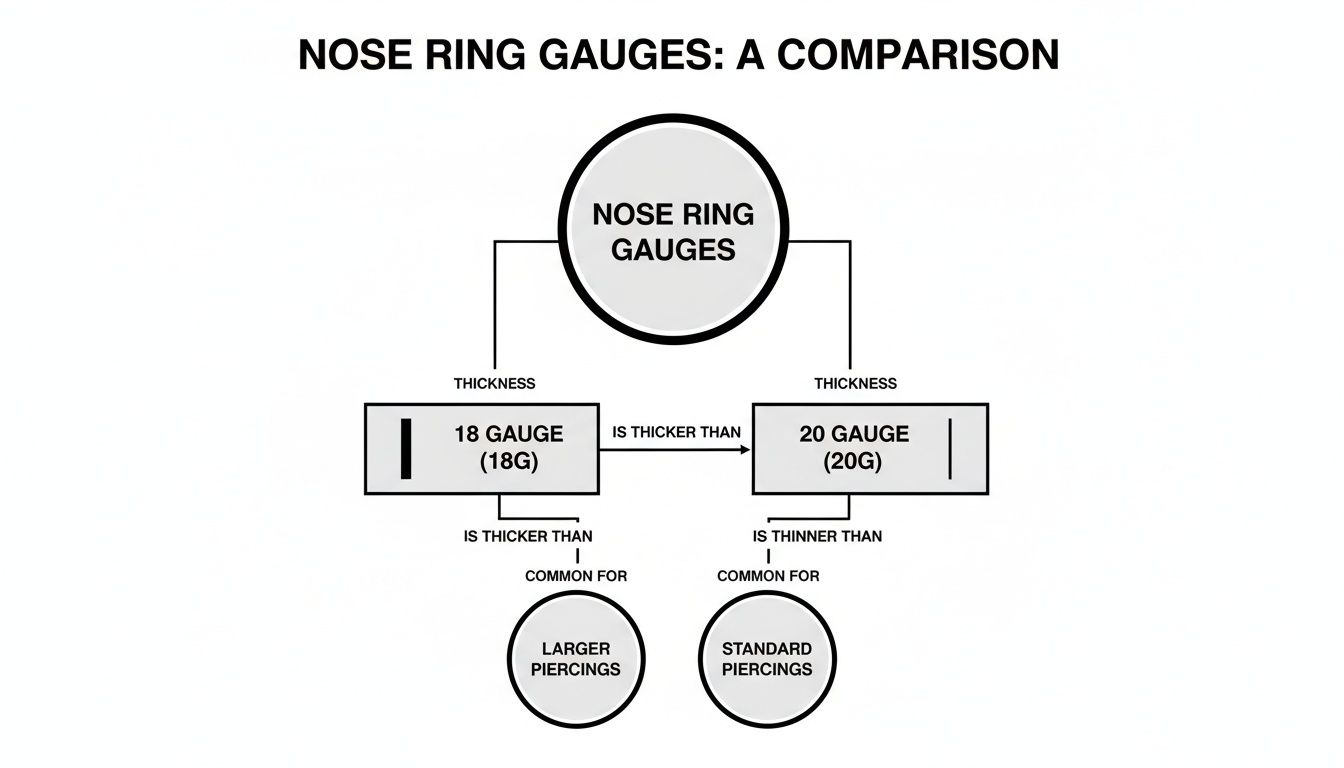
As you can see, the difference is subtle but definitely matters when you're aiming for that perfect fit and look. And hey, if you're ever feeling like your jewelry just isn't sitting right, be sure to check out our more in-depth Q&A on why your nose ring doesn't fit.
Understanding What Nose Ring Gauge Actually Means
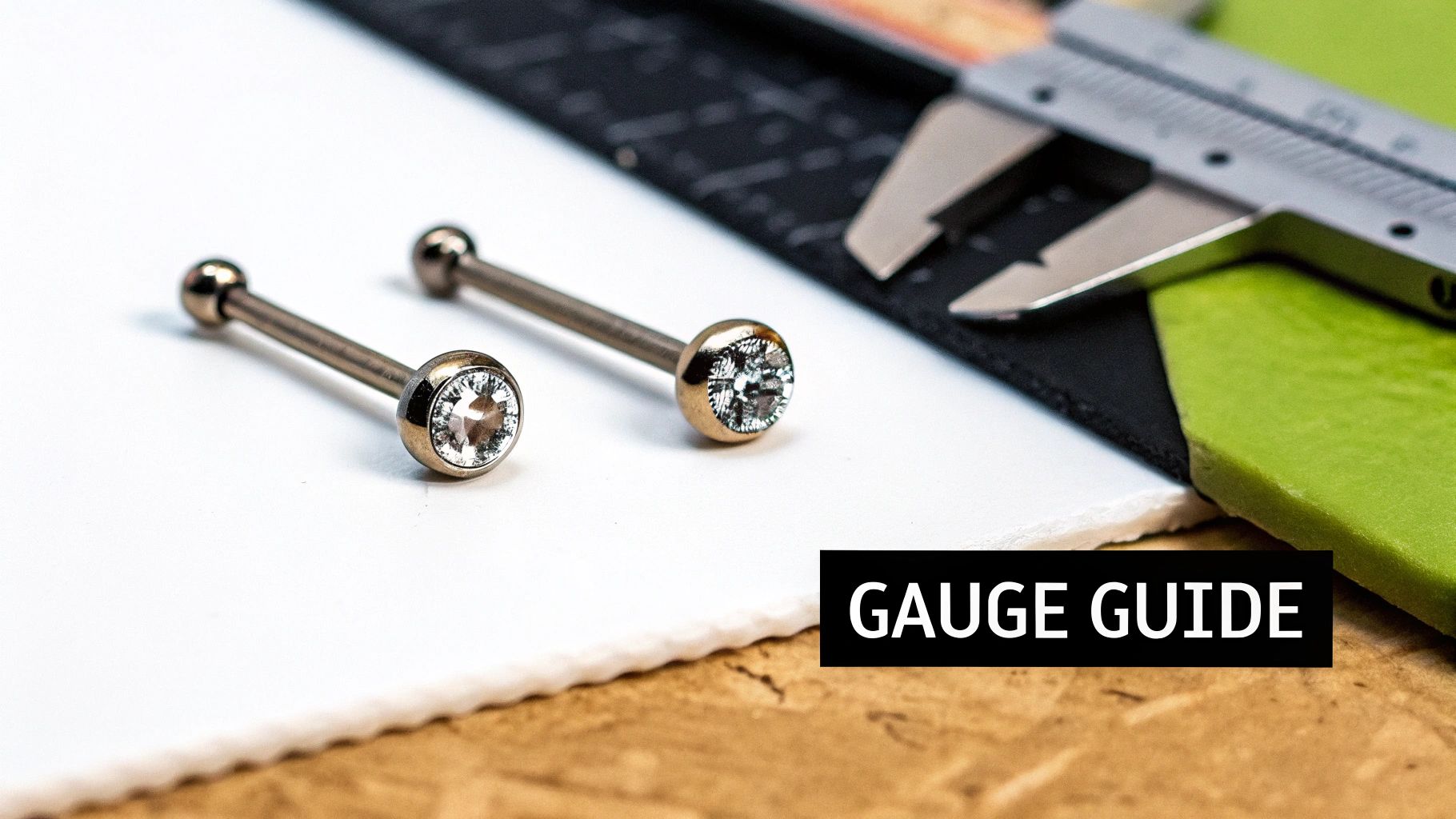
Alright, let's demystify one of the most confusing terms in body jewelry so you can shop for new nose rings like a total pro: gauge. In our world, "gauge" is just a fancy word for thickness. It tells you how thick the post or ring is that slides through your piercing.
A good way to think about it is like comparing different types of pasta. A super delicate 22G nose ring is like a thin angel hair noodle, while a beefier 16G piece is more like a thick spaghetti noodle.
Here’s the part that trips everyone up at first: the gauge system works backward. It sounds a little crazy, but it’s true—the smaller the number, the thicker the jewelry. So, an 18G stud is actually thicker than a 20G one. Once you get that concept down, you've unlocked the secret to finding jewelry that fits perfectly.
Why Gauge Is A Big Deal
So, why does this one little number matter so much? Honestly, picking the right gauge is everything when it comes to keeping your piercing happy and healthy.
If you go too thin and put a smaller gauge in your piercing, the hole itself can actually start to shrink down to fit the new, smaller jewelry. This can make it a real struggle—and sometimes a painful one—to switch back to your original, thicker size down the road.
On the flip side, trying to force a thicker gauge into a piercing that isn't ready for it is a recipe for disaster. You're looking at potential irritation, tearing, and a major setback in your healing journey. No thank you.
The goal here is to find your piercing's perfect match. Wearing the correct gauge means a comfortable fit that prevents irritation and keeps your piercing fistula (that's the healed tunnel of skin) stable and healthy for years to come.
Common Nose Ring Gauges And Their Sizes
To give you a better mental picture of what these numbers really mean, let's translate them into millimeters. This helps visualize just how tiny the differences are, but also why they're so important for your piercing's comfort.
- 22G (0.64mm): This is one of the thinnest sizes you'll find. It's usually reserved for those super delicate, tiny studs.
- 20G (0.81mm): A super common and popular size, offering a great balance of being subtle yet stable. Many piercers use this as a starting gauge.
- 18G (1.02mm): Another industry standard. It's a bit thicker and more durable, making it a favorite for many nose hoops.
- 16G (1.29mm): A bolder choice. You'll often see this gauge used for septum piercings, but it's sometimes used for nostrils if someone wants a more substantial look.
Knowing these conversions helps you understand exactly what you're buying. For a deeper dive, check out our guide on the standards of gauge sizing for body jewelry to become a true sizing expert. Now you can shop with the confidence of a pro!
Choosing Between 18G And 20G Nose Rings
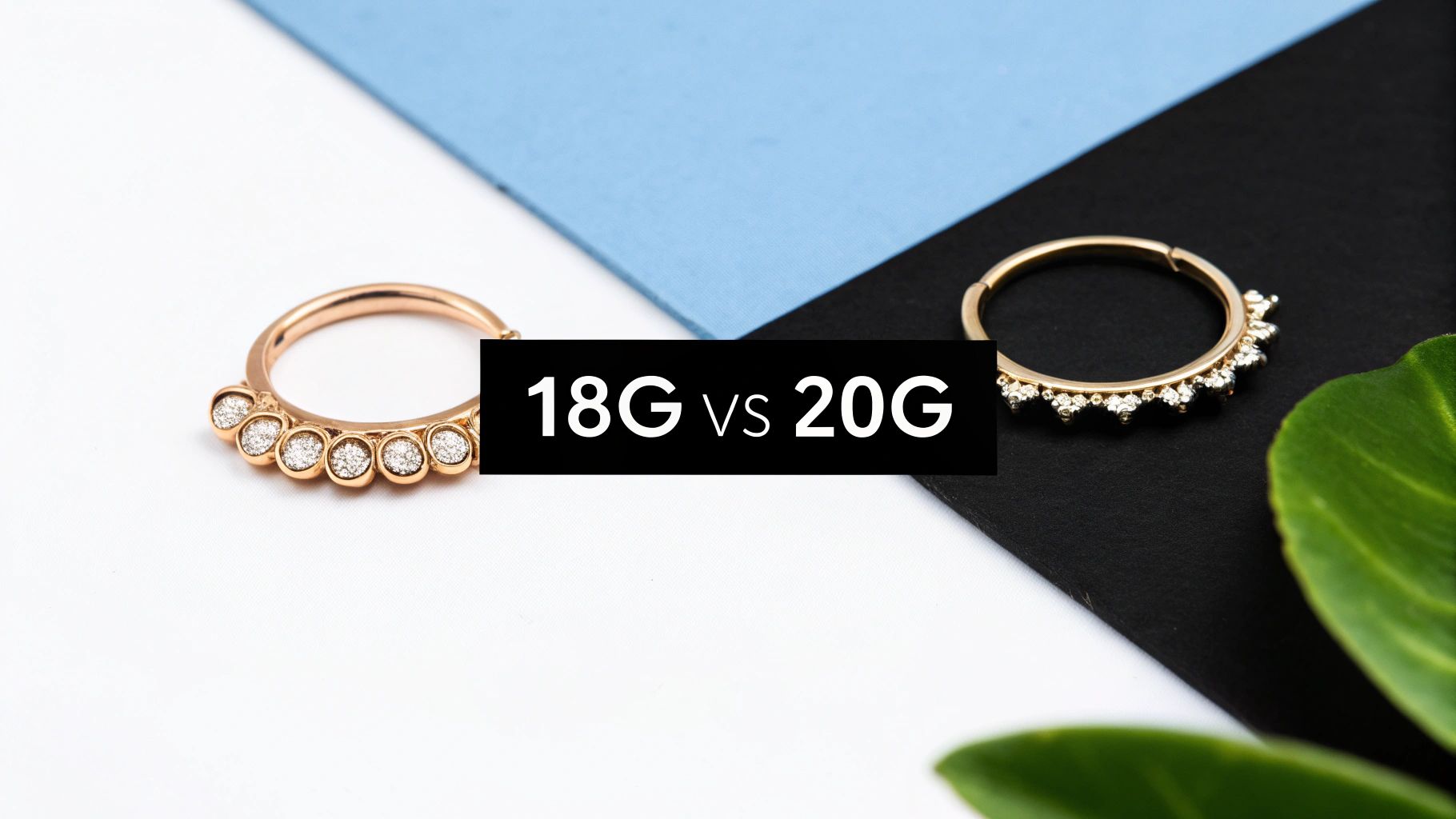
Alright, welcome to the main event! For most people getting their nose pierced, the big decision comes down to two top contenders: 18G vs. 20G. This choice really defines the look and feel of your piercing, so let's break down what sets them apart.
Think of it like choosing between a super fine, delicate chain necklace and a slightly thicker, more substantial one. Both look amazing, but they create a totally different vibe.
The Case For 20G: The Dainty And Delicate
The 20G (0.81mm) nose ring is the absolute queen of subtlety. It’s the thinner of the two, making it the perfect choice if you're aiming for a delicate, barely-there sparkle that whispers instead of shouts.
Why you might fall in love with a 20G:
- A Softer Look: It's perfect for a minimalist aesthetic or for more conservative workplaces where you want your piercing to be understated.
- Great for Beginners: Many professional piercers will start you off with a 20G because its thinner profile is really gentle on a fresh piercing. It’s a super popular choice for first-timers!
- Perfect for Petite Noses: If you have smaller nostrils or a more delicate nose structure, a 20G often provides a more proportional and comfortable fit.
This size is incredibly popular, and for good reason. Nostril piercings are a top request in studios, especially with the 30-39 crowd, and the 20G is the go-to for achieving that subtle, everyday elegance. It’s so popular, in fact, that its thinner profile is used in about 65% of new nostril piercings. Since getting the size right is key to avoiding irritation, this is a solid, trusted option. Learn more about nose ring trends and sizing facts.
The Case For 18G: The Bold And Sturdy
Now, let's talk about its slightly thicker sibling, the 18G (1.02mm). This gauge is a bit more substantial, giving you a bolder look and a few practical benefits that make it a huge fan favorite.
Here’s why you might be on Team 18G:
- More of a Statement: The slightly thicker post means your jewelry will be a little more noticeable. It’s perfect if you really want your nose ring to pop.
- Increased Durability: An 18G is more robust, which is fantastic for nose hoops and rings. It creates a more secure fit and helps prevent the dreaded "cheese-cutter effect," where a ring that's too thin puts pressure on the piercing hole and causes irritation.
- Wider Jewelry Selection: You'll often find a massive variety of cool, intricate, and statement designs available in 18G, especially when it comes to hoops and more elaborate studs.
The bottom line? Choosing between 18G and 20G is all about personal style and your own anatomy. Neither one is inherently "better"—it's about what works best for your nose and the look you want to rock.
Ultimately, your piercer’s initial choice was likely based on your specific anatomy. If you were pierced with an 18G, it’s best to stick with that size to keep your piercing happy. If you started with a 20G, you can often safely size up to an 18G once you're fully healed, but it's always a good idea to have a professional piercer help you make the jump to avoid any unnecessary irritation.
How Healing Affects Your Gauge Choice
Think of your brand-new nose piercing as a work in progress—it's gorgeous, but it's also incredibly delicate right now. When your piercer picks out your first piece of jewelry, usually an 18G or 20G, that choice isn't random at all.
That initial gauge is strategically chosen to create a stable, healthy channel for your body to heal around. Sticking with this original size during the healing phase is a must. Your body is working hard to form a new tunnel of skin (called a fistula), and messing with the jewelry can easily irritate it and drag out your healing time. Patience is your best friend here!
You might also notice your starter jewelry seems a little long. That’s completely on purpose! Your piercer uses a slightly longer post to make sure there’s plenty of room for the initial swelling that comes with any new piercing. This prevents the jewelry from getting too tight and causing painful pressure.
The Fun Part: When You're Fully Healed
Once you’ve made it through the healing stage—which for a nostril piercing is usually around 4-6 months—a whole new world of awesome jewelry options opens up. This is when you can really start to personalize your look and play around with different styles and even sizes!
After you’re fully healed, you can finally swap that simple starter stud for something that screams you. Whether you’ve been dreaming of a snug little hoop or a sparkly gem, waiting until the piercing is mature is the key to keeping it happy and healthy for years.
Don't rush the process! A fully healed piercing is a happy piercing. It gives you a stable and healthy foundation to experiment with all the amazing jewelry styles you've been eyeing.
Changing Gauges Safely
Ready for a new look? If you're thinking about changing your gauge, doing it the right way is crucial.
- Downsizing: If you want a more delicate look, switching from an 18G to a 20G is usually pretty simple. Just be aware that your piercing will likely shrink to fit the smaller jewelry, which can make it tough to go back to the thicker gauge later on.
- Sizing Up: Going from a 20G to an 18G is also super common, especially for anyone who wants to wear a sturdier hoop. You should only ever try this on a completely healed piercing, and it's always best to have a professional piercer do it for you. They can use a special tool called a taper to gently stretch the piercing without causing any trauma.
The goal is to change up your style without making your piercing angry. For a complete timeline, you can check out our guide on the healing times for popular piercings. By treating your piercing with care, you're setting yourself up for a lifetime of awesome jewelry adventures.
Matching The Best Materials And Styles To Your Gauge
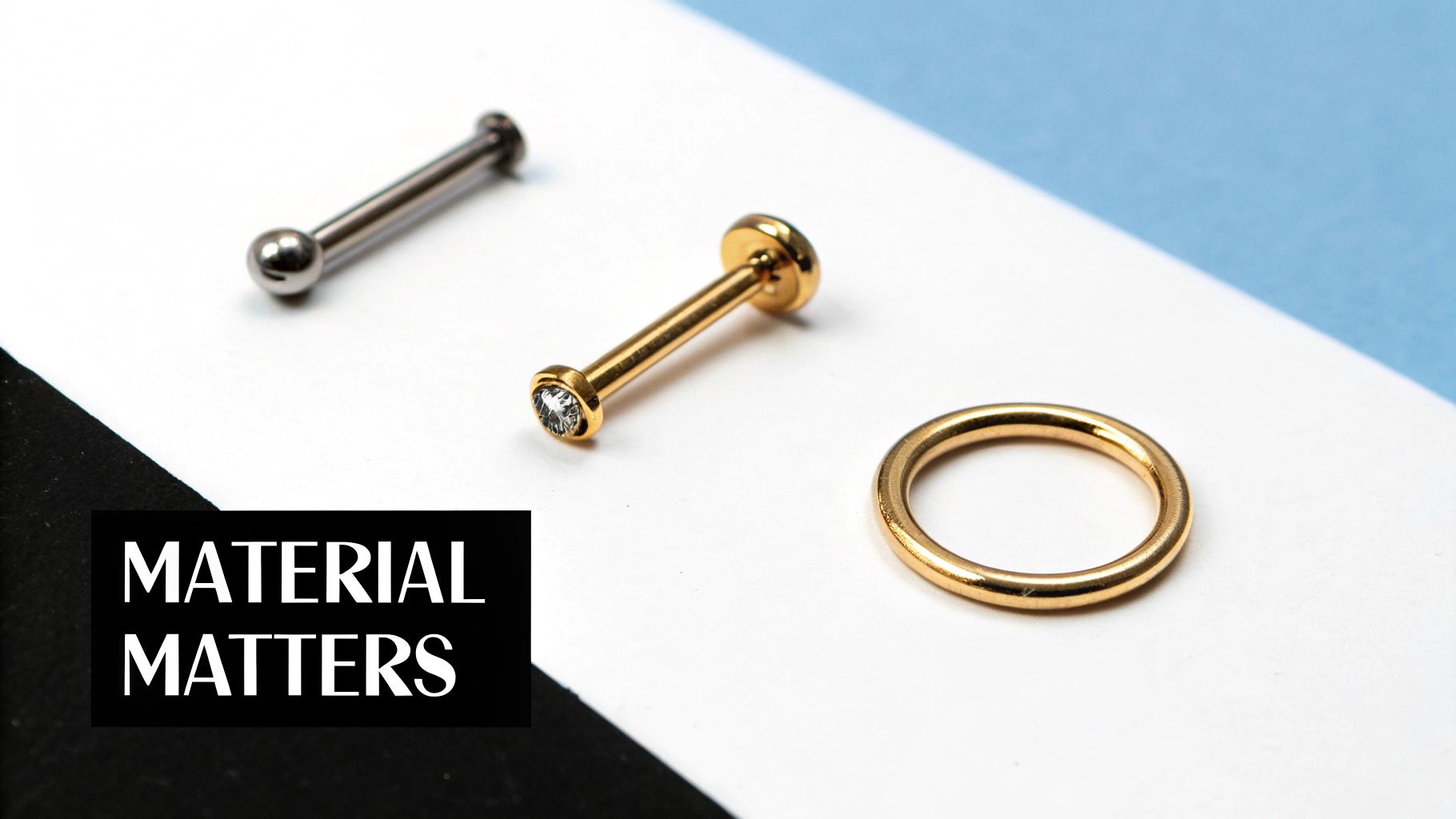
Alright, you've officially figured out your gauge size—nice work! Now we get to the fun part: picking out the perfect jewelry to show off your style. Think of this as your inside guide to pairing the best materials and designs with your specific gauge.
First up, let's talk about materials. The metal you choose is a huge deal, especially if your piercing is new or your skin is on the sensitive side. The wrong material can lead to irritation, nasty allergic reactions, and a piercing that’s just plain unhappy.
Pro Tip: When it comes to body jewelry, always, always put quality over a low price tag. Your piercing's health is worth the investment, and a happy, healthy piercing looks a whole lot better than an angry, irritated one!
To keep things happy and comfortable, you'll want to stick with body-safe, hypoallergenic materials. These are the certified rockstars of the piercing world because they’re known for being incredibly gentle and well-tolerated by almost everyone.
Top-Tier Materials For A Happy Nose
When you’re browsing for new bling, keep your eyes peeled for these awesome options. They're the industry standard for a reason—they're safe, durable, and look fantastic.
- Implant-Grade Titanium: This is the absolute gold standard for fresh and sensitive piercings. It’s 100% nickel-free, super lightweight, and tough as nails, which is why it's a professional piercer's top recommendation.
- 14k or 18k Gold: If you're into a little bit of luxury, you can't go wrong with solid gold (and we mean solid, not plated!) for a fully healed piercing. Just double-check that it's nickel-free to steer clear of any potential sensitivities.
- 316L Surgical Steel: A super popular and budget-friendly choice, surgical steel is a workhorse. It's durable and safe for most healed piercings, making it a great material for building up your collection once you know your skin handles it well.
Once you’ve got a safe material picked out, it's time to dive into the world of styles. You'll find that different jewelry designs tend to play nicer with specific gauges, so let's get them matched up.
Finding The Perfect Style For Your Gauge
The thickness of your jewelry—your gauge—really influences which styles are going to look and feel best. Generally, a thicker gauge offers more stability, which is a lifesaver for certain designs.
For instance, a super-delicate 22G post is usually best suited for tiny, subtle studs. If you try to wear a big hoop in such a thin gauge, you risk the dreaded "cheese-cutter effect"—and trust us, it's as unpleasant as it sounds.
On the other hand, the sturdier 18G is an absolute dream for statement hoops. It has the strength needed to support the ring's shape without warping, keeping your piercing comfortable, secure, and looking sharp.
Here's a quick cheat sheet to see what we mean:
Jewelry Material And Style Compatibility Guide
Navigating the world of nose jewelry can feel overwhelming, but this table breaks it down. Here's a look at which styles, materials, and gauges typically go together to help you find that perfect match.
| Jewelry Style | Common Gauges | Best For | Recommended Material |
|---|---|---|---|
| Nose Studs (Bone, L-Bend, Screw) | 20G, 22G | A classic, subtle look; great for everyday wear. | Implant-Grade Titanium, 14k/18k Gold |
| Nose Hoops (Seamless, CBR) | 18G, 20G | Making a statement; secure for healed piercings. | 316L Surgical Steel, 14k/18k Gold |
| Flat-Back Studs (Labrets) | 18G, 20G | Ultimate comfort, especially for sleeping; very secure. | Implant-Grade Titanium |
| D-Shape & Open Hoops | 20G | The look of a hoop with the ease of a stud. | 316L Surgical Steel, 14k/18k Gold |
Remember, this is a starting point. The most important thing is choosing what feels comfortable and looks great on you.
Here’s a quick breakdown of the most popular styles and their common gauges:
- Nose Studs (Bones, L-Bends, Screws): You’ll find these in pretty much every size, but 20G is by far the most popular for that classic, sparkly look. We have a massive collection of gorgeous 20 gauge nose studs just waiting for you.
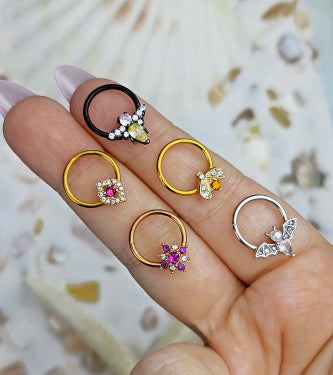
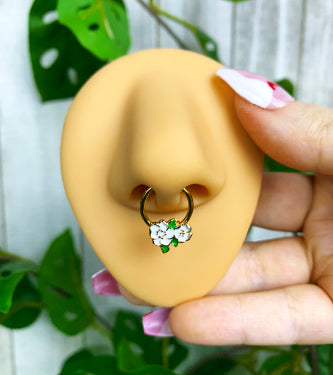
- Hoops (Seamless, Captive Bead Rings): Hoops need a bit more structural integrity to hold their shape, which is why 18G is the go-to. It’s sturdy, reliable, and provides a secure fit that won't let you down. Check out our awesome 18 gauge nose hoops to complete your next look!
By pairing the right material and style with your gauge, you're setting yourself up for a piercing that not only looks incredible but feels great, too. Happy accessorizing!
When You Should Talk To A Professional Piercer
While our guides are here to help you feel confident shopping for new jewelry, nothing beats the trained eye and steady hand of a professional piercer. Think of them as your piercing partner—their expertise is invaluable, especially when you're feeling a bit stuck.
Figuring out what gauge nose ring you need can feel like a guessing game. If you’re completely lost and have no idea what size you’re currently wearing, a quick trip to a local studio is your best bet. A piercer can instantly and accurately measure your piercing, taking all the guesswork out of the equation.
Signs It's Time For A Professional Consult
Sometimes, your body sends you signals that something isn't quite right. If you’re experiencing any signs of irritation, like persistent redness, tenderness, or swelling around your piercing, don't just hope it goes away. A pro can help you figure out what's going on, whether it's the wrong gauge, an allergy to the material, or something else entirely.
Your piercer is your first line of defense against piercing problems. A simple five-minute visit can save you weeks of discomfort and potential complications. Don't hesitate to reach out to them!
You should also definitely book a visit if you're thinking about making a significant change in size. Going from a delicate 20G to a bolder 18G might seem like a tiny jump, but it’s still a stretch for your piercing.
A professional can use a special tool called a taper to gently and safely guide the new, thicker jewelry into place. This process ensures you don't cause any unnecessary trauma, tearing, or irritation to the healed fistula. Trying to force it on your own is a recipe for a very unhappy piercing.
Seeking professional advice is a smart move for everyone, whether you've had your piercing for ten days or ten years. They’re the experts who can keep your piercing healthy, happy, and looking its absolute best.
Common Questions About Nose Ring Gauges
We've covered a lot of ground, but you might still have a few questions buzzing around. Don't worry, that's totally normal! Let's clear up some of the most common things people ask about nose ring gauges so you can feel completely confident about your jewelry choices.
Can I Put A 20G Ring In An 18G Piercing?
Yes, you absolutely can! It’s easy to go from a thicker gauge (like an 18G) to a thinner one (like a 20G). The jewelry will slide right in without any fuss.
Just keep in mind that if you wear the smaller jewelry for a long time, your piercing might shrink a little to hug the new, thinner post. If you ever decide to go back up to an 18G, it could feel a bit tight.
What Happens If I Put The Wrong Gauge In My Nose?
Using the wrong gauge can definitely lead to a few problems. If you put in a ring that’s way too thin (like a 20G in a 16G piercing), you risk something called the "cheese-cutter effect." It’s as unpleasant as it sounds! The fine jewelry can put pressure on the piercing, causing irritation or even migrating through the skin over time.
On the flip side, trying to force a thicker gauge into a piercing that isn't ready is a recipe for disaster. This can cause tearing, serious pain, and a major setback in your healing journey. It's always best to stick to your size or have a professional piercer help you stretch it properly.
What Is The Thinnest Nose Ring Gauge?
The thinnest you'll typically find for nose rings is 22G (0.64mm). This gauge is incredibly delicate and is often the choice for those tiny, minimalist studs that give a super subtle sparkle.
While it’s perfect for a barely-there look, its delicate nature also means it's more fragile and can be easier to accidentally pull out.
Now that you're a gauge expert, you're ready for the best part—shopping! At Bodycandy, we have a massive collection of stunning nose rings in every size, style, and material you could ever dream of. Find your perfect fit and express yourself with our incredible selection.
Ready to find your new look? Explore the full collection of nose rings at Bodycandy.com today!