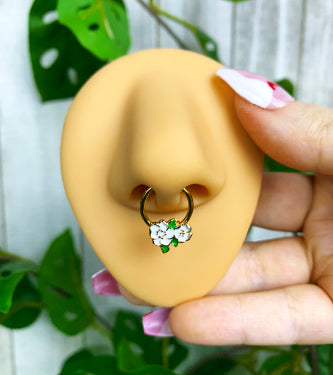


















So, you're officially crushing on the idea of a septum piercing. We get it! It's an iconic way to showcase your personality and add some serious edge to your look.
This piercing has exploded in popularity, becoming a super common form of facial modification, especially for younger adults. Just look around—you'll see them everywhere.
But before you rush to book that appointment, let's get real about what you're signing up for. Think of this guide as your trusted friend's breakdown of what's great—and what's not so great—about getting your septum pierced. We'll cover everything from the quick pinch of the needle to the thrill of finally swapping out your jewelry.
Making an informed choice is always the way to go. If you’re still weighing your options, our guide on whether to pierce or not to pierce can help you work through that decision.
To kick things off, let's get a quick snapshot of the key benefits and potential challenges.
Septum Piercing At a Glance
Here's a quick look at the main pros and cons to consider when you're thinking about a septum piercing.
| Pros | Cons |
|---|---|
| Highly Versatile Style: Looks great with countless jewelry options. | Initial Pain: The procedure can be uncomfortable. |
| Easily Concealable: You can flip it up and hide it for work or family events. | Healing Commitment: Requires 2-3 months of dedicated aftercare. |
| Unique Look: A bold way to express your personal style. | Risk of Infection: Like any piercing, proper cleaning is essential. |
| Doesn't Involve Cartilage: Typically pierces the "sweet spot," making healing faster. | Can Be Tricky to Align: Symmetry is key, so a skilled piercer is a must. |
This table gives you a bird's-eye view, but there's a lot more to unpack. Let's dive into the details so you can decide if this super cool piercing is the perfect match for you.
The Pros: Why You'll Love Your Septum Piercing
Let's get into the good stuff—all the reasons a septum piercing might just become your new favorite accessory. Trust us, it’s more than just a piercing; it's a whole vibe.
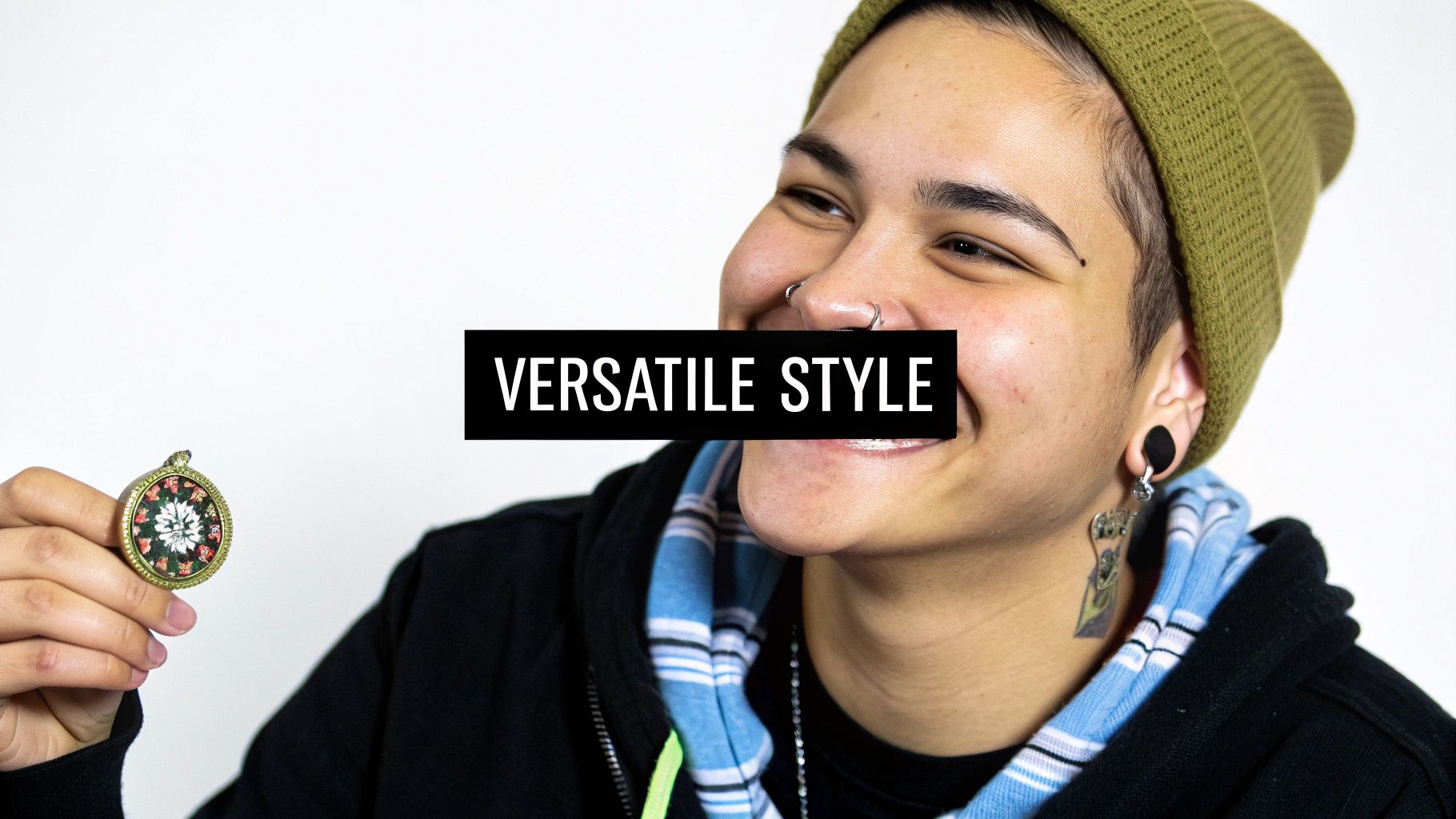
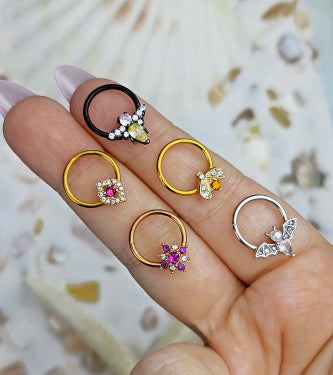
First off, the style options are practically endless. One day you can rock a delicate, barely-there seamless ring for a super subtle look. The next, you can swap it for a bold, gem-encrusted clicker that commands attention. It’s the ultimate way to switch things up to match your mood or outfit.
A Piercing You Can Actually Hide
Here's the real game-changer: the 'hideability' factor. This is the septum piercing's secret weapon and a huge part of its appeal.
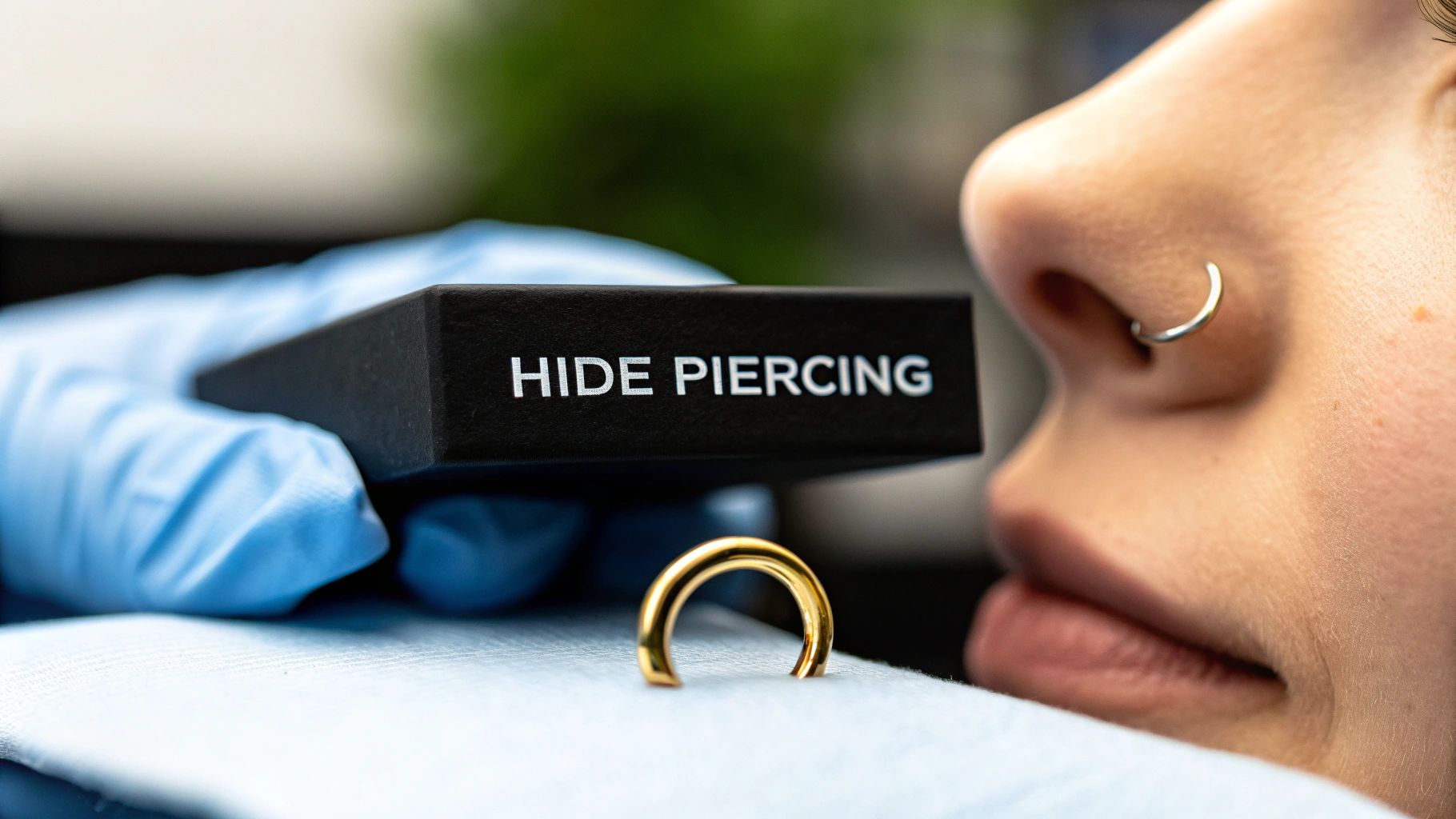
Got a strict dress code at work? A family gathering where you’d rather keep things low-key? No problem. With a circular barbell (often called a horseshoe), you just flip the ends up into your nostrils, and poof—it's completely invisible.
This practicality is a lifesaver for so many of us who want that perfect blend of self-expression and professional discretion. It really is the best of both worlds.
Enhance Your Features and Confidence
Beyond its chameleon-like abilities, a septum piercing has this unique way of accenting your face. It sits right in the center, drawing attention to your features and framing your smile beautifully. For a lot of people, it creates a sense of symmetry that's incredibly flattering.
But it’s not just about looks; it's about how it makes you feel. Getting a septum piercing is a bold statement of personal style. That little boost of confidence you get from a look that feels uniquely you? That’s one of the best pros out there.
Septum piercings have stayed incredibly popular, consistently ranking among the top piercing choices. Jewelry styles have blown up, too, with more ornate and intricate designs than ever.
The Cons: What to Prepare For
Alright, let's get real for a second. While septum piercings look amazing, it's not all smooth sailing, especially at the beginning. Knowing what to expect on the not-so-glamorous side will make the whole process a lot easier to handle.
First off, the pain. Everyone's got a different pain tolerance, but you should brace yourself for a quick, sharp pinch that is almost guaranteed to make your eyes water. The good news? It's over in a flash. That initial tenderness will hang around for a few days, but it’s the healing journey that will demand your real attention.
The Healing Hustle
The initial healing for a septum piercing usually takes about 6 to 8 weeks. But don't let that fool you—it can take a few more months for the tissue to fully toughen up. During this time, solid aftercare isn't just a suggestion; it's absolutely non-negotiable if you want to avoid any pesky problems.
Like any body modification, piercings come with risks. Complications can occur, so staying on top of your cleaning routine is key. You can learn more about piercing complication rates to stay fully informed.
Potential headaches include swelling, those dreaded irritation bumps, and infections. Another common issue is an allergic reaction to the jewelry material itself. If you know you have sensitive skin, it's a good idea to know the signs, and you can check out our guide on piercing irritation for some vital info.
You might also get acquainted with "septum funk." It's a totally normal (but admittedly weird) smell that can pop up while your body is healing. Don't stress—it's just a mix of dead skin cells and natural oils, and it usually disappears once you're fully healed.
Finally, prepare for the occasional snag. It takes a little while to get used to having jewelry in your nose, and you'll probably catch it on a sweater or a towel at least once. Just try to be mindful, and you'll get the hang of it in no time.
Your Guide to the Piercing and Healing Process
So, you're ready to take the leap? Fantastic! Let's break down the whole experience, from the moment you sit in the chair to the day you're fully healed.
First things first: you absolutely have to find an amazing, reputable piercer. This part is non-negotiable! Look for a studio that is spotless and a piercer with a solid portfolio. You want to see lots of pictures of straight, perfectly placed septum piercings.
Don't be afraid to ask to see their sterilized equipment or have them explain their process. A real professional will be more than happy to walk you through everything.
The Piercing Procedure
Once it's go-time, your piercer will locate the "sweet spot." This is a thin membrane of skin near the front of your nose, known as the columella. Piercing this spot is key because it hurts way less than going through cartilage and makes for a much quicker heal.
You'll feel a quick, sharp pinch, and then... your eyes will water. A lot. It's a totally normal reflex, so don't even worry about it! In what feels like an instant, the jewelry will be in place, and you'll be checking out your new look in the mirror.
This flow chart gives you a quick visual of the major stages, from the initial sting all the way through aftercare.
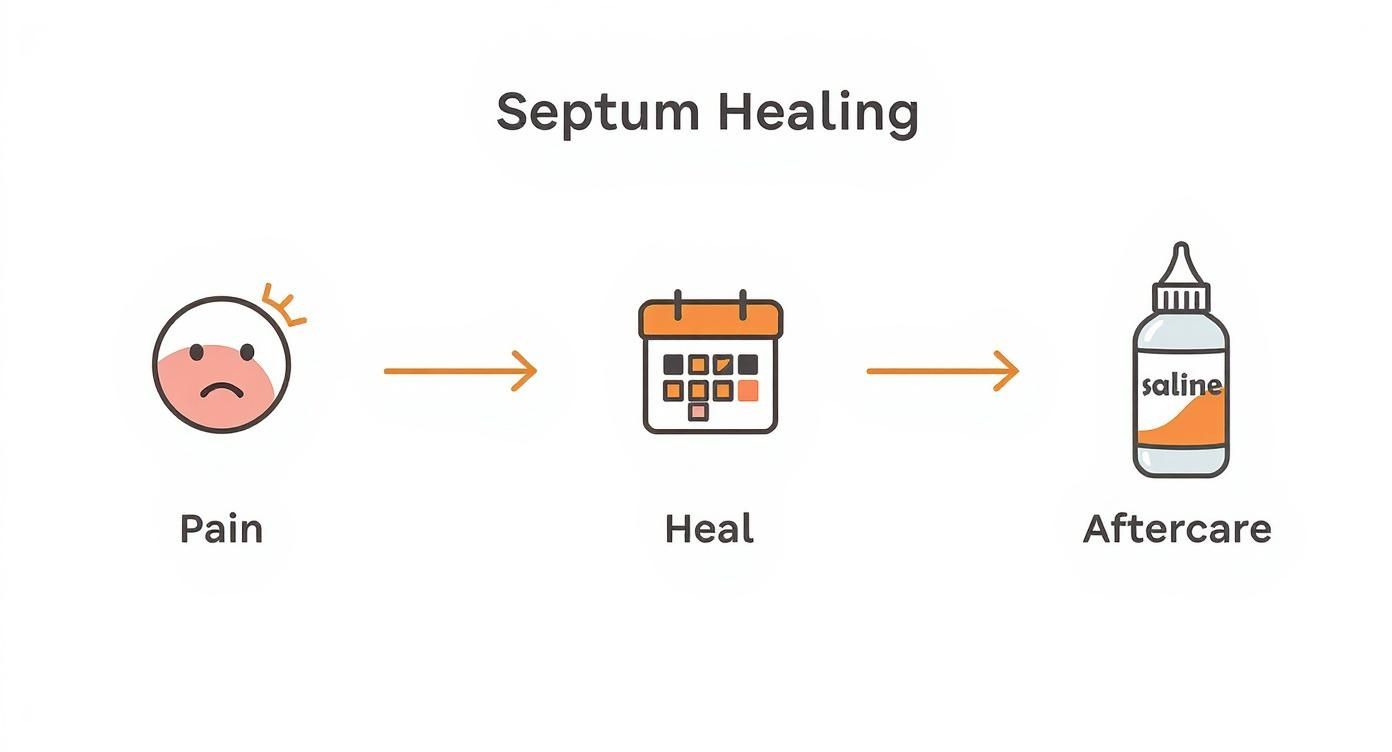
As you can see, the process starts with a brief moment of pain but quickly moves into a dedicated healing period where your aftercare routine is the top priority.
Aftercare Do's and Don'ts
Now for the most important phase: aftercare. Nailing this part is what ensures a smooth, infection-free journey to a beautifully healed piercing.
- DO clean your piercing twice a day using a sterile saline solution. You can spray it on directly or use clean, non-woven gauze to gently wipe away any of those little "crusties" that form.
- DON'T touch it! Seriously. Your hands are covered in bacteria, so avoid the temptation to twist, turn, or play with your new jewelry.
- DO be super gentle when blowing your nose or washing your face.
- DON'T submerge your new piercing in pools, hot tubs, lakes, or oceans during the initial 6-8 week healing window. These bodies of water are basically a party for bacteria.
Choosing Your Perfect Septum Jewelry Style
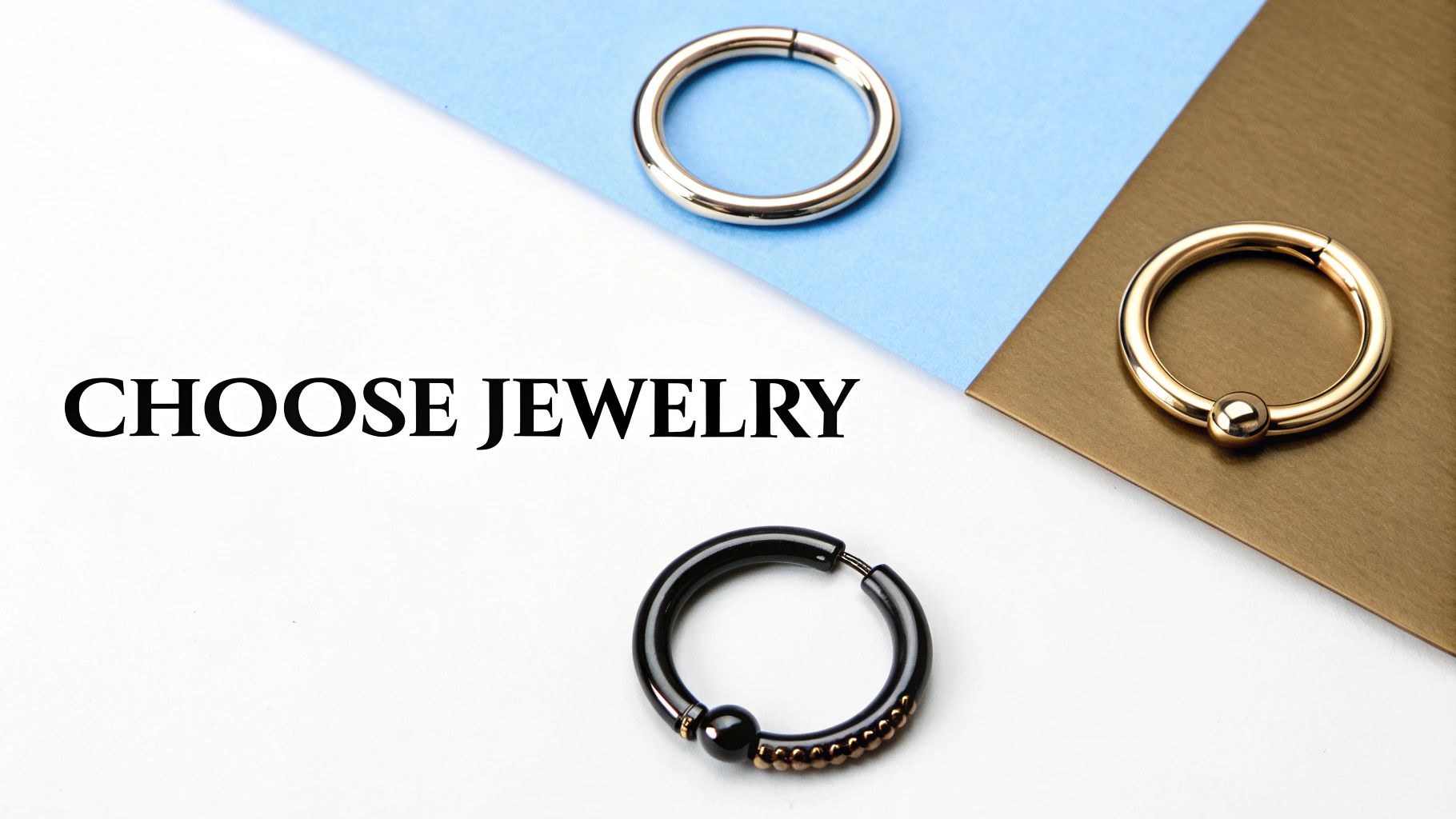
Alright, you've made it through the healing process. Now the real fun begins! Once your septum piercing is fully healed, a whole universe of awesome jewelry opens up, letting you show off your unique style.
Picking out that first new piece is a huge milestone. You’ve got tons of options, each with a completely different vibe, from classic seamless rings to bold, decorative clickers. This is your chance to really customize your look.
Finding Your Go-To Style
Let's break down some of the most popular jewelry types you'll come across. Knowing the lingo will help you figure out which style fits your personality best.
- Circular Barbells: Often called horseshoes, these are super versatile. They’re also the secret to hiding your piercing if you need to—just flip them up into your nostrils!
- Clickers: These have a hinged bar that literally "clicks" shut, which makes them incredibly easy to put in and take out. You'll often find them in more ornate and detailed designs.
- Captive Bead Rings (CBRs): This is a classic look where a small bead or gem is held in place by the ring's tension. They offer a secure and timeless aesthetic that’s been popular for ages.
- Seamless Rings: If you're going for a minimalist, clean look, these are perfect. They create a continuous, unbroken loop with no visible gap or hinge.
While clickers are a fan favorite, don't feel like you have to stick to just one thing! We've got a great guide covering why clickers aren’t the only septum accessories worth checking out.
Remember, the right jewelry isn't just about how it looks—it's about comfort and safety, too. The material you choose is just as important as the style.
High-quality, body-safe materials are your best friend. Not sure what to look for? This table breaks down the most common options.
Septum Jewelry Material Comparison
| Material | Best For | Considerations |
|---|---|---|
| Implant-Grade Titanium | Sensitive skin, new piercings, lightweight comfort | Can be more expensive, but worth it for safety and comfort. |
| 14k or 18k Gold | A classic, high-end look that is generally body-safe | Make sure it’s solid gold, not plated, as plating can wear off. Avoid anything over 18k as it can be too soft. |
| Surgical Steel | A durable and affordable option for healed piercings | Can contain nickel, which may irritate very sensitive skin. Look for 316LVM grade. |
| Niobium | A great hypoallergenic alternative to titanium | Slightly heavier than titanium but offers a similar level of safety. Can be anodized into cool colors. |
Ultimately, choosing a high-quality material like implant-grade titanium or 14k gold is a fantastic move, especially if you have sensitive skin. And don't forget about the size! Knowing your piercing's gauge (the thickness of the jewelry) is key to getting a perfect, comfortable fit.
Septum Piercing FAQs
Got a few more questions rattling around in your head? It happens! Let's clear up some of the most common things people wonder about before taking the plunge, so you can feel 100% ready for your new septum piercing.
Getting all the facts first is the best way to figure out if this piercing is the right move for you.
How bad does a septum piercing actually hurt?
Everyone's pain tolerance is a little different, but here's the general consensus: it's a quick, sharp pinch. It'll almost definitely make your eyes water for a second, but it's over before you know it.
The good news is that a professional piercer isn't going through tough cartilage. They're aiming for that sweet spot—a thin membrane of skin right inside the tip of your nose. You might feel some tenderness for a day or two afterward, but on the pain scale, it’s considered one of the more manageable piercings.
Can I hide my septum piercing for work?
You bet! This is honestly one of the best things about a septum piercing. If you get pierced with a circular barbell (the classic horseshoe-shaped ring), you can just flip it up inside your nostrils.
Poof. It's completely gone. This makes it the perfect piercing for anyone who needs to keep their look professional for a job or conservative for family gatherings. One quick tip: wait until it’s fully healed before you start flipping it up and down all the time. Constant movement can irritate a fresh piercing, so it’s best to pick a position—up or down—and stick with it for the first few weeks.
What are the signs of an infected septum piercing?
Knowing what's normal healing versus what's a real problem is key. It's totally normal for a new piercing to have some redness, a bit of swelling, and even a little clear or whitish fluid (that's just lymph).
An infection is a whole other level of angry. You'll know something's wrong if you see these signs:
- Intense, throbbing pain that just won't quit.
- Thick, yellow or green pus.
- The skin around the jewelry feels hot to the touch.
- An unpleasant smell.
If you suspect an infection, do not take the jewelry out! That can trap the infection inside as the hole closes up. Your first move should be to call your piercer or a doctor for professional advice.
Ready to explore all the amazing styles that make septum piercings so much fun? BodyCandy has an incredible collection waiting for you. Find your perfect look and shop our full collection of septum rings today