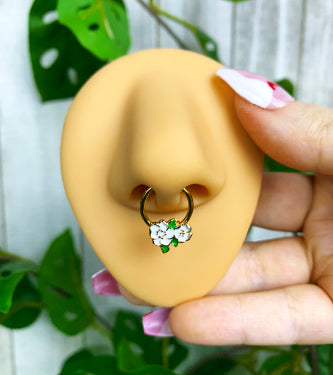
















We've all been there. You snag a super cute nose ring online, wait eagerly for it to arrive, and then... it's painfully tight or looks comically huge. Ugh. You're definitely not alone in this.
This guide is your new secret weapon for mastering the two measurements that make all the difference: gauge (thickness) and diameter (hoop size). Getting these right is the key to a comfortable, stylish piercing you'll actually want to show off.
Finding Your Perfect Nose Ring Fit
Figuring out that flawless, "just right" fit can feel like a total guessing game, but it doesn't have to be. We're here to take the mystery out of the numbers so you can finally shop for nose jewelry with complete confidence.
First up, think of gauge as the thickness of the post—the part that actually goes through your piercing. Then you have diameter, which is all about the size of the hoop itself. Nailing both is absolutely crucial for keeping your piercing healthy and happy.
The Most Common Sizes
For most people, the sweet spot for thickness falls within a pretty small range. The most common sizes you'll see are 18 gauge (1.0 mm) and 20 gauge (0.8 mm). Some people with really delicate piercings might even go for a finer 22 gauge (0.6 mm) for a barely-there look.
When it comes to hoops, the diameter usually lands somewhere between 6 mm and 10 mm. If you're not sure where to start, 8 mm is a pretty standard inner diameter that works for a lot of people. For more tips and tricks, you can check out this helpful guide to nose ring sizes on Boelry.com.
The golden rule? A higher gauge number means a thinner piece of jewelry. It seems totally backward, we know, but once you get that locked in, you're halfway to becoming a sizing pro!
Let's dive into some super simple ways you can measure your piercing right at home. It's time to say goodbye to sizing mistakes and hello to your next favorite piece of jewelry. Ready to find your perfect match? Let's get into it.
Understanding Gauge: The Key To A Comfortable Piercing
Okay, let's talk about 'gauge.' It sounds technical, we know, but it’s really just the term for the thickness of your nose ring. Getting your gauge right is the first, most important step to finding jewelry that feels just as good as it looks.
Here's the one thing that trips everyone up at first: gauge sizing works backward. The higher the gauge number, the thinner the jewelry is. So, a delicate 22G nose stud is much, much thinner than a sturdier 18G piece. It’s a little weird, but once that clicks, you've cracked the code to nose jewelry.
Why Your Original Gauge Matters
When you first got your nostril pierced, your piercer most likely used either a 20G (0.8mm) or an 18G (1.0mm) needle. That means your very first piece of jewelry was one of those two sizes, and that's the size your piercing healed around.
Sticking to that original gauge is crucial for keeping your piercing happy. If you try to force a thicker gauge—say, a 16G hoop—into a piercing that healed at 20G, you're asking for trouble. It can cause irritation, painful tearing, or even lead to an infection. Nobody wants that.
On the other hand, if you consistently wear jewelry that's too thin for your piercing (like a 22G stud in an 18G hole), the piercing can actually start to shrink. This can make it a real pain to go back to your original, correct size later on. Your piercing and your jewelry need to be a perfect match.
Pro Tip: If you're ever unsure about your gauge, the best and safest thing you can do is pop into a professional piercer's shop. They can tell you your exact size in seconds and make sure you’re buying jewelry that won't harm your piercing.
To get a better handle on how this works for all kinds of piercings, check out our complete guide on the standards of gauge sizing for body jewelry.
The Bodycandy blog is packed with educational content to help you make smart choices about your jewelry.
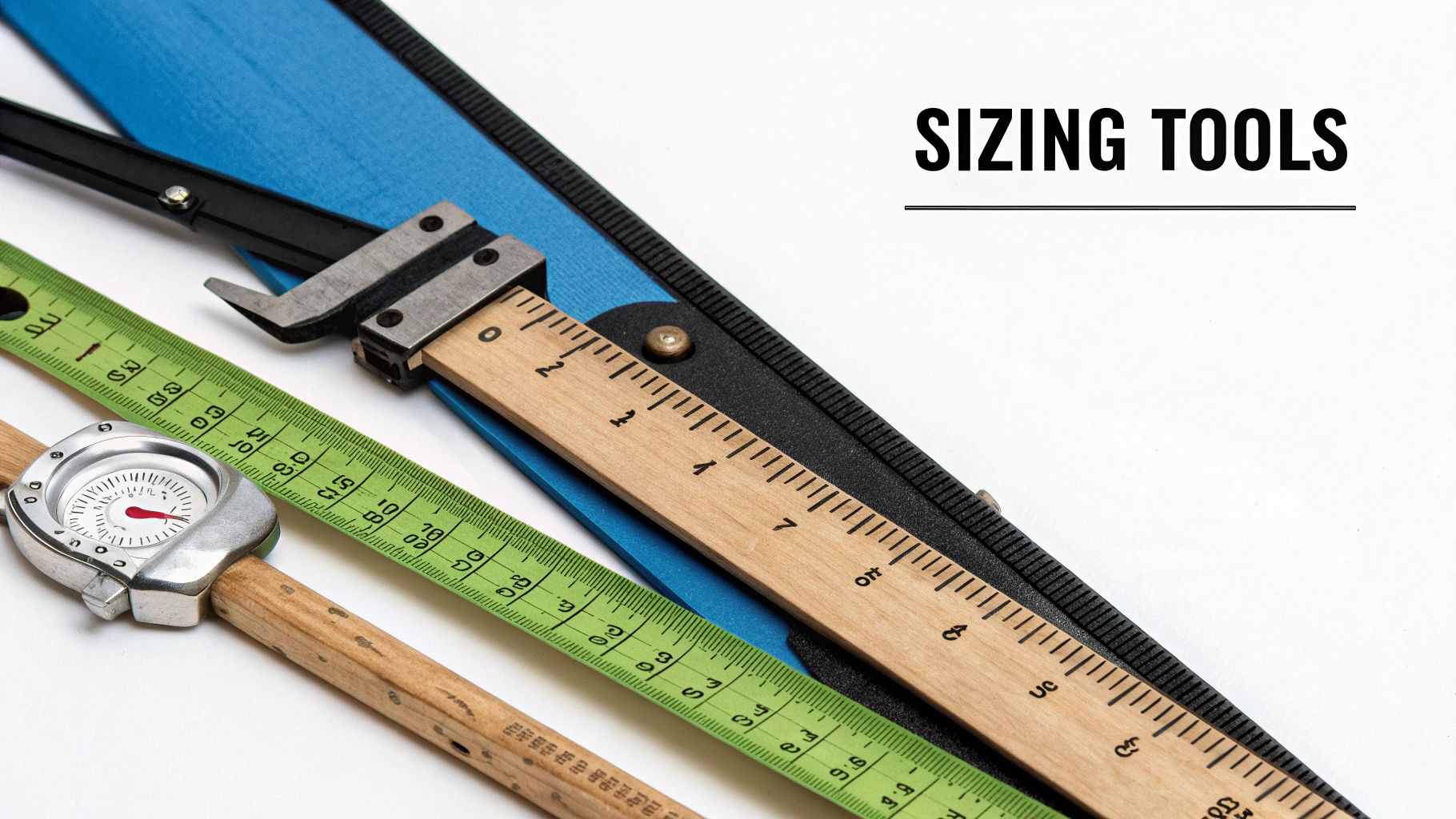
This is just a little peek at the resources we have, from aftercare tips to styling guides, all designed to support you on your piercing journey. Keeping the right gauge is the foundation of a healthy piercing and opens up a whole world of comfortable, stylish options for you to explore.
How To Find The Perfect Diameter For Your Hoop
Okay, let's get into the fun part—finding the hoop size that perfectly captures your vibe. When we're talking about diameter, we mean the measurement straight across the inside of the hoop. This is the key number that decides if your ring will hug your nostril for a snug fit or hang a little lower for a more dramatic look.
Unlike gauge, which is all about safety and a healthy piercing, diameter is purely about personal style. Are you going for that subtle, barely-there look that just peeks out? Or do you want a bolder, statement-making hoop that really stands out? There's no wrong answer here; it's all about the aesthetic you want to rock.
Your Piercing Placement Is Everything
The perfect diameter for you comes down to your unique anatomy and, most importantly, where your piercing is located. Not all nostril piercings are in the exact same spot, and even a tiny difference completely changes the size you'll need.
- Higher Nostril Piercings: If your piercing sits higher up on your nostril, closer to the bridge of your nose, you're going to need a larger diameter. Think 9mm or 10mm. This gives the hoop enough room to curve around your nostril without pulling or feeling tight.
- Lower Nostril Piercings: For piercings located closer to the bottom edge of your nostril, you can get away with a much smaller, snugger hoop. Sizes like 6mm or 7mm are often perfect for this placement, giving you that classic, tight-fitting look.
The Secret To Measuring At Home
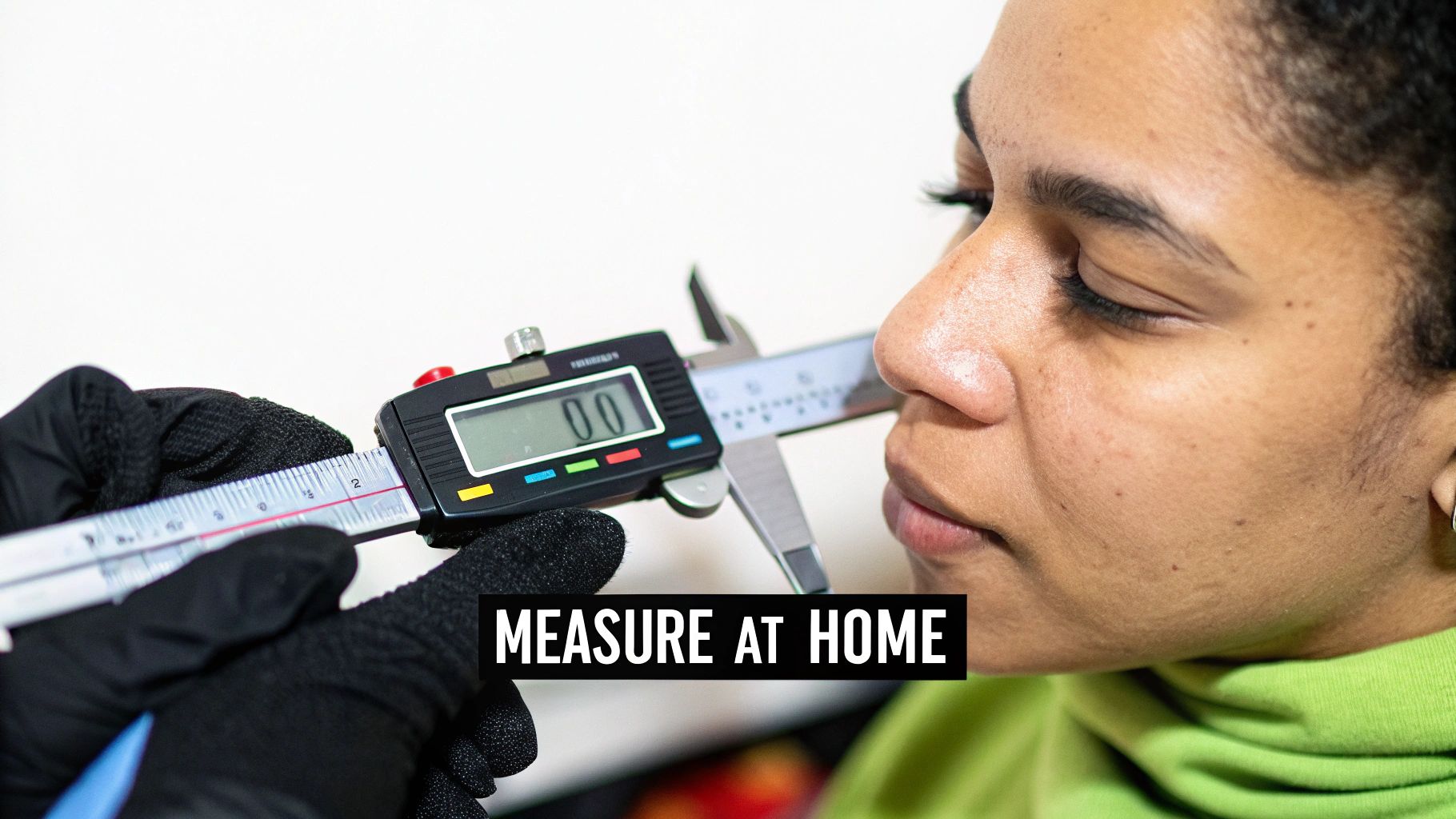
So, how do you find your magic number without a bunch of guesswork? It's surprisingly simple! All you need to do is measure the distance from your piercing hole straight down to the very bottom edge of your nostril. That measurement, in millimeters, is the smallest diameter you can comfortably wear.
Think of that number as your starting point for a super snug fit. If you want a bit more breathing room or a looser style, just add 1mm or 2mm to your measurement. It's a simple trick that takes all the stress out of buying hoops online!
This quick at-home measurement is the secret weapon for ordering flawless hoops every single time. For an even deeper dive into hoop specifics, make sure you check out our full guide on body jewelry sizing basics for nose hoops. It’s loaded with extra tips to turn you into a true sizing expert.
Decoding Sizing for Different Nose Ring Styles
The world of nose jewelry is so much bigger than just a simple hoop, and guess what? Each unique style comes with its own sizing rules. Getting the right fit isn't just about picking a cool design; it's about making sure that design actually works with your specific piercing.
Think of it like shopping for jeans—a skinny fit and a bootcut might have the same waist size on the tag, but they're going to fit your body in totally different ways. The same logic applies here. The measurements that matter for a stud are different from what you need for a hoop. Let's break down the most popular options so you know exactly what to look for.
Sizing for Studs and Straight Jewelry
When you're rocking any kind of stud-style jewelry, the most important measurement is the gauge. The post length also plays a role, but for most nostril piercings, the standard length works just fine unless you know your nostril cartilage is on the thicker side.
- Nose Screws: These have that signature curve that helps lock them in place inside your nostril. Your main focus here is getting the gauge right to match your piercing hole perfectly.
- L-Shape Posts: True to their name, these posts are bent at a sharp 90-degree angle for a super secure fit. Just like with screws, the gauge is the critical number you need to know.
- Nose Bones: This style features a tiny ball on the end to keep it from slipping out. The gauge has to be spot-on, as that little ball needs to pop through your piercing comfortably without causing any irritation.
Heads Up: A fishtail nose ring is a special case! It’s a long, straight post that your piercer custom-bends just for you. For this style, you only need to know your gauge—your piercer handles the rest to create a perfect, bespoke fit.
Sizing for Hoops and Circular Jewelry
Ready to rock a hoop? For any kind of circular style, you need to know two things: the gauge and the diameter. Getting both right is the secret to finding a hoop that looks and feels amazing, preventing that dreaded "too tight" or "too loose" situation.
Knowing your measurements opens up a whole universe of styles that will fit you perfectly from day one. It takes all the guesswork out of shopping and lets you focus on the fun part: picking out gorgeous new jewelry. We have an incredible collection of nose hoops and studs waiting for you once you've nailed down your numbers. Whether you love seamless rings, captive bead rings, or something totally unique, understanding these sizing basics empowers you to choose your next piece with total confidence.
Your At-Home Nose Ring Measurement Guide
Ready to become your own sizing expert? You don't need any fancy tools to find your perfect fit. We'll show you exactly how to measure for your next nose ring using simple items you probably already have lying around the house.
Forget the guesswork. Getting accurate measurements is surprisingly easy and is the single best thing you can do to make sure your next piece of jewelry from our nose rings collection fits like a dream from the moment you put it in.
Measuring Your Hoop Diameter
Finding your ideal hoop size is all about measuring the distance from your piercing to the very edge of your nostril. This number gives you the minimum diameter you'll need for a nice, snug fit.
Here’s a super simple, foolproof method:
- Grab Your Tools: You'll need a small, thin strip of paper, a fine-tip marker or pen, and a ruler with millimeter markings.
- Mark the Spot: Stand in front of a mirror and hold the edge of the paper strip right up against your piercing hole.
- Find the Edge: Carefully lay the paper flat against your nostril and mark a tiny line right where the bottom edge of your nostril ends.
- Measure It: Lay the paper strip on your ruler and measure the distance from the edge of the paper to the line you just made. This measurement in millimeters (mm) is your ideal diameter for a snug-fitting hoop.
Style Tip: Love a looser, more dangly look? Just add 1-2mm to your measurement. For example, if you measured 7mm, an 8mm or 9mm hoop will give you that extra bit of space for a more relaxed vibe.
Figuring Out Your Gauge
Determining your gauge at home is even easier, especially if you still have the jewelry you were pierced with. The thickness of the post is its gauge, and it’s usually measured in either gauge numbers (like 20g or 18g) or millimeters.
The most reliable method is to simply compare your current jewelry to a sizing chart. We’ve put together a handy conversion table to take all the confusion out of the process.
Nose Ring Size Conversion Chart
This chart breaks down the most common nose ring sizes, converting the gauge number into millimeters and inches, and showing typical hoop diameters.
| Gauge | Millimeters (mm) | Inches (") | Common Diameter (mm) |
|---|---|---|---|
| 22g | 0.6mm | 1/40" | 6mm, 7mm |
| 20g | 0.8mm | 1/32" | 8mm, 10mm |
| 18g | 1.0mm | 3/64" | 8mm, 10mm |
| 16g | 1.2mm | 3/64" | 8mm, 10mm |
Remember, a smaller gauge number means a thicker piece of jewelry. 20g is the most common and standard size for nostril piercings, but it's always best to be sure!

This visual breaks down the sizing journey into three clear steps, ensuring you cover all your bases from diameter to gauge. Need a little extra help? You can find a printable, true-to-scale gauge card online to use right now.
Just print it out, lay your current nose ring over the lines, and find its perfect match. This visual comparison takes all the confusion out of identifying your gauge. With these foolproof instructions, you’ll be ready to shop with total confidence, knowing you’re getting the right size on the first try.
Why Knowing Your Size Unlocks More Styles
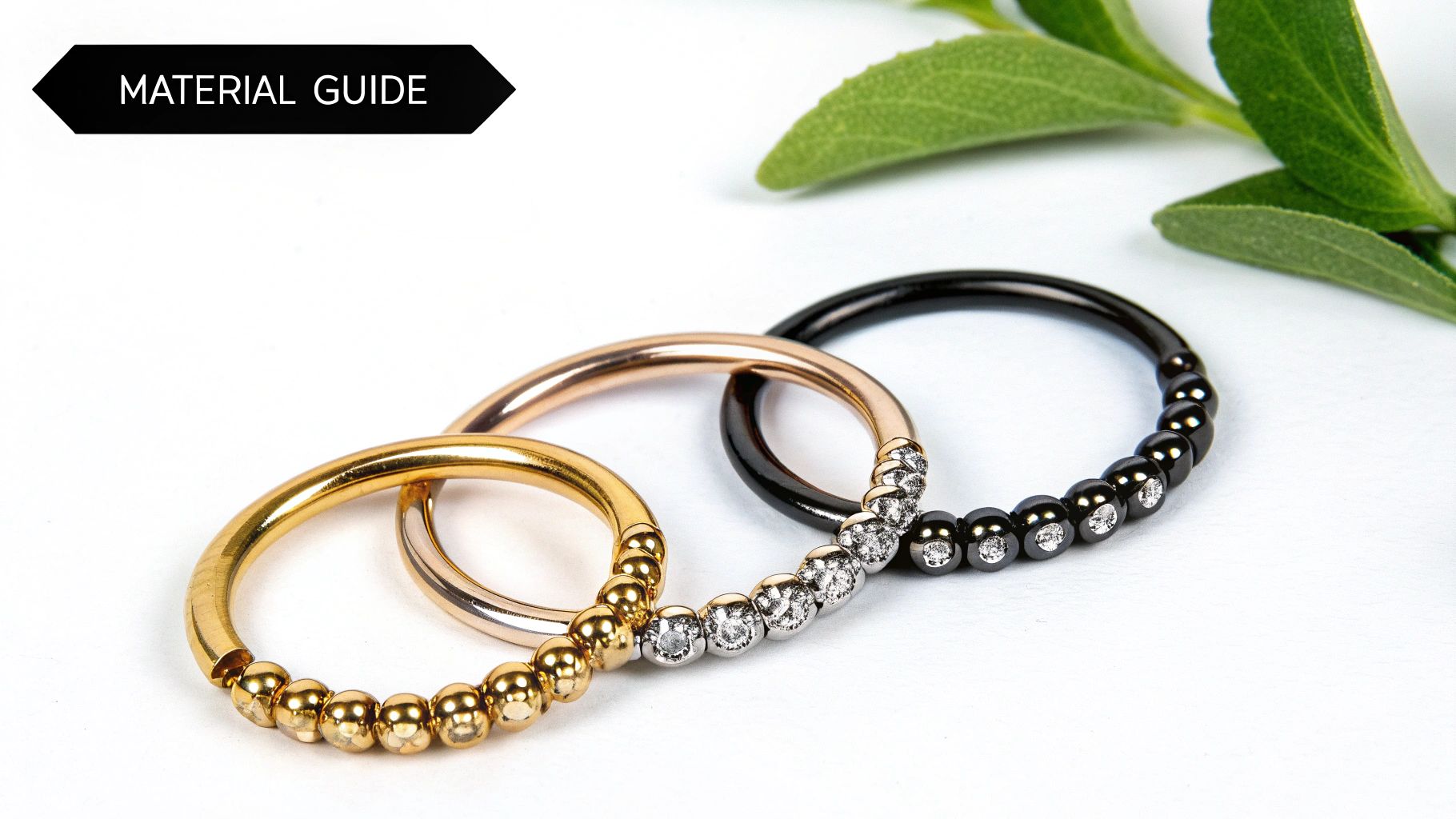
Think of it this way: knowing your nose ring size isn't just about a comfy fit—it's like finding a secret key to a treasure chest of styles you never knew you could wear. Once you've got your measurements down, you have an all-access pass to explore every trend, from dainty gold hoops to bold, can't-miss septum clickers.
The world of body jewelry is absolutely exploding with fresh designs right now. And with this massive trend toward personalization, knowing your exact gauge and diameter is more critical than ever. It's what gives you the confidence to play around with different materials, styles, and vibes, completely ditching that nagging fear of ordering the wrong thing.
More Options, More You
And this isn't just some small fad; the global appetite for unique body jewelry is huge. The body piercing jewelry market is on track to hit around $8.64 billion in 2025 and is projected to fly past $13 billion by 2032. You can dive deeper into these exciting body piercing market trends if you're curious.
So, what's that mean for you? It means when you know your perfect size, you can take full advantage of this creative boom. You're no longer stuck with whatever "standard" options are available.
Being an informed shopper means you never have to limit your style again. It's the difference between just browsing and actually buying that piece you fell in love with.
Once you’ve nailed down your measurements, you can start building a collection that’s a true reflection of you. You can swap between a snug 7mm hoop for a subtle, everyday look and a statement 10mm seamless ring for a night out. Your piercing becomes a canvas, and knowing your size is the key to unlocking its full artistic potential.
Your Nose Ring Sizing Questions Answered
Still have a few questions swirling around? Don't worry, we’ve got you. This is your go-to spot for quick, expert answers to those tricky sizing dilemmas we all face at some point. Let's clear up the confusion so you can get back to confidently rocking your look.
Think of this section as your personal sizing troubleshooter. We're about to tackle the most common issues, from figuring out what to do when you're stuck between sizes to spotting the tell-tale signs that your current jewelry is just too tight.
What If I Am Between Sizes?
It happens more often than you think! If your measurement falls right between two standard diameters, like 7.5mm, your choice really comes down to personal style and the look you're going for.
For a super snug, barely-there fit, you can size down to 7mm. If you prefer a little more breathing room or a slightly danglier vibe, size up to 8mm. Honestly, there’s no wrong answer here!
Can I Change My Gauge Size?
Absolutely, but it definitely requires patience! Going up a size (stretching) should be done slowly and carefully, and we always recommend getting help from a professional piercer to avoid any injury.
Going down a size (shrinking) is way easier—just wear a thinner gauge for a while, and your piercing will naturally shrink to fit it over time.
One of the most common issues we hear about is a hoop that just won't close or feels like it's pulling on the piercing. If you're struggling to get that clicker shut, it's a huge red flag that the diameter is too small for your anatomy.
Another tell-tale sign of a poor fit is constant irritation or a stubborn pressure bump that won't go away. If this sounds familiar, you can learn more about why your nose ring might not fit correctly in our detailed Q&A. Getting the size right is the ultimate secret to a happy, healthy piercing that always looks and feels amazing.