

















Trying to figure out your belly ring size can feel like learning a whole new language. But don't worry, once you know the basics, it's actually super simple! The only two measurements you really need to get a handle on are gauge (the barbell's thickness) and length (the distance between the balls).
Getting this right is the key to a happy, healthy piercing, so let’s dive in and make you a sizing pro!
Your Quick Guide to Belly Ring Sizes
So, you got your navel pierced and are ready to dive into the world of cute jewelry, but you’re feeling a little stuck on sizing. It's way less complicated than you might think! For most people, the standard belly ring size is 14 gauge (1.6mm) thick with a 10mm (3/8") long barbell. This is the go-to size that professional piercers typically use for initial piercings.
Why is this the magic number? Well, a 14g bar is sturdy enough to prevent pesky irritation and keep the piercing from migrating, while the 10mm length gives your new piercing just enough room to breathe without being so long that it snags on everything.
Of course, your perfect fit really comes down to your unique anatomy. The standard size is a fantastic starting point, but it's not a one-size-fits-all situation. Depending on your navel's shape and the thickness of the tissue, you might need a different length, which can range anywhere from 6mm to 12mm.
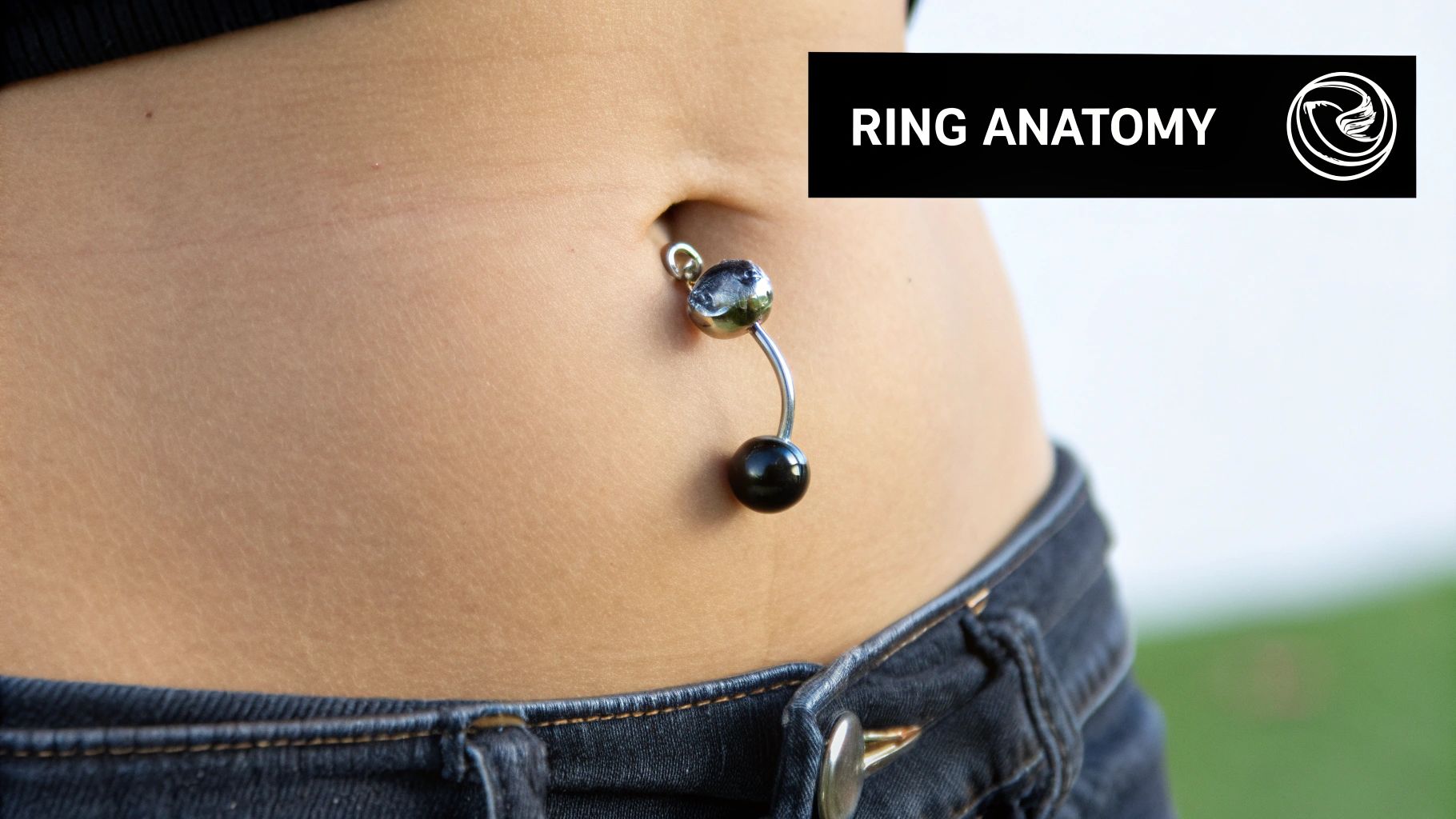
To really master the art of belly ring shopping, it helps to know all the different parts that make up your jewelry. If you want to get familiar with the lingo, check out our deep dive into the anatomy of a belly ring. Understanding these components will make your whole experience so much easier!
Here's a quick cheat sheet for the most common belly ring sizes to help you get started.
Standard Belly Ring Sizes at a Glance
| Measurement Type | Standard Size (Gauge/Inches) | Metric Equivalent (mm) |
|---|---|---|
| Gauge (Thickness) | 14g | 1.6mm |
| Length | 3/8" | 10mm |
This table covers the most typical size you'll encounter, which works great for the majority of navel piercings. Remember, this is just a starting point, and your own comfort is what matters most!
Understanding Belly Ring Gauge Thickness
First things first, what exactly is a "gauge" anyway? Think of it as the measurement for the thickness of your belly ring's barbell or post. Getting this right is a huge part of finding jewelry that not only looks great but also keeps your piercing happy and healthy.
When you start shopping, you’ll run into a weird rule with body jewelry gauges: the higher the gauge number, the thinner the metal. It feels totally backward at first, but it's the standard system used across the entire piercing world. So, a 16g barbell is actually thinner than a 14g one. Simple once you get the hang of it!
The Standard Size and Why It Matters
For navel piercings, the industry gold standard is 14 gauge (14g), which measures 1.6 millimeters thick. This isn't just a random number a piercer picked out of a hat. A 14g bar has enough substance to provide stability while your piercing is healing, which is crucial for preventing irritation and lowering the risk of your body rejecting the jewelry.
You'll also see 16g (1.2mm) jewelry, but it’s generally too thin for a fresh navel piercing. Going with a barbell that’s too thin can lead to something nasty called the "cheese-cutter effect." This is where the jewelry can slowly migrate through the skin over time, which is definitely something you want to avoid!
Pro Tip: Always stick to the same gauge your piercer originally used, especially when your piercing is still healing. If you downsize to a thinner gauge, the piercing hole can actually shrink. This makes it a real pain (sometimes literally!) to switch back to a thicker, standard-size barbell later on without having to re-stretch it.
On the flip side, trying to force a barbell that's too thick into your piercing is a big no-no. You can easily tear the skin and cause some serious damage. To make it crystal clear, here’s a quick rundown of the most common belly ring gauges:
- 14g (1.6mm): This is the go-to standard for navel piercings. It offers the best stability for healing and gives you the widest variety of jewelry styles to choose from.
- 16g (1.2mm): A thinner alternative. While some people do wear this size in a healed piercing, it's not typically recommended for the initial piercing because it offers less support.
Choosing the Right Barbell Length
Okay, so you've got the gauge thickness down. Let's talk about the next piece of the puzzle: barbell length. Getting this part right is just as crucial for a comfortable, stylish fit. It’s what determines how snugly your jewelry sits against your skin, and trust me, the wrong size can cause some real headaches.
Belly ring barbell lengths usually fall between 6mm (1/4") and 12mm (1/2"). Your perfect length is totally unique to you and really depends on your anatomy—specifically, how thick the flap of skin is that was pierced. A standard 10mm (3/8") bar is what you'll see most often, but it's definitely not a one-size-fits-all situation.
How to Measure for the Perfect Fit
Not sure what length you need? Don't sweat it. You can easily measure your piercing right at home. Just grab a ruler with millimeter markings and measure the straight-line distance between the top and bottom piercing holes. Whatever that measurement is, that's the shortest barbell length you should wear.
For a little extra help, this visual guide shows you exactly how to measure for different piercing types, including your navel.
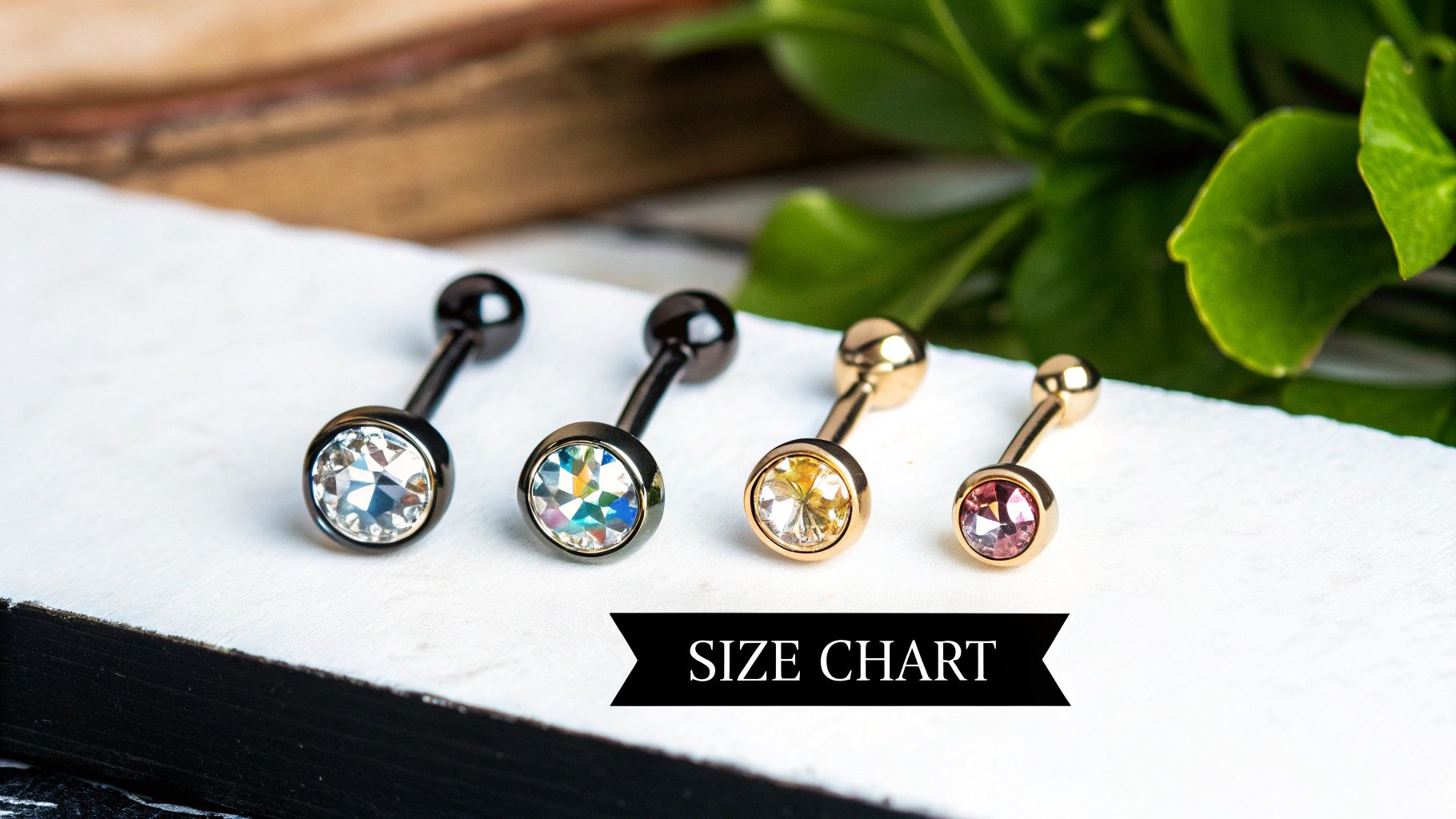
As you can see, measuring that little space between the holes gives you the exact barbell length you need for a snug, perfect fit.
A barbell that’s too short is a big problem—it can pinch your skin, leading to some nasty irritation or even embedding. On the flip side, one that’s too long will constantly snag on your clothes. That's not just annoying; it can actually damage the piercing itself.
The goal is to have the barbell sit flush. You want the top and bottom balls resting comfortably against your skin without any pressure or extra bar showing. Of course, special circumstances, like pregnancy, require their own unique sizing solutions. You can learn more about that in our guide on how to adjust a pregnancy belly ring for the best comfort. Finding your ideal spot on the belly ring size chart is the key to a happy, healthy piercing.
The Complete Belly Ring Size Conversion Chart
Ready to pin the ultimate cheat sheet? This is the heart of our guide—a complete belly ring size chart designed to make shopping for your next piece a total breeze. We've put all the essential conversions in one easy-to-read spot so you can find exactly what you need in seconds.
This chart breaks down gauge sizes and their equivalents in both millimeters (mm) and inches (in), plus the most common barbell lengths you'll find for each gauge. Whether you're a piercing newbie or a seasoned pro, this is about to become your new best friend. To give you a better idea of how different gauges compare, the visual below shows the thickness of the most common sizes.
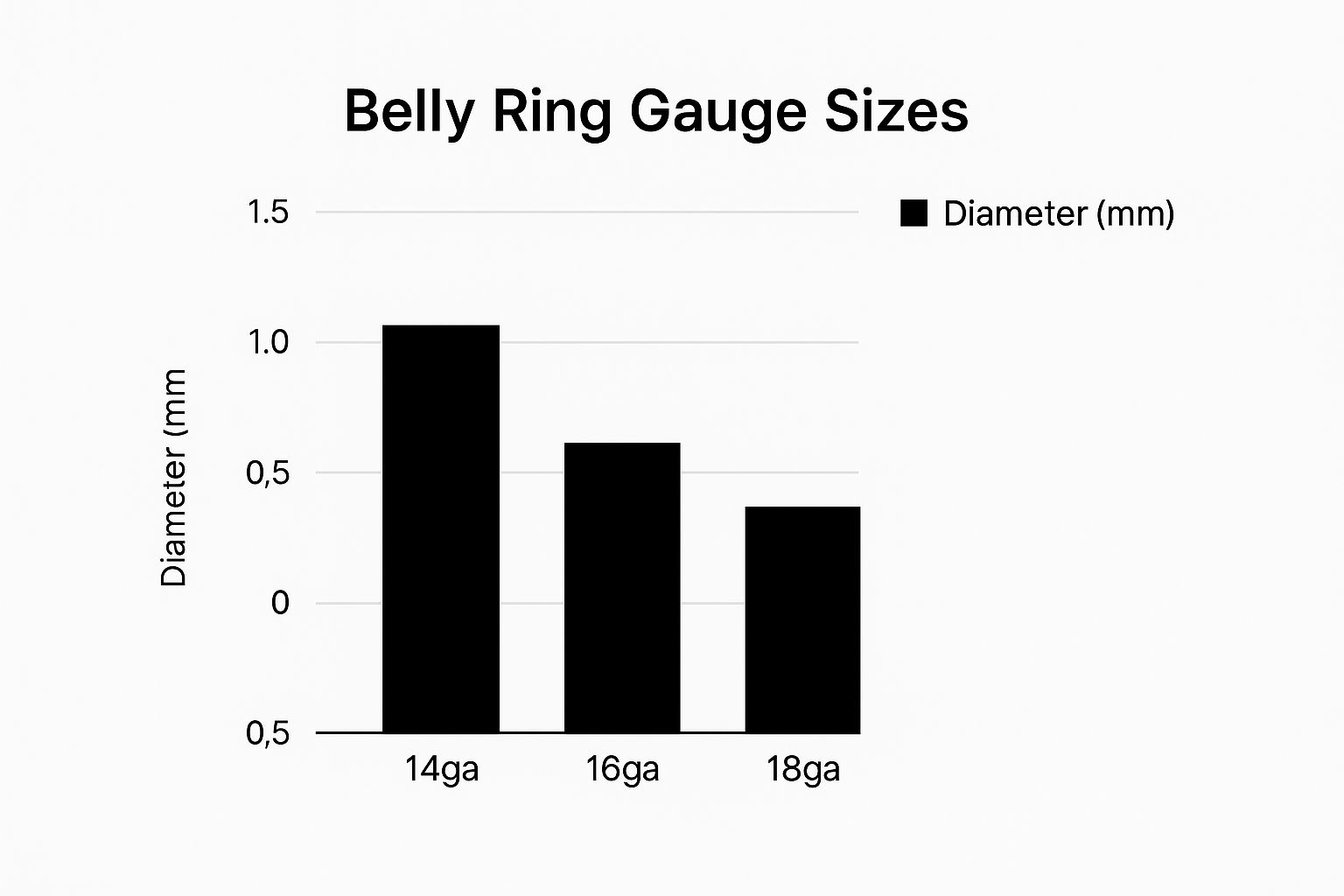
As you can see, it's a bit counterintuitive: as the gauge number goes up, the actual thickness of the jewelry goes down. A 16G is thinner than a 14G.
Now, let’s get into the full breakdown of sizes you’ll find while shopping for your next piece of stunning belly ring jewelry. Bookmark this page so you'll always have it handy!
Belly Ring Gauge and Length Conversion Chart
Here’s the at-a-glance reference for everything you need to know about belly ring sizing. We’ve laid out the gauge, the thickness in both millimeters and inches, and the most frequently seen lengths for each size.
| Gauge (G) | Thickness (Millimeters) | Thickness (Inches) | Common Lengths (mm) | Common Lengths (Inches) |
|---|---|---|---|---|
| 18G | 1.0 mm | 0.040" | 6 mm, 8 mm, 10 mm | 1/4", 5/16", 3/8" |
| 16G | 1.2 mm | 0.047" | 6 mm, 8 mm, 10 mm, 11 mm | 1/4", 5/16", 3/8", 7/16" |
| 14G | 1.6 mm | 0.063" | 6 mm, 8 mm, 10 mm, 11 mm, 12 mm, 14 mm | 1/4", 5/16", 3/8", 7/16", 1/2", 9/16" |
| 12G | 2.0 mm | 0.079" | 8 mm, 10 mm, 11 mm, 12 mm, 14 mm, 16 mm | 5/16", 3/8", 7/16", 1/2", 9/16", 5/8" |
| 10G | 2.4 mm | 0.094" | 10 mm, 11 mm, 12 mm, 14 mm, 16 mm, 19 mm | 3/8", 7/16", 1/2", 9/16", 5/8", 3/4" |
| 8G | 3.2 mm | 0.126" | 10 mm, 11 mm, 12 mm, 14 mm, 16 mm, 19 mm | 3/8", 7/16", 1/2", 9/16", 5/8", 3/4" |
Keep in mind that while 14G is the standard for initial belly piercings, you'll find jewelry in all these sizes. This chart should make it simple to switch between styles or find the perfect fit, no matter what you're looking for.
Why the Right Size Is Crucial for a Healthy Piercing
Think of your belly ring like a new pair of shoes—if the fit is off, you’re in for a world of trouble. Picking the right size from a belly ring size chart isn't just about aesthetics; it's absolutely essential for keeping your navel piercing healthy and happy for the long haul.
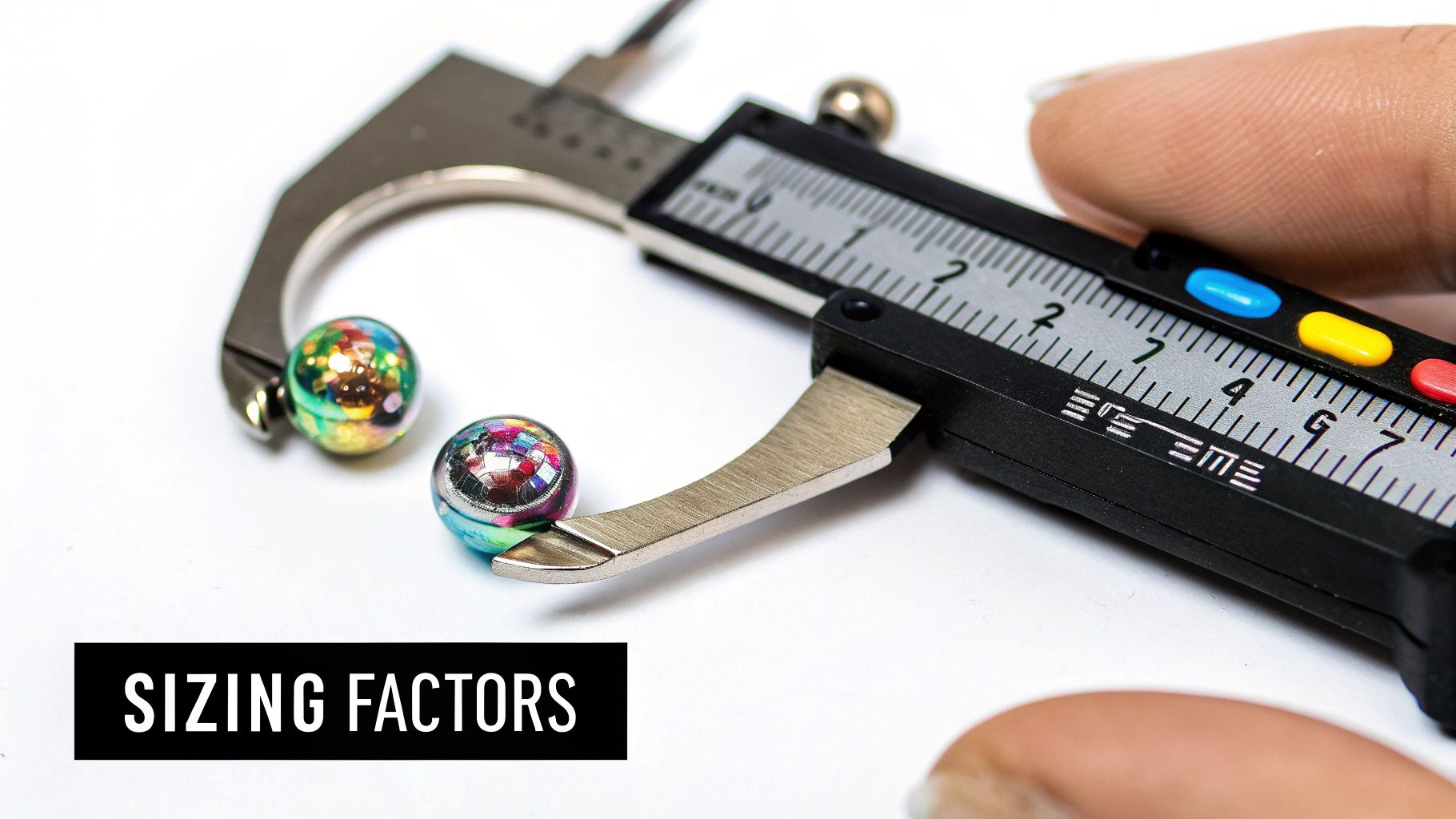
A poorly sized barbell can quickly turn your cute new accessory into a major source of irritation. This is a choice that goes way beyond style—it directly impacts your body’s well-being. Thankfully, a navel piercing is a perfectly safe form of self-expression when you take care of it properly. Research even confirms that navel piercings are a healthy way to celebrate your body and don’t correlate with body dissatisfaction issues. You can learn more from the study on body aesthetics and piercing health.
Spotting Sizing Issues Early
Your body is pretty good at telling you when something’s wrong, and your belly ring is no exception. It’s critical to pay attention to these signals to head off any nasty complications before they start.
Signs your belly ring is too short:
- Indentation: The balls of the jewelry look like they’re sinking or pressing into your skin.
- Redness and Swelling: The area feels tight, pinched, and just seems constantly angry.
- Embedding: This is a big one. In severe cases, your skin can actually start to grow over the jewelry.
Signs your belly ring is too long:
- Constant Snagging: The barbell is always catching on your clothes, blankets, or towels. Ouch.
- Flipping Up: Instead of sitting flat, the ring frequently flips upward, refusing to stay in place.
- Irritation Bumps: All that movement and snagging can cause angry, stubborn bumps to form around the piercing holes.
A common—and serious—issue with a barbell that's too long is piercing migration. This is when the constant pulling and snagging slowly pushes the jewelry out of your skin, which can lead to nasty scarring and even the loss of your piercing. Getting the length right from the start is your best defense against it.
Specialty Sizing for Different Navel Types
Let's be real—navels come in all sorts of beautiful shapes and sizes. Because of this, a one-size-fits-all approach to belly rings just isn’t going to work for everyone. To truly find that perfect fit on a belly ring size chart, you've got to consider your own unique anatomy. If you have a navel that's a little different, you might need specialty jewelry to get that flawless, comfortable look.
Your navel's shape is the key to unlocking your best style. Don't worry if standard barbells don't feel quite right; there’s a perfect piece out there for you!
Finding Jewelry for Your Anatomy
Certain navel shapes actually need specific jewelry styles to make sure the piercing stays healthy and looks flattering. For example, if you have a shallow navel, a shorter barbell is an absolute must to prevent it from snagging on your clothes. On the other hand, an "outie" navel or a piercing that sits in a unique spot might be the perfect candidate for a J-bar, which has a special curve designed for a better fit.
What's a Floating Navel Piercing?
This style is a total lifesaver for navels that tend to "wink" or collapse when you sit down. Instead of a large gem on the bottom, it has a flat disc or a tiny ball that sits discreetly inside the navel. All the decorative action is on top! This clever design prevents irritation and keeps your piercing looking amazing, no matter what you're doing.
Then there's the beautiful journey of pregnancy, which definitely calls for a different kind of jewelry. This is where maternity belly rings become your new best friend. They're made from extra-long, flexible materials like Bioplast that can be trimmed to the perfect size. This provides the ultimate comfort and safety for your growing belly, making sure your piercing stays happy and healthy through it all.
For an even deeper look into all the different jewelry styles available, be sure to check out our crash course on navel ring styles.
Your Belly Ring Sizing Questions Answered
Got a few questions still buzzing around? Don't worry, we've got you covered. This is where we tackle all the common questions about belly ring sizing, breaking it down with clear, simple answers. We want you to feel totally confident when you're browsing for your next piece of navel jewelry.
Whether you're rocking a brand-new piercing or just switching up your style, getting the sizing right is everything. Let's clear up any confusion so you can get back to the fun part—shopping!
What Size Is a Standard Belly Ring?
A professional piercer will almost always start a new navel piercing with a 14 gauge (1.6mm) barbell. For the initial piercing, they'll also pick a bar that's a bit longer than what you'll need later on, usually around 11mm or 12mm.
Why the extra length? It's super important to give your piercing room to swell during the healing process. After a few months, once all the swelling has calmed down, you should pop back to your piercer to downsize to a shorter barbell (often 10mm or 8mm) that fits more snugly. This is a key step to prevent annoying snags and irritation down the line.
Can I Switch From a 14g to a 16g Belly Ring?
Yep, you can definitely switch from a 14g (1.6mm) to a 16g (1.2mm) belly ring since you're just moving to a thinner piece of jewelry. Just keep in mind that if you wear that skinnier 16g ring for a long time, your piercing might shrink up a tiny bit.
This could make it a little tricky to get a 14g barbell back in later without having to gently stretch the piercing. It’s usually best to stick with the 14g you were pierced with, as it offers more stability and a much, much wider selection of jewelry styles to choose from.
How Do I Know if My Belly Ring Is Too Short or Long?
Trust us, your body will give you some pretty clear signs.
-
If your barbell is too short, you might feel a pinching sensation, see redness, or notice deep indentations where the balls are pressing into your skin. In some cases, the balls might even look like they're sinking into the piercing itself.
-
If the barbell is too long, you'll see a noticeable amount of the bar sticking out between the ball and your skin. This extra length often causes the ring to flip upwards or get caught on clothing, which can lead to irritation or even piercing migration.
A perfectly fitted belly ring should sit comfortably flush against your skin, with just a tiny bit of the bar visible, if any at all.
Ready to put your newfound sizing knowledge to the test? At BodyCandy, we have a massive collection of belly rings in every size, shape, and style you can imagine.
Find your new favorite belly ring and shop our collection today!