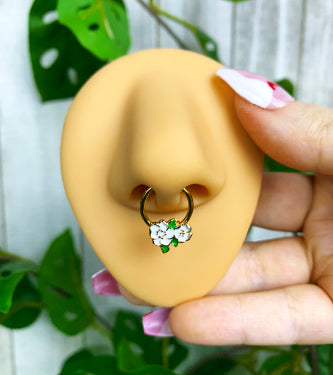


















Ever stared at a 16g label on a gorgeous new belly ring and just… blanked? You’re not alone. Trying to pick the right piercing jewelry size can feel like you're cracking some secret code, but I promise it's way simpler than you think.
Gauge (g) is just the official term for the thickness of the jewelry. This guide is here to show you exactly how that measurement converts to millimeters (mm), taking all the guesswork out of your next Bodycandy haul.
Decoding Your Piercing Size
Let's get this sorted out, shall we? Getting a handle on the gauge system is your first real step toward buying body jewelry with total confidence. The single most important thing to remember is that the system works in reverse: the higher the gauge number, the thinner the jewelry actually is. So a delicate 20g nose stud is way thinner than a standard 14g navel ring.
It's a bit weird, right? This all goes back to an old wire-making standard. If you want to dive into the history, check out our guide on the standards of gauge sizing for body jewelry.
For now, just know that matching the correct gauge to your piercing is a huge deal for keeping it happy, healthy, and comfortable. This guide will make converting gauge to mm a total breeze, so you can lock in that perfect fit every single time.
What Exactly Is A Gauge And Where Did It Come From
Time for a quick history lesson! Ever wondered why your favorite Bodycandy jewelry uses the slightly weird 'gauge' system instead of just plain old millimeters? It's not a random choice—it's actually a tradition that goes way, way back.
The answer takes us all the way to the 19th-century British iron wire industry, long before the metric system was the norm. Back in those days, wire makers used a 'gauge' system where the number told you how many times a wire had been pulled through a machine to make it thinner, as you can read in this fascinating deep dive on the origins of the gauge system.
That's exactly why a higher gauge number means a thinner piece of jewelry! So, a delicate 20g nose stud is much smaller than a 14g belly ring. Knowing this little bit of history makes you a smarter shopper and helps you appreciate the cool story behind your favorite pieces.
The Complete Gauge To Mm Conversion Chart
Alright, let's get down to the nitty-gritty. This is where we lay out the whole spectrum of body jewelry sizes, from those delicate 22g studs all the way up to statement-making 00g plugs. We're giving you the gauge size and its exact gauge to mm match so you can be totally confident in your choice.
Whether you're just starting your piercing journey or you've been collecting for years, consider this your ultimate cheat sheet. Go ahead and bookmark this page—you'll have the most accurate sizing info right at your fingertips whenever you're ready to shop.
Ever wonder why the numbers seem backward? It all goes back to how wire was originally made. Wire was pulled through a specialized tool called a die to make it thinner and thinner.
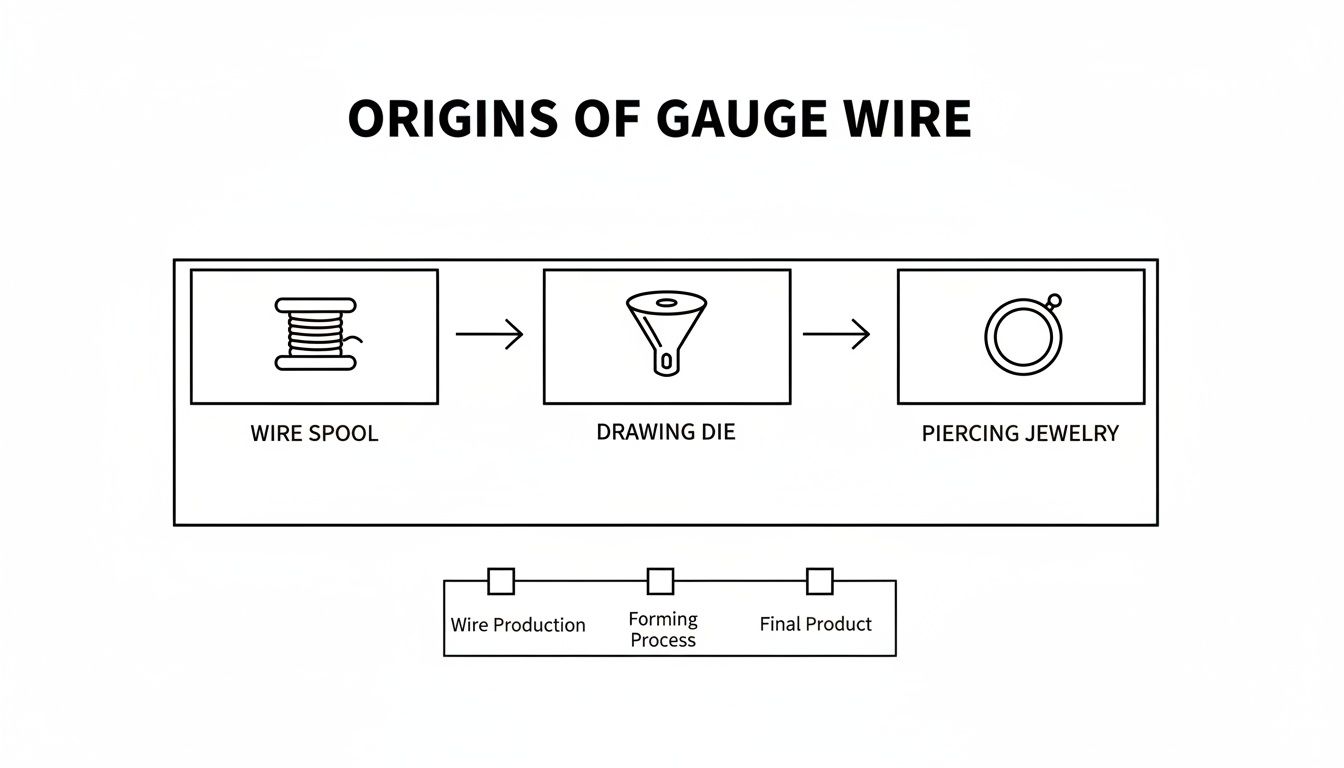
This process is exactly why a bigger gauge number, like 20g, actually means a thinner piece of jewelry, while a smaller number, like 14g, is much thicker. It's a little counterintuitive, but once you get the hang of it, you'll be a pro.
Finding Standard Sizes For Common Piercings
Ever feel a little lost trying to figure out which gauge is right for your piercing? It can be confusing, but there’s a method to the madness. Professional piercers stick to industry standards for a reason—it’s all about promoting safe healing and ensuring your jewelry sits comfortably.
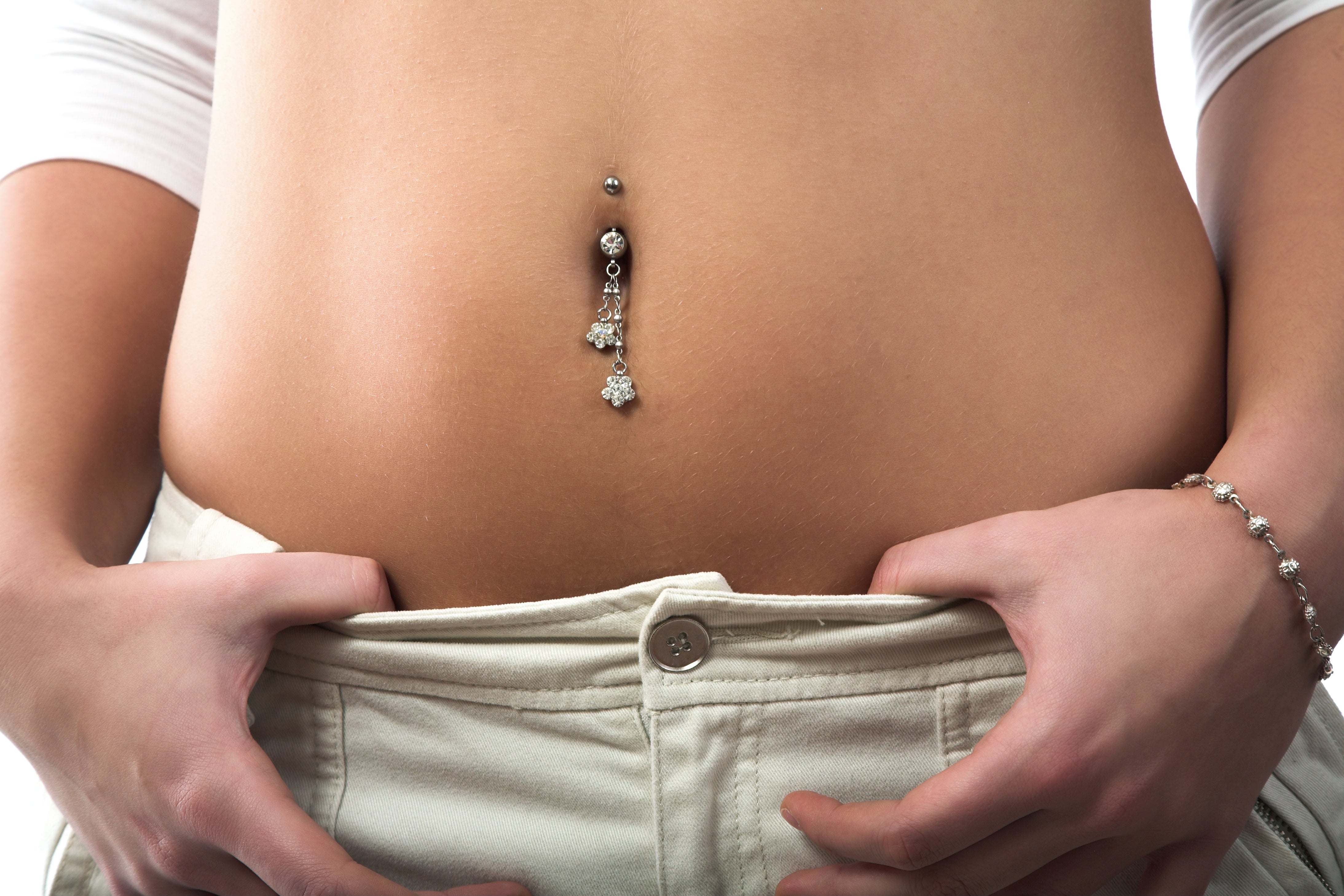
Think of it this way: certain parts of your body just heal better with specific jewelry thicknesses. For example, navel and nipple piercings are almost always done at a beefy 14g (1.6mm) to provide stability. On the flip side, delicate spots like your nostril or standard earlobes get a much thinner post, usually starting around 20g (0.8mm) or 18g (1.0mm).
Then you have the piercings that fall right in the middle, like the septum and most cartilage work (think helix or tragus). These are typically pierced at 16g (1.2mm), which is sturdy but not too heavy.
If you're curious to learn more about the specifics of cartilage, we've got a whole guide on the many gauges of cartilage piercings that really breaks it down. Once you know these common starting sizes, converting from gauge to mm becomes way less intimidating when you're shopping for that perfect new piece.
Why Using The Right Gauge Size Is So Important
Picking out the right jewelry gauge is more than just a style choice—it's actually a huge deal for the health and comfort of your piercing. If you wear jewelry that’s too thin, you might find that your piercing starts to shrink up, making it a real struggle to get your original jewelry back in later on.
Even worse, a too-thin piece of jewelry can lead to the dreaded "cheese-cutter effect." Trust us, it's as gnarly as it sounds. This is where the skinny jewelry slowly migrates or even slices right through your tissue.
On the other hand, trying to force in a gauge that’s too thick can cause painful tearing, serious irritation, and can totally derail your healing process. Nailing the gauge to mm conversion is your best defense to protect your piercing from damage and keep it happy and healthy for years to come.
Thinking about sizing up? Stretching a piercing the right way takes a good amount of patience and the proper tools. Make sure you only go up one size at a time and always use high-quality materials, like a surgical steel taper from our collection, to gently guide the new jewelry into place.
How To Measure Your Body Jewelry At Home
Got a favorite piece of jewelry you absolutely love but have no idea what size it is? It happens to the best of us. The good news is you don’t need any fancy tools to figure out your jewelry’s gauge; a simple ruler with millimeter markings will do the trick.
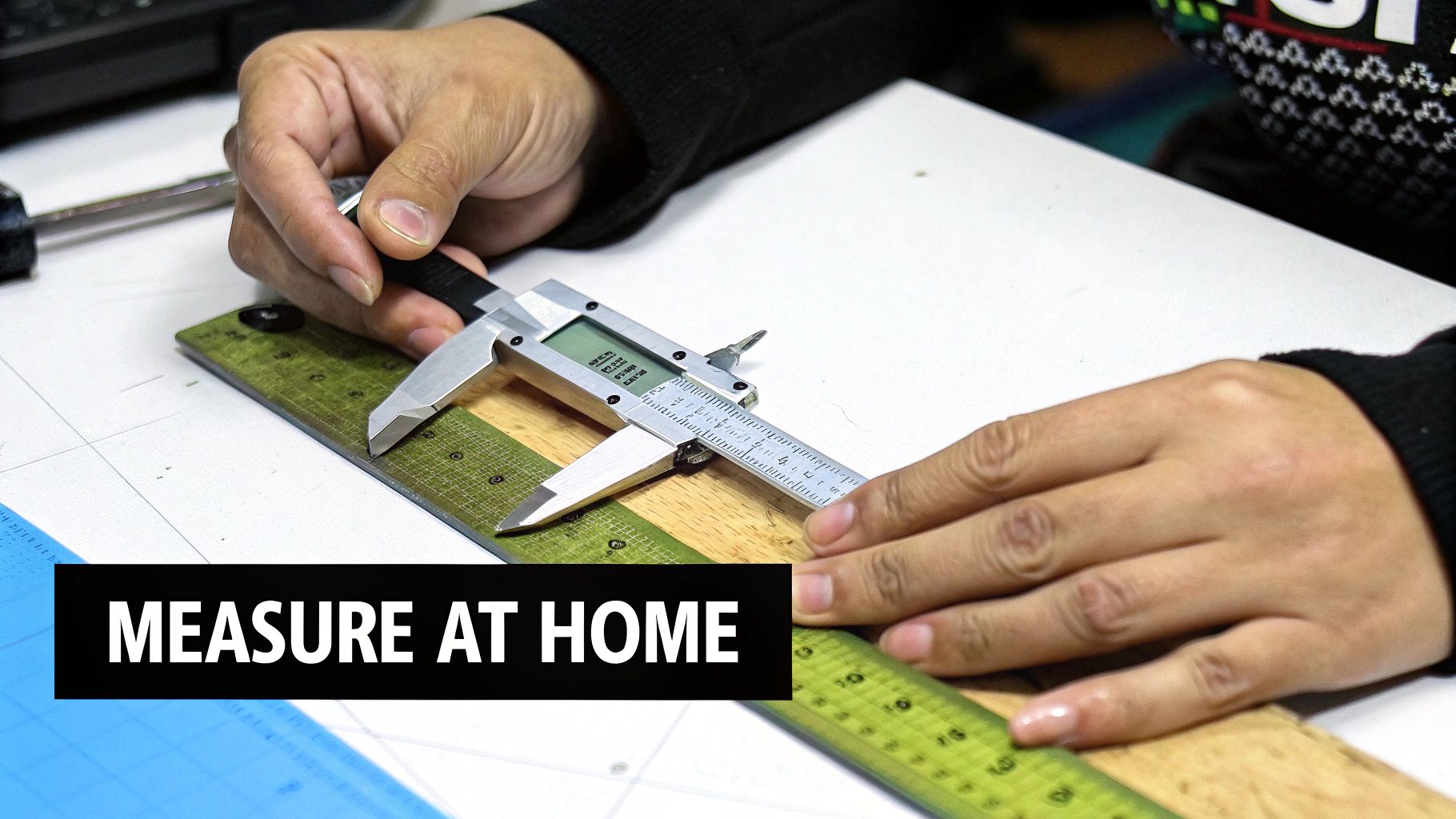
Just lay your barbell or ring flat and measure its thickness (gauge) in millimeters. Once you have that number, compare it to our conversion chart to find the corresponding gauge size. This is a super simple way to confirm your gauge to mm size before you buy a new piece you’ve been eyeing.
Of course, gauge is only part of the puzzle. For a complete walkthrough on how to also measure length and diameter, you can check out our detailed guide on measuring up body jewelry basics. Knowing all your current sizes is the absolute key to ordering new pieces that fit you perfectly every time.
Got Questions About Piercing Sizes? We've Got Answers.
Still have a few things you're wondering about when it comes to piercing sizes and that whole gauge to mm mystery? Don't sweat it. Let's tackle some of the most common questions we hear so you can feel 100% sure about your next jewelry haul.
What Happens If I Wear The Wrong Gauge Size?
This is a super important question, because size really does matter here. Wearing a gauge that's too small for your piercing can actually cause the hole to shrink over time, making it a real struggle to get your original jewelry back in later.
On the other hand, trying to force in a gauge that's too big is a recipe for disaster. This can cause pain, tearing, or even permanent damage to the piercing, especially if it isn't fully healed. It's also not the right way to stretch a piercing.
Can I Switch Between Different Gauge Sizes?
You absolutely can, but there's a right way to do it. You can usually go down a size (like switching from a 14g to a 16g) without any real problems, though keep in mind the piercing might tighten up a bit over time.
Going up a size is what's known as stretching. This needs to be done slowly and carefully, and only after your piercing is completely healed. Whatever you do, never just force bigger jewelry into a piercing that isn't ready for it.
Find Your Perfect Fit At Bodycandy
Alright, you've made it through the technical stuff and now you know your gauges from your millimeters. That means it's time for the best part—finally picking out some amazing new jewelry!
Armed with all this knowledge, you can dive into Bodycandy’s huge collection without any of the guesswork. Finding pieces that you'll love is so much easier when you know exactly what size you're looking for. No more crossing your fingers hoping for a good fit!
Imagine filtering through thousands of styles—from tiny, delicate studs to bold, statement-making barbells—and knowing with total confidence that what you pick will fit perfectly. A great fit isn't just about looking good; it's about being comfortable enough to wear your favorite pieces all day long. So go ahead, say goodbye to sizing stress and find your new favorite piece of body jewelry. You’ve got this!
Ready to show off your style with a piece that fits like a dream? Check out our incredible collections and find your perfect match today! Get started with our best-selling belly rings and flat back earrings.