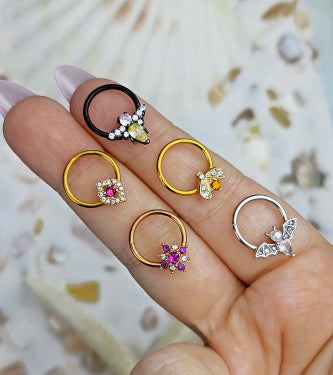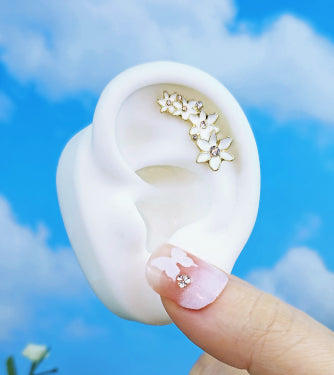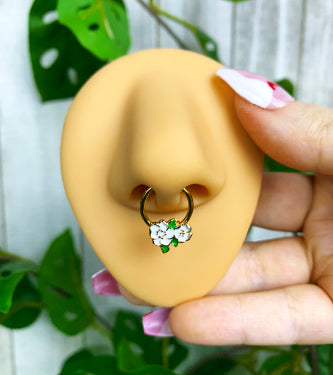










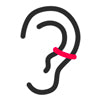
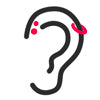
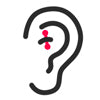





Thinking about getting a new piercing? It’s an awesome way to express your personal style, and you've definitely come to the right place to get started. Just picture your ear as a blank canvas, waiting for you to create a masterpiece. From a simple, classic lobe to something edgier like an industrial bar, the ways you can decorate your ears are pretty much endless.
Welcome to the World of Ear Piercings
If you’re ready to check out all the different ways you can adorn your ears, consider this guide your new best friend. We’ll walk you through every option, covering placement, what to expect pain-wise, healing times, and the coolest jewelry for each spot. It’s all about helping you master the art of the 'curated ear' and tell your story, one stud or hoop at a time.
It’s really no surprise that ear piercings are so popular. For a lot of people, they're the first step into the world of body modification—they’re stylish, easy to get, and offer a ton of creative freedom. And the numbers don't lie.
Why Ear Piercings Reign Supreme
Ear piercings absolutely dominate the global body piercing market, making up a massive 46% of total sales. They leave other piercings in the dust, with nose piercings at 27% and lip piercings trailing at 12%. This really shows how ear piercings are the gateway for so many people, especially teens and young adults looking for a fun, accessible way to express themselves. You can dig deeper into these market trends over on Business Research Insights.
What this means for you is that you're joining a huge community of creative individuals. This journey is about more than just one piercing; it’s about piecing together a look that's 100% you. We'll cover everything you need to know to make your choices with confidence, including:
- Understanding placement: We’ll map out every possible spot, from the soft lobe to all the different cartilage areas.
- Creating your style: Learn how to stack, mix, and match jewelry for that perfect curated look.
- Choosing safe jewelry: Find out which materials are best for keeping your new piercing happy and healthy.
- Mastering aftercare: Get a simple, step-by-step routine for a smooth and easy healing process.
Alright, let's dive in and find the perfect piercing to kickstart your ear project.
Mapping Out Your Ear: A Piercing Placement Guide
Ready to start mapping out your dream ear curation? Let's get you familiar with all the different ear piercing locations so you can start planning your perfect setup. It helps to think of your ear as a landscape with three main zones: the soft and classic Lobe, the cool and versatile Outer Ear, and the unique, intricate Inner Ear.
We’re about to break down every popular piercing out there, giving you the real scoop. For each spot—from the tried-and-true Lobe and edgy Helix to the bold Daith and subtle Tragus—we'll cover its exact placement, a pain rating on a simple 1-10 scale, the average healing time, and the best initial jewelry to get you started on the right foot.
Think of this as your visual dictionary for pinpointing that next perfect piercing. Let's dive in!
The Lobe Zone: Your Piercing Starting Point
This is ground zero for most piercing journeys. The lobe is that soft, fleshy part at the bottom of your ear, making it one of the easiest and least painful places to get pierced. Because it doesn't have that tough cartilage, healing is typically a total breeze.
But don't mistake "basic" for "boring." Lobe piercings are incredibly versatile. You can rock a single, classic stud or go for a "stacked lobe" or "constellation" look by adding more up the side. The possibilities are truly endless!
- Standard Lobe: The OG piercing, located right in the center of the fleshy part. Pain is super low, maybe a 2/10. Healing takes about 6-8 weeks, and you can start with a simple stud or a small captive bead ring.
- Upper Lobe: Placed just above the standard lobe, this is your first step toward creating a beautiful stack. The pain and healing time are pretty much identical to a standard lobe piercing.
- Transverse Lobe: This is a more unique take where a barbell goes horizontally through the lobe tissue instead of front-to-back. It's a bit more specialized, with a pain level around 4/10 and a healing time of 2-6 months. A straight barbell is the go-to for this one.
The Outer Ear: Where Style Gets Edgy
Moving up from the lobe, you hit the outer rim of your ear, which is mostly made of cartilage. This is where some of the most popular and eye-catching piercings live. Sure, cartilage takes longer to heal than the lobe, but the stylish results are totally worth the extra patience.
The key to healing any cartilage piercing is patience and proper aftercare. Since cartilage has less blood flow than the lobe, it just needs more time to fully recover—often 6 to 12 months. Don't rush it!
Helix Piercings
The helix is that curved outer rim of your upper ear cartilage. It’s a huge canvas for creativity and definitely one of the most common cartilage piercings out there.
- Standard Helix: Placed anywhere along that upper outer rim. It’s perfect for hoops, studs, or a cool mix of both. Pain is usually around a 5/10, and healing takes 6-12 months. A flat back labret stud is often the best choice for starter jewelry.
- Forward Helix: This piercing sits on the front part of the cartilage rim, just above the tragus. You can get a single, double, or even a triple forward helix for a really striking look. Pain is about a 6/10, with a healing time of 6-9 months. Tiny flat back studs are ideal here.
Industrial Piercing
Ready for something bold? The industrial piercing is a single, long barbell that connects two separate holes in the upper cartilage—usually one in the forward helix area and one on the outer helix. It makes a serious statement.
Because you're essentially getting two piercings at once, the pain can be more intense, landing around a 7/10. Healing is also a longer journey, typically taking 9-12 months or even more. A straight industrial barbell is the only jewelry for this piercing.
Auricle and Snug Piercings
These piercings are found on the middle part of the outer rim, offering a unique spot between the classic helix and the lobe.
- Auricle: This piercing is placed on the outer rim, midway down the ear. It’s a great spot for a delicate hoop or stud. Pain is a manageable 5/10, and healing takes 6-12 months.
- Snug: Tucked into the inner ridge of cartilage that runs parallel to the outer rim, the snug is a unique and less common choice. It can be quite painful, around an 8/10, because the cartilage is so thick. Healing can take over a year, and a curved barbell is the standard initial jewelry.
The Inner Ear: For Unique and Daring Placements
Now we're moving into the inner part of the ear, where the cartilage has more interesting folds and ridges. These placements are perfect for creating a truly curated and personal look. They can be a bit trickier to heal, but they offer some of the most stunning results.
As we mentioned earlier, ear piercings are by far the most popular form of body modification. This chart really puts into perspective just how dominant they are compared to other common spots.

The data makes it clear: at 46%, ear piercings are the top choice for people getting pierced, well ahead of nose and lip piercings.
Tragus and Anti-Tragus
These two piercings are located on the small bits of cartilage that sit right near your ear canal.
- Tragus: The tragus is that small, oval-shaped nub of cartilage that partially covers your ear canal. It’s a super popular spot for a single, dainty stud. The pain level is around a 5/10, and it heals in 6-12 months. A flat back labret stud is perfect for this spot.
- Anti-Tragus: Located on the small fold of cartilage opposite the tragus and just above the lobe. This one is a bit more intense, with pain around a 7/10. Healing takes 9-12 months, and a curved barbell or a small hoop works best.
Rook and Daith Piercings
Tucked away in the inner folds, the rook and daith are two of the most distinctive different ear piercing options you can get.
- Rook: The rook piercing goes vertically through the anti-helix, which is the upper fold of cartilage inside your ear. It’s a perfect spot for a curved barbell. Pain can be a 7/10, and healing takes about 9-12 months.
- Daith: This piercing sits on the innermost fold of cartilage, right above the ear canal. It has become incredibly popular for its unique look and is often shown off with a beautiful, ornate clicker ring. Pain is a solid 6/10, with a healing time of 9-12 months.
Conch Piercing
The conch is the large, cup-shaped area of cartilage in the center of your ear—named after the conch shell because of its shape. You have two main options here:
- Inner Conch: This piercing is in the center of that "cup," perfect for a statement stud.
- Outer Conch: This is placed on the flat part of the cartilage between the helix and the anti-helix, ideal for a large hoop that wraps around the ear later on.
Both have a pain level around 6/10 and take 6-12 months to fully heal. A flat back labret is the best starting point for an inner conch, while a large captive bead ring can sometimes be used for an outer conch after the initial healing is done.
For an even deeper dive with more visuals, check out our full photographic dictionary of modern ear piercings to see all these placements in action.
Quick Guide to Popular Ear Piercing Types
Feeling a little overwhelmed by all the choices? Don't worry. This table breaks down the key details for the most common ear piercings, helping you quickly compare pain levels, healing times, and the best jewelry to start with.
| Piercing Name | Location | Pain Level (1-10) | Healing Time | Best Initial Jewelry |
|---|---|---|---|---|
| Standard Lobe | Fleshy bottom part of the ear | 2/10 | 6-8 Weeks | Stud, Captive Bead Ring |
| Helix | Upper outer cartilage rim | 5/10 | 6-12 Months | Flat Back Labret, Hoop |
| Tragus | Cartilage nub covering ear canal | 5/10 | 6-12 Months | Flat Back Labret Stud |
| Daith | Innermost cartilage fold | 6/10 | 9-12 Months | Captive Bead Ring, Clicker |
| Conch | Inner cup-shaped cartilage | 6/10 | 6-12 Months | Flat Back Labret Stud |
| Industrial | Two holes in upper cartilage | 7/10 | 9-12+ Months | Industrial Barbell |
| Rook | Upper inner cartilage fold | 7/10 | 9-12 Months | Curved Barbell |
| Snug | Inner cartilage ridge | 8/10 | 12+ Months | Curved Barbell |
Use this as a handy reference while you plan your next move. Happy piercing!
How to Create Your Dream Curated Ear

Alright, you’ve got the map of all the different ear piercings—now for the really fun part! Let's talk about moving beyond single piercings and designing a look that’s totally you. Welcome to the art of the "curated ear."
Think of yourself as an interior designer, but your canvas is your ear. The goal is to make every piercing work together in harmony, creating a cohesive style that tells your story. It’s all about mixing and matching jewelry to build a personal collection.
This trend has absolutely exploded, driving major growth in the piercing jewelry industry. Seriously, this market was valued at a whopping USD 9.36 billion in 2025 and it's still climbing. A huge chunk of that comes from styles like the curated ear blowing up across North America and Europe, turning specific piercings into must-haves for anyone into fashion.
Finding Your Unique Piercing Aesthetic
Before you even think about adding jewelry to your cart, take a second to think about the overall vibe you're going for. Are you a minimalist at heart? Or do you lean more towards something bold and edgy? Nailing down your personal style makes every choice from here on out so much easier.
Need a little inspiration? Here are a few popular aesthetics to get the ideas flowing:
- The Minimalist: This is all about "less is more." It’s built on clean lines, delicate pieces, and a balanced, uncluttered feeling. Think tiny studs, thin seamless hoops, and maybe a single, simple chain connecting two piercings.
- The Celestial Queen: Pulling inspiration from the night sky, this aesthetic is all about stars, moons, and planetary shapes. It often features sparkling gems that look like little constellations scattered across your ear.
- The Edgy Rocker: This style is bold and totally unapologetic. It often involves darker metals like black PVD steel, sharp designs like spikes and daggers, and major statement pieces like a chunky industrial barbell.
- The Bohemian Dreamer: Earthy, free-spirited, and natural. This look is all about texture, incorporating nature-inspired shapes like feathers and flowers. Mixing metals is key here, giving it a more eclectic, "collected-over-time" feel.
Pro Tips for Styling Your Curated Ear
Once you've got a vibe in mind, it's time to play around with the details. Finding the perfect balance is a fun process of trial and error, but a few pro tips can definitely help you get started. The most important rule? Don't be afraid to experiment!
Mix Your Metals and Textures Gone are the days of sticking to just gold or just silver. Mixing metals is one of the best ways to add depth and visual interest to your ear stack.
- Try the 80/20 Rule: If you're a little nervous about mixing, start with one dominant metal (like gold) for about 80% of your jewelry. Then, just add a few accent pieces in a different metal, like silver or rose gold.
- Play with Texture: Don't stop at color! Mix smooth, polished hoops with beaded rings or studs with a hammered finish. This simple trick adds another layer of complexity to your whole look.
Your ear is your personal gallery. Every piece of jewelry you add is like a new brushstroke. The goal isn't just to fill the space but to create a composition that feels balanced, interesting, and uniquely yours.
Balance Statement Pieces with Dainty Details A truly great curated ear has a clear focal point. Not every single piercing needs to be screaming for attention.
- Choose a Hero Piece: Decide which piercing is going to be the star of the show. Maybe it’s a dazzling daith clicker or a bold conch hoop that you want to show off.
- Add Supporting Characters: Use smaller, more delicate pieces in your other piercings to complement that hero piece without competing with it. A simple stud in your tragus or a tiny hoop in your helix can beautifully frame something more elaborate.
If you’re hunting for more visual ideas, we've got you covered. Check out our guide on fun ways to wear your favorite ear piercings for tons of inspiration. Now go have fun building a look that’s 100% you!
Choosing the Right Jewelry for a Happy Piercing

So, you’ve picked out the perfect spot for your next piercing. Awesome! But before you get in the chair, we need to talk about the single most important decision for a smooth healing journey: the jewelry itself.
Think of your fresh piercing as a tiny, sensitive wound. Whatever you put inside it directly impacts how it heals. The wrong material can kick off a chain reaction of irritation, allergic reactions, and major healing setbacks. That’s why your first piece of jewelry isn't just about looks—it’s about safety.
This is a non-negotiable, especially if you have sensitive skin. Starting with a high-quality, body-safe metal is the best way to keep those dreaded irritation bumps at bay and ensure your piercing thrives from day one.
The Holy Trinity of Hypoallergenic Metals
Ever notice how a reputable piercing studio only uses a few specific types of metal for new piercings? There’s a very good reason for that! These materials are proven to be biocompatible, meaning your body is much less likely to have a bad reaction to them.
- Implant-Grade Titanium (ASTM F-136): This is the gold standard, and for good reason. It’s the same stuff used in surgical implants, so you know it’s designed to live peacefully inside the human body. It’s completely nickel-free, super lightweight, and the number-one choice for anyone with metal allergies or sensitive skin.
- Surgical Steel (316LVM): A popular and more budget-friendly option, surgical steel works great for a lot of people. The key thing to know is that it contains a small amount of nickel. While it's usually locked into the alloy, folks who are extremely sensitive might still have a reaction. It's a solid choice, but titanium still wears the crown for initial piercings.
- Solid 14k+ Gold: We’re talking solid gold, not gold-plated jewelry! Plated pieces have a super thin layer of gold over a mystery base metal (often containing nickel) that can flake off and cause chaos in a healing piercing. Solid 14k or 18k gold is a beautiful, body-safe option, just make sure it's certified nickel-free.
These high-quality metals aren't just a preference; they're essential for today's popular styles like curated ear stacks. With the body jewelry market in North America projected to hit USD 8.69 billion by 2026, safe and reliable materials are more important than ever. In fact, over 70% of consumers with sensitive skin actively seek out these hypoallergenic options.
The bottom line? Never, ever start a new piercing with mystery metal, sterling silver, or anything plated. Your healing piercing is an investment, and it deserves a material designed to help it succeed.
Why Titanium Is the Piercer's Choice
So, why are professional piercers almost universally recommending titanium for fresh work? It's simple: it gives you the best possible chance for a smooth, drama-free heal.
Because it's 100% nickel-free, the risk of an allergic reaction is practically zero. It’s also incredibly lightweight, which means less pressure and movement on a sensitive new piercing—a huge plus for delicate cartilage spots.
While surgical steel and solid gold are fantastic options for fully healed piercings, titanium is the undisputed champ for getting you through that critical initial healing phase without a hitch. If you want to dive deeper into the science behind the shine, check out our guide on what metal body jewelry is made of.
Your Step-by-Step Piercing Aftercare Routine
Getting your new piercing is an amazing rush, but the real work starts the moment you walk out of the studio. Honestly, great aftercare is the secret sauce to a happy, healthy, and beautifully healed piercing. But don't worry, it's not complicated at all!
We’ve put together a simple routine that takes all the guesswork out of the process. Think of this as your new piercing’s daily self-care ritual. Following these steps will help you sidestep irritation and ensure your new look heals up like a dream.
The Golden Rules of Cleaning
Consistency is your absolute best friend during the healing phase. Your main goal is just to keep the area clean without going overboard—because over-cleaning can be just as problematic as not cleaning enough!
Here’s your daily game plan:
- Wash Your Hands: Before you even think about touching your new piercing, scrub your hands thoroughly with soap and water. This is non-negotiable and the number one way to prevent introducing bacteria.
- Use a Sterile Saline Solution: The only product that should touch your fresh piercing is a sterile saline wound wash. You can grab this at any pharmacy. Just give the front and back of your piercing a quick spray.
- Gently Pat Dry: Use a fresh, disposable paper towel to gently pat the area dry. Steer clear of bath towels, as they can harbor bacteria and snag on your new jewelry. Ouch.
- Repeat: Do this simple routine 2-3 times a day—no more, no less.
That’s it! Stick to this simple process, and you’ll be giving your piercing the best possible environment to heal.
What to Absolutely Avoid
Knowing what not to do is just as crucial as knowing what to do. A lot of old-school "advice" can actually do more harm than good, especially when you’re dealing with the many different ear piercing types in delicate cartilage.
To keep your piercing happy and healing smoothly, make sure you steer clear of these common mistakes:
- No Twisting or Turning: Forget everything you’ve heard about rotating your jewelry! Twisting it only irritates the delicate healing tissue (called a fistula) and can drag bacteria deeper into the piercing. Seriously, just leave it be!
- Avoid Harsh Chemicals: Do not use rubbing alcohol, hydrogen peroxide, or antibacterial soaps. These products are way too aggressive and will only dry out and irritate your piercing, which can seriously delay your healing time.
- Keep It Dry: Try your best to avoid submerging your new piercing in bodies of water like pools, hot tubs, lakes, and oceans for at least the first month. These places are basically a party for bacteria.
- Don’t Sleep On It: This can be a tough one, we know, especially for side sleepers. Try using a travel pillow and resting your ear in the hole. This trick keeps the pressure off your new piercing while you sleep.
An irritation bump is not a sign of failure—it’s just your body’s way of saying, “Hey, something is bothering me!” Usually, it’s caused by bumping the piercing, sleeping on it, or using the wrong aftercare products.
By dodging these common pitfalls, you set yourself up for a much smoother healing journey. If you do notice a small bump appear, don’t panic. Just revisit your aftercare routine, make sure you’re not sleeping on it, and the irritation will often calm down on its own.
Your Top Ear Piercing Questions Answered
So, you're dreaming up your next piercing... or maybe your first one! You're not alone. When it comes to getting a different ear piercing, a few questions always seem to pop up. We get it, and we've heard them all.
Think of this as a chat with a piercing-obsessed friend who's been there, done that. We're covering the big stuff: loading up on new piercings, spotting a great studio from a mile away, and knowing exactly when you can finally swap in that cool new piece of jewelry. Let's get you feeling 100% confident for your next piercing adventure.
Can I Get Multiple Ear Piercings at Once?
Totally! Getting a few piercings in one go is a super popular way to jumpstart that curated ear you've been planning. There’s nothing like walking out of the studio with a whole new constellation already starting to form.
That said, most pro piercers will suggest capping it at 3-4 piercings in a single session, especially if you're getting anything in the cartilage. Your body is an amazing healing machine, but it has its limits. Too many new piercings at once can tax your immune system, making the healing process drag on and increasing the risk of trouble for all of them.
Here's the real pro-tip: get them all on one ear. This is a game-changer. It leaves you with a comfy side to sleep on, so you won't be accidentally bumping and irritating your fresh piercings all night. Always talk it over with your piercer first—they’ll help you map out a plan that’s safe for your body and your piercing goals.
What Should I Look for in a Piercing Studio?
Listen, finding a top-notch studio isn't just a friendly suggestion—it's non-negotiable for a safe piercing you'll love for years. Your health is priority number one, so you need to be picky. It's like choosing a tattoo artist; you want skill, impeccable cleanliness, and a professional you can trust.
Start by doing a little sleuthing. Check out their portfolio online or on social media. What you're looking for are lots of photos of beautifully healed piercings, not just the ones that were done five minutes ago. That's the real proof of their skill. The shop itself should be spotless, from the front door to the piercing room.
Here are the biggest green flags you should be looking for:
- Autoclave Sterilization: This is a must. They need to have a medical-grade sterilizer (an autoclave) right there in the studio and be able to show you proof that it's regularly tested.
- Single-Use Needles: Your piercer should always open a brand-new, sterile needle package right in front of you. If you see a piercing gun, walk out. Seriously. Never let one near your cartilage.
- Professional Vibe: A great piercer will happily answer every single one of your questions, explain the entire aftercare process, and guide you in choosing high-quality initial jewelry made from body-safe materials like implant-grade titanium.
When Is It Safe to Change My Ear Jewelry?
Oh, we know the feeling. You've been scrolling for weeks, saving pictures of gorgeous hoops and studs, and you can't wait to swap out your starter jewelry. But take it from us: patience is your best friend here.
You have to wait until the piercing is 100% fully healed before you even think about changing the jewelry. Swapping it out too soon is just asking for trouble. It can cause serious irritation, invite bacteria into the unhealed piercing channel (the "fistula"), and can even lead to the piercing shrinking or closing up completely within minutes.
A piercing might look perfectly fine on the outside way before the tissue inside is done healing. What you see is only half the picture.
So, what's the magic number? Healing times for different ear piercing spots vary wildly:
- Lobe Piercings: These guys are the quickest, usually healed up in about 6-8 weeks.
- Cartilage Piercings: Spots like the helix, conch, or tragus are a marathon, not a sprint. You're looking at a healing time of anywhere from 6 to 12 months.
Your piercer is the ultimate authority here and will give you the best timeline for your specific piercing. Once you get their official all-clear, the fun really starts. Go ahead and start building that dream jewelry collection!
Ready to find the perfect piece for your new piercing? From titanium flat backs to dazzling gold hoops, BodyCandy has everything you need to build your dream curated ear. Shop our massive collection of ear piercing jewelry today!