


















So, you got that gorgeous new helix or tragus piercing, dreaming of all the killer ways you could style it. But instead of showing off your new bling, you're dealing with constant itching, redness, and swelling. Sound familiar? That definitely wasn't part of the plan.
If you're tired of your cartilage piercing feeling more like a painful problem than a point of pride, you've landed in the right spot. And trust us, you are not alone in this struggle.
Here's the good news: the problem probably isn't you or your piercing. It's almost always the jewelry. That angry irritation is just your body's way of screaming that it doesn't vibe with certain metals, especially the biggest troublemaker of them all: nickel.
What's Really Causing The Irritation?
Did you know that up to 15% of the population has a nickel allergy? This makes it a huge issue for anyone trying to heal a cartilage piercing, which is already way more sensitive than a standard lobe. Hot spots like the helix, tragus, and conch have thinner skin and get bumped around more, making them prime real estate for a nasty reaction.
Nickel is a cheap metal used in crappy jewelry to make it harder and shinier, but it's also the number one culprit behind itchy, swollen, and generally pissed-off piercings. The problem is so common that the European Union passed the Nickel Directive way back in 1994, strictly limiting how much nickel can be released from jewelry. Wanna learn more? Check out our deep dive on how hypoallergenic earrings work and why they're non-negotiable for piercing lovers.
Key Takeaway: Stop blaming your piercing! That pain and itch is almost certainly a reaction to low-quality metals. The single best thing you can do for your ear is to switch to truly body-safe, hypoallergenic materials.
The solution really is that simple. Once you find jewelry made from the right stuff, you can finally heal your piercing and have fun with it. We're here to walk you through everything you need to know to pick the best cartilage earrings that not only look incredible but feel even better. Let's get you back to showing off your style with total comfort and confidence.
Choosing The Safest Metals For Your Cartilage
Think of picking the metal for your new cartilage earring like choosing a bodyguard for your piercing. You need something tough, reliable, and that won't stir up any trouble. When you’ve got sensitive ears, the material isn't just a detail—it’s everything.
This is where we get into the nitty-gritty of the metals that will keep your helix, conch, or tragus piercing happy and irritation-free. Let's break down the best players in the game so you can find your perfect match.
The Gold Standard: Implant-Grade Titanium
If there's one undisputed champion in the piercing world, it's implant-grade titanium. This isn't your average metal. It’s the same ultra-pure, biocompatible material that surgeons use for implants inside the human body. That’s how incredibly safe it is!
So, what makes it the top dog for a sensitive cartilage piercing?
- Completely Nickel-Free: Titanium contains zero nickel, making it the safest bet for anyone with a known metal allergy. No guessing games here.
- Incredibly Lightweight: You'll honestly forget it's even there. Less weight means less pressure and pulling on your delicate, healing cartilage.
- Non-Reactive: It won’t tarnish, rust, or react with your body chemistry. It just stays clean, pure, and problem-free.
While titanium is the reigning champ, you’ll also hear about 316L Surgical Stainless Steel (SSS). It's a solid choice for 85-90% of people with mild sensitivities because its nickel content is chemically locked in, preventing it from leaching out and causing a reaction. But for the other 10-15% of allergy sufferers, it can still cause issues.
This is why sticking to quality, body-safe materials is so important.
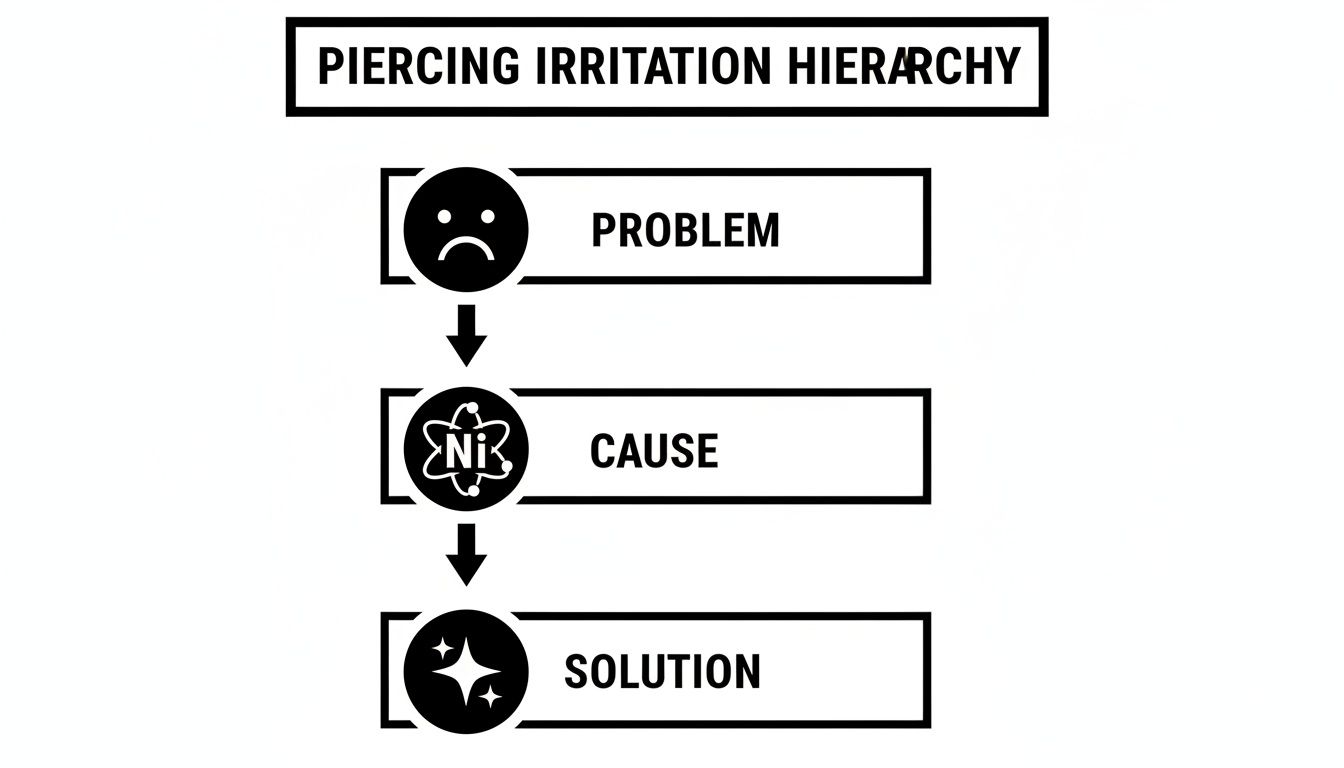
As you can see, the path to a happy piercing is simple: identify the problem (irritation), find the cause (usually nickel), and swap to a high-quality, safe metal. To dive deeper, check out our guide on everything you need to know about titanium body jewelry.
What About Surgical Steel?
You'll see implant-grade 316L surgical steel mentioned a lot, and for good reason. It’s a durable, affordable, and body-safe option that works well for most people, especially once a piercing has fully healed.
While it does contain a tiny amount of nickel, the way it’s manufactured keeps that nickel tightly bonded within the metal. This makes it far less likely to escape and cause an allergic reaction. But, if you know you have a severe nickel allergy, it’s best to just play it safe and stick with titanium.
Solid Gold And Other Precious Metals
Who doesn’t love a little sparkle? When it comes to gold, the key is to go for solid 14k or 18k gold.
Pay close attention to that word: solid. Gold-plated jewelry is just a thin coating of gold over a mystery base metal (which often contains nickel). That plating can eventually chip or wear away, exposing your sensitive skin to whatever is lurking underneath. Solid gold is the real deal through and through.
Platinum is another fantastic, though more luxurious, option. Just like titanium, it's an incredibly pure and inert metal. It’s highly unlikely to cause a reaction, making it a super-safe choice for even the most sensitive ears.
A Quick Look At Hypoallergenic Metals
Feeling a bit overwhelmed? Don't be. This little chart breaks down the best metals for sensitive cartilage piercings to help you find your perfect match.
| Material | Hypoallergenic Rating | Average Cost | Best For |
|---|---|---|---|
| Implant-Grade Titanium | Excellent (100% Nickel-Free) | $$ | New piercings & severe allergies |
| Solid 14k+ Gold | Very Good (Nickel-Free Alloy) | $$$ | Healed piercings & a luxe look |
| 316L Surgical Steel | Good (Low Nickel Release) | $ | Healed piercings & budget-friendly |
| Platinum | Excellent (Pure & Inert) | $$$$ | Extreme sensitivities & investment |
Ultimately, choosing the right material is the single most important step you can take toward a happy, healthy piercing. By investing in quality from the start, you’re really investing in the long-term health and beauty of your ear.
Why Earring Backings And Styles Are So Important
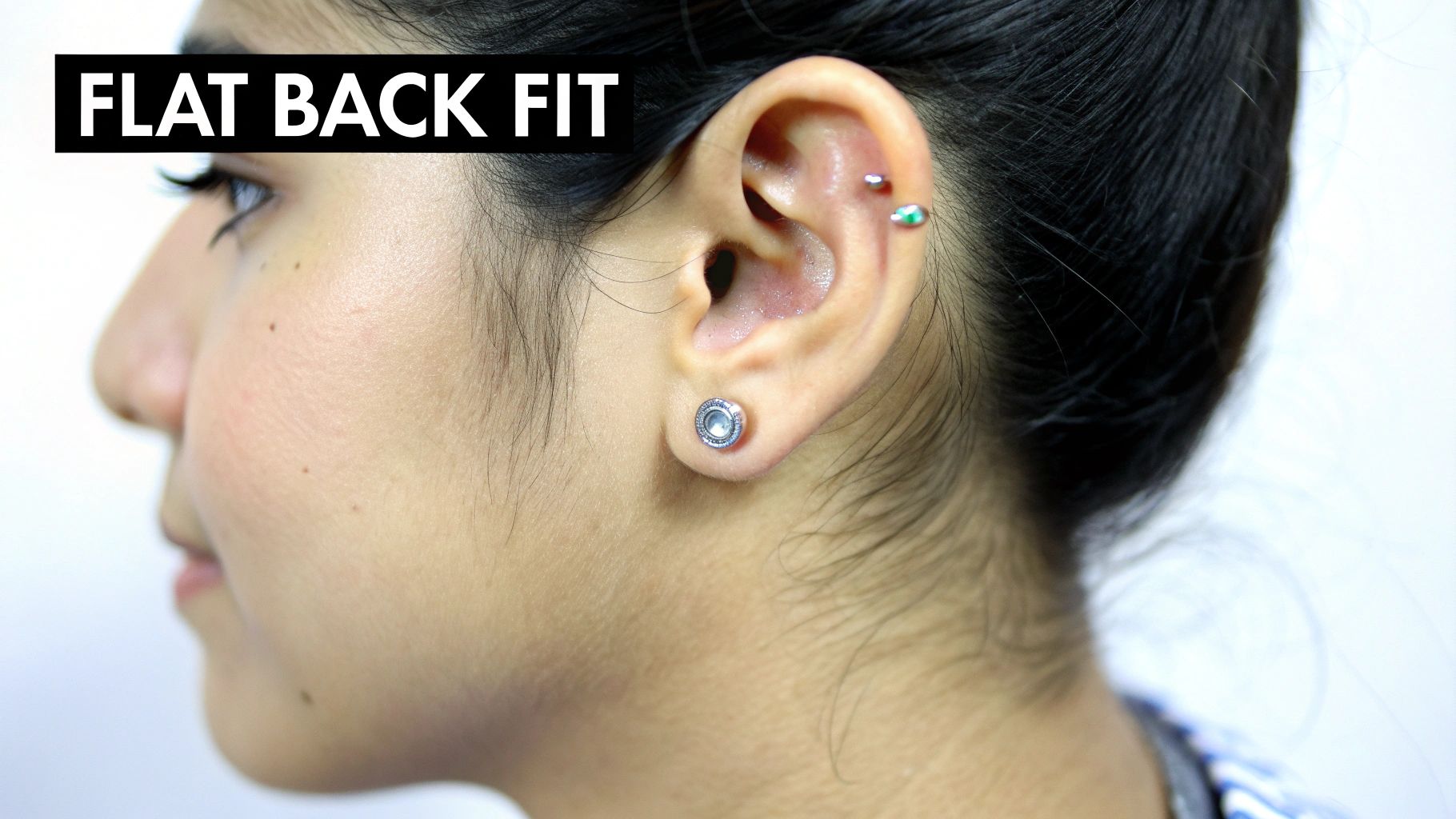
So you’ve picked out a super safe, hypoallergenic metal. Awesome! But wait—that's only half the battle. When it comes to cartilage, the actual design of your earring is just as critical for keeping your piercing happy, especially while it's healing.
Think about it: have you ever tried sleeping on a new helix piercing with a sharp, poky butterfly backing digging into the side of your head? Ouch. That constant pressure, plus the inevitable snagging on hair and pillowcases, is a recipe for irritation, inflammation, and healing setbacks.
The Magic Of Flat Back Labret Studs
This is where the flat back labret stud comes in and completely saves the day. Instead of a bulky, pointy backing, it has a smooth, flat disc that sits flush against the back of your ear.
Flat back earrings are designed for maximum comfort and minimal irritation. They eliminate the notorious poke of traditional backings, making them the superior choice for any cartilage piercing, from your tragus to your conch.
Since their popularity skyrocketed around 2018, flat back earrings have totally transformed the cartilage jewelry world. They offer a secure, poke-free alternative that can cut down irritation risks by a whopping 60% for daily wearers. Paired with implant-grade titanium, these studs are a dream come true for sensitive ears. You can learn more about the rise of flat back earrings and see why they dominate the market.
Flat backs aren't just a one-size-fits-all solution, either. They come in two main styles, and each has its own perks.
- Threadless (Push-Pin): These are incredibly user-friendly. The decorative top has a small pin that you bend slightly and simply push into the hollow post. It's held in place by tension, which makes swapping out your look super quick and easy.
- Internally Threaded: For ultimate security, this style is your best friend. The decorative top screws into the post, creating a solid fit that’s much less likely to come loose. Better yet, the threads are on the inside, so nothing sharp ever passes through your piercing.
Hoops, Huggies, And Sizing
What about hoops? We love a good hoop or a snug huggie in a cartilage piercing! They can look amazing in a healed helix or daith. But here's the catch: hoops are generally best for fully healed piercings.
Because hoops and huggies can move and rotate more than a stud, they can easily cause irritation in a piercing that's still on the mend. Once your piercing is 100% healed (which can take 6-12 months or more for cartilage), you can definitely rock a hoop. Just make sure you get the right size!
Finally, let's talk about gauge and length. Most cartilage piercings are done at 16g (1.2mm). It’s crucial to buy jewelry that matches this thickness, otherwise your piercing could shrink. The length of the post matters, too—it needs to be long enough to accommodate any swelling but snug enough that it doesn't catch on everything. Your professional piercer is the best person to help you find the perfect fit for your unique anatomy.
How To Find Your Perfect Hypoallergenic Jewelry
Alright, let's get you set up with an ear stack that looks amazing and feels great. Think of this as your inside guide to finding the best cartilage earrings for sensitive ears right here at Bodycandy. We want to make it easy to skip the irritation and jump straight to the fun part—building a look that's totally you.
Staring at a massive collection can feel overwhelming, but a few simple tricks will get you to the good stuff in no time. The secret is making the website filters work for you. First things first, you've got to tell it which materials you know will keep your piercings happy.
Filtering For Success
The most important step is to immediately narrow your search down to only the safest, most body-friendly metals. When you’re on any Bodycandy collection page, look for the filter menu and make these your top priorities:
- Select ‘Titanium’: This is always the best place to start. Filtering for titanium instantly brings up our top-tier, 100% nickel-free options. These are perfect for new piercings, stubborn healers, or ears that are just extra sensitive.
- Choose ‘Solid Gold’: If you're after that classic, luxurious look, filter for 14k gold. This makes sure you're seeing the real deal—not just a thin plating that can wear off and expose your skin to whatever mystery metal is hiding underneath.
Once you’ve got your material picked out, you can dial in on the style that's going to be the most comfortable. Find the ‘Flat Back Studs’ filter. This will show you all our labret-style earrings, which means a poke-free fit that’s a game-changer for sleeping and everyday wear. A few clicks, and you're only browsing the best of the best for sensitive ears.
Pro Tip: Don't forget to filter by gauge! Most cartilage piercings are a 16g. Selecting this makes sure you get the right thickness to keep your piercing channel healthy and prevent it from shrinking over time.
Curating Your Unique Ear Stack
Now for the best part! A curated ear is all about telling your story and showing off your personal style. One of the upsides to having sensitive ears is that it really encourages you to invest in high-quality pieces you'll cherish for years.
Start with a solid foundation, maybe a simple titanium flat back stud in your helix or conch. From there, you can start building out your vision. Don't be afraid to mix things up! Try pairing a tiny sparkling gem with a minimalist gold moon or star for some contrast.
Mixing metals is also a huge trend. The cool, silvery tone of titanium next to the warm glow of a solid gold piece in a neighboring piercing can look incredible. The goal is to create a vibe that feels balanced, cohesive, and completely you. When you stick to high-quality, hypoallergenic jewelry, you can swap pieces and experiment with total confidence, knowing your ears will stay happy and irritation-free.
Common Mistakes To Avoid When Buying Jewelry
Knowledge is power, especially when it comes to keeping your piercings happy and healthy. Think of this as your official ‘buyer beware’ guide, designed to help you spot red flags and shop smarter for the best cartilage earrings for sensitive ears. Let’s dive into the common pitfalls that can lead to an angry, irritated piercing.
First, let's talk about marketing buzzwords. You’ll see terms like “hypoallergenic” and “nickel-free” thrown around a lot, but they aren't regulated and can be super misleading. "Hypoallergenic" simply means it's less likely to cause a reaction, not that it's guaranteed to be safe. Some pieces labeled this way can still contain enough nickel to bother very sensitive skin.
Crucial Tip: Always prioritize the specific material over vague marketing claims. Knowing your earring is made from implant-grade titanium or solid 14k gold is a real guarantee of quality, whereas "hypoallergenic" can sometimes be a gamble.
Materials And Designs To Steer Clear Of
When you have sensitive ears, some materials are an absolute no-go, especially for a healing cartilage piercing. It's crucial to know what to leave out of your cart to avoid painful setbacks.
Here are the top offenders to avoid:
- Sterling Silver: While it’s beautiful for necklaces and rings, sterling silver is a bad choice for healing piercings. It oxidizes (tarnishes) when it comes into contact with body fluids and air, which can stain your skin and cause major irritation. Even worse, it can leave a permanent gray tattoo-like mark in your piercing channel. Save the silver for your fully healed lobes, not fresh cartilage.
- Low-Karat or Plated Gold: Don't be fooled by a pretty, shiny exterior. Gold-plated jewelry is just a thin layer of gold over a cheap base metal—almost always a nickel alloy. That plating wears away surprisingly fast, exposing your sensitive skin to the irritant underneath. Stick to solid 14k gold or higher to be safe.
- Mystery Metals: This is the stuff you find in fast-fashion accessory bins. If the material isn't clearly listed, just assume it's a cheap, nickel-heavy alloy that will wreak havoc on your cartilage. Your piercing deserves better!
The Dangers Of Poor Craftsmanship
Beyond the metal itself, the physical design of the jewelry is critical. Poorly made earrings can cause physical trauma to your piercing channel, leading to bumps, swelling, and a much longer, more frustrating healing time.
The biggest red flag here is external threading. This means the screw threads are on the outside of the post that passes through your ear. Imagine dragging a tiny cheese grater through your delicate piercing every time you insert or remove it—ouch! These rough threads can scrape and tear your skin.
Always, always opt for internally threaded or threadless (push-pin) styles. They provide a smooth, safe journey through your piercing channel. A quality finish matters, too, so avoid any jewelry with rough edges or imperfections that could cause micro-tears and irritation.
Aftercare For Sensitive Piercings And New Jewelry
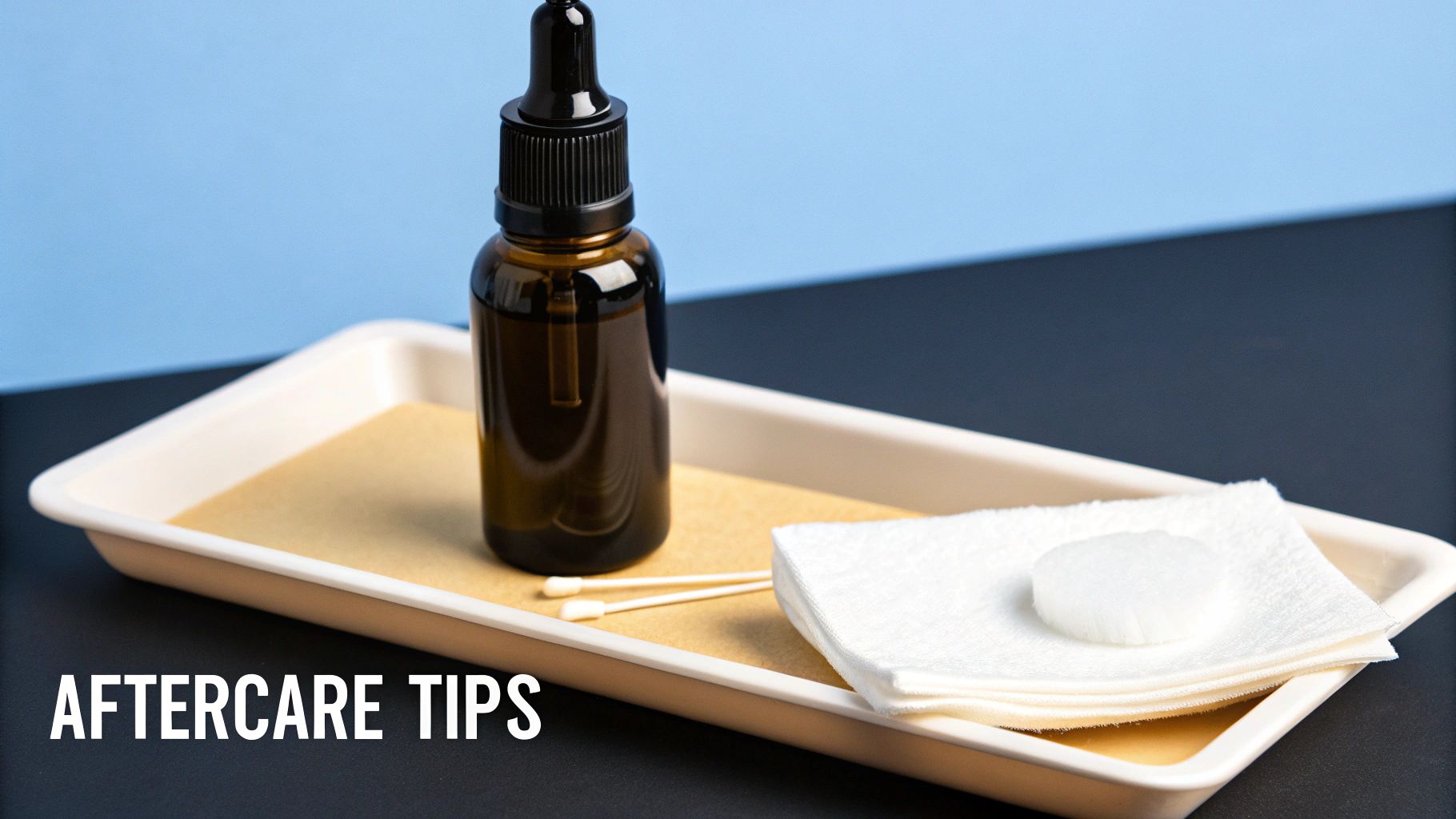
You did it! You found the perfect, body-safe cartilage earring for your sensitive ear. But even the best jewelry on the planet needs a clean, happy piercing to call home. This is where your aftercare routine becomes absolutely non-negotiable, especially when you know your skin is easily irritated.
Proper aftercare is your piercing's best defense against flare-ups and misery. The goal is to keep it simple, gentle, and consistent. Forget everything you’ve heard about using harsh chemicals—your piercing is a delicate wound, not a dirty countertop.
Keep It Clean And Simple
The best and only cleaning solution you need is a sterile saline spray. That’s it! Your body is a healing powerhouse; your job is just to create a clean environment for it to work its magic.
Here’s the daily game plan:
- Clean Twice Daily: Gently spray the front and back of your piercing with sterile saline solution, twice a day.
- Don't Twist: Seriously, resist the urge to twist or turn your jewelry. This just irritates the healing tissue and can introduce bacteria. It’s an old myth that does more harm than good.
- Pat, Don't Rub: After spraying or showering, gently pat the area dry with a clean, disposable paper towel. Terry cloth towels are notorious for snagging jewelry and can harbor nasty bacteria.
Warning: Stay far, far away from harsh products like alcohol, hydrogen peroxide, and antibacterial soaps. These are way too aggressive for a healing piercing. They can cause more irritation, dryness, and actually delay the healing process you’re working so hard on.
Taking Care Of Your New Jewelry
Keeping your beautiful new titanium or gold jewelry sparkling is surprisingly easy. Once your piercing is fully healed (and not a moment sooner!), you can occasionally remove your earrings for a gentle cleaning.
A simple wash with warm water and a mild, non-abrasive soap will do the trick. For more tips on maintaining different types of jewelry, check out our guide on the proper aftercare of coated and plated body jewelry. Keeping both your ear and your bling clean is the secret to a happy piercing journey.
Still have a few questions floating around? We get it. Here are some quick-fire answers to the things we get asked most often about cartilage earrings for sensitive ears.
Can I Be Allergic To Surgical Steel?
Yes, you absolutely can! It’s a common misconception that surgical steel is totally hypoallergenic.
While 316L surgical steel is a decent choice for a lot of people (the nickel in it is bonded within the metal, making it less likely to leach out), about 10-15% of people with a known nickel sensitivity will still have a reaction. If you know your skin throws a fit at the slightest provocation, it's always smarter to just skip the guesswork and go for a 100% nickel-free metal like implant-grade titanium or solid 14k+ gold.
How Soon Can I Change My Cartilage Earring?
Okay, this is a big one: you have to be patient with cartilage! These piercings are notoriously slow healers and can take anywhere from 6 to 12 months to be fully, truly healed.
You should never, ever swap out your initial jewelry before your piercer has checked it out and given you the official all-clear. Trying to change it too soon is a one-way ticket to those dreaded irritation bumps, potential infection, and starting the healing clock all over again.
Once you’re 100% healed up, then the fun begins! Just make sure you continue to stick with high-quality, body-safe jewelry to keep that piercing happy for years to come.
Ready to finally build an ear stack that looks amazing and feels comfortable? Shop our collection of cartilage earrings now! Dive into the massive collection of hypoallergenic titanium and solid gold options at Bodycandy and find the perfect pieces for your sensitive ears today