















A minimalist belly button ring isn't automatically safe: among people with piercings, the odds ratio for nickel allergy was 5.9. Small and simple can look great, but the material matters more than the design, especially if your skin is sensitive.
That's the mistake behind many unhappy piercing stories. You choose a low-profile barbell because it seems gentle, then discover that a vague alloy, worn plating, or poor fit can leave your navel itchy, sore, or irritated. The smart definition of minimalist is small, simple, and safe, not merely tiny.
Navel jewelry has staying power because it works as an everyday accessory, not just a dramatic holiday look. The right piece should disappear comfortably under your clothes, complement your style, and give your piercing the best chance to stay calm.
Why Minimalist Doesn't Automatically Mean Safe
A tiny belly button ring can still cause a big reaction. Design affects snagging, weight, and visual impact, but it doesn't determine how your skin will respond to the metal touching it all day.
Nickel is the major concern. A systematic review found that people with piercings had an odds ratio of 5.9 for nickel allergy, with a 95% confidence interval of 3.6 to 9.4 across 5,333 people. The review also found that jewelry can release enough nickel to trigger allergic contact dermatitis, particularly when a coating wears down and exposes the underlying alloy. Read the peer-reviewed evidence on piercing and nickel allergy before assuming a discreet style is automatically skin-friendly.
The metal beats the decoration
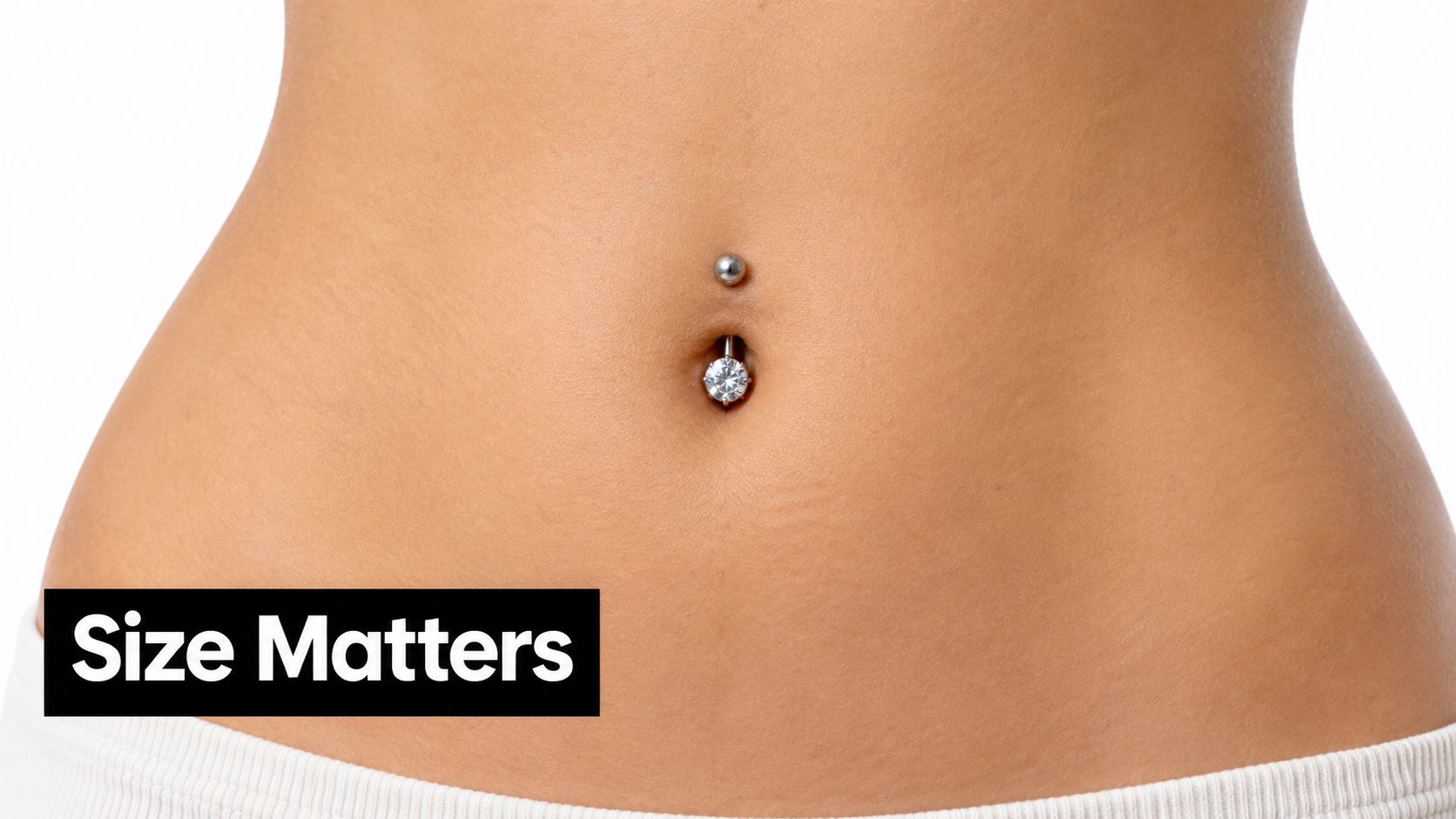
A simple curved bar made from an unsuitable alloy can irritate you just as easily as an elaborate dangling charm. In some cases, a slim piece is harder to clean around because its small seams and settings collect residue close to the piercing channel.
Look for a product that clearly identifies its composition. “Hypoallergenic” is a marketing description, not a complete material specification. A responsible listing should tell you whether the jewelry is implant-suitable titanium, niobium, verified nickel-free solid gold, or another clearly named material.
Be especially cautious with:
- Unspecified alloys: “Metal” or “fashion alloy” tells you almost nothing about nickel content.
- Thin plating: Gold-colored jewelry may have a base metal underneath that becomes exposed through friction and wear.
- Rough finishes: Scratches, seams, and unfinished edges can create more friction around a sensitive piercing.
- Decorative crevices: Tiny settings may trap soap, sweat, and other residue if you can't rinse them thoroughly.
Practical rule: Choose the material first, then choose the minimalist shape you like.
An allergic reaction often brings itching, a rash, redness, or irritation that doesn't settle when the jewelry stays in place. Infection is a different concern and may involve increasing warmth, pain, swelling, spreading redness, or pus. If a piece seems to be causing a reaction, stop wearing the suspect jewelry and seek clinical advice rather than repeatedly testing random metals.
If you're new to body jewelry, learn the broader safety basics in this guide to the piercing gun debate. A clean-looking ring can't compensate for poor piercing practices, unsuitable metal, or careless handling. Once you start checking composition as carefully as appearance, safe minimalist shopping gets much easier.
Choosing the Right Material for Your Skin Type
Material selection is where your minimalist belly ring either earns its place in your daily rotation or becomes an expensive lesson. Don't let a polished finish or a low price make the decision for you. Start with the metal, confirm the product description, and match the choice to your skin history.
A practical comparison
| Material | Best For | Nickel Risk | Price Range | Lifespan |
|---|---|---|---|---|
| Implant-suitable titanium | Sensitive skin, new or healing piercings when approved by a piercer | Low when properly specified | Usually higher than basic alloys | Long-term with proper care |
| Surgical stainless steel | Healed piercings and shoppers seeking a durable option | May contain nickel, so verify the exact specification | Often more accessible | Durable with proper care |
| Niobium | Sensitive-skin shoppers seeking an alternative to titanium | Generally considered a lower-risk option when genuine | Varies by design and retailer | Long-term with proper care |
| Verified nickel-free solid gold | Healed piercings and refined everyday styling | Low when the composition is verified | Higher | Long-term with proper care |
Implant-suitable titanium is the clearest recommendation for sensitive skin and for jewelry used during healing, provided a qualified piercer approves the change. It's lightweight, corrosion-resistant, and widely used when biocompatibility matters. Ask whether the listing identifies the titanium grade rather than accepting a generic “titanium look” claim.
Niobium deserves more attention. It's a useful alternative for shoppers who want a well-established body-jewelry material without choosing titanium. The key is still authenticity and clear disclosure. A seller that won't explain what the piece is made from hasn't given you enough information to make a skin-safety decision.
Surgical stainless steel can work well for some healed piercings, but don't treat “surgical” as a guarantee that it contains no nickel. People with a known nickel reaction should choose a material with a clearer low-risk profile and ask a professional for personalized guidance.
Solid gold can deliver a clean, understated look, but verify that it's solid and nickel-free, not just gold-colored or plated. Gold plating over an unidentified alloy brings you back to the same problem you were trying to avoid.
Read the label like a skeptical shopper
Before you buy, check for:
- A named material, not just “hypoallergenic.”
- A clear nickel statement, especially if you've reacted to jewelry before.
- A smooth finish with minimal seams and easy-to-clean surfaces.
- A design intended for body jewelry, rather than a fashion piece made for occasional contact with intact skin.
For a broader look at alternative materials and how they're used, browse this body-jewelry materials guide. Your skin history should decide the material. Your outfit can decide the color and shape afterward.
How to Find Your Perfect Belly Ring Size
A minimalist ring should sit neatly, not pinch, pull, or disappear into the piercing. The smallest-looking piece isn't always the most comfortable one. Gauge, wearable length, curvature, and the shape of your navel all matter.
Know what you're measuring
Gauge describes the thickness of the post. A thicker or thinner post may not match your existing piercing, so don't guess from a product photo. Check the packaging or ask the piercer who fitted your current jewelry.
Wearable length describes how much of the bar sits through the piercing. Too little room can create pressure, while too much can let the jewelry move, catch on clothing, and bump the channel.
Curvature affects how the jewelry follows your anatomy. A curved barbell is usually more practical for a low-profile look than a piece that hangs or projects outward, but the correct curve depends on your navel.
To measure at home, wash your hands, use a flexible measuring tape or a clean piece of string, and measure the distance through the piercing area without pressing the skin together. This can give you a rough reference, but it can't replace a professional assessment of the piercing channel or anatomy.
Fit check: Your jewelry should feel settled when you sit, stand, bend, and wear your usual waistband.
High-waisted clothing deserves special attention. A bar that feels fine while you're standing in front of a mirror may rub when denim or elastic presses against it. If your wardrobe includes fitted waistbands, prioritize a smooth, low-profile top and a length that doesn't leave excess movement.
A new piercing may need different jewelry from a healed one because swelling and tissue changes affect fit. Don't downsize or switch styles just because the outside looks calm. Navel piercings have an initial healing estimate of 6 to 12 weeks, but complete healing can take 6 to 12 months, according to this professional body-piercing aftercare reference. Keep the jewelry lightweight and simple throughout that longer period, and let a qualified piercer decide when a change is appropriate.
For a useful overview of styles, materials, and sizing terminology, read this navel ring sizing and styles guide.
Here's a visual walkthrough to help you understand the tools and fit considerations:
Don't force jewelry through a tight channel, and don't use a larger piece to solve a sizing problem. If insertion hurts, stops, or causes bleeding, pause and contact your piercer.
Styling Your Minimalist Ring for Every Occasion
Minimalist navel jewelry works because it doesn't demand a whole outfit around it. A small polished ball, a single clear accent, or a matte finish can add detail without turning your midriff into a display case.
For a workday, choose a smooth curved barbell with a restrained top and bottom. It sits neatly under a blouse, knit top, or blazer and won't compete with statement earrings or a necklace. A matte finish gives you a more muted look, while a polished metal adds a small flash when your outfit moves.
Beach days call for common sense before styling confidence. A healed piercing and a simple, secure piece are easier to manage than a dangling charm that can catch on swimwear or towels. For a healing piercing, don't treat minimalist jewelry as permission to swim or expose the area to unnecessary irritation.
Date-night styling can stay subtle while feeling intentional. Pair a simple gold-toned ball or a tiny stone accent with a fitted top, or let a sleek black finish create contrast against lighter clothing. The trick is proportion. If the rest of your jewelry is bold, keep the navel piece quiet. If your outfit is pared back, one small detail can do the work.
Make it fit your real routine
Sleeping with jewelry in depends on the piercing's condition, the piece's fit, and whether it catches against bedding or clothing. A fully healed, well-fitted low-profile bar is less troublesome than a protruding or dangling design, but persistent pressure is still a reason to reassess the fit.
For everyday wear, skip unnecessary movement. Don't choose a charm that swings when you know you'll spend the day in fitted clothing, exercising, or moving through crowded spaces. Minimalism works best when the jewelry matches your actual habits, not an imaginary version of your lifestyle.
Navel jewelry has proved itself as more than a short-lived novelty. In a 2022 study of 214 women with navel piercings, 87.6% said they always wore their piercing, while 59.8% had owned it for at least five years; one participant reported 24 years of continuous wear. The peer-reviewed study on navel-piercing use supports the everyday-accessory approach. Choose a piece you can comfortably live with, not one you'll tolerate for a single photo.
Daily Aftercare for Your Minimalist Belly Ring
Minimalist jewelry still needs consistent care. Its small size doesn't cancel out the fact that a piercing is a wound channel, and repeated touching can create more irritation than the jewelry itself.
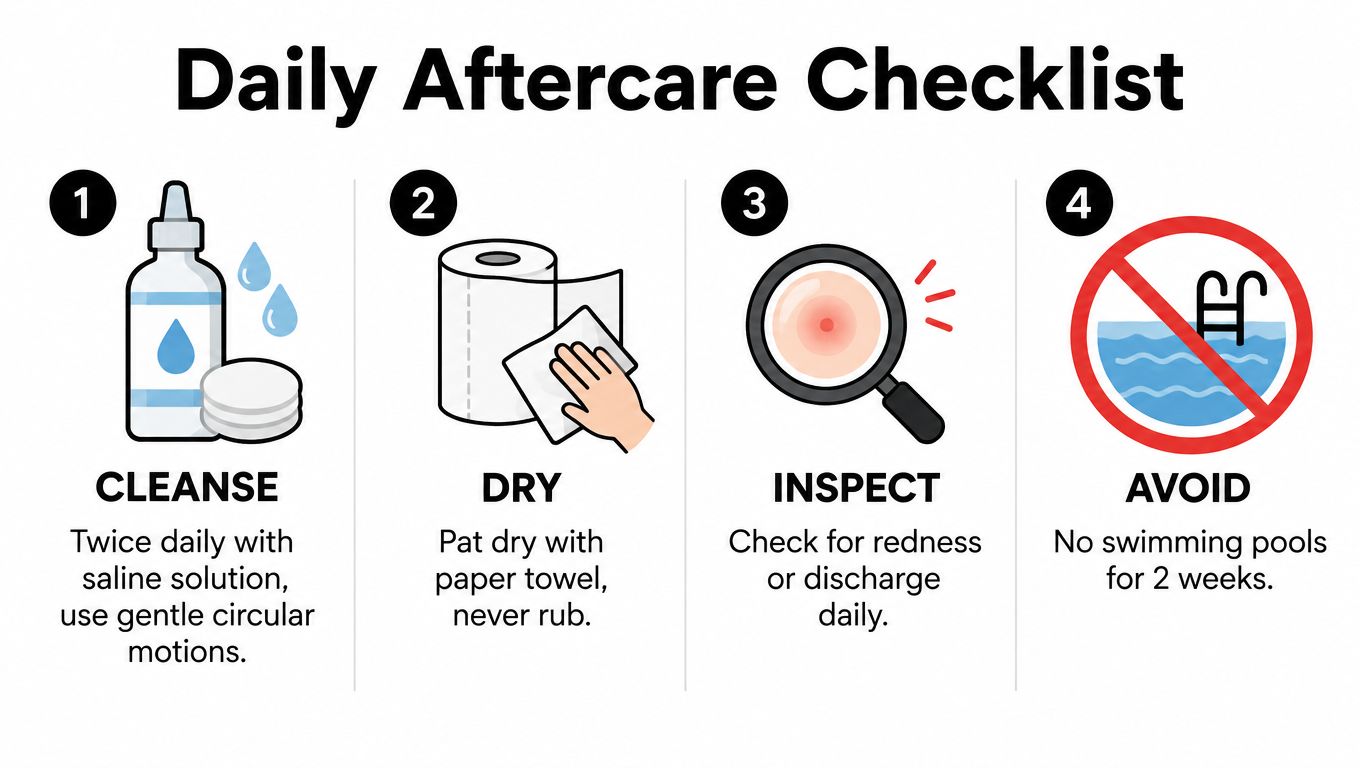
Keep the routine gentle
Wash your hands before touching the area. Use a sterile saline wound-cleaning solution, or wash with soap and water as advised by a healthcare professional. Let the solution loosen residue rather than scraping at it, then rinse away any remaining product.
Dry the navel carefully with a clean disposable material. Trapped moisture around the piercing can encourage irritation, so pat rather than rub. Don't twist, spin, or repeatedly reposition the jewelry while cleaning.
Mayo Clinic recommends saline wound-cleaning solution or soap and water and warns against hydrogen peroxide, iodine, and other harsh products, which can injure newly pierced skin. Follow its piercing aftercare guidance, especially if a product stings and leaves the surrounding skin feeling raw.
Avoid aggressive scrubbing, alcohol-heavy products, and improvised home mixtures. Stronger isn't better here. Your goal is a clean, dry piercing with as little mechanical disturbance as possible.
Know when irritation needs help
Mild swelling, tenderness, redness, or slight bleeding can occur shortly after a piercing. Those symptoms should begin settling rather than intensifying.
Watch for a worsening pattern:
- Increasing pain: Discomfort that becomes stronger instead of easing deserves attention.
- Heat and spreading redness: These can signal a problem beyond ordinary early irritation.
- Unusual drainage: Blood or pus, including white, green, or yellow discharge, is a warning sign.
- Feeling unwell: Feeling hot, cold, shivery, or generally sick calls for medical advice.
The NHS guide to infected piercings explains these warning signs clearly. Don't remove the jewelry impulsively if you suspect infection unless a clinician tells you to do so, because closing the channel can complicate drainage.
A snag isn't automatically an emergency, but it is a reason to stop fiddling with the jewelry and inspect the area in good light. If pain, redness, warmth, or discharge continues or worsens, contact a healthcare professional. A sleek ring can hide a developing problem, so judge the piercing by its symptoms and trajectory, not by how stylish it looks.
Your Quick Decision Framework for Buying Right
Use this checklist before you add a minimalist belly button ring to your cart.
- Is the material specific? Green light if the listing names the metal clearly and addresses nickel content. Red flag if it only says “hypoallergenic” or “fashion alloy.”
- Does the fit match your piercing? Green light if you know the post thickness, wearable length, and appropriate curve. Red flag if you're guessing from a model photo.
- Will it survive your routine? Green light for a smooth, low-profile design that works with your clothing and movement. Red flag for a dangling charm that will constantly catch.
- Is the piercing healed enough for a change? Green light if a qualified piercer confirms the channel is ready. Red flag if the area is still sore, crusty, swollen, or irritated.
- Can you care for it properly? Green light if you're prepared to clean gently and avoid harsh products. Red flag if you plan to twist it, pick at buildup, or cover irritation with a new style.
A few fast answers
Can you sleep in minimalist jewelry? A well-fitted piece in a fully healed piercing may be comfortable, but pressure and snagging still matter.
Is a tiny ring better for healing? Not automatically. Lightweight, simple jewelry can be practical, but the material, fit, and professional guidance matter more than visual size.
Should you choose a hoop or curved bar? A curved barbell usually gives a more secure, low-profile everyday shape. A hoop may move more and can be unsuitable for some anatomy or healing stages.
Navel jewelry has broad appeal. In a survey of 10,503 adults in England, the navel represented 33% of all recorded body piercings, making it the most common location in that dataset. See the population survey of body-piercing prevalence.pdf) for the underlying data. That popularity makes good buying habits even more useful, especially for first-time shoppers and gift buyers.
Ready to make understated the smart choice? Explore the material-conscious, low-profile styles available from BodyCandy, then check the composition and fit before you buy. Choose a belly button ring that looks effortless, feels comfortable, and is made for your skin, not just your camera roll.