















Deciding to get a new piercing is a super exciting way to show off a little bit of who you are. But let's be real, staring at a chart of all the different types of piercings can feel a bit overwhelming. From timeless earlobe studs to a bold new facial piercing, the possibilities are pretty much endless. Think of this guide as your personal roadmap to the world of body art, here to help you find the perfect piece that just screams you.
Your Ultimate Guide to Piercing Types
So, you're thinking about adding some new bling? Awesome! A new piercing isn't just a piece of jewelry; it's a statement. But before you hop into the piercer's chair, it's a great idea to know what you're getting into. It’s like planning a trip—you wouldn't just show up at the airport without a destination in mind, right?
Consider this your expert consultation before you even set foot in a studio. We’re going to break down everything you need to know about the most popular piercings out there, helping you make a choice you’ll be obsessed with for years to come.
What You'll Discover Inside
We're covering all the bases to make sure you walk into your appointment feeling totally confident. Here’s a little peek at what we'll get into:
- Location, Location, Location: We'll dive deep into ear, facial, and body piercings, explaining the specific anatomy and vibe of each spot.
- The Pain Factor: You'll get an honest, no-fluff rundown on what to expect, pain-wise, for different placements. We want you to be prepared, not surprised!
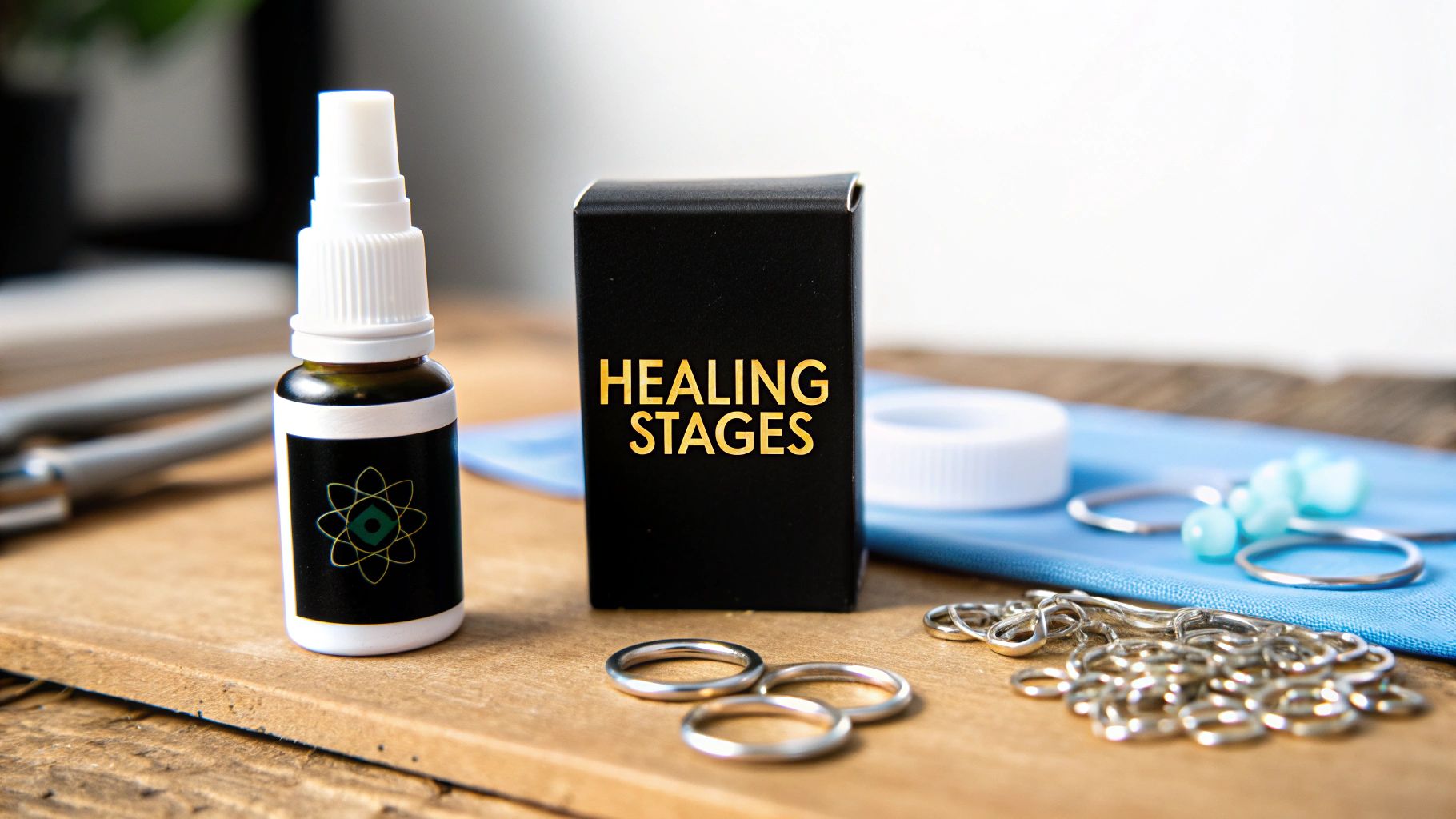
- Healing and Aftercare: Every piercing has its own unique healing journey. We'll give you the typical timelines and the must-know aftercare tips to keep it happy and healthy.
- Jewelry Styling: From creating a delicate curated ear to rocking a statement-making septum ring, we’ll explore all the ways you can style your new piercing to match your personality.
Choosing a piercing is a personal journey. It’s all about finding a style that feels genuinely you and understanding the commitment it takes to heal it right.
Ready to find the piercing that tells your story? Let's jump in and explore all the incredible ways you can adorn your body. Your next favorite accessory is just a decision away.
Ear Piercings: The Ultimate Canvas for Self-Expression
When you think about piercings, where does your mind go first? For most of us, it’s the ears. Your ears are the ultimate playground for self-expression, a blank canvas just waiting for you to create a personalized masterpiece. The whole "curated ear" trend is built on this idea—mixing and matching different piercings to design a look that's 100% you. And honestly, the possibilities are endless.
Whether you're thinking about your very first piercing or you're a seasoned pro planning your next addition, there's an ear piercing for everyone. From the simple, classic lobe to more ambitious cartilage projects, you can build a collection that tells your unique style story.
The Foundation: Lobe Piercings
Let's start with the OG of all piercings: the lobe. This is the first stop for most people, and for good reason! The fleshy part of your lower ear doesn't have cartilage, which makes a lobe piercing one of the least painful options out there.
It's also incredibly versatile. You can rock a single stud for a minimalist vibe, add a second or third set for a cool stacked look, or even stretch them over time. Healing is a breeze, usually taking just 6 to 8 weeks. You won’t have to wait long before you can start swapping out your starter jewelry for some fun new styles.
Moving Up to Cartilage Piercings
Ready to venture beyond the lobe? This is where the real fun begins. Cartilage piercings let you get creative with placements all over the upper and inner parts of your ear. Just keep in mind that piercing through cartilage is a different ballgame—it's tougher tissue, so the pain level is a bit higher and the healing time is significantly longer.
Good aftercare is non-negotiable here. Cartilage piercings can take anywhere from 6 months to a full year to completely heal, so patience is a must! Keeping them clean and avoiding snags will make all the difference in helping them heal up beautifully.
The Popular Helix Piercing
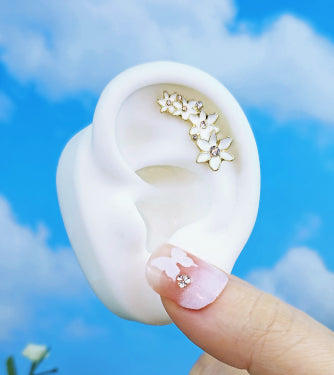
The helix is probably the most well-known cartilage piercing. Located on the upper, outer rim of your ear, it’s a super stylish spot that’s perfect for hoops, studs, or even a delicate chain connecting to another piercing. A double or triple helix looks especially awesome.
The Forward Helix
Sitting just opposite the standard helix, the forward helix is on that small, forward-facing rim of cartilage right above your tragus. This spot is made for tiny, delicate studs. You can get one, two, or even three piercings here to create a trendy constellation effect.
The Industrial Piercing: A Bold Statement
If you're looking for something that really turns heads, the industrial piercing is an amazing choice. This is actually two separate piercings through the cartilage of your upper ear, connected by a single, long barbell. It’s an edgy look that makes a serious statement.
Because it's two piercings healing at once, the process can be a bit more intense. Expect a healing time of around 9 months to a year, and be extra careful not to sleep on it or get your hair tangled in it.
Deciding on the right piercing involves weighing the pain, healing time, and of course, your personal style. It's a balance between what you want and what you're ready to care for.
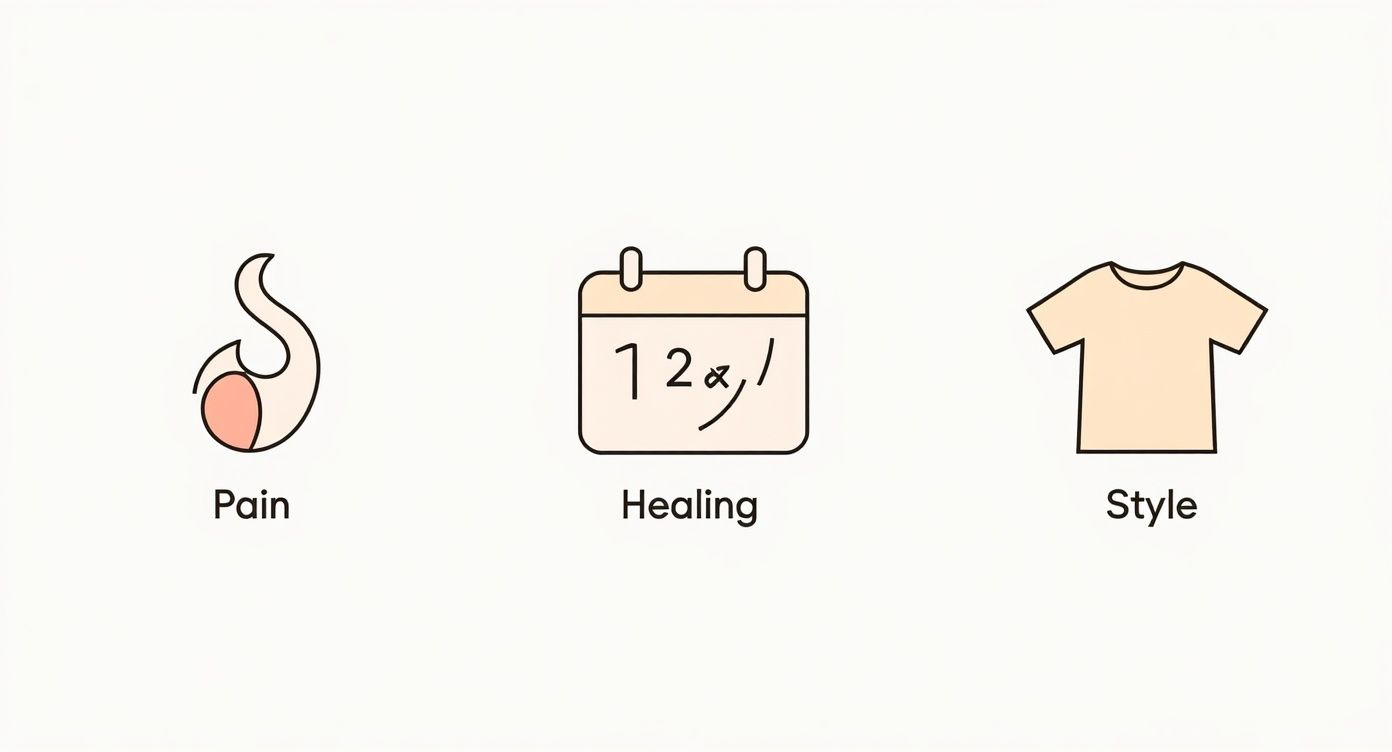
This visual guide helps break down these three key factors, helping you balance your aesthetic goals with the practical side of getting a new piercing.
Unique Inner Ear Placements
Now, let's dive into some of the more unique placements that can really take your curated ear to the next level. These inner ear piercings are perfect for adding some unexpected sparkle and personality.
- The Tragus Piercing: This popular piercing goes through the small piece of cartilage that partially covers your ear canal. It’s a super cute spot for a tiny stud or a snug-fitting hoop.
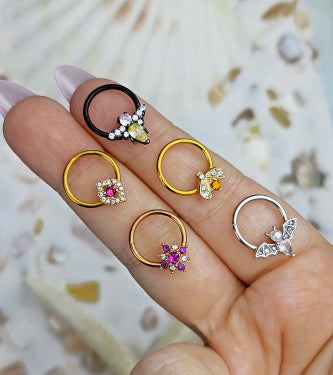
- The Daith Piercing: Tucked into the innermost fold of cartilage, the daith has exploded in popularity for its unique look. It's the perfect home for a beautiful seamless ring or a decorative clicker hoop.
- The Conch Piercing: Located in the large, cup-shaped area of your inner ear, the conch offers tons of styling potential. You can wear a stud in the center (an inner conch) or a large hoop that wraps around the outer edge of your ear's cartilage (an outer conch).
- The Rook Piercing: This one goes through the ridge of cartilage between your inner and outer ear, sitting just above the daith. It looks fantastic with a curved barbell or a small hoop once it's all healed up.
For a deeper dive into all the different spots you can decorate, check out our awesome photographic dictionary of modern ear piercings to get inspired.
Remember: Your ear anatomy is totally unique to you! A professional piercer will always assess your ear to make sure a specific piercing is a good fit and will recommend the best placement for both looks and healing.
It's no surprise that ear piercings are so popular. They completely dominate the global body piercing jewelry market, which was valued at around $8.46 billion in 2025. With ear piercings making up 46% of that market, it's clear that decorating your ears is a worldwide trend that's here to stay.
Ultimately, choosing an ear piercing is about finding what makes you feel amazing. Whether you start simple with a lobe or go all-out with a custom curation, your ears are the perfect canvas to tell your story, one piece of jewelry at a time.
Facial Piercings: Making a Confident Statement
Taking the leap from ear piercings to facial piercings is a bold move, one that puts your personal style right where everyone can see it. Facial piercings are an amazing way to highlight the features you love most, making a statement of confidence without you ever having to say a word. They can draw attention to your eyes, your smile, and the unique lines of your face, adding an edge that is 100% you.
From a classic nostril stud to something more dramatic like a septum ring, the options are as diverse as the people who wear them. Getting a facial piercing is like telling the world you're ready to show off your personality, and we're here to walk you through some of the most popular choices.
Nose Piercings: The Timeless Trend
For many, nose piercings are the very first stop on the facial piercing journey, and it's easy to see why. They've been a staple for centuries across countless cultures and have a timeless vibe that just works, whether your style is subtle and sweet or bold and in-your-face.
The Classic Nostril Piercing
This is the quintessential nose piercing, placed perfectly in the crease of the nostril. It's incredibly versatile. You can start with a simple, delicate stud for just a hint of sparkle and then, once it's healed, swap it out for a hoop to make more of a statement.
Healing a nostril piercing takes a bit of patience, usually around 4 to 6 months. You'll need to be mindful during this time, as it’s surprisingly easy to snag on towels or clothes. As for the pain? Most people put it at a 5 out of 10—it’s a sharp, quick pinch, and then it's over! Once you're fully healed, the fun begins. You can dive into Bodycandy's huge collection of nostril studs and hoops to find the perfect piece.
The Statement Septum Piercing
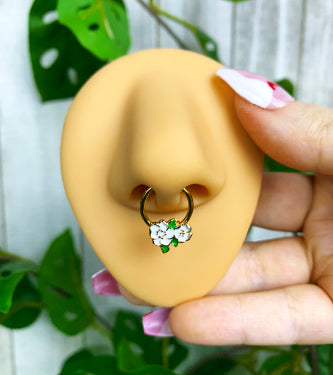
The septum piercing goes right through the "sweet spot"—that thin bit of skin at the front of your nose, just below the cartilage. It's a piercing known for making a bold statement and looks killer with everything from a simple seamless ring to an ornate, decorative clicker.
One of the coolest things about a septum piercing is its versatility; you can often flip the jewelry up into your nostrils to hide it if you need to. The healing process is also relatively fast, typically taking just 2 to 3 months, and the pain level is often less than a nostril piercing, somewhere around a 4 out of 10.
Lip Piercings: Frame Your Smile
Want to draw a little more attention to your smile? Lip piercings are a fantastic way to do it. They add a unique accent to your look, and there are so many placements to choose from, each with its own vibe and cool name. Let's get into some of the most popular ones.
Single Point Lip Piercings
These piercings are all about creating a distinct, often asymmetrical look by focusing on one specific spot. Many are even named after the iconic beauty marks of bombshells, which just adds to their charm.
- Monroe Piercing: Placed on the upper lip, left side, to mimic Marilyn Monroe's famous beauty mark. It’s almost always pierced with a flat back labret stud.
- Madonna Piercing: The Monroe's counterpart, this one is situated on the right side of the upper lip.
- Medusa Piercing: A super popular choice that sits right in the philtrum—that little groove above the center of your top lip. It’s a beautifully symmetrical piercing that perfectly centers your smile.
A key thing to remember with any lip piercing is oral hygiene. Keeping the inside of your mouth clean with an alcohol-free mouthwash is just as crucial as cleaning the outside. This is your best defense against infection and the key to a smooth healing process.
Lower Lip Placements
Piercings on or just below the lower lip open up even more ways to express yourself. These can be centered, off to the side, or even paired up for a symmetrical look.
- Labret Piercing: Traditionally, this is a single piercing placed just below the center of your bottom lip.
- Ashley Piercing: This is a true lip piercing, going directly through the center of the lower lip itself. You'll have a flat back disc inside your mouth and a gem sitting right on your lip.
- Snake Bites: A killer symmetrical look, this is a pair of piercings with one on each side of the lower lip.
- Spider Bites: A close-set pair of piercings, both on the same side of the lower lip.
For most lip piercings, you can expect a healing time of about 2 to 4 months. Swelling is totally normal for the first week or so, which is why your piercer will use a longer bar for your initial jewelry to give it some room.
Beyond the Nose and Lips
Ready to venture into something a bit more unconventional? Facial piercings aren't just limited to the nose and mouth. There are other placements out there that can create a truly unique and edgy look.
The Eyebrow Piercing
An eyebrow piercing is what's known as a surface piercing; it goes through the skin above your eye rather than any cartilage. It’s usually placed vertically near the outer arch of the eyebrow and does a fantastic job of framing your eye. Once it's healed, you can rock a curved barbell or a small hoop.
Healing can take 3 to 4 months. And because it's a surface piercing, you have to be extra careful not to snag it on things.
The Bridge Piercing
For a seriously striking aesthetic, the bridge piercing is a horizontal bar placed across the bridge of your nose, right between your eyes. This is another surface piercing, meaning that proper placement by your piercer and diligent aftercare from you are critical to prevent it from rejecting. The healing time is similar to an eyebrow piercing, around 3 to 4 months.
Facial piercings demand a little extra attention, especially when it comes to your daily routine. You’ll need to be mindful when washing your face, applying makeup, and even how you sleep. But the payoff is a stunning, confidence-boosting look that’s all you.
Body Piercings Beyond the Everyday
Ready to explore some piercing types that feel a little more personal? Moving beyond the face and ears, body piercings are a beautiful way to decorate your canvas, whether you want to show them off or keep them as a little secret just for you.
From the iconic navel piercing that defined a decade to the edgy nipple piercing, let's dive into these popular choices. We’ll break down everything you need to know, from how much they hurt to what healing really looks like.
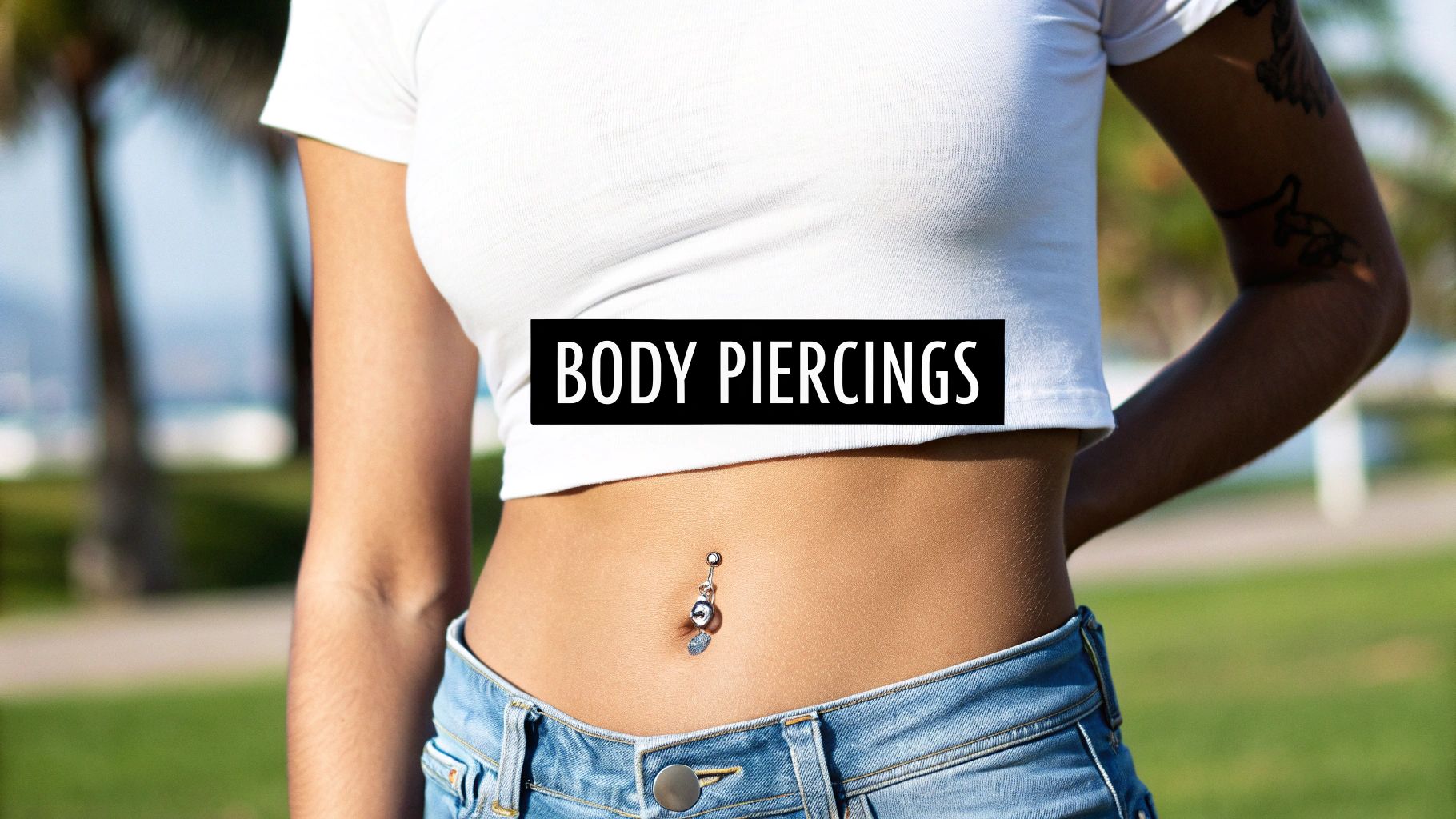
The Classic Navel Piercing
The navel piercing, or belly button piercing, is a true classic for a reason. It’s the perfect accessory for crop tops and swimsuits, adding a touch of sparkle that draws attention in all the right ways. A traditional navel piercing goes through the skin on the upper rim of your belly button, allowing a beautiful curved barbell or dangling charm to hang perfectly.
But here’s a pro tip: your anatomy plays a huge role in whether a traditional navel piercing will work for you. A good piercer will assess your navel to make sure you have a defined "lip" of skin and that the piercing won’t get squished when you sit down.
What If My Anatomy Isn't "Traditional"?
Don't worry if a standard navel piercing isn't in the cards! There are awesome alternatives. For anyone whose navel collapses or "winks" when they sit, a floating navel piercing is a fantastic option.
This style uses a small gem or disc on the bottom and a flat disc on top instead of a traditional dangling barbell. It's a clever way to prevent irritation and looks incredibly sleek. For those with a more pronounced bottom lip on their navel, a lower navel piercing can also be a unique and beautiful choice.
Your Piercer Knows Best! Always trust your piercer's assessment of your anatomy. They can guide you to the type of piercing—and the right jewelry—that will heal best for your body, ensuring you end up with a happy, healthy piercing you love.
Navel Piercing Pain and Healing
So, how much does it hurt? Most people rate the pain of a navel piercing at around a 4 out of 10. It’s a quick, sharp pinch that’s over in a second.
The healing journey, however, is a long-term commitment. Navel piercings are notorious for taking a while to fully heal because they’re in an area with a ton of movement. You can expect a healing time of 9 months to a full year. During this period, you’ll need to be extra careful to avoid irritation from high-waisted clothing.
Ready to find your perfect belly bling? Check out Bodycandy’s amazing collection of navel rings and belly button jewelry to get inspired.
The Bold Nipple Piercing
Nipple piercings are a bold, empowering choice that can be your own personal secret or a stunning statement you choose to share. They can be done on any gender and are typically pierced horizontally with a straight barbell, though some people opt for hoops once fully healed.
One of the biggest questions people have is about sensitivity. While experiences vary wildly, many people report increased sensitivity after getting their nipples pierced. For others, there’s no change at all—it’s a very individual experience.
Nipple Piercing Pain and Aftercare
Let's not sugarcoat it: this piercing is on the higher end of the pain scale. Most people rate it a 7 or 8 out of 10. The good news? The intense part is over very, very quickly.
Healing nipple piercings takes patience, typically anywhere from 9 to 12 months. The key to a smooth healing process is to keep them clean and protected.
- Protect Them: Be super careful with loofahs in the shower! Try wearing a snug cotton tank top or sports bra to bed to prevent snagging on your sheets.
- Keep It Simple: Clean them twice a day with a sterile saline solution. Avoid harsh soaps or chemicals that can cause irritation.
- Hands Off: This is the most important rule. Avoid touching, twisting, or playing with your jewelry. This is the #1 cause of irritation and healing setbacks.
Once you’re fully healed, you can start exploring all the fun jewelry options, from simple barbells to decorative shield designs. You can find some incredible styles in our collection of nipple rings and barbells.
It's clear that body piercings have moved far beyond a niche subculture. The global body piercing service market was estimated at around $1.5 billion in 2024 and is projected to grow, showing just how mainstream this form of self-expression has become. You can discover more insights about this growing market at MarketReportAnalytics.com.
Choosing the Right Jewelry Material
Okay, you've picked the perfect spot for your new piercing—high five! Now comes the second most important decision you'll make: what jewelry to put in it. Think of your initial jewelry as a houseguest that's staying for a long time. You want one that's polite, doesn't cause any drama, and lets your body heal in peace.
Not all metals are created equal, especially when you're talking about a fresh, sensitive wound. The right material can be the difference between a smooth, easy heal and a frustrating journey of irritation and setbacks. This is why picking a safe, high-quality metal is totally non-negotiable for that first piece of jewelry.
The Gold Standard: Implant Grade Titanium
When in doubt, always go for titanium. Specifically, you're looking for implant-grade titanium (ASTM F-136). This is the exact same stuff used for medical implants like bone screws and hip replacements, which tells you everything you need to know about how safe it is for your body.
It’s completely nickel-free, making it the number one choice for anyone with sensitive skin or known metal allergies. Better yet, it’s super lightweight and can be anodized into a whole rainbow of colors without using any cheap paints or mystery coatings. For a new piercing, it’s truly the best of the best.
Other Safe Piercing Materials
While titanium is the undisputed champion, you have a few other excellent options, especially once your piercing is well-healed or if you already know you don't have sensitivities.
- Surgical Steel: This is a super common material, but you need to be a little picky! Look for designations like 316L or 316LVM implant-grade stainless steel. While it’s generally considered hypoallergenic, it does contain a small amount of nickel, which can sometimes be an issue for highly sensitive folks.
- 14k or 18k Solid Gold: If you love the classic look of gold, make sure you're getting the real deal—solid gold, not plated. Stick to 14k or 18k, as 24k is way too soft for body jewelry and can easily get scratched up, creating places for bacteria to hide. Definitely avoid gold-plated pieces in a fresh piercing, as the plating can flake off and cause some major irritation.
- Niobium: This is another awesome hypoallergenic element that's very similar to titanium. It’s totally nickel-free and, like titanium, can be anodized into a bunch of cool, vibrant colors, making it a perfectly safe and stylish choice.
To help you sort through the options, we've put together a quick comparison of the most common materials you'll run into. This should give you a good starting point for finding what works best for your body and your new piercing.
Comparing Common Jewelry Materials
| Material | Best For | Pros | Cons |
|---|---|---|---|
| Implant-Grade Titanium | New piercings, sensitive skin, anyone with metal allergies. | Completely nickel-free, lightweight, can be anodized into many colors, very durable. | Can be slightly more expensive than steel. |
| 316L Surgical Steel | Healed piercings, people without nickel sensitivities. | Affordable, widely available, durable. | Contains trace amounts of nickel which can cause reactions in sensitive individuals. |
| 14k-18k Solid Gold | Healed piercings, classic aesthetic. | Luxurious look, holds value, generally body-safe (if alloyed properly). | Higher cost, 24k is too soft, can tarnish, plated versions are unsuitable for healing. |
| Niobium | New piercings, anyone wanting vibrant colors with zero nickel. | Nickel-free, hypoallergenic, can be anodized, slightly heavier than titanium. | Less common than titanium or steel, can be harder to find. |
Ultimately, choosing a material you know your body agrees with is the key to a happy piercing. It's a simple step that pays off big time in the long run.
Making an informed choice about your jewelry material is the single most important step you can take for a happy piercing. It directly impacts your healing time, comfort, and the long-term health of your new look. For a detailed breakdown, check out our guide on what metal body jewelry is made of.
This focus on safe materials is part of a much bigger trend. The body piercing kit market, which includes everything from needles to starter jewelry, is expected to hit about $97 million by 2025. This growth shows just how much people care about safe practices, whether they're in a professional studio or handling their own aftercare. You can learn more about these market findings on DataInsightsMarket.com. Always choose quality materials—it's the best way to protect your investment.
Your Piercing Questions Answered
Getting a new piercing is exciting, but it's totally normal to have a million questions running through your head. Whether this is your very first piercing or you're a seasoned pro planning your next addition, you want to feel confident before you take the plunge. That's why we've put together the answers to some of the most common questions we hear from piercing lovers just like you.
Think of this as a friendly chat with an expert who’s seen it all. We’re here to give you straight, honest answers to clear up any confusion about the whole process, from the moment you’re in the piercer’s chair to keeping your new look happy and healthy for years to come.
How Much Is This Really Going to Hurt?
Let's just get the big one out of the way: pain. It's the number one question on pretty much everyone's mind, and the honest-to-goodness answer is... it's different for everyone. Your personal pain tolerance is a huge factor, but so is the spot you're getting pierced.
A simple way to think about it is to compare fleshy spots to cartilage.
- Low Pain Piercings: Think of soft, fleshy areas like your earlobes, navel, or even the "sweet spot" of your septum. These usually feel like a quick, sharp pinch that's over in a flash. Most people put these around a 2-4 out of 10.
- Medium Pain Piercings: This is where most cartilage piercings, like the helix, tragus, and nostril, fall. You'll feel a more intense pressure that’s a bit more significant. It’s more in the 5-6 out of 10 range.
- High Pain Piercings: Placements in more sensitive spots or through thicker cartilage—we're looking at you, nipple and industrial piercings—are definitely more intense. Expect a sharp, hot sensation that most people would rate a 7-8 out of 10.
But here's the thing to remember: the most intense part lasts for just a few seconds. A skilled, professional piercer is quick and efficient, which makes the whole experience way smoother than you might imagine.
How Do I Know When My Piercing Is Fully Healed?
This is a tricky one. A new piercing often looks healed on the outside way before it’s actually solid on the inside. What’s happening is that your body is healing from the outside in, building a brand-new tunnel of skin called a fistula. This process takes time, and trying to rush it is a recipe for trouble.
So, what does a fully healed piercing look like? You'll be looking for a few key signs:
- No More Discharge: That initial clear or whitish fluid (it's called lymph) that forms "crusties" will be completely gone.
- No Pain or Tenderness: You should be able to gently touch the area without any soreness, sensitivity, or wincing.
- Jewelry Moves Freely: The post or ring should move smoothly within the piercing without any catching, sticking, or tightness.
- No Redness or Swelling: The skin around the piercing should look totally normal, with no lingering pinkness or puffiness.
Don’t get fooled if your piercing feels great after just a few weeks! That's just the first phase. The real work happens over several months as that fistula gets strong and mature.
This is exactly why it's so critical to follow the recommended timeline for your specific type of piercings.
When Can I Finally Change My Jewelry?
Oh, we get it. The itch to swap out that plain starter stud for something with a bit more personality is real! But seriously, patience is your best friend here. Changing your jewelry too soon is one of the fastest ways to anger a new piercing and send your healing progress back to square one.
Your piercer will give you a specific timeline, but here's a general rule of thumb:
- The Downsize: For a lot of piercings (like in the lip or helix), you’ll go back to your piercer for a "downsize" around 4-8 weeks in. This is when they swap the initial long bar for a shorter one once the swelling has gone down. This is purely for comfort and safety—it is not the time to change for style!
- The First Style Swap: You need to wait until your piercing is 100% fully healed before you start playing around with new jewelry. Trying to shove a new ring through an unhealed fistula can cause tearing, major irritation, and even infection.
Once you finally get the all-clear, it's party time! Changing your jewelry is the best part, letting you switch up your vibe whenever you feel like it.
What's the Best Way to Clean My New Piercing?
Your most important job during the healing process is keeping your piercing clean. The good news? It’s incredibly simple. In fact, less is more.
The absolute best thing you can use is a sterile saline solution. The easiest and most sterile way to do this is to buy a pre-made piercing aftercare spray.
Here’s your daily routine:
- Wash Your Hands: Always start with squeaky-clean hands before you go anywhere near your piercing.
- Spray It Down: Gently spray the front and back of the piercing with your saline solution, about 2-3 times per day.
- Pat It Dry: Use a fresh piece of non-woven gauze or a paper towel to gently pat the area dry. Steer clear of bath towels—they can snag your jewelry and they love to harbor bacteria.
And that’s it! No twisting, no turning, and no harsh stuff. Stay far away from alcohol, hydrogen peroxide, or antibacterial soaps, as they’re way too aggressive and will only irritate your healing skin.
Ready to start your piercing journey or add to your collection? At BodyCandy, we have everything you need to express yourself with style and confidence. Shop our massive collection of high-quality body jewelry today! https://bodycandy.com