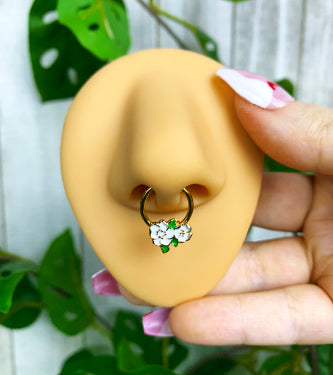


















So, you did it! You took the plunge and got that septum piercing you’ve been dreaming about. Welcome to the club!
Now for the important part: the healing. While the initial healing for a septum piercing usually takes about 2 to 3 months, the tissue inside your nose can take 6 months or even longer to fully mature and strengthen. Getting familiar with the healing stages is the best way to make sure everything goes smoothly.
Your Septum Healing Journey: What to Expect
Getting a new piercing is always a rush, but the aftercare that follows is what really matters. Healing is your body’s unique roadmap, and knowing the landmarks helps you tell the difference between what’s totally normal and what might need a little extra attention. Think of this as your personal GPS for the journey ahead, guiding you from those first few tender days all the way to a beautifully healed piercing that’s ready to show off.
Want to get into the nitty-gritty of what makes this piercing so cool? Check out our complete guide on the ins and outs of septum piercings.
The Two Main Phases of Healing
Your body is an incredible healing machine, but it doesn't work overnight. Healing a piercing is definitely a marathon, not a sprint. The whole process is broken down into two main phases, and both require your patience and care.
- Initial Healing (Weeks 1-12): This is when your body is doing all the heavy lifting. You'll see the most noticeable changes here—from some initial swelling and tenderness to the formation of the fistula (that’s the tunnel of tissue that forms around the jewelry). Your only job right now is to keep it clean and, most importantly, leave it alone!
- Maturation Phase (3-6+ Months): Just because it looks healed on the outside doesn't mean the job is done. During this stage, that new tissue inside the piercing channel is busy getting stronger and more resilient. Trying to rush this part by changing jewelry too soon is the number one reason people run into irritation and setbacks.
To give you a better idea of what's ahead, let’s break down what your septum’s recovery journey will look like.
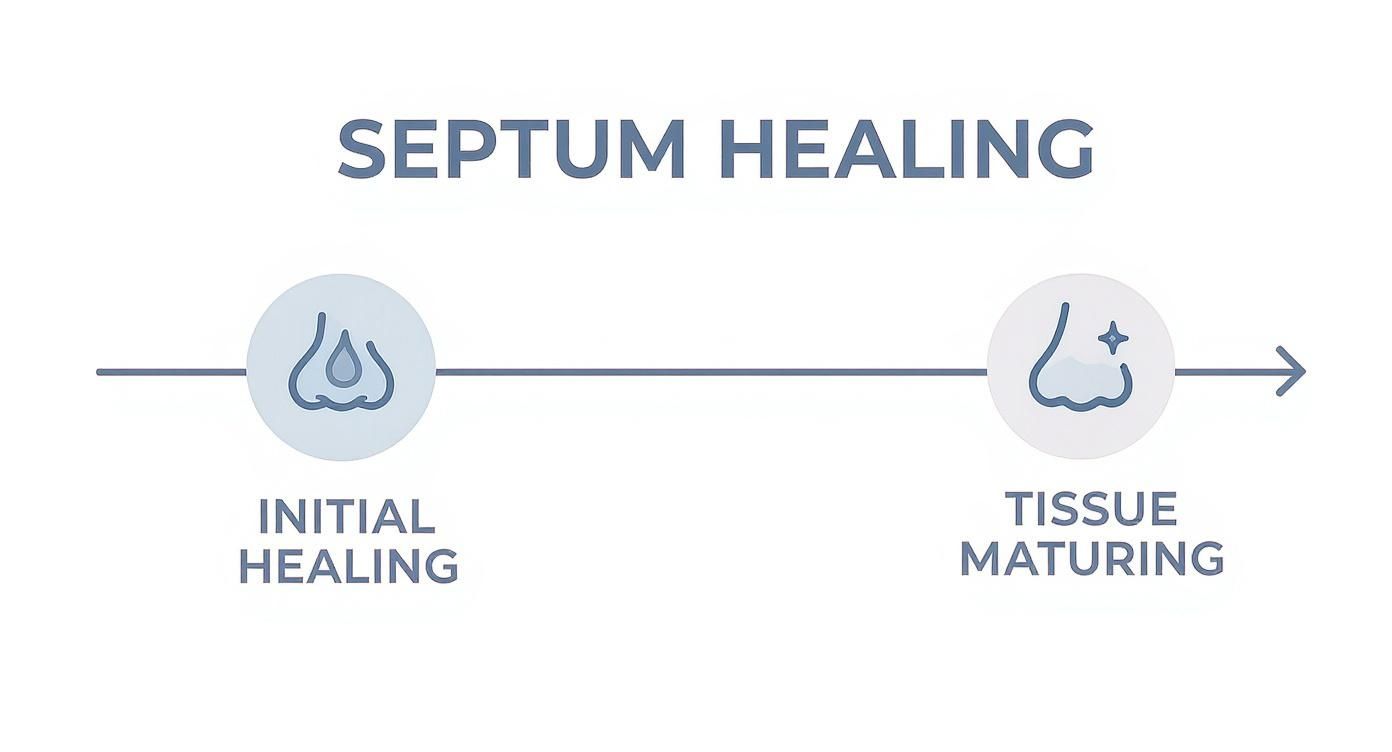
As you can see, the most obvious symptoms calm down pretty quickly, but the real work of strengthening that new tissue takes several months to finish up.
For a quick-reference guide, here's a simple table summarizing the septum healing process.
Septum Healing Stages at a Glance
| Healing Stage | Typical Duration | Key Signs and Sensations |
|---|---|---|
| Inflammatory Phase | Week 1 | Redness, swelling, tenderness, and some clear fluid are all normal. |
| Proliferative Phase | Weeks 2-12 | Swelling goes down, crusties form, and the fistula begins to build. |
| Maturation Phase | Months 3-6+ | The piercing looks and feels normal, but the inner tissue is still strengthening. |
This table helps put the whole timeline into perspective, showing you what's normal at each step along the way.
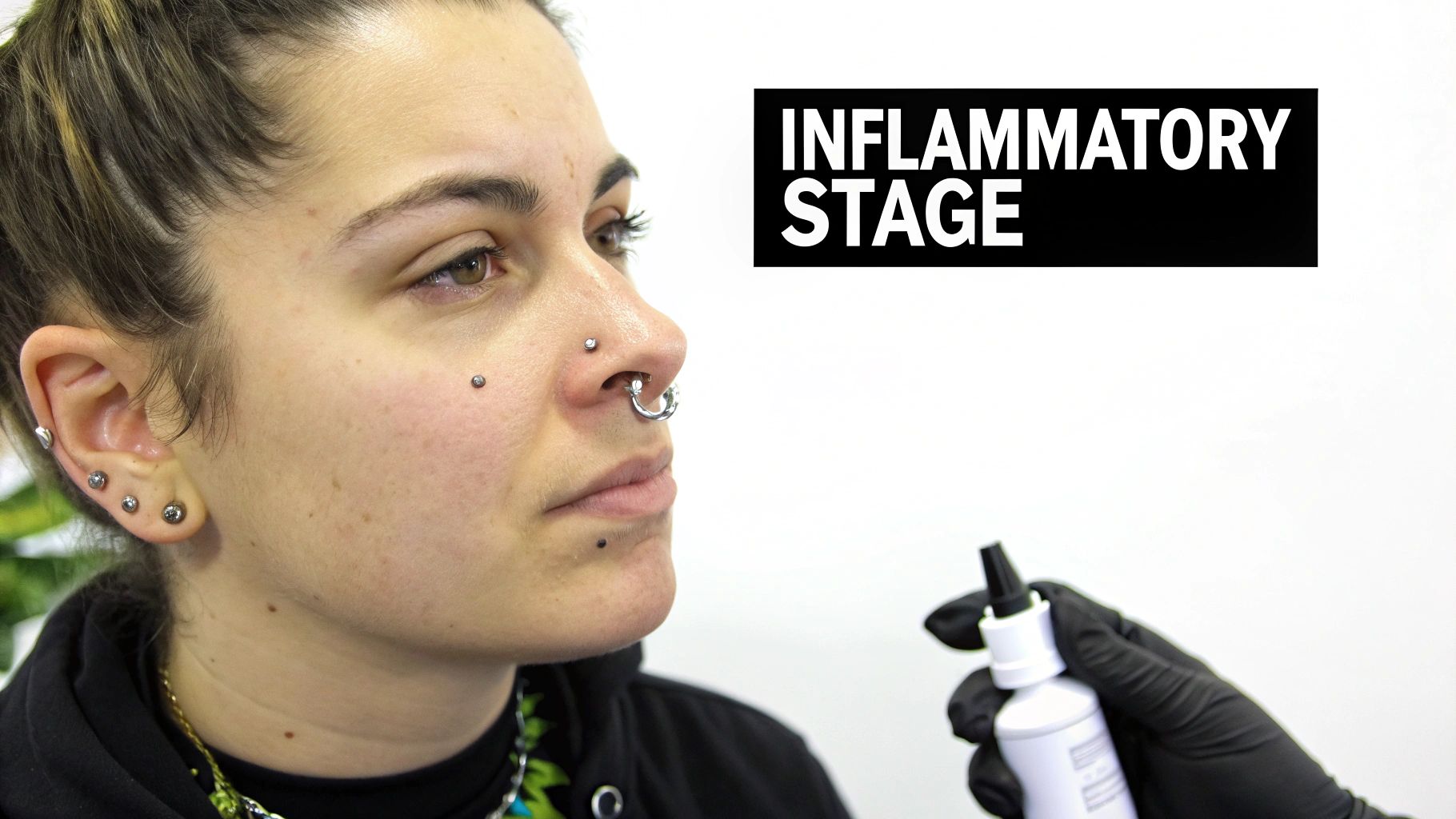
The Inflammatory Stage: Weeks 1 to 8
Welcome to the very first stage of healing your new septum piercing! This is when your body kicks into high gear, and you’ll notice the most changes. Think of your immune system as a first-response team rushing to the scene—their first job is to protect the area and start rebuilding.
During these initial weeks, it’s completely normal to see some redness, swelling, and tenderness right around the piercing site. You might also spot a clear or whitish fluid that dries into what piercers affectionately call “crusties.” As tempting as it is to pick them off, please don’t! These are a natural and necessary part of your body's healing process.
What to Expect Day-to-Day
Your top priority during this stage is a strict but gentle aftercare routine. This is the most delicate phase of healing, and your new piercing is incredibly easy to irritate right now.
This critical window typically spans 1 to 8 weeks, with the most intense discomfort usually calming down within the first one to three weeks.
During this time, your body is working hard to create a protective barrier of new tissue. That's why it's so important to be patient before even thinking about swapping your jewelry. You really need to wait a minimum of 8 to 10 weeks to avoid damaging that delicate new tissue. Dig deeper into the septum healing timeline to get the full picture.
Your main tasks during the inflammatory stage are simple but totally non-negotiable:
- Clean Consistently: Grab a sterile saline solution spray or do a gentle sea salt soak twice a day. This keeps the area clean without being too harsh on the healing tissue.
- Hands Off: Avoid touching, twisting, or flipping your jewelry up and down. Every little movement can cause irritation and seriously set back your healing time.
- Dodge the Snags: Be extra careful when getting dressed, washing your face, or blowing your nose. A snag can be painful and cause a lot of trouble for a piercing this fresh.
By treating your septum with some serious TLC during these first few weeks, you’re setting the foundation for a perfect, problem-free heal.
The Proliferative Stage: Weeks 9 to 12
Alright, you made it. Pat yourself on the back, because you've officially navigated the trickiest part of the septum healing journey. During these next few weeks, your piercing will start to feel a whole lot more settled and less like a foreign object in your nose. That initial soreness and swelling? It should feel like a distant memory by now.
You might still get a little reminder zing of tenderness if you accidentally knock your nose, but for the most part, things are finally calming down. Right now, your body is busy with its next big project: building the fistula. That's just the professional term for the tunnel of new skin that forms inside the piercing, creating a permanent, stable home for your jewelry.

Staying the Course with Aftercare
Even though the worst is behind you, this isn't the time to ditch your aftercare routine completely. Think of it like being on cruise control—you still have to steer, but the ride is much smoother. Consistency is your best friend here, as it'll help you sidestep any irritation that could set your healing back.
This is usually when the itch to swap out your starter jewelry for something flashier really kicks in. We totally get it! But you have to resist the temptation. Changing your jewelry too early can easily tear that delicate new fistula, which basically forces your body to hit the reset button and start the healing process all over again.
Remember, the fistula is still incredibly fragile during the proliferative stage. Swapping jewelry now is like trying to run a marathon right after healing from a sprained ankle—it’s a recipe for re-injury and a much longer recovery.
Stick with your gentle cleanings and try not to mess with the jewelry. Being patient for just a little longer ensures that fistula gets strong and healthy, ready for all the amazing septum clickers and cool rings you have waiting.
The Maturation Stage: 3 to 6 Months Plus
You've made it to the home stretch! This final stage is all about your piercing truly settling in and becoming a permanent part of you. By now, the outside of your septum probably looks and feels totally healed, and it has for a while now—likely since the 3-month mark.
The real work is happening on the inside, though. That fistula—the tunnel of scar tissue your body created for the jewelry—is still getting stronger and maturing. You can think of it like a freshly paved road. The asphalt is down and it looks finished, but it needs time to cure and settle before it can handle heavy traffic. This final strengthening process can take up to 6 months or even longer for some people.
During this time, the piercing channel becomes smooth, tough, and way less likely to get fussy or irritated. It’s the last step in your healing journey, and being patient here pays off in a big way.
Are You Ready for a Jewelry Change?
This is the moment everyone waits for! But hold on—before you start swapping out your starter piece, let's make sure your septum is actually ready. A fully healed and mature septum piercing means you can say "yes" to everything on this list:
- No More Tenderness: You can gently wiggle the jewelry without feeling any soreness at all.
- No Discharge or Crusties: The piercing site is completely clean. No more gunk, period.
- The Fistula Feels Smooth: When you do your first jewelry change, the new piece should glide through easily without snagging or any resistance.
- It’s Been Long Enough: You’ve patiently waited at least 3 to 6 months. This gives all that internal tissue plenty of time to fully mature.
Once you can check off every single one of those boxes, the fun can officially begin! It's time to explore the amazing world of new styles. Go on, treat yourself to some stunning septum jewelry—from fancy clickers to classic hoops, you've definitely earned it.
Your Essential Septum Aftercare Playbook
Okay, let's get real. Knowing what to expect during the healing stages is half the battle, but nailing your aftercare routine is what truly makes or breaks the experience. Proper care is your golden ticket to a happy, healthy piercing, so think of this as your official playbook for a flawless recovery.
The absolute gold standard for piercing aftercare is a sterile saline solution. Your body is already doing all the heavy lifting to heal; your only job is to keep the area squeaky clean and free of irritants. This means no harsh chemicals! Stay away from products with alcohol or hydrogen peroxide—they're way too aggressive and can actually slow down healing by drying out and damaging that delicate new tissue.
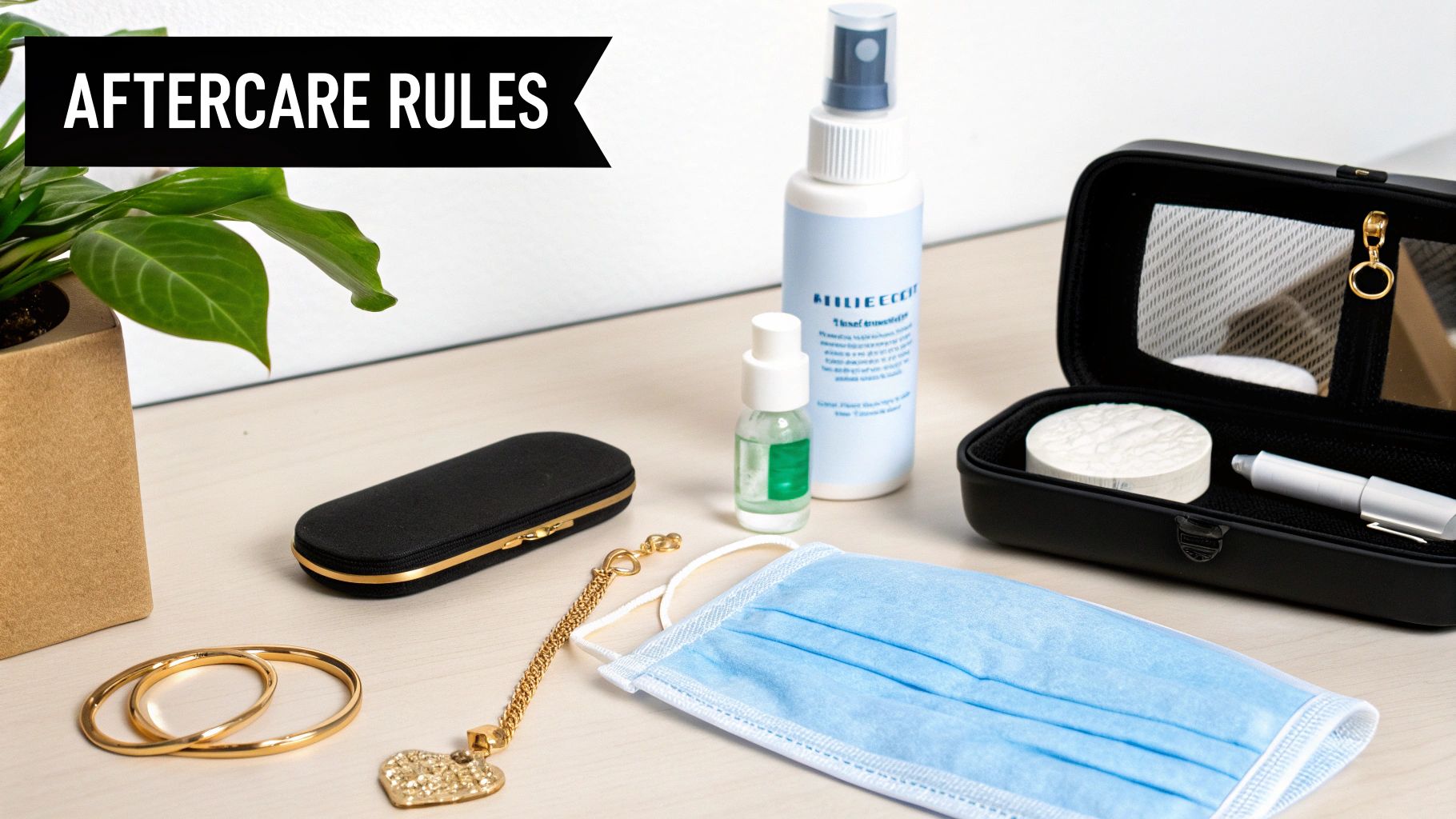
The Dos and Don'ts of Septum Care
When it comes to aftercare, less is more. Over-cleaning can be just as irritating as not cleaning enough. Stick to this simple routine, and your new piercing will thank you for it.
The "Dos" of Aftercare:
- Clean Twice Daily: Gently spray your piercing with a sterile saline solution or do a quick soak for a few minutes, twice a day. No more, no less.
- Pat Dry Carefully: After cleaning, use a fresh, disposable paper towel to gently pat the area dry. Bath towels are a no-go; they can harbor bacteria and snag your jewelry.
- Wash Your Hands: This one's huge. Always, always wash your hands thoroughly with soap and water before you even think about touching your piercing.
The "Don'ts" of Aftercare:
- No Twisting: The old myth about needing to twist your jewelry is just that—a myth. It just causes irritation and tears up the healing tissue. Leave it alone!
- Avoid Submerging: Steer clear of pools, hot tubs, lakes, and oceans during the initial healing period. They're basically a soup of bacteria you don't want anywhere near a fresh piercing.
- Hands Off: As tempting as it is, resist the urge to touch, play with, or constantly flip your jewelry up and down. Movement is the enemy of a happy, healing piercing.
Following these simple rules is non-negotiable for a smooth heal. Your piercing is essentially an open wound, and treating it with gentle, consistent care is the only way to ensure it heals beautifully without any annoying setbacks.
For a deeper dive into the best products on the market, you can learn more about H2Ocean aftercare solutions, which is a big favorite among professional piercers. A great aftercare product makes your routine totally effortless.
Troubleshooting Common Piercing Problems
Even when you do everything right with your aftercare, your healing journey can sometimes hit a bit of turbulence. The first rule is: don't panic! Most issues that pop up are minor irritations, not full-blown disasters. Your superpower is knowing how to spot the difference.
A little bit of redness or tenderness is totally normal, especially in the early weeks. But a genuine infection is a whole different beast with much scarier symptoms. Be on the lookout for intense pain, a piercing that feels hot to the touch, and thick, smelly pus that’s yellow or green. If you see those red flags, it’s time to call your doctor.
Irritation Bumps and "Septum Funk"
Two of the most common hiccups you might run into are irritation bumps and the infamous "septum funk." An irritation bump is just a small, pimple-like bump that shows up near the piercing. It’s usually your body’s way of telling you something’s bothering it—maybe it got snagged on a pillow or you slept on it weird. The key is to play detective, figure out the cause, and then stop doing it! Recommit to your saline soaks and just baby your piercing until things calm down.
And that smell? That’s what we call septum funk, and it’s completely normal! It’s just a harmless buildup of dead skin cells and natural oils getting trapped around your new jewelry. A quick, gentle clean with your saline solution will almost always make it disappear.
The number one cause of piercing problems is often a sensitivity to the jewelry material itself. Low-quality metals can cause major irritation, even if you don't have known allergies.
If you’re dealing with stubborn irritation that just won't quit, your jewelry might be the real culprit. Figuring out the signs of piercing irritation is a great first step. Sometimes, simply switching to high-quality, hypoallergenic materials like titanium or implant-grade surgical steel can make a world of difference. When in doubt, your professional piercer is your best resource—don't hesitate to reach out to them for advice.
Your Septum Healing Questions Answered
Got a few nagging questions buzzing around in your head? Don't sweat it, you're not alone! The healing journey can feel a little mysterious, and it's totally normal to wonder about all the little details.
We've rounded up some of the most common questions we hear about the septum piercing healing stages. Think of this as your go-to guide for clear, straightforward answers to put your mind at ease.
When Can I Flip My Septum Piercing Up?
This is probably the number one question on everyone's mind! The best advice is to wait until the initial swelling and major tenderness have calmed down, which usually takes about 2 to 4 weeks.
Once you've picked a position—either flipped up or down—try your absolute best to leave it that way for the rest of the initial 8-week inflammatory stage. Constantly flipping the jewelry up and down is a huge source of irritation and can seriously drag out your healing time.
How Do I Know if My Septum Is Healing Correctly?
Knowing you're on the right track brings a huge sense of relief. It's less about dramatic changes and more about slow, steady progress.
The best signs of a healthy healing process include:
- Redness and swelling that gradually get better over time.
- Tenderness that becomes less and less noticeable each week.
- Seeing some clear or whitish fluid that dries into "crusties"—this is totally normal!
As long as you're not dealing with severe pain, excessive swelling after the first week, or seeing any yellow or green pus, your body is doing exactly what it's supposed to.
The goal is progress, not perfection. Healing isn't always a straight line, but you should notice a steady improvement week by week. If things suddenly get worse, that's your cue to pay closer attention.
What's the Fastest Way to Heal a Septum Piercing?
Sorry to break it to you, but there are absolutely no shortcuts to safe healing. Your body has its own schedule, and trying to rush the process will only backfire and lead to problems.
The fastest way to heal is actually just the correct way. That means sticking to a consistent cleaning routine with a sterile saline solution, not touching the jewelry, eating well, and getting plenty of sleep. In short, just let your body do its thing without getting in the way.
Can I Change My Septum Jewelry After 2 Months?
Patience is everything with new piercings! While your septum might feel pretty good after 8-10 weeks, the new tissue (called a fistula) forming inside is still incredibly delicate.
It is highly recommended to wait at least 3 months before even thinking about your first jewelry change. Swapping it out too early can easily tear that fragile new skin, causing a major healing setback that puts you right back at square one. When in doubt, just pop into your piercer's studio for a quick check-up! They can give you the official green light.
Ready to celebrate your fully healed piercing with some new bling? Bodycandy has an amazing collection of high-quality septum rings, clickers, and retainers waiting for you. Shop our full collection of nose rings today and find your next favorite piece at https://bodycandy.com