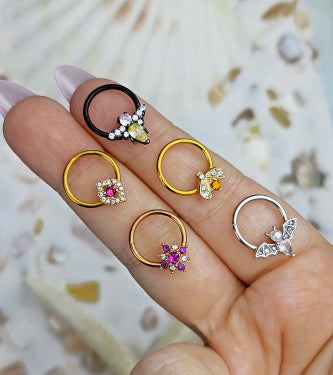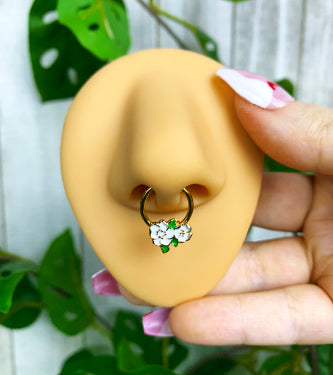
















So, you got the piercing, you crushed the aftercare, and now you’re probably lost in the amazing collection of nose rings right here at Bodycandy. The question burning in your mind is, “When can I change my nose piercing?”
We hear you! The short answer is simple: only when it’s fully healed. But "fully healed" means a whole lot more than just what you can see on the surface. Let's get into it.
The Waiting Game: How Long Until Your First Swap?
We get it. You're dying to swap out that initial stud for something that really screams you. But right now, patience is your absolute best friend.
Changing your jewelry too early is a huge no-no. It can lead to irritation, nasty infections, or even the dreaded piercing bump that throws your whole healing journey off track. In the worst-case scenario, you might even have to get it re-pierced, and who wants to go through that again?
You need to give your body enough time to build a strong, healed channel (called a fistula). Think of it like the foundation of a house—if you rush it, everything you build on top of it will be unstable. That fistula is the key to a happy, healthy piercing for life.
Healing Timelines You Need to Know
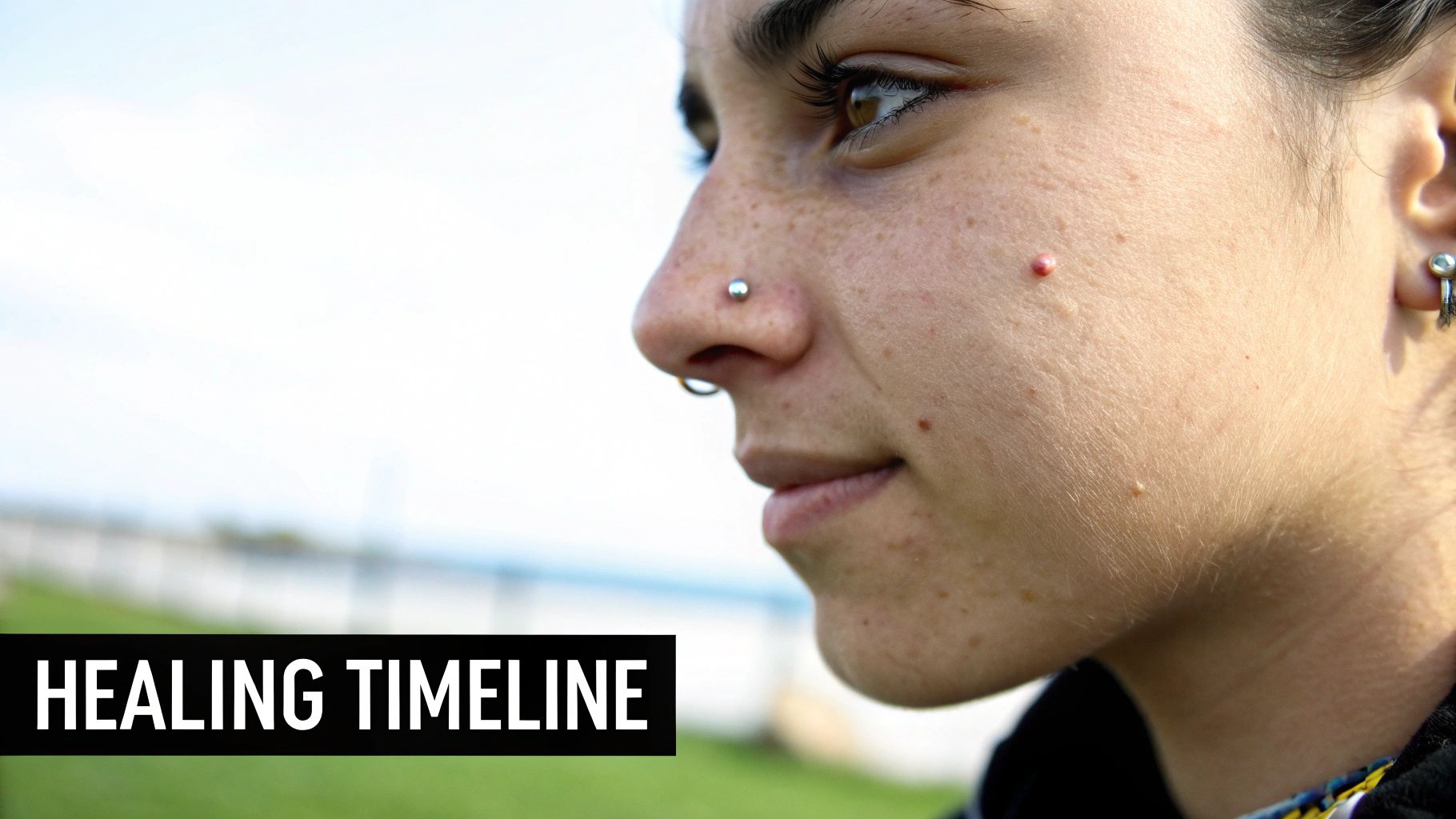
Every single body is different, so healing times are never set in stone. However, there are some solid general timelines to keep in mind.
Before you even think about swapping jewelry, take a look at these typical healing times. This is just a general guide, of course. Everyone heals at their own pace, so the most important thing is to listen to your body!
| Piercing Type | Average Full Healing Time |
|---|---|
| Nostril | 2 to 6 months |
| Septum | 6 to 8 weeks |
| High Nostril | 6 to 9 months |
| Bridge | 2 to 3 months |
| Nasallang | 3 to 9 months |
For a standard nostril piercing, you're looking at about 2 to 6 months. The outside might look and feel fine after a couple of months, but the tissue deep inside is still working hard to mature and strengthen. Your septum, on the other hand, usually heals much faster—often in just 6 to 8 weeks.
Here are a few things to drill into your brain before that first swap:
- Don't rush it. The long-term health of your piercing is way more important than a quick style change.
- The outside lies. Just because it looks good doesn't mean the inside is ready. That internal fistula needs to be completely stable.
- Listen to your body. Is it tender, red, or still producing "crusties"? If so, it's definitely not time for a change.
Understanding these timelines is crucial for any kind of body mod. You can see how your nose piercing stacks up against others in our complete guide on healing times for popular piercings.
Reading the Signs: Is Your Piercing Actually Ready?
So, the calendar says it’s been long enough, and you're hyped to finally swap out that starter stud for some fresh bling. But hang on—your piercing might have a different opinion. Knowing when you can change your nose piercing is less about the clock and more about what your body is telling you.
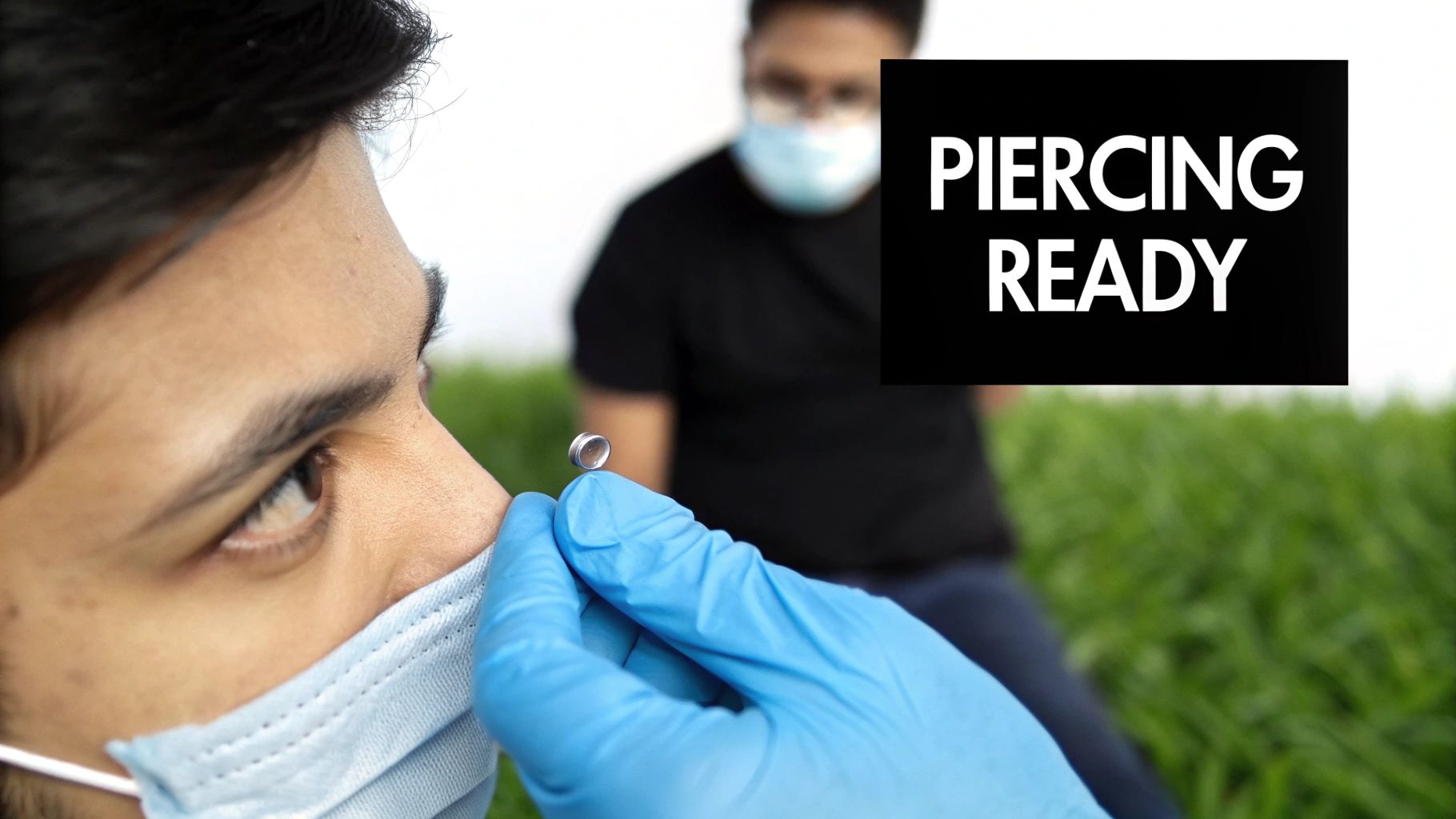
Think of it like a detective mission. You need to look for specific clues that confirm it's truly healed up and ready for a new look. Rushing this part can set you back months and undo all that careful aftercare, so let's get into what you should be looking for.
The Ultimate Healed Piercing Checklist
Before you even think about touching your jewelry, your piercing needs to pass this vibe check. If you can't tick off every single one of these points, it's a clear signal you need to back off and give it more time.
Here are the non-negotiable signs of a fully healed nose piercing:
- No More Pain or Tenderness: Gently press the area around your piercing. Does it feel just like the rest of your skin? A healed piercing should have zero sensitivity, pain, or tenderness, even with a little pressure.
- Color is Calm and Normal: Get up close in a well-lit mirror. The skin around the piercing hole should be your natural skin tone. Any lingering redness, purple hues, or discoloration needs to be gone.
- Swelling has Vanished: The initial puffiness from the piercing process should be a distant memory. The area needs to look flat and totally settled in.
- The 'Crusties' Have Left the Building: Those little crusts (just dried lymph fluid) are a normal part of the initial healing phase. A fully healed piercing, however, won't produce any discharge or crusty bits anymore.
Pro Tip: Don't be fooled if your jewelry moves around freely. While that's a good sign, it doesn't automatically mean the internal channel—the fistula—is mature and strong enough for a swap. A solid fistula is the key to an easy and safe jewelry change.
If you’re still seeing any pain, swelling, or yellow/green gunk, your piercing is definitely not ready. That could even be a sign of an irritation or an infection, which means you need to double down on your aftercare routine and give it more time. A little patience now means your piercing will stay happy and healthy for years to come.
Prepping for Your First Jewelry Change
You’ve patiently waited, you’ve watched for all the signs, and your piercing has finally healed—it's officially time! Getting ready for your first jewelry swap is half the fun, and a little prep makes all the difference for a smooth, stress-free change.
Think of this as your pre-change mission briefing. First up is choosing your new bling. While it’s tempting to grab the sparkliest, most intricate piece you see, your piercing is still a bit sensitive. For your first few changes, it's a smart move to stick with high-quality, body-safe materials.
Your Jewelry and Toolkit
The right material can prevent a world of trouble. Sticking with something your body already loves will minimize the risk of a surprise irritation or allergic reaction.
- Implant-Grade Titanium: This is the gold standard for a reason. It's lightweight, nickel-free, and super biocompatible, making it perfect for a newly healed piercing.
- 14k or 18k Gold: If you're a gold lover, make sure it's solid gold, not plated. Quality gold is a great option that's less likely to cause issues.
- Surgical Steel: While popular, ensure it's a reputable grade like 316LVM. Some people with nickel sensitivities might still react to it.
For a deeper dive into materials, check out our guide on picking the right material for your nose piercing to find your perfect match.
Key Takeaway: Your first jewelry change sets the tone for your piercing's future. Choosing a high-quality material is the best way to keep it happy and avoid setbacks.
Once you have your dream jewelry, get your toolkit ready. You'll need your new piece, some sterile saline solution for a quick clean, and clean hands. Make sure you're in a well-lit space, like your bathroom, so you can see exactly what you’re doing. This simple setup ensures your first change goes off without a hitch.
A Simple Guide to Changing Your Nose Jewelry
Feeling a little nervous about that first swap? We've got you. Once you’re absolutely certain your piercing is fully healed and happy, it’s time for the fun part. Think of this as your friendly walkthrough to make changing your jewelry a super easy and stress-free experience.
The very first thing you need to do is get your space and your new jewelry ready. It’s all about creating a clean, calm environment before you start. A well-lit bathroom is perfect for the job.
Setting Up for a Smooth Swap
Before you even think about touching your old jewelry, prepare your new piece. It’s all about cleanliness to prevent introducing any pesky bacteria into your healed fistula (the piercing channel). This simple prep work can make all the difference between a happy piercing and an angry, irritated one.
This visualization breaks down the three essential prep steps to take before you begin.
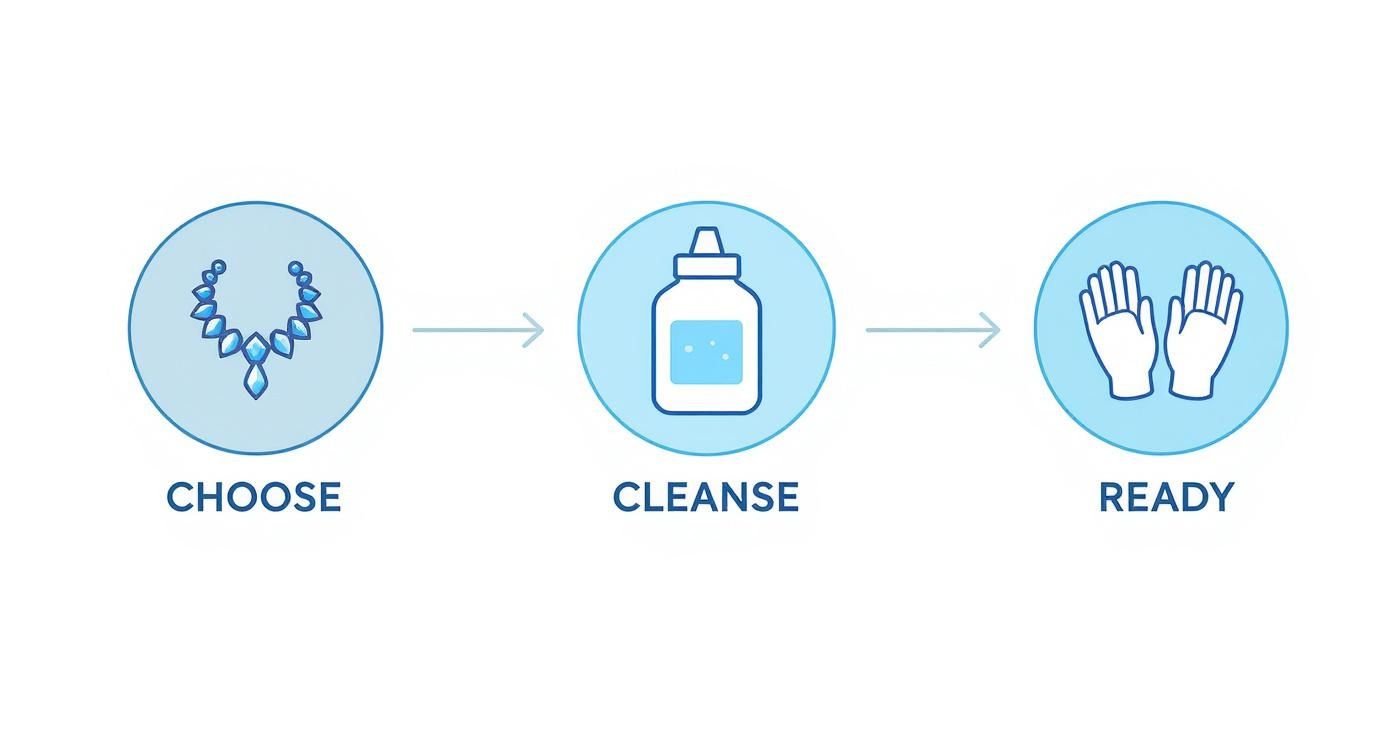
As you can see, choosing your piece, cleansing it thoroughly, and preparing your hands are the three pillars of a safe jewelry change. Don't skip these!
Now that everything is clean, let's talk about removing your old jewelry. Most starter jewelry is either an L-bend or a nostril screw. For an L-bend, you'll want to gently but firmly pull the stud straight out. For a nostril screw, you'll need to twist it while pulling—imagine unscrewing a tiny corkscrew from your nose. Take your time with it.
Inserting Your New Bling
Once the old piece is out, it's time to guide your new ring in. Take your new, sanitized jewelry and carefully line it up with the piercing hole.
One of the best pro tips I've ever learned is to exhale slowly as you insert the new piece. It's a neat little trick that helps relax the surrounding tissue, making it much easier for the jewelry to slide in without causing any trauma or discomfort.
Takeaway Tip: Never, ever force it! If you feel any significant resistance or a sharp pain, stop immediately. Your piercing might not be as ready as you thought, or you may just need to try a different angle.
If it glides in smoothly, secure the backing or closure, and you're done! Give the area a final gentle clean with your saline solution just to be safe. Following these steps will have you swapping out your collection like a pro in no time, all while keeping your piercing healthy and stylish. Now, all that's left is to admire your new look.
Troubleshooting Common Swap Issues
https://www.youtube.com/embed/804PyhbW2EY
Even when you do everything right, that first jewelry swap doesn't always go off without a hitch. Don't panic! Most of these little hiccups are totally fixable. The real trick is knowing when to gently push through and when to just stop.
One of the biggest culprits behind a painful or difficult jewelry change is simply trying to do it too soon. Seriously, we can't stress this enough—patience is a piercer's best friend. Trying to rush the process is a surefire way to invite complications.
Every piercing is different. A nostril can take a full 4 to 6 months to be truly ready, while a septum might be good to go in just 6 to 8 weeks. Forcing new jewelry into a piercing before that internal channel (the fistula) is fully healed and stable is just asking for irritation and setbacks.
Help, I Can't Get the New Ring In!
This is probably the most common frustration we hear about. First things first: take a deep breath and whatever you do, don't try to force it. Shoving jewelry into a tight piercing can cause micro-tears, swelling, and major irritation.
Here's what to try instead:
- Add a Little Lube. A tiny dab of water-based lubricant or even a bit of saline solution right on the tip of the jewelry can make all the difference. It helps it glide in much more smoothly.
- Play with the Angle. Gently try inserting the jewelry from a slightly different angle. Sometimes the fistula has a slight curve that you can't see from the outside. A small adjustment is often all it takes.
- Double-Check the Gauge. Is your new jewelry the exact same gauge (thickness) as your starter piece? Even a small step up in size will feel impossible and can damage your piercing.
If it still won't budge, your piercing might have shrunk a tiny bit, or it’s just not ready for a change yet. For a complete guide on this, check out our post on why your nose ring might not fit.
Know When to Quit: If you feel any sharp pain or see any blood, stop immediately. Your body is telling you it's not happy. Put your original, high-quality jewelry back in, clean the area, and give your professional piercer a call. They have the right tools and expertise to guide the jewelry in safely without causing any harm.
Your Top Nose Piercing Questions Answered
We get tons of questions about swapping out nose jewelry for the first time. We've rounded up the most common ones here to give you quick, clear answers and help you feel totally confident.
You've already done the hard part—getting the piercing. Now it’s just about making smart choices to keep it happy and healthy for the long haul. Let's get into the questions you've been dying to ask.
Can I Change My Piercing After Just Four Weeks?
Honestly, we strongly advise against it. After only four weeks, the inner tissue (that super important fistula) is still incredibly delicate, even if the outside looks totally fine.
Changing your jewelry this early is just asking for trouble. It often leads to irritation, tiny tears in the tissue, and can even cause an infection, which will seriously set back your healing time. A little patience now means a healthier piercing for life.
What If My Piercing Starts To Close While I'm Changing It?
First off, take a deep breath—don't panic! It’s true that a newly healed piercing can shrink shockingly fast, sometimes in just a few minutes.
Grab your sterile saline, lubricate the end of your new jewelry, and gently try to re-insert it using that "exhale" trick we talked about earlier. If you feel any real resistance or pain, stop. Never, ever force jewelry through a piercing.
Your best bet is to head straight to your professional piercer. They have special tools like insertion tapers to safely guide the jewelry back in without causing any damage.
Is It Normal for My Nose To Be Sore After the Swap?
A little bit of mild tenderness for a day or two after your very first jewelry change is pretty common. Your piercing is just getting used to its new bling, and that's okay.
However, if you're seeing significant swelling, lasting pain, any bleeding, or a yellow/green discharge, that's a red flag. It could be anything from an allergic reaction to the new metal to just general irritation from the swap. If that happens, switch back to your original, implant-grade jewelry and go back to your saline soaks. If it doesn't improve pretty quickly, check in with your piercer.
Ready to find your new look? From simple studs to dazzling hoops, Bodycandy has the perfect piece waiting for you. Shop our full collection of high-quality nose rings today