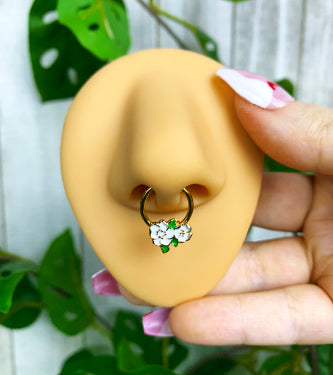

















Thinking about getting a 12 gauge piercing or maybe stretching up to this size? You've come to the right place. A 12G piercing is all about the thickness of the jewelry you wear, which clocks in at a solid 2.05mm. It's a noticeable step up from the more common starter sizes and perfect for a bolder look that’s confident without being too extreme.
What Is a 12 Gauge Piercing?
So, you keep hearing about "gauges," but what does that even mean? Think of it like this: the gauge system is just a way to measure how thick your body jewelry is. The most important thing to remember is that it works in reverse—the smaller the gauge number, the thicker the jewelry. A 12 gauge piece is definitely thicker than a 14G or 16G, which are often used for brand-new piercings.
This makes 12G a super popular "in-between" size. It's substantial enough to make a statement in piercings like septums, earlobes, and certain genital piercings, but it's not so large that it feels intimidating. For a lot of people, it’s the first big goal size when they start their ear stretching journey.
Seeing the Difference
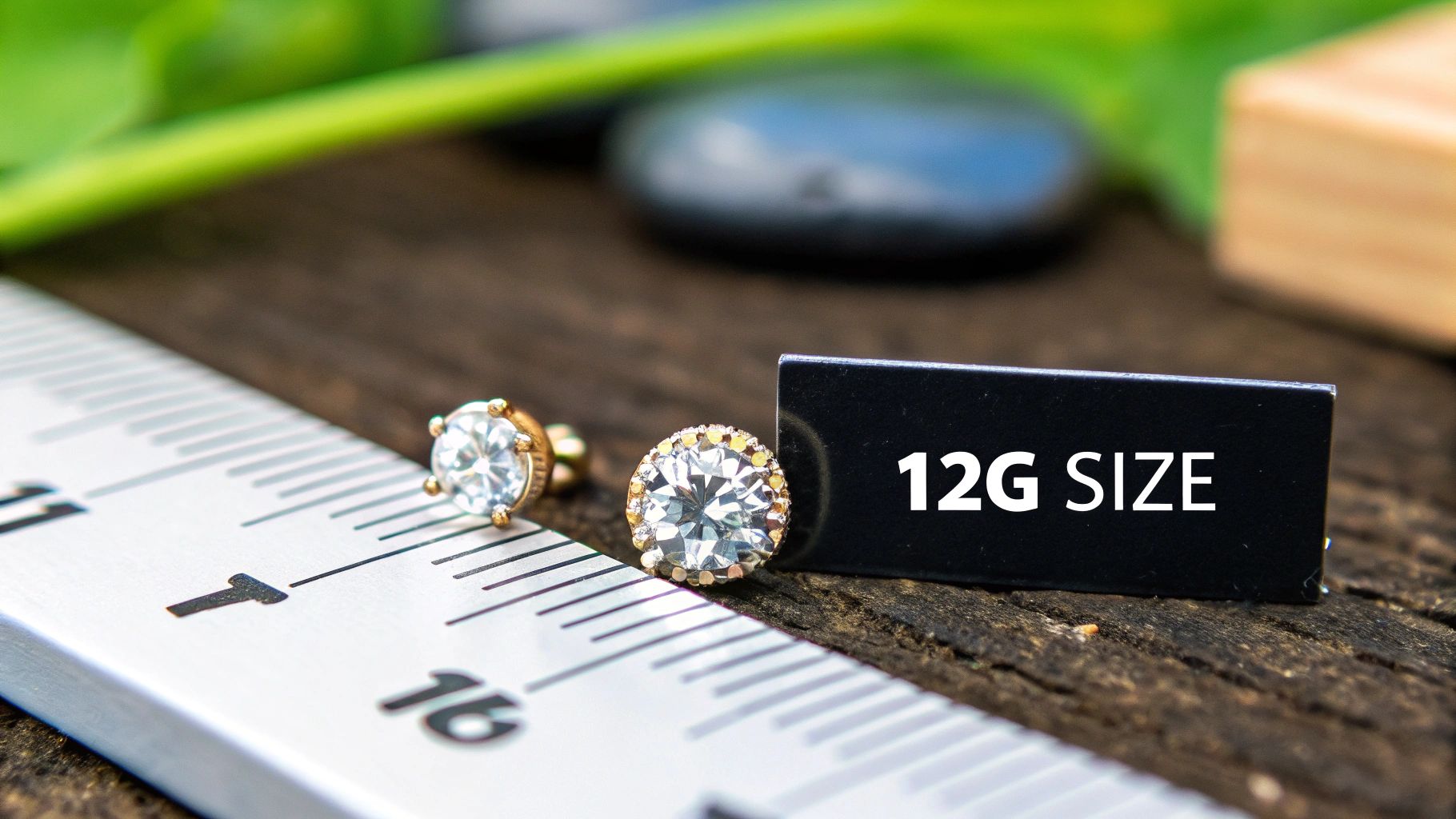
Trying to picture the size can be tricky, but we're here to help clear things up. A 12 gauge piece of jewelry has a thickness of 2.05 millimeters, which is about 0.081 inches. It sits right between the more standard 14G (1.6mm) and the next step up, 10G (2.4mm). Getting a feel for these measurements is the key to picking the right jewelry and planning your stretching goals safely.
A super common mistake is thinking a 12G is smaller than a 14G just because the number is lower. Always remember: in the world of piercing gauges, a lower number means a thicker piece of jewelry and a more prominent look!
For a quick side-by-side comparison, check out this handy chart. It's a great way to see exactly where 12G falls in the grand scheme of things.
Piercing Gauge Size Conversion Chart
| Gauge (G) | Millimeters (mm) | Inches (") |
|---|---|---|
| 16G | 1.2mm | 0.047" |
| 14G | 1.6mm | 0.063" |
| 12G | 2.05mm | 0.081" |
| 10G | 2.4mm | 0.094" |
| 8G | 3.2mm | 0.126" |
Seeing the numbers laid out like this really helps put it all in perspective, doesn't it?
If you want to go even deeper and become a true gauge guru, you can learn more about the standards of gauge sizing for body jewelry in our detailed guide. It'll give you the full picture, from the delicate 22G all the way to the larger sizes. Knowing your gauges empowers you to make the best choices for your body and your style.
Popular Placements for 12 Gauge Jewelry
So, you're sold on the bold vibe of a 12 gauge piercing, but now you're wondering where it'll actually look best? You've got some seriously cool options! While a 12G is a little less common for a brand new, initial piercing, it's a fantastic goal size for making a real statement in several popular spots.
Think of it as the perfect upgrade. Moving to a 12G can totally transform the look of a piercing, giving it way more presence and attitude. Let’s dive into the placements that truly shine with this size.

Septum Piercings
The septum is, without a doubt, one of the most popular places to show off a 12 gauge piercing. A standard septum is often pierced at 16G or 14G, making 12G a super easy and impactful first stretch.
At this thickness, jewelry like circular barbells (horseshoes), captive bead rings, and especially pinchers create a powerful focal point right in the middle of your face. It’s a size that says you’re serious about your style without being overly dramatic. A bold, solid steel segment ring at 12G? Absolutely iconic.
Stretched Earlobes
For tons of people, 12G is a major milestone in their ear stretching journey. It’s the size where you really start to feel and see a difference, and it opens up a whole new world of jewelry styles beyond your basic earrings.
This is the perfect canvas to start rocking single-flare plugs and tunnels. A pair of sleek, black steel tunnels at 12G is a classic look that’s both edgy and sophisticated. It’s pretty much the ideal starting point for anyone aiming for larger sizes down the road.
Pro Tip: When you hit 12G in your lobes, it's a great time to experiment with materials. Once your ears are fully healed, you can try out glass or smooth stone plugs for a more organic, stylish vibe that feels amazing to wear.
Prince Albert (PA) Piercings
Let's get personal! For genital piercings, particularly the Prince Albert (PA), 12G is a very common starting size. In fact, a professional piercer might even recommend starting right here or at 10G.
Why the thicker gauge? A larger surface area helps reduce the risk of the dreaded "cheese-cutter" effect, where thinner jewelry can migrate or tear through the tissue. It also provides a more comfortable and stable base for healing. Curved barbells and captive bead rings are the go-to styles for this placement.
Nipple and Cartilage Piercings
While 14G is the most common size for nipple piercings, sizing up to 12G is a popular choice for anyone who wants a more substantial look. The added thickness can make barbells and rings feel more secure and visually striking.
For cartilage, a 12 gauge piercing is definitely a bolder choice. It works exceptionally well in a conch piercing, where a chunky 12G ring can create a stunning centerpiece for your ear. Some people also opt for this size in an industrial piercing for a more rugged aesthetic, though healing a larger gauge in cartilage requires extra care and patience. Whatever you choose, a 12G piece is sure to make your piercing pop.
Choosing the Best Jewelry for Your 12G Piercing
Alright, you’ve picked your placement, and now it’s time for the fun part—the bling! Finding the right piece for your 12 gauge piercing is all about mixing your personal vibe with what’s actually good for your body. Think of this as your personal tour through the world of 12G jewelry.
The market for body jewelry is absolutely huge. While it's tricky to find numbers on a specific size like a 12 gauge piercing, the entire body piercing jewelry market was valued at a whopping $8.12 billion in 2024. If you're a data nerd, you can dive deeper into the growing body piercing jewelry market trends. That massive number just proves one thing: you've got endless ways to express yourself.
Finding Your Signature Style
When you’re rocking a 12G, you unlock some seriously cool jewelry options that are designed to make a statement. Let's break down the most popular styles you’ll find right here at Bodycandy.
- Captive Bead Rings (CBRs): These are a timeless classic for good reason. A CBR is a simple, seamless ring secured by a small bead, giving you a clean and secure look that’s perfect for septums, earlobes, and nipple piercings.
- Circular Barbells (Horseshoes): Just like the name implies, these are U-shaped barbells with a bead screwed onto each end. They give off a slightly edgier vibe than a full ring and are a total go-to for septum and certain cartilage piercings.
- Straight Barbells: The undisputed MVP for nipple piercings and industrial cartilage projects. At a 12 gauge thickness, a straight barbell creates a bold, symmetrical look that’s both minimalist and eye-catching.
- Pinchers and Plugs: Mostly seen in stretched septums and earlobes, pinchers are crescent-shaped pieces that gently "pinch" the piercing. Plugs, on the other hand, are solid pieces that fill the stretched hole entirely. 12G is often the first size where you can start showing off some really awesome plug designs!
Material Matters Most
Choosing the right material isn't just about how it looks—it's about keeping your piercing happy and healthy, especially if your skin is on the sensitive side. You wouldn't wear an itchy sweater all day, right? So why put cheap, irritating metal in your body?
The golden rule of body jewelry is to always put quality materials first. Seriously, your body will thank you for it! A killer look starts with a healthy piercing, and using implant-grade, body-safe metals is the only way to go.
Picking the perfect material can feel a bit overwhelming, but don't worry, we've got you. Here's a quick rundown of the most common materials you’ll find for your 12 gauge piercing jewelry to help you make the right call.
12G Jewelry Materials Compared
This table breaks down the most popular materials for 12 gauge jewelry, helping you choose the best option based on your piercing's needs and your skin's sensitivity.
| Material | Best For | Pros | Cons |
|---|---|---|---|
| Titanium | New piercings, sensitive skin | Hypoallergenic, lightweight, body-safe, comes in many colors. | Can be slightly more expensive than steel. |
| Surgical Steel | Healed piercings, budget-conscious buyers | Durable, affordable, classic polished look. | Contains nickel, which can irritate sensitive skin. |
| Glass | Healed stretched piercings (lobes, septum) | Non-porous, smooth, hypoallergenic, great for stretching. | Can break if dropped, not ideal for all placements. |
| Organics (Wood/Stone) | Fully healed and seasoned piercings | Lightweight, breathable, unique natural patterns. | Porous material, requires oiling, not for fresh piercings. |
Ultimately, whether you choose the vibrant colors of titanium or the classic shine of surgical steel, the goal is the same: find a piece that you love and that loves your body back. Happy hunting!
How to Stretch to a 12 Gauge Piercing
So, you're ready to size up to a 12 gauge piercing? That's awesome! Making the jump from a smaller size like 14G is an exciting step, but doing it safely is the absolute key to keeping your piercing happy and healthy.
The golden rule of stretching is simple: listen to your body and never, ever force it.
Stretching is a process that requires patience, the right tools, and a little bit of know-how. Rushing things can lead to some nasty complications like irritation, painful blowouts, or even tearing your skin. We're here to walk you through the entire process, giving you the confidence to stretch like a pro.
The Stretching Essentials
Before you even think about sizing up, you need to have the right gear on hand. Trust us, trying to stretch with the wrong equipment is a total recipe for disaster.
Here’s your must-have toolkit:
- A High-Quality Taper: This is the long, pin-like tool that gradually gets thicker to gently open up your piercing. You'll want a smooth, single-flare taper made from a body-safe material like surgical steel or glass. Never, ever use acrylic tapers for stretching—they're porous and can trap bacteria, leading to trouble.
- Piercing-Safe Lubricant: A good quality, water-based lubricant is your best friend here. It helps the taper slide through smoothly without any friction. Jojoba oil or other dedicated stretching balms are perfect for this. Steer clear of things like Vaseline or antibacterial ointments.
- Your New 12G Jewelry: Of course, have your awesome new 12 gauge jewelry ready to go! It should be a simple, single-flare style made from something like implant-grade titanium or glass to help your piercing settle in easily after the stretch.
Your Step-by-Step Stretching Guide
Okay, once your piercing is fully healed and you’ve waited at least 4-6 weeks since your last stretch, you’re ready to begin. The key is to go slow, stay clean, and pay close attention to what your body is telling you.
- Prep Your Space & Gear: Start by washing your hands thoroughly. Then, clean your taper, your new jewelry, and your piercing with a gentle soap. A clean start is a happy start!
- Lubricate Everything: Don't be shy with the lube! Apply a generous amount to your earlobe, the taper itself, and the inside of your piercing.
- Insert the Taper: Gently guide the narrow end of the taper into your piercing. Slowly and steadily push it through from front to back until the thickest end is flush with your piercing.
- Follow with Jewelry: Now, line up your new 12G jewelry with the thick end of the taper. As you push the jewelry in, it will follow the taper right out of the piercing. Pop the o-ring on the back, and you're done!
If you feel any sharp pain or serious resistance, STOP. This is your body telling you it isn't ready. Downsize back to your previous jewelry and give it a few more weeks to chill out before trying again.
For a deeper dive, check out our complete guide on how to properly stretch your lobes.
Once your stretch is healed and ready, you get to do the fun part: picking out the perfect piece!
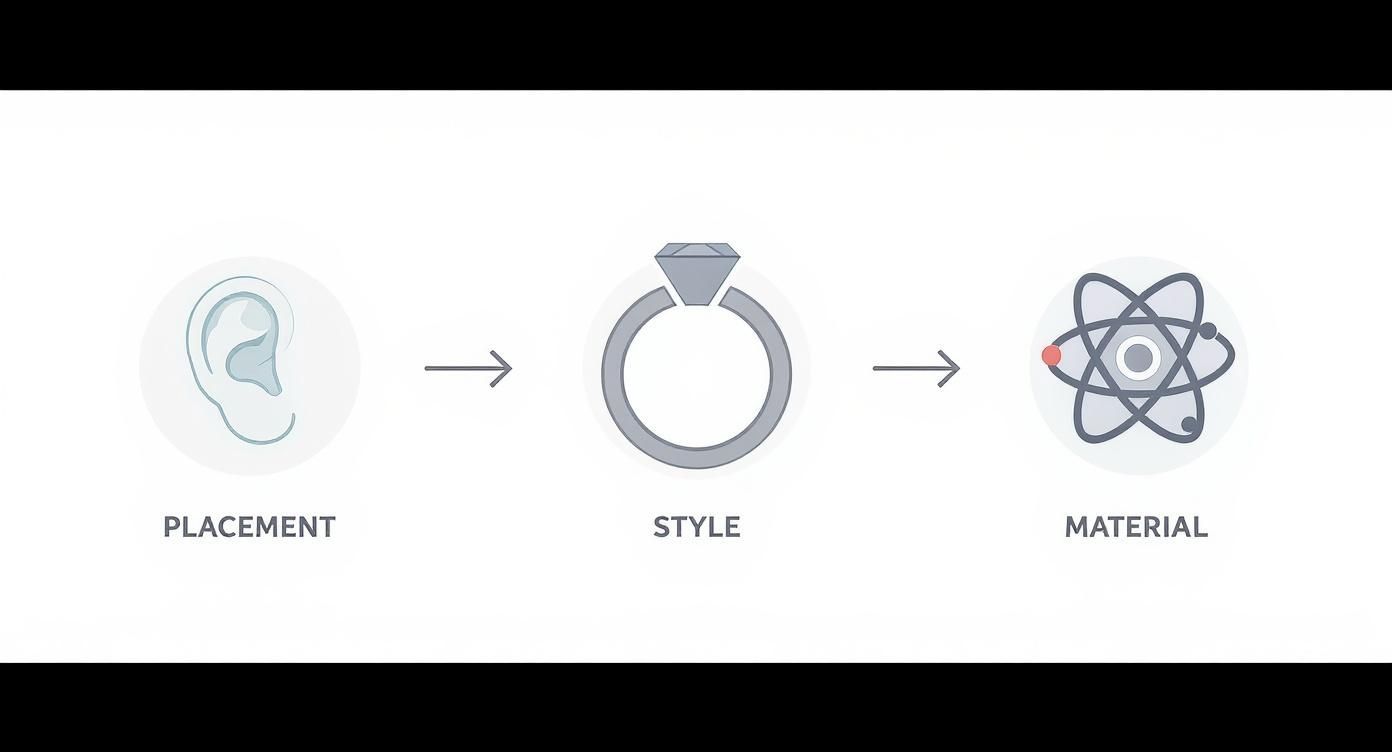
As you can see, the journey to your perfect piece involves considering placement, style, and material—in that order—for the best results.
Mastering Aftercare for Your 12G Piercing
Whether your 12 gauge piercing is fresh out of the studio or a recent stretch, getting the aftercare right is the most important thing you can do for a happy, healthy piercing. Think of it as building a strong foundation for your new look—if you don't nail the basics, things can get complicated down the road.
Luckily, taking care of a 12G piercing is pretty simple. Your body is the real hero here; it does all the heavy lifting when it comes to healing. Your only job is to give it a clean, stress-free environment to work its magic.
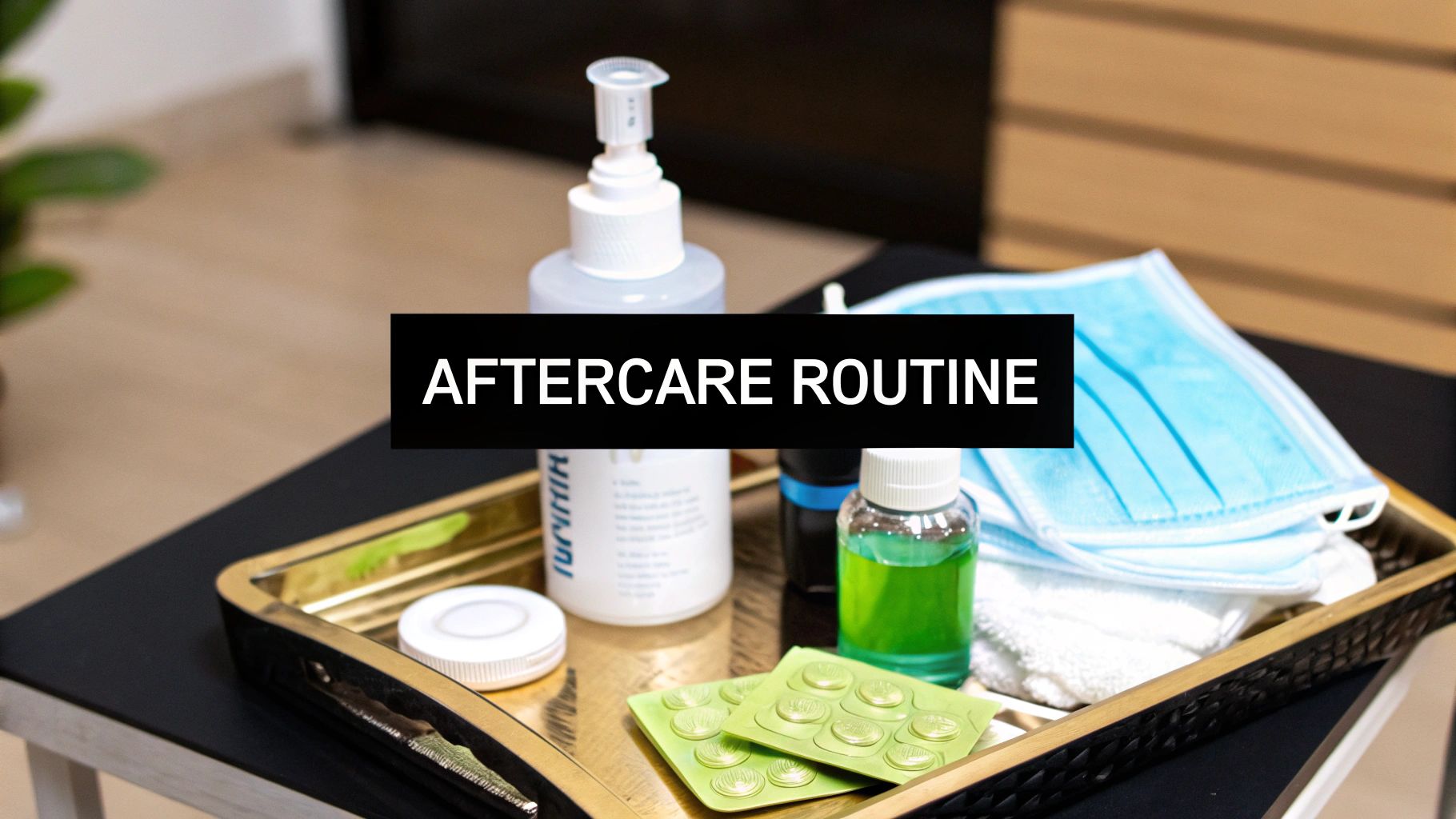
Your Daily Aftercare Routine
When it comes to aftercare, less is definitely more. A complicated routine loaded with different products often just irritates a new piercing. Forget the harsh chemicals and heavy ointments—all your piercing really needs is a gentle cleanse.
For the best results, just stick to this simple plan:
- Wash Your Hands First: This is the golden rule. Before you even think about touching your piercing, give your hands a good scrub with soap and water. No exceptions!
- Use Sterile Saline Spray: The absolute best friend for a new piercing is a sterile saline solution. Lightly mist the front and back of the piercing 2-3 times a day.
- Pat Dry Gently: Grab a clean, disposable paper towel and gently pat the area dry. Cloth towels are a no-go, as they can snag your jewelry and introduce unwanted bacteria.
That's it! Seriously. No twisting, turning, or fiddling with the jewelry. Just let the saline spray do its thing. If you need a solid product recommendation, our guide to H2Ocean aftercare products explains why it's the gold standard for piercers everywhere.
What to Expect and What to Avoid
During the first few weeks, it’s totally normal to see some mild swelling, a bit of redness, and even a clear or whitish fluid. This stuff is called lymph, not pus, and it's just a sign that your body's healing process is kicking into gear.
Knowing what not to do is just as important as your cleaning routine.
Heads up: Don't over-clean your piercing! Cleaning more than three times a day can strip away the good stuff your body produces to heal, leading to some serious irritation. Stick to the plan—your piercing will thank you.
While aftercare data for a 12 gauge piercing specifically is hard to come by, the global body piercing market was valued at around USD 1.5 billion in 2024. This shows just how many people are getting pierced, but it also highlights that detailed stats for specific gauges aren't always tracked.
Here’s a quick list of things to keep away from your new piercing:
- Harsh Chemicals: Steer clear of alcohol, hydrogen peroxide, and antibacterial ointments like Neosporin. They're way too aggressive for a healing wound.
- Swimming: Avoid pools, hot tubs, lakes, and oceans until you're fully healed. These are breeding grounds for bacteria.
- Changing Jewelry Too Soon: Resist the urge to swap out your starter jewelry. Patience is key—wait until the piercing is completely healed to change it.
Got 12 Gauge Piercing Questions? We've Got Answers.
So, you're thinking about a 12 gauge piercing, or you've already got one, and a few questions are popping up. That’s totally normal! A bolder look comes with its own set of curiosities. We’re here to clear the air and give you the straightforward advice you need, straight from your piercing-obsessed friends at Bodycandy.
Let's dive into the most common questions we hear so you can rock your 12G piercing with total confidence.
Does Getting a 12 Gauge Piercing Hurt More Than a Smaller Gauge?
This is the big one, isn't it? The honest-to-goodness answer is: it's different for everyone. Pain is super subjective.
In general, being pierced with a slightly thicker 12G needle might feel a bit more intense for a split second compared to a 16G or 14G. Think of it this way: the needle is displacing a tiny bit more tissue. But a skilled, professional piercer is fast and smooth, so the difference in sensation is often so minimal you'll barely notice. It's over in a flash.
Big heads-up for anyone stretching: If you're moving up to 12G from a smaller, fully healed piercing, you should only feel some pressure and maybe a warm sensation. Sharp pain is a huge red flag! It's your body's way of screaming, "I'm not ready!" Stop immediately if you feel anything sharp.
How Long Does a 12 Gauge Piercing Take to Heal?
Here’s a common misconception: healing time isn't really about the gauge. It's all about the location of the piercing. A 12 gauge piercing will heal at pretty much the same rate as a 14G piercing in the exact same spot. Different parts of the body just have their own healing schedules.
Here’s a quick cheat sheet for what to expect:
- Earlobe Piercings: These are the sprinters of the piercing world, usually healing up in 6-8 weeks.
- Septum Piercings: A bit more of a commitment, you're looking at around 2-3 months.
- Nipple Piercings: These can take a little longer, typically between 3-6 months to feel fully settled.
- Cartilage Piercings (like a conch): Patience is key here. These can take a good 6-12 months to heal completely.
And remember, if you're stretching to 12G, you aren't creating a new wound. Even so, you need to give that tissue a few weeks to chill out and get strong again before you even think about the next size.
Can I Use 14G Jewelry in My 12G Piercing?
Yep, you absolutely can! It’s perfectly fine to pop a smaller 14G piece of jewelry into your healed 12 gauge piercing. This is awesome for those times you find a 14G design you just can't live without.
The only thing to keep in mind is that if you wear smaller jewelry for a long time, your piercing might shrink up a little. Leaving a 14G piece in for weeks or months could make your 12G jewelry feel a bit snug when you go to put it back in. It's no big deal for a night out, but if you want to maintain that 12G size for the long haul, it's best to stick with true-to-size jewelry most of the time.
Where Can I Find the Best Selection of 12G Jewelry?
You're already in the right spot! We get it—finding a great variety of cool, high-quality 12 gauge jewelry can feel like a treasure hunt sometimes. That's exactly why we've poured so much effort into making our collection amazing.
Here at Bodycandy, we've stocked up on a fantastic range of 12G pieces. From implant-grade titanium captive bead rings for sensitive skin to bold surgical steel circular barbells, we've got you covered. Our goal is to give you safe, durable, and affordable options so you can show off your style without making any compromises.
Ready to find that perfect piece to showcase your bold style? Bodycandy has an amazing collection of 12 gauge piercing jewelry waiting for you. Shop the full collection today and find your new favorite look!