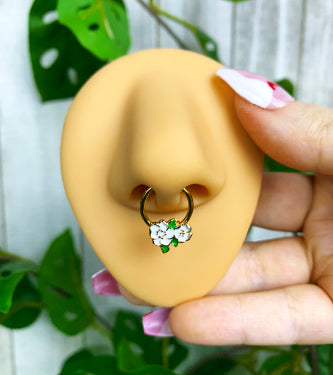


















You're shopping for a cute gold nose ring or a navel piece you can wear all the time. Then the product titles start throwing hands. Gold-plated. Gold vermeil. Gold-filled. Solid gold. Suddenly it feels like you need a chemistry degree just to buy one tiny sparkly thing.
And if you've got piercings, the stakes feel higher. You don't just want jewelry that looks expensive. You want something that won't bug your skin, won't wear down fast in high-friction spots, and won't make you feel like you wasted your money.
That's where gold-filled jewelry gets interesting. It sits in a sweet spot a lot of body jewelry wearers are looking for. It has real gold on the outside, more staying power than plated pieces, and a price that's usually a lot less intense than solid gold.
If gold jewelry terms have been melting your brain, you're not alone. For a quick primer on the broader gold categories, BodyCandy's crash course on buying and wearing gold jewelry is a helpful companion. But if your main question is what gold-filled jewelry is, and whether it makes sense for piercings, let's break it down in plain English.
Your Guide to Gorgeous Gold Jewelry
You click on a jewelry listing. It looks perfect. The color is warm, the style is minimal, and you can already see it in your nostril piercing or layered into your ear stack.
Then you read the description and freeze.
One item says 14k gold-filled. Another says gold-plated. Another says vermeil. Another just says gold, which sounds nice until you realize that word can get used very loosely online. If you've ever felt like jewelry shopping turns into a decoding game, same.
Why this gets confusing fast
A lot of these terms sound similar because they all describe jewelry that has a gold look. But they do not all mean the same thing in how the piece is built, how long it lasts, or how it behaves against your skin.
For body jewelry wearers, that matters even more than it does for a bracelet you only wear once in a while.
Think about the spots your jewelry has to survive:
- Nostrils: constant touching, skincare nearby, frequent cleaning
- Navels: rubbing from waistbands, movement, sweat
- Septums: wiping, adjusting, daily handling
- Nipples: friction from clothing and regular movement
Those areas can be rough on a finish. A material that looks great on day one might not stay cute if the gold layer is too thin.
Gold-filled tends to catch people's attention because it offers the look of gold without jumping straight to solid gold pricing.
The sweet-spot option
If you want jewelry that looks polished, feels more substantial than cheap plating, and makes more sense for regular wear, gold-filled is often the category worth learning first.
It's not fake gold. It's not the same as plating. And it's not automatically perfect just because a listing says “gold-filled.” The wording matters, the construction matters, and where you plan to wear it matters too.
That's why understanding what is gold filled jewelry isn't just trivia. It helps you shop smarter, especially when you're buying for piercings you wear all the time.
So What Exactly Is Gold-Filled Jewelry
Gold-filled jewelry is a layered material. It has a real karat gold outer layer that's permanently bonded to a base metal core, usually brass, using heat and pressure.
A good way to think about it is a candy with a thick outer shell, not a light dusting on top. Gold plating is more like a thin surface finish. Gold-filled is built with a much more substantial gold layer as part of the material itself.
The legal meaning matters
In the United States, gold-filled isn't just a marketing vibe. It's a legal term. Gold-filled jewelry must contain at least 5% gold by weight, which is the same as 1/20th of the total weight, under the standard described in this gold-filled jewelry overview.
That's a big reason it sits in a different class from plated jewelry. Gold-plated pieces don't have that same minimum gold requirement.

How it's made
This part sounds technical, but it's the reason gold-filled is such a practical material.
Gold-filled jewelry is a mechanically bonded composite material, not an alloy, where a solid layer of karat gold, typically 14k and ranging 10k to 18k, is fused to a brass core made of 90% copper and 10% zinc using heat of 900°C and pressure of 2500 psi, according to this gold-filled construction guide.
That process matters because the gold isn't just painted on. It's bonded in a way that creates a more durable outer surface.
A simple analogy
Think of your phone in a sturdy case.
The phone case isn't there for decoration alone. It's the protective outer layer that takes the day-to-day contact. Gold-filled works in a similar way. The gold layer is the part your skin and the world interact with, while the inner core gives the piece structure.
Practical rule: If you want the look of real gold but you know your jewelry will deal with friction, cleaning, and everyday wear, gold-filled makes a lot more sense than a super-thin finish.
That's the basic answer to what is gold filled jewelry. It's real gold on the outside, a base metal core inside, and a bonded construction that's built to hold up better than standard plating.
Gold-Filled vs Gold-Plated Vermeil and Solid Gold
This is the part most shoppers genuinely care about. Not the manufacturing lecture. The key question is, what do these labels mean once the jewelry is in your piercing and in your life?

Gold-filled and gold-plated
This is the comparison that causes the most confusion.
Gold-filled jewelry contains at least 5% gold by weight, while gold-plated jewelry typically has less than 0.05% gold, which is why gold-filled is generally more durable, more tarnish-resistant, and better suited to daily wear in this gold jewelry type comparison.
In everyday terms:
- Gold-filled works better for jewelry you want to keep in regular rotation
- Gold-plated is often better for trend pieces or occasional wear
- Gold-filled usually handles contact and cleaning better
- Gold-plated can lose its finish faster because the gold layer is much thinner
If you're deciding between the two for a nostril screw, a hoop, or a navel piece, gold-filled usually makes more sense when longevity matters.
Where vermeil fits in
Gold vermeil is its own category, and people often lump it in with gold-filled even though they're not the same thing. Vermeil uses sterling silver as the base metal rather than brass.
That can appeal to some shoppers, but the practical takeaway is simpler than the terminology. Vermeil and gold-filled may both look luxe at first glance, yet they're built differently and may wear differently depending on how often the piece rubs against skin, clothes, and cleansers.
If your goal is body jewelry for active, repeated wear, construction matters more than the fancy-sounding label.
Here's a quick side-by-side view:
| Type | What you're getting | Best for |
|---|---|---|
| Gold-filled | Real gold outer layer bonded to a core | Everyday wear, higher-friction use |
| Gold-plated | Thin gold layer over base metal | Fashion pieces, lighter rotation |
| Vermeil | Gold over sterling silver | Dressier or occasional wear, depending on piece |
| Solid gold | Gold all the way through as an alloy | Long-term investment pieces |
A broader primer on real gold options lives in BodyCandy's real gold jewelry guide, and it's useful if you're choosing between premium materials.
Here's a quick visual explainer if you want the short version in video form.
And then there's solid gold
Solid gold is the luxury pick. It offers the most permanence, but it also asks for the biggest budget.
Gold-filled sits in that middle lane a lot of people need. It gives you a real gold exterior and a more everyday-friendly price than solid gold, without dropping all the way down to the thinner finish of plated jewelry.
If you wear body jewelry often, the question isn't only “Does this look gold?” It's “How is that gold actually built onto the piece?”
That's the difference that changes how your jewelry ages.
Why Gold-Filled Is A Smart Choice For Your Piercings
Piercings are not gentle on jewelry. They move, they rub, they get cleaned, and depending on placement, they deal with clothes, makeup, skincare, sweat, and your own hands touching them all day.
That's why material choice matters more for body jewelry than for a pendant that just sits there looking cute.
Better for high-friction spots
Gold-filled jewelry is designed to last about 10 to 30 years with proper care, according to this durability guide on gold-filled versus gold-plated jewelry. That kind of lifespan is a major reason people choose it for pieces they wear constantly.
For body jewelry, that matters most in spots like:
- Navel piercings where waistbands and fitted clothes create constant rubbing
- Nostril piercings that get bumped during skincare or makeup
- Septum jewelry that you clean and adjust often
- Nipple piercings where fabric friction is part of daily life

A thicker bonded gold exterior is more practical in those situations than a very thin applied finish.
A solid choice for sensitive skin
A lot of people start looking into gold-filled because their skin is picky. If you've ever put in a cute piece and had your piercing get angry fast, you already know the issue.
Gold-filled is often chosen because the outer surface is real karat gold, and the material is commonly described as hypoallergenic in the verified material guidance above. That can make it appealing for sensitive wearers who want a gold look without jumping straight to solid gold.
One important note, though. For a fresh piercing, your piercer may still recommend implant-grade titanium during the initial healing period. That's a different conversation from long-term wear after healing.
Fresh piercings and everyday fashion wear are not the same use case. For healing, follow your piercer's material recommendation first.
Why body jewelry wearers like it
For everyday styling, gold-filled hits a nice balance:
- It looks elevated without requiring a solid gold budget
- It handles repetition well if you wear the same piece most days
- It can feel gentler than lower-quality fashion metals for many people
- It suits staple pieces like small hoops, nostril jewelry, and chain details
If you're curious how gold jewelry works specifically in piercings, BodyCandy has a useful guide to wearing 14k gold jewelry in your piercings.
If you want one practical example of where this material shows up, BodyCandy also carries gold-filled options such as chain-based jewelry in its assortment. That can be useful if you like the warm gold look and want something intended for body jewelry styling.
Spotting Real Gold-Filled Jewelry and Keeping It Shiny
Many shoppers often get tripped up. They learn the definition of gold-filled, then assume every listing using that phrase is equal.
Not so fast.
What to look for when you shop
Industry and legal standards require product descriptions to state the karatage followed by “gold-filled”, such as 14k gold-filled. Calling a piece only 14k or just gold is considered misleading because it suggests solid gold instead of a layered material, as explained in this gold-filled labeling FAQ.
That means clear wording is a green flag. Vague wording is not.

A few smart checks:
- Read the full material name: Look for wording like 14k gold-filled, not just “gold tone” or “14k style.”
- Check for markings: Stamps such as 14/20 GF or 18KGF are commonly associated with higher-quality pieces.
- Watch for fuzzy descriptions: If a listing dances around the material, that's a reason to pause.
- Look at who made it: Sellers who explain karat, construction, and care usually inspire more confidence than listings with one vague line.
Care is simple, not complicated
Gold-filled doesn't need a dramatic ritual. It just needs basic respect.
Try this routine:
- Clean gently: Use mild soap and water, then dry the piece well.
- Skip harsh stuff: Abrasive polishing products and aggressive cleaners can be rough on the finish.
- Store it dry: Keep it away from damp conditions when you're not wearing it.
- Be mindful with products: Lotions, sprays, and strong chemicals are better applied before jewelry goes in.
Jewelry lasts longer when you treat cleaning like maintenance, not rescue work.
The small details matter
For body jewelry, I'd be extra picky with closures, posts, chain attachments, and any area that gets frequent movement. A pretty finish doesn't help much if the build feels flimsy.
The safest shopping move is simple. Choose pieces with specific labeling, clear material language, and enough detail that you know what you're buying.
Ready to Find Your Golden Look
So, what is gold filled jewelry in the most useful possible terms?
It's jewelry made with a real gold outer layer bonded to a base metal core, and it's popular because it gives you a more durable gold option than standard plating without moving all the way into solid gold pricing.
For body jewelry wearers, that balance is the whole point. You want something that can handle repeated wear in spots like nostrils and navels, feels nicer against sensitive skin than lower-quality fashion metals, and still gives you that polished gold look.
The last thing to remember
Not all gold-filled jewelry is equal. The term is legal in the U.S. and requires at least 5% gold by weight, but that alone doesn't guarantee identical quality across every piece. Higher-quality items are often marked 14/20 GF or 18KGF and are commonly made in the USA, Italy, or Brazil, according to this guide on gold-filled quality differences.
That's the detail a lot of shoppers miss.
A good rule for your next purchase
If you're buying jewelry for a piercing you wear often, ask yourself:
- Will this piece deal with friction every day?
- Is my skin easily irritated?
- Does the listing clearly say the exact material?
- Am I buying a trend piece, or a daily staple?
If the piece is meant to stay in rotation, gold-filled is often the smarter lane.
You don't need the most expensive option to get jewelry that looks good and wears well. You just need to know what the label means.
Ready to upgrade your jewelry stack? Browse BodyCandy to explore body jewelry styles, compare materials, and find pieces that match your piercings, your budget, and your everyday wear habits.