
















There are some piercings that are so cool looking and so popular that they’re practically timeless. One of these is the tragus piercing. If you don’t know that term, it’s ok because today we’re going to review what they are and where they are.
Single Tragus
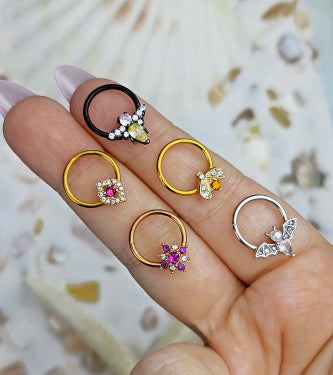
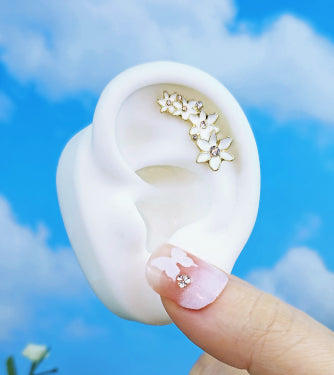
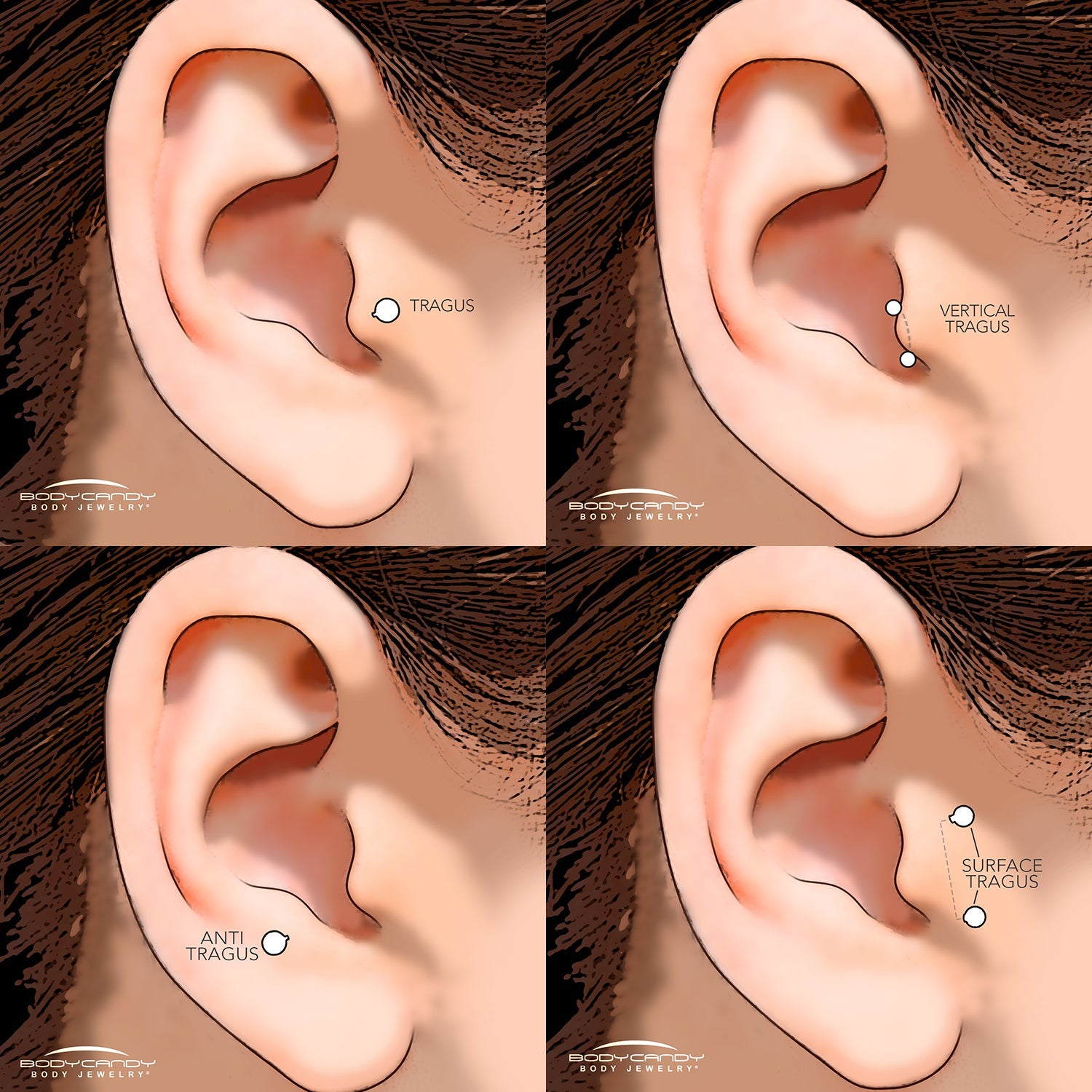
First of all, the tragus is the small nubbin of cartilage that sits between where the most forward part of the helix curve ends and above where the lobe begins. A single piercing is the most common look with jewelry often being a straight barbell or flat back labret, but a tiny captive bead ring can also make for a very striking appearance if your anatomy can handle it.

Double and Triple
If one is good, more can be better! If you use flat back labrets with very dainty ends and have enough tissue to support them, you can rock two or even three piercings in your tragus. This isn’t seen as often and looks fabulous. (Just remember not to get them all done at once! They need time and space to heal properly and getting them all at once will not allow for the inevitable post-piercing swelling.)

Vertical Tragus
You can turn the whole look upside down with this one! A vertical tragus literally goes vertically through the tragus, using a small, curved barbell. This one is highly anatomy dependent so it’s not for everybody but if you can rock this piercing, you’re going to be rocking a very unique look that will set you apart from the pack. This piercing often gets confused with another, somewhat similar piercing.

Forward Surface Tragus
This one doesn’t actually go through the tragus at all. A forward surface tragus is a surface piercing done just next to the ear, where the tragus meets the face. This should be performed with a staple-shaped surface bar and never a curved barbell. As a surface piercing, it is at risk of rejection and is considered a “long-term temporary” piercing. You can minimize the risk of scarring by creating the same look with a matched pair or dermal implants in the same. This piercing is also considered to be one of the more painful ones to get, owing to the sensitivity of the location. It looks so fabulous though, that the pain may easily be worth it.

Antitragus
This is also not actually in your tragus. The antitragus sits above the earlobe, at a ninety-degree angle from the tragus itself. As the cartilage is generally thicker, this can also be a more uncomfortable experience to get pierced. And much like the vertical tragus, it can be extremely anatomy-dependent so it’s not a look for everyone. Due to that, it’s also not common to see one in the wild so if you have the anatomy, don’t let a little discomfort and a longer healing time put you off. This piercing is unique looking and very versatile.

Whether you already have a tragus piercing (or two, or three) or you were wondering about the specifics of these piercings, you should now be armed with all the basic information you might need if you’re considering getting one. No matter which one you choose, you can be sure it will never go out of style! Happy piercing!