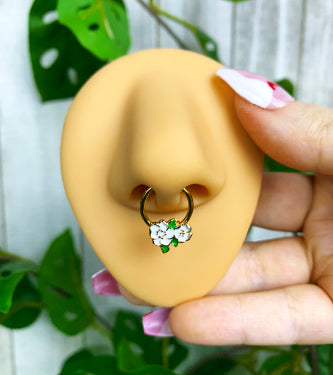


















So, you're thinking about getting a new piercing. Awesome! Whether it’s your very first time or you're adding another piece to your collection, you've landed in the right spot. There are so many types of body piercings out there, from the classic earlobe to more adventurous facial and body mods. This guide is your personal map to finding the styles that feel totally you.
Your Journey Into the World of Piercings
Deciding to get a new piercing is a pretty exciting first step. It's more than just picking out some jewelry; it’s choosing a piece of art that says something about who you are. But with a whole world of options, where do you even start?
That’s where we come in! Think of us as your experienced friend who knows the ins and outs—what to expect from the process, which jewelry works best for different spots, and how to pick a piercing you'll love for years to come.
Our goal is to pull back the curtain on the whole process. We want you to walk away feeling confident and ready to express yourself with some amazing body art. We'll go through everything together, from the most popular placements to some you might not have even heard of. If you're feeling a bit nervous, that's totally normal! Checking out our guide on what to expect for your first piercing can really help calm those butterflies and get you prepared.
So, What's Trending?
It's no secret that some piercings are way more common than others. The world of body modification definitely has its superstars, and the numbers back it up. Market research shows that ear piercings are the undisputed champion, making up a massive 46% of the global body piercing jewelry market. They offer a huge canvas for creativity, from a single lobe stud to a full-blown cartilage constellation.
Right behind ears, you've got a few other heavy hitters:
- Nose Piercings: These make up about 27% of the market. Styles like the simple nostril stud and the iconic septum ring are leading the charge here.
- Lip Piercings: Holding 12% of the market, options like the labret or medusa are a killer way to draw attention to your smile.
- Eyebrow Piercings: With a solid 9% share, this classic choice adds an instant edge to just about any look.
Seeing what's popular can be a great starting point, but always remember—the best piercing is the one that makes you feel fantastic. Now, let’s dive into the specifics and find your perfect match!
Exploring Every Type of Ear Piercing
Your ears are pretty much the perfect canvas for self-expression, offering more piercing real estate than almost anywhere else on your body. Creating a unique "ear-scape" or "curated ear" is all about mixing and matching different piercings to design a look that's 100% you.
Ready to dive in? Let's explore the hot spots, from the classics to the more daring placements.
This infographic gives you a quick visual tour of some of the most popular ear styles to get you inspired.
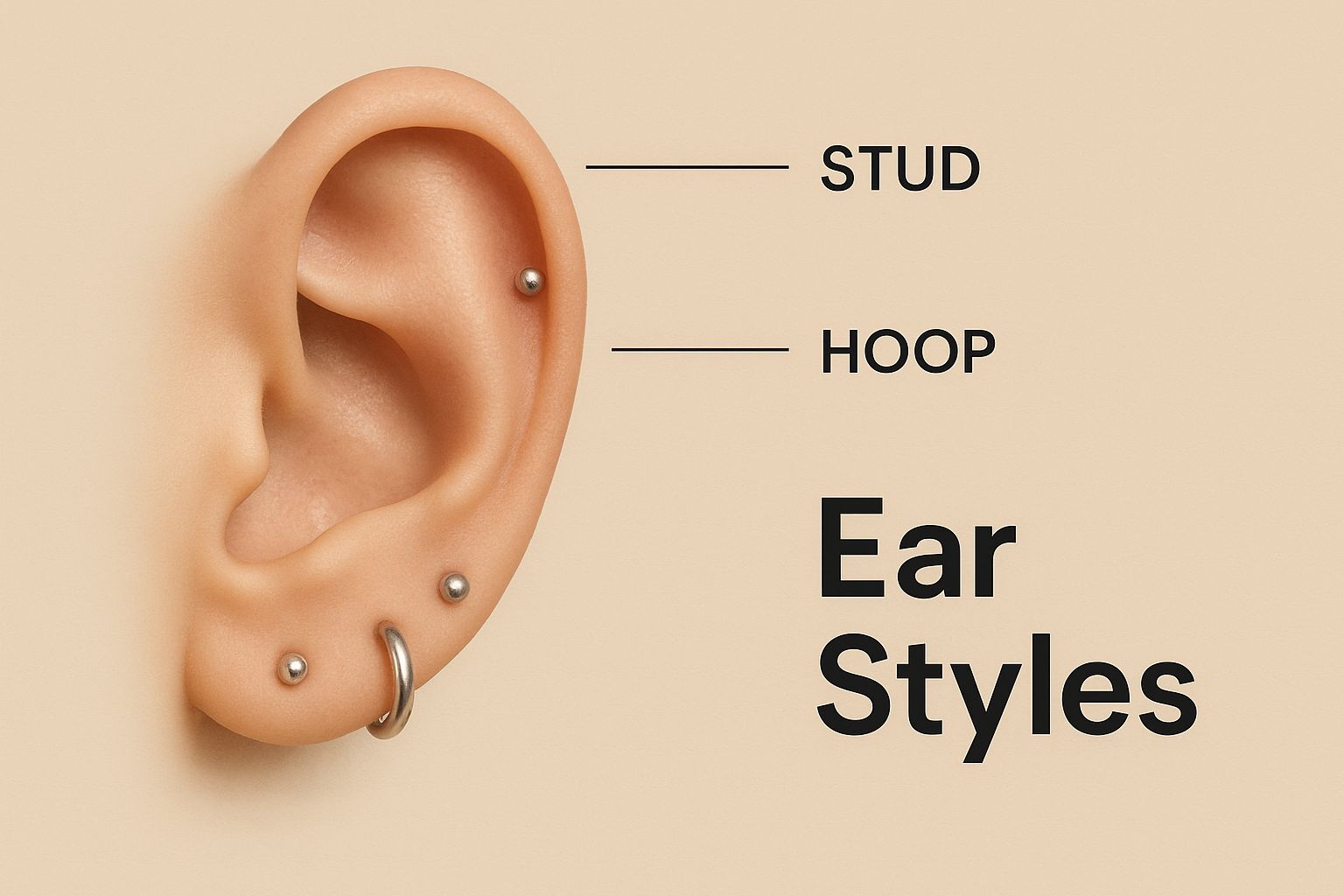
Seeing them all laid out really shows just how many creative combinations are possible when you start to play with different styles.
Before we get into the details, here's a quick chart to help you compare some of the most common options at a glance.
A Quick Look at Popular Ear Piercing Types
Use this chart to compare common ear piercings, their healing times, and the best jewelry to make them stand out.
| Piercing Type | Average Healing Time | Best Jewelry Styles |
|---|---|---|
| Lobe | 6-8 weeks | Studs, Hoops, Captive Bead Rings, Stacking Jewelry |
| Helix | 6-12 months | Studs, Seamless Hoops, Captive Bead Rings |
| Tragus | 6-12 months | Flat Back Studs, Small Hoops, Captive Bead Rings |
| Rook | 6-18 months | Small Curved Barbells, Small Hoops |
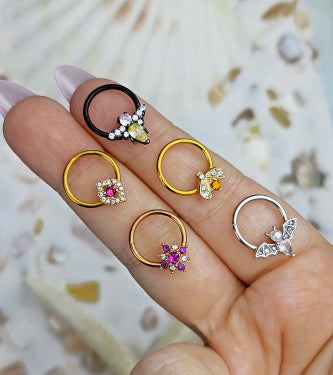
| Daith | 6-12 months | Seamless Rings, Clickers, Captive Bead Rings |
| Industrial | 9-12+ months | Long Straight Barbells (Industrial Bars) |
This should give you a solid starting point for planning your perfect ear setup. Now, let's break down what makes each of these piercings unique.
The Classic Lobe Piercing
This is where it all begins for most of us. The lobe piercing is the OG, placed in the soft, fleshy part at the bottom of your ear. Since it's not cartilage, it’s one of the least painful piercings you can get—often just a quick pinch.
Healing is also a breeze, usually taking only 6-8 weeks. Once healed, you can go wild with jewelry! Think classic studs, elegant hoops, or even stacking multiple lobe piercings for a cool, layered look.
The Ever-Popular Helix Piercing
Moving up the ear, we hit the helix, which is any piercing along the outer cartilage rim. A standard helix is typically on the upper part of the ear, and it's a super popular choice for adding a little edge. Because it’s through cartilage, expect a bit more of a sting than a lobe piercing and a longer healing time of 6-12 months.
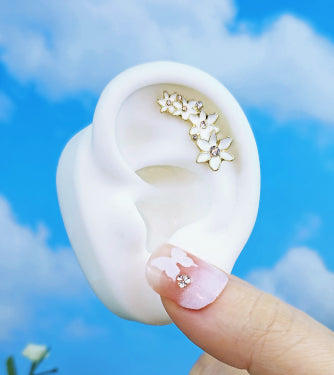
The best part about a helix? The styling possibilities are endless. Once it's fully healed, you can rock anything from a tiny stud to a seamless hoop or a captive bead ring.
The Snug and Stylish Tragus Piercing
The tragus is that little nub of cartilage that sits right in front of your ear canal. It’s a super cute and subtle spot that's perfect for a delicate stud or a small, snug hoop. The pain level is often described as a sharp pressure, but it’s over in a flash.
Because of its location, you'll need to be mindful of headphones and how you sleep during the 6-12 month healing period. A sparkly flat back stud looks amazing here and is incredibly comfortable for everyday wear.
Pro Tip: For cartilage piercings like the tragus, rook, and helix, flat back studs (also called labrets) are a game-changer. They sit flush against your ear, preventing snags and making it way more comfortable to sleep or wear headphones once you're healed.
The Distinctive Rook and Daith Piercings
Now we're getting into some seriously cool cartilage territory. These two are located in the inner folds of your ear, creating a really unique focal point.
-
The Rook: This piercing goes through the antihelix, which is the ridge of cartilage right above the tragus. It's perfect for a small curved barbell or a captive bead ring. It’s a bit more intense pain-wise and takes 6-18 months to fully heal.
-
The Daith: Placed in the innermost cartilage fold, the daith is a favorite for showcasing seamless rings and clickers. Some people even claim it helps with migraines! Healing can take anywhere from 6-12 months, and getting one really depends on your ear's specific anatomy.
For a deeper look into all the amazing ear placements, our photographic dictionary of modern ear piercings is the perfect visual guide to help you plan your next move.
The Bold Industrial Piercing
If you're looking to make a statement, the industrial piercing is your go-to. This is actually two separate helix piercings—one on the forward helix and one on the outer helix—connected by a single, long barbell.
Because it’s two piercings healing at once, the process requires extra care and can take anywhere from 9 months to over a year. Keeping it clean and avoiding pressure are absolutely key to a happy industrial piercing. Once it's healed, you can get creative with decorative industrial barbells that truly show off your style.
A Guide to Facial Piercing Styles
Ready to make your face the main event? Facial piercings are an incredible way to highlight your best features and seriously amp up your personal style. Unlike ear piercings that can be tucked away behind your hair, facial piercings are front and center. They make a bold statement about who you are.
Let's walk through some of the most popular piercing types for your face and find the one that’s calling your name.
The Timeless Nostril Piercing
The nostril piercing is an absolute classic, and for good reason. It's incredibly versatile, looks amazing on literally everyone, and can be styled to be super subtle or beautifully bold.
Placed right in the crease of the nostril, this piercing is pretty low on the pain scale for most people. Expect a quick, sharp pinch that might make your eyes water for a second, but it's over before you know it.
Healing typically takes around 4-6 months. During this time, you'll need to be gentle and stick to a strict cleaning routine. Once it's all healed up, the real fun begins!
- Studs: A simple gem or ball stud offers a delicate, minimalist sparkle.
- Hoops: A snug-fitting seamless ring or hoop gives off a chic, polished vibe.
- L-Shaped & Twist Studs: These are specifically designed to sit securely inside your nostril, so you don't have to worry about them falling out.
The Bold and Beautiful Septum Piercing
If you're looking for something with a bit more edge, the septum piercing is your answer. This one goes through the "sweet spot"—a small section of soft tissue in the wall between your nostrils, not the hard cartilage. When a professional piercer finds that spot, it’s surprisingly low on the pain scale.
The septum usually heals in about 2-3 months, which makes it one of the faster-healing facial piercings out there. One of its best features? It's easily hidden for work or those family events where you'd rather not show it off. Just flip your circular barbell or retainer up into your nose, and it completely disappears.
Jewelry options are where the septum truly shines, from simple clickers to ornate, dangling pieces.
A Look at Lip Piercings
Lip piercings are a fantastic way to draw attention to your smile. There are so many different placements to choose from, each with its own unique name and style.
Here are a few of the most popular choices:
- Labret: This is a single piercing placed just below the center of your bottom lip. It’s typically worn with a flat-back stud for maximum comfort.
- Monroe/Madonna: Named after the iconic beauty marks of Marilyn Monroe and Madonna, these are placed on the upper lip, off to one side.
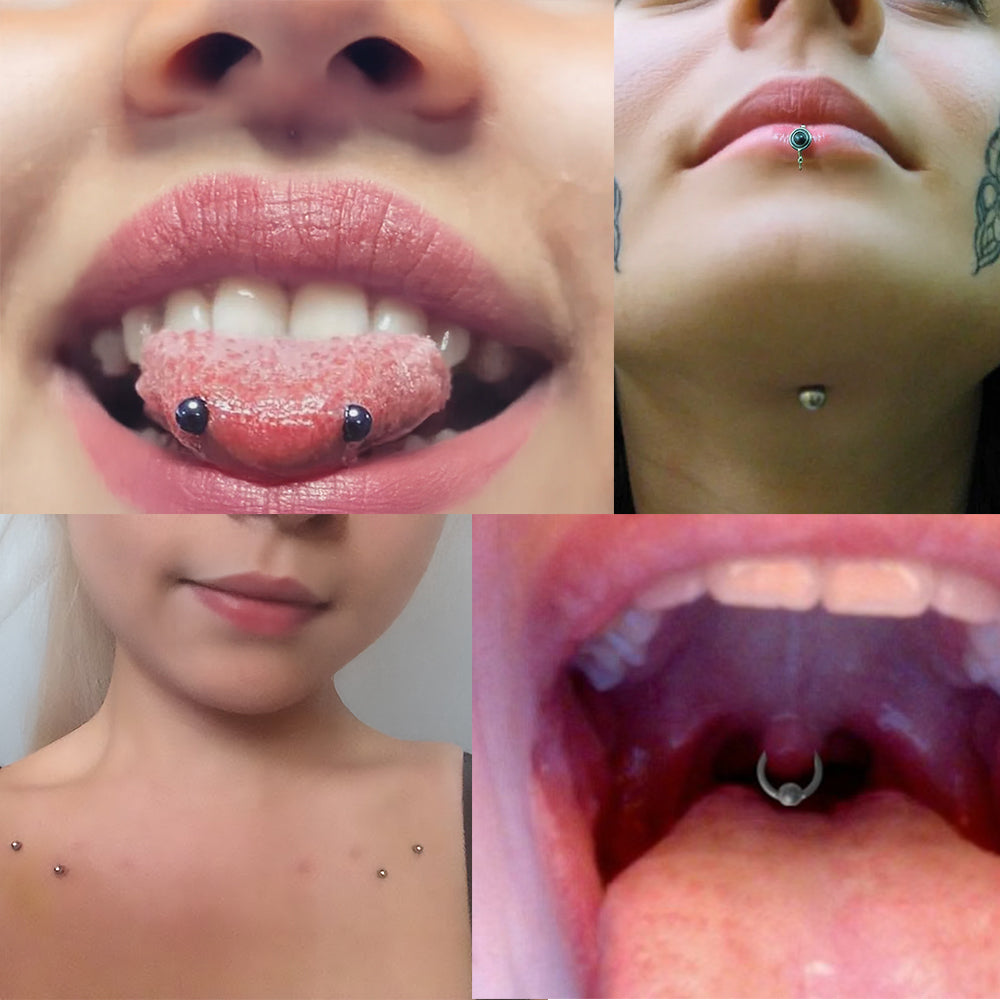
- Medusa (Philtrum): This piercing sits in the philtrum, that little divot right above the center of your upper lip. It looks incredible with a delicate gem stud.
Lip piercings generally heal in about 2-3 months. You'll need to be extra careful with what you eat and drink during the initial healing period to avoid irritation. Swelling is totally normal, so your piercer will start you off with a longer bar to accommodate it.
The Edgy Eyebrow Piercing
An eyebrow piercing gives off an effortlessly cool vibe. It’s what we call a "surface piercing," meaning it goes through a flat plane of skin rather than through cartilage or a lobe.
It's typically placed vertically towards the outer edge of the eyebrow and is considered one of the less painful facial piercings. Healing takes about 2-3 months. Because it's a surface piercing, it has a slightly higher chance of rejection or migration, so it's super important to avoid snagging it on clothes or towels.
Once it's healed, you can rock a curved barbell or a captive bead ring to complete your look.
Each of these facial piercings offers a different way to express yourself. For a complete visual overview and even more inspiration, check out our in-depth photographic dictionary of modern facial piercings. It’s the perfect resource to help you visualize what each style looks like and decide which one is right for you.
Taking the Plunge with Body Piercings
Ready to take your piercing game beyond the usual spots on your face and ears? Body piercings are an amazing way to show off your unique shape and add a little personal flair where it really counts. Let's dive into some of the most popular body piercing options, from timeless classics to more adventurous placements.

The Iconic Navel Piercing
First up, a true icon: the navel piercing. After a bit of a dip in popularity post-Y2K, the belly button ring has made a huge comeback. It's a timeless choice for anyone looking to highlight their midriff—the perfect accessory for crop tops and sunny beach days.
But here’s the thing: not all navels are created equal. A successful, traditional navel piercing really depends on your anatomy. Your piercer will be looking for a distinct "lip" or ridge of tissue at the top of your navel. This little flap is what allows the jewelry to sit comfortably without being pushed around.
If you don't have that classic navel shape, don't worry! You might be the perfect candidate for a "floating navel." This style uses a flat disc on the bottom instead of a traditional ball, letting the piercing heal beautifully without any unnecessary pressure. The only way to know for sure is to chat with a professional piercer to see what works best for your body!
Choosing Your Perfect Belly Ring
Once your navel piercing is fully healed—which can take 6-12 months, so patience is a must!—you get to explore the incredible world of belly rings. The options are practically endless, but they mostly fall into these categories:
- Classic Curved Barbells: These are your standard go-to, with a simple ball on top and a larger, often decorative, gem or ball on the bottom. They're simple, chic, and great for everyday wear.
- Dangle Belly Rings: Want to add some drama? A dangle ring features a charm or chain that hangs from the bottom ball, creating gorgeous movement as you walk. They're a fantastic way to make a statement.
- Reverse or Top-Down Rings: These flip the script completely. The decorative element sits at the top of the navel, with a simple ball peeking out from inside. It's a unique and super elegant look.
Whether you're into dazzling crystal belly rings or prefer minimalist gold pieces, there’s a style out there that will make you feel incredible.
The Bold and Alluring Nipple Piercing
Nipple piercings are a powerful and intimate way to adorn your body. They're a popular choice for all genders, celebrated for both their aesthetic edge and, for some, the added sensitivity they can bring. Getting one or both done is totally a personal choice.
The piercing process itself is incredibly fast, but it’s important to be ready for a sharp, intense pinch. The good news? It’s over in a matter of seconds! Healing can take anywhere from 6-12 months, and during this time, it's super important to keep them clean and be mindful not to snag them on clothes or loofahs.
Once they're all healed up, you can start having fun with a ton of cool jewelry options.
Jewelry Tip: For nipple piercings, you'll generally choose between barbells and rings. Straight barbells are often the go-to for initial piercings because they tend to move less and cause less irritation. Once you're healed, you can switch things up with captive bead rings, circular barbells, or even ornate nipple shields for a bolder statement.
Getting Creative with Surface Piercings
Looking for something a little more unconventional? Surface piercings and dermal anchors open up a whole new world of possibilities. Unlike traditional piercings that go all the way through a piece of tissue (like an earlobe), these sit just under the surface of the skin.
-
Surface Piercings: These use a staple-shaped bar that sits underneath the skin, leaving two visible ends on top. You can get them on the nape of your neck, on your hips (often called "hip dermals"), or along the collarbones. Just be aware they have a higher rate of rejection, so dedicated aftercare is essential.
-
Dermal Anchors: Also known as microdermals or single-point piercings, these are even more unique. A small base is anchored under the skin, leaving a single threaded post visible on the surface. You can then screw on all sorts of different decorative tops. Dermals give you incredible versatility and can be placed on almost any flat surface of the body.
Because these piercings require very specific techniques and aftercare, finding a piercer who is experienced in surface work is an absolute must. They'll help you pick a placement that works with your body's natural movement, giving your piercing the best possible chance at a long and happy life.
Choosing Your Jewelry and Mastering Aftercare
Getting pierced is just the beginning of the fun—the real journey starts with what you do next. Honestly, choosing the right jewelry and nailing your aftercare routine are the two things that will make or break your new piercing's healing process. This is where you lay the groundwork for a happy, healthy piercing you'll be obsessed with for years to come.
Think of it this way: your piercing is a tiny investment in your self-expression. You wouldn't put cheap, questionable gas in a brand-new car, would you? The same logic applies here. The metal your initial jewelry is made from is incredibly important because your body is literally building new tissue around it.
The Best Materials for a Happy Piercing
When you start looking at all the different types of body piercings and the jewelry that goes with them, you'll see a few specific materials mentioned over and over. These aren't just trendy choices; they're the ones professional piercers trust to be safe, comfortable, and biocompatible—which is just a fancy way of saying your body will likely welcome them without putting up a fight.
Here are the top players in the game:
- Implant-Grade Titanium: This is the absolute gold standard for initial piercings. It's totally nickel-free, feather-light, and the same quality used for medical implants. If you have sensitive skin, consider titanium your new best friend.
- Surgical Steel: A super popular and budget-friendly option, surgical steel is another solid choice. You'll want to look for specific grades like 316L or 316LVM to know you're getting a low-carbon, body-safe alloy. While it does contain a small amount of nickel, it's typically bound so tightly within the metal that it doesn't bother most people.
- 14k Gold: If you're all about that classic look, you can't go wrong with gold. Just make sure you're sticking to 14k or 18k solid gold that's nickel-free. Anything higher than 18k is actually too soft and scratches easily, while anything lower (like 10k) has too many other alloys mixed in that could irritate a fresh piercing.
- Bioflex/Bioplast: This is a flexible, medical-grade plastic that's incredibly comfortable and completely metal-free. It's an awesome option for tricky piercings (like a navel piercing during pregnancy) or for anyone with severe metal allergies.
The demand for high-quality body piercing jewelry is absolutely exploding. The market is projected to jump from about $8.64 billion in 2025 to over $13 billion by 2032. This huge growth is fueled by people just like you who are demanding safer materials for their mods. You can discover more insights about these market trends to see how the industry is stepping up its game.
Your Simple Guide to Piercing Aftercare
Alright, let's talk about the most crucial part: aftercare. Keeping your new piercing clean is totally non-negotiable if you want a smooth, drama-free heal. Don't stress, though—it's way simpler than it sounds.
Your piercer will give you the final word, but here's a basic, trusted routine that works for most types of body piercings.
- Grab a Sterile Saline Solution: You can find a pre-made sterile saline wound wash at any pharmacy. Whatever you do, don't try to mix your own saltwater at home. It's impossible to get the ratio right, and table salt has weird additives you definitely don't want anywhere near a fresh wound.
- Clean It 2-3 Times a Day: Just gently spray the saline solution directly onto the front and back of your piercing. If you want, you can also soak a clean, non-woven gauze pad in the solution and let it sit on the piercing for a couple of minutes.
- Pat It Dry (Gently!): Use a clean, disposable paper towel to softly pat the area dry. Steer clear of cloth towels—they can be a breeding ground for bacteria and love to snag on new jewelry. And that's pretty much it!
The Golden Rule of Aftercare: Less is more. Seriously. Your body is a healing powerhouse. Your only job is to keep the area clean and then let it do its thing without poking and prodding.
Common Aftercare Mistakes to Avoid
Knowing what not to do is just as important as knowing what to do. Dodge these common mistakes to keep irritation and infection at bay:
- No Harsh Chemicals: Step away from the alcohol, hydrogen peroxide, antibacterial soaps (like Dial), and ointments like Neosporin. These are all way too aggressive and will destroy the fragile new cells your body is working so hard to build.
- Don't Twist or Turn Your Jewelry: This is some seriously outdated advice! Twisting your jewelry just re-injures the delicate healing channel (called a fistula) and can drag bacteria inside. Just leave it alone.
- Don't Change the Jewelry Too Soon: Patience is a virtue, especially with piercings. Swapping out your jewelry before the piercing is fully healed is a recipe for irritation, closure, or even infection. Wait for your piercer to give you the official green light.
Answering Your Top Piercing Questions
Got some questions buzzing around in your head? You're definitely not alone. The world of body piercings is super exciting, but it’s totally normal for it to bring up a lot of curiosities. We’ve got you covered—this is your go-to spot for clear, straight-up answers to some of the most common questions we hear.
Let's clear the air so you can feel completely confident about your piercing journey. When it comes to your body, no question is too small!
What Is the Least Painful Body Piercing to Get?
This is probably the number one question on everyone's mind, and the answer is usually the classic earlobe piercing. Of course, everyone's pain tolerance is a little different, so what feels like a tiny pinch to one person might feel more intense for another.
But generally speaking, earlobes are the winner. The needle passes through soft tissue with fewer nerve endings compared to cartilage or other spots. It’s a super quick, sharp sensation that’s over in a flash, making it the perfect first step for anyone new to the piercing world or feeling a bit nervous.
How Do I Know If a Piercing Is Right for My Anatomy?
This is such a crucial question! It’s easy to fall in love with a picture of an industrial or a navel piercing online, but the reality is that some of the coolest types of body piercings depend entirely on your unique anatomy.
For example:
- A traditional navel piercing needs a distinct "lip" or ridge of skin to heal properly without putting too much pressure on the jewelry.
- An industrial piercing requires the outer folds of your ear to be shaped in a way that can support the long barbell without it pressing into the flat part of your ear.
- A rook piercing depends on having a prominent enough cartilage ridge for the piercer to go through.
The only way to know for sure is to have a consultation with a reputable, professional piercer. They are the experts! They can take one look at your anatomy and tell you not only what’s possible, but what will heal best and look amazing on you.
How Long Until I Can Change My Jewelry?
We totally get it—the urge to swap out that initial stud for a dazzling new piece is real! But patience is absolutely everything when it comes to a new piercing. You should never change the starter jewelry until your piercing is 100% fully healed.
Changing it too soon can cause a whole mess of problems, from irritation and swelling to a full-blown infection or even causing the piercing to close up. Healing times vary like crazy depending on the placement. An earlobe might be ready in 6-8 weeks, while something like a cartilage or navel piercing can take anywhere from 6 to 12 months to be fully stable.
Always, always listen to your piercer's specific advice on timing. They'll give you the green light when it's officially safe to start exploring all the amazing jewelry styles waiting for you.
Ready to start planning your next look? At Bodycandy, we have an incredible collection of high-quality jewelry for every piercing imaginable. Shop our full collection today and find the perfect piece to express your unique style.