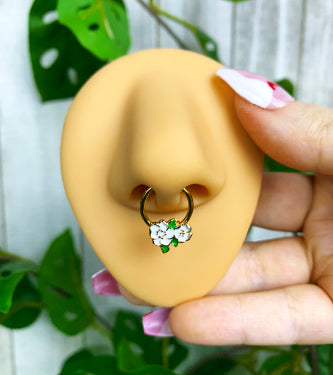


















You’re shopping for a new belly ring, nose stud, or septum clicker. You find one you love, then you hit the material line and pause.
Stainless steel.
That phrase shows up everywhere in body jewelry, and it can be weirdly confusing. One shop makes it sound like the obvious safe choice. Another warns you away from it. Then you see terms like 316L, surgical steel, and implant-grade, and suddenly buying a tiny piece of metal feels more complicated than it should.
If that’s where you are right now, you’re not overthinking it. Material matters. A lot. The metal sitting inside your piercing can affect comfort, healing, maintenance, and whether your skin stays chill or gets angry.
The good news is that stainless steel piercing jewelry isn’t some mystery club language. Once you know what the labels mean, it gets much easier to spot the difference between solid quality and cheap stuff with better marketing than manufacturing.
This guide keeps it real. You’ll learn what stainless steel is, why some grades are used for piercings and others shouldn’t be, what’s safe for a fresh piercing, and how to shop smarter without needing a metallurgy degree. If you’ve ever wondered whether that shiny steel ring is a smart buy or a future irritation issue, you’re in the right place.
Your Guide to Stainless Steel Piercing Jewelry
A lot of people start with the same thought. “It’s stainless steel. That sounds safe enough, right?”
Sometimes yes. Sometimes absolutely not.
That’s the part that trips people up. “Stainless steel” is a broad label, not a guarantee that a piece is right for your body. One steel barbell can be smooth, polished, and made to a piercing-safe standard. Another can look almost identical in a product photo and still be the kind of jewelry you would not want in a healing piercing.
Why the label gets messy
The confusion usually comes from three things:
- Marketing language gets loose. Sellers may say “surgical steel” without telling you the exact grade.
- Not all steel grades behave the same way. Some resist sweat, saliva, and daily wear much better than others.
- Finish matters as much as material. Even decent steel can be rough, scratched, or poorly threaded.
Practical rule: If a listing only says “stainless steel” and gives you zero detail, that’s not enough information for a new piercing.
What you actually need to know
You don’t need to memorize a chart of industrial codes. You just need a few solid filters:
- Know the grade. 316L is the common one you’ll see. 316LVM or ASTM F138 is the more serious label for implant-grade steel.
- Check the finish. A piercing-safe piece should look mirror-smooth, not cloudy, nicked, or jagged.
- Match the metal to the piercing stage. Fresh and healing piercings need stricter standards than healed ones.
- Be honest about your skin. If you’re nickel-sensitive, steel may still bug you even when it’s a higher quality grade.
That’s really the heart of it. Stainless steel piercing jewelry can be a great option, but only when you know what you’re buying.
What Exactly Is Stainless Steel Jewelry?
Stainless steel is an alloy, which just means it’s a blend of metals. It's similar to a recipe. Iron is the base, then other ingredients get added to change how the metal behaves.
The ingredient that gives stainless steel its whole identity is chromium. That’s what helps it resist rust and corrosion. Instead of breaking down easily like regular steel, stainless steel forms a thin protective oxide layer on the surface. That invisible layer is a huge reason it became so useful in medical tools, implants, and body jewelry.

Why regular steel and stainless steel aren't the same
Regular steel is strong, but it’s much more likely to rust or react badly when exposed to moisture. Your piercing is not a dry, controlled environment. It deals with sweat, shower water, skin oils, and sometimes saliva.
Stainless steel handles that much better because of that protective surface layer. In plain language, it’s built to stay stable under conditions that would make cheaper metals act up.
If you want a broader breakdown of metal types used in jewelry, BodyCandy has a useful overview in Material Girl. What Metal Body Jewelry Is Made Of.
How it ended up in the piercing world
Stainless steel didn’t start as piercing jewelry. It was invented in 1913 by Harry Brearley, and it first took off in industrial use. Later, it found its way into medical applications and then body jewelry.
That shift mattered a lot. Stainless steel gained traction in piercing during the 1970s and 1980s through pioneers like Gauntlet, and the move away from gold slashed jewelry costs by up to 80 to 90 percent compared to gold, which helped push piercing into mainstream fashion and subcultures alike, according to this history of stainless steel jewelry.
Stainless steel is a family, not one single thing
People often get confused by this. “Stainless steel” sounds like one exact material, but it’s really a group of related alloys.
That’s why one stainless steel piece can be fine for a healed nostril piercing, while another is a bad choice for a fresh navel piercing. The exact grade, polish, and manufacturing quality make the difference.
Stainless steel can be a smart pick. You just need the kind made for piercings, not the kind that only looks shiny in a listing photo.
Decoding the Steel Grades 316L vs The Rest
Once you start reading product descriptions, you’ll run into a little alphabet soup. 316L, 316LVM, maybe 304, and sometimes just the words “surgical steel” with no backup at all.
Here’s the simple version. The grade tells you a lot about how the metal may behave in your piercing.

What 316L means
316L surgical steel is one of the most common grades used in body jewelry. It’s a low-carbon stainless steel alloy with 16 to 18 percent chromium and 2 to 3 percent molybdenum, which is why it stands up better to sweat and saliva than 304 steel. Its passive oxide layer also helps limit nickel ion leaching to levels far below thresholds that typically cause allergic reactions, according to this breakdown of 316L surgical steel.
The L means low carbon. That matters because lower carbon helps the metal resist certain forms of corrosion better.
For you, that translates to a piece that’s generally better suited to body wear than lower-grade stainless options.
What 316LVM means
316LVM is basically the more refined relative in the family. The VM refers to vacuum melting. In piercing language, this is the kind of detail you want to see when a piece is meant for a fresh piercing or implant-grade use.
You may also see ASTM F138 linked with implant-grade steel. That’s the sort of specification that tells you the material is being held to a more specific standard than vague “surgical steel” wording.
Why 304 isn't the same deal
304 is still stainless steel. That’s true. But it doesn’t have the same corrosion resistance profile as 316L.
That means a 304 piece might sound acceptable if you’re only looking at the word “stainless,” but it’s not the same choice once you think about constant exposure to body conditions and long-term wear.
A quick cheat sheet
| Grade | What it means for piercings | Good use case |
|---|---|---|
| 316L | Common piercing-grade steel with strong corrosion resistance | Often used for healed piercings |
| 316LVM | Higher-purity implant-grade option | Better for initial piercings when certified |
| 304 | Stainless, but less resistant than 316L | Better skipped for piercing jewelry |
If you like seeing examples of 316L jewelry styles, BodyCandy has a post on annealed 316L surgical steel D-rings and more.
The phrase that should make you pause
If a listing says only “surgical steel” and nothing else, slow down.
That phrase gets used loosely. A better listing will tell you the actual grade, and for a fresh piercing, whether it meets an implant-grade standard.
The safest shoppers aren't the ones who memorize every code. They're the ones who refuse to buy jewelry with vague material labels.
The Good The Bad and The Bling Pros and Cons
Stainless steel gets popular for real reasons. It also has limits. Both can be true at once.
Why people love it
The biggest draw is value. The switch to stainless steel in the 1980s, helped along by companies like Gauntlet, cut jewelry costs by as much as 75 percent compared to gold, which made piercing more accessible and helped steel take over as a dominant material, according to this American timeline of initial piercing jewelry.
That affordability still matters now. If you like rotating styles, building a collection, or trying different looks for the same piercing, steel makes that easier.
Other upsides:
- Durability: It holds up well to daily wear.
- Style variety: Hoops, barbells, clickers, spikes, charms. Steel is everywhere.
- Shiny finish: Good steel has that crisp, bright look a lot of people want.
- Low fuss: It doesn’t demand high-maintenance babying once you’re wearing a quality piece in a healed piercing.
Where steel can be annoying
The biggest issue is nickel.
Even when the steel is high quality, steel alloys can still contain nickel. Some people wear it for years with zero trouble. Other people notice itching, redness, or a constant low-level irritation and realize their body just doesn’t love it.
That doesn’t always mean the jewelry is fake or awful. It may mean your skin is more sensitive.
A few honest tradeoffs
- Weight can be a plus or a minus. Some people love that solid feel. Others find it too heavy for certain placements.
- Not every steel piece is safe for healing. That’s where the generic-vs-implant-grade issue matters.
- Cheap steel can look fine online. Photos don’t show rough edges, poor polish, or bad threading very well.
So is it worth it
For a lot of healed piercings, yes. Stainless steel can be a practical, stylish, budget-friendly option.
For very sensitive skin, or for a brand-new piercing, you need to be more selective. Steel isn’t an automatic no. It’s just not an automatic yes either.
Stainless Steel vs Other Metals The Ultimate Showdown
When you’re choosing jewelry, you’re not picking in a vacuum. You’re usually deciding between steel and something else.
Maybe titanium if your skin is picky. Maybe gold if you want a luxe look. Maybe bioplast if you want something flexible. Here’s the side-by-side reality.

Material showdown table
| Material | Best For | Hypoallergenic? | Cost | Weight |
|---|---|---|---|---|
| Stainless Steel | Healed piercings, everyday style variety | Sometimes. Depends on sensitivity and grade | Lower | Medium |
| Titanium | Fresh piercings, very sensitive skin | More reliably hypoallergenic | Higher | Light |
| Gold | Premium styling, classic looks | Can be, if the alloy is suitable | Higher | Medium |
| Bioplast | Flexible wear, some comfort-focused situations | Metal-free option | Varies | Light |
Steel vs titanium
This is the matchup people ask about most.
Titanium usually wins for fresh piercings and for people who know their skin reacts to nickel. It’s the safer-feeling pick when you want to reduce the chance of metal sensitivity drama.
Stainless steel wins on price and style range. It gives you more options without hitting luxury-metal pricing, and for healed piercings, a lot of people wear it comfortably.
If your piercing is new and you’re torn between the two, titanium is usually the calmer choice. If your piercing is healed and you want something durable and affordable, steel makes a lot of sense.
Steel vs gold
Gold has a very different vibe. It’s classic, polished, and more jewelry-box than punk toolbox.
But gold isn’t automatically the safer option just because it’s expensive. Alloy quality still matters, and gold is softer than steel. That means it can be a little less carefree in everyday wear depending on the piece.
Steel tends to be the more practical daily driver. Gold is often the aesthetic splurge.
Steel vs bioplast
Bioplast is a different category entirely. If you want a metal-free option, or you need flexibility for comfort, bioplast can be useful.
That said, it doesn’t give the same crisp, polished look as steel, and a lot of people still prefer metal for long-term style. Steel usually wins on appearance if you want shine, structure, and that classic piercing-jewelry feel.
A fast decision guide
Go with stainless steel if:
- You want a budget-friendlier metal look
- Your piercing is healed
- You like heavier, sturdier jewelry
- You want lots of style options
Go with titanium if:
- Your piercing is brand new
- Your skin is easily irritated
- You’ve reacted to steel before
- You want the lightest feel
Go with gold if:
- You want a premium aesthetic
- You’re building a curated jewelry look
- You don’t mind paying more for the vibe
Go with bioplast if:
- You want flexibility
- You prefer a non-metal option
- Comfort is your top priority
You don't need one forever metal. A lot of people wear one material during healing and switch to another once the piercing settles down.
Is Stainless Steel Safe For Your New Piercing?
This is the question where people need the clearest answer.
A fresh piercing is not the same as a healed piercing. A healing piercing is basically dealing with a controlled wound around jewelry. That means the metal and the finish have to be a lot more trustworthy.
The short answer
For a new piercing, generic stainless steel is not a good enough label.
A key point of confusion for shoppers is the difference between broad “stainless steel” wording and certified implant-grade surgical steel such as ASTM F138. The Association of Professional Piercers recommends only implant-grade materials with a mirror-polished finish for fresh piercings to reduce tissue irritation and support safer healing, as explained in this FAQ on surgical steel for piercings.
Why the finish matters so much
A fresh piercing is extra easy to irritate. If the surface is rough, scratched, or poorly threaded, that jewelry can drag, scrape, or create tiny points of friction while the tissue is trying to settle.
That’s why professional standards care about more than just the alloy name. A smooth finish matters because your body can feel the difference, even if your eye can’t.
What to look for in a fresh piercing
If you’re choosing jewelry for a brand-new piercing, check for:
- Implant-grade wording, not just “stainless steel”
- ASTM F138 or 316LVM if steel is being used
- Mirror-polished finish
- Professional installation, especially for threaded jewelry
If you’re navigating metal sensitivity questions, BodyCandy has a related guide on allergic reactions and piercing care and what metals and materials are right for you.
The realistic take
Can steel be safe in a new piercing? Yes, but only when it’s the right steel, made to the right standard, with the right finish.
If you can’t confirm that, don’t assume. That’s the whole game.
A lot of irritation stories start with jewelry that sounded legit because the listing used a familiar phrase. “Surgical steel” sounds reassuring. But if there’s no actual grade, no implant standard, and no sign of a polished finish, that label doesn’t protect your piercing.
If you're unsure, choose the stricter option
When in doubt, go more cautious, not less. Your piercing will thank you for it.
If the piece is for a fresh piercing and the material details are fuzzy, skip it. Save the cute mystery metal for a healed piercing if you really want to experiment. Healing time is not the moment to gamble on vague product copy.
How to Choose Quality Stainless Steel Jewelry
At this point, you stop shopping with vibes alone and start shopping with a checklist.
A quality stainless steel piercing piece should look clean, feel smooth, and tell you what it’s made of without making you play detective.

Start with the surface
High-quality manufacturing calls for a mirror-smooth finish with surface roughness under Ra <1 µm and burr-free edges. Poorly finished steel with microcracks can raise corrosion risk and increase nickel release by over 90 percent, which can irritate the piercing and slow healing, according to this manufacturing note on stainless steel piercing quality.
That sounds technical, but the shopping takeaway is simple.
Look for jewelry that appears:
- Glossy, not cloudy
- Smooth around the ends and edges
- Free of pits, scratches, or dull patches
- Evenly finished all over
If a piece looks rough in the product photo, it won’t magically feel better in your piercing.
Check the threading
Threading matters more than people think.
Internal threading is usually kinder because the part passing through the piercing is smoother. External threading can be more irritating, especially if the finish isn’t excellent.
A few things to watch:
- Internally threaded or threadless is usually a better sign
- Visible rough screw ridges on the wearable part are not ideal
- A vague listing with no threading info is worth questioning
Read the product description like a skeptic
Good listings tend to tell you exactly what you’re getting.
Look for terms like:
- 316L
- 316LVM
- implant-grade
- ASTM F138
- mirror-polished
Be more cautious with phrases like:
- surgical steel with no grade
- stainless metal
- allergy-friendly with no specifics
- plated steel with no finish details
One option you’ll find online is BodyCandy, which offers jewelry labeled by material category, including steel pieces, so you can compare listings based on what they disclose rather than just buying off the first cute photo.
Be smart about colored steel
Colored steel can look amazing, but not all color finishes are equal.
A well-applied PVD coating is different from cheap paint-like plating. You want color that looks intentional and even, not thick, flaky, or gummy around seams and threads.
Ask yourself:
- Does the finish look smooth and uniform?
- Are there weird chips or patchy spots?
- Does the seller explain what the coating is?
Here’s a quick visual if you want to see steel jewelry up close before buying styles like this for yourself.
A simple quality checklist
Before you hit buy, run through this:
- Material listed clearly
- Grade included
- Finish looks mirror-smooth
- Threading style disclosed
- No rough edges in photos
- Fresh piercing use only if implant-grade is confirmed
If the seller hides the important details, that's a detail too.
Caring For Your Steel and Solving Common Problems
Once you’ve got a good stainless steel piece, keeping it happy is pretty straightforward. The trick is not overdoing it.
Daily care that keeps sense
For healed piercings, your goal is simple. Keep the jewelry and the area clean without turning care into a whole chemistry experiment.
A practical routine:
- Rinse in the shower. Warm water helps wash away skin oils and buildup.
- Use mild soap carefully if needed. Rinse well so nothing lingers on the jewelry.
- Dry gently. Pat, don’t scrub.
- Clean the jewelry during changes. If you remove it, give it a proper wash before putting it back.
Steel is low-fuss, but it still collects normal body gunk. That doesn’t mean the metal is failing. It means you’re a human with skin.
If your piercing gets cranky
Redness, itching, or soreness doesn’t always mean infection. It can come from a few different things.
Nickel sensitivity
If the irritation keeps coming back with steel jewelry, your body may not love the nickel content. In that case, switching to titanium is often the easier move.
Poor finish or bad fit
Sometimes the issue isn’t the steel grade. It’s a rough edge, bad threading, or a piece that moves too much.
If the jewelry feels scratchy going in, catches on tissue, or looks worn down, stop wearing it.
Build up and neglect
A healed piercing can still get irritated if it’s dirty, bumped, or left with old buildup around the jewelry. A calm cleaning reset often helps.
When to stop troubleshooting at home
Get help from a professional piercer if:
- The irritation keeps returning
- The jewelry feels too tight or too loose
- You see obvious damage on the piece
- The piercing is fresh and getting worse, not better
You don’t have to force steel to work for you. If your body likes titanium better, that’s not you failing at piercings. That’s just good information.
A stainless steel piercing can be stylish, durable, and easy to wear. It just works best when the grade is right, the finish is smooth, and the jewelry matches your skin and healing stage.
Ready to switch up your look or find a piece that matches your piercing stage better? Browse BodyCandy for body jewelry styles, compare materials carefully, and pick pieces with the kind of details your piercings deserve.