



















There are a lot of myths that continue to haunt piercing-specific environments like a bad smell that won’t quite go away. Today we’re going to cover a few more of them so you can avoid the dangers that lurk within them.
MYTH #1: It only takes a few weeks to heal.

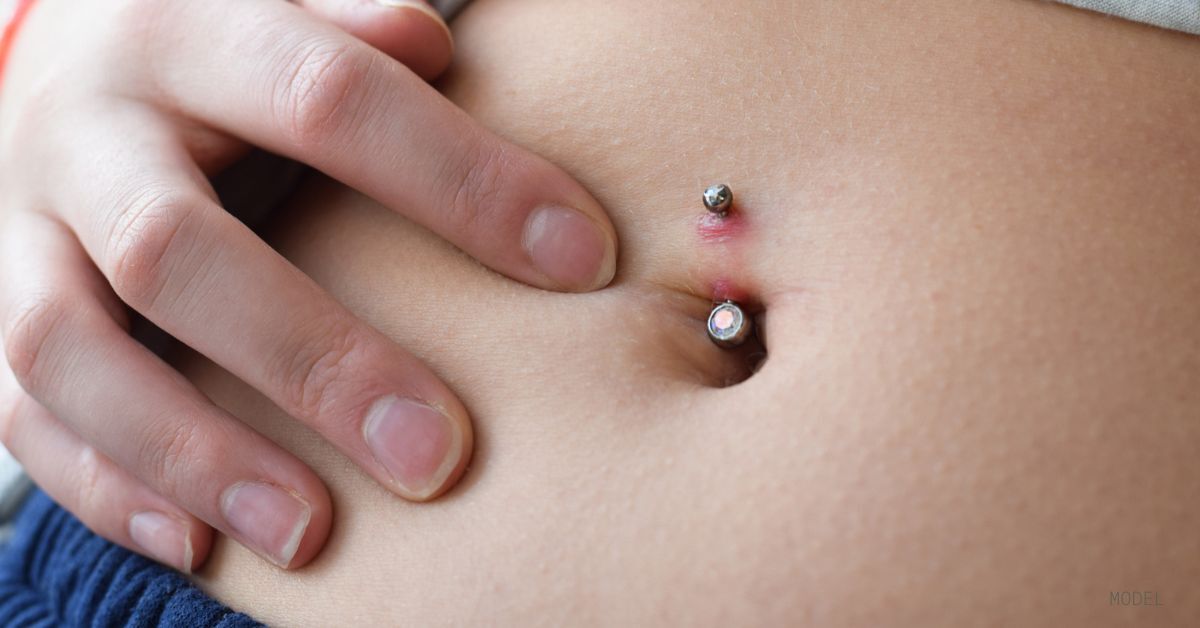
FACT: Whatever social media told you the healing time is for your piercing, it’s probably incorrect. Your lobes may possibly heal in six weeks, but it is unlikely that your nostril will be fully healed in three months. Everyone’s body is different, and healing depends on your health and immune system and a lot of different factors, but one thing that healing requires is TIME. If your piercing went through cartilage, it will take longer to heal than one that went through skin. Some piercings (such as navel, nipples, or a snug) can take up to a year while cheek piercings (dimples) can take even longer. Healing a piercing is about patience. Don’t rush it and don’t expect it to happen overnight.
- - - - -
MYTH #2: Titanium and surgical steel are the same.

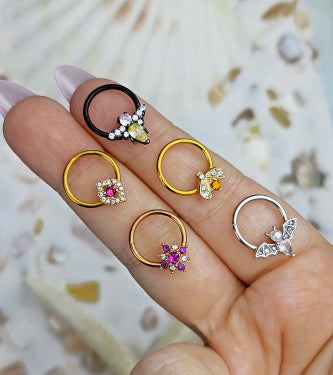
FACT: They are definitely different. There is a thing called ASTM F-136 titanium. This is an implant grade titanium that is body safe and free of allergens. (Pro Tip: If you have concerns that your piercer is selling shoddy titanium, ask to see a mill certificate. They should be able to produce it for you. Also, if your titanium is black, don’t get pierced with it. Titanium cannot be anodized to a true black. If it’s black titanium, it has been coated and getting pierced with coated jewelry is a road to problems.) Stainless steel does have the potential to contain allergens like nickel, and it is heavier than titanium. It’s okay for healed piercings but it is wholly inappropriate for getting pierced with. If someone offers to pierce you with stainless steel jewelry, leave. Don’t let them pierce you.
- - - - -
MYTH #3: Jewelry threading doesn't really matter.

FACT: Yes, this also matters. Internally threaded jewelry has the threading inside the body of the jewelry so that the rough portion never goes inside of your fistula. Externally threaded jewelry has the threading inside the end of the jewelry (ball end or charm end) so the rough portion goes through the fistula. This can harm fragile cells that are still healing and cause damage. Again, if you are offered externally threaded jewelry to get pierced with, leave. (Threadless jewelry has a small wire on the charm/ball end to hold it in place. No threading = no issue)
- - - - -
MYTH #4: You can clean a piercing with hydrogen peroxide or alcohol.

FACT: You may have read that you can clean your new piercing with rubbing alcohol or peroxide. This is a lie. Either one is way too harsh to be putting on a fresh, healing piercing. It will dry out the skin, slow the healing process, and mess with your body’s natural defenses. Clean that piercing with sterile saline wound wash solution. It is the gold standard of aftercare methods, and your piercer should have told you that. If they told you to use peroxide or rubbing alcohol, they are not a trustworthy piercer, and you should not go back there.
Hopefully this has dispelled a few more piercing myths that need to fade back into the fog of bad ideas from history. Piercing is really composed of a few simple concepts: good piercer, correct jewelry, correct aftercare, correct expectations. When you have all four of those together, you have the recipe for a beautiful and well-healed piercing. If you remove any of the four, you have a recipe for disaster. As any good chef would tell you, read the recipe before you get cooking. Happy piercing!