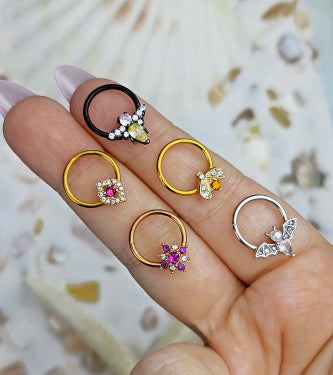


















You’ve made it through your tummy tuck, and you're loving your new silhouette. Now you’re thinking about adding a little sparkle with a navel piercing to really show it off. We totally get it!
So, can you get your belly button pierced after a tummy tuck? The short answer is yes, you absolutely can. But the most important word in this whole process is patience.
Your Post-Surgery Piercing Plan
Getting a navel piercing after an abdominoplasty is an amazing way to accessorize your new look, but this isn't something you can rush. Your body has been through a major surgical procedure, and giving it time to heal isn't optional. This is about more than just a scar fading—we're talking about deep tissue repair, re-established blood flow, and skin health.
Key Takeaway: The absolute bare minimum you need to wait is one full year. Trying to pierce it sooner can lead to some serious problems like migration, rejection, or a nasty infection. The last thing you want is to jeopardize the beautiful results of your surgery.
The biggest hurdle is making sure the blood supply to your new belly button is back to normal. A tummy tuck changes how blood flows to the navel area, and it takes a long time for those pathways to get strong again. Piercing delicate tissue with poor circulation is just asking for trouble.
To give you a clearer picture, we've put together a quick reference table.
Tummy Tuck and Navel Piercing Quick Facts
Here's a quick summary of what you need to know before planning your piercing.
| Consideration | Key Takeaway |
|---|---|
| Minimum Wait Time | 12 months is the absolute minimum, but 18 months is often better. |
| Main Healing Factor | Blood flow must be fully restored to the navel tissue to support healing. |
| Primary Risks | Piercing too early can lead to infection, migration, and piercing rejection. |
| Surgeon's Role | You must get clearance from your plastic surgeon before seeing a piercer. |
| Piercer's Role | A qualified piercer will assess your navel's anatomy and tissue health before agreeing to pierce. |
Think of this table as your starting point. It’s a good overview, but your body’s unique healing journey will determine the final timeline.
The Official Waiting Period
So, what's the magic number? While everyone heals at their own pace, the standard recommendation for a navel piercing after a tummy tuck is a wait of 12 to 18 months. This isn't just a random number; it comes from years of clinical observation by surgeons and professional piercers.
As you'll see in many cosmetic surgery and piercing guidelines, trying to pierce before that one-year mark puts you at a huge risk for rejection, where your body literally pushes the jewelry right out of your skin. It's a waiting game, but a successful, beautiful piercing is worth it.
Understanding the Post-Surgery Healing Timeline
So, you’re feeling fantastic after your tummy tuck and are already picturing that perfect, sparkly navel ring. We totally get the excitement, but let's have some real talk about why hitting the pause button is the absolute best thing you can do for your body right now. When it comes to getting a navel piercing after a tummy tuck, patience isn't just a virtue—it's a requirement.
Your body just went through a major transformation. During an abdominoplasty, a surgeon doesn't just remove skin; they essentially re-sculpt your entire midsection. This almost always involves detaching and repositioning your belly button, which completely changes its underlying tissue and blood supply. Trying to introduce a piercing into this delicate, healing area is a recipe for heartbreak, and can easily lead to nasty infections, migration (where the jewelry starts to move), or outright rejection.
Why Your Body Needs Time
Think of your new navel as a brand-new garden. You have to let the soil settle and the roots take hold before you can plant anything. After surgery, your body kicks off a massive repair project, rebuilding blood vessels and nerve pathways from the ground up. It’s a slow, methodical process.
That standard 12 to 18-month waiting period isn't just some arbitrary number; it's the time surgeons and experienced piercers agree on. This gives your scar tissue enough time to fully mature and ensures blood flow is strong enough to support the healing of a new piercing.
This timeline really puts the journey from surgery to piercing into perspective.

As you can see, the healing is by far the longest and most crucial stage. The piercing itself is the very last step, only to be considered after a long and successful recovery.
Piercing too early is like trying to build a house on a wet foundation. You need to wait until the tissue is strong, stable, and has a great blood supply to avoid complications. A healthy piercing needs a healthy canvas.
So, how do you actually know when your body is good to go? There are a few key signs to watch for.
Signs You Are Ready to Get Pierced
While your surgeon is the only one who can give you the official all-clear, you can definitely keep an eye on your own healing progress. Here are the big indicators that your navel is likely ready for its new bling:
- Full Sensation Has Returned: Gently touch the skin around your belly button. If it still feels numb or you get that weird "pins and needles" tingle, your body is still working on regenerating nerves. You want to feel normal sensation.
- The Scar Tissue Is Soft and Pale: A fresh, healing scar is typically reddish, firm, and a bit raised. A fully mature scar will be flat, soft to the touch, and will have faded to a pale color much closer to your natural skin tone.
- There’s No Lingering Swelling: After a year or more, any significant post-op swelling should be long gone. The entire area should look and feel completely settled.
- You Have Your Surgeon's Blessing: This is the absolute most important checkpoint. Your surgeon knows exactly what was done during your procedure and how your specific healing is progressing. Their approval is non-negotiable.
It's also super helpful to know what a typical piercing healing journey looks like. To get a better idea of what to expect, check out our guide on the healing times for popular piercings. It's a great resource to have bookmarked for later
Your Pre-Piercing Safety Checklist
You've healed up, you're feeling great, and you’re ready to add that final sparkle to your new look. It's an exciting moment! But before you book that piercing appointment, we need to run through one last, super-important safety check.
Getting a navel piercing after a tummy tuck isn't quite the same as a standard piercing. Taking a few extra precautions now is the key to getting the beautiful, hassle-free result you’ve been dreaming of.
Getting the Green Light From Your Surgeon
First things first: you need to see your plastic surgeon. This is absolutely non-negotiable. No one on the planet knows your new tummy's internal structure—the blood supply, the scar tissue, the nerve endings—better than the surgeon who performed your procedure.
Think of this as your final post-op check-in. It's your chance to get a definitive medical "all clear" before you let a needle anywhere near your new navel. Come to this appointment ready with a few questions. You're not just asking for permission; you're gathering crucial info for your piercer.
Here's what you should cover:
- "Is the blood supply to my navel robust enough to heal a new piercing?"
- "Is my scar tissue mature and stable enough to be pierced?"
- "Has sensation returned sufficiently in and around my navel?"
- "Are there any specific areas around my belly button that my piercer needs to avoid based on my surgery?"
A confident "yes" from your surgeon is the ultimate peace of mind. It means your body is medically ready for the next step.
Pro Tip: Ask your surgeon if they can jot down a quick note or send an email confirming you're cleared for a navel piercing. It's not always required, but showing up to your piercer with that in hand proves you’ve done your homework and gives them extra confidence.
Understanding Your New Anatomy
A tummy tuck doesn’t just make your stomach flat; it often redesigns your belly button entirely. Its depth, shape, and even position can be completely different now. What might have worked for a piercing pre-surgery may not be suitable anymore.
So, take a good, honest look at your new navel. Get familiar with it!
- Is it deeper or shallower? A very deep navel might need jewelry with a longer bar. A really shallow one, on the other hand, might not be able to support a traditional piercing at all.
- What's the shape? Is it a narrow vertical slit, a round circle, or more of a wide oval? The shape will be a huge factor in placing the jewelry so it sits flat and looks fantastic.
- Where is the scar tissue? Gently feel the area around your navel. You'll want to avoid piercing directly through any thick, rigid scar tissue, as it can make healing a real struggle.
This isn't about trying to diagnose anything yourself. It's about becoming an expert on your own body. When you walk into that piercing studio, you'll be able to have a much more productive conversation with your piercer, pointing out what you've noticed and working with them to find the perfect spot for your unique, beautiful new navel.
Choosing Your Piercer and First Jewelry
Okay, so your surgeon gave you the green light. You're officially ready to find the artist who will help you reclaim your navel with some amazing new jewelry!
This is the most critical step, and it’s not the time to wander into the nearest mall kiosk. A navel piercing after a tummy tuck is a completely different ballgame. The tissue has been surgically altered, and you absolutely need a pro who understands the new landscape of your belly button.
How to Find Your Piercing Pro
Finding the right person for the job is part research, part gut feeling. You’re looking for someone with a deep respect for safety and a portfolio that proves their skill.
Start your search by looking for piercers who are members of the Association of Professional Piercers (APP). This isn't just a fancy title; it shows a commitment to the highest standards of safety and ongoing education in the industry.

Once you have a few studios in mind, it's time to play detective. A true professional will welcome your questions.
- Ask to see their work. Look for a portfolio with plenty of healed navel piercings. Bonus points if they have photos of clients with post-surgical anatomy similar to yours.
- Be direct about your history. Ask them straight up: "Have you pierced a navel on someone who's had a tummy tuck before?" Their response will tell you everything you need to know.
- Watch how they assess you. A great piercer won't just say "yes." They'll want to look at your navel, check the tissue's elasticity and blood flow, and discuss how your scar might impact placement.
Red Flag Warning: If a piercer seems dismissive of your tummy tuck history, doesn't want to examine your anatomy, or pressures you to get pierced right then and there, turn around and walk out. Your safety is non-negotiable.
The Best Jewelry for a Fresh Piercing
You’ve found your expert—now for the fun part! Picking out that first piece of jewelry is exciting, but for this initial piercing, function trumps fashion. Your primary goal is a smooth, irritation-free healing process.
The undisputed champion for initial piercings, especially on sensitive or post-surgical tissue, is implant-grade titanium.
I can't stress this enough. Materials matter immensely when you’re trying to heal. Here's a quick breakdown of what to look for and what to avoid.
Initial Jewelry Material Showdown
| Material | Why It's Great (or Not) | Best For |
|---|---|---|
| Implant-Grade Titanium (ASTM F-136) | The Gold Standard. It's completely biocompatible and 100% nickel-free, minimizing the risk of allergic reactions and irritation. | Everyone, especially post-tummy tuck clients and those with sensitive skin. |
| 14k-18k Solid Gold | A good, nickel-free option if it's from a reputable brand. It's beautiful but can be softer and more expensive than titanium. | Healed piercings or initial piercings for those who prefer gold and are certain it's nickel-free. |
| "Surgical" Steel | Avoid for initial piercings. This is a mystery metal. It can contain significant amounts of nickel, a very common allergen that can cause major healing complications. | Down-the-road jewelry choices once you're fully healed and know you don't have a nickel sensitivity. |
| Sterling Silver / Plated Metals | Absolutely not. Silver tarnishes and plated jewelry flakes, both of which can lead to severe irritation and infection in a fresh piercing. | Never for a new or healing piercing. Save these for your ears, maybe. |
For a new navel on a reconstructed tummy, implant-grade titanium is simply the safest bet to get your healing journey started on the right foot.
Your piercer might also suggest a specific jewelry style called a "floating" navel curve. This is a game-changer for many post-tummy tuck bodies. Instead of a traditional ball at the bottom, it has a small, flat disc. This clever design prevents the jewelry from pressing into the scar tissue or the bottom of your navel, which can be a huge source of irritation.
It’s a subtle difference that can make or break your healing experience. To get a better sense of how the different parts of navel jewelry work, check out our deep dive into the anatomy of a belly ring.
Post-Tummy Tuck Navel Piercing Aftercare
Alright, the hard part is over and your new navel piercing is finally in! Now the real work begins: aftercare. Healing a piercing on tissue that’s been through a tummy tuck is a different ballgame. The area is more delicate and has a unique history, so it needs a bit of extra TLC.
Think of your new piercing as a serious commitment. If you treat it right, it'll heal up beautifully and become that perfect finishing touch to your new look. Let's get into exactly what you need to do to make sure the healing process is smooth and free of irritation.

Your Essential Cleaning Routine
Keeping your piercing clean is the golden rule, but it’s easy to go overboard. Over-cleaning or using the wrong stuff can cause way more problems than it solves. The key here is to be gentle but consistent.
For the next few months, your absolute best friend is a sterile saline solution. You'll want to clean your piercing twice a day—once in the morning and once at night. Don't go crazy and clean it more unless your piercer specifically tells you to.
Here’s the super simple routine:
- Wash your hands first! Seriously. Use soap and water before you even think about touching your piercing.
- Spray the saline solution directly on the piercing, getting the top and bottom entry points nice and saturated.
- Gently pat the area dry. A clean, disposable paper towel is perfect for this. Stay away from bath towels; they’re a magnet for bacteria and can easily snag your new jewelry.
Pro Tip: Whatever you do, don't twist or turn your jewelry! This is old, outdated advice that can actually introduce bacteria into the piercing and tear the delicate new tissue (the fistula) that's trying to form. Just spray, dry, and let your body handle the rest.
What to Avoid During Healing
Knowing what not to do is just as critical as your cleaning routine. Remember, a new piercing is an open wound, and you need to protect it from anything that could cause a fuss.
For the entire healing period—which can easily take 6-12 months or even longer after a tummy tuck—you must avoid these things:
- Harsh Chemicals: This means no rubbing alcohol, no hydrogen peroxide, and absolutely no antibacterial soaps like Dial or ointments. These are way too aggressive and will just destroy the healthy new cells your body is working so hard to create.
- Submerging Your Piercing: Put your swimming and hot tub plans on hold. Pools, lakes, oceans, and jacuzzis are basically giant tubs of bacteria just waiting to cause a nasty infection. Quick showers are totally fine!
- Tight, High-Waisted Clothing: I know, those new high-rise jeans are calling your name, but they'll have to wait. Constant friction and pressure from tight waistbands are the number one cause of irritation, migration, and outright rejection for a navel piercing after a tummy tuck. Stick with low-rise bottoms and loose, flowy tops for a while.
Recognizing Red Flags
A little bit of redness, some minor swelling, and a clear or whitish fluid (this is lymph, not pus!) are all totally normal in the first few weeks. But you need to know the difference between "normal healing" and "uh oh, something's wrong."
Be on the lookout for these warning signs:
- Thick, yellow, or green discharge (that's pus)
- A funky or foul odor coming from the piercing site
- Pain, redness, and swelling that gets worse after the first week
- Skin around the piercing that feels hot to the touch
If you spot any of these signs, don't panic and definitely don't take the jewelry out. That can trap an infection inside. Call your piercer or a doctor right away. They'll know what's up and can guide you on how to fix it.
For even more aftercare goodness, our deep dive on H2Ocean products is a fantastic resource for keeping that new piercing happy and healthy.
Answering Your Post-Tummy Tuck Piercing Questions
Thinking about getting a navel piercing after your tummy tuck? It's completely normal to have a million questions running through your mind before you make the leap. This is a big deal, and you should feel totally confident before you even walk into a piercing studio. We've put together the questions we hear most often to help you get the answers you need.
Will It Hurt More Than a Regular Navel Piercing?
This is the big one, isn't it? The honest answer is: maybe, but maybe not! It all comes down to how much feeling has returned to your belly button area since the surgery.
Some people actually report less pain because the nerve endings in the area haven't fully reconnected. For others, who have all their sensation back (or even heightened sensitivity), it might feel a little more intense. The real wildcard here is scar tissue. Piercing through that tougher, denser tissue can definitely create more of a pressure sensation than piercing through regular, soft skin.
The Bottom Line: Pain is totally subjective. The tissue is different, yes, but that doesn't automatically mean it's going to hurt more. The best thing you can do is find a piercer who has experience with post-surgical piercings. Their technique will make all the difference in your comfort level.
How Does Scar Tissue Affect the Piercing?
Scar tissue is the single biggest factor to consider when getting pierced after an abdominoplasty. A great piercer will do everything they can to avoid going directly through the thickest, most dense parts of the scar.
Here's what you need to know about piercing around scar tissue:
- Healing Can Take Longer: Scar tissue doesn't have the same rich blood supply as regular skin. This can sometimes mean your healing journey will be a bit slower than average. Patience is key!
- Placement is Everything: Your piercer might need to tweak the angle or exact spot of the piercing to work with your unique scar pattern. This is super important to make sure the jewelry sits flat and doesn't get irritated.
- Keloid Risk: If you know you're prone to keloids or hypertrophic scarring, you must have a conversation about this with both your surgeon and your piercer. The risk can be higher with skin that's already been surgically altered.
Will My New Navel Shape Limit My Jewelry Choices?
Yes, it often will—especially during the healing phase. A tummy tuck can leave you with a navel that’s a bit shallower, more of a vertical slit, or just a different shape than you had before. This new anatomy is the most important factor in picking out your first piece of jewelry.
A classic curved barbell with a big gem on the bottom might look great, but it could push up from inside a shallower navel, causing constant pressure and irritation. This is exactly why "floating" navel jewelry is a game-changer for so many post-tummy tuck clients! It uses a small, flat disc on the bottom part of the barbell, which sits comfortably inside the navel without causing any trouble.
Once you’re fully healed (which can take a year or even longer), you'll definitely have more jewelry options to play with. But for that initial piercing and the entire healing period, listening to your piercer's advice on the style and material is absolutely crucial for a successful piercing.
Getting a piercing is so much more than just a decoration. For many, it's a way to reclaim their body and feel amazing in their own skin. In fact, studies show about one-third of women feel more positive about their abdomen after getting a navel piercing. Plus, with 59.8% of pierced women keeping their navel jewelry for five years or more, it’s clear this is a modification people truly love. Read more about these body image findings.
Ready to celebrate your new look with the perfect piece of jewelry? The team at Bodycandy is here to help you find high-quality, body-safe options that will make your new piercing shine. Explore our huge collection of beautiful navel rings today at https://bodycandy.com