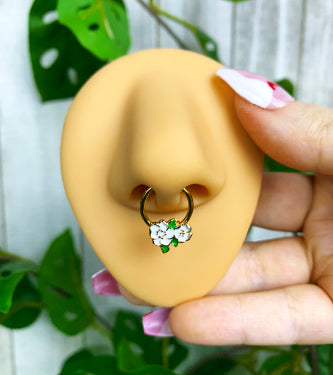




















You’re probably here because you found a gold septum clicker you love, then immediately hit the usual questions. Is it solid gold or just gold-colored? Will it annoy sensitive skin? What size are you even supposed to buy? And why do some clickers snap in perfectly while others feel like a tiny trap for your nose?
Fair questions.
A gold septum clicker can be one of the easiest, sleekest pieces of jewelry to wear, but only if you understand the material, the fit, and the mechanism. Once you do, shopping gets way less confusing. You stop guessing and start choosing.
What Exactly Is a Septum Clicker
A septum clicker is a hinged ring made for your septum piercing. One small segment opens, you guide it through the piercing, then press it shut until it clicks into place. That click is the whole magic. It’s like a tiny gate that locks itself.
That design is why so many people prefer clickers over fussier styles. A captive bead ring can look amazing, but the bead can be slippery and annoying to line up. Bendable rings can be elegant too, but bending them the wrong way can warp the shape. A clicker cuts out most of that drama.

Why the hinge matters
The hinge gives you three big advantages:
- Easier changes because you’re not chasing a loose bead over the sink
- Cleaner look because the ring appears continuous from the front
- More secure wear because the closure is built into the jewelry itself
Some gold clickers use a horseshoe shape, while others are full rings with a hinged segment. Both can work well. The important part is that the opening and closure feel smooth, not rough or forced.
Practical rule: If a ring closes with a clean, crisp click and sits evenly, you’re usually working with a much friendlier piece of jewelry than one that needs twisting, squeezing, or guesswork.
Why people keep coming back to clickers
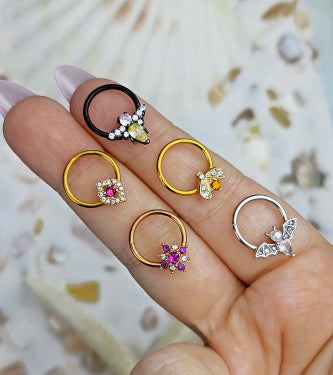
Convenience is a huge reason, but style is the other one. A clicker can be super minimal, like a plain polished gold ring, or wildly decorative with gems, beads, or ornate shapes. You get the easy mechanism without giving up the fun part.
If you want a wider overview of how septum jewelry styles compare, BodyCandy’s guide to septum piercing styles and standards is a useful starting point.
The short version is simple. If you want jewelry that looks polished and usually makes change-outs less annoying, a gold septum clicker is a smart pick.
The Real Deal on Gold Materials
Many people misunderstand this aspect. “Gold” can mean solid gold, gold alloy, or gold PVD-coated metal. Those are not the same thing, especially if your skin gets irritated easily.
Solid 14kt gold
A solid 14kt yellow gold clicker contains 58.3% pure gold alloyed with metals like copper, silver, and zinc, according to this 14kt gold clicker product breakdown. In that same source, nickel content is described as below 0.05%, and the piece is presented as highly biocompatible and corrosion resistant.
That matters because the jewelry sits in a piercing, not just on top of skin. In the same source, healed septum wear in a saline-like environment is described as producing negligible ion leaching over extended wear, which is exactly the kind of boring, stable behavior you want from body jewelry.
Here’s a practical takeaway. Solid 14kt gold is usually the move when you want:
- A lower-irritation option for sensitive skin
- Long-term color stability without relying on a surface coating
- A luxury finish that still works as everyday jewelry
That same source also states that 14kt models retain 98% luster post-1-year wear versus 85% for PVD-coated steels, which gives you a concrete idea of how well solid gold tends to hold its look over time.

Gold PVD-coated steel
PVD stands for physical vapor deposition. That sounds intense, but the simple version is that gold color is bonded onto the surface of another metal in a much tougher way than old-school plating.
According to this gold PVD septum clicker material description, the coating thickness is 0.5-2μm, adhesion strength is greater than 50N, and color retention lasts up to 2 years abrasion-free, with performance described as 5-10x better than electroplated gold for retention. The same source describes the coated surface as harder and more resistant to micro-abrasions than uncoated steel.
So if you love the gold look but don’t want to jump straight to solid gold, PVD-coated steel can make sense. It’s typically more budget-friendly while still looking polished.
Which one is better for sensitive skin
Here, you'll want to be picky.
An underserved issue in septum jewelry is allergy confusion. A retailer trend summary notes that some shoppers report irritation from pieces labeled like gold but made with plating or mixed materials, and it points to a gap in clear hypoallergenic education in the category, including discussion around nickel content and verification standards in this roundup on gold septum product listings.
If your skin is reactive, my friend-level advice is this:
| Material | Best for | Watch out for |
|---|---|---|
| Solid 14kt gold | Healed piercings, sensitive skin, long-term wear | Higher cost |
| Gold PVD-coated 316L steel | Gold look, durability, everyday fashion wear | Base metal still matters if you’re highly sensitive |
| Gold-plated jewelry | Short-term fashion use | Coating can wear faster and expose underlying metal |
For a refresher on what “real gold” means in jewelry terms, BodyCandy has a handy explainer on real gold jewelry basics.
If a listing says “gold tone,” that usually describes the color, not the metal content. Always check what the core material actually is.
Finding Your Perfect Fit Gauge and Diameter
A gorgeous gold septum clicker that fits wrong will annoy you fast. Sizing comes down to two things: gauge and diameter.
Gauge is the thickness of the part that goes through your piercing. Diameter is the inner width of the ring. If you mix those up, you can end up with a clicker that either won’t go in or hangs way differently than you expected.

Gauge means thickness
Think of gauge like the width of a straw. A thicker straw takes up more space. Septum jewelry commonly appears in sizes like 16g and 14g, and the number system is backward. Higher number, thinner jewelry.
That catches people all the time.
If you’re unsure what your current size is, compare with jewelry you already wear comfortably or ask your piercer to measure it. If you want a quick primer, BodyCandy’s gauge sizing standards guide breaks down the basics clearly.
Diameter changes the look and feel
Diameter affects both comfort and style.
A smaller diameter gives you a snugger look. A larger one hangs lower and can feel roomier. In one 14kt clicker specification, a 3/8" (10mm) diameter is suggested for standard 8-10mm septum inner diameters to improve flip-up comfort and reduce pinching, according to the earlier material source already discussed.
PVD clicker specs in another product source describe 7mm and 8mm inner diameters on 16G pieces, with guidance that 7-9mm diameters can work well for healed piercings depending on anatomy. That’s why one person’s perfect fit can feel cramped on someone else.
Healing piercings need extra care
Sizing gets trickier when a piercing is new or still calming down. Swelling changes the space inside the piercing channel, and forcing a too-snug ring can create irritation.
A trend summary tied to user questions and design developments reports a 40% rise in patents for “flexi-clicker” designs, while TikTok discussions show 60% confusion around upsizing during healing. The same source says improper upsizing can contribute to migration issues in up to 28% of cases in that context, according to this trend note on gold septum clickers.
So if your septum is healing, don’t just choose the tightest, cutest ring. Give your tissue room.
- For a fresh piercing ask your piercer what gauge was used and whether a clicker is even appropriate right now.
- For mild swelling a slightly roomier diameter can reduce pressure.
- For a healed piercing you can choose based more on the look you want.
Jewelry should sit comfortably. It shouldn’t squeeze, dig, or leave you feeling aware of it every second.
How to Insert and Remove Your Clicker
Changing your septum jewelry doesn’t have to feel like a mini panic event. Go slow and give yourself good lighting.

How to put it in
Start with clean hands and a clean ring. Stand in front of a mirror and find the hinged segment. Open it gently. Don’t yank it wider than it’s meant to go.
Then:
- Hold the clicker so the opening lines up with your piercing.
- Guide the post through slowly.
- Rotate the ring into place if needed.
- Press the segment shut until you hear or feel the click.
If it doesn’t close easily, stop and check the alignment. Forcing it can scratch the jewelry or irritate your piercing.
A visual walkthrough can help if you’re more of a watch-first person:
How to take it out
Removal is usually even easier. Find the seam, brace the ring with one hand, and lift the hinged segment open with the other. Once it’s open, slide the post back through the piercing slowly.
A few things help:
- Warm shower first if your skin feels tight or dry
- Tissue or gloves if the ring feels slippery
- Patience if the hinge is new and a little stiff
If your piercing is sore, crusty, or not fully healed, let a piercer handle the change. A smooth clicker can still cause problems if the timing is wrong.
Keeping Your Gold Jewelry Gleaming
Gold jewelry looks effortless when it’s clean. The trick is not overcleaning it with harsh stuff that does more harm than good.
Solid gold care
For solid 14kt gold, keep it simple. Use warm water, mild soap, and a soft cloth or very soft brush. Rinse well, dry completely, and check the hinge area for any buildup.
Solid gold is resilient, but that doesn’t mean you should scrub it like cookware. Gentle cleaning keeps the finish bright without roughing up the surface.
PVD-coated care
PVD-coated jewelry needs a lighter touch because the gold color is a surface coating. It’s durable, but you still want to protect it from needless abrasion.
Use:
- Mild soap and lukewarm water
- A soft cloth
- Careful drying around the hinge
Skip abrasive polishes, rough brushes, and strong chemical cleaners. Those can dull or wear the finish faster.
Rinse jewelry after heavy sweat, skincare buildup, or makeup contact. Most “my gold tone looks dull” issues start with residue, not damage.
Quick don'ts
A short no-list saves a lot of regret:
- Don’t use toothpaste on body jewelry
- Don’t soak it in harsh chemicals
- Don’t force the hinge if product buildup is making it sticky
- Don’t store it loose where it can rub against harder jewelry
If the closure starts feeling gritty, clean the seam first before assuming the mechanism is failing.
Styling Your Gold Septum Clicker
A gold septum clicker works because it can shift with your mood. It can look refined, rebellious, glamorous, or cool depending on the shape and what else you’re wearing.
Septum piercings have serious staying power. They’re described as the second most common piercing type globally with a history going back over 5,300 years, and modern visibility got another boost through celebrities like Rihanna and Zendaya, according to this history of the septum piercing.
For the minimalist
Go with a smooth gold clicker in a simple shape. No extra texture, no heavy gems, no giant drop. This look plays well with tiny nostril studs, slim hoops, and everyday makeup.
It feels polished without trying too hard.
For the glam mood
Gemmed clickers particularly shine. A row of clear stones or a decorative front-facing design catches light right under the nose line, which makes it more noticeable than people expect.
If you’re dressing for a night out, pair the clicker with warm-toned earrings so the gold feels intentional. You want the metals to talk to each other, not argue.
For the statement look
Ornate shapes, beading, pointed silhouettes, and bold lower arcs turn your septum ring into the centerpiece. When you wear a more dramatic clicker, keep the rest of your facial jewelry cleaner so the look stays sharp.
If you’re shopping styles, septum rings at BodyCandy include different silhouettes and finishes, from cleaner everyday options to more decorative pieces.
A good styling trick is to think in balance:
| Your vibe | Clicker style |
|---|---|
| Soft and subtle | Plain polished ring |
| Dressy and sparkly | Gem-set front-facing clicker |
| Edgy and bold | Angular, beaded, or ornate design |
Gold works especially well because it can read ancient, punk, or luxe depending on the rest of your look. That range is part of why the septum piercing never really disappears. It just gets restyled.
Your Gold Septum Clicker Questions Answered
Can I wear a clicker in a brand-new septum piercing
Maybe, but don’t assume yes. Some clickers are smooth and easy to manage, but initial jewelry choice should come from your piercer based on placement, swelling, and healing needs. Fresh piercings need stability more than style.
How do I know if I’m reacting to the material
Look for a pattern, not just one bad day. Ongoing itchiness, redness that keeps returning, unusual tenderness, or irritation that starts after switching jewelry can point to a material issue. If you suspect that, stop experimenting and talk to a professional piercer.
Is solid gold always better than gold PVD
Not always. Solid 14kt gold makes more sense if your skin is sensitive and you want long-term wear. Gold PVD-coated steel makes sense if you want the gold look with a tougher-than-plated finish at a lower cost. The right choice depends on your body and how you plan to wear it.
What’s better for me, a clicker or a seamless ring
If you want easier changes, choose a clicker. If you love a super clean circular look and don’t mind more careful handling, a ring with an uninterrupted circular design can be a nice option. Individuals who change jewelry themselves often find clickers more convenient.
What if the hinge feels too tight
Clean it first. Dried residue around the seam can make a good ring feel stiff. If it still feels wrong after cleaning, don’t force it. A piercer can check whether the mechanism is just snug or misaligned.
Ready to pick a gold septum clicker that fits your skin, your style, and your comfort level? Browse the latest options at BodyCandy, and if you’re still torn between materials or sizing, ask your piercer before you buy. A little extra info now saves a lot of irritation later.