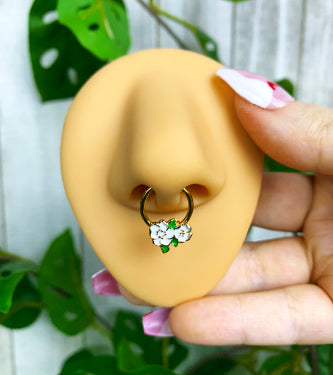




















You got pierced, you looked in the mirror, you fell in love, and then the chaos started.
One friend says saline only. Another swears by tea tree oil. Someone in a comment section acts like emu oil is a miracle potion. Someone else says never let any oil near a healing piercing. If your head is spinning, that’s normal.
Aftercare gets confusing fast because people mix together three different situations: a brand-new piercing, a healing-but-settled piercing, and an irritated old piercing. Those are not the same thing, and they shouldn’t all be treated the same way.
Emu oil piercing care sits in the middle of that confusion. It’s popular for a reason, but it’s also one of those products that gets overhyped online. Used at the right time and in the right way, it can be helpful. Used carelessly, it can create more problems than it solves.
So You Got a New Piercing Now What?
The first days after a new piercing are a mix of excitement and low-level panic.
You keep checking it in every mirror. You wonder if the redness is normal. You debate whether that tiny crusty bit means healing or disaster. Then you search online and get five different answers in thirty seconds.
What your piercing needs first
A fresh piercing is a wound. That sounds dramatic, but it matters because wound care is different from skin care.
Your body is trying to do a few things:
- Calm the initial trauma so swelling and tenderness settle down
- Protect the channel around the jewelry while new tissue forms
- Keep bacteria out while the area is still vulnerable
That’s why aftercare matters. A piercing can be pierced perfectly and still heal badly if it gets bumped, over-cleaned, touched with dirty hands, or coated with products too early.
Practical rule: The newer the piercing, the simpler your routine should be.
Why emu oil gets so much attention
Emu oil has a big reputation in piercing circles, especially for stretched lobes, irritation flare-ups, and piercings that feel dry or tight. Some people love it. Some piercers use it selectively. Some won’t recommend it for fresh work.
All of those reactions make sense.
The main reason people talk about emu oil piercing care is that it isn’t just being treated like a moisturizer. People use it because they believe it helps calm angry tissue and keep skin flexible while healing. That’s a different claim, and it deserves a look.
The question to keep in your head
Don’t ask, “Is emu oil good or bad?”
Ask this instead: Good for what stage, what piercing, and what skin?
That one question clears up a lot of bad advice. A settled navel piercing with dry irritation is one thing. A fresh cartilage piercing that’s weeping is another.
What Exactly Is Emu Oil Anyway?
Emu oil is rendered from the fat of the emu, a large flightless bird native to Australia. That single fact matters more than a lot of aftercare guides admit. If you avoid animal-derived products, emu oil is off the table from the start.

What makes people so interested in it is not the name. It is the makeup. Emu oil contains a mix of fatty acids, especially oleic acid and linoleic acid, which are also types of lipids your skin already recognizes. That helps explain why people describe it as softening dry, tight, or irritated tissue instead of just sitting on top like a thick ointment.
Here is the plain-English version.
- Oleic acid helps oil spread and sink in more easily, which is one reason emu oil often feels less waxy than petroleum-based products.
- Linoleic acid is tied to skin barrier support, so people often reach for emu oil when piercing skin feels flaky or stressed.
- The overall texture is usually light and slippery, which appeals to people who want moisture without a heavy coating.
That does not mean it is automatically the right choice.
A lot of the hype comes from how emu oil feels in real life. If petroleum jelly is like putting plastic wrap over the area, emu oil feels more like conditioning leather so it stays flexible. For an older piercing that feels dry or cranky, that difference can be appealing. For a brand-new piercing that is still producing fluid, adding any oil can be a bad call.
Readers often get tripped up at this point. They hear “natural,” “highly absorbable,” or “used by piercers,” and assume that means universally safe. It does not. Product quality varies, purification matters, and animal-derived oils can still trigger irritation or contamination problems if they are poorly processed or used at the wrong stage of healing.
So the useful way to define emu oil is simple. It is a refined animal oil with a fatty acid profile that may help dry or irritated skin feel more comfortable. That is very different from calling it a cure-all for every piercing problem.
The Science Behind Emu Oil for Piercings
Emu oil stops being just internet lore here and starts sounding more grounded.
Piercers didn’t start talking about it only because somebody on a forum got lucky. It built a reputation from a mix of practical use, skin-healing research, and repeated mentions in piercing education circles, including endorsements in The Piercing Bible.
What the research suggests
The most cited historical claim is tied to burn care. An influential 1990s study by Dr. William Code on burn victims demonstrated that emu oil generated new skin cells rapidly, resulting in statistically significant scar reduction and a decrease in inflammation in treated wounds compared to controls, according to Almoda Body Piercings’ overview of emu oil aftercare.
That matters for piercings because irritated piercing tissue usually has two big problems at once: inflammation and fragile skin. A product that may help calm inflamed tissue while supporting skin recovery is naturally going to get attention.
The same body of information around emu oil also describes it as having anti-inflammatory, antibacterial, and moisturizing properties in piercing aftercare contexts. Those are exactly the kinds of traits people want when a piercing feels hot, tight, flaky, or generally cranky.
Why pros keep it in the conversation
Professional piercers and experienced stretchers aren’t looking for miracle cures. They’re looking for products that do a few useful things reliably.
Emu oil stays in the conversation because people use it for situations like:
- Jewelry insertion when dry tissue needs a little slip
- Stretching prep when the skin feels stiff
- Flare-ups when a piercing is irritated but not infected
- Long-healed piercings that need conditioning rather than basic wound care
That’s a very different use case from “put this on your brand-new piercing immediately.”
What the lab-style findings mean in real life
Some of the available information also points to regenerative activity. One source notes increased DNA synthesis, which is discussed as increased skin cell growth activity. Mouse burn wound studies described in the verified data also reported changes linked to inflammation, tissue regeneration, and hair follicle growth over time.
You don’t need to become a biochemist to get the takeaway.
Here’s the simple version:
| What people care about | Why emu oil gets attention |
|---|---|
| Redness and swelling | It’s associated with anti-inflammatory effects |
| Dry, tight tissue | It’s used as a moisturizer that doesn’t feel heavy |
| Irritation-prone piercings | People use it to calm touchy areas |
| Scar concerns | Historical wound-care research helped build its reputation |
Good aftercare products don’t heal the piercing for you. Your body does the healing. The product only helps create better conditions.
That’s the balanced view. The science is interesting, and the history is significant enough to take seriously. But none of it turns emu oil into medicine, and none of it cancels out basic piercing hygiene.
Weighing the Benefits and Risks
This is the part people usually skip, and it’s the part that matters most.
Emu oil can be useful. It can be the wrong fit for your values, your skin, or your healing stage. Both things can be true at once.

Where emu oil shines
For the right person, emu oil piercing care has a few clear strengths.
- It can soften dry tissue. That’s why people with healed or stretched piercings often like it.
- It may calm irritation. If a piercing is angry from friction or dryness, a tiny amount can feel soothing.
- It adds slip. That can help with jewelry changes or stretching prep when skin feels tight.
A lot of the love for emu oil comes from that combo. It doesn’t just sit there shiny. People use it because the skin often feels more flexible after.
Where the hype goes off the rails
Online chatter turns a useful product into a cure-all.
It isn’t one.
Emu oil is not a shortcut around poor jewelry quality, sleeping on your helix, snagging your navel ring on jeans, or touching your piercing every ten minutes. It also won’t fix an angle problem, pressure issue, or jewelry that’s too short.
Key Downsides
Here are the risks people should be honest about:
- It’s animal-derived. If you’re vegan or ethically opposed, that ends the conversation right there.
- It isn’t sterile. That’s one reason some professionals are cautious, especially with very fresh piercings or open wounds.
- You can still react to it. Even “gentle” products can trigger irritation on sensitive skin.
- Quality varies. A poorly made or contaminated product is not something you want near a healing piercing.
A quick decision guide
| If this sounds like you | Emu oil might be | Why |
|---|---|---|
| Your piercing is very fresh and still open | Not the first choice | Simpler care is usually safer early on |
| Your healed piercing feels dry or tight | Worth considering | Conditioning is where oils often make more sense |
| You’re dealing with mild irritation | Sometimes helpful | It may soothe tissue if the cause is friction or dryness |
| You suspect infection | The wrong tool | You need professional advice, not oil |
| You’re vegan | Not suitable | It comes from animal fat |
The smartest aftercare routine is the one that matches the actual problem, not the trendiest product.
If you decide to try emu oil, treat it like a specialty tool. Not a personality trait. Not a miracle. Just one option that may work well in a narrow set of situations.
How to Use Emu Oil on Your Piercings Safely
You clean your piercing, notice it feels dry and tight, and reach for the emu oil. That can be fine. The trick is using it like a finishing touch, not like salad dressing.
Too much oil creates its own problems. It can trap lint, hair product, and general bathroom-counter mystery dust against the skin. Then it gets harder to tell what your piercing is reacting to.

Start small and stay observant
A tiny amount goes a long way. For a small piercing area, one drop is usually enough. You want a thin film on the surrounding tissue, not a shiny coating that sits there all day.
A safe routine looks like this:
- Wash your hands well. If your fingers are not clean, the oil can carry that grime straight to irritated skin.
- Clean the piercing first. Oil goes on clean, settled skin. It should not be layered over sweat, crust, makeup, or hair product.
- Use the smallest amount to cover the area. Start with one drop. You can always add more next time, but you cannot un-grease a piercing.
- Apply around the piercing, not deep into the channel. The goal is to soften and condition the outside tissue.
- Give it time, then reassess. If the area looks redder, feels itchier, or starts collecting debris, stop using it.
That last step matters more than people expect. Emu oil gets hype online because some people feel soothed by it, but the useful question is why your skin likes it, or why it does not. If the issue is surface dryness or friction, a little oil may help. If the issue is pressure, metal sensitivity, or infection, oil will not fix the underlying cause.
Timing matters
Fresh piercings are touchy. If yours is still bleeding, leaking a lot of fluid, or acting like an open wound, keep the routine simpler. Early healing tissue usually does better with fewer variables.
Cartilage deserves extra caution here. A helix, tragus, rook, or industrial can get angry fast from overhandling alone. Adding oil too soon, or rubbing the area too much during application, can turn "trying to help" into "why is this worse now?"
What about piercing bumps?
Readers get mixed messages regarding this topic, so let’s clear it up.
Some people use emu oil on bumps because it can feel softening and calming on irritated skin. That does not mean every bump should be treated with oil. A bump is a symptom, not a diagnosis. It works like seeing a check-engine light and polishing the dashboard. If the underlying problem persists, the light comes back.
Common causes include:
- Jewelry pressure from a post or ring that is too tight
- Snagging or sleeping on it
- Moisture buildup
- Jewelry material issues
- Overcleaning or product irritation
If you want to try emu oil on a mild irritation bump, use a very small amount on the outside only and watch closely for changes over a week or two. If the bump grows, gets hot, becomes painful, or starts draining thick fluid, stop experimenting and get it checked.
A few smart guardrails
Patch test first if you have reactive skin. Even a product with a simple ingredient list can still cause a reaction.
Use it on clean, stable jewelry setups. If the jewelry quality is questionable or the fit is wrong, fix that first. Otherwise you are trying to calm tissue while the source of irritation keeps poking it.
And keep expectations realistic. Emu oil is a support product, not a repair kit.
If your piercing is older and your goal is more about general upkeep than active healing, BodyCandy’s guide to piercing deodorant aftercare for established piercings covers a different kind of maintenance.
Use emu oil to support calm, clean skin. Do not use it to cover up worsening symptoms or a jewelry problem that needs a real fix.
Safe Alternatives for Your Piercing Aftercare
You do not need emu oil to heal a piercing well.
For a lot of people, especially with fresh piercings, the most boring option is still the most reliable one: sterile saline. It’s simple, familiar, and doesn’t add extra variables when your body is trying to settle down.

If you want the standard option
Sterile saline is the first thing people reach for because it cleans gently without turning your routine into a science project.
It’s a solid choice if:
- Your piercing is brand new
- You have sensitive skin
- You’d rather avoid animal-derived products
- You want fewer ingredients in the mix
If emu oil isn’t for you
Some people skip emu oil because they’re vegan. Some skip it because their skin likes simpler routines. Some don’t want another bottle on the counter.
All fair.
The right aftercare routine is the one your skin tolerates, your lifestyle supports, and your piercing benefits from. If you want to compare another common aftercare route, this H2Ocean aftercare guide gives you another reference point for a saline-focused approach.
The easiest way to choose
Ask yourself three questions:
- Is this piercing fresh or more established?
- Am I treating dryness, or am I trying to heal a wound?
- Do I want animal-derived products in my routine?
Those answers usually point you in the right direction faster than any comment thread will.
When to Ditch the Oil and See a Professional
Some irritation is normal.
A little redness, some tenderness, and those annoying crusties can all happen during healing. That doesn’t automatically mean infection, and it doesn’t automatically mean you need to throw five products at the problem.
But there’s a line.
Signs you shouldn’t brush off
Stop experimenting at home and contact a piercer or medical professional if you notice:
- Thick pus
- Severe or increasing pain
- Skin that feels hot to the touch
- Redness spreading outward
- Swelling that gets worse instead of better
- A reaction that starts after using a product
Emu oil is not medicine. It cannot treat an infection.
When the problem might not be the oil
Sometimes the underlying issue is jewelry length, angle, placement, metal sensitivity, or repeated trauma from sleeping, headphones, waistbands, towels, or makeup.
If your piercing keeps acting up, don’t keep swapping products and hoping for a miracle. Get another set of trained eyes on it. That’s important with cartilage piercings, which can go from “annoying” to “why is this still mad?” quickly.
For a helpful breakdown of how allergy and irritation can overlap, BodyCandy’s guide on allergic reactions and piercing irritation is worth a look.
If a product seems to be making things worse, stop using it. Your piercing doesn’t care how popular that product is online.
Emu oil can be a tool for some people and some piercings. It can soften dry tissue, support flexibility, and calm mild irritation when used carefully. It just isn’t a replacement for clean habits, good jewelry, and professional help when something looks off.
Ready to treat your healed piercings to a fresh upgrade? Browse BodyCandy for body jewelry in styles that let your happy, settled piercings show off a little.