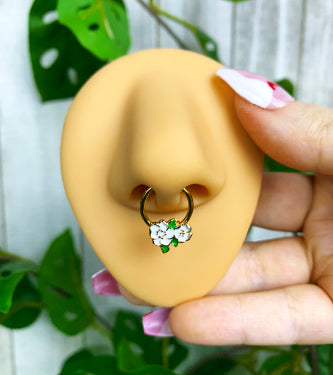












So, you're ready to find your next favorite piece of nipple jewelry but feeling a little overwhelmed by all the choices? Don't even sweat it. Think of us as your piercing-obsessed bestie, here to walk you through all the awesome options.
This is all about helping you find a style that fits your vibe, feels comfy, and makes you feel like the rockstar you are. To get started, let's dive into the main styles you'll be looking at.
The Core Nipple Jewelry Styles
When you start browsing, you'll see that pretty much every design falls into one of three main families: barbells, hoops, or shields. Each one serves a totally different look, making them perfect for different moods and outfits. Getting these basics down is the first step to building a jewelry collection that's 100% you.
- Barbells: These are your classic, go-to choice. A simple bar with two screw-on ends, they're loved for their comfort, versatility, and being the best option for fresh piercings.
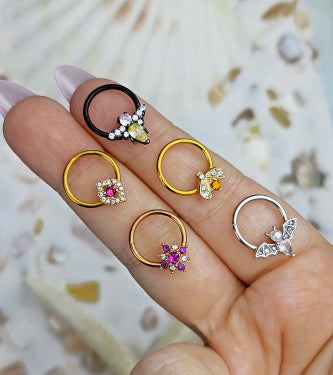
- Hoops & Rings: From captive bead rings to sleek, modern clickers, circular jewelry frames your piercing with a timeless, edgy look. They come in different diameters so you can rock a snug fit or a more dramatic, dangly vibe.
- Shields & Dangles: Okay, now we're talking showstoppers. Shields are elaborate, decorative pieces that sit around the piercing, while dangles add eye-catching movement to a standard barbell. They're perfect for when you really want to make a statement.
This infographic gives you a great visual breakdown of how the main types branch out into more specific styles.
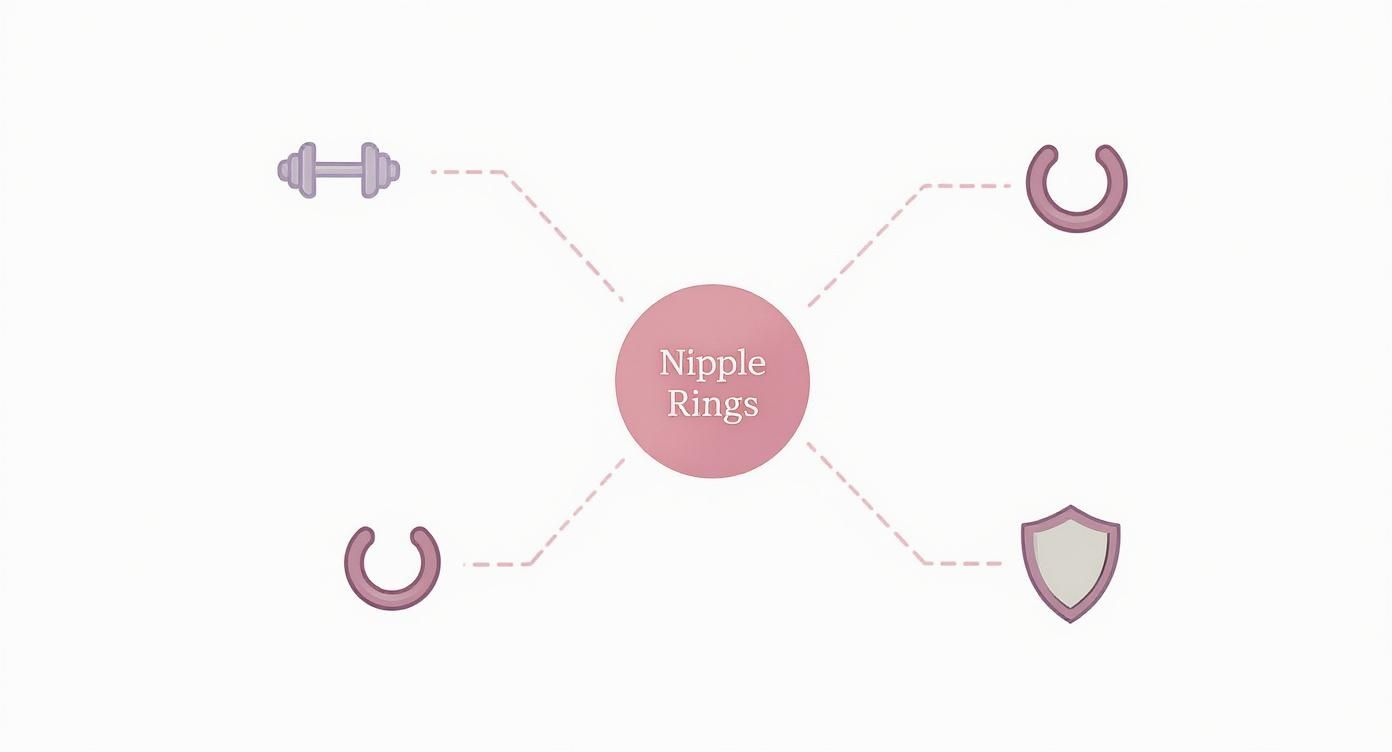
As you can see, your journey starts with a simple choice between a straight, circular, or decorative style. From there, a whole world of self-expression opens up!
Nipple Ring Styles at a Glance
Need a quick-and-dirty comparison? This table breaks down the most popular nipple ring types to help you find your perfect match in seconds.
| Jewelry Type | Best For | Vibe | Ease of Changing |
|---|---|---|---|
| Straight Barbell | Healing, everyday wear, discretion | Minimalist, classic, versatile | Easy |
| Captive Bead Ring | A secure, traditional hoop look | Edgy, timeless, bold | Moderate |
| Clicker Hoop | Easy changes, seamless appearance | Modern, sleek, sophisticated | Very Easy |
| Nipple Shield | Making a bold statement | Ornate, dramatic, decorative | Moderate to Hard |
| Dangle Jewelry | Adding movement and flair | Playful, elegant, eye-catching | Easy |
Think of this as your cheat sheet. Whether you're after something low-key for work or a jaw-dropper for a night out, there's a style here that's got you covered.
Exploring the Classic Barbell Nipple Ring
Let’s kick things off with the undisputed icon of nipple piercings: the straight barbell.
If you’re freshly pierced, you’re probably already rocking one. And there’s a good reason for that! Your piercer chose it because its simple, straight shape keeps movement and irritation to a minimum. This creates the perfect environment for a happy, healthy healing process. It's the reliable, comfy, and surprisingly versatile foundation of any good jewelry collection.
The barbell is the ultimate starter piece. It’s just a straight bar with two removable ends, but that simple design is its superpower. You can build a whole collection of different looks just by swapping out the ends. Twist off the balls, pop on some new gems, and you’ve got a whole new vibe in seconds.
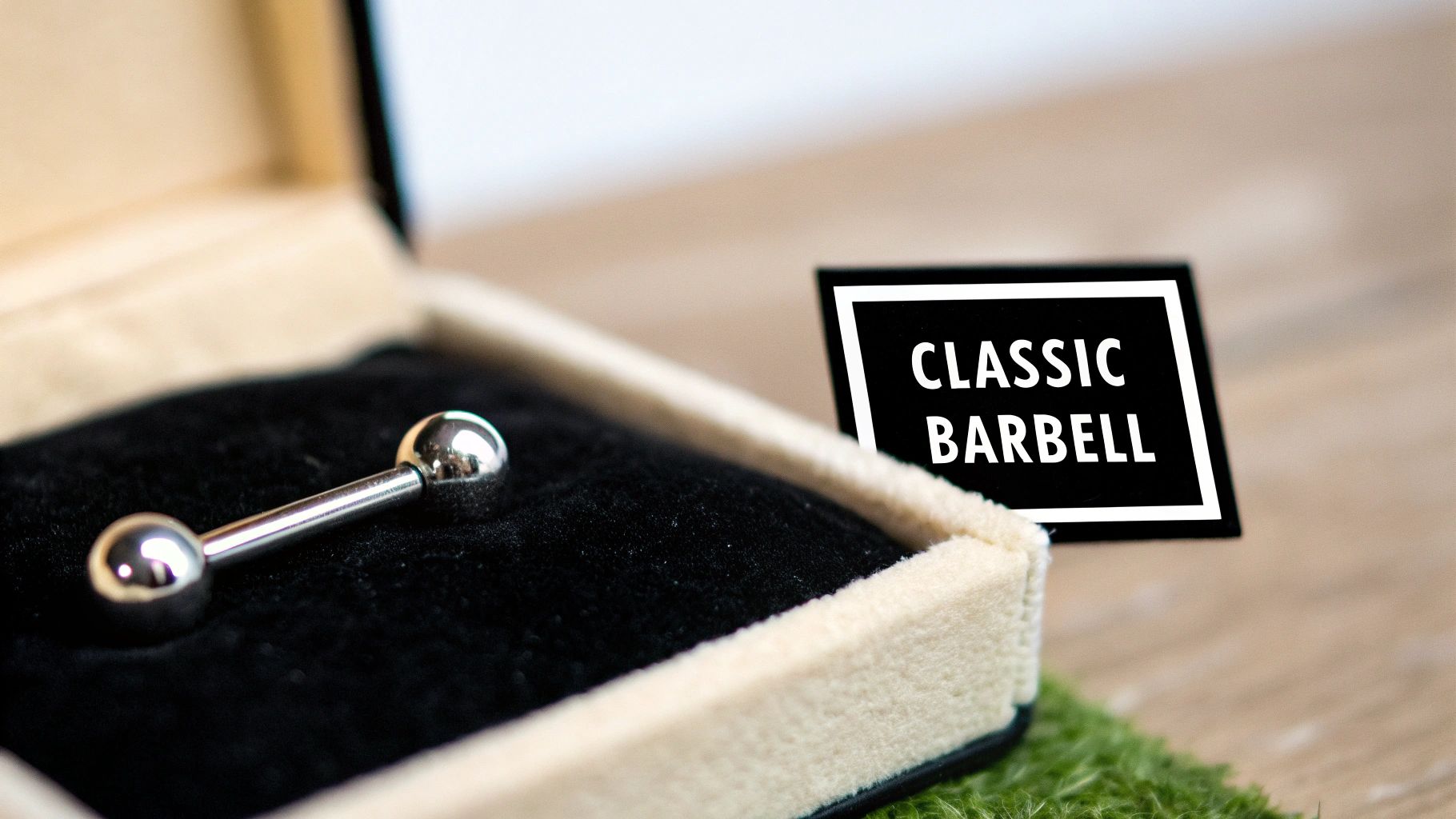
Anatomy of a Barbell
Getting a perfect fit comes down to two key measurements: gauge and length.
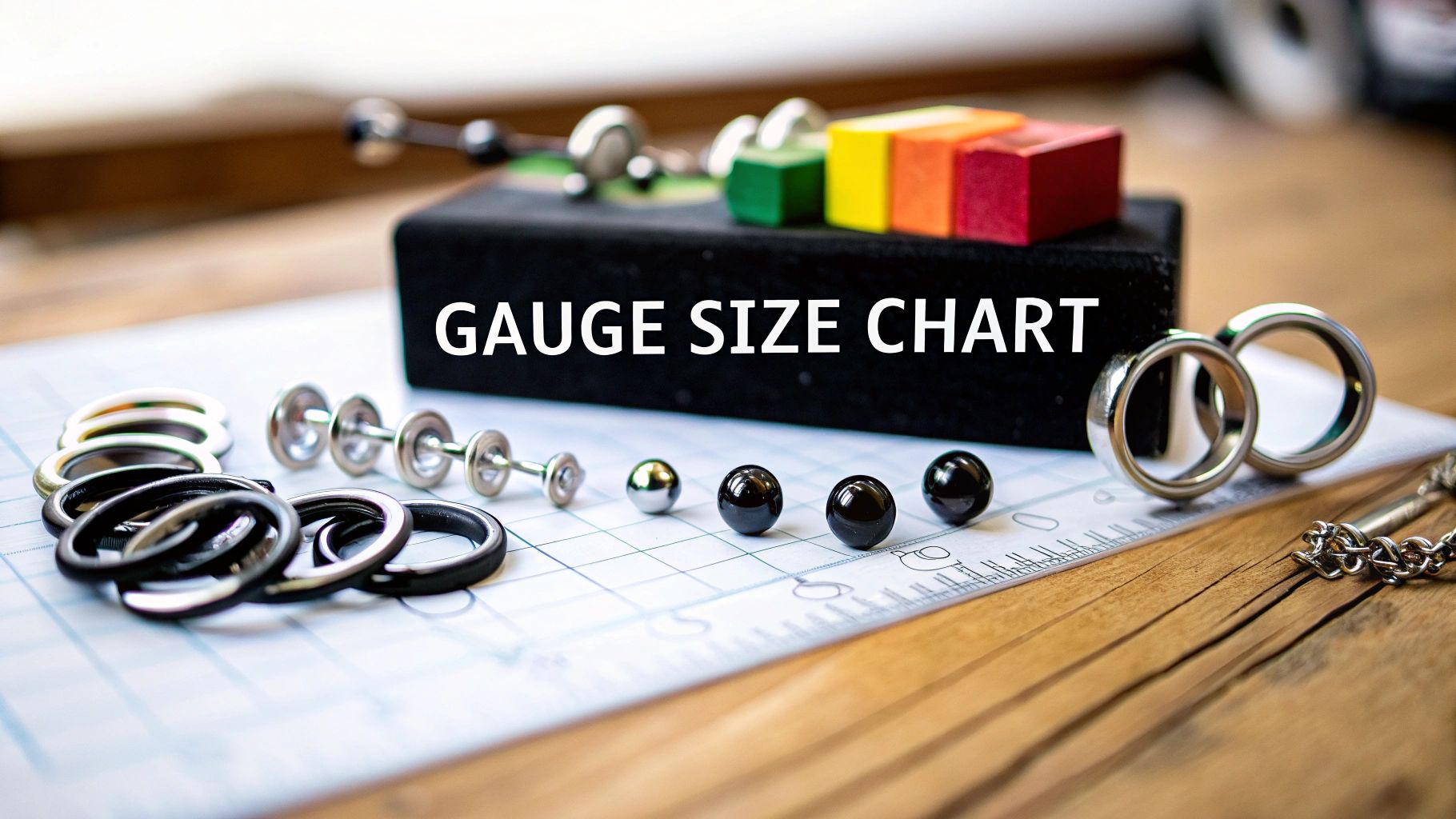
Gauge is all about the thickness of the bar. For nipple piercings, the most common size is 14 gauge (1.6mm). Length is the wearable surface of the bar—the part that sits inside your piercing, measured between the two ends. A bar that's too short can pinch (ouch!), while one that's too long can snag on everything.
Once you’ve got your size dialed in, the real fun begins. The next thing to know is how the ends screw on.
Key Takeaway: The biggest difference is the threading—that little screw mechanism holding the ends on. It’s a small detail, but it can make a huge difference in comfort, especially when you’re changing jewelry.
You’ll run into two main types:
- Externally Threaded: The screw threads are on the outside of the bar, and the ball screws onto them. This is a super common and affordable style, but those exposed threads can sometimes scrape the inside of your piercing. Not fun.
- Internally Threaded: The threads are tucked away inside the bar, and a little screw attached to the end goes into the bar. This gives you a completely smooth surface that glides right through. It’s a fan favorite for a reason—it’s way more comfortable and helps prevent irritation.
If your piercing is still on the sensitive side, internally threaded jewelry is definitely the move. To get a better look at all the different kinds of barbells, you can explore our photographic dictionary of barbell types.
Styling Your Barbell
Okay, now for the fun part! That simple straight barbell is your blank canvas. Since the ends are interchangeable, you can switch up your entire look without ever having to take the bar out.
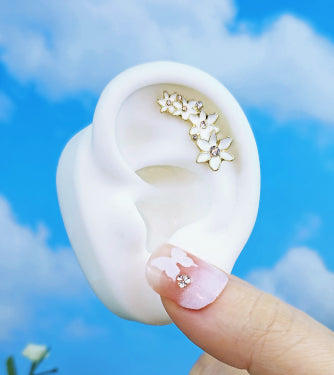
Feeling sparkly? Pop on some gem ends. Want something edgier? Try some spikes or skulls. You can even find tiny dangles that screw right onto your bar for some playful movement.
This insane versatility is what makes the barbell an absolute must-have. It’s the perfect blend of everyday comfort with the potential for a real show-stopping look whenever you feel like it.
Level Up with Hoops, Rings, and Clickers
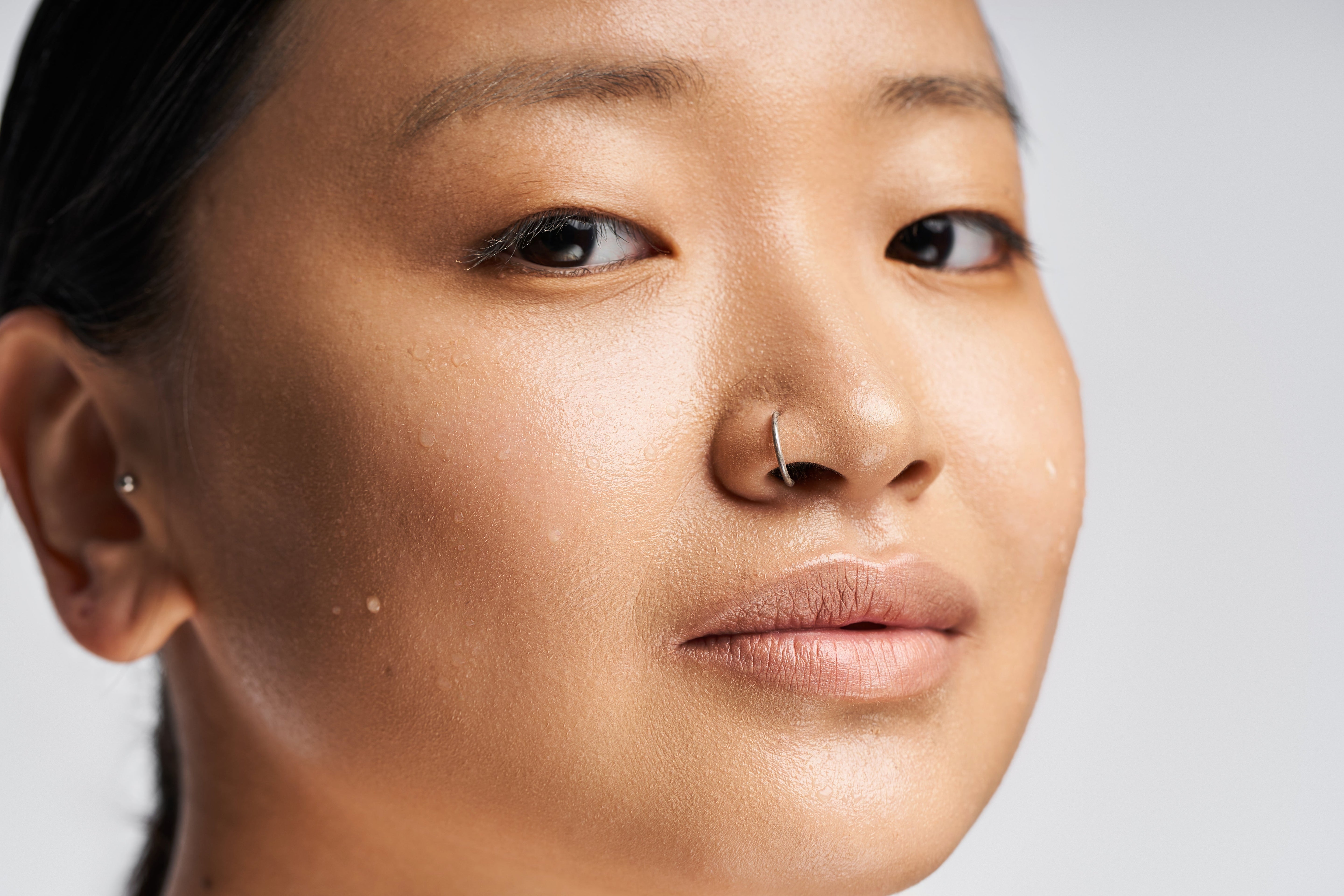
Ready to break away from the straight-and-narrow world of barbells? Hoops, rings, and clickers are waiting to add a whole new dimension to your style. These circular options frame your piercing in a completely different way, creating a look that can be anything from delicate and subtle to bold and in-your-face.
Swapping a barbell for a hoop is like trading your everyday sneakers for a pair of killer boots—it instantly changes the whole vibe. Let's dive into the most popular circular styles that will have you falling in love with your piercings all over again.
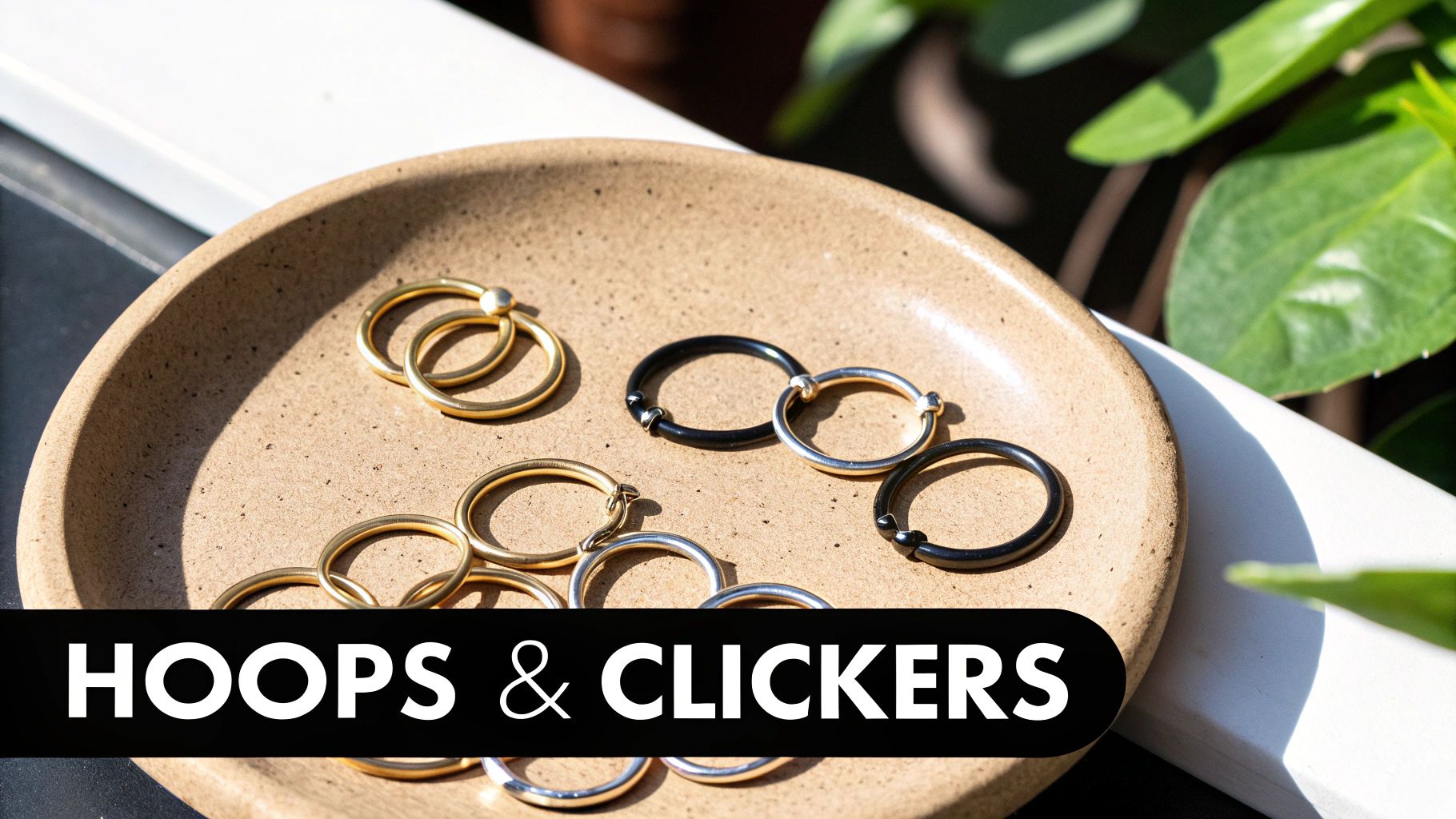
Classic Hoops: The Captive Bead Ring
The Captive Bead Ring (CBR) is a true piercing icon. It’s a simple ring held together by a single bead, which is kept in place purely by the tension of the ring itself. The result? An incredibly secure piece of jewelry that you know isn’t going anywhere.
Getting that bead in and out can take a little practice (and sometimes a pair of ring-opening pliers), but that security is exactly why so many people swear by them. They offer a timeless, edgy look that’s been a staple in the piercing community for decades.
Seamless and Segment Rings
If you love the clean silhouette of a CBR but want something even more minimalist, seamless and segment rings are your answer.
- Seamless Rings: These are cleverly designed to look like a continuous, unbroken circle. You just gently twist the ends apart to open them, insert the ring, and twist it back into place.
- Segment Rings: These take the seamless concept one step further. A small, curved section actually pops out, creating a gap for you to insert the jewelry. When you pop the segment back in, the ring looks perfectly flawless.
Both styles are perfect for that sleek, modern aesthetic where the jewelry looks like it’s floating effortlessly.
The Game Changer: Clicker Rings
Let's be real—fumbling with tiny beads or trying to perfectly align a segment ring can be a pain. Enter the clicker ring, the undisputed champion of convenience.
A clicker is a type of ring with a hinged section that simply clicks securely into place. No lost beads, no special tools, just a satisfying “click” and you’re good to go.
This simple but brilliant design has made clickers wildly popular for all kinds of piercings, especially nipples. They combine the clean look of a seamless ring with the easiest opening mechanism you could ask for.
This means you can change your jewelry in seconds, making them perfect for anyone who loves to switch up their style on the fly. To get a better feel for all these options, you can learn more about circular body jewelry in our detailed guide.
Making a Statement with Shields and Dangles
Ready to go big? Let's talk about nipple shields and dangles—the undisputed headliners of nipple jewelry. These aren't your subtle, everyday pieces. We're talking about jewelry designed for those moments when you want your piercings to be the absolute center of attention.
If a simple barbell is your favorite t-shirt, think of a nipple shield as a full-on couture outfit. It’s an ornate piece that a barbell slips right through, creating an elaborate frame around your nipple. Imagine intricate filigree, dazzling gem arrangements, or even fun shapes like hearts and wings. It completely transforms your piercing into a wearable piece of art.
Dangles bring a playful elegance to the party. You start with a standard barbell and add a hanging charm that moves with you, catching the light and drawing the eye. It's the perfect way to add extra flair without the full commitment of a shield.
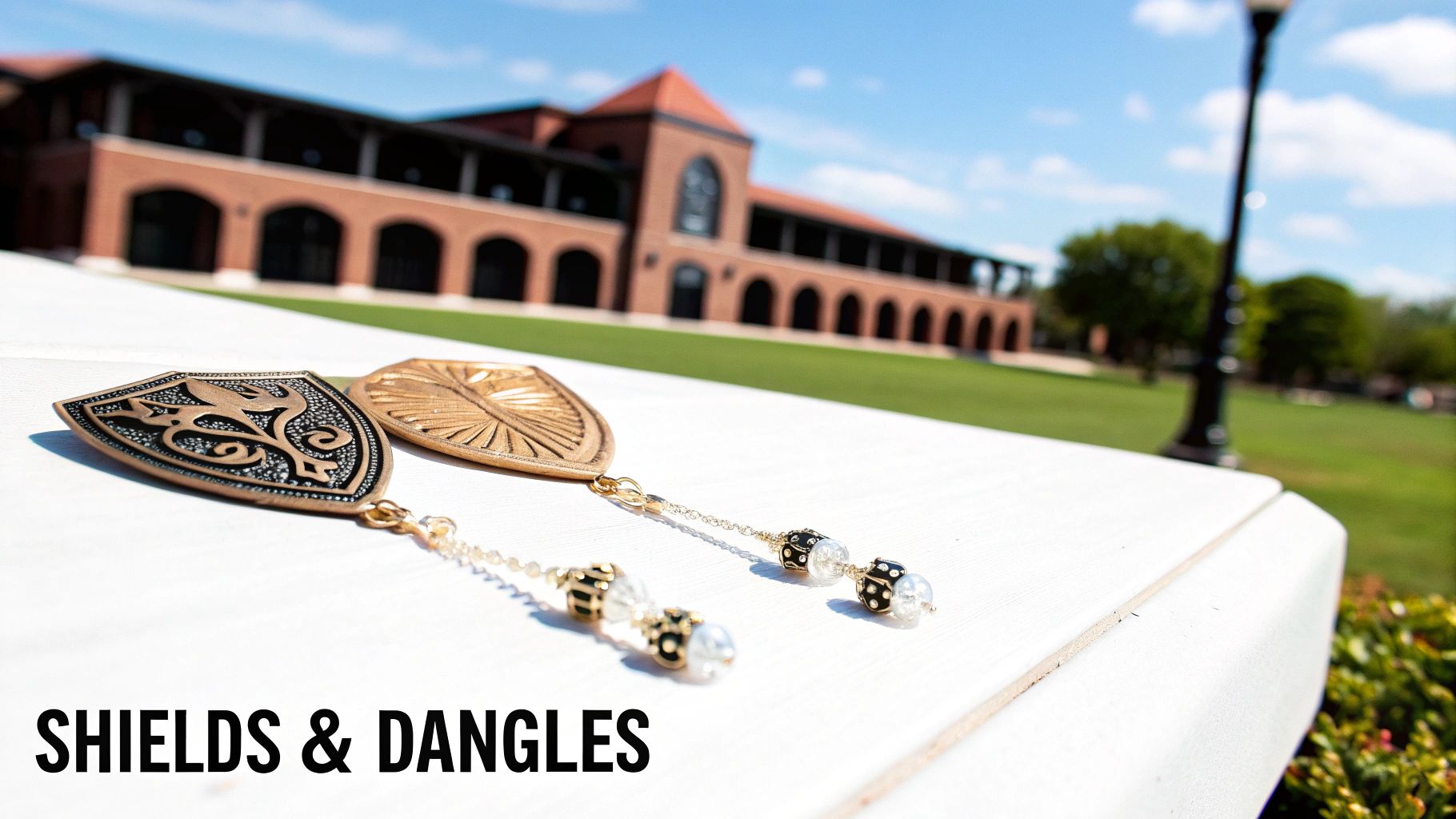
Rocking Shields Safely and Stylishly
Nipple shields are incredible, but they definitely come with a few ground rules. First and most importantly, they are strictly for fully healed piercings only. A shield can put pressure on a new piercing and trap moisture, which is a recipe for major irritation. You'll want to wait at least 9-12 months, or until your piercer gives you the enthusiastic all-clear.
Because they are larger and heavier, shields are also way more likely to snag on clothing, loofahs, or bedsheets. This is exactly why most people treat them as special-occasion jewelry instead of wearing them 24/7. Think of it this way: you wouldn't wear a ballgown to go grocery shopping, would you?
Pro Tip: When you’re wearing a shield, opt for a slightly looser top or a soft bralette. This gives your jewelry some breathing room and seriously reduces the risk of it getting caught on fabric.
The Playful Charm of Dangles
If you love the idea of adding some personality but feel like shields might be a bit too much for your style, then dangle jewelry is your new best friend. It strikes that perfect balance, mixing the simplicity of a barbell with a decorative, eye-catching element.
And the best part? The variety is practically endless.
- Simple Chains: Delicate chains can add a touch of subtle, shimmering movement.
- Gemstone Drops: A single sparkling gem can instantly elevate your look.
- Themed Charms: This is where you can really show off your personality, with everything from tiny skulls to celestial moons.
Just like shields, dangles can snag more easily than a plain barbell, so be a little mindful when you're wearing them—especially during a workout or while you're sleeping. They are a fantastic way to dip your toes into the world of statement jewelry. Check out Bodycandy's collection of dangle nipple rings to find a style that's just waiting to be shown off.
Choosing the Right Metal for Your Body
Alright, so you've found a style that speaks to you. Awesome! But before you hit "buy," we need to talk about what your jewelry is made of.
Think of it this way: the design is the cute outfit, but the material is the fabric touching your skin. Getting this part right is the key to a happy, healthy piercing that won't give you any grief. This choice is super personal and comes down to your skin's sensitivity, your lifestyle, and your budget.
Let’s walk through the heavy hitters in the piercing world so you can choose your metal like a pro.
The Gold Standard: Implant Grade Titanium
If your skin gets angry at the mere thought of mystery metal, implant-grade titanium is your new BFF. This isn't just a fancy name; it's the top-tier material that professional piercers swear by, especially for fresh or finicky piercings.
Why? It's completely nickel-free, making it hypoallergenic as you can get. Plus, it's shockingly lightweight, so it won't put any unnecessary stress on your piercing. It might cost a bit more, but the peace of mind you get from avoiding irritation is priceless.
The Reliable Workhorse: Surgical Steel
Next up is 316L surgical steel, a true classic in the body jewelry game. It's tough, has a great shine, and is way more affordable, which is why it's so incredibly popular. It’s a fantastic middle-ground, offering great quality without breaking the bank.
Here's the one thing to keep in mind: surgical steel contains a tiny amount of nickel. For most people, this is a total non-issue. But if you have a known nickel sensitivity, you’ll want to stick with titanium. For a deeper dive, you can learn more about what metal body jewelry is made of in our complete guide.
A Touch of Hypoallergenic Luxury: 14k Gold
Feeling a little fancy? 14k solid gold—whether you're into yellow, white, or rose—gives you that high-end vibe while still being totally body-safe. The keyword here is "solid gold," not gold-plated! Plated jewelry has a thin coating of gold over a different base metal, and that plating can wear off, exposing your skin to whatever is underneath and causing irritation.
When you invest in solid 14k gold, you’re getting a gorgeous, timeless piece that’s both durable and has a very low risk of causing an allergic reaction.
How to Find Your Perfect Jewelry Fit
Let's dive into the two magic words of jewelry sizing: gauge and length. Getting these right is the secret to a piece that not only looks amazing but feels so comfortable you'll forget it's there.
Think of it like buying new shoes—if they're too small, they'll pinch and cause pain. If they're too big, they'll slip around and give you blisters. Your piercing jewelry works the exact same way.
A bar that's too tight can put pressure on your piercing, leading to nasty irritation and embedding. On the flip side, a bar that’s too long can get snagged on clothes or shift around too much, which is a one-way ticket to an angry piercing. Finding that "just right" Goldilocks fit is everything.
Understanding Gauge and Length
So, what do these terms actually mean? Let's break it down.
- Gauge (g): This is the thickness of the barbell or ring. It’s a little weird, but the smaller the number, the thicker the jewelry. The standard and most common gauge for nipple piercings is 14g, which is 1.6mm thick.
- Length: For a straight barbell, this is the wearable part of the bar—the space between the two screw-on ends. For a hoop or a ring, this measurement is the internal diameter.
The combination of gauge and length determines exactly how the jewelry will sit in your piercing.
How to Measure Your Jewelry
The absolute best and most foolproof way to know your size is to ask your professional piercer. They're the experts and can measure you perfectly!
But, if you already have a piece of jewelry that fits you like a dream, you can easily measure it yourself at home. Just grab a ruler with millimeter markings or a digital caliper.
To Measure Your Barbell:
- Unscrew one of the balls from your barbell.
- Lay the bar flat against your ruler or in the caliper.
- Measure the distance from the base of one threaded end to the base of the other. Don't include the threaded posts themselves! This measurement is your wearable length.
Once you know your ideal measurements, you can browse all the nipple rings on Bodycandy.com with total confidence, knowing you'll get a perfect fit every single time.
Your Nipple Ring Questions Answered
Still have a few questions? Good. Let's clear up any last-minute confusion so you can feel 100% confident when you pick out your new favorite jewelry.
We've rounded up the most common questions people have when they're trying to decide between different nipple ring styles.
Which Type of Nipple Ring Is Best for a New Piercing?
For a fresh piercing, your piercer is almost always going to use a straight barbell. There's a really good reason for this: healing.
Barbells don't move around as much as hoops or rings. That stability is exactly what you want—it prevents irritation and helps the piercing channel form straight and healthy. You'll want to stick with a simple barbell made from implant-grade titanium until you're fully healed, which can take 9-12 months or even longer. After that, the world of hoops, shields, and dangles is all yours!
Can I Wear Nipple Shields or Dangles All the Time?
While nipple shields and dangles look absolutely incredible, they aren't really designed for 24/7 wear. Because they have more size and weight, they're much more likely to snag on your clothes, bedsheets, or the dreaded loofah.
Think of shields and dangles as your statement pieces—like a killer pair of high heels. They're perfect for showing off, but not the most practical choice for sleeping or hitting the gym.
For everyday comfort and to keep your piercing happy for the long haul, a classic barbell or a snug-fitting clicker hoop is a much safer and more comfortable bet.
How Do I Know What Size Nipple Jewelry to Buy?
Getting the perfect fit boils down to two key measurements: gauge and length/diameter. The gauge is the thickness of the bar (most common is 14g), while the length is the wearable surface between the two ends.
The absolute best way to figure out your size is to ask a professional piercer. They can measure you with total accuracy and take all the guesswork out of it. Another option is to carefully measure a piece of well-fitting jewelry you already own. Nailing this part is key to comfort, so it's worth taking the time to get it right!
Ready to put all this new knowledge to good use? At Bodycandy, we've got an incredible selection of barbells, hoops, shields, and more to match your unique style.
Shop the full collection of nipple jewelry at Bodycandy.com today!