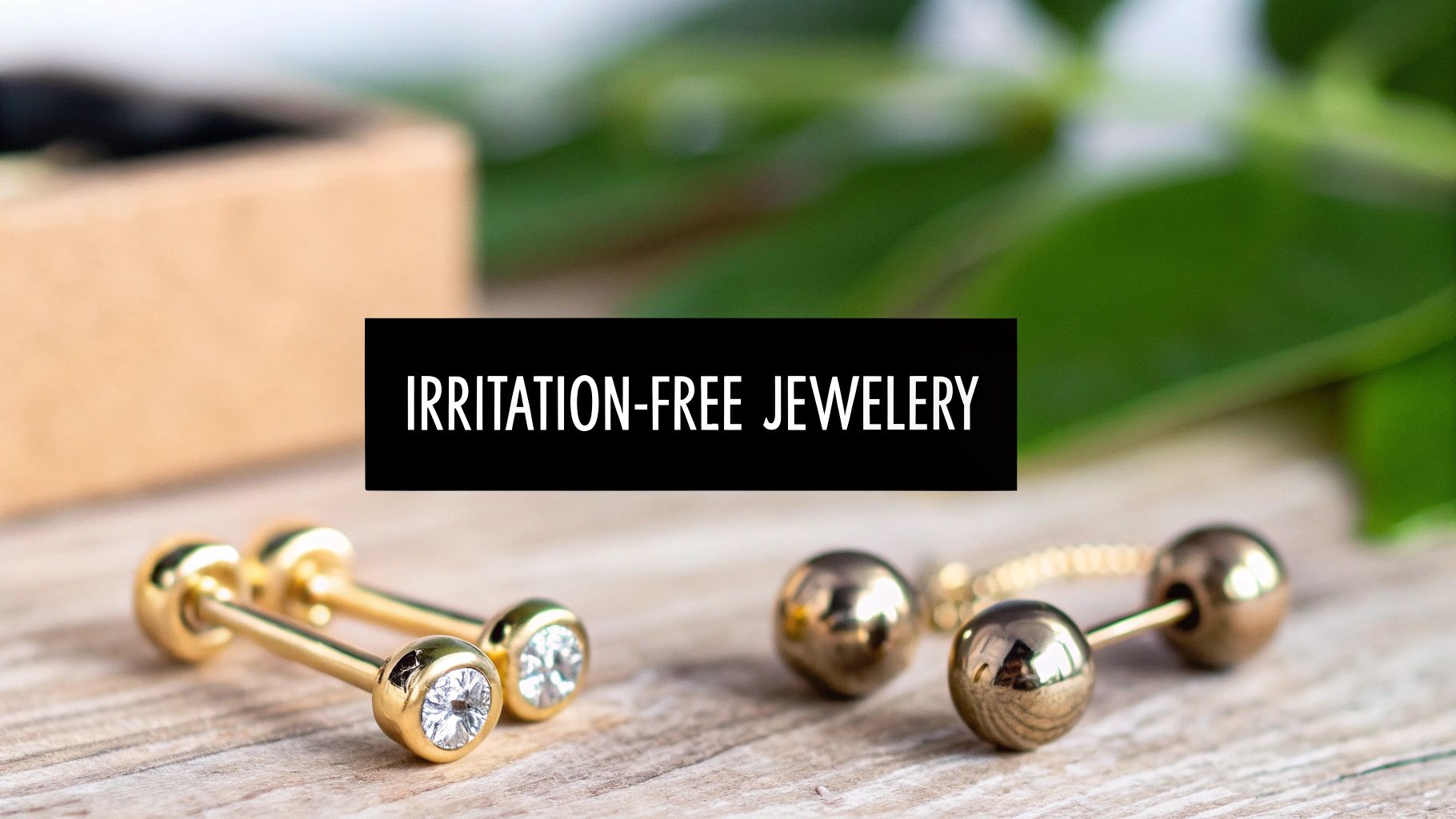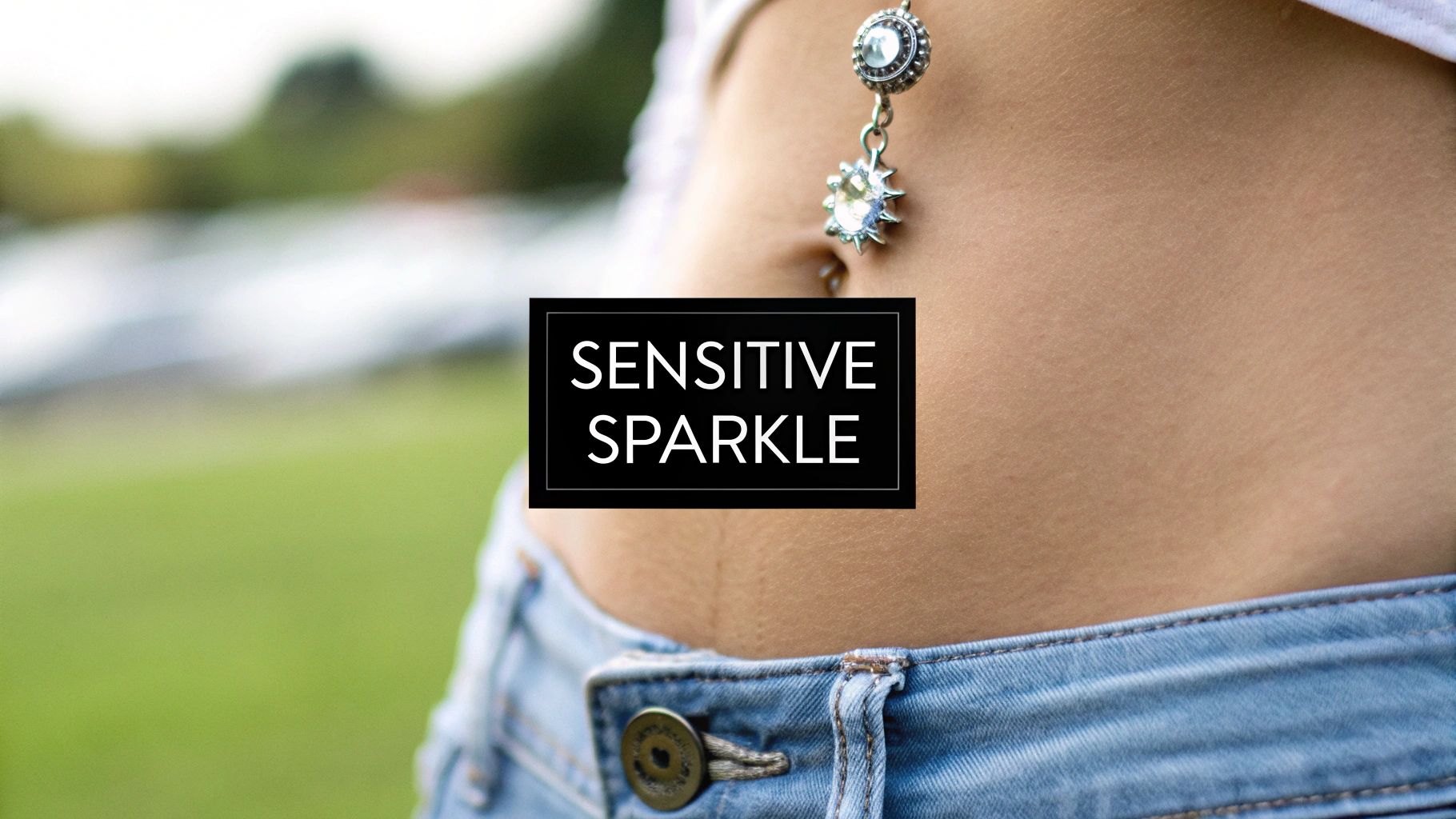


















When you’re hyped for a new belly button piercing, picking the best material is everything. The simple answer? Implant-grade titanium is the undisputed champion for new piercings, while 316L surgical steel is a durable and affordable classic for healed ones. Your choice really sets the stage for a happy piercing journey.
Your Ultimate Guide to Belly Ring Materials
Getting a new navel ring is one of the best ways to show off your personal style, but the sheer number of material options can feel like a pop quiz you didn't study for. Surgical steel, titanium, gold, bioplast—what’s the difference, and which one is right for you? Don't stress, we've got you.
Think of this as your personal cheat sheet. We're breaking down the most popular materials to help you choose the safest, most comfortable, and most stylish option for your piercing. Whether you have super sensitive skin, live an active lifestyle, or just want something that looks amazing, the perfect material is out there.
Belly Ring Material Quick Comparison Guide
To make things even easier, let’s start with a quick comparison. This table highlights the core differences between the top contenders, so you can see how they stack up side-by-side.
| Material | Hypoallergenic? | Best For | Price Point |
|---|---|---|---|
| Titanium | Yes (100% Nickel-Free) | New Piercings & Sensitive Skin | Mid to High |
| Surgical Steel | Mostly (Contains low nickel) | Healed Piercings & Durability | Low to Mid |
| 14k/18k Gold | Yes (Nickel-Free Alloys) | Healed Piercings & Luxury Style | High |
| Bioplast/PTFE | Yes (Metal-Free) | Pregnancy, Sports & Medical Scans | Low |
This gives you a bird's-eye view, but the details are what really matter. Choosing the right material ensures your piercing not only looks great but stays healthy and irritation-free, too.
The titanium used in high-quality body jewelry is a very specific kind, typically designated as ASTM F136 or Grade 23. This isn't just any old titanium; it’s a medical-grade alloy that offers superior biocompatibility, making it the least likely material to cause a fuss with your body.
If you're curious about the industry and why this stuff matters so much, you can learn more about the growing body piercing jewelry market trends. Quality is king, and picking the right metal from the start makes all the difference.
Surgical Steel: The Classic and Reliable Choice
Let's talk about the OG of piercing materials: surgical steel. If you've ever gotten a piercing, chances are you started with this classic. There’s a very good reason it’s been a go-to choice for decades—it’s the perfect blend of tough, affordable, and stylish.
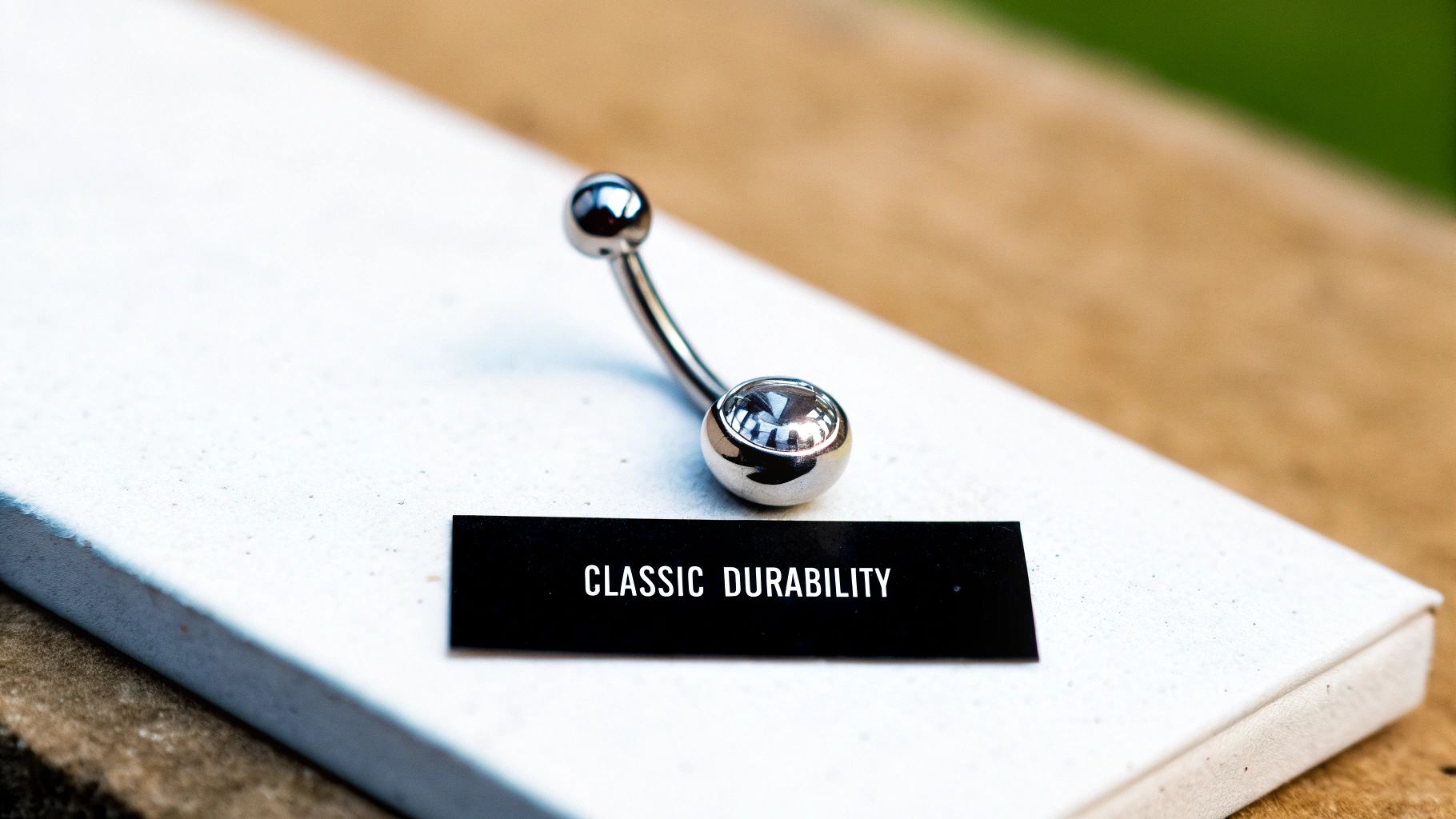
When you see surgical steel belly rings on Bodycandy, you’re looking at high-quality 316L or 316LVM grades. This isn't your average metal; it's specifically designed to be body-safe and incredibly durable. Think of it as the trusty leather jacket of body jewelry—it’s timeless, reliable, and built to withstand pretty much anything you throw at it. Its strong resistance to corrosion and scratches makes it perfect for daily wear.
This material has a long-standing reputation for safety. Surgical steel, particularly the 316L and 316LVM grades, became popular in the 1990s for body jewelry because it's non-porous and resists corrosion, which helps reduce the risk of infection. Globally, it holds a major share of the body piercing market, showing just how trusted it is. You can get more insights on the body piercing jewelry market trends to see how it continues to dominate.
Understanding the Nickel Question
Now, for the real talk: what about nickel? It’s true that surgical steel contains a small amount of nickel, which is what gives it that beautiful, shiny finish. However, in 316L surgical steel, the nickel is bound within the metal alloy in such a way that it's highly unlikely to be released and cause a reaction.
For the vast majority of people, this is a non-issue. But if you have a known, severe nickel allergy, you might be one of the few who react.
Key Takeaway: For most healed piercings, 316L surgical steel is perfectly safe. If you have extremely sensitive skin or a known nickel allergy, you might want to start with titanium and switch to steel once you’re fully healed.
Why Surgical Steel Offers Amazing Value
So, why choose surgical steel? It hits that perfect sweet spot between quality and cost. You get a piece of jewelry that looks amazing, lasts forever, and doesn’t break the bank.
This affordability means you can build a whole collection of awesome surgical steel belly rings without feeling guilty. Want a sparkly gem for the weekend and a simple ball for the gym? With surgical steel, you can have it all. It’s the best belly button ring material for anyone who loves to switch up their style on a whim.
Titanium: The Ultimate Material for Sensitive Skin
If your skin throws a total fit at the mere thought of mystery metals, then you need to meet your new piercing BFF: titanium. For anyone with sensitive skin or a brand-new piercing, this isn't just a good option; it's the gold standard for a reason.
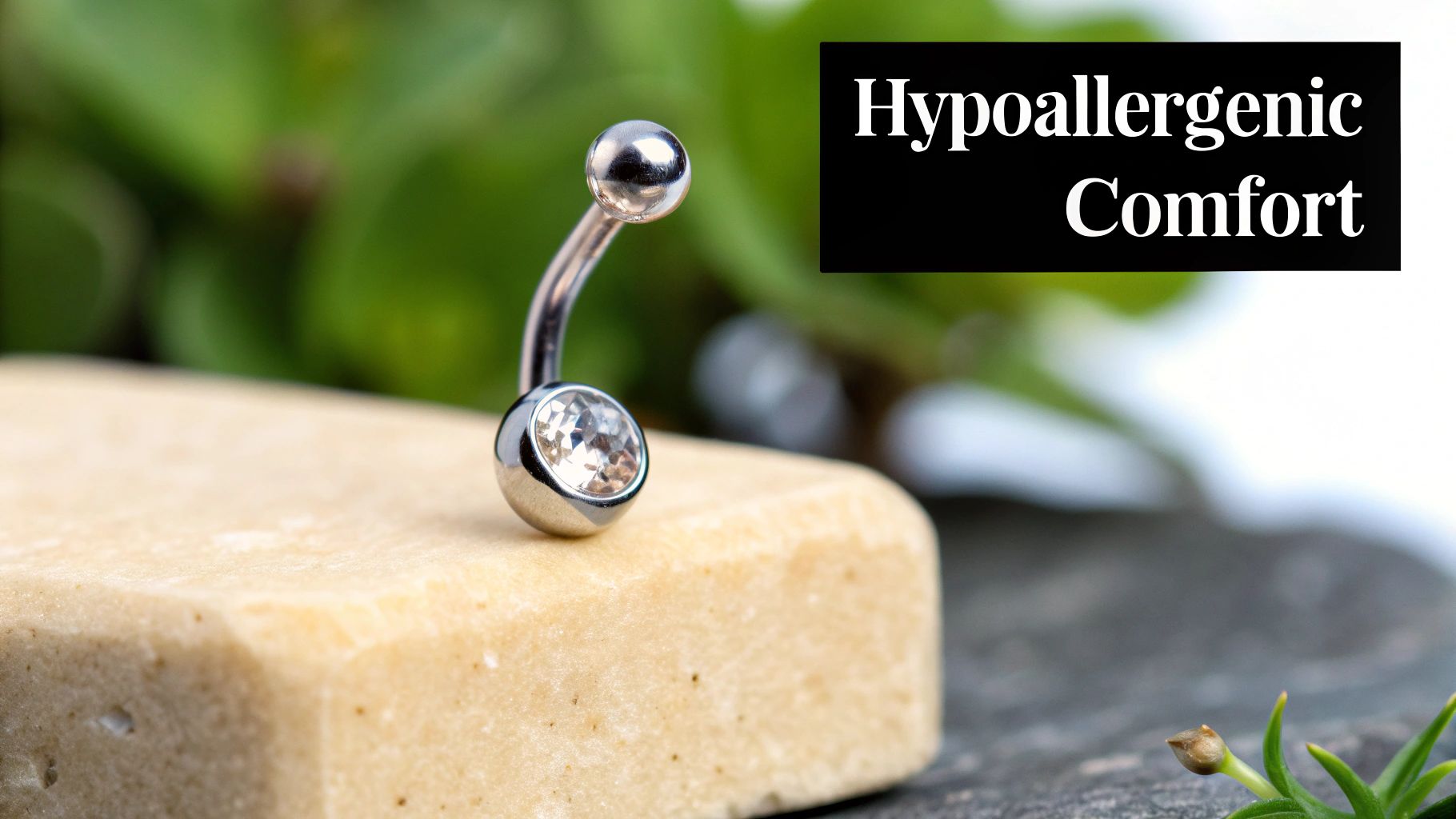
When we talk about titanium for piercings, we’re specifically gushing about implant-grade titanium (ASTM F136). This is the exact same stuff used for medical implants, which tells you everything you need to know about how safe it is. It's completely biocompatible, which is just a fancy way of saying your body welcomes it instead of fighting it off as a foreign invader.
The secret to its success? It's 100% nickel-free. Nickel is the top culprit behind most metal allergies and skin sensitivities, causing that dreaded itching, redness, and irritation. By choosing titanium, you're kicking that risk to the curb entirely, making it the safest bet for a happy, healthy healing process.
So Light You’ll Forget It's There
Beyond its hypoallergenic superpowers, one of the absolute best things about titanium is how ridiculously lightweight it is. It weighs nearly 50% less than surgical steel, which makes a massive difference in comfort, especially with a fresh piercing.
You get all the strength and durability of steel without any of the heft. This reduced weight means less pulling and pressure on your healing navel, which can help minimize irritation and promote a smoother recovery. Seriously, it’s so comfortable you might actually forget you're even wearing it!
The Magic of Anodized Color
Ready for the really cool part? Titanium can be turned into a rainbow of vibrant colors without a single drop of paint or sketchy coating. This process is called anodization, where an electric current is used to change the surface oxide layer of the metal, creating some seriously stunning, iridescent colors.
Anodization isn't a coating; it's a change to the metal itself. This means the color won't chip, flake, or wear off, ensuring your jewelry remains beautiful and, most importantly, completely body-safe.
This makes it the best belly button ring material for adding a pop of color without compromising on safety. You can rock a bold blue, a vibrant purple, or a shimmering rainbow, all while knowing you're wearing one of the safest materials out there.
Choosing titanium means you get the best of all worlds: superior safety, feather-light comfort, and a whole spectrum of gorgeous colors to express your unique style.
Solid Gold: The Luxurious and Timeless Option
Ready to add a touch of luxe to your look? When you want your navel piercing to make a truly timeless statement, nothing beats the classic elegance of solid gold. It’s sophisticated, beautiful, and when you pick the right kind, it’s a fantastic option for fully healed piercings.
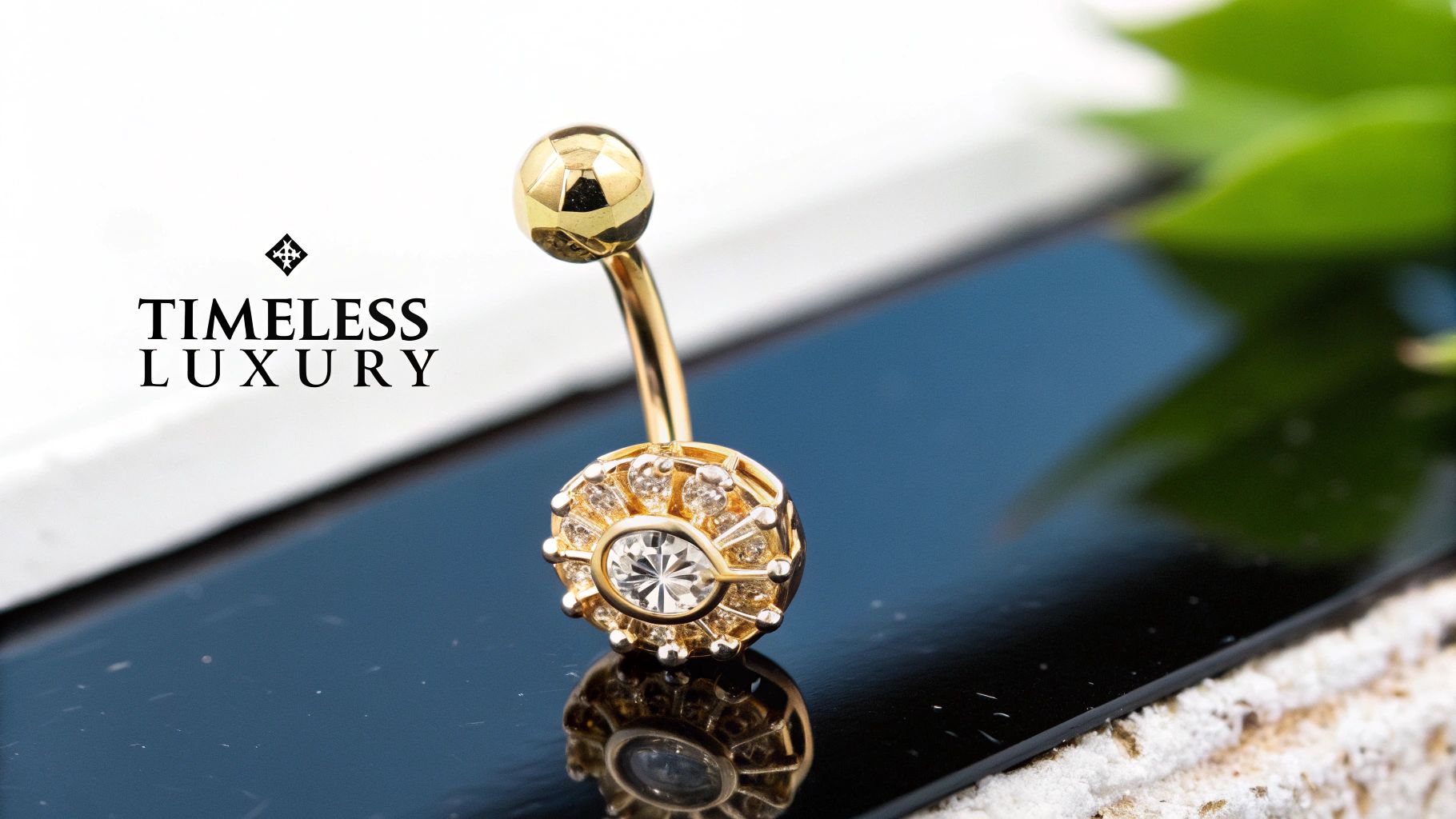
But here's a crucial tip: not all gold is created equal, especially when it comes to body jewelry. You’ll want to stick exclusively to 14k or 18k solid gold. These specific karats hit the sweet spot, offering the perfect balance of purity and strength for long-term wear. Anything higher, like 24k gold, is just too soft and can easily get scratched or bent out of shape.
The Karat Conversation: 14k vs. 18k
So, what's the real difference between 14k and 18k gold for your belly ring? It all comes down to the mix of pure gold and other alloys.
-
14k Solid Gold: This is a super popular and durable choice. It's made of 58.3% pure gold mixed with stronger alloys, making it tough enough for everyday life. It has a beautiful, subtle golden hue that looks amazing on just about everyone.
-
18k Solid Gold: A step up in purity, 18k gold contains 75% pure gold. This gives it a richer, more vibrant yellow color that really pops. While it's slightly softer than 14k, it's still a fantastic and safe option for healed piercings.
Both 14k and 18k gold are excellent choices. They are generally biocompatible and safe for most people, as long as you don't have a specific allergy to one of the alloy metals, like copper. To dive deeper, check out everything you need to know about real gold jewelry in our 101 guide.
Why You Must Avoid Gold-Plated Jewelry
This is a big one. You’ll see "gold-plated" or "gold-filled" jewelry that looks tempting because of the lower price tag, but you should absolutely avoid it for a navel piercing. Plated jewelry has a very thin layer of gold over a base metal—often a mystery mix that can contain nickel.
The thin gold plating on these pieces can easily wear away, flake off, or degrade from contact with your body's natural oils and moisture. This exposes the mystery metal underneath, which can lead to severe irritation, allergic reactions, and even infection.
Investing in solid gold means you’re getting a piece that’s safe, durable, and will keep its gorgeous shine for years to come. It’s the best belly button ring material for anyone wanting to treat themselves to a little everyday luxury that will truly last.
Bioplast and PTFE: The Flexible Modern Materials
Had enough of traditional metals? It might be time to meet Bioplast and PTFE, the flexible wonders of the piercing world. These modern, biocompatible plastics are total game-changers, offering a unique blend of comfort and safety that metals just can't touch.
Their biggest superpower is, without a doubt, their flexibility. Unlike a rigid metal bar, Bioplast and PTFE can bend and move with your body. This makes them incredibly comfortable for anyone with an active lifestyle. Whether you're hitting the gym, practicing yoga, or just constantly on the go, these materials seriously cut down on the pulling and pressure on your piercing.
This unique flexibility also makes them a fantastic option during pregnancy, as they can adapt to your changing body with ease.
Perfect for Sensitive Situations
Beyond just everyday comfort, these modern materials really shine in a few specific scenarios. Because they are 100% metal-free, they are a lifesaver for anyone with severe metal allergies who can't even tolerate titanium. They offer a completely safe, irritation-free alternative.
Plus, their non-metallic nature is a huge deal when it comes to medical procedures. If you have an X-ray, CT scan, or MRI coming up, you won't have to take your jewelry out. This makes them the best belly button ring material for making sure you don’t have to risk your piercing closing during a doctor's appointment.
Pro Tip: Bioplast's soft, smooth surface can be incredibly soothing for a new or irritated piercing. Its gentle nature can help calm things down when your piercing is feeling a bit angry or sensitive.
The infographic below can help you decide if one of these flexible materials is the right choice for your lifestyle.
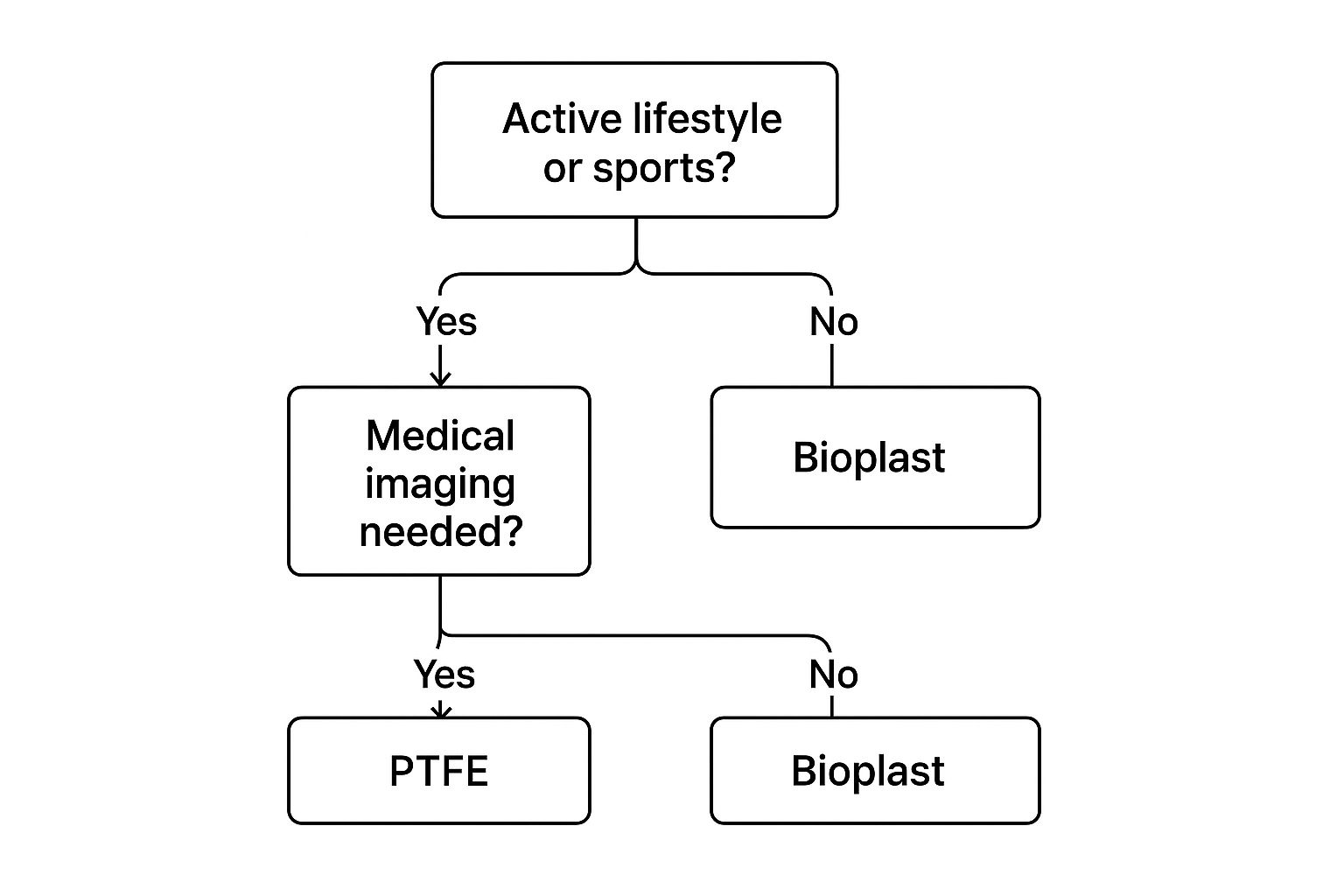
As you can see, the choice often comes down to your specific daily needs, from physical activity to medical necessity.
Bioplast and PTFE are both fantastic, but they do have subtle differences. PTFE (Polytetrafluoroethylene) is extremely slick and flexible, often recommended by piercers for initial piercings. Bioplast is a bit more rigid than PTFE but still offers incredible comfort and is available in a much wider range of styles and colors.
To dive deeper, learn all about the benefits of Bioplast and making the switch in our detailed guide. These materials prove that sometimes the best choice is the most unexpected one.
Matching The Material to Your Piercing Stage
The best belly button ring material isn't just about what looks cutest—it’s about matching the metal to where you are in your piercing journey. A brand-new piercing has totally different needs than a fully healed one that's ready to show off. Making the right choice at the right time is the secret to a happy, healthy navel.
Think of it like this: your initial piercing is in its most delicate and sensitive phase. It needs the absolute best, most gentle material to heal properly without throwing a fit. This is exactly why professional piercers almost always start you off with implant-grade titanium (ASTM F136). It’s completely nickel-free and biocompatible, which just means your body is way less likely to see it as a foreign invader. This seriously cuts down the risk of irritation and helps you get a much smoother healing process.
New Piercings vs. Healed Piercings
For the first six months to a year, your piercing is still working hard to heal on the inside, even if it looks perfectly fine on the outside. During this super important time, your material choices are a bit limited, but sticking to them is essential for success.
-
For Fresh & Healing Piercings (0-12 months): You have to play it safe here. Implant-grade titanium is your number one, hands-down best choice. Sometimes, high-quality 316LVM surgical steel or solid 14k gold can work, but only if you're 100% sure you have no metal sensitivities.
-
For Fully Healed Piercings (12+ months): Once your piercer gives you the all-clear, you can finally start having some real fun! This is when you can explore the whole world of options, from affordable and tough 316L surgical steel to luxurious 18k gold or the flexible and fun Bioplast.
Crucial Tip: If your piercing ever gets irritated—even years after it's healed—switch back to titanium immediately. Think of it as the ultimate reset button. It helps calm everything down so you can figure out what might be causing the trouble.
Special Situations and Lifestyles
Sometimes, your day-to-day life just doesn't mesh with a rigid metal bar. If you're an athlete, always on the move, or pregnant, that constant pressure can cause some serious stress on your piercing.
This is where Bioplast or PTFE shines as the best belly button ring material for the job. Its amazing flexibility allows it to move with your body, which helps prevent all that painful snagging and irritation.
To make things even easier, we've put together a quick guide to help you choose the right material for every stage of your piercing's life.
Material Recommendations by Piercing Stage
This table breaks down the best and worst material choices based on where you are in the healing process, from the day you get pierced to special circumstances.
| Piercing Stage | Recommended Materials | Materials to Avoid |
|---|---|---|
| Brand New (Initial Jewelry) | Implant-Grade Titanium | Surgical Steel, Plated Metals, Sterling Silver |
| Healing (First Year) | Titanium, Solid 14k Gold | Mystery Metals, Gold-Plated, Bioplast (for some) |
| Fully Healed & Happy | Titanium, Surgical Steel, Gold, Bioplast | Sterling Silver, Low-Quality Plated Jewelry |
| Irritated or Sensitive | Implant-Grade Titanium | Everything else until healed |
Ultimately, listening to your body (and your piercer!) is key. A happy piercing is one that’s cared for with the right material at the right time.
Got Questions About Belly Ring Materials? We've Got Answers
Still have a few things buzzing around in your head? We get it. Choosing the right material for your belly button ring is a big decision, so let's clear up some of the most common questions people ask. We want you to feel totally confident when you pick out your next piece of navel bling.
What Is the Absolute Safest Material for a New Belly Piercing?
For a brand-new or still-healing piercing, the answer is always implant-grade titanium (ASTM F136). No contest. Think of it as the VIP of piercing metals—it's what surgeons use for implants, so you know it's legit.
It’s completely nickel-free, super lightweight, and biocompatible, which is a fancy way of saying your body is way less likely to freak out and have a bad reaction to it. This seriously cuts down the risk of irritation and helps your piercing heal as smoothly as possible.
Can I Wear Sterling Silver in My Navel Piercing?
That's going to be a hard no from us. It's best to keep sterling silver far away from your navel piercing, especially if it isn't 100% healed.
Here’s the deal: silver oxidizes (tarnishes) when it's exposed to your body fluids and the air. That process can kick off some major irritation and nasty allergic reactions. Even worse, it can permanently stain the skin around your piercing a gross grayish color. It's much safer to stick with proven body-safe materials like titanium, 316L surgical steel, or solid gold.
Heads Up: Your body has its own alarm system. Signs of an allergic reaction include persistent redness, itching, swelling, a rash-like look, or any fluid discharge that isn't normal for your healing piercing. If you spot these symptoms after putting in new jewelry, take it out! Switch back to a known hypoallergenic material like titanium right away and give your piercer a call.
How Do I Know if I'm Allergic to a Belly Ring Material?
Oh, your body will definitely let you know! An allergy or sensitivity usually shows up as irritation that just won't quit.
If your piercing suddenly gets extra red, super itchy, swollen, or starts weeping a clear or colored fluid after a jewelry change, that's a huge red flag. It’s your body screaming, "I don't like this!" The best first step is always to swap the new piece out for a trusted, high-quality material you know you’re safe with.
Ready to find the perfect, body-safe material that fits your unique style? From implant-grade titanium to gorgeous solid gold, Bodycandy has everything you need for a happy and healthy piercing. Shop our full collection of beautiful belly button rings today at https://bodycandy.com