















So, you're dreaming about some new bling for your navel, but one big question keeps popping into your head: how much does a belly button piercing actually hurt? Let's get right to it. On a pain scale of 1 to 10, most people put the navel piercing somewhere between a 3 and a 5.
It’s a quick, sharp pinch that's over in just a few seconds. Think of it like a flu shot, but maybe a little more intense. It's totally one of those "over before you know it" moments!
How Much Does a Belly Button Piercing Really Hurt?
Thinking about getting your belly button pierced is super exciting, but it's completely normal to feel a little nervous about the pain. The good news is that when you look at all the different kinds of body piercings out there, the navel is definitely one of the more manageable ones.

Unlike cartilage piercings, the needle goes through soft, fleshy tissue. Because of this, the sensation is super brief and way less intense than you're probably imagining. It's a great choice whether you're a piercing newbie or a seasoned pro looking for a stylish new addition without a huge pain commitment.
Most people describe the feeling as a strong, deep pinch. It's not like a cartilage piercing where you might feel a "crunching" sensation; this is more of a straightforward sting. The discomfort is pretty much gone the second the needle is through.
Want to see for yourself? You can check out what the experience is like up close in our video of Lexii's belly piercing journey.
Breaking Down the Pain Scale: 3 to 5 Out of 10
So, what does a 3 to 5 out of 10 actually feel like? Here's a quick breakdown to put it in perspective for you:
- 1–2: Barely there. Like a tiny prick or a mosquito bite you hardly notice.
- 3–5: A definite, sharp pinch that gets your attention but is over in a flash. This is the sweet spot for the belly button piercing pain scale.
- 6–8: A more intense, eye-watering feeling. This is common for cartilage piercings like an industrial or even nipple piercings.
- 9–10: A very sharp, significant pain that might take your breath away for a moment.
To give you a better idea of where the navel piercing sits, here’s how it stacks up against some other popular choices.
Belly Button Piercing Pain Scale At a Glance
| Piercing Type | Average Pain Rating (1-10) | Common Sensation |
|---|---|---|
| Earlobe | 1-2 | A tiny pinch |
| Belly Button (Navel) | 3-5 | A sharp, quick pinch |
| Nostril | 4-6 | A sharp pinch, can make your eyes water |
| Septum | 5-6 | An intense pinch, eye-watering |
| Nipple | 6-8 | A sharp, intense, hot sensation |
| Industrial | 7-8 | A strong, dull ache with two sharp points |
This table shows that while it's more noticeable than a simple earlobe piercing, it's definitely less intimidating than many cartilage or more sensitive area piercings.
In fact, BodyCandy's own piercing pain level chart places navel piercings at a solid 5/10, describing it as a "strong, deep pinch"—much less daunting than cartilage or genital piercings. Client feedback backs this up, with over 70% of people saying the pain was very manageable and totally worth it for the stunning result.
The bottom line? You can walk into your appointment feeling confident and excited, not scared.
What Influences Your Spot on the Pain Scale
Ever wonder why your friend claimed their navel piercing was a total breeze, but someone else said it was way more intense? That 3-to-5 rating on the belly button piercing pain scale isn't set in stone. It’s more of a ballpark figure, and where you actually land is a unique mix of a few different things.
Think of it less like a fixed number and more like a starting point. Several key elements come together to create your personal experience. Knowing what they are can take a lot of the mystery out of the process and help you feel more prepared and in control on piercing day.
Your Unique Anatomy and Pain Tolerance
First off, your own body plays a huge part. The specific shape of your belly button and the thickness of that little "shelf" of skin your piercer will work with are major players. If you have a classic, defined lip of tissue above your navel, the piercing is usually pretty straightforward and quick.
Then there’s your own pain tolerance, which is as unique as your fingerprint. What one person registers as a quick pinch, another might feel as a more memorable sting. Things like your general health, how well you slept the night before, and even your stress levels can all shift your sensitivity up or down.
Key Insight: Your mindset is a powerful tool. If you walk into your appointment super anxious and tense, your body is naturally going to be more on edge and sensitive to pain. Try to relax, take some deep breaths, and focus on how awesome your new bling is going to look! A calm mind usually means a calmer piercing experience.
The Skill of Your Piercer
This one is a complete game-changer. Seriously, the experience and skill of your piercer are probably the most important factors in how much (or how little) a piercing hurts. A seasoned professional is your absolute best friend here.
Here’s exactly why going to a pro makes such a difference on the pain scale:
- Confident and Swift Technique: An experienced piercer isn't hesitant. They work with a quick, precise, and fluid motion that minimizes how long the sensation lasts and reduces trauma to the tissue.
- The Right Tools for the Job: A pro will always use a brand-new, single-use, sterile hollow needle. They never use piercing guns, which use blunt force to shove jewelry through the skin, causing a ton of unnecessary damage, way more pain, and a much rougher healing journey.
- Anatomy-Savvy Placement: A great piercer knows how to read your anatomy. They'll find the perfect "sweet spot" that not only looks great but is also best suited for smooth healing with the least amount of discomfort.
Putting your money toward a top-rated, professional piercer is a direct investment in your own comfort and the long-term health of your new piercing. Their expertise is what makes the whole thing as quick and smooth as possible.
The Belly Piercing Healing Timeline: What to Expect
That quick, sharp pinch from the needle? That's just the very beginning of your journey with a new belly button piercing. The real story isn't just about that one moment; it's about the entire healing process.
Knowing what to expect will help you stay calm and let your body do its thing. Think of it as a timeline—the initial sting is over in a flash, but the sensations will change over the next few weeks and months.
Here’s a detailed breakdown of what the healing process looks like stage by stage.
Belly Piercing Healing Stages and Sensations
| Healing Phase | Typical Duration | What to Expect (Pain & Sensation) |
|---|---|---|
| Initial Piercing | The First 24–72 Hours | Expect a dull, throbbing ache and some definite tenderness. The area will likely be red and a little swollen. This is totally normal! |
| Early Healing | Week 1 to Week 4 | Soreness will fade, but you'll probably notice itching and the formation of "crusties." Don't pick them! This is a sign of healing. |
| Mid-Healing | Month 2 to Month 6 | The piercing will feel much better, but it's not fully healed internally. You might still see crusties and have occasional flare-ups if it gets snagged. |
| Maturation | Month 6 to Month 12 | The internal channel (fistula) is strengthening. The piercing should feel normal, with no pain, discharge, or redness. |
This table gives you the roadmap, but let's dive into what those first few weeks really feel like.
The First Few Days: Throbbing and Tenderness
For the first 24 to 72 hours, it’s completely normal to feel some soreness and a dull throb around your navel. Your piercing will probably look a little pink and feel tender if you touch it. This is just your body kicking off the healing process by sending extra blood to the area. It’s a good thing!
Don’t be shocked if it’s a bit uncomfortable when you bend over or if your waistband accidentally bumps it. Your only job right now is to be super gentle and keep it clean. That means no intense workouts and no high-waisted jeans.
Your personal experience will be shaped by a few key things, from your unique anatomy to your piercer's skill.

As you can see, your body, your mindset, and your piercer’s expertise all play a part in your piercing story.
The Following Weeks: Crusties and Itchiness
Once you’re past that first week, the initial soreness should die down quite a bit. Now, you’ll probably enter the infamous "itchy and crusty" phase. If you see some clear or whitish fluid that dries into little bits around the jewelry, that is a great sign. This stuff is just lymph fluid—your body's natural cleaning crew getting the job done.
It’s going to be tempting, but do not pick the crusties! Seriously. Just gently clean them away with a sterile saline spray, exactly like your piercer told you to. You might also notice some itching. Just like a healing scrape, an itchy piercing means new tissue is busy forming underneath.
A Quick Reality Check: Normal healing includes mild redness, some swelling, tenderness, itching, and those classic crusties. These are all signs your body is on the right track. If you ever see thick green or yellow discharge, or if the skin is hot to the touch and the redness is spreading, it's time to call your piercer or a doctor right away.
The full healing time for a navel piercing is a marathon, not a sprint—it often takes a full 9 to 12 months. During this period, the piercing will get less and less sensitive. You can learn more about what to expect by checking out our guide on the healing times for popular piercings. Patience and a solid aftercare routine are your best friends here.
Pro Tips to Minimize Pain and Swelling
Alright, so you're ready for your new navel piercing, but you'd rather the experience be as painless as possible. We get it! Even though a belly button piercing is pretty low on the belly button piercing pain scale, there are definitely things you can do to make the whole process go smoothly.
Honestly, you have more control over the comfort level than you might realize. A few smart moves before you go, while you're in the chair, and during healing can make a huge difference.

During Your Piercing Appointment
Once you're sitting in the piercer's chair, the single best thing you can do for yourself is to just breathe. When you get nervous and tense up your stomach muscles, it makes the skin taut, which can make the needle feel a little more intense.
Try to focus on slow, deep belly breaths. It’s a simple trick that tells your nervous system to calm down. You can also distract yourself! Pop in some headphones with your favorite playlist, chat with your piercer, or just close your eyes and think about how awesome your new belly ring is going to look.
Your Aftercare Do's and Don'ts
What you do in the first few days and weeks is super important for keeping soreness and swelling in check. The golden rule is simple: a clean piercing is a happy piercing. Good aftercare is your best friend for an easy heal.
The Absolute Must-Do's:
- Sterile Saline Spray: This is your hero product. Clean your new piercing 2-3 times a day with a sterile saline wound wash. It's the only thing you should be using—it’s gentle and works with your body's natural healing process.
- Pat Dry Gently: After you clean it or get out of the shower, gently pat the area completely dry with a fresh, disposable paper towel. You don't want any lingering moisture, which can invite bacteria to the party.
- Wear Loose Clothing: For the first few weeks, stick to low-rise pants and baggy shirts. You want to avoid anything that puts pressure or friction on your new jewelry, like high-waisted jeans. That constant rubbing is a recipe for irritation and swelling.
Expert Tip: Steer clear of harsh chemicals! Things like rubbing alcohol, hydrogen peroxide, or antibacterial soaps are way too strong for a healing piercing. They'll dry everything out, kill the good cells your body needs to heal, and just make your recovery more complicated and painful.
The "Please Don't Ever" List:
- No Touching or Twisting: Your hands are covered in germs, so keep them away! Resist the temptation to play with, twist, or turn your jewelry. The only time to touch it is with freshly washed hands during cleaning.
- Avoid Soaking It: For the entire healing time, you have to stay out of pools, hot tubs, lakes, and the ocean. These are basically giant pools of bacteria that can cause a really nasty infection.
- Don't Change the Jewelry Too Soon: Your first piece of jewelry was chosen specifically to give your piercing room to heal. Don't swap it out for that cute dangly charm you bought until your piercer says it's 100% ready. For an easy heal, start with simple, high-quality jewelry like our titanium belly button rings.
Choosing Jewelry for a Happy Healing Piercing
Okay, let's get to the fun part—the bling! Picking out your first belly ring is a huge part of the excitement, but your choice is about way more than just looks. The jewelry you start with is absolutely critical for keeping your spot on the belly button piercing pain scale low and making sure the whole healing process goes off without a hitch.
Think of it like this: your new piercing is basically a small, super-sensitive wound. The very last thing you want is to stick some mystery metal in there that could trigger irritation, an allergic reaction, or even a nasty infection.
The Best Materials for Starter Jewelry
When it comes to a happy piercing, you just can't compromise on material quality. You need jewelry that your body will welcome, not fight against. That's where implant-grade metals come into play—they’re literally designed to live inside the human body peacefully.
Here are the top-tier choices your piercer will likely recommend:
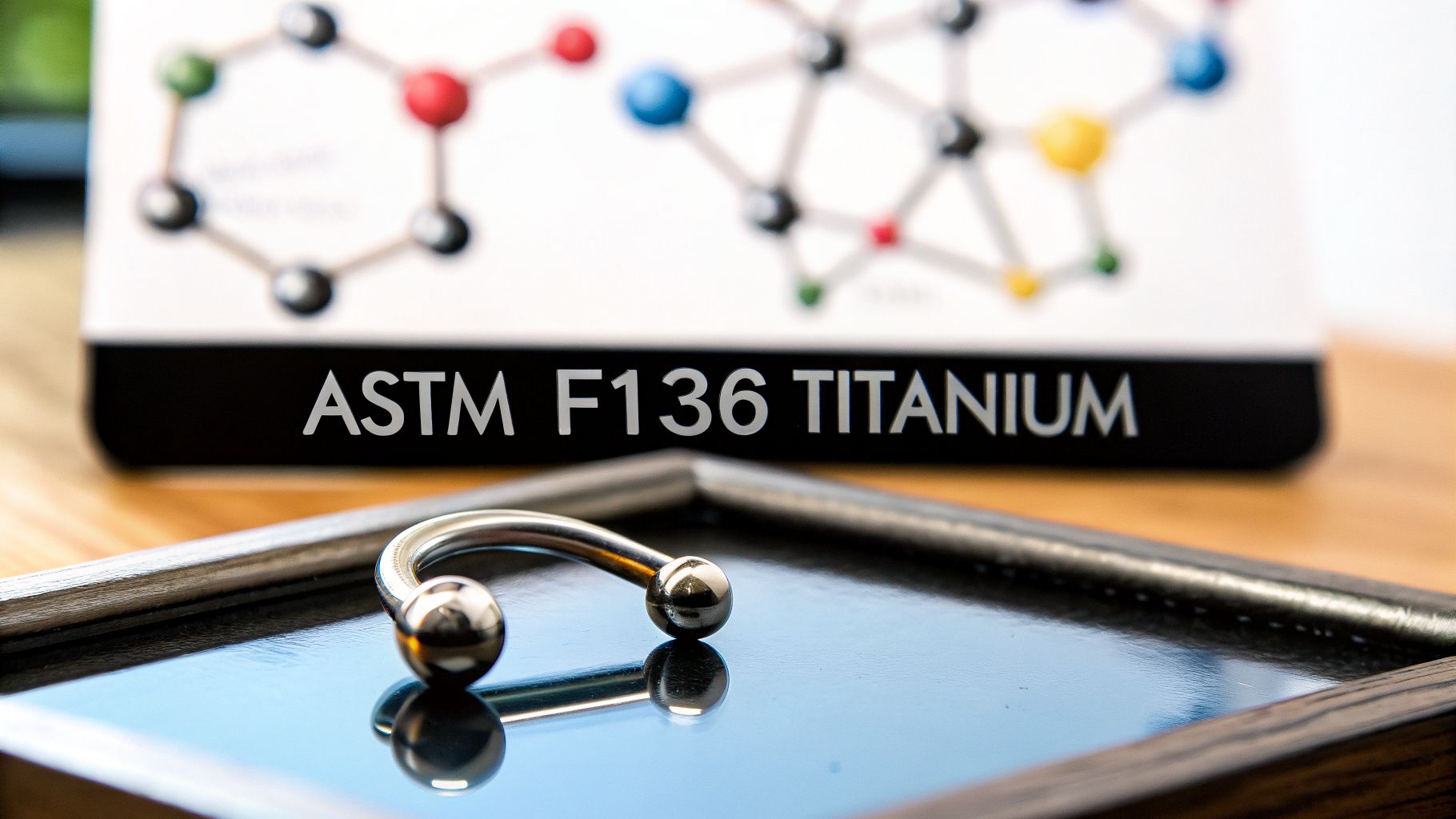
- Implant-Grade Titanium (ASTM F-136): This is the undisputed champion for fresh piercings. It’s incredibly lightweight, 100% nickel-free, and so biocompatible that your body is highly unlikely to have a bad reaction to it.
- 14k or 18k Solid Gold: If you’re a gold person, just make sure it’s the real deal—solid, not plated! Gold-plated jewelry has a paper-thin coating that can chip or wear away, exposing the cheap base metal underneath and causing a world of irritation.
- Implant-Grade Surgical Steel (ASTM F-138): While loads of people heal perfectly fine with surgical steel, it's important to know it contains trace amounts of nickel. If you have sensitive skin or a known nickel allergy, your safest bet is to go with titanium.
Your starter jewelry is all about safety first. Choosing a high-quality, body-safe metal is one of the most important decisions you'll make for a pain-free and successful healing journey. It sets the foundation for a healthy piercing you'll love for years.
Style Matters: Simple Is Better
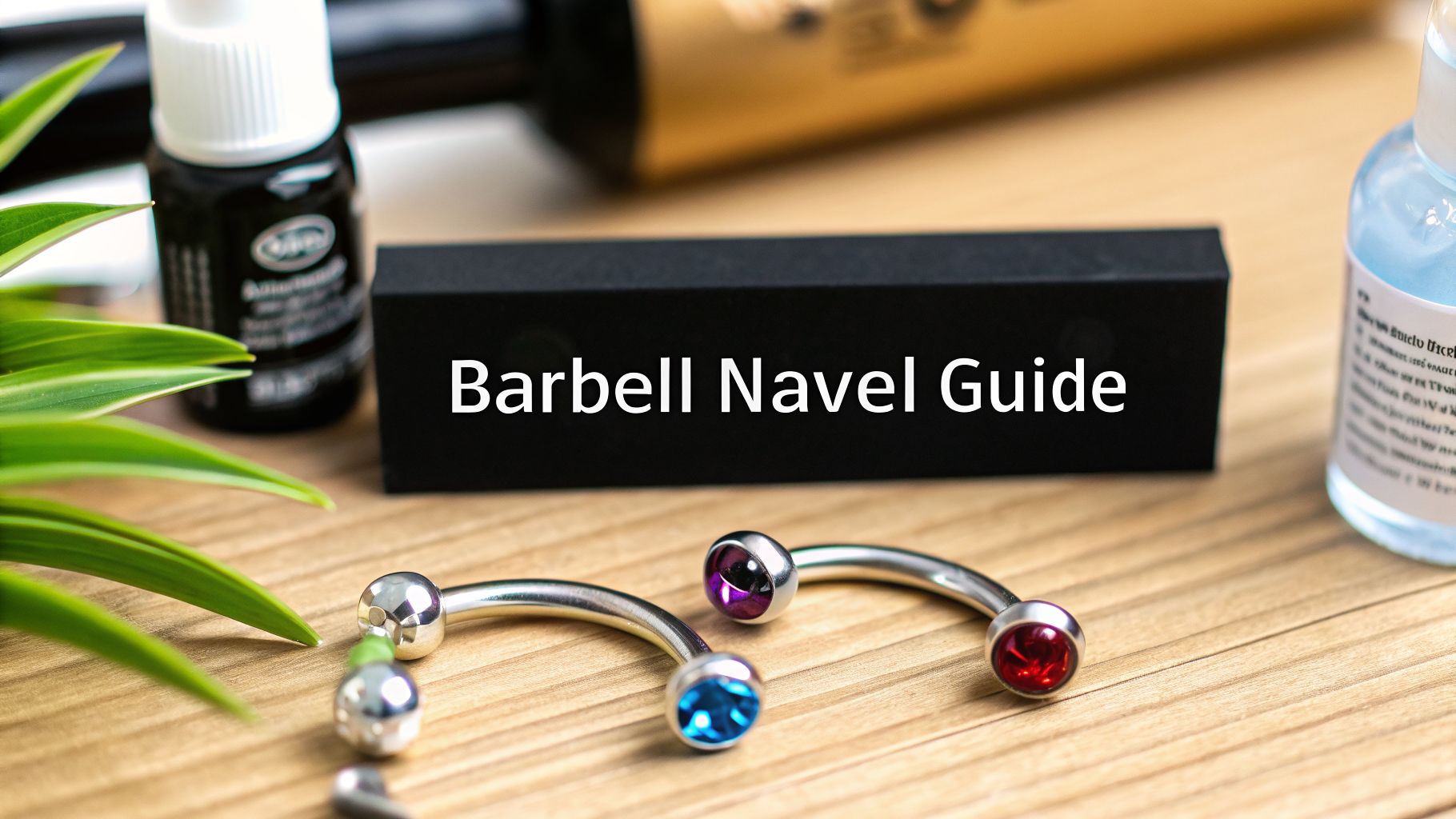
I know, I know—it's so tempting to grab that super cute, dangly charm you've been eyeing. But you’ve got to pump the brakes and save that piece for later. For your initial piercing, simple is always the way to go. The perfect starter jewelry is a basic curved barbell.
This classic style is ideal because it has a smooth, uncomplicated surface with no extra bits to snag on your waistband or become a little trap for bacteria. Your piercer will also use a slightly longer bar to start with, which gives your piercing room to swell. If you want to nerd out on the different parts of your new jewelry, check out our guide on the anatomy of a belly ring.
Red Flags to Watch for During Healing
Most navel piercings heal up just fine, but it’s super important to know the difference between what’s normal and what’s a real problem. Think of it this way: your body is smart. It’ll send you signals if something isn't right, and learning to read those signals is the key to a happy, healthy piercing.
A bit of redness, some tenderness, and that clear or whitish fluid that dries into "crusties" are all totally normal parts of the healing game. But if your pain suddenly spikes after the first few days instead of getting better, that's your cue to pay attention.
Spotting Infection Early
You need to deal with a potential infection ASAP. Unlike the initial soreness, an infection will usually get worse over time. Keep your eyes peeled for these specific warning signs.
- Thick, Colored Discharge: If you're seeing yellow, green, or dark-colored pus, that's a huge red flag. Normal healing fluid is always clear or milky-white.
- Intense Pain and Swelling: Some swelling is expected at first, but it should calm down. If the area gets incredibly swollen, painful, and feels hot when you touch it, you might be dealing with an infection.
- A Foul Odor: A healthy piercing shouldn't smell like anything. Any unpleasant or "off" odor is a strong signal that bacteria have crashed the party.
If you spot any of these signs, don't play doctor. Get in touch with your piercer or a doctor right away.
Crucial Tip: Never, ever remove your jewelry if you think you have an infection. Taking it out can let the piercing hole close up, which traps the infection inside. This can lead to a much more serious problem, like an abscess.
Understanding Piercing Rejection
Another thing to watch for is rejection. This isn't an infection; it’s your body deciding it doesn't like this new, foreign object and trying to literally push it out of your skin. It has its own unique set of signs.
You'll notice the jewelry slowly migrating closer to the surface. The piercing holes might look like they're getting bigger or stretching, and the strip of skin between them might get thin and red. If you think your piercing is rejecting, go see your piercer. Catching it early is your best shot at saving it.
Your Belly Piercing Questions Answered
Still have a few things you're wondering about? Totally normal! Getting all the facts before you take the plunge is the smartest way to go. We've tackled some of the most common questions about navel piercings, the belly button piercing pain scale, and healing to make sure you're feeling 100% confident.
Can I Get My Belly Button Pierced if I Have an 'Outie'?
We get this one all the time! The short answer is: it depends entirely on your unique anatomy. For a classic navel piercing to work, you need a nice, defined ridge or "lip" of skin at the top of your belly button for the jewelry to pass through.
Many outies just don't have this lip, which means a standard piercing will struggle to heal. But don't lose hope! A talented piercer might suggest a "floating" navel piercing, which uses a flat disc on the bottom instead of a traditional ball. The only way to know for sure is to have a reputable professional take a look in person—they'll give you the safest and best recommendation for your body.
Will Gaining or Losing Weight Affect My Piercing?
Big changes in your weight, particularly around your stomach, can definitely have an impact. If you gain weight, the jewelry might start to feel snug, putting pressure on the piercing channel and causing some serious irritation.
On the flip side, losing a significant amount of weight can cause the piercing to shift or hang differently than it used to. Small, everyday fluctuations aren't going to cause any drama. But if you're planning a major body transformation, it's a good idea to wait until your weight has stabilized before getting pierced.
How Long Until I Can Change My Belly Ring?
This is where patience becomes your superpower! A belly button piercing is a serious commitment, often taking a full 9 to 12 months to heal completely. It might look and feel totally fine from the outside way sooner, but the tissue on the inside is still fragile.
Swapping out your starter jewelry too early is a recipe for disaster—it can tear that delicate new tissue, introduce nasty bacteria, and set you back with pain and a potential infection. You should never change your jewelry until a professional piercer has examined the piercing and given you the official all-clear. Once you get that green light, the world of fun belly ring styles is yours to explore!
Ready to find the perfect piece for your future navel piercing? Bodycandy has a huge collection of high-quality starter jewelry and dazzling designs for when you're fully healed. Check out our full selection of belly button rings today