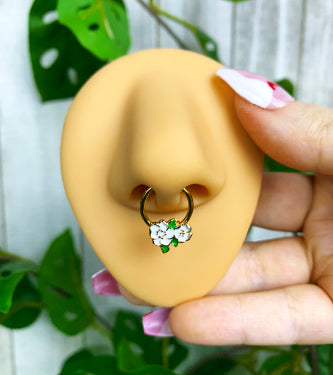



















You’re shopping for a new hoop, click on something cute, and then the product page hits you with a mini science class. 18G. Stainless steel. Surgical steel. 304. 316L. Suddenly you’re not shopping anymore. You’re decoding metal jargon with one eyebrow raised.
If that’s you, relax. You’re not missing some secret piercing language everyone else magically understands.
A lot of guides talk about 18-gauge stainless steel like it belongs in a machine shop. You care about something way more useful. Will it fit your piercing? Will it feel comfortable? Will your skin throw a tantrum? Will it still look good after real life happens? Those are the questions that matter.
This guide translates the technical stuff into actual piercing terms. No dry metal lecture. No confusing nonsense. Just the info you need to choose jewelry with confidence and stop panic-Googling size charts at midnight.
Welcome to the World of 18G Jewelry
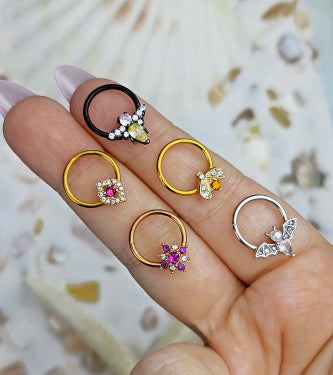
You’ve probably seen 18G on nose hoops, cartilage rings, and other dainty pieces that look simple until it’s time to buy one. Then the spiral begins. Is 18G thick? Thin? Is it smaller than 16G or bigger? And what does stainless steel mean when it’s going through your skin?
That confusion is completely normal.
A lot of body jewelry terms come from manufacturing language, not from the way real people shop. So instead of starting with how the jewelry feels in your nostril or helix, most explanations jump straight into metal specs. Helpful for engineers. Not so helpful when you’re trying to decide whether a ring will look sleek or feel bulky.
Here’s the useful version. 18-gauge stainless steel is a very common combo because it sits in a comfortable middle zone. It’s slim enough for a lot of everyday piercings, but still sturdy enough to hold its shape well. That balance is exactly why so many people run into it while shopping.
You don’t need to memorize metallurgy to buy safe, cute jewelry. You just need to know what the words mean for your body.
If you’ve ever bought a piece that looked perfect online and then felt wrong the second you tried it on, you already know that size and material matter just as much as style. A polished hoop can still be a bad choice if the gauge is off or the metal doesn’t play nice with your skin.
So let’s make this simple. First, we’ll crack the code on gauge sizing. Then we’ll get into why 18-gauge stainless steel works so well for certain piercings, where people get tripped up on steel grades, and how to figure out your actual fit without guessing.
What Exactly Is Gauge Demystifying Piercing Sizes
Gauge is the thickness of the jewelry that goes through your piercing. That’s it. Not the overall size of the ring. Not how big it looks from the front. Just the thickness of the post or hoop itself.
And yes, the gauge system is weird.
The backward part everyone hates
With piercing sizes, a smaller number means thicker jewelry. So 16G is thicker than 18G, and 18G is thicker than 20G. It feels backward because it is backward.
Consider this:
- 20G is more delicate
- 18G is a little thicker
- 16G is thicker again
That’s why people accidentally order the wrong thing. They assume a bigger number means a bigger piece. In piercing land, it means the opposite.

What 18G means in real measurements
For 18-gauge stainless steel, the thickness is approximately 1.27 millimeters (0.0500 inches), which is one reason it’s such a popular body jewelry size for comfort and wearability, according to this 18-gauge stainless steel reference.
That number matters because it gives you something solid to compare against if you’re checking an existing piece or talking to your piercer.
Here’s a quick cheat sheet:
| Gauge | What it means visually |
|---|---|
| 20G | thinner, more delicate look |
| 18G | balanced, still slim but more substantial |
| 16G | thicker and often used where more structure is wanted |
Gauge is not the same as diameter or length
This is the other big mix-up.
If you’re buying a hoop, you’re dealing with two different measurements:
- Gauge = thickness of the metal
- Diameter = the size of the hoop itself
If you’re buying a straight post:
- Gauge = thickness of the post
- Length = how long the wearable part is
So you can absolutely have two nose hoops that are both 18G, but one sits snug and the other hangs lower because the diameter is different.
Practical rule: If a piece fit well before, don’t only copy the style. Copy the gauge and the diameter or length.
If you want a deeper primer on how piercing sizes work across different jewelry types, BodyCandy has a handy guide on the standards of gauge sizing for body jewelry.
Why 18G Stainless Steel Is The Sweet Spot
Some jewelry sizes are fussy. They either feel too tiny and flimsy, or too thick and noticeable for everyday wear. 18-gauge stainless steel tends to land in that sweet middle zone.
For a lot of piercings, it gives you enough substance to feel secure without making the jewelry feel clunky.
It’s slim, but not fragile
18-gauge stainless steel works well for people who want jewelry that feels light and looks clean. That’s especially true in placements where a bulky piece can feel annoying fast, like a nostril or certain cartilage piercings.
At the same time, it’s not some featherweight little noodle of metal. In its annealed condition, 18-gauge Type 304 stainless steel has a tensile strength of around 515 MPa, which is why it can handle the pulling and tugging of daily wear without bending or breaking so easily, according to this breakdown of 18-8 stainless steel.

That matters in real life. Piercings get bumped by towels, shirts, sleep, hairbrushes, and your own hands when you forget it’s there and touch it for no reason.
It feels easy to wear
A lot of people like 18G because it doesn’t usually have that heavy, overbuilt feel. It’s a nice fit for jewelry styles that are supposed to look sleek instead of chunky, like:
- Nose hoops that sit close and clean
- Small studs where you want subtle shine
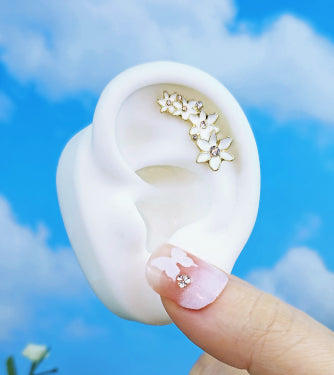
- Cartilage rings that shouldn’t overpower the ear
The overall vibe is polished, not intense.
It also gives designers room to be creative
Because this gauge balances strength with wearability, it works well for pieces with more detail. Think smooth rings, tiny accents, and shapes that need to keep their form instead of warping every time you change clothes or sleep on one side.
That’s part of why 18G shows up so often in jewelry that’s meant to be both practical and cute. You get a piece that can handle regular wear while still looking refined.
If your goal is “I want it to feel comfortable, stay put, and not look bulky,” 18G is usually worth a close look.
This isn’t the right size for every piercing or every anatomy, of course. But for everyday jewelry in the right placement, it often hits the balance people are chasing without realizing that balance is what they want.
Not All Steel Is Created Equal Your Guide to Safety
A common mistake many shoppers make is seeing “surgical steel” and assuming that means every steel piece is basically the same. It isn’t.
“Surgical steel” gets used as a catch-all retail phrase, but what matters to your piercing is the specific grade of steel and how your skin reacts to it.
Why the grade matters
Different stainless steel grades have different compositions. One big difference is nickel content, and that’s a huge deal if you have sensitive skin.
Some grades of stainless steel, like 304, contain 8-10.5% nickel, and that nickel can trigger allergic reactions in 10-20% of pierced individuals, according to this discussion of 304 stainless steel and biocompatibility concerns.
That’s why implant-grade 316L steel is usually considered the safer pick for sensitive skin. It has lower nickel content, so it’s a better option when your piercing gets irritated easily or you know nickel is a problem for you.
304 versus 316L in plain language
Here’s the simple version:
| Steel grade | What you should know |
|---|---|
| 304 stainless steel | Common and durable, but nickel content can be an issue for some people |
| 316L stainless steel | Often preferred for body jewelry when skin sensitivity is part of the conversation |
If your piercing is healed and your skin handles stainless steel well, you may do fine with different steel options. If your skin is dramatic, reactive, or already suspicious of earrings, 316L deserves your attention.
What to ask before you buy
Don’t stop at “steel.” Ask better questions.
- What grade is it? If the listing only says surgical steel, that’s not very specific.
- Is your skin nickel-sensitive? If yes, be extra cautious.
- Is the piercing fresh or healed? Fresh piercings usually need more careful material choices.
- Is the finish smooth and polished? Even a decent material can be annoying if the finish is rough.
If you want to browse examples of jewelry made with this material category, BodyCandy has a post featuring annealed 316L surgical steel D-rings and more.
A mystery metal with cute styling is still a mystery metal. Your piercing cares more about composition than marketing words.
Finding Your Fit How to Measure and Choose 18G Jewelry
Sizing gets messy fast when people use one measurement to guess another. You can know your gauge and still order the wrong jewelry if you miss the diameter or length.
The good news is that you don’t need fancy equipment to get a better answer than pure guesswork.

Where 18G often shows up
You’ll often see 18G in jewelry for piercings like these:
- Nostril
- Helix
- Daith
- Rook
- Eyebrow in some styles
That doesn’t mean every person with one of those piercings wears 18G. Piercing anatomy, placement, and your piercer’s preference all affect sizing. Still, it’s a common place to start your search.
How to measure what already works
If you already own a piece that fits well, use that as your reference point.
- Clean the jewelry first. Don’t handle a crusty old hoop like it’s a scientific instrument.
- Check the gauge from the product listing if you still have it. That’s the easiest route.
- Measure diameter or length separately. A small ruler can help, but calipers are more precise.
- Write it down immediately. Trust me, you will not remember later.
For hoops, measure the inside diameter. For straight posts, measure the wearable length, not the decorative end.
The mistake people make most
They know their piercing takes an 18G, so they buy any 18G piece they like.
Then the hoop hugs too tight, hangs too low, or the post presses into the skin because the diameter or length was wrong. Same gauge. Wrong fit.
Jewelry size has two jobs. One part goes through the piercing. The other part has to sit correctly on your anatomy.
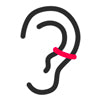
A quick visual can help if you’re more of a “show me” person than a “read me” person:
When to ask your piercer instead of your group chat
If the piercing is newer, irritated, oddly placed, or you’ve never changed it before, ask your piercer. That’s the move.
They can tell you whether your piercing was done at 18G, whether the current jewelry length is intentional for swelling or healing, and whether switching to a snugger style is a smart idea. A friend with a nose ring is not the same thing as a professional fit check.
If you’re shopping online, compare every listing for these three details before you click buy:
- Gauge
- Diameter or length
- Material grade
That combo tells you way more than the product photo ever will.
Keeping It Fresh Care for Your Stainless Steel Jewelry
Stainless steel is pretty low-maintenance, but low-maintenance doesn’t mean no-maintenance. If you want your jewelry to stay shiny and your piercing to stay calm, keep the care routine simple.

Do this
- Wash gently: Use mild soap and water for the jewelry itself when appropriate, or follow your piercer’s guidance.
- Use sterile saline when needed: This is often the gentler choice around the piercing area.
- Dry it well: Moisture left sitting on jewelry or skin can get annoying fast.
- Store pieces separately: A small pouch or organizer helps prevent scratches.
Skip this
- Harsh cleaners: Strong chemicals can be rough on jewelry and your skin.
- Abrasive scrubbing: If you have to attack it with force, that’s not the right method.
- Dirty storage: Tossing jewelry loose into a drawer is how finishes get scratched and pieces get grimy.
If a piercing starts acting up, don’t assume the metal is automatically the villain. Sometimes the issue is buildup, friction, pressure, or a poor fit.
Beyond Steel Titanium and Niobium Alternatives
Stainless steel is a solid default for a reason. It’s durable, widely used, and can be a practical choice when you want everyday jewelry without getting too precious about it.
But it isn’t the only option.
When titanium makes more sense
If your skin is highly reactive, titanium is often the material people look at next. It’s popular with wearers who want a lightweight feel and extra peace of mind around sensitivity.
If you want a quick primer on that material, BodyCandy has a useful guide on titanium body jewelry.
Where niobium stands out
Niobium gets attention for color. If you love bolder looks and want something outside the standard silver-tone lane, niobium is often part of that conversation.
It also appeals to people who want another metal option beyond stainless steel when they’re dialing in comfort and style.
Why stainless steel still stays in the mix
Stainless steel has one big modern advantage beyond looks and toughness. It’s 100% recyclable, and interest in materials like recyclable stainless steel and long-lasting PVD-coated options is rising. Searches for “hypoallergenic 18g” were up 40% in Q1 2026, according to this trend discussion on stainless steel and alloy materials.
So if you want a material that’s durable, familiar, and still relevant to more conscious shopping habits, stainless steel absolutely still belongs in the conversation.
Your Go-To Guide for 18G Piercing Questions
A few questions always pop up right before someone checks out. Let’s clean those up.
Can you switch from 20G to 18G
Sometimes, yes, but don’t treat it like nothing. 18G is thicker than 20G, so moving up in size can feel tight or uncomfortable if the piercing isn’t ready for it.
If the piercing is healed, your piercer may be able to help you make the change safely. If it’s fresh, irritated, or already moody, don’t force a thicker piece through.
Is 18G good for a nose piercing
It can be. A lot of people like 18G in nostril jewelry because it gives a little more structure than thinner options while still keeping a sleek look. The important part is whether your specific piercing was done at that size and whether the diameter works for your anatomy.
Why does my steel jewelry irritate me if stainless steel is supposed to be fine
A few possibilities:
- The grade may not suit your skin
- The finish might be rough
- The fit could be off
- The piercing may be getting bumped or over-cleaned
Material matters, but it’s not the only variable. Don’t overlook length, diameter, pressure, and cleaning habits.
If a piercing is angry, troubleshoot in this order: fit, movement, cleaning routine, then material.
Is stainless steel okay for long-term wear
For many people, yes. It’s widely used because it balances durability and wearability well. But if you know you’re nickel-sensitive, long-term comfort may be better with a more sensitivity-friendly material.
How do you know if an online listing is giving enough information
Look for specifics, not vague buzzwords.
A solid listing should tell you:
| What to check | Why it matters |
|---|---|
| Gauge | tells you the thickness |
| Diameter or length | tells you how it will sit |
| Material grade | helps you judge skin compatibility |
| Style details | tells you how the piece opens and wears |
If a listing is fuzzy on the metal and fuzzy on sizing, that’s your sign to keep scrolling.
18-gauge stainless steel can be a smart choice when you want jewelry that looks refined, feels wearable, and holds up to normal life. Once you know how gauge works and what steel grade you’re dealing with, the whole shopping process gets way less chaotic.
Ready to find a piece that fits your piercing and your style? Browse BodyCandy for nose rings, cartilage jewelry, and other body jewelry styles, then match your gauge, diameter, and material before you add to cart.