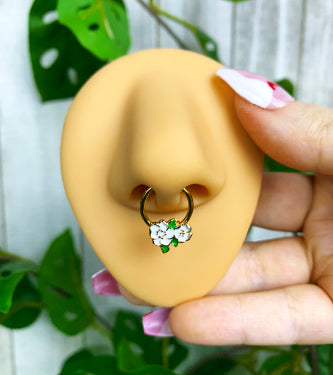


















You're probably here because you saw “14k keepsake ring” on a product page, in a resale listing, or buried in a social post and thought, okay, but what does that mean?
Fair question. The phrase sounds official, sentimental, and a little slippery all at once. It can refer to a specific jewelry brand, or it can mean a ring that's meaningful to you personally. If you wear body jewelry, that gets even more confusing fast. You're not just wondering whether it's pretty. You're wondering whether it's solid gold, whether it'll irritate your skin, and whether it makes sense for a piercing.
That's where people get tripped up. Jewelry language loves sounding fancy when a plain-English answer would do the job.
A 14k Keepsake ring can be a legit solid gold piece. It can also be something totally different from the memorial or personalized “keepsake” jewelry you may have seen online. Once you separate the name from the idea, shopping gets much easier.
So You Saw a 14k Keepsake Ring
You're scrolling late at night, half shopping and half just vibing, and a listing pops up for a 14k Keepsake ring. Maybe it looks vintage. Maybe it's a plain band. Maybe the seller says it's “real 14k Keepsake” and assumes that clears everything up.
It doesn't.
That phrase triggers three questions right away:
- Is Keepsake a brand
- Does keepsake mean it contains something sentimental
- Is 14k gold good for piercings or sensitive skin
Those are all normal questions. The wording makes it sound like “keepsake” is describing the metal, when it usually isn't.
A lot of the confusion starts because jewelry sellers and shoppers often use the same word for two very different things.
If you're coming at this from a body jewelry angle, there's another layer. You might be wondering whether a ring originally made as a band has anything to do with a hoop, clicker, or captive style you'd wear in a nostril, helix, or septum. Sometimes the answer is no. Sometimes the useful part is understanding what 14k gold brings to the table.
A key aspect is separating the label from the material. Once you do that, the phrase stops sounding mysterious and starts sounding manageable.
The Keepsake Ring A Brand vs The Vibe
The biggest mistake people make is assuming “keepsake ring” means one single product category. It doesn't.
Sometimes Keepsake is a brand name. Other times, “keepsake ring” just means a ring with emotional value. Those are not the same thing, and mixing them up leads people down the wrong shopping path.

When Keepsake is the actual brand
In this version, Keepsake works like a label on the jewelry. You may see it on vintage bands, engagement rings, or classic gold styles sold through mainstream retail channels and resale marketplaces.
That means the word is identifying who made it, not promising that it contains ashes, hair, breastmilk, or some other personalized material.
When keepsake means sentimental jewelry
This is the other lane. Here, “keepsake ring” describes a ring that holds memory or meaning. That could be a memorial piece, a custom ring made with personal inclusions, or a ring you associate with a person or moment.
That's why search results get messy. According to this discussion of keepsake ring search intent, 30 to 40% of search queries for “keepsake ring” target the customization niche. So many search with one meaning in mind and land on the other.
Why this matters for piercing jewelry
If you want gold body jewelry, the useful question isn't “is it keepsake enough.” It's:
- Is it solid 14k gold
- Is it safe for the piercing I want to wear it in
- Is the design appropriate for body jewelry
A branded Keepsake band and a sentimental keepsake ring can both be meaningful. But neither label tells you everything you need to know about comfort, purity, or wearability in a piercing setup.
Deconstructing 14k Gold for Your Piercings
Now for the part that matters most if you care about comfort and quality. What does 14k mean?
Think of gold like a recipe. Pure gold is beautiful, but it's soft. For jewelry that has to survive real life, jewelers mix gold with other metals to toughen it up.
A 14K gold ring is composed of approximately 58% pure gold and 42% other metals, which is a regulated standard in major markets and part of why 14k is known for balancing shine with strength, as explained in this breakdown of 14K gold composition.

Why that mix matters
If you wore ultra-soft gold in jewelry that gets bumped, twisted, slept on, or snagged on a hoodie, you'd have problems. Alloy metals help the piece keep its shape better.
For body jewelry, that balance matters a lot. A nose ring, cartilage hoop, or seam ring has to look good and also hold up to everyday wear. That's where 14k tends to make sense. It gives you the gold look without being as fragile as higher-purity gold.
Why people with sensitive skin pay attention to it
“Sensitive skin” isn't one-size-fits-all, and reactions depend on the full metal mix, not just the gold content. Still, many people prefer solid gold over mystery metal blends because at least they know what category they're buying from.
That doesn't automatically make every 14k piece perfect for every person or every fresh piercing. It does make it easier to evaluate than vague listings that say things like “gold tone” or “premium metal.”
For a good foundation on gold jewelry terms and what they mean in practice, check out BodyCandy's crash course on buying and wearing gold jewelry.
Practical rule: If a seller can't clearly tell you whether a piece is solid 14k gold, treat that as a warning sign.
Gold in Your Piercings The Good and The Bad
14k gold has a lot going for it. It also isn't the right answer for every piercing, every budget, or every stage of healing.
The easiest way to think about it is as a tradeoff. You're choosing a premium material with classic style and long wear, but you're also paying more and asking a softer metal to do a tougher job than steel or titanium would.
The fast comparison
| Pros | Cons |
|---|---|
| Solid 14k gold has a polished, elevated look that works with almost any styling setup. | It costs more than many other common body jewelry materials. |
| It's a popular choice for people who want a precious metal instead of plated fashion jewelry. | Very delicate designs can still bend or get damaged if they're snagged. |
| Properly maintained 14k gold pieces are made for long-term wear. | The alloy mix may not be the best starting point for a fresh, healing piercing. |
| It works especially well once a piercing is healed and settled. | You need to shop carefully because “gold” wording on listings can be vague. |
The long-wear advantage
A big reason people buy 14k gold is that they want jewelry that sticks around. A 14K gold keepsake ring is engineered to last for decades, with user reports indicating a lifespan of 20 to 50 years or more when properly maintained, according to user discussion on everyday 14K wear.
That doesn't mean every thin hoop will survive every bad decision. It means the material itself is built for the long haul when the piece is well made and worn with reasonable care.
Who usually loves it most
14k gold tends to appeal to a few types of wearers:
- Style-focused collectors who want a warm, luxe look in healed piercings
- Sensitive-skin shoppers who are trying to avoid low-quality mixed metals
- Gift buyers who want a piece that feels special, not disposable
If sensitive skin is part of your shopping checklist, BodyCandy's guide to hypoallergenic jewelry for sensitive skin is a smart next read.
Gold is gorgeous. It's just not indestructible. Choose it for its balance of beauty and wearability, not because you think it can't ever get scratched.
How to Pick The Right 14k Ring
Shopping for a 14k ring gets easier when you ignore the romantic wording and inspect the details like a hawk. Pretty photos are nice. Clear specs are better.
Start with what the piece actually is
If you're shopping for body jewelry, first make sure the ring is body jewelry and not just a finger ring being described in a way that sounds transferable. A classic band and a nose hoop are both rings, but they're built for very different jobs.
For piercings, you want to confirm:
- The style. Is it a hoop, clicker, seam ring, captive ring, or fixed decorative piece?
- The fit. You need the correct gauge and diameter for the piercing.
- The closure. It should feel secure, not flimsy or awkward.

Check the stamp
One of the clearest authenticity clues is the mark inside or on the piece. Authentic 14k Keepsake rings are crafted from solid 14 Karat Gold and stamped with the marks “14K Keepsake,” as shown in this vintage Keepsake ring listing.
That tells you two things at once:
- 14K refers to the gold purity category
- Keepsake may refer to the brand, not some magical sentimental metal type
For non-branded body jewelry, you may see other gold purity markings instead. The point is to look for a clear metal designation, not vague language like “gold look” or “14k finish.”
Avoid wording traps
A seller can make a listing sound expensive without saying much at all. Slow down when you see terms like:
- Gold-plated. That usually means a base metal with a thin outer gold layer.
- Gold-filled. Different from solid gold.
- Gold tone. Pure style language, not a material guarantee.
- Keepsake style. Could mean almost anything aesthetically.
If you want a piece that's specifically made for body jewelry wear, it helps to compare with examples from dedicated collections like BodyCandy's 14kt gold nose rings guide.
If the description is emotional but not specific, keep scrolling. Good jewelry listings tell you what the piece is made of, how it closes, and where it's meant to be worn.
Styling and Keeping Your 14k Ring Flawless
14k gold works because it's classic without being boring. It can look clean and minimal, or rich and layered, depending on how you wear it.

Easy ways to style it
A tiny gold hoop in a nostril piercing gives you a soft, polished look that goes with almost anything. If your ears are heavily curated, gold helps tie multiple piercings together without feeling too matchy.
Try these combos:
- Nostril stack with a simple hoop and a small nearby stud
- Helix and lobe mix using yellow gold pieces in different shapes
- Conch setup with a smooth ring paired with tiny gem accents
- Mixed-metal ear if you like white and yellow tones together
The best styling trick is restraint. Let one or two pieces do the talking instead of loading every piercing with the same exact finish and shape.
Keep the shine without overdoing it
Gold doesn't need a dramatic spa routine. It needs gentle handling.
A simple care routine looks like this:
- Use warm water with a mild, phosphate-free soap
- Wipe gently with a soft cloth
- Rinse well so soap residue doesn't hang around
- Pat dry instead of rubbing hard
Avoid harsh cleaners, abrasive materials, and rough storage. If a piece has stones or delicate details, be even gentler.
Here's a quick visual if you want a little extra jewelry-care inspo:
A few habits that help
Daily wear is fine. Mindless wear is what causes trouble.
Take gold jewelry out before chlorine exposure or rough activity if there's a real chance it could get knocked, bent, or scraped.
Also, don't toss your jewelry into a random drawer with harder pieces. Gold can hold up well, but it still benefits from being stored like it matters.
Your 14k Keepsake Ring Questions Answered
Some questions come up every single time with 14k gold and keepsake jewelry, so let's clean those up.
Can a 14k Keepsake ring be resized
Usually, yes. Authoritative data confirms that 14K gold rings, regardless of brand, are structurally resizable by professional jewelers unless they have specific design constraints, despite social media myths claiming otherwise, according to this Keepsake warranty reference.
That said, design still matters. Rings with complex settings, unusual structures, or certain decorative details may be harder to alter.
Can I use a 14k gold ring in a fresh piercing
For a fresh piercing, many people prefer to start with piercing-specific materials selected by a professional piercer for the healing phase. Once the piercing is healed, 14k gold often becomes a much more comfortable and practical style choice.
Healing skin is pickier than healed skin. That's the short version.
How do I tell if it's real
Look for a clear stamp, solid material language, and a seller who gives real specifications instead of dreamy adjectives. If “gold” is the only material info on the page, that's not enough.
A real listing should answer basic questions about metal, wear type, and construction without making you play detective.
Is a branded Keepsake ring the same as a personalized keepsake ring
No. That's the confusion point that catches people most often. A Keepsake ring may be a brand-name gold ring. A keepsake ring may be any ring you treat as meaningful or that's customized with sentimental material.
Same word. Different idea.
If you remember that one distinction, you'll shop smarter and waste way less time.
Ready to upgrade your jewelry game with something classic? Browse BodyCandy for body jewelry that lets you show off your style your way.