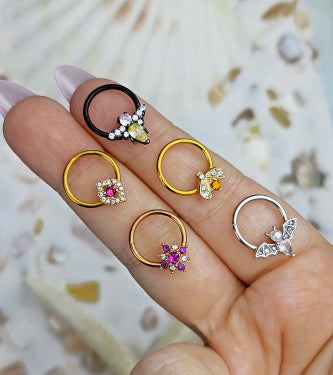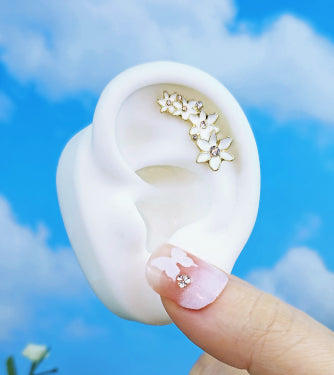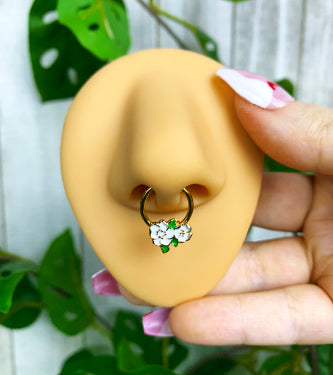




















You buy a new piece for your helix, nose, or belly button. It looks perfect in the mirror. Then a day later your skin starts acting disrespectful. The area gets itchy, red, maybe a little puffy, and suddenly your cute new jewelry feels like a tiny enemy.
If that sounds familiar, you're not being dramatic. Your skin may be reacting to nickel, which is one of the biggest troublemakers in jewelry allergies. And the annoying part is that a tag saying “nickel free” doesn't always mean what shoppers think it means.
That's why knowing what is nickel free jewelry matters. Not in a boring textbook way. In a “save your piercing and your money” way.
That Itchy Rash From Your New Piercing
You know the moment. You twist in a fresh little stud, a sleek hoop, or a sparkly curved barbell and think, yes, this is the vibe. Then your piercing starts feeling hot, itchy, or weirdly sore. By the next day, the skin looks angry.

That reaction throws a lot of people off because the jewelry may not look cheap or shady. It might even say hypoallergenic or nickel free on the listing. But your skin doesn't care about marketing words. It reacts to what touches it, especially when that metal sits in a piercing for hours, days, or all day every day.
Why piercings get so dramatic
Piercings are extra sensitive because jewelry isn't just brushing against your skin like a necklace clasp. It's sitting in a channel through the body. Add moisture, friction, skin oils, aftercare products, and long wear, and small material issues get amplified fast.
A fresh lobe piercing and a healed septum are not playing by the same rules either. One can be forgiving. The other can turn into a cranky mess over a metal it doesn't like.
Some reactions are less about “bad jewelry” and more about the wrong material for that exact piercing.
The usual suspect
A lot of those itchy-rash stories come back to nickel. Jewelers use nickel in some alloys because it helps with durability and design flexibility. Handy for manufacturing. Not so handy when your skin decides it hates the stuff.
This is why nickel-free jewelry became such a big deal for people with piercings. It's not just about comfort. It's about wearing your jewelry without that low-level dread of “Will this turn into a rash by tonight?”
So What Is This Nickel Allergy Thing Anyway
A nickel allergy is basically your skin throwing a fit after contact with nickel. In plain language, your body treats the metal like a problem and responds with irritation. That reaction often shows up as redness, itching, swelling, dryness, or a rash where the jewelry touches you.

For people with piercings, that can look like a mystery irritation around the post, ring, or decorative end. It can be easy to blame aftercare, sleeping on it wrong, or “sensitive skin in general.” Sometimes those things matter. But nickel is a very real trigger.
It's common, not some random rare thing
Nickel allergy affects about 17% of people, and it's more common in women at around 15% to 16% than in men at 4% to 5%, according to this nickel allergy explainer. So if your ears, nose, or navel have ever rejected a cute piece of jewelry with pure attitude, you're in very crowded company.
That's also why sensitive-skin jewelry advice keeps circling back to the same few safer materials. A lot of people need them.
If you want a broader look at how metal choice affects irritation and healing, BodyCandy has a helpful guide on allergic reactions and piercing care and what metals and materials are right for you.
What it can feel like in real life
A nickel allergy doesn't always announce itself dramatically on day one. Sometimes it starts as:
- Mild itching that gets worse the longer you wear the jewelry
- Redness around the entry and exit points
- A rash or dry patch exactly where the metal sits
- Persistent irritation that keeps returning with the same piece
A quick visual can help if you want the basics in another format.
Your skin is not being “too sensitive.” It's giving you useful information.
The Truth About Nickel Free Jewelry Labels
In this scenario, shoppers get played a little.
A lot of people hear nickel free and assume it means zero nickel, anywhere, full stop. That isn't always how the term works. In major markets, the more important issue can be how much nickel a piece releases onto the skin, not whether every atom of nickel has vanished from existence.
Nickel free often means low release, not zero content
Under the EU Nickel Directive, the standard focuses on nickel migration. For posts inserted into pierced ears and other pierced body parts, the limit is up to 0.2 micrograms of nickel per cm² per week, according to this explanation of nickel-free metals and EU release limits.
That's the insider detail most shoppers never get told. The label can mean the jewelry is designed to stay under a release threshold rather than being made with absolutely no nickel at all.
Why that matters for piercings
If you're buying a ring for a finger, that's one thing. If you're buying jewelry for a piercing that stays in place, rubs, gets wet, and lives against your skin, release matters a lot.
That also explains why two pieces labeled similarly can behave very differently on your body. One may stay stable. Another may have plating, wear down over time, or expose a base metal that your skin hates.
A better way to read the label
Instead of asking only “Does it say nickel free?” ask:
- What is the actual material
- Is the whole piece made from that material, or just the surface
- Is it meant for prolonged wear in piercings
- Is there any mention of implant-grade standards or nickel-release compliance
The safest shopper move is to treat “nickel free” as a starting clue, not the final answer.
Your Go-To Guide for Safe Piercing Materials
Some metals earn trust because they behave better in the body. They're stable, resistant to corrosion, and less likely to create drama when worn for long stretches. That's why piercers keep coming back to the same shortlist.
According to this material guide on nickel-free jewelry, titanium and niobium are popular because they're inert and highly corrosion-resistant, which makes them a strong fit for prolonged wear and piercings.

The short version on each material
Titanium is the one I'd call the low-drama friend. It's widely favored for fresh piercings and sensitive skin because it's non-reactive and built for long wear. If you see implant-grade titanium, that's a strong sign you're looking at a serious piercing material.
Niobium is another excellent option. It's naturally nickel-free, corrosion-resistant, and a solid choice for people who want something stable and skin-friendly.
Gold can be great, but details matter. Higher-karat solid gold is generally a better bet than mystery gold-tone jewelry or plated pieces. Pure gold is soft, so jewelry is usually alloyed, which means you need to know what else is in the mix.
Platinum sits in the premium lane. It's known for being very inert and is often a comfortable pick for sensitive skin.
Surgical stainless steel is where things get more nuanced. Some surgical-grade steel works well for many people, especially in healed piercings. But if your skin is very reactive, or the piercing is fresh, titanium often feels like the safer call.
Nickel-Free Material Cheat Sheet
| Material | Why We Love It | Best For |
|---|---|---|
| Titanium | Stable, low reactivity, strong for long wear | Fresh piercings, sensitive skin |
| Niobium | Naturally nickel-free and corrosion-resistant | Everyday wear, sensitive piercings |
| Solid Gold | Stylish and comfortable when the alloy is skin-friendly | Healed piercings, elevated everyday looks |
| Platinum | Very inert and premium-feeling | Sensitive skin, long-term wear |
| Surgical Stainless Steel | Durable and common, but quality matters | Healed piercings if you tolerate it well |
One material does not fit every piercing
A titanium flat back for a healing helix, a niobium hoop for a healed nostril, and a solid gold clicker for a healed septum can all make sense. The right answer depends on where you're wearing it, how healed the piercing is, and how reactive your skin tends to be.
BodyCandy carries body jewelry in materials commonly sought by sensitive-skin shoppers, including titanium and gold options, which can make side-by-side material shopping easier when you already know what your piercing tolerates.
How to Be a Smart Shopper for Sensitive Skin
Shopping for sensitive skin is part style, part detective work. If a listing is vague, your piercing may end up doing the fact-checking for you. That's an expensive way to learn.
In the U.S., there's no single standard for “nickel-free,” and some brands may only mean the plating is nickel-free while the base metal is not, according to this guide to what nickel-free jewelry means in the U.S.. That's why material specifics matter more than the label alone.

Your no-nonsense shopping checklist
-
Look for exact material names
“Nickel free” is vague. “Implant-grade titanium” is useful. “ASTM F136 titanium” is even better. -
Ask what the whole piece is made from
Posts, ends, hinges, clasps, and decorative fronts can differ. One safe-looking surface doesn't guarantee a safe piece underneath. -
Treat plating with caution
Plating can create a barrier, but barriers wear down. That matters most for jewelry you plan to wear constantly. -
Match the metal to the piercing
Fresh piercings usually need the calmest, least reactive option. Healed piercings may give you more flexibility. -
Skip mystery metal listings
If the seller won't clearly say what it is, keep scrolling.
For more ideas focused specifically on wearable materials, BodyCandy has a quick guide to body jewelry for sensitive skin.
Green flags and red flags
Green flags are listings that mention things like implant-grade titanium, niobium, solid gold, or platinum. Transparency is attractive. So is a seller who can answer direct questions without getting weirdly slippery.
Red flags are phrases like “alloy,” “metal blend,” “hypoallergenic finish,” or “nickel-free coating” with no explanation of the base metal.
If the safest detail on the page is the color name, that's not enough information for a piercing.
Match the material to the piercing, not just your budget
A fresh cartilage piercing usually wants a non-reactive material first. A healed belly ring or nostril hoop may handle more variety as long as the metal is still skin-friendly. The smarter move is buying for the piercing's current stage, not just for the look you want today.
Love Your Piercings Longer With The Right Care
The metal matters. Care matters too. Even a good material can feel rough if the jewelry is dirty, the area stays irritated, or the finish is wearing down and rubbing the skin the wrong way.
Keep your jewelry clean, handle it with washed hands, and pay attention to changes. If a piece starts causing irritation after wearing fine for a while, check whether the coating is fading, the hinge is rubbing, or the piercing is asking for a better material.
According to this guide on choosing nickel-free materials by piercing type, the best option depends on the piercing. Fresh cartilage often does well with titanium, while a healed belly button piercing might be fine with 14k gold. That's the long-game mindset. Match the jewelry to the piercing's needs, not just the aesthetic in your cart.
If you wear coated or plated pieces, it also helps to understand how surface finishes hold up over time. BodyCandy's article on proper aftercare of coated and plated body jewelry is useful for that.
You don't have to choose between style and comfort. You just need better info, a sharper eye, and jewelry that isn't all talk.
Ready to shop smarter? Browse BodyCandy for body jewelry in materials that make sensitive-skin shopping easier, and use what you know now to pick pieces your piercings will enjoy wearing.