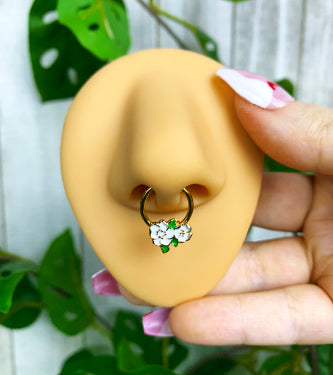




















Your ears are itchy. Your cartilage piercing is acting dramatic. That “sensitive skin safe” clicker you bought looked cute for exactly three days, and now your piercing is giving you attitude.
If that sounds familiar, you're not overreacting. A lot of people search for hypoallergenic jewelry brands when what they really need is a straight answer about materials, healing, and what is safe for a piercing that lives in your body all day.
The tricky part is that body jewelry is not the same thing as regular jewelry. A healed lobe piercing can tolerate way more than a fresh helix, a new navel piercing, or stretched ears that get irritated by rough surfaces. So let's break this down like a friend who's already made the mistakes, learned the hard way, and now reads material specs before adding anything to cart.
So What Does Hypoallergenic Even Mean
Hypoallergenic sounds more official than it really is. In jewelry, it usually means “less likely to bother your skin,” not “guaranteed safe for every person.”
That's where people get tripped up. You see the word, assume it's a strict industry standard, and then wonder why your piercing still gets red or itchy.
According to this guide to hypoallergenic jewelry and sensitive skin, nickel allergy is the most common cause of jewelry-related skin reactions, affecting about 10–20% of the population, and “hypoallergenic” is not a regulated jewelry standard in the United States. So the label matters less than the actual metal.

The real villain is usually nickel
If your skin freaks out around jewelry, nickel is often the first suspect. It's the repeat offender of the jewelry world. Not always visible, not always obvious, but very often the reason your skin gets annoyed.
That's why many hypoallergenic jewelry brands focus so hard on nickel-free materials or on metals that keep nickel tightly bound so it doesn't easily release during wear. For piercing jewelry, that difference matters a lot more than a fluffy “safe for sensitive skin” promise.
Why the word still matters, kind of
The term isn't useless. It can be a helpful starting point. It tells you a brand is at least trying to appeal to people with sensitive skin.
But you still need receipts. You want exact material names, not vibes.
A product page is more useful when it says things like:
- Material listed clearly: 316L surgical stainless steel, titanium, solid gold, or 925 sterling silver
- Grade included: implant-grade titanium is more helpful than just “titanium”
- Construction disclosed: solid metal is different from plated metal
- Piercing use explained: healed piercing jewelry is not automatically appropriate for healing piercings
Practical rule: Treat “hypoallergenic” like the word “light” on a food label. It points you in a direction. It does not tell you the whole story.
If you want a quick primer on the basics, BodyCandy has a helpful explainer on what hypoallergenic jewelry means. Then come back to the product page and check whether the brand tells you what the jewelry is made of.
Why piercing people need to care more than everyone else
A necklace that brushes your skin for part of the day is one thing. A barbell sitting inside a healing piercing is a whole different relationship.
For body piercings, the metal isn't just touching your skin. It's sitting in a channel that needs calm, stable conditions to heal. That's why a vague label can get you into trouble fast. The safer move is always to shop by material composition first, and branding second.
The Ultimate Body Jewelry Material Showdown
Some hypoallergenic jewelry brands are careful and transparent. Others toss around nice-sounding words and hope you don't ask follow-up questions. The fastest way to separate the two is to compare materials.

Hypoallergenic metal comparison
| Material | Nickel-Free? | Best For | Price Point |
|---|---|---|---|
| 316L Surgical Stainless Steel | No, but nickel is bound in a stable alloy | Healed piercings, everyday wear, budget-friendly options | Lower |
| Implant-grade Titanium | Yes | Fresh piercings, healing piercings, high sensitivity | Mid |
| Niobium | Yes | Sensitive healed piercings, color options without plating | Mid |
| 14K or 18K Solid Gold | Can be, if explicitly nickel-free | Healed piercings, luxury pieces, some sensitive wearers | Higher |
| Platinum | Typically very low allergy risk | Severe sensitivity, fine jewelry, long-term wear | Higher |
Titanium is the clean-answer metal
If your piercing is new, irritated, or just plain high-maintenance, implant-grade titanium is usually the material people trust most.
A materials ranking for hypoallergenic jewelry says titanium causes allergic reactions in fewer than 0.6% of cases and is preferred for medical implants. That's a huge reason titanium keeps showing up in serious piercing conversations.
Titanium's appeal is simple:
- Nickel-free: no nickel hiding in the mix
- Biocompatible: your body tends to tolerate it well
- Lightweight: nice for larger pieces or long wear
- Strong choice for healing: especially for cartilage, navel, and other fussier piercings
If a brand just says “titanium,” I'd still want more detail. For piercings, exact grade labeling matters. Implant-grade titanium tells you more than a broad category name.
For a fresh piercing, “hypoallergenic” is not specific enough. “Implant-grade titanium” is the kind of wording you want to see.
316L surgical steel is the practical baseline
316L surgical stainless steel is everywhere in body jewelry for a reason. It's durable, accessible, and often a solid option for a lot of people.
It does contain nickel, but that doesn't mean it behaves like cheap mystery metal. A piercing-focused hypoallergenic jewelry guide explains that 316L is widely used because the nickel is bound in a stable alloy structure and releases only negligibly under normal wear. That's why so many brands use it as a budget-friendly starting point.
For many healed piercings, 316L can work well. For very sensitive skin or fresh piercings, titanium is usually the stronger technical choice.
A few quick gut-checks:
- Good for: healed lobes, many healed nose piercings, everyday wear
- Maybe not ideal for: brand-new cartilage, angry navel piercings, severe nickel sensitivity
- Shop smart: look for 316L specifically, not just “surgical steel”
Niobium is the underrated cool kid
Niobium doesn't get talked about enough, but piercing people know it deserves respect. It's nickel-free, generally well tolerated, and can be anodized for color without using plating.
That last part matters. Color created through anodizing is different from coating a mystery core with a thin outer layer that might wear down later. If you want color and you're picky about skin reactions, niobium is worth a look.
Gold can be great, or a total trap
People hear “gold” and assume safe. Not always.
A guide from Blomdahl on hypoallergenic jewelry notes that 14K+ solid gold can work for sensitive wearers only when the alloy is explicitly verified nickel-free, and that thin surface layers can wear off and expose a reactive core. So “gold tone” means basically nothing, and “gold plated” is not the same as solid gold.
Gold purity matters too. In the verified data, 14K gold is 58.3% pure and 18K gold is 75% pure, which means higher karats reduce the share of alloy metals when nickel is avoided. For body jewelry, I'd still want the listing to say solid gold and nickel-free, not just “14K finish.”
Platinum is the luxury low-drama option
Platinum sits in the fine-jewelry lane, and for people with severe sensitivity it can be appealing because it's highly inert. The same Blomdahl guide says Pt950 is about 95% purity, which is why it's often considered one of the lower-allergy-risk choices.
For everyday body jewelry, platinum is less common than titanium or steel because of cost and category fit. But in the hypoallergenic jewelry brands conversation, it absolutely belongs on the board.
My real-world cheat sheet
If I were giving you the fast version:
- Fresh piercing: implant-grade titanium first.
- Healed piercing on a budget: 316L surgical steel can be a reasonable option for many people.
- Sensitive but want color: niobium.
- Luxury pick: solid nickel-free 14K+ gold.
- Very high sensitivity with fine-jewelry budget: platinum.
One factual example from the market: BodyCandy offers body jewelry made from materials including 316L surgical grade stainless steel, which is one of the common hypoallergenic baseline materials used for sensitive-skin shoppers.
Beware of Fakes and Sketchy Coatings
A lot of jewelry looks safe on day one. That's the trap.

A shiny surface can hide a completely different base metal underneath. Think candy apple. The outside is the glossy part you see first. The inside is what you're eventually dealing with if that outer layer starts wearing down.
That's why some people swear a piece was “fine at first” and then suddenly couldn't wear it anymore.
Plated jewelry is where people get fooled
According to this discussion of skin triggers beyond the hypoallergenic label, a thin surface layer on jewelry can wear off and expose a reactive core, and terms like “shower-safe” and “tarnish-free” are not the same thing as inertness against dermatitis.
That matters extra for body jewelry because piercings involve friction. Navel rings move. Lip jewelry rubs. Cartilage jewelry gets bumped by hair, pillows, headphones, and hoodies. If the safety of a piece depends on a surface layer staying perfect forever, that's not much of a safety plan.
What to watch for on product pages
Some wording is helpful. Some wording is suspiciously cute.
Pay attention to these differences:
- Solid gold means the piece is gold throughout, not just on top
- Gold-plated means a base metal sits under a thin gold layer
- Coated means there's an added surface treatment, which may wear over time
- PVD-colored and other finishes still deserve questions about the base metal underneath
- Gold tone or silver tone tells you the color, not the material
If a listing sells the finish harder than the metal, slow down and keep reading.
If you wear coated or plated pieces, aftercare matters too. BodyCandy has a practical guide on proper aftercare of coated and plated body jewelry, especially if you're trying to make fashion finishes last longer without irritating your piercing.
Here's a quick visual walkthrough before you buy anything with a finish or coating:
The safest mindset
For healed piercings, a plated piece might be something you wear occasionally if you already know your skin tolerates it.
For fresh piercings, healing piercings, or piercings that have a history of acting cursed for no reason, skip the gamble. Go for a material that's safe all the way through, not just on the outside.
Is Your Skin Trying To Tell You Something
Not every grumpy piercing is an allergy. Sometimes it's pressure, friction, soap residue, or jewelry that's the wrong shape. But your body does give clues, and it's smart to pay attention before irritation turns into a bigger mess.

Signs that deserve a closer look
A possible sensitivity reaction can show up like this:
- Persistent itching: not just a random moment, but a pattern
- Redness that keeps coming back: especially after you put one specific piece in
- Dry, flaky, or rashy skin: more than normal healing crust
- Tenderness that doesn't settle down: even when you stop messing with it
- Weird timing: the piercing was calm, then got mad after a jewelry change
For body piercings, location matters too. The post, wearable surface, threading, or closure area may be the actual issue rather than the decorative front.
What to do right now
Don't panic. Start simple.
- Stop wearing the suspected piece if the irritation clearly began after a swap.
- Switch to a known, better-tolerated material if you have one.
- Keep aftercare boring and gentle. No random ointments, no alcohol, no “let me just twist it.”
- Look at the pattern. Did this happen with plated jewelry, cheap clickers, or one specific metal family?
Your skin is not being “dramatic.” It's giving you data.
When to call in a pro
Sometimes self-diagnosis turns into self-chaos. If the area is getting worse, producing unusual discharge, staying very inflamed, or you're not sure whether you're dealing with allergy, irritation, or infection, get help from a professional piercer or a medical professional.
BodyCandy also has a useful read on allergic reactions and piercing irritation if you want a basic reference point before deciding your next move.
A calm rule of thumb is this:
- Mild irritation after a jewelry change: remove the variable and monitor
- Ongoing reaction with no clear cause: ask a piercer to assess the jewelry and fit
- Symptoms that feel serious or keep escalating: see a doctor
Your Piercing-Specific Shopping Checklist
This is the part most general hypoallergenic jewelry brands content skips. A healed first lobe and a fresh rook piercing are not shopping for the same thing.
A piercing-focused guide from Tini Lux points out that body jewelry has different safety needs than fashion earrings, and that material choice, gauge, threading, polish, and sterilization all matter. It also highlights a major shopper confusion point: whether “hypoallergenic” alone is enough for new piercings versus healed ones.
Short answer: for a new piercing, no. It's not enough.
If the piercing is new or still healing
Use this checklist like your pre-cart interrogation.
- Check the exact metal first: You want specifics like implant-grade titanium, not a soft phrase like “sensitive skin friendly.”
- Read for grade language: If the listing gives a precise grade, that's a good sign the brand understands piercing materials.
- Look at the finish: Smooth polish matters. Rough surfaces can irritate healing tissue even if the metal itself is decent.
- Confirm the style suits healing: Fancy seams, complicated hinges, and decorative edges can be annoying in fresh piercings.
- Think about movement: A healing navel or cartilage piercing usually does better with stable, well-fitted jewelry than something dangly or bulky.
If the piercing is fully healed
You have more flexibility, but don't go fully chaotic.
A healed piercing may tolerate 316L surgical steel, nickel-free solid gold, niobium, or other well-made options depending on your sensitivity history. Personal experience matters here. If you know plated mystery metal makes your skin revolt, don't talk yourself into one more try because the charm is cute.
Questions worth asking a brand
If the product page is vague, ask anyway. A trustworthy seller should be able to answer basic material questions without doing a magic trick.
Try these:
- What is the exact base material?
- Is it solid, plated, or coated?
- If it's gold, is it solid and nickel-free?
- If it's titanium, what grade is it?
- Is this recommended for healing piercings or only healed ones?
- What is the threading style and wearable size?
If customer service dodges those questions, I'd move on.
Shopping mindset: Don't buy body jewelry the way you buy sunglasses. For a piercing, the hidden details matter more than the first photo.
Tiny details that make a big difference
These are easy to overlook, but they matter a lot in the body-jewelry world:
- Gauge: The wrong gauge can irritate the piercing or not fit right
- Threading: Internal threading or threadless designs are often preferred by people who want smoother insertion
- Polish: A smoother finish usually feels better in long-term wear
- Sterilization and packaging info: More relevant when you're buying for sensitive or healing situations
- Wear area versus decorative top: The post or wearable part is the section your body cares about most
My simple buying filter
If I were helping you shop for a fresh helix, a new navel, or a healing nostril piercing, I'd use this filter:
- Can I tell exactly what metal this is?
- Can I tell whether it's solid or just surface-finished?
- Does the shape make sense for healing?
- Does the brand seem to understand piercings, not just fashion jewelry?
If any answer is no, keep scrolling.
For healed piercings, you can have more fun. For new ones, this is not where you improvise.
Find Your Perfect Hypoallergenic Bling Today
The big takeaway is simple. Know the material, not just the marketing.
That's how you spot the difference between a piece that's fine for a healed lobe and one that's appropriate for a fresh navel, cartilage, or nose piercing. It's also how you evaluate hypoallergenic jewelry brands without falling for vague labels, pretty finishes, or “safe for sensitive skin” copy that never tells you what the jewelry is really made of.
When you shop, think in layers. First the metal. Then whether it's solid or plated. Then whether the style makes sense for healing or only for healed piercings. Then your own history, because your skin always gets a vote.
You don't need to become a metallurgist to shop smarter. You just need to be the person who reads past the first line of the product description and asks better questions than “is it hypoallergenic?”
That's where the confidence comes from. Not from guessing. From knowing what you're putting in your body.
Ready to upgrade your jewelry lineup with materials you can feel good about wearing? Browse BodyCandy for body jewelry options, compare material details closely, and pick pieces that fit your piercing's real needs, not just the aesthetic mood of the day.