


















You're probably here because you saw a lip piercing that looked ridiculously cute, but it wasn't the usual stud-under-the-lip situation. Both ends of the jewelry were visible, it hugged the lower lip in a super flattering way, and now you need the name so you can obsess properly.
That piercing is the vertical labret.
If you've been asking, what is a vertical labret, the short answer is this: it's a lower-lip piercing that goes through the lip tissue itself instead of passing into the mouth. That one detail changes a lot, from how it looks to how it feels day to day.
The Vertical Labret Explained
A vertical labret is a lower-lip piercing placed so the jewelry enters through the center of the lower lip and exits below the lip line, with both ends visible outside the mouth. It usually uses a curved barbell, because the jewelry has to follow the lip's natural curve instead of forcing a straight path.
It's a tiny, decorative staple for your lip, but much cuter and much more intentional.

How it differs from a standard labret
Often, the two are confused. A standard labret usually sits below the bottom lip and passes through to the inside of the mouth, where a flat back rests against the inner lip. A vertical labret doesn't do that. It stays external.
That's the big distinction. It changes both the look and the practical feel of the piercing.
Here's the easy comparison:
| Piercing | Placement | Inside the mouth | Typical jewelry |
|---|---|---|---|
| Vertical labret | Through the lower lip vertically | No | Curved barbell |
| Standard labret | Below the lower lip | Yes | Flat-back stud |
| Medusa | Above the upper lip in the philtrum | Yes | Stud |
Why people choose it
A lot of people love the vertical labret because it gives that lip-piercing vibe without putting jewelry directly inside the mouth. Professional guidance notes that this can reduce direct contact with teeth and gums, which is one reason it gets called a more teeth-friendly option than a standard labret. That distinction and the long history of labret-style adornment, dating back to around 1000 B.C.E. in the ancient Americas, are noted in this overview of labret history and anatomy.
Quick reality check: “Teeth-friendly” doesn't mean “zero-risk.” It means the jewelry usually sits more externally than a standard labret.
If you want to see how this piercing fits into the wider lip-piercing family, this guide to labret piercing styles and standards is a helpful companion.
Getting Your Vertical Labret What to Expect
Walking into the studio for a vertical labret appointment usually feels like a mix of excitement and “wait, am I really doing this?” That's normal. Once the process starts, it's a lot less mysterious than it sounds.
The appointment starts with anatomy and placement
Your piercer will first look at your lower lip to make sure the placement works well with your anatomy. Vertical labrets need enough lip tissue for a stable piercing, and placement matters because even a tiny shift can change how the jewelry sits.
Then they'll clean the area and mark the entry and exit points. This part is more important than people expect. You'll probably be asked to sit naturally, relax your mouth, and check the marking in a mirror before anything happens.
The piercing itself is quick
Once you approve the placement, the actual piercing is usually the shortest part of the whole appointment. You'll feel a sharp pinch, pressure, and then it's done.
The jewelry goes in right after, and that first mirror look is usually the payoff moment. Suddenly the thing you've been screenshotting for weeks is on your face, and it makes sense.
Most of the appointment is setup, checking, and making sure the angle is right. The actual poke is the quick part.
What the first day feels like
The first few hours are usually less about drama and more about awareness. You notice your lip when you smile. You notice it when you sip a drink. You become weirdly conscious of how often you move your mouth.
That doesn't mean something's wrong. It just means your lip has new hardware and your brain is clocking it.
A few practical day-one realities:
- Eating feels different: Soft foods are usually easier at first because big bites can bump the jewelry.
- Drinking may be awkward: Cups, cans, and straws can all feel a little strange until you learn your new angles.
- Talking is usually fine: You might move a little more carefully at first, especially if your lip feels swollen.
- The jewelry may look longer than you expected: That's often intentional so there's room for swelling.
If you want a more general studio-day refresher before you book, this first-time piercing prep guide covers the basics nicely.
Your Guide to Healing and Aftercare
Vertical labret healing is where “cute” meets “be careful.” Lips move all day. You talk, eat, drink, laugh, bite your lip by accident, and mess with the jewelry when you're bored. Your job is to make that piercing's life as boring as possible.
A vertical labret typically takes 6 to 8 weeks for initial healing, with up to 6 months for full healing, according to this vertical labret aftercare guidance.

Your simple daily routine
The core routine is refreshingly basic. Clean it with saline twice daily, leave it alone the rest of the time, and avoid activities that add irritation.
That same aftercare guidance also recommends avoiding oral irritation, pools, lakes, and contact sports during the early phase. Because the lower lip moves so much, extra motion can create microtrauma and slow healing.
Do this and not that
Use this as your cheat sheet:
- Do clean with saline twice a day: Keep it gentle and consistent.
- Do wash your hands first: If you need to touch near the piercing, clean hands matter.
- Do expect some crusting: “Crusties” are common during healing and aren't automatically a problem.
- Do choose healing-friendly materials: Guidance commonly points to titanium, surgical steel, gold, or acrylic during healing.
- Don't twist or spin the jewelry: That only irritates the channel.
- Don't pick at dried buildup: Let saline soften it first.
- Don't keep testing it with your teeth or lips: Fidgeting is one of the fastest ways to annoy a healing piercing.
- Don't treat it like it's healed just because it looks calm: Surface calm and full healing are not the same thing.
Living with it while it heals
This piercing sits right where life happens. Food can get near it. Drinks can hit it. Lip products can wander too close.
Practical rule: If something wouldn't feel good in a paper cut, don't put it on a fresh lip piercing.
That's why a lot of people keep their routine minimal while healing. Saline, clean habits, and patience do more than a drawer full of random products. If you want more oral-area piercing care basics, this oral piercing care guide is useful background reading.
Styling Your Pout The Best Jewelry for Vertical Labrets
This is the fun part, because a vertical labret can look sweet, sharp, glossy, edgy, or full-on doll-like depending on the jewelry.
The most important style fact is also the most practical one. A vertical labret uses a curved barbell because the jewelry has to match the piercing's curved, vertical path through the lip. Professional guidance notes that a straight barbell can create uncomfortable pressure on the tissue, which is exactly why this piercing is not the place to freestyle with the wrong shape. That explanation is covered in this vertical labret jewelry guide.

Why curved barbells work so well
A curved barbell follows the shape of the piercing channel instead of fighting it. That means better comfort, cleaner positioning, and that signature look where one end sits on the lip and the other rests just below it.
A straight post would feel like trying to wear a flat shoe on a curved staircase. Technically there's a shape there, but it's the wrong one.
Materials and the vibe they give
Once your piercer has you in the correct shape and size, material becomes the style language.
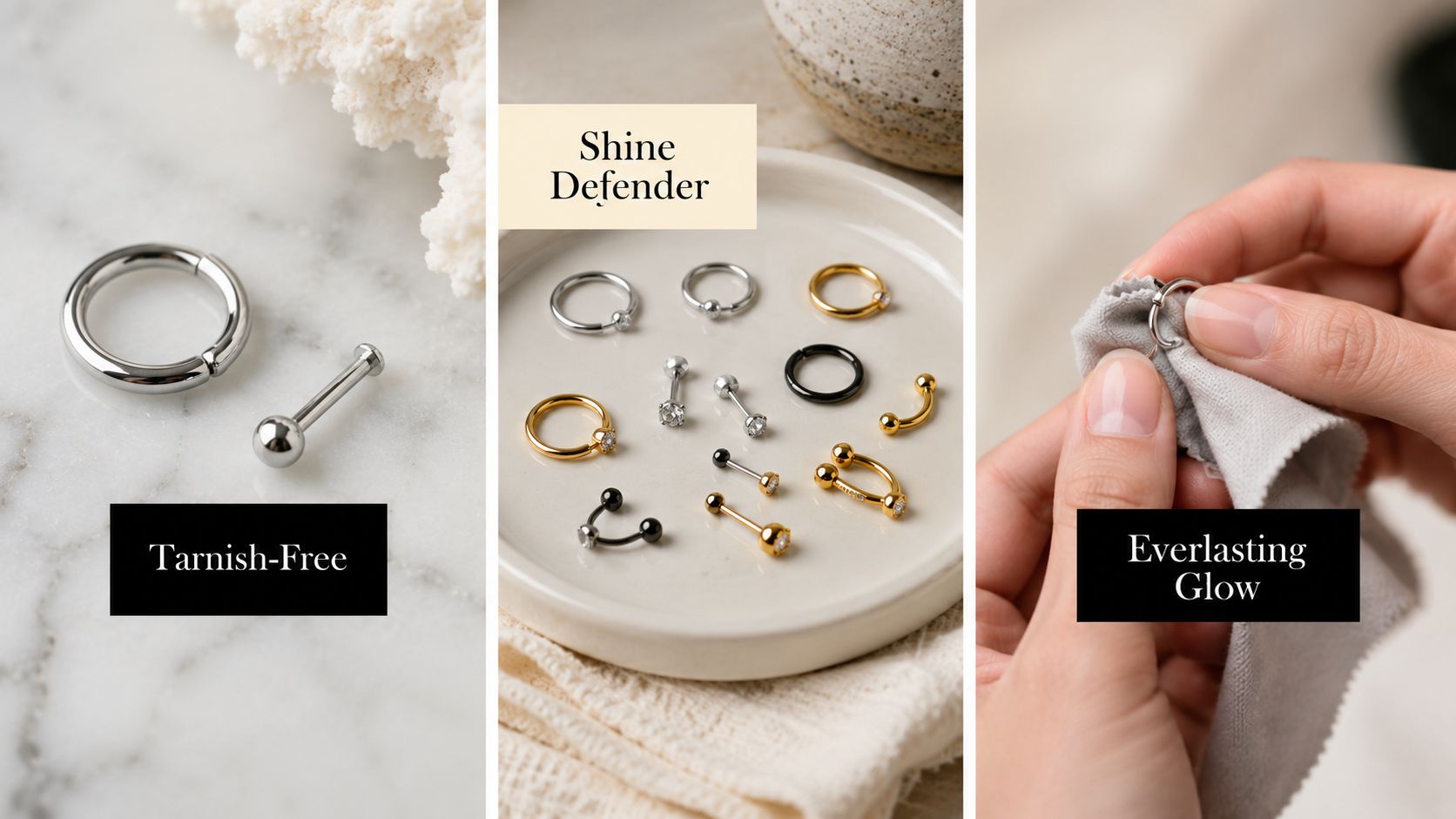
- Titanium works well if you want a lightweight, simple option often recommended for sensitive piercings.
- Surgical steel gives you a classic polished look and is a common body jewelry material.
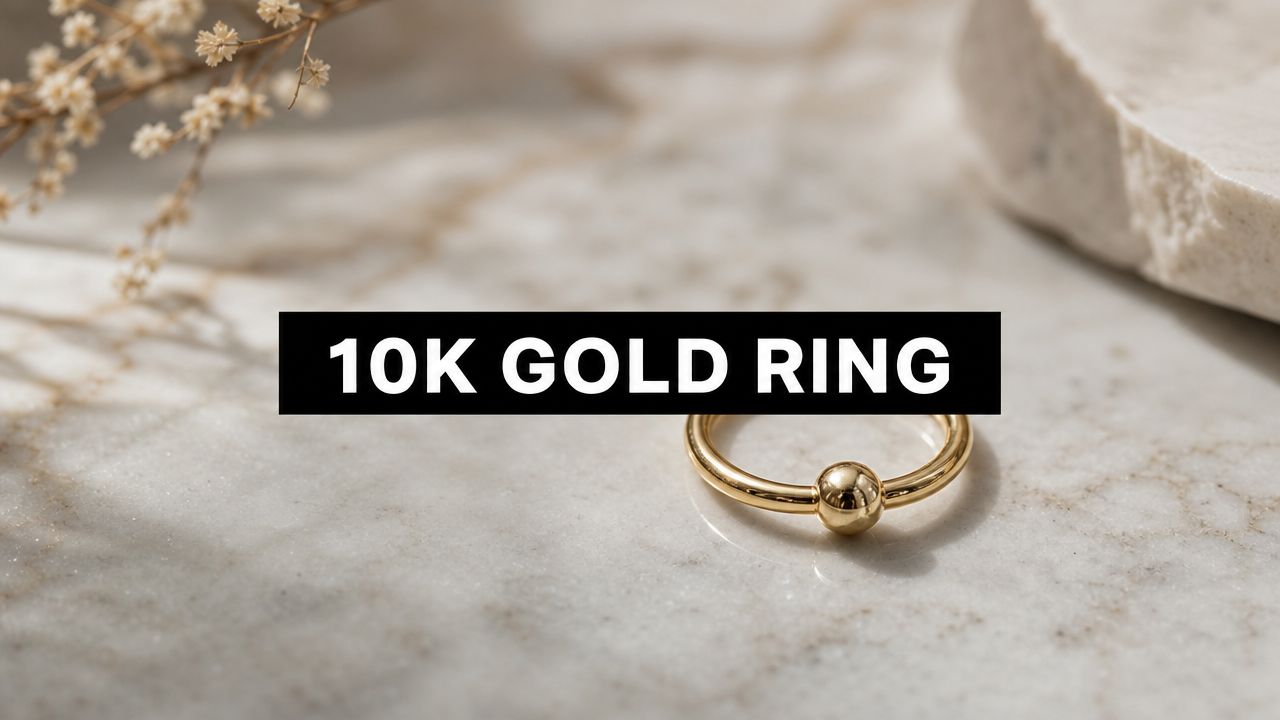
- Gold changes the whole mood. It can make the piercing look softer, warmer, or more luxe depending on the end design.
- Acrylic accents can show up in some healing guidance, but many people still prefer metal for a more classic look and feel.
One place you can browse this jewelry type is BodyCandy's curved barbell collection, especially if you're trying to picture the difference between simple ball ends and more decorative tops.
For a better visual on how curved barbells sit and move, this quick video helps:
Cute choices that don't get annoying fast
The prettiest jewelry isn't always the jewelry you'll enjoy wearing all day. For a vertical labret, comfort and profile matter.
A few style notes that make daily life easier:
- Small ball ends tend to feel comfortable and easy to wear.
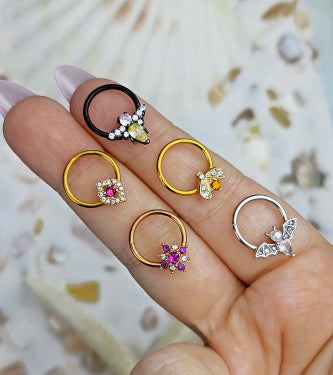
- Gem tops add sparkle without changing the basic silhouette too much.
- Very bulky ends can be adorable in photos but may feel more noticeable when eating or drinking.
- Your initial jewelry should follow your piercer's recommendation: Healing jewelry is about fit first, aesthetics second.
Playing It Safe Potential Risks and Solutions
Vertical labrets are gorgeous, but they're not a “set it and forget it” piercing. Because the jewelry sits on a very mobile part of your face, small irritation can show up fast.
That sounds dramatic, but it's manageable when you know what to look for.

Irritation versus a real problem
A healing vertical labret can get a little cranky. Mild swelling, tenderness, and crusting can all happen. The trick is not to panic every time your piercing has a moment.
These signs usually mean “slow down and baby it”:
- It feels sore after a lot of talking or eating: Extra motion can irritate the area.
- You bumped it with a cup or your hand: One snag can make it act annoyed for a bit.
- You've been touching it more than you realized: This one gets almost everybody.
Signs that need attention
Some problems deserve a check-in with your piercer sooner rather than later.
| Concern | What it can look like | What to do |
|---|---|---|
| Migration | The piercing seems to sit more shallowly over time | Contact your piercer and stop messing with the jewelry |
| Rejection | The skin looks thinner and the jewelry seems closer to the surface | Get professional advice quickly |
| Infection concerns | Increasing redness, worsening pain, or discharge that seems unusual for healing | Reach out to a professional piercer and seek medical care if needed |
| Snag trauma | Sudden soreness after catching it on clothing, a towel, or a drink | Clean it gently and monitor for ongoing irritation |
Don't “fix” a struggling piercing by swapping jewelry at home. Wrong timing and wrong sizing can make a rough situation worse.
Day-to-day risk management
A lot of vertical labret care is just learning not to forget it exists. Towels catch. Water bottles knock. Big burgers test your patience.
A few smart habits help:
- Take smaller bites at first: It's less glamorous, but your lip will thank you.
- Be careful with cans and bottle rims: They can hit the top bead.
- Skip rough lip play while healing: Friction is not your friend right now.
- Ask your piercer if the jewelry feels too long after swelling settles: Fit matters for comfort and stability.
Your Vertical Labret Questions Answered
Does a vertical labret hurt
It's a lip piercing, so yes, it's going to be spicy for a second. Lip piercings are often described as a quick sharp pinch followed by pressure, then tenderness rather than ongoing intense pain.
The good news is that the appointment is usually over fast. The more annoying part for many people is the first stretch of getting used to eating, sipping, and moving their mouth more carefully.
How do eating and drinking change
For the first part of healing, you'll probably notice this piercing most at mealtimes. Big bites can bump the jewelry. Cups and cans can tap the top end. Very messy foods are kind of rude to a fresh vertical labret.
A few real-life adjustments help:
- Start with softer foods
- Take smaller bites
- Sip slowly until you learn your angles
- Keep the area clean after eating or drinking
Once you adjust, these things usually feel much more normal.
Is a vertical labret right for everyone
Not always. Lip shape and available tissue matter, so candidacy depends on your anatomy and your piercer's assessment.
There's also an important practical gap that doesn't get talked about enough. A vertical labret is often described as more teeth-friendly than a standard labret, but that claim is relative, not universal. Existing oral factors like braces, retainers, crowns, or a history of gum recession can change the conversation around whether this piercing makes sense for you, as noted in this discussion of vertical labret candidacy gaps.
If you already have dental sensitivity or orthodontic hardware, bring it up before you get pierced. Don't assume “outside the mouth” means it can't affect your day-to-day comfort.
What about price
Pricing varies by studio, jewelry material, and location, so it's smarter to ask your chosen piercer directly than rely on random guesses online. Make sure the quote covers both the piercing service and the initial jewelry, and ask whether downsizing later is a separate charge.
Final friend-to-friend take
If you want a lip piercing that really shows off your lower lip, keeps both ends visible, and usually avoids the inside-of-the-mouth setup of a standard labret, the vertical labret is easy to understand and even easier to fall for.
It's one of those piercings that looks playful in photos, but your actual day-to-day experience matters just as much. If you like the look and you're willing to baby it while it heals, it can be such a cute choice.
Ready to style your new look? Browse BodyCandy for curved barbells and fresh jewelry options for your next lip-piercing vibe.