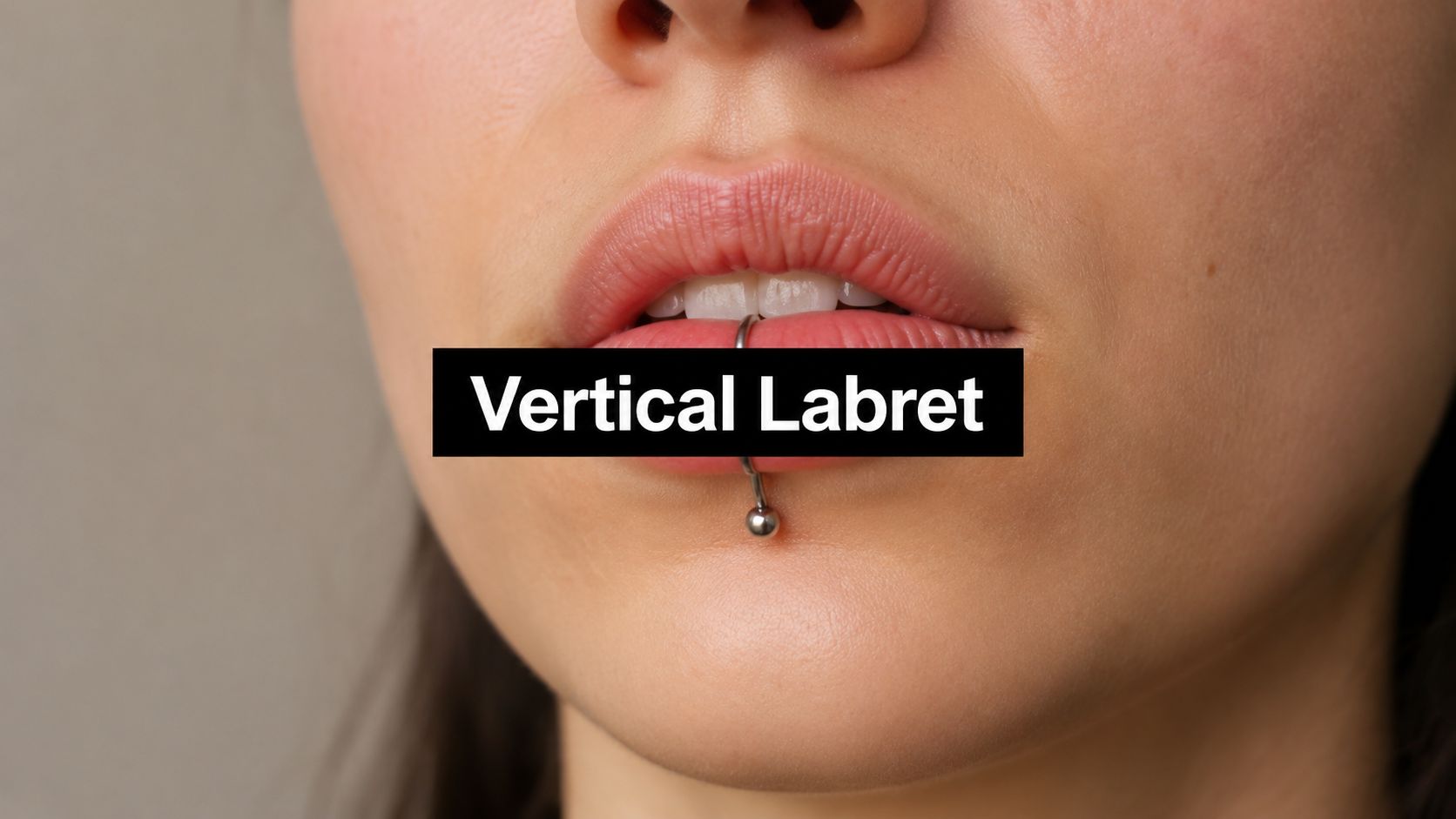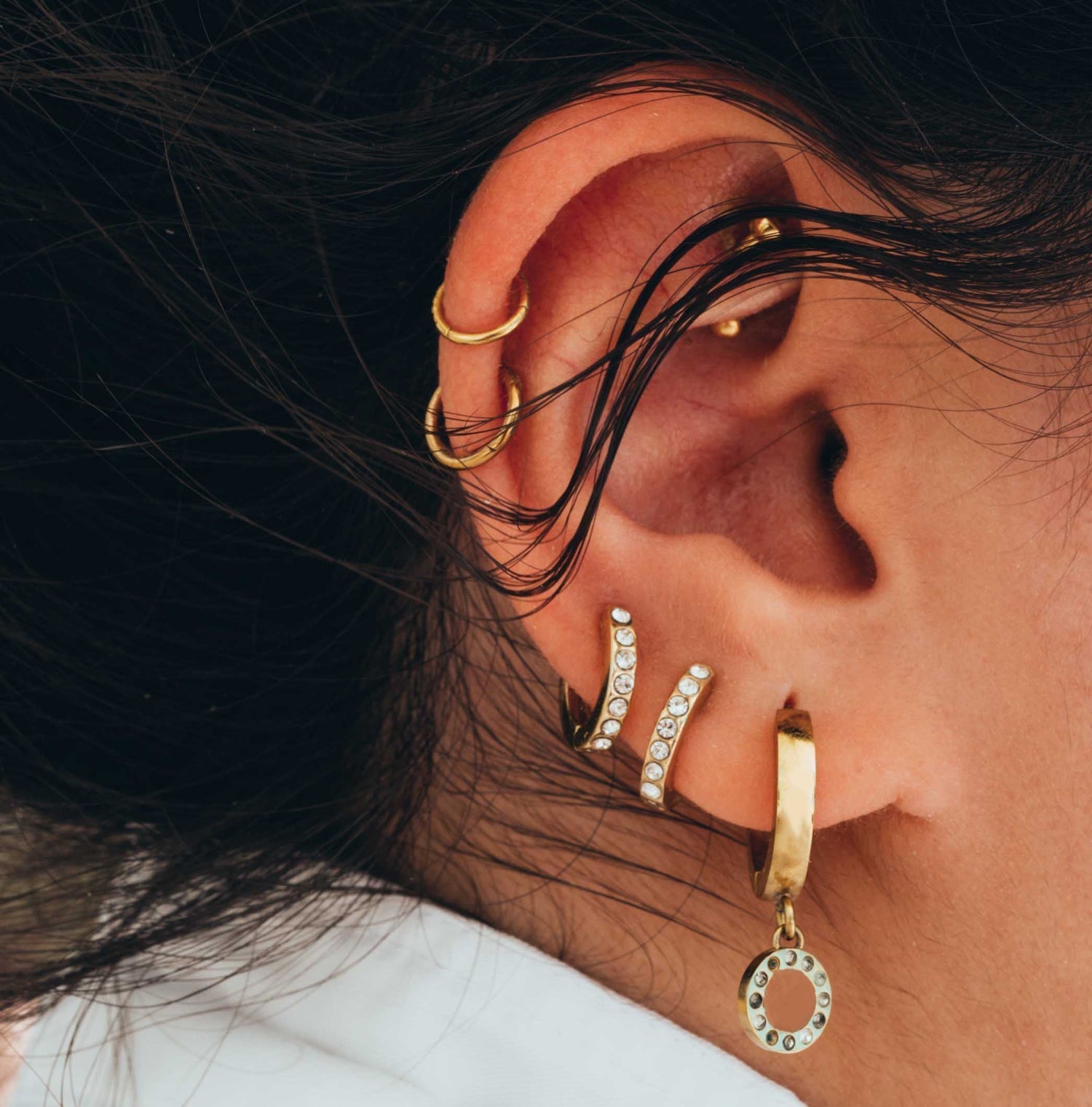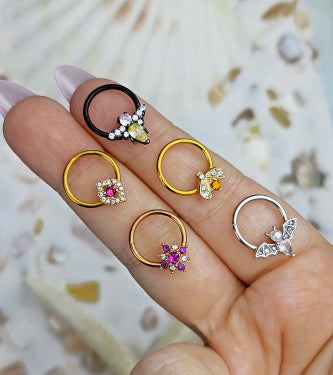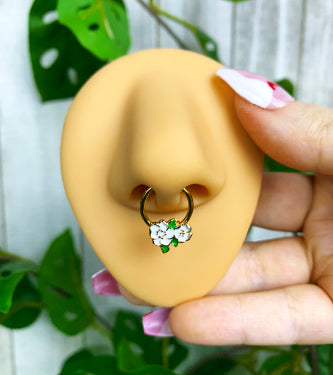




















Gold body jewelry has a way of wrecking your self-control. You start by browsing for a simple hoop, then suddenly you're comparing nostril rings, septum clickers, and little gold huggies for your stacked lobe like you're building a tiny treasure chest for your face.
Then the karat labels show up. 10K. 14K. 18K. If you've ever stared at those numbers and thought, “Cool, but what am I supposed to put in my piercing?” you're not alone.
A lot of jewelry guides talk about wedding bands or traditional rings. Piercings are a different game. Your jewelry moves, gets bumped, catches on towels, and has to survive your real life. That's why a 10 karat gold ring can make a lot of sense for body jewelry, especially if your piercing is healed and you want something that looks luxe without acting delicate.
So You Want to Rock a Gold Ring
You spot a gold nose hoop that looks perfect. Not too flashy, not too plain, just enough shine to make your whole setup look intentional. Then you read the details and hit the usual pause: Is 10K good, or is that the cheap version?
That question trips up a lot of people because “more gold” sounds like it should automatically mean “better.” For some jewelry, maybe. For body jewelry, it's more complicated.
Your piercings don't live a quiet life. A nostril ring gets nudged when you wash your face. A septum ring flips, twists, and moves all day. Ear piercings deal with headphones, hairbrushes, sleep, and whatever else you throw at them. In that world, softer isn't always smarter.
A piece can be beautiful and still be wrong for the way you actually wear jewelry.
That's where 10K often becomes the practical pick. It gives you real gold, but in a mix that's built to handle more day-to-day chaos. If you're choosing jewelry for a healed piercing and you want something with staying power, 10K deserves a serious look.
Where people usually get stuck
Most confusion comes from three things:
- Purity versus toughness. People assume higher purity always wins.
- Safety questions. You want to know if your piercing will stay calm.
- Body jewelry use. Advice for finger rings doesn't always translate to noses, septums, and ears.
By the end, the label won't feel mysterious anymore. You'll know what 10K means, when it works well, and when you may want a different material instead.
What Is 10K Gold Really
Karats measure how much pure gold is in the metal mix. A 10 karat gold ring contains 10 parts gold out of 24, which works out to 41.7% pure gold and 58.3% other metals, according to Garfield Refining's explanation of gold ring purity and U.S. marking standards.
That mix is called an alloy. If pure gold were soft butter, alloyed gold would be butter mixed into a firmer recipe so it can hold its shape when life gets grabby.

Karats without the headache
An easy way to consider:
| Gold type | What it means |
|---|---|
| 24K | Pure gold, very soft |
| 18K | More gold, less alloy |
| 14K | Middle ground |
| 10K | Less gold, more alloy, more toughness |
So no, 10K isn't fake gold. It's real gold with a recipe designed for wearability.
Why that alloy mix matters for piercings
Body jewelry gets motion. A hoop in your nostril or helix doesn't just sit there looking pretty. It has a job to do. The extra non-gold metals in 10K help the piece stay firmer and more resistant to the little dings and scratches that come with regular wear.
That's why a lot of people end up liking 10K for pieces they plan to live in, not just admire in a jewelry box.
Practical rule: More pure gold usually means a richer gold presence. More alloy usually means a tougher piece.
There's also a legal and historical side to it. In the U.S., solid gold jewelry has needed to be 10K or higher to carry a karat stamp under the 1906 National Gold and Silver Marking Act, which is why 10K sits at the entry point for marketable solid gold in that system, as noted in this gold jewelry history overview.
Why 10K feels modern
Historically, older fine jewelry often leaned higher in purity. The record described by Garfield Refining notes that Georgian rings were usually made in 22K or 18K, and 10K examples were occasional rather than typical in that era. That's part of why 10K reads as practical, modern, and everyday rather than old-world high jewelry.
For body jewelry, that modern practicality is not a downside. It's often the whole point.
How 10K Gold Stacks Up to 14K and 18K
If you're comparing a 10 karat gold ring with 14K and 18K, you're really comparing trade-offs. No option magically wins every category. You're choosing what matters most for your piercing and your habits.

The quick side by side
Here's the body jewelry version of the comparison:
| Type | What it's like in real life |
|---|---|
| 10K | Tougher, lighter in gold tone, easier on the budget |
| 14K | Balanced look and wearability |
| 18K | Richer gold look, softer feel, more of a special-piece vibe |
Brilliant Earth notes that 10K gold has 10 parts gold out of 24, with 58.3% alloy metals, and that this higher alloy fraction improves resistance to scratching and denting, making it generally better suited to daily wear than higher-karat gold in practical terms, as explained in their 10K gold guide.
What that means for noses, septums, and ears
A healed nostril piercing often does well with jewelry that can handle frequent movement. You touch your face, swap makeup, pull shirts over your head, and sleep on one side weirdly. A tougher metal mix can be useful there.
A septum ring deals with flipping, cleaning, and accidental bumps. Again, durability matters.
For ears, especially cartilage, your jewelry can take a beating from hair tools, over-ear headphones, pillow pressure, and the glorious chaos of getting dressed while late. A harder gold alloy can make daily wear feel less stressful.
If you want jewelry for real life, not fantasy life, 10K often makes more sense than people expect.
So which one should you choose
Pick based on how you wear jewelry, not just how it looks in a product photo.
- Choose 10K if you want solid gold with more toughness for a healed piercing you wear often.
- Choose 14K if you want a classic middle ground and are okay paying more for higher gold content.
- Choose 18K if color richness matters most and the piece won't live in a high-motion, high-impact spot.
One more practical note. For body jewelry, “better” depends on placement. A decorative clicker you wear occasionally is a different decision from a hoop you leave in your nose every day. The more your piercing moves, the more 10K starts to look smart instead of basic.
The budget reality
You'll usually see 10K positioned as the more affordable option because it contains less pure gold than 14K or 18K. I'm keeping that qualitative on purpose, but yes, that lower gold content is a big part of why people build a larger collection with 10K.
That matters if you like switching up your stack. You may want a tiny gold seam ring for your helix, a snug nostril hoop, and a second lobe clicker without turning one shopping trip into a dramatic life event.
Is 10K Gold Safe for Your Piercing
Speaking as a piercer-friend, I'll be very direct. Fresh piercings are picky. Healed piercings are way more flexible.
If your piercing is new, irritated, or still acting moody, this is not the time to experiment with whatever gold alloy happens to be cute. Healing tissue usually does best when you keep things boring and reliable.

Fresh piercing versus healed piercing
For a healing piercing, many piercers recommend implant-grade materials or higher-purity solid gold that's appropriate for initial wear. If you want a deeper look at why people choose gold in piercings, BodyCandy's guide to 14K gold in piercings is a useful companion read.
For a healed piercing, 10K can work very well. The main thing to think about is your own skin history.
The allergy question
Some people react to alloy metals. If you already know you're sensitive to nickel or mixed-metal jewelry, don't ignore that just because the piece is gold.
A good rule of thumb:
- If your healed piercing handles mixed alloys well, 10K may be a comfortable long-term option.
- If your skin throws tantrums easily, be more cautious and look closely at material details.
- If a piercing is healing or irritated, go back to the material your piercer recommends, not the one that matches your outfit.
Solid gold and gold-plated jewelry are not the same thing for a piercing.
That last part matters a lot. Gold-plated jewelry only has a thin gold layer over another base metal. In a piercing, especially one that moves, that surface can wear down. Once that happens, your skin is dealing with whatever's underneath.
What to shop for
When you're buying for a healed piercing, look for these words:
- Solid 10K gold if you want actual gold throughout the piece
- Material details that clearly identify the metal
- Healed-piercing use if the product listing gives wear guidance
Skip vague listings. If a seller gets weirdly poetic about “gold tone luxury” but never tells you what the jewelry is made of, keep scrolling.
Buying and Caring for Your 10K Gold Jewelry
Shopping for gold body jewelry gets easier when you know what to check first. You don't need gemologist energy. You just need a sharp eye and about thirty seconds of patience.
Check the mark before you buy
A genuine solid piece is often stamped 10K or 417. That second mark lines up with the gold content because only 41.7% of a 10K piece is pure gold, as explained in The Alloy Market's breakdown of 10K gold value and purity.
They also give a helpful example: a 5 g 10K ring contains about 2.1 g of pure gold. That's useful for understanding why gold content affects value, even if you're shopping for style first and scrap value never enters your mind.

If you want a basic buying refresher before checkout, this BodyCandy guide to buying and wearing gold jewelry covers the fundamentals in a shopper-friendly way.
Easy care that keeps the shine
You don't need a dramatic jewelry spa day. For most solid gold body jewelry, simple care works:
- Use mild soap. A few drops in warm water is enough.
- Soak briefly. Let the piece loosen up any buildup.
- Brush gently. A very soft toothbrush works well around details.
- Rinse well. Soap residue can make jewelry look dull.
- Pat dry. Use a soft cloth, not whatever rough towel is closest.
Clean your jewelry gently, especially around hinges, gems, and decorative edges where buildup likes to hide.
A few habits that help
- Take it out before chlorine exposure if the piece isn't meant to stay in continuously.
- Store pieces separately so hoops and studs don't scratch each other.
- Check closures on clickers and hinged rings before wearing them out all day.
This is also where I'll mention one shopping option plainly: BodyCandy carries solid 10K rose gold body jewelry, including body jewelry styles such as belly rings and barbells, so if you're specifically looking for solid 10K in piercing-friendly forms, that's one place to compare listings and material details.
Ready to Shine in Your New 10K Gold Ring
A 10 karat gold ring makes more sense once you stop judging it like a fancy traditional ring and start judging it like body jewelry. In piercing life, durability matters. Comfort matters. Being able to wear your jewelry without babying it matters.
That's why 10K has such a solid lane. It gives you real gold, a practical level of toughness, and styling flexibility for healed piercings that go with you through life. Nose hoops, septum rings, lobe stacks, cartilage accents. It fits the vibe.
If your piercing is still healing, stay cautious and follow your piercer's material advice. If it's healed and happy, 10K may be exactly the sweet spot you've been looking for.
Gold doesn't have to mean fragile. Sometimes the smartest choice is the one that looks polished and survives your everyday nonsense.
Ready to upgrade your setup? Browse BodyCandy for body jewelry styles that match your piercings, your routine, and your gold mood.