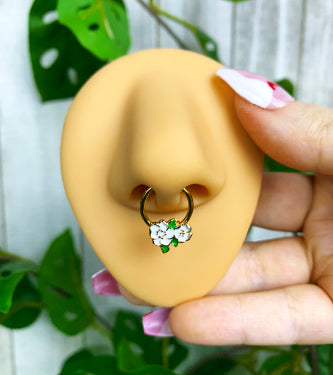



















So, you've heard the buzz about the daith piercing for migraines and you're wondering if it's a real solution or just a stylish trend. The honest answer? It's a bit complicated. There's no hard scientific evidence that it's a guaranteed cure, but at the same time, tons of people absolutely swear by it.
The Big Question: Does a Daith Piercing Stop Migraines?
You’ve definitely seen the pictures floating around online—a cool little piercing tucked into the innermost cartilage of your ear, whispered to be a secret weapon against migraines. It sounds almost too good to be true, doesn't it? For years, this piercing has been at the center of a huge debate. On one side, you have people who claim it gave them life-changing relief. On the other, you have skeptics pointing out the lack of clinical studies.
The whole idea isn't as random as it might sound, though. The theory is that the daith piercing hits a specific pressure point used in acupuncture, a practice that's been used to manage chronic pain for centuries. This connection is what really launched its popularity, turning a simple piercing into a beacon of hope for people who feel like they've tried everything else.
What You Need to Know First
Before you run off to the nearest piercing studio, it's super important to get the full picture. The relief some people experience could be due to the placebo effect. This is a powerful phenomenon where simply believing a treatment will work can cause real, physical improvements. It’s not imaginary relief; your brain is a powerful thing!
That said, many individuals report a huge drop in the number of migraine attacks they get, with some even saying their migraines have stopped completely.
For a quick summary of the whole debate, we've put together a simple table to break it down.
Daith Piercing for Migraines At a Glance
| Key Aspect | What You Should Know |
|---|---|
| The Theory | It's thought to stimulate a vagus nerve branch or an acupuncture point, potentially disrupting pain signals. |
| The Evidence | Almost entirely anecdotal. Many personal stories of success, but no large-scale scientific studies to back it up. |
| The Placebo Effect | A very real possibility. Believing it will work might be what's actually providing the relief. |
| The Risks | It’s a cartilage piercing, which means a longer, more painful healing process and a higher risk of infection. |
| The Piercer's Role | A skilled piercer is crucial for placement and hygiene, but they are not medical professionals or acupuncturists. |
| The Cost | You'll pay for the piercing service and high-quality, hypoallergenic jewelry. |
Ultimately, deciding to get a daith piercing is a personal choice. It's about weighing the potential for drug-free relief against the realities of a new piercing, including the pain, cost, and lengthy healing process. For many migraine sufferers, the "what have I got to lose?" mindset makes it a chance worth taking.
Understanding the Theory Behind the Trend
So, how did a super stylish ear piercing suddenly get a reputation as a potential migraine remedy? It might sound a bit out of left field, but the whole idea is actually rooted in acupuncture, a practice that’s been around for thousands of years.
The spot where a daith piercing goes isn't just a random bit of cartilage. For a long time, acupuncturists have targeted this specific pressure point to help manage chronic pain, including nasty headaches. The piercing acts as a form of constant, 24/7 acupressure, right where you need it.
The Vagus Nerve Connection
What makes this particular spot so special? Well, it's believed to be a key point along a branch of the vagus nerve. This nerve is a major player in your body's wiring, kind of like a superhighway of information running between your brain and other parts of your body, including the areas that handle pain signals.
The theory is that by piercing this exact spot, the jewelry provides continuous stimulation to that nerve branch. This constant pressure could potentially interrupt or "scramble" the pain signals that trigger migraines before they have a chance to take hold and completely ruin your day. Think of it like creating a bit of soothing static on a radio channel that's broadcasting nothing but pain.
The idea is simple but pretty powerful: By keeping gentle, consistent pressure on a specific nerve pathway, you might be able to calm the storm before it even starts. This is why so many people are drawn to the daith piercing for migraines—it offers a potential drug-free way to manage their pain.
Acupuncture in Piercing Form
In a way, getting a daith piercing is like having a tiny, permanent acupuncture needle in just the right place. While a typical acupuncture session gives you temporary relief, the piercing is always there, potentially offering ongoing benefits without needing to book constant appointments.
Here’s a quick rundown of how the theory is supposed to work:
- The Target: Your daith piercing is placed on a specific acupuncture pressure point in the innermost cartilage of your ear.
- The Nerve: This point is thought to connect directly to a branch of the vagus nerve.
- The Action: The constant, gentle pressure from the jewelry stimulates this nerve.
- The Result: This stimulation may help to block or lessen the intensity of migraine pain signals that travel to the brain.
It’s this fascinating mix of modern body modification and ancient wellness practices that has created so much buzz. For those curious about the history and explosion in popularity, you can learn more about what makes daith piercings a hot topic in the piercing world. It's a compelling idea—turning a piece of beautiful jewelry into a potential tool for wellness. While the science is still playing catch-up, the theory itself offers a glimmer of hope for many migraine sufferers looking for a new way to fight back.
What Real People and Research Say
So, you've heard the theory connecting acupuncture and the vagus nerve, but what's the actual verdict? When you start digging, you’ll find the conversation around the daith piercing for migraines is buzzing with personal stories, even if formal scientific studies are still playing catch-up.
The internet is filled with incredible testimonials from people who swear their lives were changed. They talk about going from multiple debilitating migraines a month to just a few, or in some cases, none at all. These stories are powerful and are a huge reason why this piercing became so popular in the first place.
On the flip side, you'll also find plenty of people who say it did absolutely nothing for their pain. It’s important to hear both sides to keep your expectations realistic. A piercing isn't a magic wand, and what works wonders for one person might not do a thing for another.
Anecdotal Evidence and Surveys
While we wait for more clinical trials, some surveys have tried to capture the community's experience. One of the bigger surveys looked at over 1,100 people who got a daith piercing specifically for migraines. The results were pretty interesting.
A whopping 64% said they saw a reduction in how often their migraines hit. Even better, 18% of those who saw an improvement claimed their migraines stopped completely. But it's also crucial to note that about a quarter of people saw no change, and a small group of 7-9% actually felt their migraines got worse.
The theory behind why it might work is all about hitting a specific acupuncture pressure point, as this diagram shows.
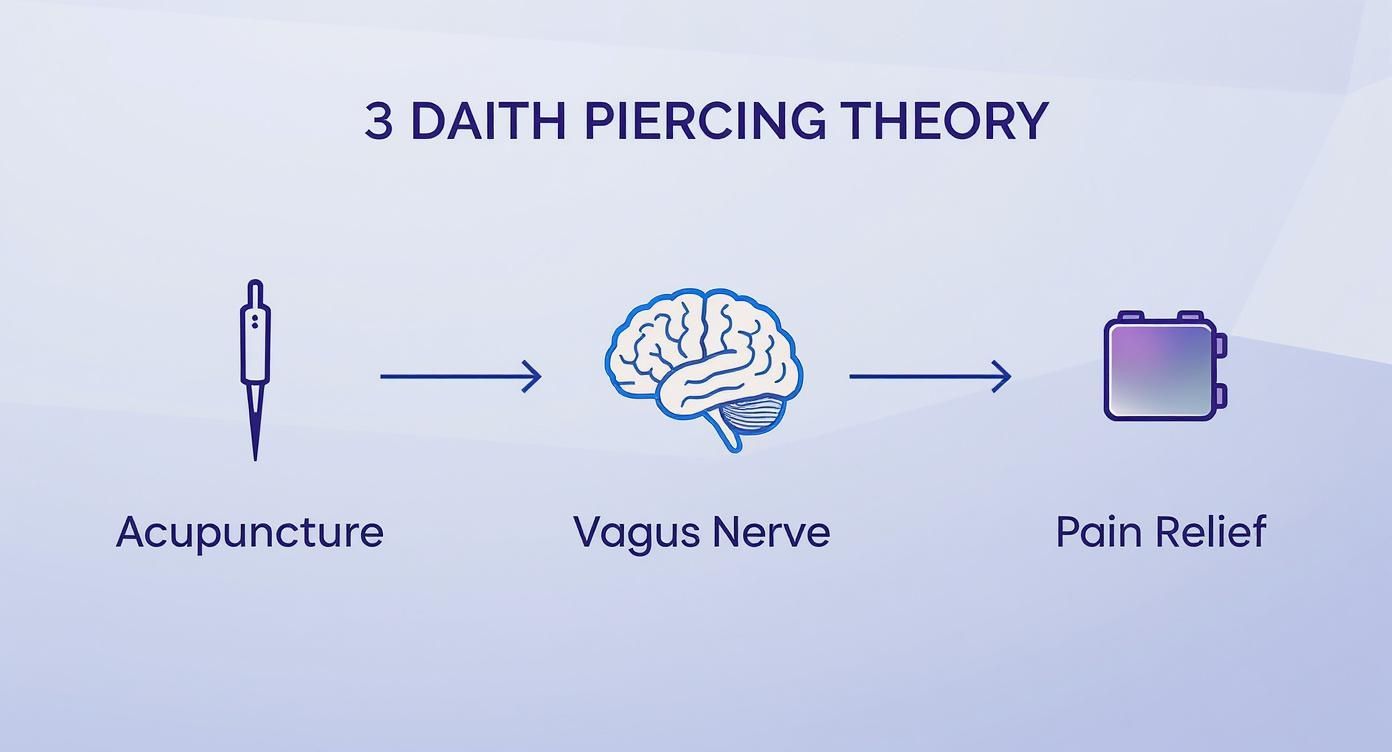
This visual helps connect the dots from the piercing's placement on an acupuncture point to its potential effect on the vagus nerve and, ultimately, pain relief.
The Placebo Effect Conversation
Now, we have to talk about the placebo effect. Skeptics bring it up all the time, and they have a point! Your mind is incredibly powerful. If you strongly believe something is going to help you, you can experience real, measurable relief.
The fascinating thing about the placebo effect is that it doesn't mean the relief isn't real. It just means the reason for the relief might be your brain's expectation, not the piercing itself.
But here’s the thing: for someone suffering from chronic migraines, does the "why" really matter as much as the result? If you get a daith piercing and your migraines disappear, you're probably not going to spend much time worrying about whether it was nerve stimulation or your own belief that did the trick. For many, relief is relief, period.
This is a core part of the discussion, blending body modification with wellness. For a deeper dive into this intersection, you can read about what experts say about piercings and acupuncture points. Ultimately, the lack of hard scientific proof means personal stories and survey data are the best resources we have right now to gauge what might happen.
Weighing The Pros And Cons Before You Commit
Alright, so you’re officially intrigued by the possibility of a daith piercing for migraines. Before you jump on the phone to book an appointment, let's get real and weigh the good stuff against the not-so-good stuff.
Making an informed choice is key, especially when it involves your body and your health. Let's lay it all out for you, no filter.
On one hand, the potential upsides are seriously compelling. The biggest pro? The chance for drug-free pain management. For anyone tired of relying on medication, the idea of a one-time piercing offering lasting relief is a massive draw. Plus, let's be honest, daith piercings look incredibly cool. You get a stylish new accessory that might just help with your headaches—a total win-win.
The Potential Upsides
While the medical community is still studying it, the anecdotal evidence from real people is hard to ignore. An international survey found that 82% of respondents with migraines were either “very pleased” or “delighted” after getting their daith pierced.
Even more telling, 49% of those using triptan migraine medications were able to stop using them completely after the piercing. You can dive into the data yourself and read more about these impressive patient-reported outcomes.
Here’s what people are hoping for when they get a daith piercing:
- Potential Migraine Relief: The most sought-after benefit, offering a possible reduction in migraine frequency and severity.
- Aesthetic Boost: Daith piercings are undeniably stylish and add a unique edge to your look.
- Drug-Free Approach: It offers a non-pharmaceutical option for managing chronic pain.
The Realistic Downsides
Now for the other side of the coin. The biggest con is that there’s absolutely no guarantee it will work. You could go through the pain, healing, and cost only to find it has zero effect on your migraines. That's a tough pill to swallow.
Speaking of healing, cartilage piercings are a commitment. A daith can take 6 to 12 months to fully heal, and the process can be tricky. They are prone to irritation bumps and infection if not cared for meticulously.
You also have to consider the initial pain of the piercing itself and the risk of allergic reactions to certain metals. To avoid this, it's vital to understand the best materials for your body; check out our guide on how to pick the right piercing metals to prevent irritation.
Daith Piercing Pros vs Cons
Before making a decision, it helps to see everything laid out side-by-side. Here’s a quick comparison of the potential benefits against the real-world risks and drawbacks.
| Pros (The Potential Upsides) | Cons (The Realistic Downsides) |
|---|---|
| Potential for significant migraine relief | No guarantee of effectiveness |
| Drug-free alternative to medication | Long and difficult healing process (6-12 months) |
| Stylish and aesthetic piercing | Risk of infection, keloids, and irritation bumps |
| Could reduce reliance on pain meds | Initial pain during the piercing procedure |
| One-time procedure vs. ongoing treatment | Cost of the piercing and quality jewelry |
| Positive anecdotal community support | Potential for allergic reactions to jewelry metals |
Ultimately, the decision is a personal one. You have to weigh whether the chance of relief is worth navigating the definite risks and healing commitment.
Your Guide to the Piercing and Healing Process
So you’ve weighed the evidence, considered the pros and cons, and decided to go for it—awesome! Getting a daith piercing for migraines can feel like a really proactive, exciting step. To make sure everything goes off without a hitch, let's walk through what you can expect, from finding the perfect piercer to navigating that all-important healing journey.
This whole process is a marathon, not a sprint, especially when it comes to cartilage. Being prepared will make a world of difference in your experience and, ultimately, your results.
Finding a Pro and Picking Your Jewelry
First things first: you need a skilled, reputable piercer. This is absolutely not the time to bargain-hunt! Look for a professional with a sparkling clean, sterile studio and a solid portfolio showing off their healed daith piercings. A great piercer will calmly walk you through the process, answer every single question you have, and make you feel comfortable.
Next up is the fun part—the jewelry! For your initial piercing, the material is everything. To head off any potential irritation or allergic reactions, your piercer must use implant-grade materials.
Here are your best bets for a fresh daith piercing:
- Implant-Grade Titanium (ASTM F-136): This is the gold standard for body jewelry. It's super lightweight, nickel-free, and a perfect match for sensitive skin.
- 14k or 18k Solid Gold: If you're all about that classic gold look, just make sure it’s solid—not plated. It also needs to be nickel-free and biocompatible.
- Niobium: Another fantastic hypoallergenic option. It's a lot like titanium but can be anodized into some seriously cool colors.
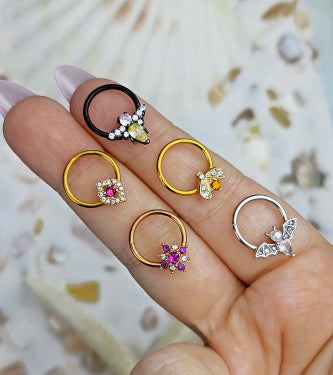
Your piercer will probably suggest starting with a captive bead ring or a curved barbell. These shapes are much better at accommodating swelling than snug little hoops.
The Piercing Appointment: What to Expect
Okay, deep breaths! The actual piercing is over in a flash. Most people put the pain at around a 5 or 6 out of 10, describing it more as a short, intense pressure than a sharp sting. You might even hear a little "crunchy" sound as the needle passes through that thick cartilage—don't worry, this is totally normal.
The whole thing is over in a matter of seconds. Your piercer will work quickly and professionally to keep discomfort to a minimum, and before you know it, you'll be checking out your new bling in the mirror.
Afterward, it's pretty common to feel a dull, throbbing ache for a few hours or even a couple of days. Some swelling and redness are also par for the course in the initial healing phase, so don't be alarmed.
Navigating the Healing Journey
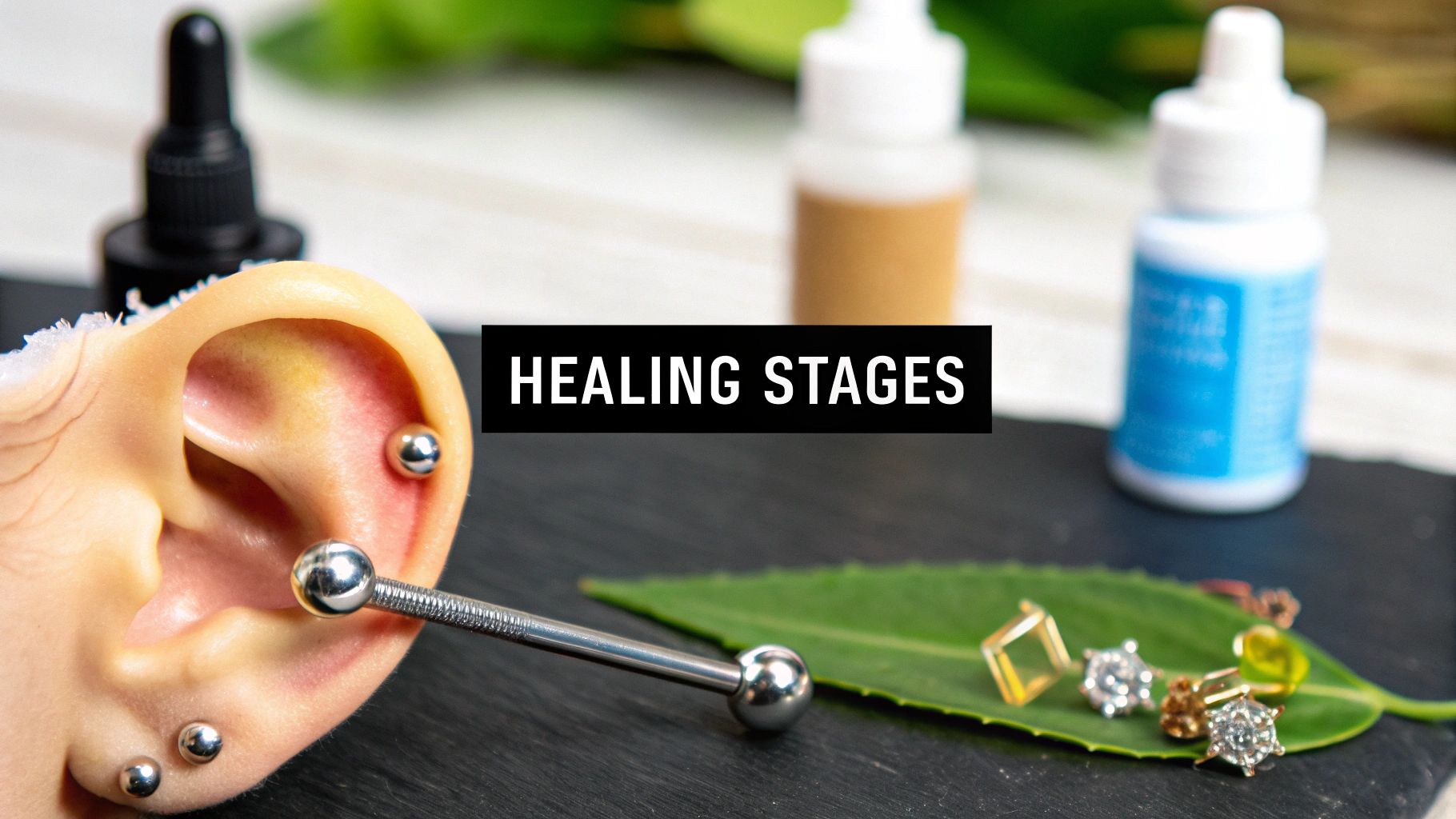
Patience is your new best friend when healing a daith piercing. This isn't like a lobe piercing that's happy in a few weeks; you're looking at a 6 to 12-month commitment for it to be fully, truly healed. Cartilage just doesn't get a lot of blood flow, which means the whole healing process is much slower.
Here are the essential aftercare dos and don'ts to protect your investment:
DO:
- Clean the piercing 2-3 times a day using a sterile saline solution.
- Gently pat the area dry with a fresh, clean paper towel.
- Sleep on the opposite side to avoid putting pressure on your new piercing.
- Change your pillowcase often to keep bacteria at bay.
DON'T:
- Touch, twist, or fiddle with your jewelry. Seriously, hands off!
- Use harsh stuff like alcohol, hydrogen peroxide, or antibacterial soap.
- Submerge your piercing in pools, hot tubs, or the ocean until it's fully healed.
- Change out your initial jewelry until a professional piercer gives you the green light.
Stick to these rules, and you'll set yourself up for a smooth healing process and give your new piercing the best possible chance to shine.
What to Do If the Piercing Does Not Work
So you did it. You went through with the piercing, healed it like a pro, and… your migraines are still showing up uninvited. That can be a huge bummer, but don't give up just yet! Realizing the daith piercing for migraines isn't a silver bullet is the first step. The bright side? You've got a seriously cool new piercing and a whole bunch of other proven options to check out.
Think about managing your migraines like you're putting together a personal toolkit. The daith piercing was one tool you decided to try, but it's definitely not the only one in the box. Lots of people find that the best relief comes from mixing and matching different strategies to find their perfect combo.
Exploring Other Paths to Relief
It's always good to remember that while personal stories can be super convincing, the hard science behind the daith piercing is still playing catch-up. A survey from 2017 found that while about 47% of people noticed their migraines happening less often, it's far from a universal cure. Researchers often wonder if the placebo effect or just the natural up-and-down cycle of migraines might be playing a role. You can read a bit more about these daith piercing survey findings for yourself.
This is your chance to pivot and look into other routes that have a more established track record for migraine management.
- Traditional Medical Routes: Don't sleep on the power of teaming up with a doctor or neurologist. They can walk you through all sorts of targeted medications, from stuff you can get over-the-counter to specific prescriptions made to either prevent migraines or stop them in their tracks.
- Alternative Therapies: Many people get amazing relief from things like acupuncture (the original inspiration for the daith theory!), massage therapy, or even chiropractic adjustments that work on releasing built-up tension in the body.
- Lifestyle Tweaks: You'd be surprised how much small daily changes can help. Getting serious about tracking and avoiding your personal migraine triggers, locking in a solid sleep schedule, and keeping stress in check with yoga or meditation can be total game-changers for some folks.
Your journey to getting your migraines under control is just that—yours. The piercing might not have been the magic fix you hoped for, but you took a proactive step for your health. Now you can take that same awesome energy and use it to find the next right tool for your kit.
Answering Your Daith Piercing Questions
Got a few questions still floating around? You're definitely not alone. Deciding to get any piercing is a big deal, especially when you're hoping it might do double duty and help with your migraines. Let's dig into some of the most common questions we get so you can feel totally confident in your decision.
How Much Does a Daith Piercing Hurt?
Alright, let's get right to it: the pain factor. Everyone's pain threshold is unique, but most people put the daith piercing at about a 5-6 out of 10. Think of it less as a sharp sting and more as a short, intense moment of pressure.
The best part? It's over in a flash. A skilled piercer works fast to keep any discomfort to a minimum. You can expect a dull, throbbing ache for a few hours afterward, but for many, that fleeting pain is well worth the potential payoff.
Which Ear Should I Get Pierced for Migraines?
This is probably the number one question we hear! The common wisdom in the piercing world is to get the daith on the side of your head where your migraines tend to hit the hardest or most often.
But what if your pain seems to be everywhere? If that's the case, a practical approach is to choose the side you don't sleep on. This simple choice can make the healing journey a whole lot more comfortable since you won't be putting pressure on it all night.
How Long Does a Daith Piercing Take to Heal?
When it comes to cartilage, patience is key. A daith piercing is a serious commitment, and you're looking at a full healing time of anywhere from 6 to 12 months—and sometimes even longer.
Because it's nestled in a thick fold of cartilage with less blood flow than, say, your earlobe, the healing process is much slower. It's super important to get the green light from your piercer before you even think about swapping out that initial piece of jewelry.
What Jewelry Is Best for a New Daith Piercing?
For a fresh piercing, the material is everything. Your piercer should only use high-quality, implant-grade metals to prevent irritation, allergic reactions, and other healing complications.
We always point people toward these top-tier, body-safe options:
- Implant-grade titanium (ASTM F-136)
- 14k or 18k solid gold (nickel-free)
- Niobium
Your first piece of jewelry will likely be a captive bead ring or a curved barbell. These styles are specifically chosen to give your ear plenty of room to swell without causing issues.
Ready to explore your options once you're healed? BodyCandy has a massive collection of stunning, high-quality daith rings waiting for you. Find your perfect style and express yourself at https://bodycandy.com.