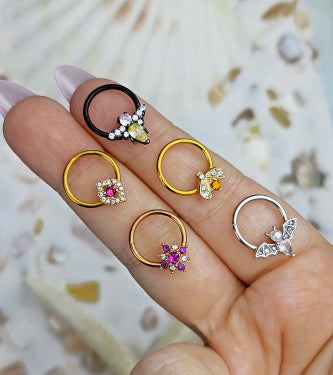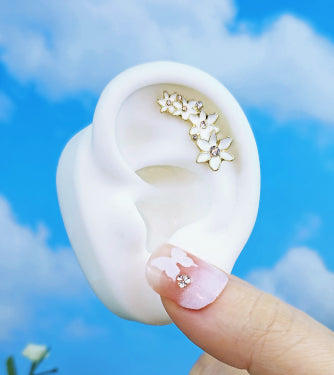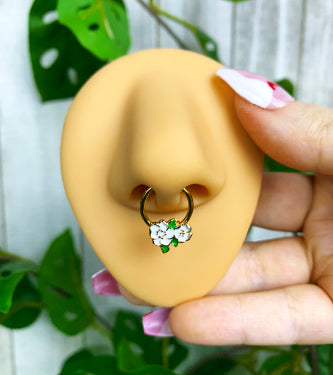




















Okay, let's be real—the absolute best way to stop your favorite jewelry from turning your skin green is to choose hypoallergenic metals like titanium or surgical steel right from the start. But if you're obsessed with a piece that leaves a mark, a quick trick is applying a thin barrier, like clear nail polish, directly onto the jewelry.
And no, that green stain doesn't mean your bling is "cheap" or fake. It's just a little chemistry experiment happening on your skin.
Unpacking the Mystery of the Green Stain
Ever taken off a favorite ring or belly ring and found a weird green mark left behind? Don't panic! It’s a super common experience, and it has nothing to do with your jewelry being low-quality. It's just a little bit of science in action.
That greenish tint is caused by a process called oxidation. A lot of metal jewelry, even high-quality pieces like sterling silver and rose gold, contains copper. In fact, copper is what gives rose gold its gorgeous rosy hue and what adds the necessary strength to pure, soft silver.
When that copper gets exposed to moisture—we're talking sweat, the natural oils on your skin, or even your favorite lotion—it starts to react. This reaction creates a super thin, harmless layer of something called copper salt. That's the green film that temporarily stains your skin.
So, What Speeds Up the Green Reaction?
You might notice this happens to you more than your friends. A few things can make this reaction happen faster or look more intense, and it all boils down to your unique body chemistry and your environment.
- Your Skin's pH: Everyone's skin has a unique pH level. If your skin happens to be naturally more acidic, you might just be more prone to that green stain effect.
- Sweat and Moisture: Hitting the gym, living in a humid climate, or just having a super sweaty day can kick the oxidation process into high gear. The more moisture, the quicker the reaction.
- Lotions and Perfumes: The chemicals hiding in your favorite cosmetics can also react with the metals in your jewelry, adding to that green residue.
This isn't some new phenomenon; people have been noticing this for centuries! The main culprit is just how reactive copper is. In fact, studies show that about 30% of people who wear copper jewelry see this green tint, and that number can jump to 50% in humid climates or for folks with more acidic skin.
Knowing which materials are more likely to react is your first line of defense against the green. Different metals have different properties, and being aware of what your bling is actually made of can save you a ton of hassle.
To become a true material expert, check out our guide on what metal body jewelry is made of. This knowledge will help you pick pieces you can wear with confidence, without any colorful surprises later.
Choose Your Bling With Confidence
Honestly, the easiest way to dodge the green-skin blues is to pick the right metals from the very start. Think of it less like a chore and more like being a smart shopper—choosing pieces that will keep your skin happy and stain-free.
At Bodycandy, we’re obsessed with body-safe, high-quality materials you can trust, especially for fresh or sensitive piercings. These are the hypoallergenic heroes you'll want to get to know.
Meet the Hypoallergenic Heroes
When you're shopping for new bling, some metals are just naturally better friends to your skin. They're known for being non-reactive, which is a fancy way of saying they are highly unlikely to cause that dreaded green tint or any other irritation.
- Implant-Grade Titanium: This is the top choice for initial piercings, and for good reason. It's incredibly biocompatible (meaning your body plays nice with it), super lightweight, and contains zero nickel.
- 316L Surgical Steel: Another piercing studio favorite. Surgical steel is durable, surprisingly affordable, and tough against corrosion. It’s a fantastic option for your everyday go-to jewelry.
- Solid 14k Gold: If you're a gold lover, make sure it’s solid and at least 14k. Higher karat gold has fewer other metals mixed in, which makes it a much safer bet for sensitive skin.
Want to get the full scoop on body-safe options? Dive into our guide to hypoallergenic jewelry for sensitive skin.
This little decision tree shows exactly how your choice of metal impacts whether your skin stays clear or turns green.
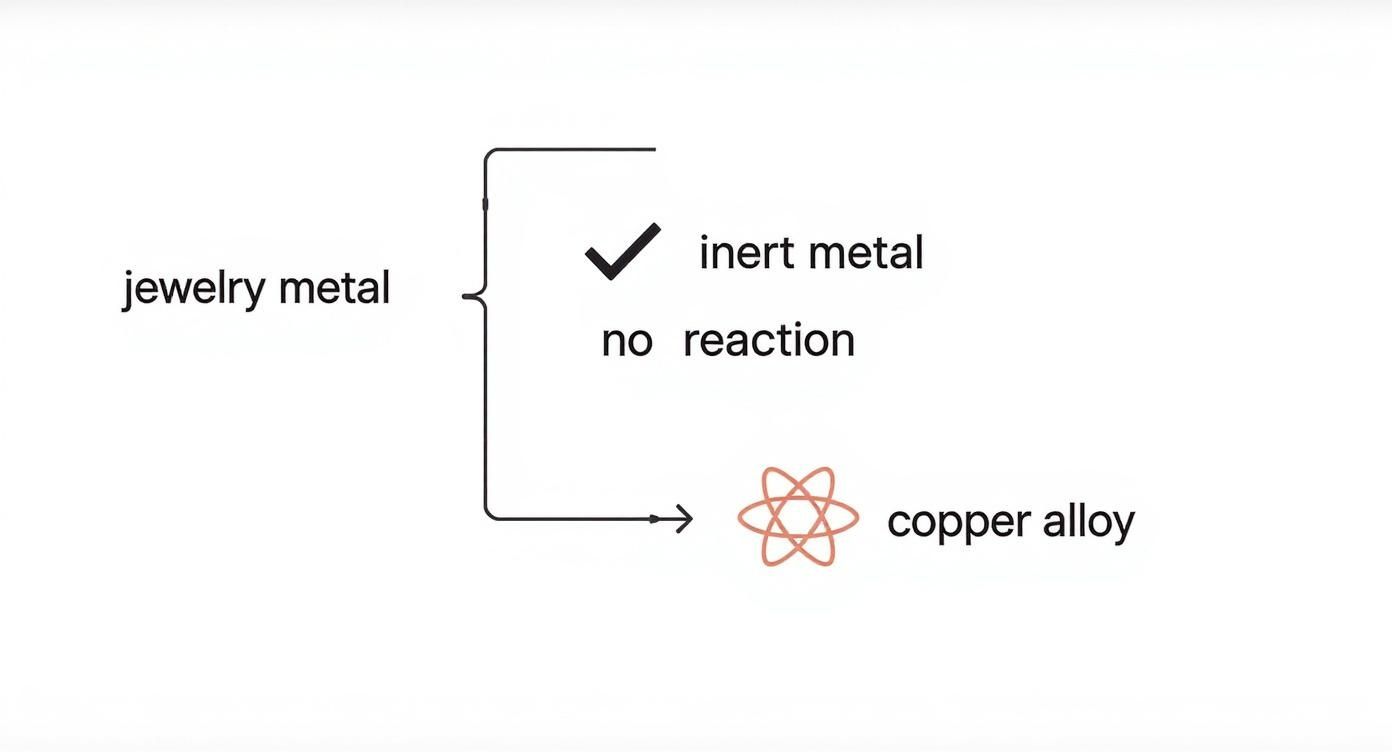
The key takeaway is simple: inert metals won't react with your skin, but copper alloys are almost always the ones to blame for that green stain.
Your Guide to Green-Free Jewelry Metals
Let's break it down. When you're picking out new jewelry, especially for a piercing, the metal matters—a lot. Here’s a quick reference to help you choose wisely.
| Metal Type | Risk of Green Skin | Best For | Bodycandy Favorite? |
|---|---|---|---|
| Titanium | Virtually None | Fresh & healed piercings, sensitive skin | Absolutely! |
| 316L Surgical Steel | Very Low | Healed piercings, everyday wear | Yes! |
| Solid 14k+ Gold | Very Low | Healed piercings, special occasions | For sure! |
| Sterling Silver | High | Occasional wear (not for piercings) | Not for piercings. |
| Copper/Brass/Bronze | Very High | Costume jewelry (short-term wear only) | Nope! |
| Plated Jewelry | Varies (High risk) | Short-term fashion, not for piercings | Not recommended. |
Ultimately, sticking with implant-grade titanium, 316L surgical steel, or solid 14k+ gold is your safest bet for happy, healthy, and green-free piercings.
Understanding the Usual Suspects
Okay, let's talk about the metals that are usually behind the green scene. The main culprit is almost always copper. It’s mixed into tons of different alloys to add strength and color, but it’s also highly reactive with your skin’s oils and sweat.
Metals that frequently have copper hiding in them include:
- Brass
- Bronze
- Sterling silver (it's actually 7.5% copper by definition)
- Rose gold (that pretty pink hue? Yep, that's from copper)
Pro Tip: Don't get tricked by plated jewelry! A thin plating of gold or rhodium over a copper or brass base can and will wear off over time. Once it does, your skin is exposed to the reactive metal underneath. If you go this route, look for pieces with a thick, high-quality plating.
By learning to read product descriptions and prioritizing body-safe materials from the get-go, you can build a collection of stunning pieces you can wear with total confidence. No more green surprises.
Create a Protective Barrier on Your Jewelry
So, you’ve got that one perfect piece of jewelry you absolutely adore, but it has a dark side—it turns your skin green. Don’t banish it to the bottom of your jewelry box just yet!
You can totally salvage it with a few clever at-home fixes. The goal is simple: create a shield between the reactive metal and your skin.
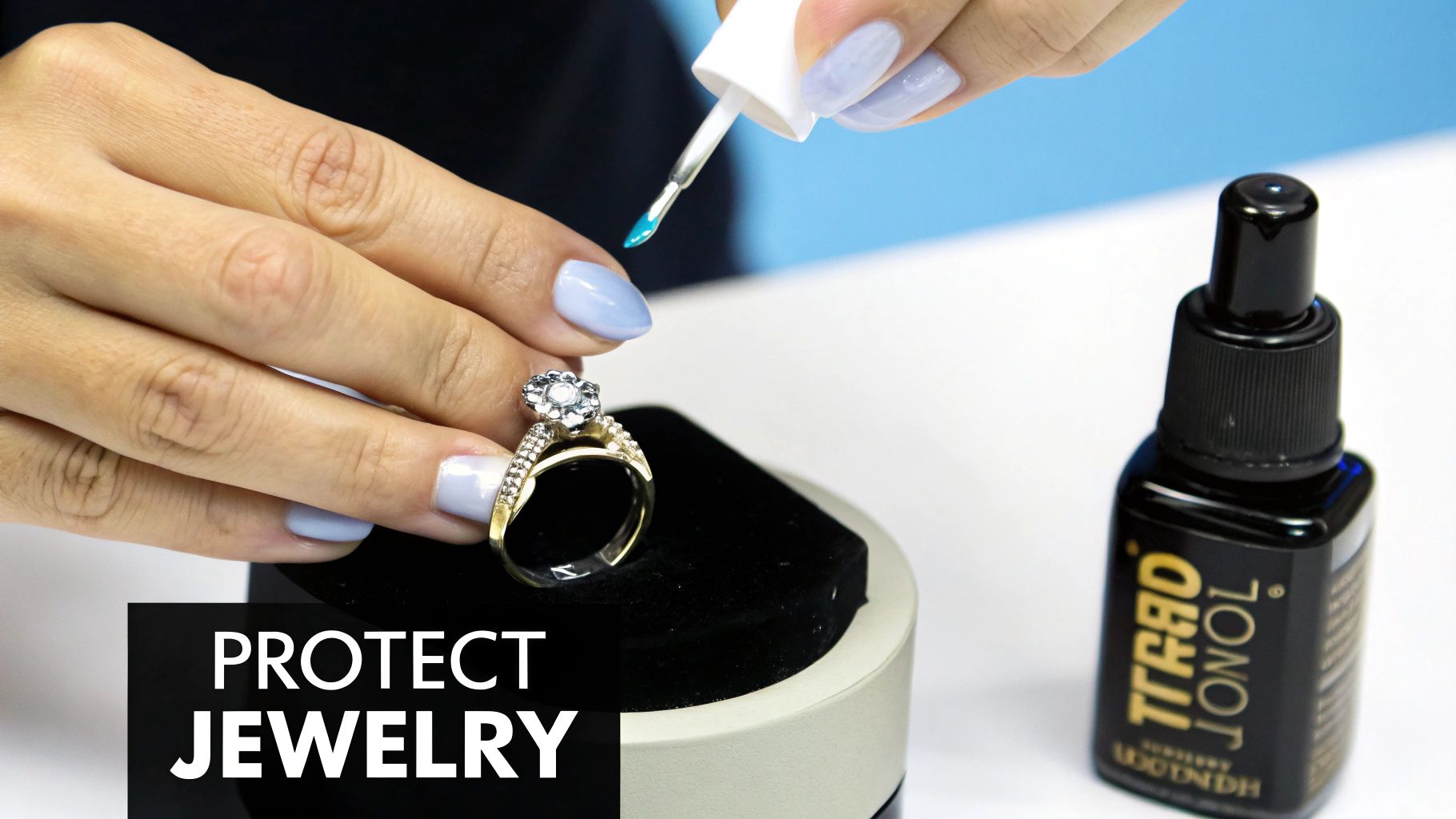
This simple trick can bring your favorite accessories back into your daily rotation, letting you wear what you love without any colorful consequences.
The Classic Clear Nail Polish Hack
Let's start with the most popular DIY hack out there: clear nail polish. It’s a classic for a reason. Applying a thin, even coat of clear polish to the parts of your jewelry that touch your skin creates an invisible barrier that stops the oxidation process in its tracks.
This trick is a game-changer for rings, the backs of earrings, and necklace clasps. Here’s how to do it right for a smooth, lasting finish:
- Clean Your Jewelry First: Make sure the piece is completely clean and dry. Any lingering oils or dust will prevent the polish from adhering properly.
- Apply a Thin, Even Coat: Use the brush to apply a very thin layer only on the surfaces that will have direct skin contact. A thick coat can look clumpy and will take forever to dry.
- Let It Dry Completely: This is crucial! Give it at least an hour to fully cure before you even think about wearing it. If it’s tacky, it’ll just make a mess.
The use of clear nail polish has become incredibly widespread; surveys show that 70% of jewelry wearers have tried this method at least once. While it's effective—reducing green stains by 60-70%—it’s not a one-and-done solution. You’ll likely need to reapply it every few weeks as it flakes and wears down.
Level Up With Professional Coatings
If you're looking for something a bit more durable than nail polish, specialized jewelry lacquers and coatings are your new best friends. These are specifically designed for this exact purpose, offering a more resilient and longer-lasting barrier against moisture and skin oils.
Think of these coatings like a professionally applied, invisible shield for your bling. They're formulated to be skin-safe and bond strongly to metal, giving you a much longer wear-time between applications.
You can find these clear polymer sealants online or at craft stores. The application process is similar to nail polish—just paint on a thin layer and let it cure. It’s a fantastic option for pieces you wear frequently.
Properly caring for coated pieces is key to their longevity, so be sure to check out our guide on the proper aftercare of coated and plated body jewelry to make them last.
Build Smart Habits to Protect Your Bling
Sometimes, preventing that weird green stain is all about your daily routine. Adopting a few simple habits can make a huge difference in keeping both your jewelry and your skin looking their best. The best part? You don’t need any special tools or products—just a little bit of mindfulness.
The golden rule of accessorizing is simple: your jewelry should be the last thing you put on and the first thing you take off. Think about it—your morning routine is probably full of lotions, perfumes, hairsprays, and makeup. All of these products contain chemicals that can speed up the oxidation process on your bling.
By putting your jewelry on after you’ve applied everything else, you give those products time to dry and absorb. This small change creates a buffer, preventing direct chemical contact that could leave your skin looking like the Hulk.
Keep Your Bling High and Dry
Moisture is the number one enemy of reactive metals. When you combine water with the natural salts in your sweat, you create the perfect storm for a chemical reaction. That means you’ll want to keep your favorite pieces as dry as humanly possible.
Before you hop in the shower, jump in the pool, or hit the gym for a serious sweat session, take a moment to remove your jewelry. This is especially important for pieces made with copper alloys, like some sterling silver or rose gold.
Even household chores can be a hazard! The chemicals in cleaning products are super harsh on delicate metals and can cause them to tarnish and react almost instantly. It’s always a good idea to slip off your rings before you start scrubbing.
Remember, the green stain is simply the result of a chemical reaction. It's not dangerous, but it is annoying. Consistently keeping your jewelry away from moisture and harsh chemicals is the single most effective habit you can build to prevent it.
Making these small adjustments to your daily habits will extend the life of your jewelry and keep that dreaded green tint at bay. It’s all about creating a safe environment for your bling, free from the triggers that cause that unwanted reaction. Your jewelry—and your skin—will thank you for it.
Store Your Jewelry to Prevent Tarnish
You might think that once you take your jewelry off for the day, the battle against the green stain is over. Think again. Where you keep your bling when you’re not wearing it matters just as much as how you wear it. Leaving your favorite pieces out on a dresser or—even worse—in a steamy bathroom is a fast track to tarnish town.
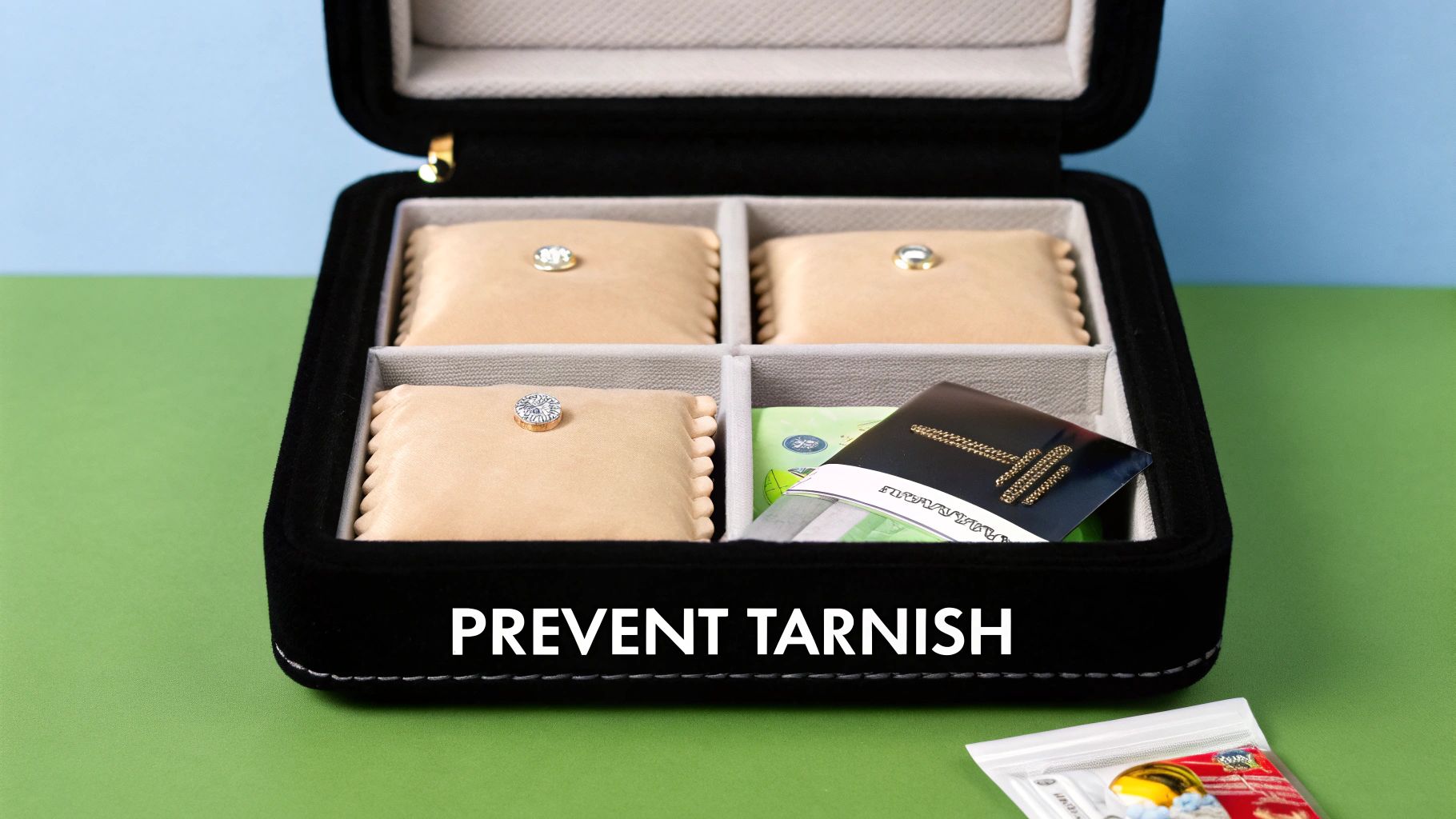
Here's the deal: tarnish is just a slower, sneakier version of the same oxidation that turns your skin green. When your jewelry is exposed to open air, humidity, and light, the metals (especially copper) react and start to break down. That tarnished layer will then rub right off onto your skin the next time you wear it.
Create a Safe Haven for Your Bling
The secret to stopping this process cold is limiting your jewelry’s exposure to the elements. A cool, dry, and dark place is the ideal environment. This is why a dedicated jewelry box or storage system isn't just for looking fancy—it’s a crucial tool in your fight against tarnish.
Your mission, should you choose to accept it, is to cut off access to air and moisture. Here are some of the best ways to do it:
- Soft Pouches: Storing each piece in its own soft fabric pouch (like velvet or microfiber) not only prevents scratches but also seriously limits air exposure.
- Airtight Bags: For pieces you don't wear often, small, zip-top plastic bags are an amazing, low-cost solution. Just be sure to squeeze out as much air as possible before you seal it up.
- Lined Jewelry Boxes: A jewelry box with a soft, anti-tarnish fabric lining is the gold standard. These are specifically designed to absorb airborne pollutants that cause discoloration.
- Anti-Tarnish Strips: These little paper tabs are a total game-changer. You can toss them into any jewelry box or bag, and they work to neutralize the sulfur gases in the air that accelerate tarnish.
Pro Tip: You know those little silica gel packets you find in new shoe boxes or purses? Don't throw them away! Tossing one into your jewelry box is an awesome hack to absorb any extra humidity, keeping your bling perfectly dry.
Proper storage isn’t just about figuring out how to stop jewelry from turning skin green; it's about preserving the life and shine of your entire collection. It prevents your favorite chains from becoming a tangled mess and protects delicate pieces from getting chipped or scratched. A little effort here goes a long, long way in keeping your collection ready to wear and looking brand new.
Your Top Questions About Jewelry and Green Skin
We get asked about that mysterious green stain all the time. So, we’ve put together a quick-fire round of answers to the most common questions we hear.
You've learned the science behind the green and the best ways to prevent it. Now, let's clear up any lingering questions so you can feel totally confident in your jewelry.
Is the Green Stain From Jewelry Harmful?
Nope! For the vast majority of people, that green tint is completely harmless. Think of it as just a temporary, surface-level chemical reaction happening on your skin—it's not a sign of anything dangerous going on underneath.
However, if you notice the green stain comes with friends—like itching, redness, swelling, or a bumpy rash—your body might be signaling an allergic reaction. This is often a reaction to nickel, another common metal mixed into jewelry alloys. If that happens, it’s best to take the jewelry out immediately and switch to trusted hypoallergenic materials like our implant-grade titanium or 316L surgical steel.
Does Green Skin Mean My Jewelry Is Fake?
Not at all! This is probably the biggest myth out there. While it’s super common with affordable costume jewelry, even genuine and high-quality pieces can cause a green tint. It all comes down to the metal mixture, not the authenticity.
Take these popular metals, for example:
- Sterling Silver: To be officially called "sterling," a piece must be 92.5% silver. That other 7.5% is usually copper, which is added to make the otherwise soft silver strong and durable.
- Rose Gold: Where does that gorgeous, warm pink hue come from? A high copper content mixed with yellow gold. In this case, the copper is a key feature, not a flaw!
A green mark simply tells you there's copper or another reactive metal in the piece's alloy. It says nothing about its quality or value.
How Do I Get the Green Stain off My Skin?
Good news: getting rid of the stain is usually super easy and takes just a minute. In most cases, simple soap and warm water will wash it right off.
If the mark is a little more stubborn, a makeup remover wipe or a cotton ball soaked in a bit of rubbing alcohol will do the trick. Just be sure to rinse the area well and dab on a little moisturizer afterward, as alcohol can be drying on the skin. The stain is never permanent, so a gentle cleaning is all you'll ever need.
The bottom line is that the green stain is temporary and easy to remove. It's more of an aesthetic annoyance than anything else, and with the right care, you can easily manage it.
Will Jewelry From Bodycandy Turn My Skin Green?
Here at Bodycandy, we are absolutely obsessed with offering high-quality, body-safe materials that you can wear with total peace of mind.
We have a massive collection of body jewelry made from materials that are highly unlikely to cause a green reaction. You can always check the product description on our site to see exactly what your new bling is made of. We believe in being totally transparent so you can choose the piece that's perfect for you and your skin.
Ready to shop with confidence and say goodbye to green skin for good? The Bodycandy collection is packed with stunning, skin-friendly options made from implant-grade titanium, 316L surgical steel, and solid 14k gold. Find your new favorite piece today!