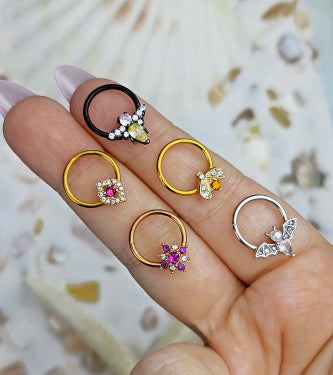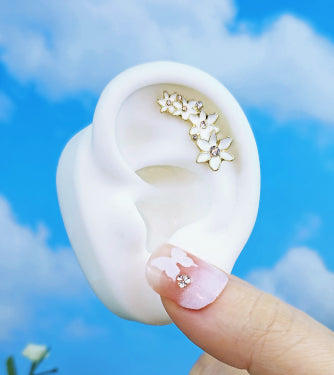




















You know that moment when you're ten tabs deep, staring at belly rings that all kind of blur together? Same basic sparkle. Same polished metal. Same “cute” look that somehow still doesn't feel like you.
Then an opal navel ring shows up and everything changes.
It flashes blue, green, pink, or milky white depending on the light. It feels a little dreamy, a little cosmic, and way more personal than a plain gem. If you want jewelry that looks soft and eye-catching at the same time, opal is usually the piece that stops the scroll.
That Flash of Magic You've Been Searching For
Maybe you started with a simple curved barbell and now you want something with more personality. Or maybe your piercing is healed and you're finally ready for jewelry that feels styled, not just functional. That's where opal gets people.
An opal navel ring has that color-shifting look that makes even a simple outfit feel finished. White tank, low-rise jeans, tiny bit of sparkle at the waistline. Suddenly the whole vibe looks intentional. It's one of those jewelry choices that reads expressive without trying too hard.
What makes it even better is that “opal” in body jewelry can mean a few different things. That's also where people get tripped up. Two rings can look similar in a product photo but wear very differently over time depending on the type of opal, the metal in the barbell, and how the stone is set.
Some opal belly rings are picked for the photo. The smart ones are picked for real life.
If you've ever wondered why one ring stays pretty while another gets irritating, dull-looking, or snaggy, the answer usually isn't the color. It's the construction.
That's why this guide focuses on the stuff shoppers need. What kind of opal you're looking at. Which settings protect the stone better. Which metals are kinder to sensitive skin. And how to choose a piece that still looks gorgeous after plenty of wear.
What Makes an Opal Navel Ring Special
The first thing to know is that “opal” on a product page doesn't always tell you enough. Some listings say opal without explaining whether it's natural, synthetic, or imitation. That matters a lot for durability, appearance, and everyday practicality.
Natural opal versus synthetic opal

In body jewelry, synthetic opal is generally the more practical choice for long-term wear. Product pages often don't spell this out clearly, but shoppers, especially people with sensitive skin, should know what they're buying because the visible opal may be paired with metals like 316L stainless steel or ASTM F-136 titanium, and the opal itself may vary by type. A product reference discussing titanium threadless floating belly jewelry with opal highlights that opal labeling is often vague and that synthetic opals are generally more durable and stable for long-term wear in navel jewelry (details on opal labeling and synthetic durability).
Here's the easy version:
- Natural opal can be gorgeous and unique, but it's often a more delicate choice.
- Synthetic opal is made for consistency, color, and better wearability in jewelry that sits against skin and clothing.
- Imitation or faux opal can look pretty too, but you'll want to know exactly what the listing means before assuming it'll hold up the same way.
If you're shopping for your first opal navel ring, synthetic opal is usually the easiest place to start. It gives you that signature flash without as much guesswork.
For extra inspo on color and design options, BodyCandy has a quick read on opal belly button rings.
The setting changes how the ring wears
People often focus on the stone color first, but the setting can make or break your experience.
A bezel setting wraps more metal around the opal. That gives the stone a smoother outline and more protection. If you wear fitted tops, high-waisted bottoms, or anything that rubs near the navel, a bezel style is often easier to live with.
A prong setting uses small metal claws to hold the opal in place. It lets more of the stone show, which can make the color pop more. It can also create a more raised profile.
Here's a simple way to consider this:
| Setting type | How it looks | How it feels in daily wear |
|---|---|---|
| Bezel | Sleek, smooth, modern | More protected, often lower snag risk |
| Prong | Sparkly, open, more dramatic | More exposed, can feel less low-profile |
Practical rule: If you want your ring for everyday outfits, gym leggings, and regular movement, start with a lower-profile design before moving into fancier statement styles.
That doesn't mean prong-set opals are a bad choice. They're just more about visual impact. If you love detail and don't mind being a little more careful, they can be stunning.
Choosing the Best Material for Your Skin
You can pick the prettiest opal in the world and still end up with a belly ring you hate wearing. The reason is simple. Your skin touches the barbell metal all day, not the flash of color on top. If a piercing feels itchy, sore, or just weirdly angry, the metal is often the first thing to check.
That matters even more with opal styles meant for long-term wear. A durable opal and a skin-friendly post make a much better pair than a gorgeous stone on a metal your body dislikes.

Titanium, steel, and gold at a glance
Here's the quick breakdown.
| Material | Good for | What to know |
|---|---|---|
| Implant-grade titanium | Sensitive skin, long wear, quality-focused shoppers | Often preferred because of high corrosion resistance and lower nickel exposure risk |
| 316L surgical steel | Everyday fashion wear for many people | Common and durable, but some shoppers still pay attention to alloy sensitivity |
| Gold | Luxe look and warmer tone lovers | Check whether it's solid gold or a coated finish |
| PVD-coated steel | Gold-color appearance | The base metal still matters |
Why titanium gets so much love
Implant-grade titanium (ASTM F-136) is popular for navel jewelry because it resists corrosion well and has a lower nickel exposure risk. In real-life terms, it gives your piercing fewer reasons to get cranky in an area that deals with sweat, movement, and fabric rubbing all day. That's why premium opal navel rings often pair synthetic opal accents with titanium posts (titanium prong-set opal navel ring details).
Titanium works like choosing a plain, reliable phone case instead of a cute one that cracks fast. It may not be the dramatic part of the jewelry, but it does a lot of the daily protection work.
If your skin reacts easily, or you want an opal ring you can wear often without second-guessing it, titanium is usually the easiest starting point. If you want a little more guidance, BodyCandy has a helpful guide to belly button rings for sensitive skin.
Where steel and gold fit in
316L surgical steel has a huge presence in belly jewelry for a reason. It's durable, easy to find, and often costs less than titanium. Plenty of healed piercings do perfectly fine with it. Still, “surgical steel” is not magic wording. If your skin is already fussy, the exact alloy matters more than the shine or the marketing label.
Gold looks especially good with opal because the warmer metal can make white, blue, and fiery tones look richer. But the big question is whether you're buying solid gold or a coated piece. Those wear very differently over time. A gold-colored finish can still have steel underneath, so your skin is reacting to the base metal, not the color you see.
PVD-coated steel sits in that same category. The coating changes the look. It does not change what the barbell is made from.
A simple shopping checklist helps:
- Check the post first. The part inside the piercing matters more than the decorative top.
- Read the actual material name. “Hypoallergenic” is vague. Titanium, steel, and gold tell you more.
- Match the metal to your wear habits. Daily wear usually calls for a more reliable material choice than occasional styling.
- Pair durability choices together. A synthetic opal in a protected setting makes more sense for frequent wear than choosing only by color.
If the opal is the sparkle, the metal is the foundation. Pretty matters. Wearability matters more.
Finding Your Perfect Fit and Size
You find an opal navel ring that looks perfect online. The color flash is unreal, the setting is cute, and then you hit the size dropdown and suddenly it feels way less fun.
Good news. Sizing is much simpler once you separate it into two questions. How thick is the bar, and how long is the wearable part? For navel jewelry, that usually means gauge and length.
What gauge means
Gauge is the thickness of the barbell. A drinking straw comparison helps here. You are checking how wide the tube is, not how long it is and not how big the opal looks from the front.
For most navel piercings, 14 gauge (1.6 mm) is the standard size, so a lot of opal styles are built around a 14g curved barbell (navel piercing sizing guide).

If your current jewelry feels comfortable and was fitted by a piercer, there is a decent chance you already wear 14g. That little detail makes shopping much easier, because you can focus on the opal type and setting instead of guessing whether the bar will even fit.
That matters more than people expect. A natural opal or a prong-set stone can be less forgiving in daily wear if the jewelry shifts too much. A well-sized bar helps keep the piece stable, which is kinder to both your piercing and the decorative top.
Length changes how the ring lives on your body
Length is the wearable space on the curved barbell, the part that sits through the piercing.
A bar that is too short can press into the skin and make the top and bottom ends feel crowded. A bar that is too long has more room to move, twist, and snag. In the navel, where waistbands, leggings, and towels already create friction, that extra movement can be a real nuisance.
It also affects how well your opal holds up over time. If you choose a ring with a raised setting or a larger decorative end, a too-long bar gives that design more chances to bump into things. If you want an easier everyday piece, a properly fitted bar plus a lower-profile setting usually wears better than a flashy design on the wrong length.
How to measure without guessing
The easiest starting point is a ring you already own and enjoy wearing.
- Remove the jewelry only if your piercing is ready. If you are not sure, let a piercer handle it.
- Measure the wearable bar length. Measure the curved section between the ends, not the full top-to-bottom height of the jewelry.
- Confirm the gauge from the product listing or your piercer. Your eyes are not a caliper.
- Check the decorative size too. Two barbells can share the same length but feel different if one has a chunky bezel, tall prongs, or a large bottom gem.
That last point trips people up all the time.
A bezel-set opal usually sits neater and closer to the body. A prong-set opal can show off more stone, but it may also stand higher and catch more easily. So if you love the look of a larger opal, make sure the fit and setting work together. Pretty is great. Pretty that survives actual life is better.
Anatomy matters more than the photo
Standard sizing exists for a reason, but navels are not copy-paste. Placement, depth, and the shape of your navel all affect what feels right.
If your anatomy is a little different from the model photo, your best fit might also be different. That is normal. It is one reason many people do better with simpler daily pieces first, then save larger clusters or dangles for occasional wear. If you want a visual sense of how different opal designs sit and sparkle, this gallery of opal body jewelry styles is helpful for comparing silhouettes.
The right size does more than feel comfortable. It helps your opal ring stay pretty longer.
How to Style Your Opal Belly Ring
Opal has range. That's why it works for people with totally different aesthetics. It can look ethereal, moody, beachy, polished, or a little extra depending on the metal, the cut, and whether the design is minimal or full-on decorative.

Match the color to the mood
A white or milky opal reads soft and glowy. It looks amazing with white tops, neutrals, swimwear, and anything clean and minimal.
A blue-toned opal feels cooler and sharper. Pair it with black, denim, silver-toned jewelry, or anything with a sleek edge.
A pink or fiery opal look gives more warmth. It's cute with softer fabrics, warmer metals, and outfits that lean romantic or playful.
If you want styling ideas with a little more visual drama, this roundup of entrancing opal body jewelry is a fun place to browse.
Pick the silhouette that fits your day
Some rings are all about subtle shine. Others are meant to be noticed from across the room.
- Single-opal styles work well for everyday outfits and low-key looks.
- Bezel-set pieces feel modern and neat, especially under fitted clothing.
- Dangle designs bring movement and glamour, which can be perfect for beach days, festivals, or styling around a crop top.
- Floating navel styles can create a cleaner look when you want the jewelry effect without a heavy bottom element.
A quick visual walkthrough helps here:
Build a whole look around the flash
Opal plays well with layered jewelry because it already has multiple tones inside one stone. That means you don't have to overmatch.
Try these combos:
- Silver-toned stack. Opal navel ring, simple hoops, cool-toned necklace.
- Warm mixed-metal look. Gold-color belly ring with soft makeup and cream fabrics.
- Swim style. Minimal opal ring, glossy skin, little else.
- Night-out vibe. Raised opal setting, lower-rise fit, tiny rhinestone accents elsewhere.
The trick is letting the opal catch light. It doesn't need much help.
Keeping Your Opal Jewelry Sparkling and Safe
You take out your favorite opal navel ring and it still flashes blue, green, and pink in the light. Great. Then you notice the surface looks cloudy, or the setting catches on a towel, or the stone seems a tiny bit loose. That is usually not a mystery. It is wear.
Opal is one of those materials that rewards gentle habits. Navel jewelry also deals with sweat, waistbands, lotion, shower water, and constant movement. Put those together, and care matters a lot more than it does with a plain steel bead.
Clean for the material you actually have
This part trips people up. “Opal” can mean a few different things, and care changes with the type.
Synthetic opal, which is common in body jewelry, is often more predictable for daily wear because the color pattern is uniform and the material is made for decorative use. Natural opal can be more delicate. Doublets and triplets, which are layered opals, need extra caution because water and chemicals can affect the glued layers over time.
So keep your routine boring. Boring is good here.
- Wash your hands first.
- Use lukewarm water and a little mild soap.
- Wipe the jewelry gently with a soft cloth or clean fingers.
- Rinse well and pat dry.
That is enough for regular cleaning. If a ring needs intense scrubbing to look presentable, the issue may be buildup around the setting or wear on the finish, not a lack of cleaning effort.
Protect the stone and the setting
The opal itself is only half the story. The setting decides how much daily life the stone has to survive.
A bezel setting works like a phone case around the edge of the opal. It covers more of the stone, so it usually handles waistbands, towels, and sleep better. A prong setting leaves more of the opal visible, which can look brighter and more gem-like, but those little raised points are easier to snag. Glue-set decorative tops can look beautiful too, but once adhesive starts to weaken, moisture and friction become bigger problems.
A few habits help a lot:
- Skip harsh cleaners and alcohol-heavy products. They can dull finishes and be rough on decorative components.
- Do not soak the jewelry for long periods. That matters even more with natural opals and layered opals.
- Avoid aggressive scrubbing. If you scrub hard around prongs or glued areas, you can shorten the life of the design.
- Check for movement. If the opal shifts, rattles, or sits crooked, stop wearing it until the piece is repaired or replaced.
Healed piercings have more freedom
Decorative opal styles make the most sense in a healed navel piercing. During healing, the area is already dealing with pressure, motion, and irritation. Add a raised setting or a heavier decorative end, and you have one more thing rubbing, catching, or twisting.
For a healed piercing, the question becomes practical: what kind of wear is this ring built for? A low-profile synthetic opal in a bezel setting usually handles everyday life better than a large raised stone with delicate details. If you want a special-occasion piece, that is totally fine. Just treat it like occasion jewelry instead of gym, travel, and sleep jewelry.
As noted earlier, if your piercing gets irritated easily, simplify first. Lower profile usually wins.
Small habits that make pretty jewelry last longer
Store each piece separately so polished surfaces and decorative tops do not knock into each other. Watch out for high-rise seams, lace, knits, and rough towels. Dry the area well after showers or swimming. If your piercing feels sore, pressured, or weirdly warm, swap to a simpler piece and give it a break.
The goal is not to baby your jewelry forever. It is to match the ring to real life. The prettiest opal navel ring is the one that still looks good after months of wear, not just the one that looked amazing for three days.
For general material and healing context, this retail materials overview and healing note is a useful reference.
Your Top Opal Navel Ring Questions Answered
Can I wear an opal navel ring in a brand-new piercing
Usually, you'll want to be cautious with decorative styles in a fresh navel piercing. Healing takes time, and the navel area deals with movement and friction all the time. Lower-risk materials and simpler profiles are often the safer route until the piercing is fully settled.
How can I tell whether the opal is natural or synthetic
Sometimes you can't tell just by looking at a product photo. That's the annoying truth. The better move is to read the product description closely and look for clear wording like synthetic opal, lab-created opal, faux opal, or a more specific material description. If a listing only says “opal,” it's worth asking questions before buying.
Is a bezel-set opal better than a prong-set one
Better for what? That's the main question. If you want a smoother, more protected everyday look, bezel-set is often the easier choice. If you care most about sparkle and a more open, gem-forward style, prong-set can be gorgeous.
What's a floating navel ring
A floating navel ring is designed to sit differently from a standard top-and-bottom gem style. It usually gives a cleaner, less bulky appearance at the bottom of the piercing. Some people like it for anatomy reasons, and others just prefer the look.
What should I prioritize if I have sensitive skin
Focus on the barbell material first, then the style profile, then the decorative details. A titanium post with a lower-profile opal design is often a smart place to start if your piercing tends to react.
Ready to find your next piece? Browse BodyCandy for opal belly jewelry styles, compare materials carefully, and pick the ring that fits both your vibe and your real life.