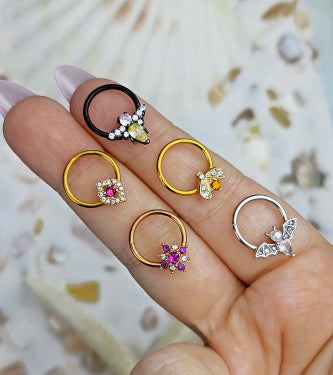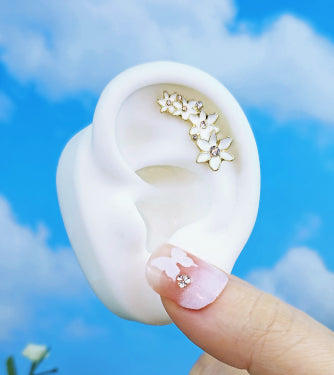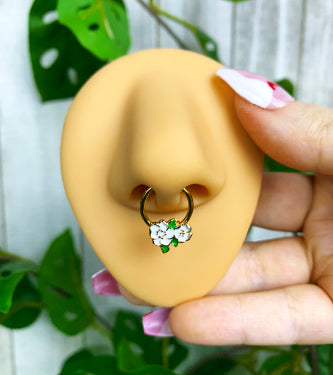


















So, you've got that awesome new nose piercing and you're ready to rock some killer jewelry. But hold on—the real journey starts now, and it's all about aftercare. The absolute best nose piercing cleaning solution is a sterile saline solution, which is just a fancy way of saying a mixture of purified water and salt that mimics your body's natural fluids.
Your Guide To A Happy Healthy Nose Piercing
Congrats on the new bling! Seriously, getting a new piercing is an exciting moment, and we're so stoked for you. Now, let's talk about the one thing that will make or break your healing journey: keeping it clean.
A happy piercing is a clean piercing. Getting this part right from the start means you'll be swapping out that initial stud for some fire Bodycandy jewelry before you know it.
Think of your new piercing as a tiny, delicate wound. Your body is doing the amazing work of building a new tunnel of skin (called a fistula) around your jewelry. Your job is simple: create the perfect, clean environment for it to heal without any drama. This guide is your new best friend, cutting through the noise to give you the real deal on aftercare.
Why Saline Is Your Piercing's BFF
The gold standard for aftercare, recommended by professional piercers everywhere, is a sterile saline solution. Forget everything you might have heard about using harsh chemicals or homemade concoctions. Your piercing doesn't need to be "disinfected" with aggressive products; it just needs to be gently cleansed.
Here’s why saline is the undisputed champ:
- It’s Gentle: Saline has the same salt-to-water balance as your own body. This means it cleanses without stinging, burning, or drying out the fragile new skin cells that are working hard to heal your piercing.
- It’s Effective: A good saline rinse flushes away debris, dried lymph fluid (those "crusties" are totally normal!), and any incidental bacteria without causing irritation.
- It’s Simple: There are no mysterious ingredients, fragrances, or additives that can cause an allergic reaction or delay healing. It's just 0.9% sodium chloride (salt) and purified water. That's it.
Let's take a quick look at what you should and shouldn't be using on that fresh piercing.
Nose Piercing Cleaning Solutions At A Glance
| Solution Type | Why It's Recommended (or Not) | Best For |
|---|---|---|
| Sterile Saline Solution | Recommended. It's isotonic, meaning it matches your body's natural salinity. It cleans gently without damaging new tissue. | All new and healing piercings. This is the gold standard. |
| Rubbing Alcohol | NOT Recommended. Extremely harsh and drying. It destroys healthy cells needed for healing and can cause major irritation. | Never for piercings. Use it for sterilizing surfaces, not your skin. |
| Hydrogen Peroxide | NOT Recommended. Too aggressive. It kills bacteria but also the new, delicate cells, which dramatically slows down healing. | Never for piercings. It can lead to scarring and irritation. |
| Antibacterial Soaps | NOT Recommended. Often contain dyes, fragrances, and harsh chemicals (like Triclosan) that irritate piercings and can dry out the skin. | Never for piercings. Stick to saline. |
As you can see, keeping it simple is the key. Your body knows how to heal; your job is just to keep the area clean so it can do its thing.
Pro Tip: Never, ever use rubbing alcohol, hydrogen peroxide, or antibacterial soaps on a new piercing. These products are way too harsh and will destroy the healthy tissue your body needs to heal, leading to a longer, more painful recovery.
We’re here to set you up for success from day one. By sticking to a simple saline routine, you'll avoid the most common aftercare mistakes and ensure your nose piercing heals beautifully.
If you're getting ready for your very first piercing, you might also want to check out our guide on what to expect and how to prepare. Mastering the cleaning process is the final step to a flawless experience, allowing you to focus on the fun part—planning your future jewelry collection!
Choosing Your Perfect Cleaning Solution
Alright, you're standing in the first-aid aisle, and it feels like you need a chemistry degree just to figure out what to buy. Sound familiar? Don't worry, we're cutting through the clutter to help you pick the perfect nose piercing cleaning solution. Think of this as your personal shopping guide to keeping that new nose bling happy and healthy.
When it comes to aftercare, you really only have two fantastic options: a pre-made sterile saline spray or a simple DIY sea salt soak. Let's break down the real-world pros and cons of each so you can figure out what works for you and your lifestyle.
The Convenience King: Sterile Saline Sprays
Let's be real, life gets busy. For those of us who want a no-fuss, grab-and-go option, a pre-made sterile saline spray is an absolute lifesaver. These sprays are amazing because they take all the guesswork out of the equation.
The solution is already perfectly mixed to be isotonic (0.9% sodium chloride), which just means it matches your body's natural salinity. This is the sweet spot for cleaning a wound without causing any irritation or stinging. Plus, they come in a sterilized, sealed can, so you know what you're spraying is 100% pure and free from any nasty contaminants. No mixing, no measuring—just spray, pat dry, and get on with your day.
Pro Tip: Look for saline sprays that list only two ingredients: purified water and 0.9% sodium chloride. Additives like preservatives, perfumes, or other chemicals can seriously irritate a healing piercing and should be avoided at all costs.
The Budget-Friendly Choice: DIY Sea Salt Soaks
If you're looking for a wallet-friendly alternative that's just as effective, making your own sea salt solution is a great way to go. This is an old-school method that piercers have trusted for decades, and for good reason. While it takes a little more effort, it’s super simple once you get the hang of it.
The real key to a successful DIY soak is getting the ratio right. A solution that's too salty can be incredibly irritating and drying—the last thing your new piercing needs. On the other hand, a mixture that's too weak just won't be effective. Think of it like baking; precision is everything.
Ready to play scientist in your kitchen? Here’s the only recipe you’ll ever need.
Your Foolproof DIY Saline Recipe
Getting this mixture right is non-negotiable for a happy piercing. A bad batch can lead to irritation bumps or a much longer healing process, so follow these steps carefully.
What You'll Need:
- Non-Iodized Sea Salt: This is a must. Regular table salt often contains iodine and anti-caking agents that can be super harsh on a fresh wound.
- Distilled or Bottled Water: Your tap water can have bacteria, minerals, and chemicals like chlorine that will only interfere with healing. Stick with purified water to be safe.
- A Clean Container and Measuring Spoons: Use a glass or ceramic mug that you can easily wash and keep sterile.
The Magic Formula:
- Bring 8 ounces (1 cup) of distilled water to a rolling boil to ensure it's fully sterilized. Let it cool down until it's comfortably warm, but not scalding hot.
- Mix in exactly 1/4 teaspoon of non-iodized sea salt.
- Stir until every last grain of salt has completely dissolved.
And that's it! You've just made a perfect isotonic solution. You absolutely must make a fresh batch for every single cleaning session to avoid any risk of bacterial contamination. Never, ever store it for later use.
Ultimately, whether you go for a convenient pre-made spray or a budget-friendly DIY soak, the goal is exactly the same: to create a clean, happy environment for your new piercing to heal beautifully.
Your Daily Piercing Cleaning Ritual
Alright, you’ve got your cleaning solution picked out—either a store-bought sterile saline spray or a fresh batch of your own DIY mix. Perfect. Now let’s talk about the actual cleaning process. Think of this as a new daily self-care moment. It’s a small, simple ritual that protects your piercing and helps it heal beautifully.
First thing’s first, and this part is absolutely non-negotiable: wash your hands thoroughly with soap and water before you even think about touching your piercing. You're dealing with what is essentially a small wound, and clean hands are your best defense against nasty bacteria.
Your Go-To Cleaning Methods
You really have two solid methods for applying your nose piercing cleaning solution. They’re designed to fit into any schedule. One is a quick spray-and-pat for when you're on the go, and the other is a more therapeutic soak that's great for unwinding at the end of the day.
The Quick Spray-and-Pat (For Busy Days):
- Grab your sterile saline spray. Hold the can a couple of inches from your nostril.
- Give it a good spritz. You want to liberally spray the solution right onto the front and back (inside your nostril) of the piercing. Don't be shy—saturate the area.
- Let it sit for a minute. This gives the saline a chance to soften up any "crusties" that have formed around the jewelry.
- Pat it dry. Use a clean paper towel or a piece of sterile non-woven gauze to gently pat the area completely dry. Never use a cloth towel; they can snag your jewelry and are breeding grounds for bacteria.
The Relaxing Saline Soak (For Evenings):
- Prep your solution. Pour some pre-made saline into a small, clean cup or mix up a fresh batch of your DIY sea salt solution.
- Saturate your gauze. Dip a piece of sterile, non-woven gauze into the warm saline until it’s soaked through.
- Apply and chill. Gently press the wet gauze against your piercing and hold it there for 5-10 minutes. This feels amazing and does a fantastic job of loosening stubborn buildup without forcing you to pick or scrub at it.
- Pat dry. Same as the spray method, just gently pat the area completely dry with a fresh paper towel.
This flowchart breaks down just how simple both cleaning routines can be.

Whether you go for the convenience of a pre-made spray or the control of a DIY soak, the core steps—apply and dry—are all about gentle, consistent care.
How Often Should You Clean Your Piercing?
When it comes to cleaning frequency, you’re aiming for the Goldilocks zone: not too little, not too much. For a brand new nose piercing, the sweet spot is twice a day. A quick clean in the morning and another before bed is the perfect rhythm to flush away bacteria and keep the site pristine.
It's a common myth that cleaning more will speed up healing. It won't. In fact, over-cleaning is just as bad as not cleaning enough. It can strip your skin's natural oils, which leads to irritation, dryness, and a much longer, more frustrating healing process. Your body is doing all the hard work; your job is just to keep the area clean.
Key Takeaway: The twice-a-day cleaning routine is an industry standard for a good reason. Consistency is way more important than intensity. Stick to your morning and night ritual and let your body do its thing.
This isn't just our opinion; it's what pro piercers and health experts recommend. Saline solution is king in the world of piercing aftercare, advised by everyone for its gentle but effective cleansing power. Piercers will tell you to use a saline rinse twice daily from day one. This is critical, as nose piercings can take anywhere from 3-6 months to fully heal. Sticking to this routine has been shown to slash infection risks by up to 70% compared to inconsistent care. You can learn more about the science behind aftercare at Healthline.com to see why this method is so trusted.
Turning this into a habit is the single best thing you can do for your piercing. It only takes a few minutes, but it makes all the difference in your healing journey.
What To Expect During The Healing Process

Patience is everything when you're healing a new piercing. It's so easy to wake up, stare in the mirror, and wonder, "Is this supposed to look like this?" We get it. Understanding the normal healing timeline helps you stay calm and stick to your aftercare.
Your body is hard at work building a new tunnel of skin (called a fistula) around your jewelry. This process doesn't happen overnight, and it has some very distinct stages. Knowing what's normal will keep you from panicking over minor things and help you spot a real problem if one pops up.
The First Few Weeks
That first month is definitely the most intense part of the healing journey. During this time, it's completely normal to experience what piercers call "primary symptoms." Don't be alarmed if you notice:
- Redness: The skin around your new stud will probably be a little pink or red. This is just a sign of increased blood flow, which is your body's way of sending healing power to the site.
- Swelling: A bit of puffiness is totally expected. Your body is having a normal inflammatory response to the new addition.
- Tenderness: The area will likely be sore, especially if you accidentally bump it. This sensitivity should slowly get better over time.
These symptoms will show up, peak, and then gradually fade over the first month or so. As long as you see consistent improvement and things aren't getting worse, you're on the right track.
Demystifying The "Crusties"
Let's talk about one of the most misunderstood parts of healing: those yellowish, crusty bits that form around your jewelry. It’s so easy to mistake them for pus and assume you have an infection, but most of the time, they are a great sign!
This discharge is actually lymph fluid, a clear or whitish-yellow fluid that's a natural part of the healing process. It seeps out, dries, and forms what we affectionately call "crusties." Your daily cleaning routine with a quality nose piercing cleaning solution is designed to gently soften and rinse this gunk away—no picking or scrubbing required.
Remember, picking at crusties is just like picking a scab. It rips away the delicate new skin, can set your healing back to day one, and might even cause irritation bumps or an infection. Let your saline do the work.
The Long Haul: Full Healing
Here’s the reality check: even when your piercing looks and feels perfect on the outside, it's still busy healing on the inside. A nose piercing takes a surprisingly long time to become fully healed and sturdy.
The complete healing timeline for a nostril piercing is typically 4 to 6 months. For some people, it can even take a little longer. This is exactly why you have to keep up with your cleaning routine and fight the urge to change your jewelry too soon.
Switching out that initial stud before the fistula is fully formed can tear the fragile new skin, leading to a major setback. Your first piece of jewelry is usually a bit longer to allow for swelling. You'll likely need to visit your piercer for a "downsize" (a shorter post) after the initial puffiness goes down, usually around the 2 to 3 month mark.
Understanding the full timeline is key for a happy piercing. You can get a better sense of different timelines by checking out our guide on healing times for popular piercings. Sticking to your aftercare for the whole duration ensures your piercing heals strong, stable, and ready for all the amazing Bodycandy styles you've been eyeing.
Troubleshooting Common Piercing Problems

Even with the most diligent aftercare, sometimes a new piercing just gets fussy. It's totally normal to feel a wave of panic when you spot some redness or a mysterious bump, but take a breath. Most of the time, it's nothing to worry about.
The key is knowing how to tell the difference between simple irritation and a genuine infection. Once you can spot the signs, you'll know exactly what to do to get your piercing back on track.
Is It Irritation Or An Infection?
First things first, let's learn to identify a true infection. While they're rare if you're cleaning properly, infections are serious and need prompt attention. Irritation, on the other hand, is way more common and usually an easy fix.
Signs of an Infection:
- Thick, Opaque Discharge: We're talking about green or dark yellow pus. This is not the same as the clear-ish or whitish fluid that forms normal "crusties."
- Foul Odor: A real infection often has an unpleasant, distinct smell.
- Spreading Redness and Warmth: The red area is growing far beyond the piercing site, and the skin feels hot to the touch.
- Intense Pain and Swelling: The pain isn't getting better; it's getting progressively worse.
If you tick these boxes, do not remove the jewelry! This is a classic mistake. Taking it out can cause the hole to close, trapping the infection inside and creating a much bigger problem, like an abscess. Call your piercer or a doctor immediately.
Infections from shoddy aftercare can affect up to 20-30% of new piercings. The good news? A quality nose piercing cleaning solution drastically lowers those odds. Studies have found that early warning signs like warmth and pus often show up in the first week because of neglect. But simply washing twice a day with saline can clear up about 85% of mild irritations without antibiotics, which just goes to show how powerful that simple step is. You can find more great information on piercing safety and aftercare on WebMD.com.
The Dreaded Irritation Bump
More often than not, that scary-looking bump is just an irritation bump. These annoying little guys, sometimes called pustules or granulomas, pop up right next to the piercing. They are your body's not-so-subtle way of screaming, "Hey, something is bugging me!"
The usual suspects behind these bumps include:
- Physical Trauma: This is the big one. Snagging your jewelry on a towel, sleeping on it wrong, or constantly fiddling with it are the top causes.
- Improper Aftercare: Using harsh chemicals (like alcohol or peroxide), over-cleaning, or even under-cleaning can throw things out of whack.
- Low-Quality Jewelry: That "mystery metal" stud you bought online could be causing an allergic reaction. Stick to implant-grade materials from reputable sources.
- Moisture: Not drying your piercing completely after you clean it creates a damp, swampy environment where irritation loves to thrive.
Key Takeaway: An irritation bump is a symptom, not the actual problem. To make it go away, you have to play detective, figure out what's causing the irritation, and fix it.
Your Action Plan For An Angry Piercing
If your piercing is red and angry or has sprouted a bump, it’s time for a "back to basics" boot camp. Think of this as a hard reset for your healing journey.
1. Stop Touching It. This is the golden rule, and it's non-negotiable. No twisting, turning, picking, or prodding. Leave it alone.
2. Stick to Saline. Ditch any other products you've been trying. Go back to your simple, sterile saline soaks or sprays twice a day. The gentle cleansing will calm things down without adding more fuel to the fire.
3. Check Your Habits. Be honest with yourself. Are you accidentally sleeping on that side? Are you playing with the stud when you're bored? Identify the habit and stop. A travel pillow can be a total game-changer for protecting new nose and ear piercings while you sleep.
4. Keep It Dry. After every single cleaning, gently pat the area completely dry. Use a fresh piece of paper towel or sterile non-woven gauze. Remember: a damp piercing is an unhappy piercing.
5. Be Patient. Irritation bumps are stubborn. They don't vanish in a day. But with consistent, gentle care, you will see it slowly shrink and eventually disappear.
Dealing with these little bumps in the road is all part of the piercing experience. By learning to listen to your body and sticking to a simple, effective routine, you'll be able to handle any little hiccups and get back to loving your awesome new look.
Your Nose Piercing Aftercare Questions Answered
Even with a perfect aftercare plan, a new piercing can throw some curveballs. You're not alone if you still have a few "what if" scenarios running through your mind.
Let's dive into some of the most common questions we hear every single day. Getting these sorted will help you feel confident in your routine and get you that much closer to showing off all the new styles you've been eyeing.
Can I Use Alcohol Or Hydrogen Peroxide On My Piercing?
This is a hard no. It's one of the biggest and most damaging myths in piercing aftercare. While you might think of alcohol and hydrogen peroxide as go-to disinfectants, they are way too aggressive for a healing piercing.
Think of it this way: you wouldn't use a pressure washer to clean a delicate painting. These harsh chemicals don't just kill bad bacteria; they wipe out all the healthy new cells your body is working hard to generate. This can cause serious irritation, chemical burns, and a much longer, more painful healing journey. Stick with a gentle, sterile nose piercing cleaning solution like saline—it's what all the pros recommend for a reason.
How Do I Clean The Inside Of My Nostril Piercing?
Great question! Cleaning the inside is just as crucial as the outside, since crusties and buildup can form on both ends of the jewelry. The simplest and safest method is to use your sterile saline spray.
Just tilt your head back a bit, lift your nostril, and give a quick, targeted spritz right at the back of the jewelry. If you need to, you can also use a fresh piece of sterile non-woven gauze soaked in saline to gently wipe around the post inside. The whole point is to rinse away any gunk without twisting, turning, or yanking on the jewelry.
What Do I Do If I Snag My New Nose Ring?
Ouch! First off, don't panic. It happens to literally everyone at some point—whether it's on a towel, your pillowcase, or that favorite sweater. The initial shock and sting are real, but it's usually not a catastrophe.
Take a deep breath. Start by washing your hands, then gently check it out. It’ll probably be sore, and you might even see a tiny bit of blood, which is normal after that kind of trauma. The best thing you can do is give it an extra saline soak to clean the area and calm it down.
- Soak a clean piece of sterile non-woven gauze in warm saline solution.
- Gently hold it against the piercing for 5 to 10 minutes.
- When you're done, pat the area completely dry with a fresh piece of gauze or paper towel.
Keep a close eye on it for the next few days. If you start to see signs of an infection or a stubborn bump starts to form, it's time to check in with your piercer.
Pro Tip: The biggest challenge after a snag is fighting the urge to touch or mess with it. Your body knows how to heal, but it needs you to leave it alone. A few extra saline soaks and a healthy dose of patience are your best friends here.
When Can I Finally Change My Nose Jewelry?
We get it—you're so ready to swap that plain starter stud for all the awesome styles you've been collecting. But patience is everything when it comes to a new piercing. You should never change your initial jewelry until the piercing is 100% healed, which can take anywhere from 4 to 6 months.
Changing it too soon is one of the worst mistakes you can make. It can easily tear the delicate new skin tunnel (called a fistula) that your body has formed, which basically resets your healing time all the way back to day one. This mistake can bring back swelling, invite infection, and lead to those dreaded irritation bumps.
Always listen to your piercer's advice on when it's safe to make the switch. For that very first jewelry change, we highly recommend having your piercer do it for you. They'll make sure it's done safely and correctly without damaging all your hard healing work.
Ready to find your new look for when that piercing is all healed up? At Bodycandy, we have thousands of styles waiting for you.