

















You saw one tiny piece of jewelry sitting in that little flap by someone’s ear canal, and suddenly your whole brain went, “Yep. I need that.”
That’s the ear tragus piercing effect. It’s subtle, but it changes the whole vibe of an ear stack. It looks polished, a little edgy, and weirdly intentional, like the jewelry equivalent of rolling up your sleeves just right.
If you’re here, you’re probably wondering a few things at once. Does it hurt? Can your ear even support it? What jewelry works? And the big one almost nobody explains properly: what happens if you live in earbuds?
So You're Obsessed with the Tragus Piercing
The crush on a tragus piercing usually starts the same way. You notice it on a friend, a creator, or someone ordering coffee. It’s tiny, but it pulls focus. Not loud. Not messy. Just cool in that “I know exactly what I’m doing” way.
That makes sense, because the tragus piercing is a pretty modern look. It emerged in the 1980s, and its popularity really started climbing around 2005, according to this tragus piercing history overview. By 2019, it had become a standard offering in professional studios and ranked among the top ten most popular piercings.
That part matters. The ear tragus piercing isn’t some experimental niche move anymore. It’s established, well-known, and something experienced piercers work with all the time.
Still, it has a different energy than a basic lobe piercing. A lobe says, “Cute earrings.” A tragus says, “I curated this ear on purpose.”
A tragus piercing is tiny real estate with big styling power.
It also sits in a spot that confuses first-timers. People mix it up with the daith, the conch, the anti-tragus, or just call it “that inside ear piercing.” Fair enough. Ear anatomy names sound like a fantasy map until someone points at the right cartilage and breaks it down.
A good tragus guide should do more than say it looks cute. You need solid information. Whether your anatomy works. Why your piercer picks certain jewelry. Why sleeping on it can make it grumpy. And yes, what to do if your day basically runs on AirPods.
That’s where people usually get tripped up. They focus on the photo they want after it’s healed, not the months it takes to get there without irritating it into chaos.
The Tragus Piercing 101 What You Need to Know
You’re standing in the mirror, tilting your head to see that tiny flap in front of your ear canal, and one question hits fast. Is there enough room to pierce that?
The tragus is the small piece of cartilage that sits right at the entrance of the ear. It works a bit like a little doorstop for your ear canal. Small area, firm tissue, very little margin for error. That’s why tragus piercings look so clean when they’re done well, and why placement has to be precise.

Not every ear is built for it
This part surprises a lot of first-timers. Tragus anatomy varies a lot from person to person, and a piercer needs to assess that in person, as explained in this tragus anatomy and placement guide.
Some tragi are thick and nicely defined. Some are tiny little cartilage buttons. Some angle forward or inward in a way that makes jewelry sit awkwardly. That does not mean your ear is bad for piercings in general. It means this specific piercing needs enough usable tissue to stay stable.
A good piercer is checking more than “Can I fit jewelry here?” They’re checking whether the jewelry can sit without too much pressure, whether the angle will heal cleanly, and whether your daily habits will annoy it. That last part matters more with a tragus than people expect, especially if you live in earbuds, wear over-ear headphones for work, or constantly have a phone pressed to that side.
Why depth placement matters
A tragus piercing needs to pass through the sweet spot of the cartilage. Too close to the outer edge, and the jewelry may not have enough tissue to anchor securely. Too far inward, and the angle or pressure can stay irritated for months. The same guide notes that poor depth can lead to migration, rejection, or chronic irritation.
A simple way to read it:
- Too shallow: not enough healthy tissue supports the jewelry.
- Too deep: the piercing can sit under constant pressure and never calm down.
- Well placed: the jewelry has support, the angle is clean, and healing has a fair shot.
That “well placed” zone is tiny. Tragus piercing is more like parking in a narrow spot than pulling into an empty lot.
Your headphones and earbuds matter more than people say
This is the part many guides rush past, but it can make or break your healing experience.
A fresh tragus piercing sits exactly where earbuds want to rest. If you push an earbud into a new piercing, you add friction, pressure, and bacteria from a device that probably gets cleaned less often than you think. Even if it feels fine for ten minutes, that repeated rubbing can keep the piercing swollen and cranky.
Over-ear headphones are usually the easier option during healing, but only if the ear cup does not press on the tragus. Some pairs sit gently around the ear. Some clamp right onto the piercing site. Test the fit carefully, and if there’s pressure, skip them on that side.
If you use earbuds every day for calls, music, commuting, or the gym, bring that up during your consultation. A good piercer will tell you whether your anatomy gives you enough space and what lifestyle adjustments healing will require. Sometimes the honest answer is that you’ll need to take a break from in-ear headphones for a while. Better to hear that before the piercing than after you’ve irritated it for three weeks straight.
What a good consultation sounds like
A skilled piercer usually checks your tragus from more than one angle, looks at cartilage thickness, marks placement carefully, and explains how the jewelry will sit. They should also ask questions that sound practical, not performative. Do you sleep on that side? Do you wear earbuds daily? Do you need a headset for work? Do you have enough room for safe placement?
Those questions are a good sign. They show the piercer is planning for healing, not just the photo you want on day one.
If your tragus is too small or the shape makes placement risky, a solid piercer may tell you no. That can sting a little in the moment. It is still the answer you want. The right piercer protects your ear first and your feelings second, which is exactly how cartilage work should be handled.
Choosing Your Bling The Best Jewelry for Tragus Piercings
You can have a great piercer, a clean studio, and perfect placement, then still make healing harder with the wrong jewelry choice. Tragus jewelry is tiny, but it behaves like hardware in a small doorway. If the shape swings, presses, or catches, your ear feels every bit of it.
For a fresh tragus piercing, the safest starting point is usually straight jewelry. A flat-back labret is the classic pick for a reason. It sits close to the ear, stays fairly calm, and gives swelling a little room without turning your tragus into a snag magnet.

What you should start with
Fresh tragus piercings do best with jewelry that stays put. Cartilage likes stability. The less twisting and dragging you create, the easier healing usually goes.
Good starter options include:
- Flat-back labret: low-profile, stable, and usually the easiest style to live with day to day
- Straight post-style stud: similar idea, if the post length and backing are right for your anatomy
- Small straight barbell: sometimes appropriate, depending on placement and your piercer’s judgment
Styles to save for later:
- Hoops: they move more, catch more easily, and tend to get annoyed by early swelling
- Curved barbells: they can place uneven pressure on the channel and are not a common first choice for healing
- Large decorative tops: pretty in photos, frustrating with hair, towels, helmets, masks, and pillowcases
If jewelry terms all blur together at first, this ear cartilage jewelry naming guide is a useful visual reference.
Gauge matters more than people expect
A tragus piercing is usually thicker than a standard lobe piercing. Professional piercers often use 16 gauge (1.2 mm) or 14g jewelry for better stability.
That sounds backward to a lot of first-timers. Smaller does not always mean gentler. In cartilage, jewelry that is too thin can be less stable and more prone to shifting in ways you do not want.
Why flat backs usually win
A flat-back labret works well because both sides of the jewelry have a job. The decorative top stays visible from the front, and the flat disc sits at the back with less poking and rubbing than a butterfly back would cause.
That matters even more with a tragus because this spot is right next to things people use every day. Earbuds. Phone screens. Hats. Hands.
If headphones and earbuds are part of your normal life, jewelry choice is not just a style decision. It is a comfort decision. A low-profile flat-back usually gives you the best odds of avoiding extra pressure from over-ear headphones once the piercing is calm enough for them, and it is much less likely to get bumped than a bulky gem cluster. Earbuds are still a problem during healing on that side, but starter jewelry that sits close to the ear gives you fewer things working against you.
Studs versus hoops for healed tragus piercings
Once the piercing is fully healed, both studs and hoops can look great. They just wear differently.
Studs are the easier everyday option. They stay subtle, feel secure, and usually play nicer with glasses, hats, and hair.
Hoops show more. They can look sharp in a curated ear setup, but they also move more and can be fussier if you still catch that area a lot.
Here’s the quick read:
| Jewelry style | Fresh piercing | Healed piercing | What it feels like |
|---|---|---|---|
| Flat-back stud | Yes | Yes | Secure, minimal, easy to wear |
| Straight labret | Yes | Yes | Stable and practical |
| Hoop | Usually no | Yes | More movement, more statement |
| Curved barbell | Usually avoided | Sometimes, depending on anatomy and professional advice | Can create pressure in a small area |
Material matters too
Shape gets most of the attention, but material can make the difference between “a little crusty” and “why is this still angry?”
For starter jewelry, piercers often recommend implant-grade titanium because it is lightweight and widely tolerated. Surgical steel works for some people, but not everyone handles it well, especially if nickel sensitivity is in the mix. Solid gold can also be a good option if it is high quality and suitable for fresh piercings.
Tragus Jewelry Material Comparison
| Material | Hypoallergenic Rating | Best For | Notes |
|---|---|---|---|
| Implant-grade titanium | High | Sensitive skin and long wear | Common starter choice |
| Surgical steel | Moderate | People who already know they tolerate it well | Can bother nickel-sensitive ears |
| Solid gold | High when appropriate quality is used | Fine jewelry styling and sensitive wearers who want gold | Quality and alloy matter |
My friend-version advice
Pick jewelry for the life you live.
If you sleep on one side, wear hoodies, wash your hair in a hurry, answer calls all day, or are already mourning your earbuds, go simple. A small flat-back labret in implant-grade titanium is boring in the best way. It behaves itself.
You are not choosing your forever tragus look on day one. You are choosing the piece that gives your ear the best chance to heal without drama. Tiny gem, tiny bead, small top. Calm energy.
The fun stuff can come later.
Getting Pierced What to Expect at the Studio
The piercing appointment usually feels way less dramatic than people build up in their heads. Most of the time, the nerves peak before you even sit down.
A good studio slows the whole thing down. They’ll look at your anatomy, talk placement, confirm jewelry, and make sure you’re on board before anything happens.

Green flags before the needle comes out
You want a piercer who acts like this is precision work, because it is.
Look for things like:
- Clean setup: sterile tools, fresh gloves, organized station.
- Anatomy check: they examine your tragus instead of just agreeing instantly.
- Marking and approval: they place a mark and let you look before piercing.
- Needle-based procedure: cartilage should be pierced with a hollow needle, not a gun.
That last point is huge. According to this tragus piercing guide from Body Art Forms, professional piercers use 16 gauge (1.2mm) or 14g needles for tragus piercings to prevent migration, and the procedure is done with a hollow needle, never a piercing gun.
What the appointment usually feels like
The process is pretty straightforward.
- Consultation Your piercer checks whether your tragus is a good candidate and helps choose suitable starter jewelry.
- Cleaning and marking They clean the area and mark the placement. This is the moment to speak up if the dot looks off.
- The piercing itself You’ll be asked to hold still and breathe. The needle goes through quickly, and the jewelry follows.
- Final check They make sure the jewelry sits correctly and then go over aftercare.
If you want to see the setup and procedure in action, this up-close tragus piercing video from BodyCandy’s blog gives a helpful visual.
Let’s talk about pain honestly
The tragus piercing isn't often considered wildly painful. It’s cartilage, so you’ll feel pressure, but it’s over fast.
The part that catches people off guard is often the sound, not the pain. Because the tragus sits close to the ear canal, some people hear a weird internal pop or crunch during the piercing. It’s unsettling if nobody warned you. If somebody did warn you, it’s more like, “Oh. That was the noise.”
Pain-wise, a tragus usually lands in the “sharp and quick” category. More intense than a lobe. Not endless. Not cinematic.
Stay still, exhale, and don’t yank your head away at the last second. That’s the least glamorous way to make a piercing harder than it needs to be.
One small detail that matters
Eat beforehand. Not a giant meal, just enough that you’re not running on caffeine and panic. Being lightheaded has ruined more appointments than pain has.
Also, tie your hair back if it tends to swing into your ears. Tiny prep move. Big convenience.
The Complete Tragus Healing and Aftercare Guide
You get home, catch your reflection, and your new tragus looks great. Then the next morning you reach for your earbuds out of habit and pause. Can you wear them? Will they ruin the piercing? That question trips up a lot of people, and it matters because tragus healing is less about complicated care and more about avoiding small, repeated irritation.
A tragus piercing may look tiny, but it heals like cartilage, not like a lobe. The outside can look calm while the inside is still knitting itself together. Cartilage healing works a lot like drying paint. It may look done before it is safe to touch.

How long healing really takes
Plan for months, not weeks.
A tragus usually takes around 3 to 6 months for initial healing, and full settling can stretch closer to 12 months for some people. If you want a broader comparison, this healing times guide for popular piercings shows how cartilage piercings tend to take longer than softer tissue piercings.
That long timeline explains why a tragus can seem fine for a while, then get irritated after one rough night of sleep or a week of constant headphone pressure.
A lot of people notice three rough stages:
- First few weeks: swelling, tenderness, warmth, and light crusting
- The middle stretch: calmer overall, but still easy to anger
- The long stretch: mostly normal-looking, with occasional flare-ups after pressure or snagging
Your daily aftercare routine
Keep the routine plain and consistent.
- Clean with sterile saline once or twice a day
- Let warm water run over it in the shower
- Pat dry with clean gauze or a paper product
- Leave the jewelry alone
- Keep pressure off that side
That is the whole job.
Do not twist the jewelry. Do not rotate it to “keep it from sticking.” A fresh piercing is not a hoop earring from the mall in 2007. Twisting only drags irritation back into the channel your body is trying to heal.
Skip alcohol, hydrogen peroxide, ointments, tea tree oil, and DIY mixtures. They usually dry out or irritate the area and make the healing window longer.
What irritates a tragus fast
The tragus sits in a high-traffic spot. It gets bumped by phones, towels, hair, pillowcases, helmet straps, and absent-minded hands.
Common irritation triggers include:
- Sleeping on it
- Earbuds pressing into the jewelry
- Over-ear headphones that clamp too tightly
- Hair wrapped around the post
- Snagging it with a towel or hoodie
- Cleaning it too often
- Changing jewelry before it is ready
If you sleep on your side, a travel pillow works like a donut for your ear. Your head still gets support, but the piercing can sit in the center hole without taking pressure all night.
Cartilage has a long memory. One small bump may bother it for days.
The headphone and earbud question nobody answers clearly
Here’s the straight answer. Earbuds are often a bad match for a healing tragus piercing.
The problem is simple. The tragus is the little flap right at the entrance of the ear canal, which is exactly where many earbuds sit or press. Even light contact can push the jewelry, trap moisture, and rub the area over and over. You may not notice the pressure in the moment, but your piercing usually does.
That does not mean every pair of headphones is forbidden for a year. It means you need to judge them by contact.
Ask yourself:
- Does the earbud touch the jewelry?
- Does it push the tragus inward?
- Does the area feel sore after wearing it?
- Does the piercing get red or throb later?
If the answer to any of those is yes, stop using that device for now.
What to do instead
Safer options during healing depend on what physically clears the piercing.
- Use the other ear only if one side is healing
- Choose speaker mode for calls when you can
- Try over-ear headphones only if the ear cup fully clears the ear and does not press the tragus
- Keep listening sessions short if any device causes even mild soreness
- Clean shared headphone surfaces so you are not pressing dirty gear near a fresh piercing
Over-ear headphones can be better than earbuds, but they are not automatically safe. Some ear cups still press the outer ear inward. If you take them off and the tragus feels tender, leaves an imprint, or looks redder than before, they are still causing trouble.
Your piercing gives pretty honest feedback. Listen to that more than marketing labels.
Normal irritation versus a problem
A mildly irritated tragus often gets a little red, tender, or swollen after pressure, snagging, or over-cleaning. You might also see a small irritation bump. That is annoying, but it does not automatically mean infection.
Before you panic, check the recent history:
- Did you sleep on it?
- Did you wear earbuds?
- Did your phone press against it?
- Did you clean it too aggressively?
- Did it catch on hair, clothing, or a towel?
If yes, remove the trigger and return to simple aftercare.
Get advice from your piercer or a medical professional if symptoms keep worsening, the area becomes increasingly hot and painful, drainage turns thick or foul-smelling, or the jewelry starts looking embedded. Those signs need more than patience.
The mindset that helps the most
The best tragus healers are usually the boring ones. They clean it gently, keep pressure off it, and stop checking on it every hour.
Treat it like a scab in a very inconvenient place. Your body knows how to heal it. Your job is to stop interrupting.
Styling Your Healed Tragus Piercing Like a Pro
Once your tragus is fully healed, the fun part kicks in. This piercing is tiny, but it does a lot of visual work. It can soften a stacked ear, sharpen a minimalist look, or act like a little sparkle checkpoint near the center of the ear.
The key is treating it like part of a conversation with your other piercings.
The curated ear trick
A healed tragus works especially well when the rest of the ear has some rhythm. Think of it as the detail that makes the whole layout feel intentional.
A few combinations that usually work:
- Lobes plus tragus: clean and balanced, great if you like subtle jewelry.
- Helix plus tragus: a little sharper, with top-and-center contrast.
- Conch plus tragus: more dimensional, but still polished if the pieces aren’t fighting each other.
If your ear already has several piercings, your tragus doesn’t need to be huge to stand out. Sometimes the smallest gem in the smartest spot wins.
What jewelry looks best after healing
Once your piercer confirms it’s healed enough for a change, you’ve got more range.
Good healed-piercing options include:
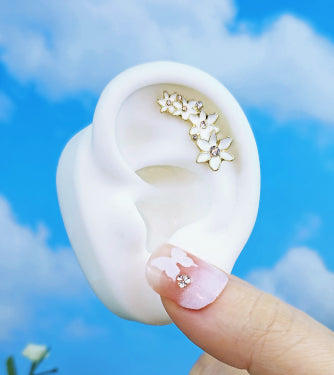
- Tiny gem studs: classic, bright, and easy to pair
- Minimal beads or balls: simple and architectural
- Small hoops: sleek and a little bolder
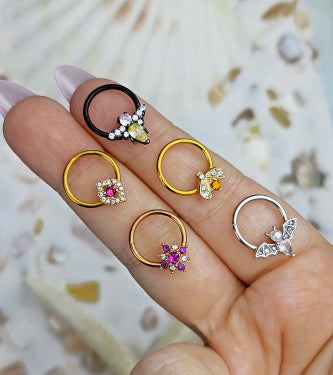
- Decorative ends: stars, hearts, opals, clusters, or subtle shapes
The tragus piercing allows your personal style to shine. A single crystal can make the whole ear look refined. A tiny black piece can make it feel sharper. A gold hoop can warm up everything around it.
Small jewelry doesn’t mean small impact. On a healed tragus, tiny pieces read very intentionally.
How to keep it from looking crowded
The tragus sits near a lot of visual action. If you load every nearby piercing with large tops, the ear can start to look busy fast.
A simple formula helps:
- If your tragus is sparkly, let nearby pieces stay plainer.
- If your conch or helix is bold, keep the tragus sleek.
- If you love mixed textures, repeat one detail so the stack still feels connected.
This piercing shines when it supports the whole look, not when it tries to outshout the rest of the ear.
Tragus Piercing Troubleshooting and Common Questions
Even a well-behaved tragus can throw a little tantrum while it heals. That does not always mean something is wrong. Cartilage is more like a moody houseplant than a low-maintenance cactus. It usually settles down if you fix the thing irritating it.
When can I change the jewelry for the first time
Wait until your piercer says the piercing is ready.
Tragus piercings heal slowly, and they can look fine on the outside before the channel inside is fully stable. Swapping jewelry too early is one of the fastest ways to stir up swelling, tenderness, or a bump. If you are itching for a different look, book a check-in and let your piercer do the first change. That keeps the jewelry transfer quick, clean, and far less irritating.
What if I get a bump
Start with the boring answer first. Bumps are usually irritation, not disaster.
The common triggers are pretty predictable. Pressure while sleeping, earbuds, over-cleaning, snagging the jewelry, or wearing a piece that is too short, too tight, or the wrong shape for your anatomy. The tragus sits right in the path of daily friction, which is why tiny habits matter so much here.
A quick reset helps:
- Take pressure off the area. Skip sleeping on that side, and stop pushing earbuds or headphone pads against it.
- Keep aftercare simple. Use sterile saline and let water rinse away debris in the shower.
- Keep your hands off. Twisting, checking, and poking usually keeps the bump irritated.
- Have your piercer check the jewelry fit. A post with no room for swelling can keep the piercing angry.
If the area becomes hot, starts producing thick yellow or green discharge, or the pain ramps up instead of easing, contact a medical professional.
Why did the piercing sound louder than it felt
Because the tragus sits right next to your ear canal, and sound travels weirdly there.
Many people report that the noise of the needle going through cartilage feels more unsettling than the pain itself. That is a location thing, not a sign that anything went wrong. The sensation can be quick, sharp, and odd all at once, a little like hearing someone crunch ice right beside your eardrum.
Can I wear headphones or earbuds while it heals
This is the question almost everybody wishes they had asked sooner.
Earbuds are usually the bigger problem because they sit right where a fresh tragus piercing needs space. Even if they technically fit, they can press on the jewelry, trap moisture, and rub bacteria into an already tender spot. Over-ear headphones are sometimes easier, but only if the ear cup does not squash the tragus. If the padding presses your ear inward, that still counts as pressure.
The safest move is simple. Use the other ear for calls, switch to speakerphone when you can, and give your healing side a break. If you need headphones for work or the gym, test them gently. Any pressure, throbbing, or lingering soreness means they are not a good match yet.
Can I pierce both tragi at once
A piercer can tell you whether it is possible. The better question is whether it fits your life.
Healing one tragus already affects how you sleep, how you use audio gear, and how careful you need to be with hair, hats, and towels. Healing both at the same time doubles all of that. If you depend on earbuds, wear a headset for work, or toss from side to side while sleeping, one side at a time is usually the saner plan.
How do I know if my tragus is too small
A mirror cannot judge this accurately. Your piercer needs to check the thickness of the cartilage, the shape of the area, and whether there is enough tissue for safe placement.
If your piercer says your anatomy is not a good match, treat that like a solid safety call, not a challenge. A tragus piercing needs enough cartilage to hold jewelry securely and heal without constant stress. Forcing a placement into a tiny or shallow tragus usually leads to irritation, poor angles, or jewelry that never quite sits right.
Ready to Rock Your New Tragus Piercing
You are a week into your new tragus piercing, your earbuds are sitting on the table, and you are suddenly aware of how often you reach for them without thinking. That is a common tragus experience. It is a small piercing that asks for a little planning.
Handled well, though, it is one of the most satisfying cartilage piercings you can get. It adds a clean focal point to your ear stack, works with tiny studs or rings once healed, and looks intentional without shouting for attention.
The big takeaway from this guide is simple. Respect the tissue, pick jewelry that fits your anatomy, and treat audio gear like part of aftercare, not an afterthought. Earbuds, tight headphones, phone pressure, sleeping on that side, and rough towel snags can all irritate a healing tragus faster than people expect.
A healing tragus is a lot like fresh paint on a doorway trim. The area may look fine early on, but repeated rubbing keeps setting it back. Give it calm conditions, keep your aftercare consistent, and let time do its job.
Then the fun part starts.
Once it is healed, your tragus piercing stops feeling high-maintenance and starts feeling like that tiny detail that pulls your whole look together. If you still have questions about placement, healing, or whether your favorite headphones can wait long enough, ask them before you book. A good piercer would always rather answer one more question than fix one preventable irritation bump later.